Last updated 2026-07-25
TL;DR
Fire prevention protection means defensible space (100 feet in CA), ember-resistant home hardening, and documentation insurers accept. California's Zone 0 (0-5 ft) ember-free rule is still in rulemaking as of 2026, not yet enforceable statewide. Start with roof, vents, gutters, and the first 5 feet around your house; that's where most homes actually ignite.
What does "fire prevention protection" actually mean for a homeowner?
For most homeowners, fire prevention protection isn't one thing. It's three separate jobs: reducing fuel around your house (defensible space), making the house itself harder to ignite from embers (home hardening), and having proof of both ready for your insurer or fire district inspector. People conflate these constantly, and it costs them. CAL FIRE splits defensible space into zones: Zone 0 (0-5 feet from structures, the "ember-resistant zone"), Zone 1 (5-30 feet), and Zone 2 (30-100 feet) [1]. Home hardening covers roofs, vents, eaves, windows, decks, and siding, the parts of a house embers actually get into. Most homes that burn in wildfires don't burn from a wall of flame hitting them. They ignite from wind-blown embers landing in vents, gutters full of dry leaves, or mulch beds pushed against siding, sometimes minutes to hours after the main fire front has passed [2]. If you got a non-renewal letter, your insurer's underwriting team and your local fire district may be evaluating different things using different rules. That mismatch is a huge source of homeowner frustration, and we'll get into it below. See our breakdown of defensible space zones for how the 0/1/2 zone system actually works property by property.
When does the California defensible space law (Zone 0) go into effect?
As of this writing, California's Zone 0 ember-resistant zone rule is still in the rulemaking process and is not yet a statewide enforceable requirement. The underlying law, SB 63 (2020, adding Government Code section 51182.5) and related statute, directed the Board of Forestry and Fire Protection to develop regulations for the 0-5 foot zone around structures in State Responsibility Areas and designated Very High Fire Hazard Severity Zones [3]. The Board has been through multiple rulemaking drafts. Public workshops and comment periods pushed the effective date back repeatedly from earlier targets. Check CAL FIRE's Zone 0 regulation status page directly before you assume a hard deadline, because the date has moved before and could move again [1]. Here's the honest version: don't wait for the regulation to become mandatory before doing Zone 0 work. Insurers and many local fire districts are already scoring homes on ember-resistant clearance now, informally or through their own underwriting guidelines, well ahead of any statewide enforcement date. If your fire district requires something different or stricter, follow that; defensible space rules vary by jurisdiction, so [confirm your local fire district's specific requirement here] before you finalize a plan. What Zone 0 will likely require once finalized: no combustible mulch, no wood fencing attached directly to the house within 5 feet, non-combustible ground cover (gravel, pavers, concrete), and removal of anything that can carry embers into contact with siding or under eaves [1].
Why won't people follow the defensible space law in California?
Cost, confusion, and trust are the three real reasons, not laziness. A full 100-foot defensible space clearing on a wooded lot can run from a few hundred dollars for a small suburban lot to $3,000-$10,000+ for a large rural parcel with heavy brush, depending on terrain and vegetation density; there's no single national number because labor costs and fuel loads vary enormously by region. Confusion is real too. Homeowners get conflicting messages: their insurer's wildfire risk score, their county's brush abatement notice, and CAL FIRE's zone guidance don't always agree on distances or what counts as compliant. Some homeowners live on lots too small to physically achieve 100 feet of clearance without clearing a neighbor's yard, which the law does not require them to do beyond their own property line [1]. There's also a trust problem. Some homeowners have told researchers and reporters that they did the work and got non-renewed anyway, or that a neighbor with an unmitigated lot never faced consequences. CAL FIRE's own compliance data has shown enforcement of the existing (non-Zone-0) defensible space requirements is inconsistent across the state's many local fire jurisdictions, because inspection capacity and enforcement priorities differ county to county. Finally, some of it is simple avoidance: clearing brush is physical labor, contractors are backed up during peak season, and a letter from an insurer doesn't come with a clear step-by-step checklist. That's a real gap, and it's exactly what a wildfire defensible space clearing contract framework or a documented survival kit is meant to close: not new law, just a way to actually get it done and prove it.
How to prevent wildfires (what actually reduces ignition risk)
Roughly 85-90% of wildfires in the U.S. are human-caused, according to the National Interagency Fire Center's long-run data, meaning most ignitions come from things like unattended campfires, equipment sparks, downed power lines, and debris burning, not lightning [4]. Preventing wildfires at the community level starts there: extinguish campfires completely (drown, stir, drown again), never use equipment that throws sparks (mowers, grinders, welding) on dry grass during red flag warnings, and never leave a barbecue or fire pit unattended. At the property level, prevention means keeping potential fuel and ignition sources away from your structure and away from wildland vegetation. Ready.gov's wildfire guidance recommends clearing dead vegetation and debris regularly, storing firewood at least 30 feet from structures, and keeping gutters and roof valleys free of leaves and needles, since these are common places embers accumulate and smolder before catching. On public land or near open space, respect local burn bans and red flag warning restrictions. These are issued by the National Weather Service and local fire agencies specifically because wind and humidity conditions make any spark likely to spread fast. Report unattended fires and downed lines immediately rather than assuming someone else already called it in.
How to prevent forest fires and how to avoid forest fires (the same core answer)
"Forest fire" prevention and "wildfire" prevention overlap almost completely; the difference is mostly about location (forested wildland vs. mixed suburban-wildland interface), not method. The U.S. Forest Service and CAL FIRE both point to the same behaviors: fully extinguish campfires, don't drive or park on dry grass (catalytic converters and hot exhaust systems are a known ignition source), follow local fire restrictions, and dispose of cigarettes properly rather than tossing them from a vehicle window. If you manage or own forested or brush-covered land, prevention also means active fuel management: thinning dense stands, removing ladder fuels (low branches and shrubs that let fire climb from ground to canopy), and prescribed burning where local agencies permit it. CAL FIRE's Vegetation Management Program and USFS hazardous fuels treatment programs both use this approach on public and cooperating private land [1]. One thing worth saying plainly: individual homeowners can't prevent large wildland fires from starting in remote forest. What you control is whether your home survives once a fire is already burning nearby. That's the entire logic behind defensible space and hardening, and it's why insurers care about it more than they care about your general fire-safety intentions.
How to prepare for a wildfire (and how to prepare for forest fires) before you get a warning
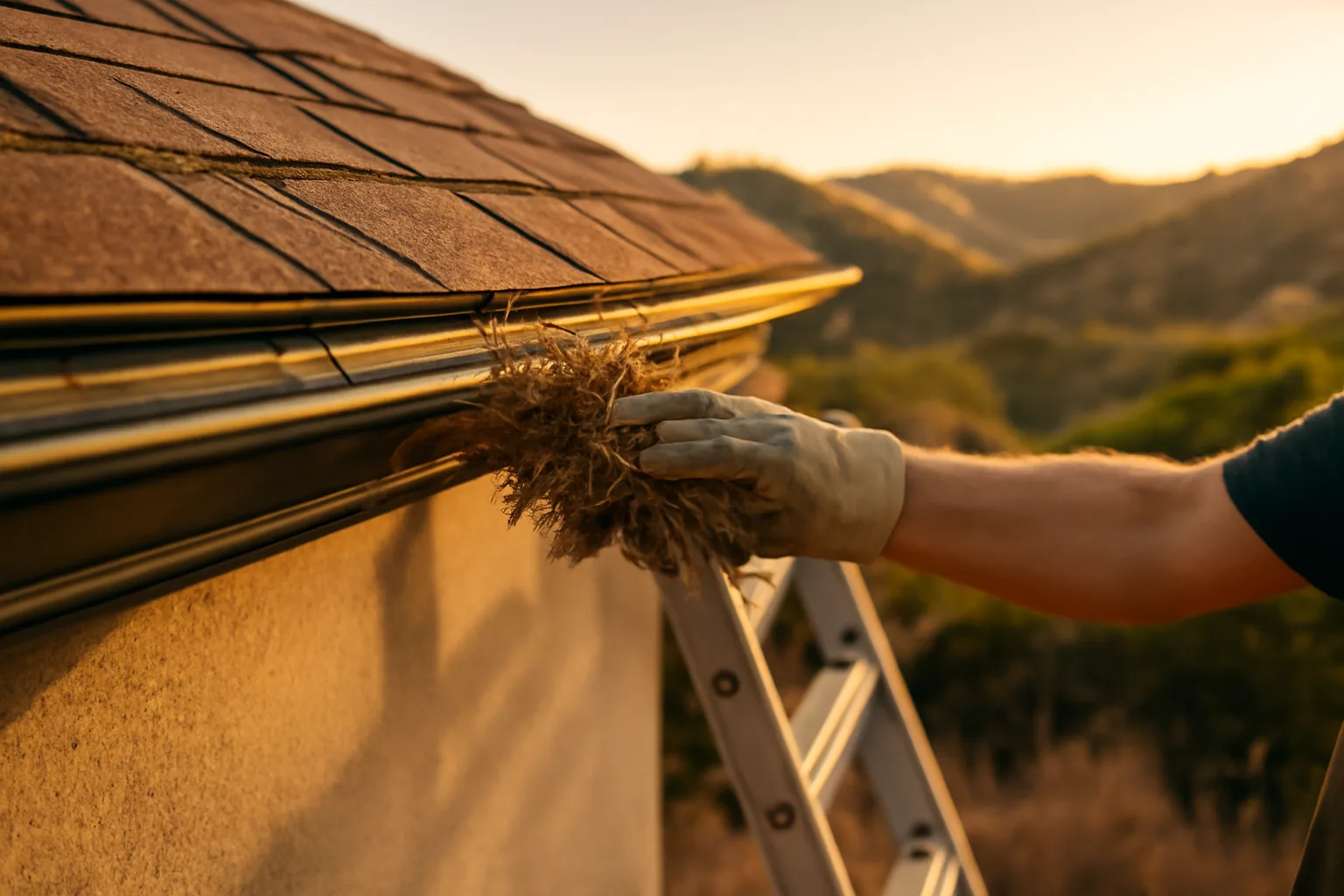
Preparing for a wildfire has two tracks: getting your property ready and getting your household ready. Do both before fire season peaks in your area, not after a red flag warning is issued. For the property: clear Zone 1 (5-30 feet) of dead vegetation, keep grass mowed to under 4 inches, prune tree branches so they don't overhang the roof, and move firewood stacks and propane tanks out of the first 30 feet [1]. Check that your address is visible from the street; fire crews waste critical time on unmarked or hidden addresses. For the household: Ready.gov recommends building a go-bag with medications, copies of insurance documents, chargers, and a change of clothes per person, and making an evacuation plan with two routes out of your neighborhood in case one is blocked. Photograph and inventory your home's interior and exterior, including your hardening and defensible-space work, before fire season starts, not during an evacuation order. That documentation matters twice: once for your own insurance claim if the worst happens, and once for underwriting review if you're fighting a non-renewal. Sign up for your county's emergency alert system (most CA, CO, OR, and AZ counties run a reverse-911 style system) and know your evacuation zone designation in advance.
What fire-safe home rules take effect in 2026?
There isn't one single national "2026 fire-safe homes" rule; this is a patchwork by state, and several pieces are still moving. In California, the Zone 0 ember-resistant zone regulation (Government Code 51182.5) has been in active rulemaking with the Board of Forestry, and its effective date has shifted multiple times; check CAL FIRE's current regulation status page for the live date rather than relying on any single year [1] [3]. Separately, California's Chapter 7A building code (referenced in Title 24, Part 2) already requires ignition-resistant construction, materials, and vent screening for new construction and remodels in Wildland-Urban Interface Fire Areas, and that code gets periodic updates on the standard triennial cycle the California Building Standards Commission follows [5]. Because specific 2026 effective dates for local ordinances, WUI code updates, and insurance-related mitigation standards vary by state and even by fire district within a state, [confirm your local jurisdiction's 2026 rule changes here] with your county building department or state fire marshal's office before budgeting for compliance work. Oregon's statewide wildfire risk map and defensible space code (under SB 762) has gone through its own multi-year rollout with paused and revised timelines, which is a good example of how these dates shift in practice [6].
Is Santa Barbara safe from fire?
No part of Santa Barbara County is "safe" from fire in an absolute sense; large portions of the county, especially foothill and canyon communities like Montecito, the Riviera, Mission Canyon, and the San Marcos foothills, sit inside CAL FIRE's mapped Very High Fire Hazard Severity Zones [7]. The 2017 Thomas Fire burned into Ventura and Santa Barbara counties and was followed by the deadly Montecito debris flow in January 2018, a reminder that wildfire risk in this region compounds with post-fire mudslide risk on steep terrain. That said, risk isn't uniform across the county. Flatter areas closer to the coast and away from chaparral-covered hillsides carry meaningfully lower wildfire hazard scores than homes built into canyon terrain with one road in and out. If you're evaluating a Santa Barbara-area property (buying, insuring, or fighting a non-renewal on one), pull the parcel's specific Fire Hazard Severity Zone designation from CAL FIRE's map rather than relying on the city or county's general reputation [7]. A home two blocks apart can carry very different official risk classifications.
How can we prevent forest fires at the community level?
Community-level prevention works differently than individual prevention: it's about coordinated fuel breaks, shared evacuation planning, and consistent enforcement across a neighborhood, since one unmitigated lot can put every neighboring property at higher risk. Firewise USA, a National Fire Protection Association program, certifies neighborhoods that organize collective defensible space work, evacuation drills, and fuel reduction days; there were over 1,500 recognized Firewise USA sites nationally as of NFPA's most recent published counts . Local fire safe councils (common in California, Colorado, and Oregon) coordinate chipper days, grant-funded fuel reduction on shared open space, and community chipping programs that make it cheaper for individual homeowners to clear brush, since hauling and disposal costs are often the most expensive part of defensible space work. Reporting matters at scale too: most human-caused wildfires start small and are reported within the first hour, and fast initial attack (getting fire engines and crews on scene before a fire grows past a few acres) is the single biggest lever agencies have on final fire size. That's a systems-level fact, not something an individual homeowner controls directly, but it's why prompt 911 reporting of any unattended fire or smoke matters more than people assume.
How do I document my fire prevention work for my insurer?
Insurers reviewing a wildfire non-renewal or considering reinstatement want dated, specific evidence, not a general claim that you "did defensible space work." Photograph each zone separately (0-5 ft, 5-30 ft, 30-100 ft where applicable), date-stamp the images, and keep receipts or contractor invoices for any brush removal, roof replacement, vent screening, or gutter guard installation. A lot of homeowners lose this fight simply from disorganization: they did real work but can't produce it in a format an underwriter can review quickly. This is the one place we'll mention our own product directly: DefensibleHome's $99 one-time Wildfire Insurance Survival Kit is built to organize exactly this kind of documentation, before/after photos by zone, a hardening checklist, and a dated record, into a packet a homeowner can send to their insurer themselves. To be clear about what that is and isn't: we don't file claims on your behalf or promise a discount, reinstatement, or coverage outcome. You prepare and send your own documentation; the kit just organizes it. This is not legal, insurance, or claims advice, and outcomes depend entirely on your insurer's own underwriting rules and your local fire district's requirements.
What should I do first if I already got a non-renewal letter?
Read the letter closely for the stated reason; insurers are generally required to give a reason for non-renewal, and it's often tied to a specific wildfire risk score, distance to vegetation, or roof material rather than a vague "wildfire risk" label. Start with the cheapest, highest-impact fixes first: clear the first 5 feet around the structure (Zone 0), clean gutters and roof valleys, and screen or replace any vents larger than 1/8 inch mesh, since ember intrusion through vents is one of the most cited home-ignition mechanisms in post-fire structure assessments [2]. Next, address anything combustible touching the house directly: wood fences that attach to siding, mulch beds against the foundation, and firewood stacked under eaves. These are common, cheap-to-fix items that inspectors and underwriters flag repeatedly. Then document everything before you request any re-inspection or send materials to your insurer. See our guide on what actually happens during a house fire event and how ignition typically starts, and our breakdown of fire-safe landscaping next to the house for the specific plant and hardscape choices that matter most in that first 5-foot zone.
Frequently asked questions
When does the California defensible space law go into effect?
California's existing 100-foot defensible space law (Public Resources Code 4291) is already in effect. The newer Zone 0 (0-5 foot ember-resistant zone) regulation under Government Code 51182.5 is still in Board of Forestry rulemaking as of this writing and has no fixed enforcement date yet; check CAL FIRE's regulation status page for updates.
Why won't people follow the defensible space law in California?
Cost, confusing overlapping rules from insurers, counties, and CAL FIRE, and inconsistent enforcement across fire districts are the main reasons. Some lots are also physically too small for full 100-foot clearance. Homeowners who did the work sometimes still faced non-renewal, which erodes trust in the process.
How do I prevent wildfires around my property?
Extinguish all fires completely, avoid spark-producing equipment on dry grass, keep firewood 30 feet from structures, clear dead vegetation regularly, and follow local burn restrictions during red flag warnings. About 85-90% of wildfires are human-caused, per National Interagency Fire Center data, so most prevention is behavioral, not technical.
How do I prepare for a wildfire?
Clear defensible space zones, harden your home's roof and vents, build a go-bag with medications and documents, plan two evacuation routes, photograph your property before fire season, and sign up for your county's emergency alert system. Do this before a red flag warning, not during one.
How do I prevent forest fires specifically, versus wildfires generally?
The prevention behaviors are nearly identical: extinguish campfires fully, don't drive on dry grass, follow fire restrictions, and dispose of smoking materials properly. Forest fire prevention on managed land also includes fuel thinning and prescribed burns, which individual homeowners don't typically do themselves.
What fire-safe home rules take effect in 2026?
No single 2026 national rule exists. California's Zone 0 regulation is still finalizing without a locked date. Chapter 7A building code already requires ignition-resistant construction in WUI areas. Oregon's SB 762 mapping and code rollout has also shifted timelines. Confirm dates with your state fire marshal or county building department.
Is Santa Barbara safe from fire?
No area of Santa Barbara County is fully safe from fire; foothill and canyon communities sit in CAL FIRE-mapped Very High Fire Hazard Severity Zones. Coastal flatland areas carry lower risk than canyon terrain. Check your specific parcel's Fire Hazard Severity Zone designation rather than relying on general reputation.
How can we prevent forest fires as a community?
Organized neighborhood programs like Firewise USA coordinate shared fuel breaks, chipper days, and evacuation planning across properties, since one unmitigated lot raises risk for neighbors too. Fast reporting of unattended fires and quick initial attack by fire agencies are the biggest levers on keeping small fires from becoming large ones.
What's the difference between defensible space and home hardening?
Defensible space is vegetation and fuel management around your house (zones 0 through 2, up to 100 feet). Home hardening is building-level work: ember-resistant vents, Class A roofing, enclosed eaves, and dual-pane windows. Insurers and fire districts often evaluate both separately, and doing only one rarely satisfies underwriting review.
How much does defensible space clearing cost?
Costs vary widely by lot size, vegetation density, and region, from a few hundred dollars for small suburban lots to $3,000 to $10,000 or more for large rural parcels with heavy brush. Hauling and disposal, not the cutting itself, is often the largest cost. Local fire safe councils sometimes offer subsidized chipper programs.
What counts as Zone 0 under California's proposed ember-resistant rule?
As proposed, Zone 0 covers 0 to 5 feet from a structure and would require noncombustible ground cover like gravel or pavers, no combustible mulch, no wood fencing attached to the house within that zone, and removal of anything that lets embers contact siding or gather under eaves. The rule is still finalizing, so requirements could shift before enforcement begins.
Can my insurer really non-renew me over defensible space?
Yes. Insurers use wildfire risk scoring models that weigh vegetation proximity, roof material, slope, and fire history, and non-renewal for wildfire risk is legal in most states, though some, including California, have added temporary moratoriums after major fire declarations. Read your non-renewal letter's stated reason and address that specific item first.
Sources
- CAL FIRE, Defensible Space (California Public Resources Code 4291) & Zone 0 regulation status: Defensible space zones (0-5 ft, 5-30 ft, 30-100 ft) and Zone 0 ember-resistant zone requirements and rulemaking status
- USDA Forest Service, Home Ignition Zone research (Jack Cohen): Homes ignite primarily from wind-blown embers rather than direct flame contact, often after the main fire front passes
- California Legislative Information, SB 63 (2020) and Government Code Section 51182.5: Statutory basis directing the Board of Forestry to develop the Zone 0 ember-resistant zone regulation
- National Interagency Fire Center, Statistics: Roughly 85-90% of wildfires in the U.S. are human-caused
- California Building Standards Commission, Title 24 Part 2, Chapter 7A: Chapter 7A requires ignition-resistant construction and materials in Wildland-Urban Interface Fire Areas
- CAL FIRE, Fire Hazard Severity Zone Maps: Santa Barbara County foothill and canyon communities are mapped in Very High Fire Hazard Severity Zones
- National Fire Protection Association, Firewise USA Program: Firewise USA recognized neighborhood sites nationally coordinating community-level wildfire risk reduction