Last updated 2026-07-25
TL;DR
Protecting your home from wildfire means working three defensible-space zones (0-5, 5-30, 30-100 ft), hardening the first 5 feet with noncombustible materials, and documenting it all before your insurer asks. California's updated Zone 0 ember-resistant rule (Government Code 51182) is still pending final regulations as of mid-2025, so check with CAL FIRE and your local fire district before assuming a 2026 deadline applies to you.
What does it actually mean to protect your home from wildfire?
It means reducing the three ways homes ignite: direct flame contact, radiant heat, and embers landing on or near your house. Embers cause the majority of home losses in wildfires, sometimes arriving hours after the main fire front has passed and starting new fires up to a mile ahead of the flame line, according to CAL FIRE's wildfire preparedness guidance. That single fact should reshape how you think about "protecting your home." It's not really about stopping a wall of flame at your property line. It's about making sure a wind-blown ember can't find a foothold: a pile of dry leaves in a gutter, a wood mulch bed against the siding, a vent screen with a gap big enough to let embers in. CAL FIRE and most Western fire agencies organize the work into concentric zones around the structure, plus the structure itself (sometimes called Zone 0). Get those zones right and you've done most of what actually moves the needle. Everything else, generators, go-bags, evacuation routes, matters for your safety during a fire but doesn't change whether your house is still standing after. If you've already gotten a non-renewal or inspection letter, treat this as the baseline you build your insurance documentation from. See our defensible space primer for how the zone system maps to what an inspector or underwriter is actually checking.
What are the defensible space zones and what has to happen in each one?
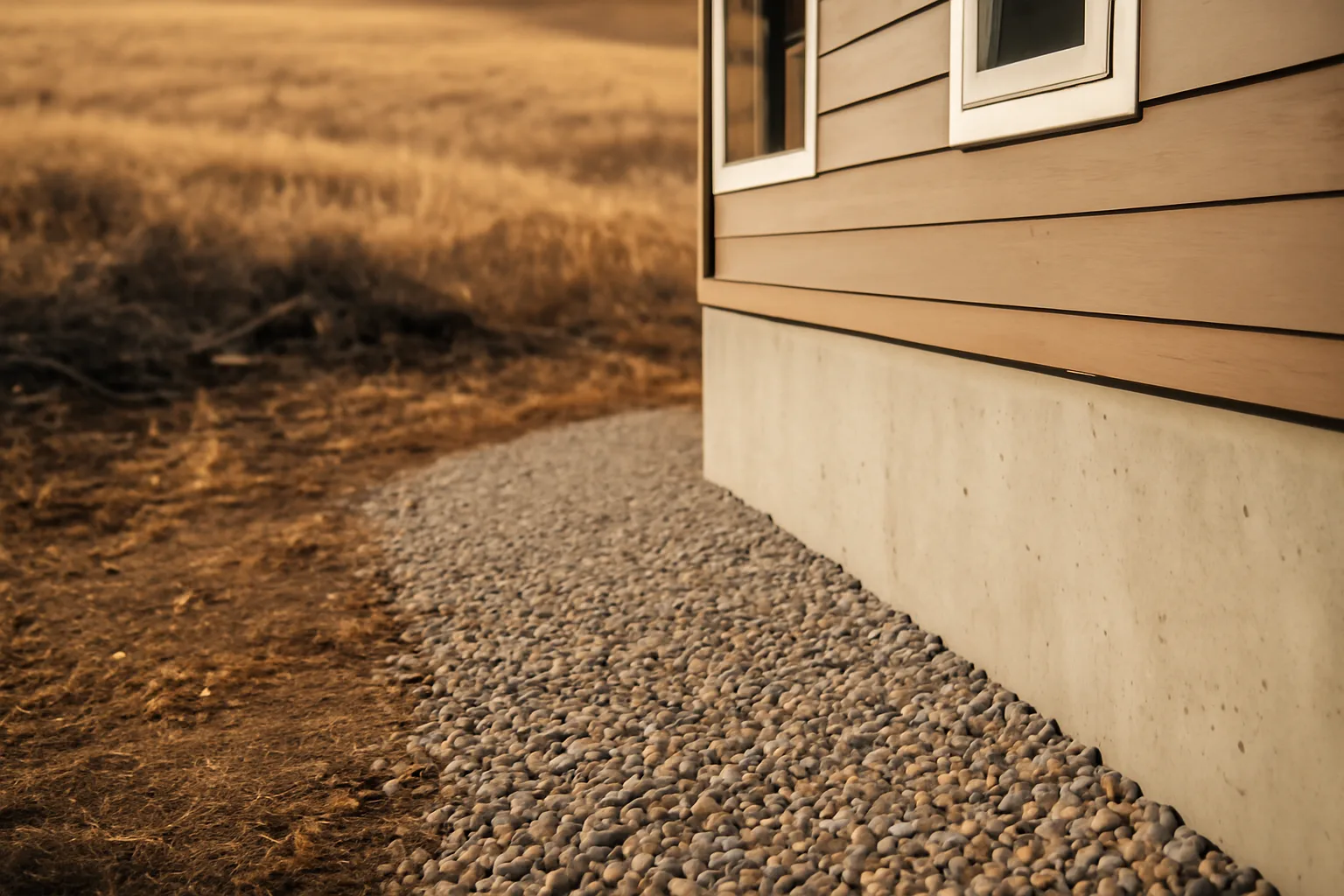
| Zone 0 (ember-resistant zone) | 0-5 ft | Noncombustible materials only: no bark mulch, no combustible plants, no stored firewood, no combustible fencing attached to the house | |
|---|---|---|---|
| Zone 1 | 5-30 ft | Remove dead plants/debris, space tree canopies, keep grass mowed to 4 inches, no vegetation touching structures | |
| Zone 2 | 30-100 ft | Reduce fuel volume, space trees and shrubs, remove ladder fuels connecting grass to shrubs to tree canopy | Source: CAL FIRE, "Defensible Space" program guidance. Zone 0 is the newest and most contentious because it requires removing things homeowners like: mulch beds, potted plants, wood fences that touch the house, patio furniture with cushions. CAL FIRE's own guidance states the intent plainly: "Embers are the number one cause of home ignitions during wildfire" and Zone 0 exists to deny those embers fuel right at the wall. Zone 1 and Zone 2 are more forgiving. The core task is breaking up "ladder fuels," the continuous vertical path from grass to shrub to tree branch that lets a ground fire climb into a crown fire. Mowing, pruning tree limbs up 6 feet from the ground, and spacing shrub islands apart are the main moves. For planting choices inside these zones, our guide on fire safe landscaping next to a house covers which species and mulch types are actually allowed versus which just get marketed as "fire resistant." |
CAL FIRE defines defensible space as the area around a structure where vegetation is modified to reduce fire behavior, and it breaks the required 100 feet (or to the property line) into zones with different rules. | Zone | Distance from structure | Core requirement |
When does the California defensible space law go into effect?
The baseline 100-foot defensible space requirement (Public Resources Code 4291, mirrored in Government Code 51182) has been in effect for years and applies now in State Responsibility Areas and designated Wildland-Urban Interface zones [1]. The newer Zone 0 ember-resistant zone requirement, added by Assembly Bill 3074 (2020), amended Government Code 51182 to require a noncombustible zone within 5 feet of structures, but it does not take effect until the Board of Forestry and Fire Protection adopts final implementing regulations [2]. As of CAL FIRE's public status updates, that regulatory process has been under development for several years with draft language circulating but no adopted, enforceable statewide Zone 0 regulation finalized on a fixed date. CAL FIRE's own defensible space page notes the Zone 0 concept is being "recommended" for adoption and describes it as forthcoming rather than currently mandatory statewide. Homeowners frequently see "2023," "2025," and "2026" floated in news coverage and social media as the effective date; none of those has been confirmed by an adopted regulation as of this writing. What this means practically: don't wait for a firm date. Insurers, and increasingly the FAIR Plan and admitted carriers doing wildfire scoring, are already treating Zone 0 compliance as a favorable factor in underwriting even before it's legally mandatory. Building it now costs the same whether it's required in 2025 or 2027, and it's one of the few improvements that shows up clearly in a defensible space inspection photo. Check your specific requirement here: [State Fire Marshal / CAL FIRE Zone 0 update, guided fill-in for your county and fire district] ______________.
What is the 2026 fire-safe home standard people are asking about?
There isn't one single, confirmed nationwide "2026 fire-safe home" standard; this phrase usually points to a mix of things people conflate: California's pending Zone 0 regulation, updated Wildland-Urban Interface building codes referencing the 2021 or 2024 International Wildland-Urban Interface Code, and state-specific ignition-resistant construction rules under California's Chapter 7A building code (Title 24, Part 2) [3]. Chapter 7A already requires ignition-resistant materials (Class A roofing, ember-resistant vents, tempered or multi-pane windows, noncombustible siding within 6 inches of grade) for new construction and additions in designated Fire Hazard Severity Zones. That's been law since 2008 and has been updated in successive code cycles, most recently the 2022 California Building Code cycle effective January 1, 2023 [3]. If your county, insurer, or local news is telling you a specific "2026" deadline applies to your home, get it in writing from the source and confirm the citation. Fill in your local requirement here: [Local building department or fire marshal 2026 code reference] ______________. The practical move regardless of exact dates: if you're building new, adding on, or replacing a roof or vents anyway, build to Chapter 7A ignition-resistant standards now. It costs more upfront (Class A roofing assemblies and ember-resistant vents typically add a few thousand dollars over standard products depending on home size) but it's the standard insurers will eventually expect everywhere embers are a risk, more than where it's currently mandatory.
Why won't people follow the defensible space law in California?
Compliance is genuinely inconsistent, and it's not simply stubbornness. CAL FIRE and university extension research point to a handful of recurring, overlapping reasons. Cost and labor are the biggest one. Clearing 100 feet of brush on a hillside lot, removing mature trees that violate spacing rules, or replacing wood fencing and mulch beds in Zone 0 can run from a few hundred dollars for a small flat lot to many thousands for a large, wooded, sloped property. Retired homeowners on fixed incomes, absentee landowners, and people who inherited rural property often simply can't afford the work in a given year. Aesthetics and attachment matter more than people admit. Mature trees, established landscaping, and privacy hedges took decades to grow, and removing them feels like a real loss, not a chore. Some homeowners genuinely don't want a bare, gravel-and-succulent yard even if they understand the fire logic. Enforcement is spotty. Inspections happen on a rotating or complaint-driven basis in most jurisdictions, and CAL FIRE's own compliance data historically shows large shares of inspected parcels failing on first inspection, with many not achieving full compliance until a follow-up. Fines, where they exist, are often low enough to function as a cost of doing nothing. Finally, there's a genuine information gap. Defensible space requirements differ by fire district, county ordinance, and whether the parcel is in a State Responsibility Area or Local Responsibility Area, so "the law" isn't one consistent thing a homeowner can look up once and trust forever. That inconsistency itself discourages compliance, because people reasonably wonder whether the rule that applied last year still applies now. Check your local defensible space ordinance and inspection schedule here: [Local fire district contact and inspection cycle] ______________.
How to prevent wildfires from starting in the first place
Human activity causes roughly 85% of wildfires in the United States, according to the National Interagency Fire Center's ignition source reporting cited by the U.S. Forest Service [4]. That means most prevention happens before a fire ever starts, and it's mostly about how you handle equipment, debris, and vehicles outdoors. Do these consistently: never leave a campfire unattended and drown it until it's cool to the touch, avoid mowing or using power equipment on dry grass during red flag warnings, keep vehicles off dry grass (catalytic converters can ignite it), maintain spark arrestors on chainsaws and off-road equipment, and don't burn debris on windy days even where permitted. Defensible space work itself is prevention too, in the sense that a well-maintained property is less likely to carry a spot fire from a neighbor's property into a full structure loss, and less likely to give an accidental ignition (a dragging trailer chain, a discarded cigarette, a downed power line) enough fuel to spread. Ready.gov's wildfire action guidance frames this as an ongoing responsibility, not a one-time task: "Create a fire-resistant zone around your home free of leaves, debris, or flammable materials that spans at least 30 feet".
How to prevent forest fires and avoid forest fires as an individual
"Preventing forest fires" and "protecting your home from wildfire" are related but not identical goals, and it's worth separating them because the actions differ. Forest fire prevention, at the individual level, is mostly about not being the ignition source: follow local burn bans, check current fire danger ratings before any outdoor burning or equipment use, report unattended campfires and downed power lines, and support (or at least don't sabotage) prescribed burn programs, which reduce the buildup of fuels that turn small fires into catastrophic ones. Protecting your specific home is a separate, parallel project: defensible space zones, ember-resistant construction, and insurance documentation. You can do everything right on prevention and still lose your home to a wildfire that started ten miles away and threw embers onto your roof. Both matter, but don't let "I always follow burn bans" substitute for actually clearing Zone 0. The Forest Service's Smokey Bear program remains the primary public prevention campaign and its guidance is still the clearest single-page summary of individual fire-cause prevention steps [5]. For the structural side, see only you can prevent wildfires for how that messaging translates into home-specific action.
How to prepare for a wildfire (and prepare for forest fires) before one threatens your area
Preparation splits into three tracks that should happen on different timelines: structure hardening (do this now, it takes weeks to months), an evacuation plan (do this now, it takes an afternoon), and a go-bag plus documentation kit (do this now, it takes a few hours). For structure hardening, work backward from ignition risk: roof and gutters first (Class A roofing, metal gutter guards, no debris), then vents (1/8-inch or smaller ember-resistant mesh), then the 0-5 foot zone around the foundation, then the 5-30 foot zone. For evacuation, Ready.gov recommends identifying at least two ways out of your neighborhood in case one route is blocked, and practicing the route with everyone in the household, more than the driver. Sign up for your county's emergency alert system now; most operate opt-in text or app-based alerts (fill in your county's specific system name and sign-up link here: ______________). For documentation, photograph and video every room, exterior elevation, and major system (roof, HVAC, water heater, electrical panel) before fire season starts. Save receipts for major purchases and improvements. Store copies off-site or in cloud storage, more than on a home computer that could be destroyed along with everything else. This is also where a pre-built kit saves real time under stress. DefensibleHome's $99 one-time Wildfire Insurance Survival Kit is built around this exact documentation gap: a structured way to photograph your defensible space work, log improvement dates and receipts, and organize the file an insurer or adjuster would actually want to see, without you needing to negotiate with anyone or file a claim yourself. It doesn't replace legal or insurance advice, and it doesn't promise coverage or a discount; it just gets your own paperwork in order before you need it.
Is Santa Barbara safe from fire?
No coastal California community, including Santa Barbara, is "safe" from wildfire in any absolute sense, and Santa Barbara County has a documented history of major fires, including the 1990 Painted Cave Fire and the 2017 Thomas Fire, which at the time was the largest wildfire in modern California history at roughly 281,893 acres before being surpassed by later fires, according to CAL FIRE's incident archive [6]. The Thomas Fire was followed by the January 2018 Montecito debris flow, which killed 23 people, a reminder that wildfire risk in this region compounds with post-fire flood and mudslide risk on burned hillsides [6]. Much of Santa Barbara's urban core sits in or adjacent to a State Responsibility Area or Very High Fire Hazard Severity Zone as mapped by CAL FIRE, meaning defensible space law applies to a large share of the county's housing stock, more than remote foothill parcels [1]. If you own property in or near Santa Barbara, Montecito, Goleta, or the surrounding foothill communities, check your parcel's specific hazard zone designation directly rather than relying on general reputation: [CAL FIRE Fire Hazard Severity Zone Viewer, county-specific link] ______________. The honest answer is that "safety" here is a function of defensible space compliance, ember-resistant construction, and evacuation readiness, not geography alone. Plenty of homes survived the Thomas Fire specifically because they had cleared brush and ember-resistant roofing; plenty of similarly situated homes without that work did not.
How can we prevent forest fires at a community and policy level?
Individual homeowner action matters, but forest fire prevention at scale depends heavily on fuel management policy: prescribed burning, mechanical thinning, and grazing programs that reduce the dense fuel loads decades of fire suppression have allowed to build up. The U.S. Forest Service's 10-Year Wildfire Crisis Strategy, launched in 2022, commits to treating up to an additional 20 million acres of National Forest System land and an additional 30 million acres of other lands (state, tribal, private) through fuels and forest health treatments in high-risk landscapes [7]. That's the largest coordinated federal fuels-reduction commitment in the agency's history, and it directly affects wildfire behavior near communities adjacent to national forest land. At the community level, the National Fire Protection Association's Firewise USA program organizes neighborhoods to do collective defensible space work, share equipment and cost, and qualify for reduced-friction wildfire risk assessments in some insurance markets [8]. If your neighborhood isn't enrolled, it's worth raising at the next HOA or neighborhood association meeting; it costs nothing to join and gives you a structured annual work plan instead of everyone guessing independently. For property-specific vegetation management contracts, particularly in states with active state-run clearing assistance programs, see our guide to wildfire defensible space clearing contracts in Washington State for what a properly scoped contract should include and cost.
What are the highest-priority hardening projects if you can only afford a few?
If your budget is limited, prioritize by ignition probability, not by what looks most dramatic. Vents, roof, and the first 5 feet around the foundation stop more losses per dollar than anything else. 1. Ember-resistant vents (1/8-inch metal mesh, no larger) on all attic, crawlspace, and soffit vents. This is often a few hundred dollars in materials for a typical home if you or a handyman can do the install. 2. Class A roof covering and clean gutters. If your roof already meets Class A (most asphalt shingle, tile, and metal roofs sold in the last 20 years do), the free part is just keeping gutters and roof valleys clear of leaf litter and pine needles, which is one of the single most common ignition points documented in post-fire damage assessments. 3. Zone 0 cleanup within 5 feet of the structure: remove bark mulch (swap for gravel or pavers), move firewood stacks away from the house, remove or replace combustible fencing that attaches directly to the structure, and clear anything flammable from under decks. 4. Enclose or screen the underside of decks and porches, a common ember entry point that's cheap to address with 1/8-inch mesh compared to full deck replacement. 5. Multi-pane or tempered windows, if you're already replacing windows for other reasons; single-pane glass can crack from radiant heat and let embers and flame directly inside. The math generally favors this order because vents, gutters, and Zone 0 debris removal are labor-and-materials costs in the hundreds to low thousands, while things like whole-house siding replacement or full window replacement run into the tens of thousands. Do the cheap, high-leverage items first.
How do you document defensible space work for your insurer?
Insurers and the California FAIR Plan increasingly ask for evidence of defensible space compliance, more than a checkbox claim, especially after a non-renewal notice or a wildfire risk inspection. Photograph each zone separately (0-5 ft, 5-30 ft, 30-100 ft) from multiple angles, dated, ideally with a timestamp visible or embedded in the file metadata. Keep records of: the date work was done, who did it (self or contractor, with contractor license number if applicable), what specifically was removed or modified, and receipts for materials or labor. If your local fire department or a certified defensible space inspector did a walkthrough, request a copy of their inspection report or checklist; many California fire districts provide this on request even outside the mandatory inspection cycle. For comparison shopping between hardening approaches, and to see how requirements and costs stack up across states, our comparisons hub breaks down how California, Colorado, Oregon, and Arizona differ in mandatory versus voluntary defensible space rules. A word on scope: none of this documentation guarantees your insurer reinstates coverage, offers a discount, or approves a claim faster. Public adjusters and licensed agents handle claim negotiation; this kind of documentation work is something a homeowner does themselves to build a clear, organized record, and it's not a substitute for legal or insurance advice specific to your policy and state.
Frequently asked questions
When does the California defensible space law go into effect?
The baseline 100-foot defensible space law (Public Resources Code 4291) is already in effect in State Responsibility Areas. The newer Zone 0 (0-5 ft, ember-resistant) requirement added by AB 3074 amends Government Code 51182 but isn't enforceable until the Board of Forestry adopts final implementing regulations, which had not happened as of this writing. Check CAL FIRE's site for the current status before assuming a firm date applies to you.
Why won't people follow the defensible space law in California?
Mainly cost, labor, and attachment to established landscaping, combined with inconsistent enforcement and rules that vary by fire district and responsibility area. CAL FIRE inspection data has historically shown large shares of parcels failing on first inspection. Fixed-income and absentee owners in particular often can't afford full-property clearing in a single season, so compliance gets spread over years or ignored.
How to prevent wildfires from starting near my property?
Keep vehicles off dry grass, maintain spark arrestors on equipment, never leave campfires unattended, avoid mowing dry grass on windy or red-flag days, and don't burn debris in high wind. Roughly 85% of U.S. wildfires are human-caused according to National Interagency Fire Center data cited by the U.S. Forest Service, so most prevention is about controlling ignition sources, more than clearing brush.
How do I prepare for a wildfire if I get an evacuation warning?
Have two evacuation routes planned and practiced, sign up for your county's emergency alert system, keep a go-bag with medications, documents, and chargers ready, and photograph your home's interior and exterior now for insurance purposes. Ready.gov recommends maintaining a 30-foot fire-resistant zone around the home as part of ongoing readiness, not a last-minute task.
How can I prevent forest fires as an individual, more than protect my own house?
Follow local burn bans and check fire danger ratings before any outdoor burning, report unattended campfires or downed power lines, maintain equipment spark arrestors, and support prescribed burn and fuels-reduction programs in your area rather than opposing them. These reduce the fuel buildup that turns small ignitions into large, fast-moving fires.
What fire-safe home standards take effect in 2026?
There's no single confirmed nationwide 2026 standard. People are usually referencing California's pending Zone 0 ember-resistant zone regulation (not yet finalized as of this writing) or updated Wildland-Urban Interface building codes. Confirm any specific 2026 date directly with your local building department or state fire marshal rather than relying on general news coverage.
Is Santa Barbara safe from fire?
No, not in any absolute sense. Santa Barbara County has had major fires including the 1990 Painted Cave Fire and the 2017 Thomas Fire (281,893 acres), and much of the area sits in a CAL FIRE-designated Very High Fire Hazard Severity Zone. Safety there depends heavily on individual defensible space compliance and ember-resistant construction, more than location.
What is Zone 0 and why is it different from Zones 1 and 2?
Zone 0 is the 0-5 foot ember-resistant zone immediately around a structure, requiring noncombustible materials only (no mulch, no combustible plants, no firewood, no attached wood fencing). Zones 1 (5-30 ft) and 2 (30-100 ft) allow vegetation but require it to be spaced, pruned, and maintained to break up continuous fuel paths.
What's the single cheapest thing I can do to protect my home from wildfire?
Clean your gutters and roof valleys of leaves and pine needles, and install 1/8-inch ember-resistant mesh over attic and crawlspace vents. Both address the most common ember entry points documented in post-fire damage assessments and typically cost under a few hundred dollars in materials for an average home.
Does defensible space work guarantee my insurance gets reinstated?
No. Defensible space and hardening work can support your case with an insurer or the FAIR Plan, but nothing guarantees reinstatement, a discount, or claim approval. Documentation is something you prepare yourself; negotiating with an insurer or filing a claim is a separate process handled by licensed agents or public adjusters, not something a documentation kit performs for you.
How often do defensible space inspections happen in California?
It varies by fire district and whether the property sits in a State Responsibility Area or Local Responsibility Area; some areas inspect annually, others on a rotating or complaint-driven basis. Contact your local fire department or fire district directly for your specific inspection cycle rather than assuming a statewide schedule applies.
Can prescribed burns actually help prevent the fires that threaten homes?
Yes, prescribed burns and mechanical thinning reduce the fuel loads that let wildfires grow large and fast. The U.S. Forest Service's 10-Year Wildfire Crisis Strategy commits to fuels treatment on an additional 20 million acres of National Forest System land specifically to reduce this kind of risk near communities.
Sources
- California Public Resources Code Section 4291: Baseline 100-foot defensible space clearance requirement around structures in State Responsibility Areas
- California Government Code Section 51182 (as amended by AB 3074, 2020): Statutory basis for the Zone 0 ember-resistant zone requirement pending Board of Forestry implementing regulations
- California Building Standards Commission, California Building Code Chapter 7A: Ignition-resistant construction requirements including Class A roofing and ember-resistant vents in Fire Hazard Severity Zones
- USDA Forest Service, wildfire cause statistics citing National Interagency Fire Center data: Approximately 85% of wildfires in the United States are human-caused
- USDA Forest Service, Smokey Bear wildfire prevention program: Primary federal public messaging campaign for individual wildfire ignition prevention
- CAL FIRE, Top 20 Largest California Wildfires incident archive: 2017 Thomas Fire burned approximately 281,893 acres in Santa Barbara and Ventura counties
- USDA Forest Service, Wildfire Crisis Strategy: Commitment to treat an additional 20 million acres of National Forest System land and 30 million acres of other lands for fuels reduction
- National Fire Protection Association, Firewise USA program: Community-based recognition program organizing neighborhood-level defensible space and wildfire risk reduction