Last updated 2026-07-25
TL;DR
The five things that actually cut home fire risk: clear the 0-5 foot ember zone around your house, harden vents and roof edges against embers, keep gutters and roofs free of debris, maintain 100 feet of defensible space where required, and keep a fire-ready go-kit and evacuation plan. Embers, not flame fronts, destroy most homes in wildfires, per CAL FIRE.
What actually prevents a house fire in a wildfire zone?
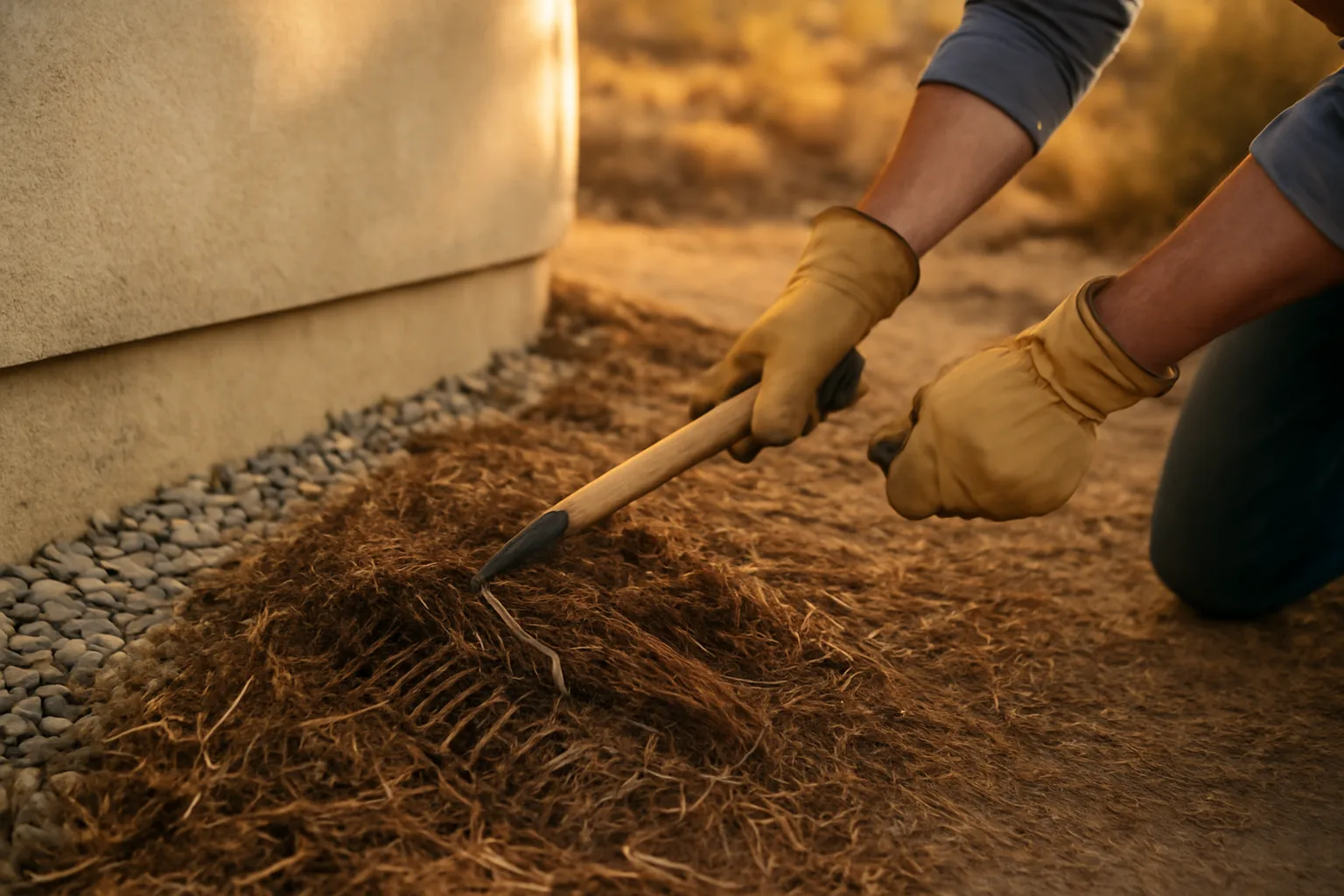
Most people picture a wall of flame rolling through and torching everything in its path. That's not usually what happens. CAL FIRE's own research says embers, sometimes carried a mile or more ahead of a fire front, are the main reason homes ignite during wildfires [1]. Embers land in gutters full of leaves, under decks, in vent openings, and on dry mulch pressed against siding. They smolder for minutes before anything catches. That delay is exactly why home hardening works: you're not stopping a firestorm, you're removing the small stuff embers can grab onto. So the five things that move the needle, in the order I'd actually spend money on them: clear the zone within 5 feet of your house (called Zone 0), harden vents and eaves against ember intrusion, keep roofs and gutters clean, maintain defensible space out to 100 feet if you're in a State Responsibility Area, and have an evacuation plan with a go-kit ready before you need it. None of this is exotic. Most of it is cheap or free. The expensive parts (vent replacement, roof work) usually cost less than a single insurance premium increase after a non-renewal. If you already got a non-renewal letter or an inspection notice, start with defensible space basics before you spend money on anything else. Insurers and fire departments are looking for the same five things, in roughly the same order of importance.
How to prevent wildfires from starting near your property
Prevention starts with ignition sources, and most wildfires near homes are human-caused. Nationally, roughly 85 to 90% of wildfires are started by people, according to the National Interagency Fire Center's historical data cited by the U.S. Forest Service [2]. That means the single most useful thing you can do is control ignition sources on your own land: no debris burning on red flag days, no mowing dry grass with metal blades in the afternoon heat, no parking a hot vehicle over dry grass, and no unattended grills near vegetation. Equipment is a bigger culprit than people assume. Lawnmowers, chainsaws, and grinding tools throw sparks that ignite cured grass in seconds during summer months. CAL FIRE recommends doing that kind of work before 10 a.m. and never on windy days [1]. If your area is under a red flag warning, that's not a suggestion, it's the day to skip yard work entirely. Defensible space clearing itself needs to happen under the right conditions too. If you're hiring a contractor for brush clearing or mechanical mastication, ask when they're scheduling the work; doing it during high wind or extreme heat advisories creates the exact ignition risk you're trying to prevent. Some states, like Washington, have specific contractor programs for this. See wildfire defensible space clearing contracts washington state dnr if you're working with a contractor rather than doing it yourself.
How do you prepare for a wildfire before it starts?
Preparation happens in three phases: harden the structure, clear the landscape, and pack a kit, and each phase has its own timeline. Structure work (vents, roofing, gutter guards) can take weeks to schedule a contractor. Landscape clearing is faster, often a weekend of work for a quarter-acre lot. The go-kit should already be done; you don't want to be building it while smoke is visible from your window. Ready.gov's wildfire preparedness guidance says to build a kit with at least a three-day supply of water and food per person, a battery or hand-crank radio, copies of insurance documents, medications, and a way to charge phones without power. Keep it somewhere you can grab it in under two minutes. A lot of families build the perfect kit and then store it in a closet nobody can find during an actual evacuation order. Documentation matters just as much as physical prep, especially if you've already had an insurer flag your property. Before fire season, walk your property with your phone and record video of the exterior, roof, vents, and defensible space zones, with a timestamp visible. That's the kind of evidence that supports your own claim or appeal later; you're not negotiating with the insurer, you're just building your own paper trail. If you want a structured version of this, DefensibleHome's $99 Wildfire Insurance Survival Kit walks through exactly what to photograph and how to organize it before you need it (/survival-kit-builder). It's a one-time purchase, not a subscription, and it doesn't file anything on your behalf.
How to prevent forest fires near your community
Forest fire prevention at the community level is mostly about fuel management and ignition control, the same two levers that work on an individual lot, just at scale. The Forest Service and state agencies use prescribed burns and mechanical thinning to reduce the dense undergrowth that turns a small fire into a crown fire. If your neighborhood borders public land, ask your local fire district whether a Community Wildfire Protection Plan exists; many California counties have one, and it usually lists shared fuel breaks and evacuation routes specific to your area. At the household level, the same red-flag-day rules apply as before: no burning, no sparking equipment, no unattended fire of any kind. Campfires cause a disproportionate number of forest ignitions relative to how few people actually build them, because people leave them unattended or think they're out when they're not. If you live near a forest boundary, check with your county for local burn permit rules; some require permits year-round, others only during dry months. Community chipper days, where a fire district collects cleared brush for free or low cost, are worth checking for every spring. They remove the temptation to burn brush piles yourself, which is one of the more common accidental forest fire starts in rural counties.
How to avoid forest fires as a homeowner on the wildland edge
If your home borders wildland, avoiding forest fire risk is really about breaking the fuel continuity between the trees and your house. Fire moves through connected fuel: grass to shrub to tree canopy. Break any one of those links near your structure and you've bought yourself time and reduced the odds of ignition significantly. CAL FIRE's defensible space guidance breaks the property into zones: Zone 0 (0-5 feet from structures, essentially nothing flammable allowed), Zone 1 (5-30 feet, well-spaced and low-growing plants), and Zone 2 (30-100 feet, reduced fuel load and increased spacing) [1]. The exact distances and rules can shift depending on your local fire district and slope, so treat these as a starting point, not gospel: [confirm your local fire district's specific defensible space distances and vegetation rules here]. Tree spacing matters more than most people think. CAL FIRE recommends spacing between tree canopies of at least 10 feet in Zone 2, increasing with slope, because a fire that reaches a tree crown can throw embers far beyond what ground clearing alone would stop [1]. If you've got mature trees close to the house, limbing them up 6 to 10 feet from the ground removes the ladder fuel that lets a grass fire climb into the canopy.
When does the California defensible space law go into effect?
California's defensible space requirement (100 feet of clearance around structures in State Responsibility Areas) has been law since 2005, established under Public Resources Code Section 4291 [3]. That's not new. What's changing is enforcement and a new ember-resistant zone rule. The more urgent date for homeowners to know is the Zone 0 regulation. California's Board of Forestry and Fire Protection has been developing the ember-resistant zone rule (the 0-5 foot zone immediately around structures) under SB 63 (2023) and earlier authorizing legislation, AB 3074 (2020) [4]. As of this writing, the Board has been working through the regulatory process, and the effective date has moved more than once; check the Board of Forestry's current rulemaking status page directly before assuming a specific date, because state timelines on this have shifted [confirm current Zone 0 effective date and applicable jurisdictions with your county or CAL FIRE unit]. Once finalized, it will apply to homes in the State Responsibility Area and some Very High Fire Hazard Severity Zones in Local Responsibility Areas. Don't wait for the regulation to become mandatory before doing Zone 0 work. Insurers are already asking about it in inspections, and it's the cheapest of the five prevention categories to fix: gravel or pavers instead of mulch, no wood fencing attached directly to the house, nothing flammable stored against exterior walls.
Why won't people follow the defensible space law in California?
There's no single reason, but a few show up over and over in state and county compliance data and reporting: cost, confusion about the rules, and the sheer physical labor involved on large or sloped lots. CAL FIRE inspects a sample of SRA parcels each year and issues notices of noncompliance where required clearance isn't met; failure to comply after notice can lead to citations, and in some counties the county itself can perform the clearing and bill the property owner [3]. A lot of noncompliance isn't defiance, it's confusion. Homeowners genuinely don't know whether they're in a State Responsibility Area versus a Local Responsibility Area, and the rules differ. Others assume defensible space means clear-cutting their whole yard, which isn't accurate; Zone 2 allows for spaced, maintained vegetation, not bare dirt. Some homeowners on fixed incomes simply can't afford to hire a crew for a half-acre of dense brush, and that's a real barrier, not an excuse. There's also a psychology piece worth naming honestly: people who haven't experienced a close call tend to underweight the risk, especially in areas that haven't burned in living memory. That's changing fast in places like Santa Barbara and Sonoma County after recent fire years, but it's still a real pattern in newer-to-fire-risk areas.
Is Santa Barbara safe from fire?
No area in Santa Barbara County's wildland-urban interface can be called safe from fire risk, and the county has direct experience with this: the 2017 Thomas Fire burned over 280,000 acres and was, at the time, the largest wildfire in modern California history, followed within weeks by the Montecito debris flow that killed 23 people [5]. Parts of the county, especially the foothill communities of Montecito, Mission Canyon, and the San Marcos foothills, sit in Very High Fire Hazard Severity Zones as mapped by CAL FIRE [6]. That said, "safe" isn't binary. Homes built or retrofitted to current ember-resistant standards, with proper defensible space maintained, survive at meaningfully higher rates than unhardened homes in the same fire. CAL FIRE's post-fire damage assessments consistently show hardened homes with defensible space surviving direct exposure that destroys neighboring unhardened structures [1]. If you're in Santa Barbara County or anywhere with a Very High Fire Hazard Severity Zone designation, check your specific zone status directly on CAL FIRE's fire hazard severity zone viewer, since designations get updated periodically and your exact parcel matters more than the county's general reputation. Insurers are treating Santa Barbara County parcels individually now, not by zip code average, which is part of why some neighbors keep coverage and others get non-renewed. House fire risk assessment increasingly comes down to the specific hardening features on your specific structure.
What fire safety rules for homes take effect in 2026?
The honest answer is that this is a moving target, and homeowners should verify directly with their state fire marshal rather than rely on a fixed list, because several rules have shifted timelines already. What's known: California's Zone 0 ember-resistant zone regulation, once finalized by the Board of Forestry and Fire Protection, is expected to apply to homes in high-risk zones, with compliance windows likely phased in after adoption [4]. Some reporting and state agency communication has referenced a 2026 compliance target for existing homes, but the Board's own rulemaking page is the only place to confirm the current, official date, since this has moved before [confirm current 2026 compliance date and scope with the Board of Forestry and Fire Protection's rulemaking page]. Colorado, Oregon, and Arizona each have their own separate timelines and requirements, generally tied to wildland-urban interface codes adopted at the county or municipal level rather than a single statewide date. Oregon's statewide wildfire risk map and defensible space code requirements, established under Senate Bill 762 (2021), have gone through their own revision process after initial pushback from mapped communities [7]. If you're outside California, check with your state-rules fire marshal's office directly; don't assume California's rules or dates apply to your state. Whatever the exact date, the direction is consistent across all four states: stricter ember zone rules, more granular parcel-level risk assessment by insurers, and less tolerance for unmaintained defensible space. Getting ahead of it costs less than reacting to it.
How can we prevent forest fires as a community, more than a household?
Community-level prevention works because fire doesn't respect property lines; one uncleared lot with a wood pile against the fence can undo a neighbor's careful hardening work. The most effective community programs combine three things: shared fuel breaks on the wildland edge, coordinated chipper or green waste days, and a Firewise USA-recognized neighborhood program (run through the National Fire Protection Association) that gets neighbors doing risk assessments together [8]. HOAs and neighborhood associations have real pull here that individual homeowners don't. A single HOA rule requiring gutter guards and ember-resistant vents across a subdivision does more for the whole street's survival odds than one household doing everything perfectly while three others do nothing. If your HOA doesn't have a wildfire committee, that's a genuinely useful thing to start, and it's usually cheap: most of the work is coordination, not spending. Utility coordination matters too. Many California utilities now do Public Safety Power Shutoffs during extreme fire weather specifically because downed or arcing power lines are a documented ignition source. Know your utility's PSPS notification system and keep a battery backup for medical equipment or well pumps if you're in an area that gets shut off regularly.
Which five prevention steps should you actually do first, and what does each cost?
| 1. Zone 0 clearing (0-5 ft) | Remove mulch, wood piles, flammable plants against the house; switch to gravel/pavers | $0-$1,500 DIY, $1,500-$4,000 contractor | Cheapest and highest-impact; embers ignite this zone first [1] | |
|---|---|---|---|---|
| 2. Vent and eave hardening | Ember-resistant vents (1/8 inch mesh or listed ember-resistant vents), sealed eaves | $300-$3,000 depending on vent count | Second most common ember entry point after ground-level debris [1] | |
| 3. Roof and gutter maintenance | Clear debris, install metal gutter guards, check for damaged shingles | $150-$800 DIY, more with a roofer | Roofs and gutters collect exactly the dry debris embers need [1] | |
| 4. Zone 1 and 2 defensible space (5-100 ft) | Tree spacing, canopy limbing, brush removal | $500-$5,000+ depending on lot size and terrain | Required by law in SRAs; slows fire spread and radiant heat exposure [3] | |
| 5. Go-kit and evacuation plan | Documents, supplies, communication plan, property video documentation | $100-$300 for supplies | Doesn't prevent ignition, but prevents loss of what matters if prevention fails | Notice that the cheapest step is ranked first. That's deliberate. A lot of homeowners spend on the expensive stuff (new roof, big brush clearing contract) before doing the free stuff (moving the firewood pile away from the house, clearing gutters). Do the free and cheap items first; they close the most common ignition gaps. |
Here's the honest priority order, based on what actually reduces ignition risk versus what feels productive but isn't. I'd do these roughly in this sequence if I were starting from zero. | Step | What it involves | Rough cost range | Why it's ranked here |
What should you document before fire season, and why does it matter for insurance?
Documentation isn't prevention, but it's the difference between a smooth post-fire claims process and a fight, and it's worth doing every single fire season regardless of whether you've been non-renewed. Photograph and video your defensible space zones, roof condition, vent types, and any hardening upgrades you've made, with a timestamp visible in frame. Keep receipts for every hardening improvement: vent replacement, roofing work, brush clearing invoices. If your insurer non-renews you or raises questions during an inspection, this is the record you hand them, or the record you use to appeal a Fair Plan placement or seek reinstatement with a standard carrier later. To be clear: none of this is legal or insurance advice, and preparing your own documentation isn't the same as filing a claim or negotiating with an insurer; a licensed public adjuster or attorney does that work if you need it. What you can do yourself is make sure the paper trail exists before you need it. Store copies somewhere that isn't just your house: cloud storage, a family member's place, or a safe deposit box. A fireproof safe in a home that burns doesn't always survive, depending on temperature and duration of exposure. For homes that have already gotten inspection or non-renewal letters, see fire safe landscaping California next to house and fire at a house for specifics on what inspectors are actually checking against.
Frequently asked questions
When does the California defensible space law go into effect?
The core 100-foot defensible space requirement has been law since 2005 under Public Resources Code Section 4291. The newer Zone 0 ember-resistant zone rule (0-5 feet from structures) is still moving through the Board of Forestry and Fire Protection's rulemaking process; confirm the current effective date directly on the Board's rulemaking page, since it has shifted more than once.
Why won't people follow the defensible space law in California?
Cost, confusion about SRA versus LRA jurisdiction, physical labor on large or sloped lots, and low perceived risk in areas that haven't recently burned. CAL FIRE can issue noncompliance notices and, in some counties, perform the clearing itself and bill the owner, but enforcement capacity varies by county and inspections only sample a portion of parcels each year.
How do you prevent wildfires from starting on your own property?
Control ignition sources: no debris burning on red flag days, no mowing dry grass with metal blades in the afternoon, no sparking equipment near vegetation, and no unattended fire of any kind. Roughly 85-90% of wildfires nationally are human-caused according to National Interagency Fire Center data cited by the U.S. Forest Service, so ignition control matters as much as fuel clearing.
How do you prepare for a wildfire if you get an evacuation warning?
Have a go-kit ready year-round with three days of water and food per person, medications, a battery or hand-crank radio, and copies of insurance documents, per Ready.gov's wildfire guidance. Know two evacuation routes, keep your car fueled during fire season, and document your property with timestamped video before you need to leave.
How can homeowners help prevent forest fires near their community?
Join or start a Firewise USA-recognized program through your HOA or neighborhood, coordinate chipper days for brush disposal instead of burning, and maintain shared fuel breaks along wildland borders. Individual hardening only works well when neighbors do it too, since fire spreads across property lines regardless of how careful one household is.
How to avoid forest fires when your home borders wildland?
Break the fuel continuity between wildland and your structure: clear Zone 0 completely, space out Zone 1 and 2 vegetation, and limb up trees 6-10 feet from the ground to remove ladder fuel. CAL FIRE recommends at least 10 feet of spacing between tree canopies in Zone 2, increasing with slope.
What fire safety rules for homes take effect in 2026?
This is genuinely unsettled; California's Zone 0 ember-resistant zone rule has a compliance timeline that's been referenced around 2026 in some agency communication, but the Board of Forestry and Fire Protection's rulemaking page is the only reliable source for the current official date. Oregon, Colorado, and Arizona have separate, county-level WUI code timelines.
Is Santa Barbara safe from fire?
No, especially in foothill communities like Montecito and Mission Canyon that CAL FIRE maps as Very High Fire Hazard Severity Zones. The county experienced the 280,000-plus acre Thomas Fire in 2017. Hardened homes with maintained defensible space survive at higher rates than unhardened homes in the same fire event, so individual preparation still matters even in high-risk areas.
What is Zone 0 and why does it matter more than the rest of defensible space?
Zone 0 is the 0-5 foot area immediately around a structure, where CAL FIRE recommends removing all flammable material, including mulch, wood piles, and plants touching the house. It matters most because embers, not flame fronts, ignite most homes, and Zone 0 debris is usually the first thing an ember lands on and ignites.
How much does it cost to make a home fire-resistant?
Costs range widely: Zone 0 clearing can be done for under $1,500 DIY or $1,500-$4,000 with a contractor, ember-resistant vents run $300-$3,000 depending on vent count, and full defensible space work on a larger lot can run $500-$5,000 or more. Free steps, like moving firewood away from the house, matter as much as expensive ones.
What's the difference between defensible space and home hardening?
Defensible space is landscape management (vegetation clearing, tree spacing, fuel reduction) typically measured in the 0-100 foot zones around a structure. Home hardening is upgrading the structure itself (vents, roofing, siding, windows) to resist ember intrusion. CAL FIRE recommends doing both, since defensible space alone doesn't stop embers that travel past the cleared zone.
Does clearing defensible space guarantee my insurance won't get canceled?
No, and nobody should promise that. Defensible space and home hardening improve your risk profile and give you documentation to support an appeal or reconsideration request, but insurers weigh regional wildfire model scores, claims history, and reinsurance costs alongside your property's condition. This article and any related tools don't negotiate with insurers or promise reinstatement; that's a licensed professional's job if you need it.
Sources
- CAL FIRE, Defensible Space (Public Resources Code 4291): Embers are the primary way homes ignite during wildfires; zone-based defensible space distances and tree spacing recommendations
- USDA Forest Service, Wildfire Causes and Evaluation: Majority of wildfires are human-caused
- California Public Resources Code Section 4291: 100-foot defensible space requirement in State Responsibility Areas and enforcement provisions
- California Board of Forestry and Fire Protection, Zone 0 Rulemaking: Zone 0 ember-resistant zone regulation development under SB 63 and AB 3074
- CAL FIRE, Thomas Fire Incident Information: Thomas Fire burned over 280,000 acres in Santa Barbara and Ventura counties in 2017
- CAL FIRE, Fire Hazard Severity Zone Maps: Very High Fire Hazard Severity Zone designations for parts of Santa Barbara County
- Oregon State Legislature, Senate Bill 762 (2021): Oregon's statewide wildfire risk mapping and defensible space code requirements
- National Fire Protection Association, Firewise USA: Firewise USA neighborhood recognition program for community wildfire risk reduction