Last updated 2026-07-25
TL;DR
Class A roofing, ignition-resistant siding (stucco, fiber cement, or treated wood), dual-pane tempered windows, and metal or ignition-resistant decking are the four upgrades that matter most. California's Chapter 7A building code requires all of these in Wildland-Urban Interface zones for new construction, and insurers increasingly want photo proof of them even on older homes.
What actually counts as a fire resistant building material?
Fire resistant doesn't mean fireproof. Nothing is fireproof. What building codes and fire scientists actually test for is ignition resistance: how long a material can sit next to flame, embers, or radiant heat before it catches. CAL FIRE and the California Building Code (Chapter 7A) rate materials this way for roofs, walls, decks, vents, and windows in Wildland-Urban Interface (WUI) zones. The roof rating system is Class A, B, or C, tested under ASTM E108. Class A is the highest resistance and is what California requires in Wildland-Urban Interface Fire Areas under the California Building Code, Chapter 7A [1]. Composition (asphalt) shingles, concrete tile, clay tile, and metal roofing all commonly achieve Class A ratings. Wood shakes, even treated ones, generally do not meet Class A on their own. For walls, siding, and decking, the relevant standard is ignition resistance under SFM 12-7A-1 through 12-7A-5, the State Fire Marshal's WUI product testing standards [2]. These tests simulate embers, radiant heat, and direct flame contact for specific time intervals, not indefinitely. Here's the plain-English version: a wildfire usually doesn't march up and torch your house like a wall of flame from a movie. Most home losses in wildfires happen because of embers, sometimes traveling a mile or more ahead of the fire front, landing in gutters, vents, mulch beds, or on wood decks and finding something ignitable. Material choice is mostly about denying those embers fuel.
What roofing material actually resists wildfire embers?
Class A rated roofing is the standard, and in California WUI zones it's the law for new construction and re-roofing under Chapter 7A [1]. The most common Class A options are asphalt composition shingles (many standard shingles are Class A rated as an assembly, more than the shingle itself), concrete or clay tile, and standing-seam metal roofing. Wood shake and shingle roofs are the material most associated with catastrophic home loss in wildfires, because they ignite easily from wind-blown embers landing in the gaps. Even fire-retardant-treated wood shakes have had spotty real-world performance as the treatment weathers off over years, and many local jurisdictions restrict them outright regardless of the label. Cost roughly: architectural asphalt shingle roofs run $4.50 to $9 per square foot installed in most Western states as of 2024-2025 estimates from contractor pricing guides; concrete tile runs meaningfully higher due to structural reinforcement needs (tile roofs are heavy, and older homes may need engineering review before conversion); standing-seam metal runs $9 to $16 per square foot depending on gauge and finish. These are rough regional ranges, not quotes, get three local bids. Don't ignore roof valleys, ridge caps, and the point where roof meets wall. Ember accumulation concentrates there. A Class A field with un-rated flashing or exposed underlayment at the edges still leaves a weak point.
What siding materials resist wildfire the best?
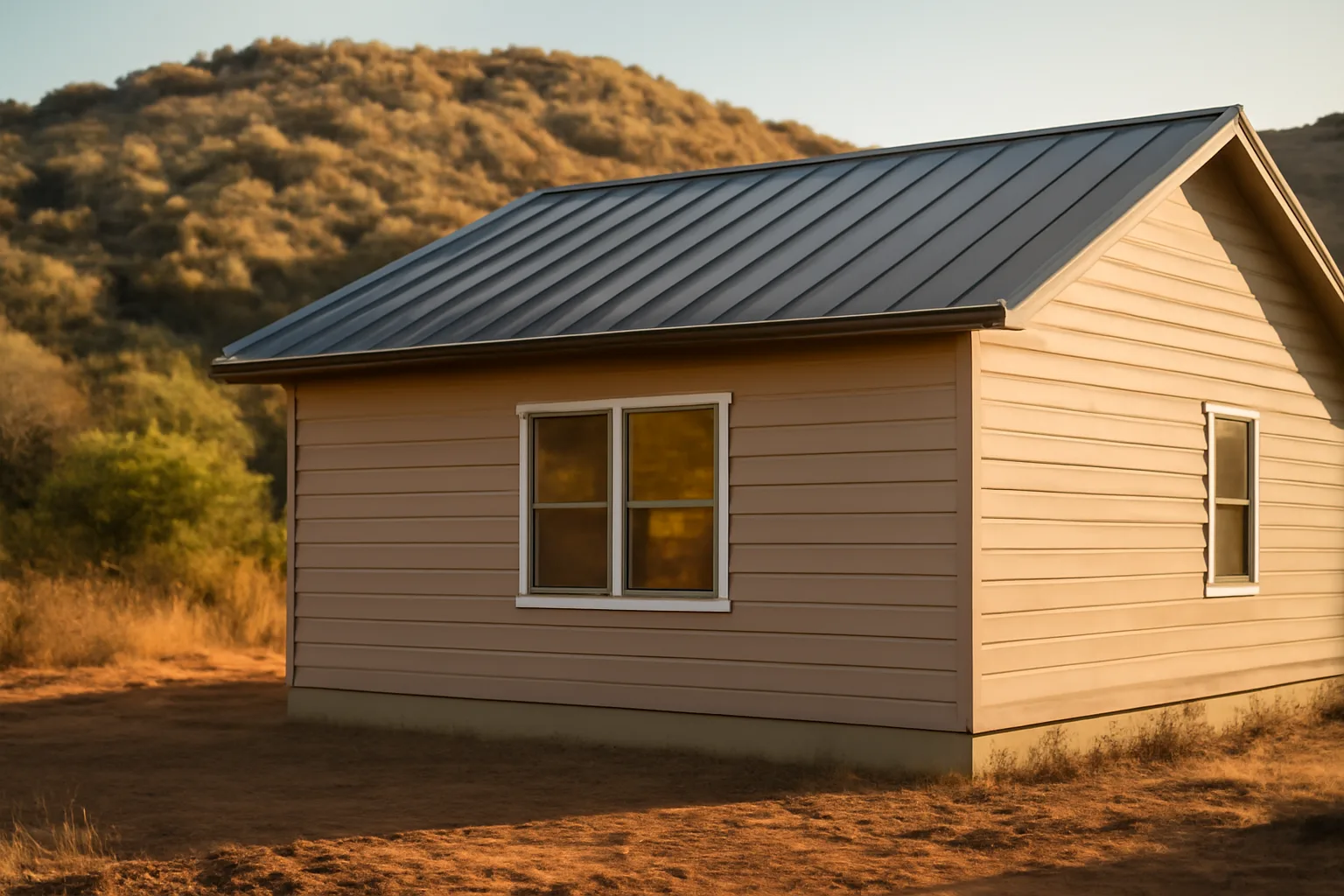
Stucco, fiber cement board (like HardiePlank), and some engineered wood products with SFM 12-7A-1 approval are the standard ignition-resistant siding choices. Vinyl siding is a poor choice in wildfire zones; it softens and melts at fairly low temperatures, and while it may not be the first thing to ignite, it can deform and fall away exposing the wall cavity to flame and embers. Untreated wood siding (board and batten, shiplap, cedar shakes on walls) is the highest-risk common siding material. It's not banned everywhere, but many WUI-adjacent jurisdictions require it to be either non-combustible or ignition-resistant-treated and tested to SFM standards [2]. Stucco (three-coat traditional or one-coat synthetic) is popular in California and Arizona partly because it's cheap and partly because it performs well against embers and radiant heat, since the outer layer is essentially cement. Fiber cement siding costs more upfront than vinyl (roughly $5 to $12 per square foot installed vs $3 to $7 for vinyl) but holds up to both fire and general weather better, which matters for insurance underwriting. A detail people miss: the first 6 inches above grade and any area where siding meets a deck, fence, or attached structure is a common ignition point. Fences that touch the house made of wood are a well-documented pathway for fire to reach siding directly. CAL FIRE's guidance specifically flags attached wood fencing as a hazard that should be interrupted with a non-combustible gate or gap.
Do fire resistant windows really make a difference?
Yes, and it's an underrated upgrade. Single-pane windows with aluminum or vinyl frames are a documented weak point: radiant heat from a wildfire (even without direct flame contact) can crack single-pane glass, and once glass fails, embers and hot gas enter the structure directly. Dual-pane windows with at least one tempered glass pane perform significantly better under radiant heat exposure. Chapter 7A requires either dual-pane windows with a minimum of one tempered pane, or dual-pane assemblies meeting a specific radiant heat test, for new construction in WUI zones [1]. Frame material matters too: vinyl frames can soften before the glass fails, so metal-clad or fiberglass frames are considered a stronger pairing with tempered glass. If you're not replacing windows wholesale, exterior shutters (metal, not vinyl) or interior fire-rated window film are lower-cost partial mitigations, though neither is a substitute for actual tempered dual-pane glass in a full retrofit. Full window replacement for a typical home runs into the tens of thousands of dollars, so for many homeowners this becomes a phased project rather than a same-year fix.
What deck materials survive wildfires?
Composite decking with an SFM 12-7A-4a or equivalent ignition-resistant listing, or non-combustible materials like concrete, pavers, or metal decking, are what fire-hardened homes use. Standard wood decking, especially with gaps that trap embers and debris underneath, is a frequent point of home loss because decks connect directly to the house and often sit right under a door or window. Not all composite decking is created equal for fire purposes; you want a product specifically tested and listed under the State Fire Marshal's Building Materials Listing Program [2], more than marketed generically as low-maintenance or eco-friendly. Ask the manufacturer or your contractor for the SFM listing number. Underneath the deck matters as much as the surface. Enclosing the underside with ignition-resistant material, or keeping it entirely clear of stored wood, cushions, and leaf litter, closes off a common ember trap. This connects directly to the immediate 0-5 foot zone around the home covered in defensible space rules; see fire safe landscaping California next to house for how that zone interacts with attached structures like decks.
When does the California defensible space law go into effect?
California's core defensible space law, Public Resources Code 4291, has actually been in effect since 1965 and was significantly expanded in 2005 to extend the clearance requirement from 30 feet to 100 feet around structures in State Responsibility Areas and designated Very High Fire Hazard Severity Zones [3]. So there isn't a single new "go live" date, it's a long-standing and periodically expanded requirement. What's newer and often confused with it is the "Zone 0" ember-resistant zone rule (the 0-5 foot zone immediately around structures), created by Assembly Bill 3074 (2020), which directs the State Fire Marshal to adopt regulations for ember-resistant zones within 5 feet of buildings [4]. As of this writing, CAL FIRE's Board of Forestry has been working through the regulatory process for Zone 0, and the state has signaled a target implementation window, but the exact enforcement date has shifted more than once. Check the current status directly at the CAL FIRE defensible space page before assuming any specific date, because this is exactly the kind of detail that changes between legislative sessions. What fire-safe standards take effect in 2026, if any, is a genuinely moving target depending on your county and fire district; some jurisdictions adopt State Fire Marshal model code updates on their own timelines. Call your local fire marshal's office or building department and ask directly which version of the code applies to your address this year (guided fill-in: [your county/city building department phone number]).
Why won't people follow the defensible space law in California?
Cost, labor availability, and enforcement gaps are the three real reasons, not ignorance of the law. Clearing 100 feet of vegetation on a sloped, wooded lot can run into the thousands of dollars per acre if you hire it out, and many homeowners, especially older or fixed-income residents, simply defer it. Enforcement is also inconsistent. PRC 4291 gives local fire agencies inspection and citation authority, but staffing for defensible space inspections varies enormously by county, and a lot of compliance historically has been complaint-driven rather than proactive. CAL FIRE's own materials acknowledge defensible space compliance has lagged in parts of the state even after the 2005 expansion to 100 feet [3]. There's also a genuine disagreement in some communities about what "clearing" means. Some homeowners conflate 100 feet of defensible space with clear-cutting all vegetation, which isn't what the law requires (it's about reducing continuous fuel and ladder fuels, not bare dirt), and that misunderstanding creates resistance rooted in aesthetics and property values, not defiance for its own sake. For the specific zone-by-zone breakdown of what's actually required at 0-5, 5-30, and 30-100 feet, see defensible.
How do I prepare for a wildfire as a homeowner?
Ready.gov's wildfire preparedness guidance breaks this into three buckets: harden the home, clear defensible space, and have an evacuation plan with a go-bag ready before fire season starts, not during a red flag warning. Material choices (roof, siding, windows, decking) are the long-lead, expensive part; defensible space clearing is the annual maintenance part; evacuation planning is the part that costs nothing but time. A practical sequence, roughly in order of cost-effectiveness: clear the 0-5 foot zone around the house first (cheapest, highest impact, do it yourself in a weekend), then address roof and vent gaps (moderate cost, high impact), then siding and windows (highest cost, do this as part of any planned renovation rather than all at once if budget is tight). Documentation matters almost as much as the physical work, particularly if you've received a non-renewal notice. Insurers and FAIR Plan underwriters increasingly want photo-dated evidence of defensible space and hardening work, more than a verbal assurance. Keep dated photos of your roof, vents, cleared zones, and any Wildfire Prepared Home or similar certification paperwork in one place before your next renewal or inspection.
How to prevent wildfires and forest fires from starting near your home
Most wildfires in the US are human-caused, not lightning-caused. National Interagency Fire Center data cited by federal agencies attributes roughly 85-90% of wildfires to human activity, including unattended campfires, equipment sparks, debris burning, and downed power lines [5]. Preventing a fire from starting near your property is a separate task from hardening your home against a fire that's already burning miles away. Practical prevention steps that fall on individual homeowners: never park a hot vehicle on dry grass (catalytic converters routinely start roadside fires), keep chainsaws and mowers off dry vegetation during red flag conditions, fully extinguish and stir campfire ash rather than just dousing the top, and maintain any backup generators or equipment so they're not throwing sparks near dry brush. Utility-caused fires from downed lines are a bigger factor in some regions (several major California fires in the 2010s and 2020s were later attributed to utility equipment), and that's largely outside individual homeowner control beyond reporting sagging lines or exposed equipment near your property. How to avoid forest fires more broadly (as opposed to protecting a specific structure) comes down mostly to fuel reduction at a landscape scale, which is why prescribed burns and fuel breaks conducted by CAL FIRE and the US Forest Service matter as much as anything an individual homeowner does. Smokey Bear's long-running message, "Only you can prevent wildfires," from the US Forest Service campaign, is really about human-caused ignition specifically, not fire behavior once one starts [6]. For a deeper look at what defensible space actually interrupts once a fire is already moving toward a structure, see only you can prevent wildfires.
Is Santa Barbara safe from wildfire?
No area in California's coastal or foothill wildland-urban interface, including Santa Barbara, can be called safe from wildfire risk, and the region's own fire history argues against that framing directly. Santa Barbara County has had multiple major, damaging fires in recent decades, including the 1990 Painted Cave Fire, the 2008 Tea Fire, the 2017 Thomas Fire (at the time one of the largest in California history), and the resulting 2018 Montecito debris flow that killed 23 people in the aftermath of the Thomas Fire's burn scar [7]. Much of Santa Barbara's hillside and foothill area sits within a CAL FIRE-designated Very High Fire Hazard Severity Zone, which is the same designation category that triggers the 100-foot defensible space requirement under PRC 4291 [3] [8]. Homes in these zones, whether in Santa Barbara, Malibu, or the Sierra foothills, face the same underlying wind, fuel, and topography risk factors: steep terrain that channels wind and fire uphill, dense chaparral fuel loads, and a long dry season. That doesn't mean every Santa Barbara property is equally exposed. Risk varies block by block based on slope, aspect (south and west-facing slopes generally see more fire activity), proximity to open wildland, and vegetation density. Check your specific parcel's designation using CAL FIRE's Fire Hazard Severity Zone viewer rather than relying on a general area reputation [8].
How much does it cost to build a fire resistant home compared to standard construction?
| Roofing | 3-tab asphalt shingle | Class A architectural shingle, tile, or metal | Often minimal for shingle-to-shingle; $3-8/sq ft more for tile or metal | |
|---|---|---|---|---|
| Siding | Vinyl or untreated wood | Stucco or fiber cement | $2-5/sq ft more | |
| Windows | Single-pane, vinyl frame | Dual-pane, tempered, metal-clad frame | Roughly 20-40% more per window | |
| Decking | Untreated wood | SFM-listed composite or non-combustible | $3-7/sq ft more | |
| Vents | Standard mesh vents | Ember-resistant (flame/ember tested) vents | Marginal, often under $50/vent | These are broad planning ranges pulled from contractor pricing guides and industry cost studies, not fixed quotes, get local bids since labor costs swing regionally and by year. The vent line item deserves attention because it's cheap and often skipped: standard mesh vents let embers straight into attics and crawlspaces, and ember-resistant vents are one of the lowest-cost, highest-value upgrades on this whole list. |
Estimates from building industry and insurance-affiliated research groups generally put the cost premium for wildfire-hardened new construction in the range of 2% to 5% above standard code-minimum construction, when hardening is designed in from the start rather than retrofitted . Retrofitting an existing home material by material costs considerably more per square foot than building it in from day one, because you're tearing out and replacing finished assemblies rather than making a single upfront material choice. | Component | Standard material | Fire-resistant alternative | Rough installed cost premium |
What should I actually prioritize if I got a non-renewal notice?
Start with the cheap, fast, highly visible fixes, because insurers and FAIR Plan underwriters are often responding to a checklist, not a full risk model built from scratch for your house. Ember-resistant vents, gutter guards, clearing the 0-5 foot zone, and moving firewood piles away from the house are all things you can finish in days, not months, and they're exactly the items that show up on wildfire risk inspection forms. Document everything with dated photos before and after. If you're building the case to bring to your next renewal, appeal a non-renewal, or apply to a state FAIR Plan, you want a paper trail: photos of your roof material, vents, cleared defensible space zones, and any receipts for hardening work. We put together a $99 one-time Wildfire Insurance Survival Kit at defensiblehome.com specifically for organizing this kind of documentation into something you can hand to an agent or underwriter; you can start one at /survival-kit-builder. To be clear: neither that kit nor this article negotiates with your insurer, files claims on your behalf, or promises reinstatement or a discount. You gather the documentation and send it yourself. For bigger-ticket items (roof replacement, window replacement, full re-siding), phase them around whatever you're already planning to renovate. Nobody should gut a functional roof purely for insurance optics if it's not near end of life; but if a roof needs replacing anyway in the next few years, doing it Class A now instead of later is close to free in terms of marginal cost.
Frequently asked questions
When does the California defensible space law go into effect?
The core 100-foot defensible space requirement under Public Resources Code 4291 has been law since a 2005 expansion from the original 30-foot standard. There isn't a new start date; it's ongoing. The newer "Zone 0" ember-resistant zone rule from Assembly Bill 3074 (2020) is still moving through CAL FIRE's regulatory process, so check fire.ca.gov for its current enforcement status before assuming a date.
Why won't people follow the defensible space law in California?
Cost and labor mostly, not defiance. Clearing 100 feet on a sloped, wooded lot can cost thousands if hired out, and enforcement has historically been complaint-driven and inconsistent by county. Some resistance also comes from confusing full vegetation clearance with the actual requirement, which targets fuel continuity, not bare dirt.
What fire-safe standards take effect in 2026?
There's no single statewide 2026 deadline confirmed as of this writing; California's Zone 0 ember-resistant zone regulation has been in the rulemaking pipeline for years with shifting timelines. Local fire districts also adopt State Fire Marshal code updates on their own schedules, so call your county building department to confirm what applies to your specific address this year.
How can I prevent wildfires from starting near my home?
Roughly 85-90% of US wildfires are human-caused, per National Interagency Fire Center data. Avoid parking hot vehicles on dry grass, fully extinguish campfires and stir the ash, avoid mowing or using equipment on dry vegetation during red flag warnings, and report sagging or damaged power lines near your property immediately.
How do I prepare for a wildfire if I live in a high-risk zone?
Ready.gov recommends three simultaneous tracks: harden your home's materials (roof, vents, siding, windows), maintain defensible space clearance year-round, and keep an evacuation plan with a packed go-bag ready before fire season starts. Documentation of your hardening work also matters for insurance renewal or appeal purposes.
Is Santa Barbara safe from wildfire?
No. Much of Santa Barbara's foothill area sits in a CAL FIRE Very High Fire Hazard Severity Zone, and the region has a documented history of major fires including the 2017 Thomas Fire and the deadly 2018 Montecito debris flow that followed it. Risk varies by exact parcel, slope, and vegetation, so check your specific address on CAL FIRE's hazard viewer.
What's the single best fire-resistant roofing material?
There isn't one best material, but Class A rated options (asphalt composition shingles, concrete or clay tile, standing-seam metal) all meet California's Chapter 7A requirement for WUI zones. Metal and tile generally outperform shingles on longevity, but cost, roof structure, and local code all factor into which makes sense for your home.
Does vinyl siding work in a wildfire-prone area?
It's not a good choice. Vinyl softens and can melt at fairly low temperatures, potentially exposing the wall cavity behind it to flame and embers even if it doesn't ignite first. Stucco and fiber cement board perform considerably better and are the more common choices in California WUI construction.
Are dual-pane windows really necessary for wildfire protection?
Yes, if you're in a WUI zone. Single-pane glass can crack from radiant heat alone, without direct flame contact, letting embers and hot gas into the home. California's Chapter 7A requires dual-pane windows with at least one tempered pane for new WUI construction, and it's a meaningful upgrade even where not legally required.
What deck material is safest near a wildfire-prone home?
Composite decking listed under the State Fire Marshal's ignition-resistant testing standards (SFM 12-7A-4a or equivalent), or non-combustible options like concrete, pavers, or metal. Standard untreated wood decking, especially with gaps that trap embers underneath, is a common point of home ignition in wildfires.
How much more does it cost to build a fire-resistant home versus standard construction?
Industry cost studies generally put the premium for building wildfire-hardened features in from the start at roughly 2% to 5% above standard code-minimum construction. Retrofitting an existing home material by material costs considerably more per square foot since you're replacing finished assemblies rather than making one upfront choice.
What's the cheapest wildfire hardening upgrade with the biggest impact?
Ember-resistant vents and clearing the 0-5 foot zone immediately around the house. Standard mesh vents let wind-blown embers straight into attics; ember-resistant vents often cost under $50 each to upgrade. Combined with clearing debris and vegetation in the first 5 feet, these are the fastest, cheapest fixes with outsized impact.
How to prevent forest fires from spreading once one starts near a community?
At the individual level, defensible space clearing and fire-resistant building materials interrupt fire spread from wildland into structures. At the landscape level, agencies use fuel breaks, prescribed burns, and vegetation management to slow spread between wildland areas; that work happens through CAL FIRE and the US Forest Service, largely outside individual homeowner control.
Sources
- California Building Standards Commission, California Building Code Chapter 7A: Chapter 7A requires Class A roofing and dual-pane tempered windows for new construction in Wildland-Urban Interface Fire Areas
- California State Fire Marshal, Building Materials Listing Program (SFM 12-7A standards): SFM 12-7A-1 through 12-7A-5 are the WUI product ignition-resistance testing standards for siding, decking, and other building materials
- California Public Resources Code Section 4291: Defensible space clearance requirement was expanded from 30 feet to 100 feet around structures in State Responsibility Areas
- California Assembly Bill 3074 (2020): AB 3074 directs the State Fire Marshal to adopt ember-resistant zone regulations within 5 feet of structures
- National Interagency Fire Center, statistics: The large majority of US wildfires are human-caused rather than lightning-caused
- USDA Forest Service, Smokey Bear campaign history: The Smokey Bear 'Only you can prevent wildfires' campaign targets human-caused ignition prevention
- CAL FIRE, Fire Hazard Severity Zone Viewer: Fire Hazard Severity Zone designations, including Very High zones affecting Santa Barbara foothill areas, determine defensible space requirements
- Insurance Institute for Business & Home Safety, Wildfire Prepared Home standard: Cost premium estimates for building wildfire-hardened features into new construction versus standard construction