Last updated 2026-07-25
TL;DR
"Gridwrap" refers to fire-resistant wrap products applied to structures or vents to slow ember and radiant heat intrusion during wildfire. They are a supplemental tool, not a substitute for defensible space clearing, ember-resistant vents, or Zone 0 compliance under California's 2026 rules. Insurers rarely credit wraps alone for coverage decisions.
What is gridwrap wildfire mitigation, exactly?
"Gridwrap" is a term that's shown up in wildfire-prep forums and some product marketing to describe fire-resistant fabric or foil-backed wrap applied over a structure, deck, propane tank, or vent opening before a fire front arrives. The idea borrows from wildland firefighting, where crews sometimes wrap historic cabins or high-value structures in aluminized fire shelters (structure wrap) as a last-resort protective measure. There is no single certified "gridwrap" product recognized by CAL FIRE or the National Fire Protection Association. If you're seeing it marketed as a home product, treat it the way you'd treat any fire-retardant gel or wrap: as a supplemental, temporary measure, not a substitute for permanent hardening. The actual structure-wrap material used by federal wildland fire crews is a fiberglass fabric with an aluminized coating, deployed by trained personnel, usually on outbuildings, cabins, or historic structures in a fire's path, and it is not designed for homeowner self-application on an occupied house [1]. Home insurers underwriting wildfire risk are looking at defensible space, roofing material, vent screening, and ember-resistant construction, not wrap products, when they decide whether to renew a policy [2]. If your real goal is reducing wildfire risk to your home and keeping or regaining insurability, the money and time are better spent on defensible space zones, hardened vents, and documentation than on wrap products of uncertain provenance.
When does the California defensible space law go into effect?
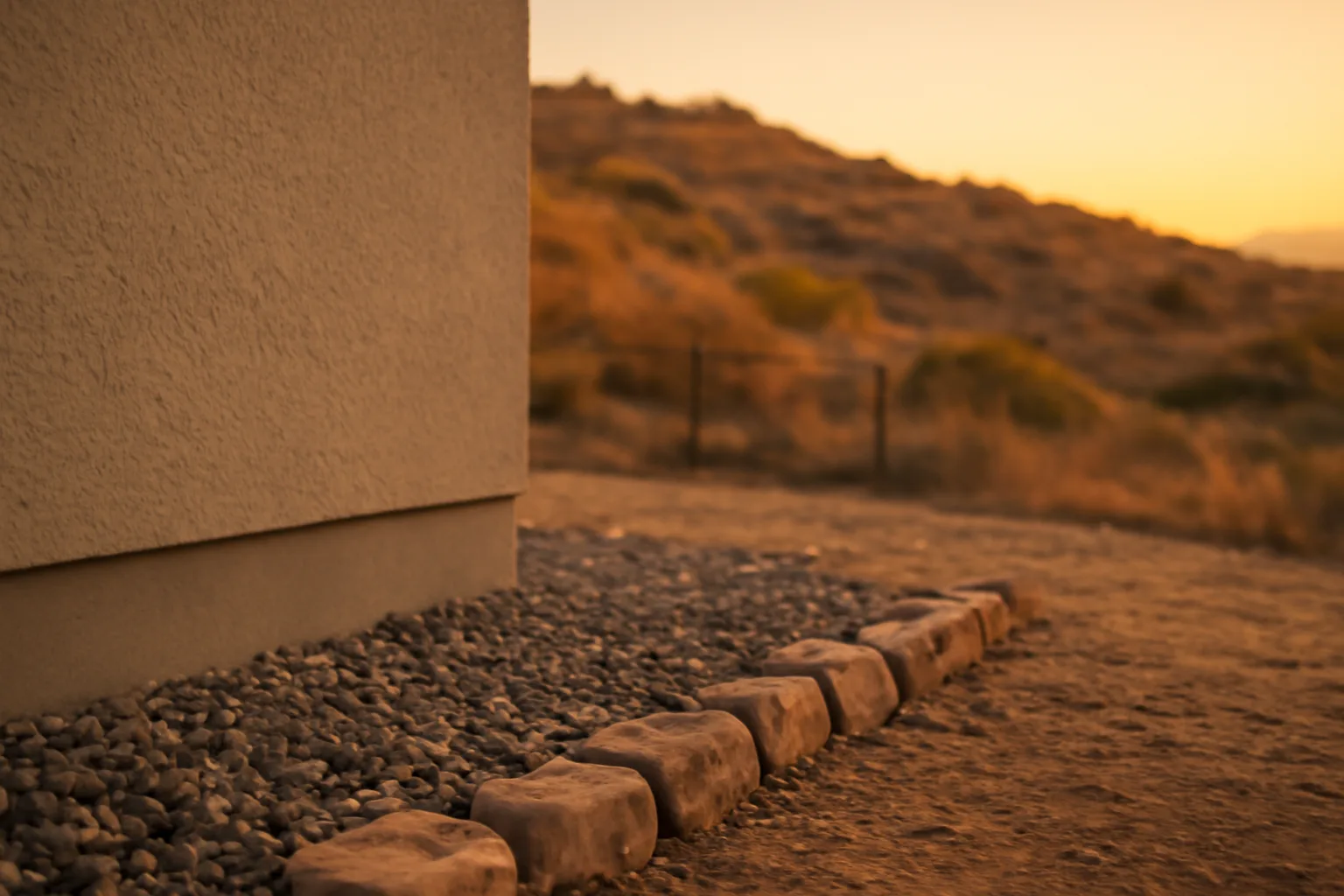
California's existing 100-foot defensible space requirement under Public Resources Code 4291 has been in effect for years and applies to homes in State Responsibility Areas and some Local Responsibility Areas with a Very High Fire Hazard Severity Zone designation. That law requires vegetation clearance in two zones: 0 to 30 feet (lean, clean, and green) and 30 to 100 feet (reduced fuel). The new piece homeowners are asking about is the Zone 0 ember-resistant zone rule. California Assembly Bill 3074 (2020) directed the Board of Forestry and Fire Protection to adopt regulations for a 0 to 5 foot ember-resistant zone immediately around structures in high fire hazard zones. As of early 2025, the Board of Forestry had not finalized the Zone 0 regulation text, and CAL FIRE's own guidance says the ember-resistant zone requirement "is not yet in effect" pending final rulemaking, with the state's stated target for adoption and enforcement widely discussed as 2025 to 2026 [3]. Because the exact effective date depends on final Board of Forestry rulemaking and your county's adoption timeline, check your local fire district's current defensible space bulletin before assuming Zone 0 is enforceable in your area right now. [Fill in: your county/fire district's defensible space enforcement date] _______________ Until Zone 0 is formally in force where you live, the existing 4291 100-foot rule is what inspectors are citing. Get ahead of it anyway: gravel, pavers, or bare mineral soil in the 5 feet around your foundation, no combustible mulch, no wood fencing attached directly to the house, are all things you can do now that will satisfy Zone 0 once it's law.
What fire-safe home rules take effect in 2026?
Several California wildfire-related building and disclosure rules are converging around 2025-2026, though exact effective dates depend on final agency rulemaking. The Zone 0 ember-resistant zone regulation under AB 3074 is the one most homeowners ask about, and CAL FIRE and the Board of Forestry have discussed a 2025-2026 adoption and phase-in window, but as of this writing the regulation had not been finalized into enforceable code text [3]. Separately, California's WUI (Wildland-Urban Interface) building code under Chapter 7A of the California Building Code already requires ember-resistant vents, fire-resistant roofing, and non-combustible siding details for new construction and qualifying remodels in high fire hazard zones, and that code is periodically updated on the standard triennial code cycle [4]. If you're outside California, check your own state fire marshal. Oregon's Senate Bill 762 created a statewide wildfire risk map and defensible space code framework, though the original map was withdrawn in 2022 after public pushback and the state redid the process; homeowners in Oregon should check the Oregon Department of Forestry's current wildfire risk map status directly [5]. Colorado and Arizona don't have a single statewide defensible space mandate comparable to California's; rules are set more at the county or fire district level. [Fill in: your state fire marshal's current wildfire building code page and effective date]_______________
Why won't people follow the defensible space law in California?
Cost, confusion, and enforcement gaps are the three real reasons, and none of them are secret. CAL FIRE inspectors doing defensible space compliance checks routinely find noncompliance rates that vary widely by county, and enforcement historically leaned on education and re-inspection rather than citations, which meant a lot of homeowners simply never got a hard deadline that stuck. Cost is real. Removing mature trees, regrading slopes, and hauling brush isn't cheap, and low-income and elderly homeowners in wildland areas are disproportionately represented among noncompliant properties, according to CAL FIRE's own defensible space outreach materials, which specifically flag "limited financial resources" as a barrier local assistance programs try to address. Confusion matters too. Homeowners often don't know which zone rules apply to their specific parcel, whether they're in a State Responsibility Area or Local Responsibility Area, or what the actual 100-foot measurement means on a sloped lot (the defensible space distance is measured on the ground, not as a flat radius, so slope steepness effectively shrinks or expands the real clearance needed). And there's a trust problem: some homeowners have watched neighbors clear vegetation only to still lose a home, and conclude compliance doesn't change outcomes, which isn't what the data shows but is an understandable reaction to a traumatic loss. Finally, some homeowners are simply prioritizing wrong. They'll spend money on a wrap product or a single "miracle" fireproofing spray before they've done the 100-foot vegetation clearance that CAL FIRE's own research finds is the highest-leverage single action a homeowner can take.
How to prevent wildfires (what actually reduces ignition risk)
Preventing a wildfire from starting is a different problem than preventing your house from burning once one is nearby, and both matter. On the ignition-prevention side, the numbers are stark: roughly 85 percent of wildfires in the United States are human-caused, according to the National Interagency Fire Center's long-running analysis of wildfire causes, with the remainder from lightning. Human-caused ignitions break down into a predictable list: unattended campfires, debris burning, equipment sparks (mowers, chainsaws, off-road vehicles), downed power lines, arson, and fireworks. Ready.gov's wildfire preparedness guidance specifically calls out keeping vehicles and equipment away from dry grass, avoiding outdoor burning on windy days, and properly extinguishing (more than walking away from) campfires as the practical steps individuals control [6]. At the home level, prevention blends into hardening: clearing dead vegetation, keeping gutters free of debris, and maintaining a mowed perimeter reduce the odds that a stray ember or spark near your property becomes a structure fire. None of this is complicated. Most of it is maintenance, done on a schedule, not a one-time project.
How to prevent forest fires and how to avoid forest fires
These two phrasings ask the same question, and the answer for individuals is mostly about controlling the human ignition sources listed above, plus supporting the broader fuel-reduction work that public land agencies do. You personally can't stop lightning strikes, which cause a minority of fires but tend to ignite in remote, hard-to-reach terrain that burns bigger before crews arrive. What you can control: never leave a campfire unattended and always drown, stir, and feel it cold before leaving (this is Smokey Bear's actual longstanding guidance from the USDA Forest Service and Ad Council campaign, not a paraphrase); avoid parking or idling vehicles over dry grass where a hot catalytic converter can ignite vegetation; check local burn bans before any debris burning, since most Western states suspend agricultural and yard debris burning during red flag conditions; and report unattended fires or suspicious smoke immediately rather than assuming someone else has called it in. On public land, prescribed burns and mechanical fuel thinning done by the Forest Service and state agencies are the large-scale version of "defensible space," reducing the fuel load so that when a fire does start, it burns less intensely and is easier to control. You can support this indirectly by not opposing prescribed burn projects near your community and by learning to distinguish planned smoke from wildfire smoke using your state's fire agency alert system.
How to prepare for a wildfire (and how to prepare for forest fires)
Preparing for a wildfire has two tracks: get your home ready to survive with minimal intervention, and get your family ready to leave fast if you have to. Ready.gov's wildfire preparedness checklist recommends creating and maintaining defensible space, hardening your home with ember-resistant vents and Class A roofing, and building a go-bag with essential documents, medications, and supplies for at least three days [6]. Here's a practical prep sequence, roughly in order of cost-effectiveness: 1. Clear the 0-5 foot zone around your foundation of anything combustible (mulch, stored firewood, dry plants). 2. Clean gutters and roof valleys of leaf litter and pine needles, ember traps that ignite roofs during ember showers well before flames arrive. 3. Screen or replace vents with 1/8 inch metal mesh ember-resistant vents. 4. Complete the 30-foot and 100-foot defensible space zones per CAL FIRE's zone guidance. 5. Build a go-bag and a documented home inventory (photos, receipts, serial numbers) before you need it, not during evacuation. 6. Know two evacuation routes out of your neighborhood, since fire can block the primary route. This is also where insurance documentation earns its keep. Insurers and FAIR Plan adjusters, when they do engage, respond better to homeowners who can show dated, photographed evidence of defensible space work and home hardening rather than verbal assurances. That's the specific gap the $99 Wildfire Insurance Survival Kit is built to close: a structured way to document your defensible space zones, hardening upgrades, and home inventory before you ever need to use it. To be clear, we don't file claims on your behalf or promise reinstatement; you send your own documentation, we just help you build it right the first time.
Is Santa Barbara safe from fire?
No California coastal community with wildland vegetation nearby is "safe" from fire risk, and Santa Barbara County has direct experience with this: the 2017 Thomas Fire burned over 281,000 acres across Ventura and Santa Barbara counties and was, at the time, the largest wildfire in modern California history, followed within weeks by the Montecito debris flow that killed 23 people when rain hit the fire-scarred hillsides [7]. Santa Barbara sits against steep, chaparral-covered mountains with a Mediterranean climate: dry summers, Santa Ana/sundowner wind events, and dense native brush that naturally accumulates fuel over decades between burns. That combination is part of why CAL FIRE's Fire Hazard Severity Zone maps rate large portions of the Santa Barbara foothills and South Coast as Very High, the top classification [8]. That doesn't mean every neighborhood in the city is equally exposed. Flatter, more urbanized parts of Santa Barbara proper carry lower direct wildfire risk than homes in the foothills or in unincorporated areas like Montecito, Mission Canyon, or the San Marcos foothills. If you're evaluating a specific property, check its designation on CAL FIRE's Fire Hazard Severity Zone viewer and ask your insurer directly what hazard zone data they're underwriting against, since that's usually the actual driver of non-renewal notices in the area, not a general sense of the county's risk.
How can we prevent forest fires, as a community?
Community-level prevention works differently than individual prevention, because it's about coordinated fuel reduction, enforcement, and shared infrastructure rather than any one household's actions. Firewise USA, the National Fire Protection Association's recognition program, organizes neighborhoods to do joint defensible space assessments, shared chipper days, and coordinated evacuation planning, and NFPA reports thousands of recognized Firewise sites across the country . At the policy level, communities reduce risk through undergrounding or hardening power lines (a leading ignition source in several major California fires), enforcing defensible space compliance uniformly rather than letting a few noncompliant parcels create a fuel bridge to compliant neighbors, and funding prescribed burns and mechanical thinning on adjacent public land. The uncomfortable truth is that one property's defensible space work can be undone by a neighbor's overgrown lot 50 feet away, since embers and radiant heat don't respect property lines. That's the practical argument for joining or starting a Firewise USA group in your area rather than treating hardening as a purely individual project. For the mechanics of what "defensible space" actually requires zone by zone, see our breakdown of defensible space requirements, and for the landscaping choices that hold up during ember exposure, see fire safe landscaping next to your house.
Where gridwrap-style products fit (and where they don't)
If a wrap or fire-resistant fabric product is marketed to you as a way to protect your whole house, be skeptical of any claim that isn't backed by an independent test standard like ASTM E84 (surface burning characteristics) or an actual wildfire exposure test from a recognized lab. The structure wraps federal fire crews use are deployed by trained personnel on specific structures under specific conditions, not sold as a homeowner DIY kit for an occupied residence [1]. Where fire-resistant wrap-style products can make sense: temporarily protecting a wood fence gate, a propane tank enclosure, or an exposed wood deck support during an active fire watch, if the product has documented fire test data. They are not a substitute for the fundamentals: Class A roofing, ember-resistant vents, non-combustible siding in the first few feet above grade, and the defensible space zones required under Public Resources Code 4291. Insurers underwriting wildfire risk in California, per guidance from the California Department of Insurance's Safer from Wildfires regulation, give homeowners premium credit consideration for specific, documented mitigation actions like Zone 0 compliance, ember-resistant vents, and community Firewise recognition, not for wrap products [2]. If you're trying to influence a non-renewal decision or qualify for the FAIR Plan's Safer from Wildfires discount program, put your money into the items that regulation actually recognizes. For a broader look at hardening priorities when your home has already burned or been damaged and you're rebuilding, see our guides on house fire recovery and fire at a house response basics.
Do fire-resistant wraps affect your insurance or FAIR Plan status?
Generally, no, not directly, and you shouldn't expect a wrap product purchase to move the needle on a non-renewal decision. California's Safer from Wildfires regulation (10 CCR 2644.9) requires insurers to give mitigation credit for a defined list of actions: defensible space zones, Zone 0 compliance where applicable, ember-resistant vents, Class A roof assemblies, and Firewise USA community recognition among them [2]. Wrap products aren't on that list. That means the actual return on investment for your dollar is higher on things insurers are required to recognize. If you're facing a non-renewal letter, your first move should be pulling your property's current Fire Hazard Severity Zone designation from CAL FIRE, then documenting every mitigation item on the Safer from Wildfires list that you've already completed or can complete within 60 to 90 days, with dated photos. For structures outside California, check your own state's insurance department; Oregon, Colorado, and Arizona each have different (and generally less prescriptive) wildfire mitigation credit frameworks, and some rely more on individual insurer discretion than state-mandated credit lists. [Fill in: your state insurance department's wildfire mitigation discount program page]_______________
Frequently asked questions
When does the California defensible space law go into effect?
The core 100-foot defensible space law (Public Resources Code 4291) has been in effect for years already. The newer Zone 0 ember-resistant zone rule under AB 3074 was still in Board of Forestry rulemaking as of early 2025, with 2025-2026 discussed as the target adoption window; check your county fire district for local enforcement dates.
Why won't people follow the defensible space law in California?
Cost, confusion about which zone rules apply to their parcel, and inconsistent enforcement are the main reasons, according to CAL FIRE's own outreach materials, which specifically cite limited financial resources as a barrier for many noncompliant homeowners, especially elderly and low-income residents in wildland areas.
What fire-safe home rules take effect in 2026?
California's Zone 0 ember-resistant zone regulation under AB 3074 is the main one under discussion for 2025-2026 adoption, though it wasn't finalized as of early 2025. Chapter 7A of the California Building Code already requires ember-resistant vents and fire-resistant materials for new construction in high hazard zones on its regular update cycle.
Is Santa Barbara safe from fire?
No area of Santa Barbara County with nearby wildland vegetation is fully safe from fire risk. The 2017 Thomas Fire burned over 281,000 acres in the region, and CAL FIRE rates large portions of the Santa Barbara foothills as Very High Fire Hazard Severity Zones. Risk varies significantly by specific neighborhood.
How can we prevent forest fires as individuals?
Never leave campfires unattended, avoid parking hot vehicles over dry grass, check local burn bans before debris burning, and report unattended fires immediately. About 85 percent of U.S. wildfires are human-caused, per the National Interagency Fire Center, so individual ignition control matters more than most people assume.
What is gridwrap wildfire mitigation and does it actually work?
There's no NFPA-certified "gridwrap" product category. The term likely borrows from aluminized fire shelter wraps wildland crews use on structures, deployed by trained personnel. Homeowner-marketed wrap products aren't a substitute for defensible space, ember-resistant vents, and Class A roofing, and insurers don't credit them.
How do I prepare my home for a wildfire evacuation?
Build a go-bag with medications, documents, and three days of supplies, know two evacuation routes, and document your home's condition and mitigation work with dated photos before you need it. Ready.gov's wildfire checklist covers the full preparedness sequence for both the home and the household.
What's the difference between Zone 0, Zone 1, and Zone 2 defensible space?
Zone 0 is 0-5 feet from structures (ember-resistant, still in rulemaking in California). Zone 1 is 0-30 feet (lean, clean, and green, remove dead vegetation). Zone 2 is 30-100 feet (reduced fuel load, spaced vegetation). All three come from CAL FIRE's defensible space framework under PRC 4291.
Will removing brush around my house guarantee it survives a wildfire?
No mitigation guarantees survival; wildfire behavior depends on wind, fuel, terrain, and ember exposure from beyond your control. Defensible space and home hardening substantially improve the odds, which is why CAL FIRE and insurers prioritize them, but no single action or product makes a home fireproof.
Does my county enforce the same defensible space rules as CAL FIRE's statewide standard?
Enforcement and specific inspection timelines vary by fire district and county even though the underlying state law (PRC 4291) is statewide. Some counties add stricter local ordinances. Check your local fire department or fire safe council for the specific defensible space bulletin and inspection schedule where you live.
Can fire-resistant wraps help protect a propane tank or deck during a wildfire?
Fire-resistant wrap products with documented ASTM fire test data can offer temporary protection for specific exposed elements like a propane tank enclosure or deck support during an active fire watch. They aren't a substitute for permanent hardening and shouldn't be relied on as a whole-house protection strategy.
How much does defensible space clearing typically cost?
Costs vary widely by parcel size, slope, and vegetation density, and there's no single reliable national average; get quotes from a licensed local contractor or your county fire safe council, which sometimes offers cost-share programs for qualifying low-income or elderly homeowners.
Sources
- USDA Forest Service, Fire Shelter and structure wrap deployment guidance: Aluminized structure wrap is deployed by trained wildland fire personnel on structures, not a homeowner DIY product
- California Department of Insurance, Safer from Wildfires regulation (10 CCR 2644.9): Insurers must give mitigation credit for specific documented actions like defensible space zones, ember-resistant vents, and Class A roofing
- CAL FIRE / Board of Forestry, Zone 0 ember-resistant zone rulemaking status: Zone 0 ember-resistant zone regulation under AB 3074 was still in rulemaking as of early 2025
- California Building Standards Commission, California Building Code Chapter 7A: Chapter 7A requires WUI fire-resistant construction standards for qualifying structures in high hazard zones
- National Interagency Fire Center, Statistics: Roughly 85 percent of wildfires in the U.S. are human-caused
- CAL FIRE, Thomas Fire incident archive: The 2017 Thomas Fire burned over 281,000 acres and was the largest California wildfire on record at the time
- CAL FIRE, Fire Hazard Severity Zone Viewer: CAL FIRE rates portions of Santa Barbara County foothills as Very High Fire Hazard Severity Zone
- National Fire Protection Association, Firewise USA program: Firewise USA organizes community-level defensible space and mitigation recognition across thousands of U.S. sites