Last updated 2026-07-25
TL;DR
Home Depot sells rugs labeled "flame resistant" or "fire retardant," mostly wool or treated synthetic blends that resist small flames and cigarette embers indoors. They are not rated for wildfire ember storms, are not part of any building code ember-resistance standard, and won't affect your insurance non-renewal risk. Real ember protection comes from vent screens, roof material, and a cleared zone around the house.
Do fire resistant rugs from Home Depot actually stop wildfire embers?
No. A fire resistant rug sold at Home Depot is tested against small ignition sources like a dropped cigarette or a candle tip, not the kind of ember storm that arrives ahead of a wildfire front. Those rugs (wool, or synthetic blends treated with flame retardant chemicals) are built to slow a localized flame long enough for someone to notice and put it out. That's a real, useful thing indoors. It has nothing to do with what happens when a house is hit by wind-driven embers during a wildfire. Embers that ignite homes in wildfires typically enter through vents, gaps under eaves, gutters full of debris, or land on flammable material stacked against exterior walls, not through the living room floor. The research from the Insurance Institute for Business & Home Safety and CAL FIRE on home ignition during wildfires consistently points to the same weak points: attic and foundation vents, roof-wall intersections, decks, and anything flammable within 5 feet of the structure [1]. A rug in your entryway is irrelevant to that chain of events. If you're buying a fire resistant rug because a neighbor lost their home or because your insurer sent a non-renewal notice, it's not wasted money exactly, it's just aimed at the wrong problem. Treat it as ordinary home safety (kids, candles, fireplaces) and look elsewhere for wildfire hardening. Worth saying plainly: no rug, mat, or floor covering sold at any retail hardware store carries a wildfire ember rating. There is no such consumer product category yet.
What does "fire resistant" or "flame retardant" actually mean on a rug label?
"Fire resistant" and "flame retardant" are not the same claim, and neither one means fireproof. Flame retardant usually means a chemical treatment (often boron or phosphorus-based compounds) has been applied to slow ignition and flame spread. Fire resistant sometimes refers to naturally flame-resistant fibers like wool, which chars rather than melts and self-extinguishes more readily than synthetic fibers such as polypropylene or nylon. The relevant consumer standard most rugs are tested against is 16 CFR Part 1630 (the Standard for the Surface Flammability of Carpets and Rugs), a federal flammability test administered under the Consumer Product Safety Commission [2]. That test drops a burning methenamine tablet onto the rug surface and measures how far the char spreads. Passing means the rug won't act as a fuse for a small accidental flame across your floor. It says nothing about radiant heat exposure, ember showers, or sustained wildfire-level fire conditions. Wool rugs generally perform better in this test than synthetic ones because wool has a higher ignition temperature and doesn't melt into a flaming liquid the way some synthetics can. That's a genuine reason to pick wool for a home with a wood stove or a lot of candles. It is not a wildfire mitigation decision. Bottom line: read the label as "safer around a dropped match," not "safer in a wildfire."
What actually prevents wildfires from destroying homes?
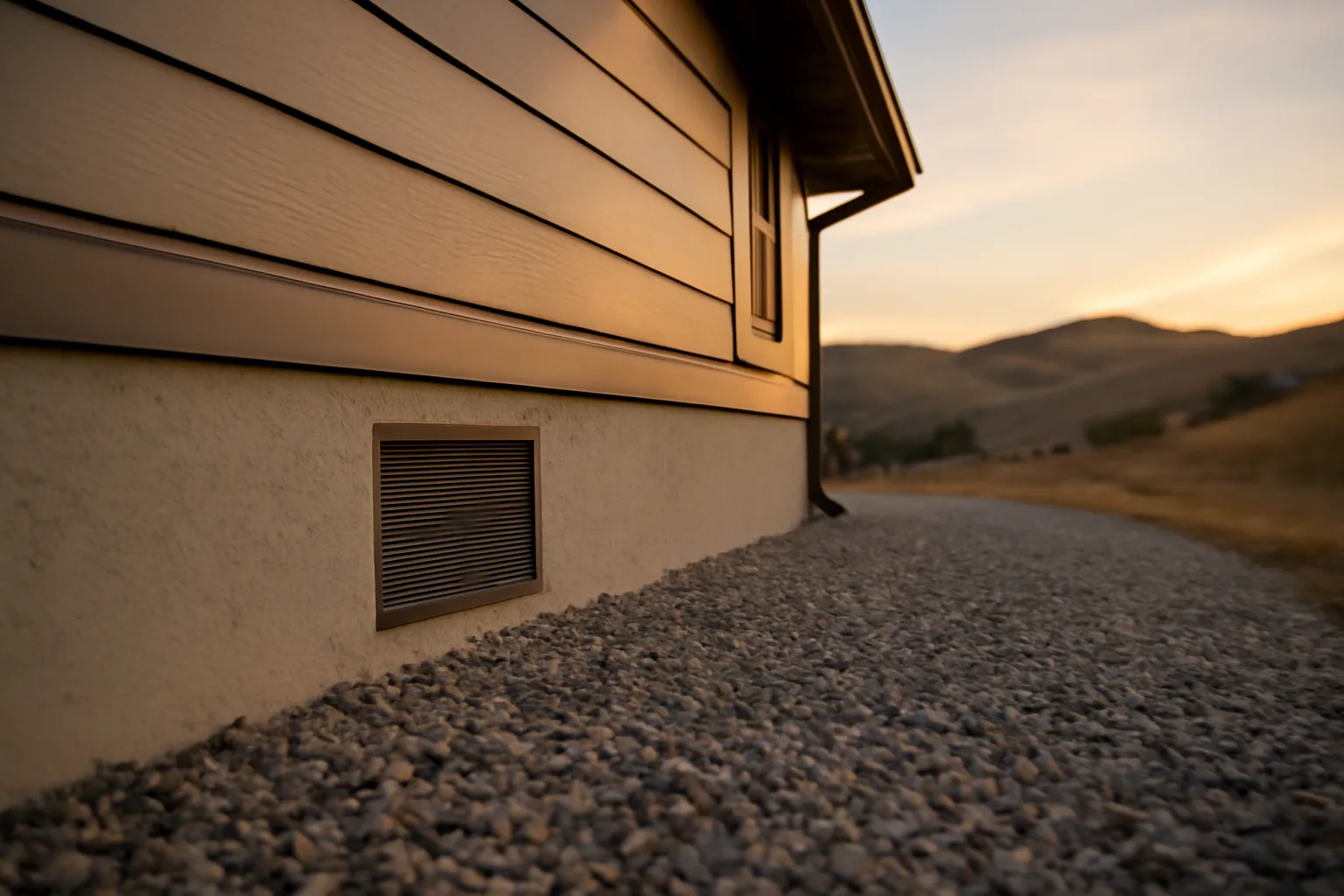
Home destruction in wildfires is mostly an ember problem, not a wall-of-flame problem. CAL FIRE's Wildland Urban Interface research and repeated post-fire assessments (Camp Fire, Marshall Fire, and others) found that most homes ignite from embers landing on or entering the structure, sometimes minutes to hours after the main fire front has passed [3]. The things that actually change outcomes: Class A fire-rated roofing, ember-resistant (flame and ember rated) vents, noncombustible material in the first 5 feet around the foundation (CAL FIRE calls this "Zone 0"), enclosed eaves, dual-pane or tempered windows, and gutters kept clear of leaf litter. California's SB 63 and the State Fire Marshal's ongoing Zone 0 regulation work are built entirely around this ember-intrusion research. A cleared, well-maintained defensible space matters just as much as the structure itself. CAL FIRE's defensible space standard requires two zones extending out to 100 feet from a home where feasible: Zone 1 (0-30 feet, lean, clean, and green) and Zone 2 (30-100 feet, reduced fuel volume). If you haven't mapped your property against those zones, our guide on fire safe landscaping in California next to your house walks through plant spacing and clearance distances by zone. None of this involves indoor rugs. If you're trying to prevent a wildfire from destroying your house, the rug budget is better spent on ember-resistant vent screens (roughly $15 to $40 per vent) or a day of gutter clearing.
How do you prepare a home for a wildfire, step by step?
Preparing for a wildfire happens in three phases: harden the structure, clear the defensible space, and get an evacuation and documentation plan ready before you need it. Structure hardening, roughly in order of cost-effectiveness: seal or screen attic and foundation vents with 1/8-inch noncombustible mesh, clear gutters and roof valleys of debris, remove anything flammable within 5 feet of the foundation (mulch, wood piles, dry plants), and check that your roof is Class A rated. Ready.gov's wildfire preparedness page recommends keeping roofs and gutters free of leaves and debris and installing ember-resistant vents as part of basic home preparation [4]. Defensible space, by zone: Zone 0 (0-5 feet) should be essentially noncombustible, gravel or pavers, no bark mulch, no wood fencing attached directly to the house. Zone 1 (5-30 feet) calls for well-spaced, well-watered vegetation with dead material removed. Zone 2 (30-100 feet) allows more vegetation but requires reduced density and mowed dry grass. Evacuation and documentation: know two routes out, keep a go-bag, and photograph the exterior of your home, your defensible space work, and any hardening upgrades. Insurers increasingly ask for this kind of documentation when reviewing a policy for renewal, and having dated photos and receipts on hand saves real time if you're ever contesting a non-renewal decision or reapplying for coverage. This is one place where a $99 Wildfire Insurance Survival Kit can help, it's built specifically to organize that photo and document trail so you're not scrambling when a renewal letter arrives. To be clear, it doesn't file claims for you; it just helps you build your own file. If you've already gotten a non-renewal or inspection letter, start with the property, not the paperwork. Insurers are increasingly using aerial and satellite imagery to check defensible space compliance before renewal decisions, so the physical work has to happen first.
When does the California defensible space law go into effect?
California's core defensible space requirement, Public Resources Code 4291, has been in effect since it was substantially expanded in 2005, requiring 100 feet of defensible space clearance around structures in State Responsibility Areas and designated Wildland-Urban Interface areas [5]. That part isn't new. What's newer, and still rolling out, is the Zone 0 ember-resistant zone rule. Senate Bill 63, signed in 2024, directs the Board of Forestry and Fire Protection to adopt regulations requiring an ember-resistant zone within 5 feet of structures in high and very high fire severity zones. As of this writing, the Board of Forestry has been working through the rulemaking process, and the enforceable Zone 0 standard has been delayed past its original informal 2023 target; check the Board of Forestry and Fire Protection's official rulemaking page for the current status in your area, because timelines have moved more than once. So there are really two answers: the 100-foot defensible space law has been enforceable for two decades, and the stricter 5-foot ember-resistant zone rule is still being finalized. Don't wait for Zone 0 to become mandatory to do the work. Insurers are already scoring properties on ember-zone conditions during inspections, law or no law.
What fire safe home rules take effect in 2026?
There's no single nationwide "2026 fire code" everyone should expect. What's real: California's Zone 0 ember-resistant zone regulation, once finalized by the Board of Forestry and Fire Protection under SB 63, is expected to apply to new construction first and existing homes in high and very high fire severity zones on a phased timeline; the Board's rulemaking documents are the authoritative source for exact effective dates, and they have shifted before. Separately, several fire districts and counties (parts of Los Angeles County, Santa Barbara County, and various Colorado and Oregon jurisdictions) have been updating local wildfire codes on their own schedules, often ahead of state mandates. Mitigation rules genuinely vary by fire district: [enter your county/fire district here] to check the current local defensible space ordinance, because a state law being "in effect" doesn't always mean your specific fire district enforces the same distances or deadlines. The practical move if you're worried about a 2026 deadline: check your state fire marshal's office and your local fire district's building department directly rather than relying on a single national rule. Oregon's Department of Forestry and the Colorado Division of Fire Prevention and Control both maintain their own wildfire-hazard mapping and defensible space guidance pages that are updated independently of California's timeline [6].
Why won't people follow the defensible space law in California?
A mix of cost, labor shortage, and enforcement gaps. Clearing 100 feet of defensible space on a sloped, wooded lot can run from a few hundred dollars in a small suburban yard to several thousand dollars for larger rural parcels, and it has to be redone every year as vegetation regrows. For older or fixed-income homeowners, that recurring cost is a real barrier, not laziness. Enforcement is also inconsistent. Public Resources Code 4291 gives local fire authorities and CAL FIRE the ability to inspect and require compliance, with fines possible for noncompliance, but the actual inspection rate varies enormously by county and fire district, and many rural parcels simply never get visited in a given year [5]. Without a real chance of inspection, some homeowners deprioritize the work, especially when they're weighing it against other costs. There's also a knowledge gap. Some homeowners genuinely don't know their zone requirements change at 30 feet and again at 100 feet, or they assume clearing a strip near the house is enough. CAL FIRE's own materials note that defensible space "is not a fire-free zone," it's meant to slow and reduce fire intensity, not eliminate risk entirely, and that distinction gets lost in casual conversation. Finally, some homeowners resist because they value the trees and privacy screening vegetation provides, and clearing feels like giving up something they moved to that area for in the first place. That's an understandable trade-off, but insurers increasingly don't see it that way, and neither does the fire behavior data.
How can homeowners help prevent wildfires from starting in the first place?
Most wildfires are human-caused, so individual behavior actually matters here in a way it doesn't for a lot of climate-scale problems. CAL FIRE and the U.S. Forest Service's long-running Smokey Bear campaign both point to the same behavioral levers: properly extinguishing campfires, not parking hot vehicles on dry grass, maintaining chains and equipment that can spark on trailers, and following local burn permit rules during red flag warning days. At the property level: keep chainsaws, mowers, and grinders off dry vegetation during fire season, especially midday when temperatures peak; store gasoline and propane away from dry brush; and don't discard cigarettes from a vehicle window, still one of the most common documented ignition sources along roadsides. During red flag warnings (issued by the National Weather Service when wind, low humidity, and dry fuel combine into critical fire weather), avoid any outdoor spark-producing activity entirely. Many counties legally suspend outdoor burning and equipment use during these periods, and violating a local burn ban can carry real fines on top of any fire liability. If you see unattended fire or smoke, call it in immediately rather than assuming someone else has. Delayed reporting is a recurring theme in post-fire investigations of how small ignitions became large incidents.
Is Santa Barbara safe from fire risk?
No coastal California community, Santa Barbara included, is meaningfully safe from wildfire risk, and the area has a long documented fire history to prove it. The Thomas Fire (2017) burned over 280,000 acres and directly contributed to the Montecito debris flow that killed 23 people in January 2018, one of the deadliest post-fire disasters in California history . The Jesusita Fire (2009) and the Tea Fire (2008) both burned through Santa Barbara's foothill neighborhoods. Santa Barbara County has significant areas mapped as Very High Fire Hazard Severity Zones by CAL FIRE, particularly in the foothill and wildland-urban interface communities along the base of the Santa Ynez Mountains . Homeowners in those zones face the same defensible space obligations under Public Resources Code 4291 as anyone else in a State Responsibility Area, and increasingly the same insurance non-renewal pressure. If you live in or near Santa Barbara's foothill communities (Montecito, Mission Canyon, the Riviera, upper State Street areas), check your specific parcel against CAL FIRE's Fire Hazard Severity Zone viewer rather than assuming coastal proximity protects you. Wind-driven fires in that region have repeatedly moved from wildland into dense residential neighborhoods within hours.
What should you actually buy instead of a fire resistant rug if you're worried about wildfire?
If the budget that would've gone toward a fire resistant rug is instead going toward wildfire hardening, prioritize in this order: ember-resistant vent screens first (cheap, high impact, blocks a documented major entry point for embers), then gutter guards or a gutter-clearing schedule, then noncombustible ground cover (gravel, pavers) in the 5 feet closest to your foundation, then a Class A roof upgrade if you're already due for a reroof. A rough cost picture, acknowledging real regional variation: vent retrofits often run $15 to $40 per vent for materials plus labor if you're not doing it yourself; a full Zone 0 gravel conversion for a typical foundation perimeter can run from a few hundred dollars in materials to a few thousand with contractor labor depending on lot size and existing landscaping; a full Class A roof replacement is a much bigger expense, often five figures, and should be planned around your roof's existing age and condition rather than rushed purely for wildfire reasons. For renters or homeowners without the budget for structural work right now, cleaning gutters, moving firewood piles away from the house, and clearing dead leaves from under decks cost nothing but time and address some of the highest-risk ignition points. If you're facing a non-renewal notice and need to document this work for an insurer or for your own records, our survival kit builder organizes the photos, receipts, and completion dates insurers commonly ask for, again as a documentation tool you control, not a claims service.
How does defensible space interact with insurance non-renewal decisions?
Insurers in California, Colorado, Oregon, and Arizona increasingly use aerial imagery, satellite data, and third-party wildfire risk scoring services to evaluate properties before renewal, and defensible space condition is one of the most visible factors those tools can actually measure from above. A cleared 5-foot perimeter, a maintained roof, and visible vegetation spacing all show up in overhead imagery in ways that indoor fire safety products never will. California's FAIR Plan exists as the insurer of last resort for homeowners who can't get standard coverage specifically because of wildfire risk, and its policies are generally more limited and more expensive than standard homeowners insurance . Avoiding a forced move to the FAIR Plan (or a similar high-risk pool in Colorado or Oregon) is a real financial reason to take defensible space seriously well before a renewal letter arrives. If you've already received a non-renewal or inspection notice, the fastest useful response is usually: do the physical mitigation work first, photograph it thoroughly with dates, and then send your own documentation to your insurer or agent. Neither this article nor any tool referenced here files claims or promises reinstated coverage; that work, and any outcome, is between you and your insurance company. What you control is having a clean, dated record of what you actually did to your property. For a broader look at what insurers and inspectors are actually checking property by property, see our inspections resource and our breakdown of only-you-can-prevent-wildfires messaging versus real mitigation.
Frequently asked questions
Are Home Depot fire resistant rugs rated for wildfire embers?
No. They're tested under 16 CFR Part 1630, a federal flammability standard for small ignition sources like dropped matches or cigarettes, not wildfire ember exposure. There is no consumer rug rating for wildfire ember resistance. Wildfire protection comes from vent screens, roofing material, and defensible space clearance, not floor coverings.
When does the California defensible space law go into effect?
The core 100-foot defensible space requirement under Public Resources Code 4291 has been enforceable since 2005. A newer, stricter 5-foot "Zone 0" ember-resistant zone rule under SB 63 (2024) is still in the Board of Forestry and Fire Protection's rulemaking process, so check their site for its current effective date.
Why won't people follow the defensible space law in California?
Mostly cost, inconsistent enforcement, and lack of awareness. Clearing 100 feet of vegetation annually can cost hundreds to thousands of dollars, inspection rates vary heavily by county, and many homeowners don't realize the zone requirements change at 30 and 100 feet, more than near the house.
How do you prevent wildfires from starting?
Extinguish campfires completely, avoid outdoor equipment sparks on dry grass during red flag warnings, never discard lit cigarettes outdoors, and follow local burn permit rules. Most wildfires are human-caused, so behavior around equipment, vehicles, and fire during dry, windy conditions matters more than most people assume.
How do you prepare for a wildfire as a homeowner?
Harden the structure (vent screens, clear gutters, Class A roof), clear defensible space by zone (0-5 feet noncombustible, 5-30 feet lean and green, 30-100 feet reduced fuel), and prepare an evacuation plan with two routes plus dated photo documentation of your property and mitigation work.
How do you prevent forest fires while camping or hiking?
Fully extinguish campfires with water until cold to the touch, never leave fire unattended, check local burn restrictions before lighting anything, avoid driving or parking on dry grass, and report unattended smoke or fire immediately rather than assuming someone else has already called it in.
What fire safe home rules take effect in 2026?
There's no single national 2026 rule. California's Zone 0 ember-resistant zone regulation under SB 63 is the most significant pending change, but its exact phased timeline depends on the Board of Forestry and Fire Protection's final rulemaking. Local fire districts in CA, CO, OR, and AZ may also update codes on independent schedules.
Is Santa Barbara safe from wildfire risk?
No. Santa Barbara has a documented history of major fires, including the 2017 Thomas Fire (over 280,000 acres) and the resulting 2018 Montecito debris flow that killed 23 people. Foothill neighborhoods sit in CAL FIRE-mapped Very High Fire Hazard Severity Zones and carry real ongoing risk.
Do flame retardant rugs help with house fires in general, not wildfires?
Yes, for a different, smaller-scale purpose. Wool or treated rugs resist small ignition sources like dropped cigarettes or candle flames indoors, which is a genuine safety benefit for everyday household fire risk. That's a separate issue from wildfire ember intrusion, which enters through vents and gaps, not floors.
What's the difference between defensible space Zone 0, Zone 1, and Zone 2?
Zone 0 (0-5 feet from the structure) should be essentially noncombustible under CAL FIRE guidance and pending SB 63 rules. Zone 1 (5-30 feet) requires lean, clean, well-spaced vegetation. Zone 2 (30-100 feet) allows more vegetation but requires reduced fuel volume and mowed dry grass.
Can insurers require proof of defensible space before renewing a policy?
Insurers increasingly use aerial imagery and inspection reports to evaluate defensible space and structure hardening before renewal decisions in wildfire-prone states. Homeowners can't control an insurer's decision, but keeping dated photos and receipts of mitigation work creates a record to send if asked.
How much does it cost to clear defensible space in California?
Costs vary widely by lot size, slope, and vegetation density, from a few hundred dollars for a small suburban yard to several thousand for larger rural parcels, and the work typically needs repeating annually as vegetation regrows. Get local quotes; state averages aren't reliable for individual properties.
Does a fire resistant rug affect my home insurance rate?
No. Insurers pricing wildfire risk look at roofing material, vent type, defensible space, and structure age and location, not interior floor coverings. A fire resistant rug has no bearing on wildfire-related underwriting decisions or FAIR Plan eligibility.
Sources
- CAL FIRE, Wildfire Prevention: Ember intrusion through vents and roof-wall intersections is a primary home ignition pathway
- U.S. CPSC, 16 CFR Part 1630: Federal flammability standard for carpets and rugs uses a methenamine tablet char-spread test
- California Legislature, SB 63 (2024): SB 63 directs the Board of Forestry to adopt ember-resistant Zone 0 regulations within 5 feet of structures
- California Public Resources Code Section 4291: California's 100-foot defensible space clearance requirement around structures in SRA and WUI areas
- California Board of Forestry and Fire Protection, Rulemaking: Zone 0 ember-resistant zone rulemaking status and timeline updates
- CAL FIRE, Fire Hazard Severity Zone Viewer: Santa Barbara County foothill areas are mapped in Very High Fire Hazard Severity Zones