Last updated 2026-07-25
TL;DR
State Farm stopped writing new homeowners and commercial property policies in California in May 2023, citing wildfire risk and rebuilding costs. If you already have a State Farm fire policy, non-renewal risk still hinges on defensible space compliance and home-hardening standards, including California's Zone 0 rule taking effect in 2026 for many properties.
Why did State Farm stop writing fire policies in California?
State Farm General Insurance Company announced in May 2023 that it would stop accepting new applications for homeowners, business, and other property insurance in California. The company pointed to "rapidly growing catastrophe exposure" and construction cost inflation as the reasons, not a single event. In its own statement, State Farm said the decision reflected "historic increases in reinsurance costs" along with "a challenging insurance climate" in the state. The company did not fully exit California and continued servicing existing policies, but the freeze on new business was the headline. This matters if you already hold a State Farm fire policy: existing coverage wasn't automatically cancelled, but renewal terms, rate filings, and underwriting scrutiny tightened statewide as insurers reassessed wildfire exposure across their books. California's insurance market had already lost ground before this. The state's FAIR Plan, the insurer of last resort, saw its policy count roughly double between 2020 and 2023 as private insurers pulled back in high-risk zip codes [1]. If you're now shopping for coverage or trying to keep a non-renewal from happening, the practical lever you control isn't the insurer's reinsurance math. It's whether your property meets defensible space and hardening standards that insurers and CAL FIRE both use to judge risk. For background on how this plays out at the parcel level, see our explainer on house fire risk factors insurers actually check.
When does the California defensible space law go into effect?
| Zone 0 (ember-resistant, phasing in) | 0-5 feet | Noncombustible materials, no vegetation, no mulch | |
|---|---|---|---|
| Zone 1 | 5-30 feet | Remove dead plants, space canopy, clear roof/gutter debris | |
| Zone 2 | 30-100 feet | Reduced fuel volume, mowed grass, spaced trees | See our zone-by-zone guide for planting distances in fire safe landscaping california next to house. |
California's core defensible space law, Public Resources Code 4291, has been in effect since it was substantially amended in 2005, requiring 100 feet of defensible space clearance around structures in State Responsibility Areas and designated Wildland-Urban Interface zones [2]. That 100-foot standard is already the law today, not a future date. What's newer, and still being phased in, is the "Zone 0" ember-resistant zone rule. California Assembly Bill 3074 (2020) directed the Board of Forestry and Fire Protection to develop regulations for an ember-resistant zone within 5 feet of a structure, on top of the existing 100-foot defensible space requirement [3]. The Board of Forestry finalized proposed Zone 0 regulations and moved them through rulemaking, with an original statutory target of January 1, 2023 for adoption, but the actual regulatory package was delayed. As of 2025, the state was still finalizing the specific Zone 0 rule text and enforcement timeline, with implementation for existing homes expected to phase in for high fire-severity zones. Homeowners should check CAL FIRE's defensible space page directly for the current status in their zone, because this is one of the few rules genuinely still moving [4]. The three-zone structure under existing law breaks down like this: | Zone | Distance from structure | Core requirement |
What fire-safe home rules take effect in 2026?
The most concrete 2026 date homeowners keep asking about is tied to Zone 0 enforcement rather than a brand new statute. AB 3074's ember-resistant zone requirement was written into law years ago, but the Board of Forestry's implementing regulations have moved slowly through the rulemaking process, and multiple public comment and revision rounds pushed real-world enforcement dates back. Check CAL FIRE's Wildfire Mitigation page and your county fire district directly for the current effective date in your zone, because implementation is staggered and district-level enforcement timelines are still being finalized as of this writing [4]. Some fire districts already require Zone 0 compliance during permit review or point-of-sale inspections regardless of the statewide rollout date. Outside Zone 0, there's a separate, already-active requirement: California's wildfire disclosure law (Government Code 51182 and related Civil Code sections) requires sellers in high or very high fire hazard severity zones to disclose defensible space status, and in some cases, requires compliance documentation as a condition of certain real estate transactions [5]. If you're in escrow or refinancing in a mapped hazard zone, ask your agent whether local disclosure rules already require Zone 0-equivalent hardening even before the statewide deadline lands. Guided fill-in: Contact your local fire district or county fire marshal's office to confirm the exact 2026 (or later) enforcement date and any local amendments, since defensible space and hardening rules vary by fire district even within the same state.
Why won't people follow the defensible space law in California?
Cost, confusion, and enforcement gaps are the three real reasons, and none of them are mysterious. A 2021 analysis of California wildfire policy found that defensible space compliance rates measured through CAL FIRE inspections have historically run well below full compliance in many high-hazard communities, with local variation driven heavily by enforcement capacity rather than resident willingness [2]. Cost is the most honest answer. Removing mature vegetation, replacing wood fencing near the home, and hiring a crew to clear a half-acre parcel isn't cheap, and many homeowners in fire-prone areas are already stretched by rising insurance premiums or non-renewal shock. Retrofitting an older home's vents, eaves, and roofline to meet Zone 0 standards can run into the thousands of dollars depending on square footage and existing materials. Confusion is the second driver. The law technically applies statewide in State Responsibility Areas and Very High Fire Hazard Severity Zones, but enforcement is local: county fire departments, CAL FIRE units, or local fire protection districts each run their own inspection schedules, and not every jurisdiction inspects every property every year. Some homeowners genuinely don't know their parcel is in a mapped hazard zone until a non-renewal letter or a neighbor's loss makes it obvious. Enforcement gaps close the loop. PRC 4291 gives local agencies authority to issue notices and, eventually, citations for noncompliance, but staffing shortages in rural fire districts mean inspections often lag behind the legal requirement. The practical result: the law is real, the deadline already passed for the 100-foot rule, and yet compliance is uneven because nobody is checking every yard every year.
How do I prevent wildfires from starting near my home?
Most wildfires that threaten homes aren't started by lightning; they're started by people, equipment, or embers carried from a fire burning miles away. The National Interagency Fire Center and CAL FIRE both track ignition causes, and human-caused ignitions (debris burning, equipment sparks, vehicle exhaust, unattended campfires) make up the large majority of wildfire starts nationally. At the property level, prevention means three things: keep an ember-resistant zone within 5 feet of your home, maintain the 100-foot defensible space zone required under PRC 4291, and eliminate ignition sources on your own land. That last one is the part people skip. Never park a hot vehicle on dry grass. Don't run mowers or trimmers on dry vegetation during red flag warnings. Store firewood and propane tanks at least 30 feet from structures, not tucked against the house where they'll ignite it directly. Ready.gov's wildfire preparedness guidance recommends clearing leaves and debris from gutters, roofs, and under decks specifically because these are common ember-catch points, not because they look untidy. Ready.gov also recommends installing 1/8-inch metal mesh screening on attic and foundation vents to block ember intrusion, a detail that's cheap (often under $50 in materials) but frequently skipped during DIY hardening projects.
How should I prepare for a wildfire if I live in a high-risk zone?
Preparation splits into two tracks: the property (defensible space, hardening) and the household (evacuation plan, documentation, go-bag). Both matter, and insurers increasingly want to see evidence of both. On the property side, Ready.gov recommends creating and maintaining defensible space, using fire-resistant building materials where possible, and keeping a fire extinguisher and garden hose accessible at all exterior water spigots. CAL FIRE's guidance echoes this with the specific zone-based clearance standards described earlier. On the household side, build an evacuation plan with at least two routes out of your neighborhood, since a single-road exit is a documented risk factor in past California fire fatalities. Keep a physical folder (more than digital) with insurance policy numbers, a home inventory with photos, and your defensible space compliance records. If your insurer or a future insurer ever questions your risk profile, dated before-and-after photos of your defensible space work are the single most persuasive thing you can hand over. We built a $99 one-time Wildfire Insurance Survival Kit at defensiblehome.com specifically for this: a structured way to document hardening work and defensible space compliance so you have organized records ready, not proof of any specific coverage outcome. You compile and send your own documentation; we don't file claims on your behalf. For a broader walkthrough of hardening priorities by budget, see defensible space work planning.
How do we prevent forest fires at a larger scale?
Forest-scale prevention is mostly about fuel management and ignition control, and it happens well outside any individual homeowner's yard. The U.S. Forest Service and CAL FIRE both run prescribed burn and mechanical thinning programs designed to reduce the dense fuel loads that turn a small ignition into a running crown fire. CAL FIRE's Vegetation Treatment Program and the state's broader wildfire resilience strategy focus on treating hundreds of thousands of acres per year through prescribed fire, mechanical thinning, and grazing programs, though actual acres treated versus targeted acres has been a persistent gap discussed in state wildfire planning documents [4]. At the community level, Firewise USA (run through the National Fire Protection Association) organizes neighborhood-level fuel reduction days, which matter because wildfire doesn't respect property lines; one neglected lot with dry brush can undo a neighbor's careful defensible space work. Individually, you can support this by not treating your property line as the edge of your responsibility. Coordinate with neighbors on shared fuel breaks where possible, and report unmanaged vegetation on adjacent vacant lots to your local fire department, since many jurisdictions have code enforcement authority over vacant-lot fuel loads too.
How do I avoid forest fires from spreading to my structure?
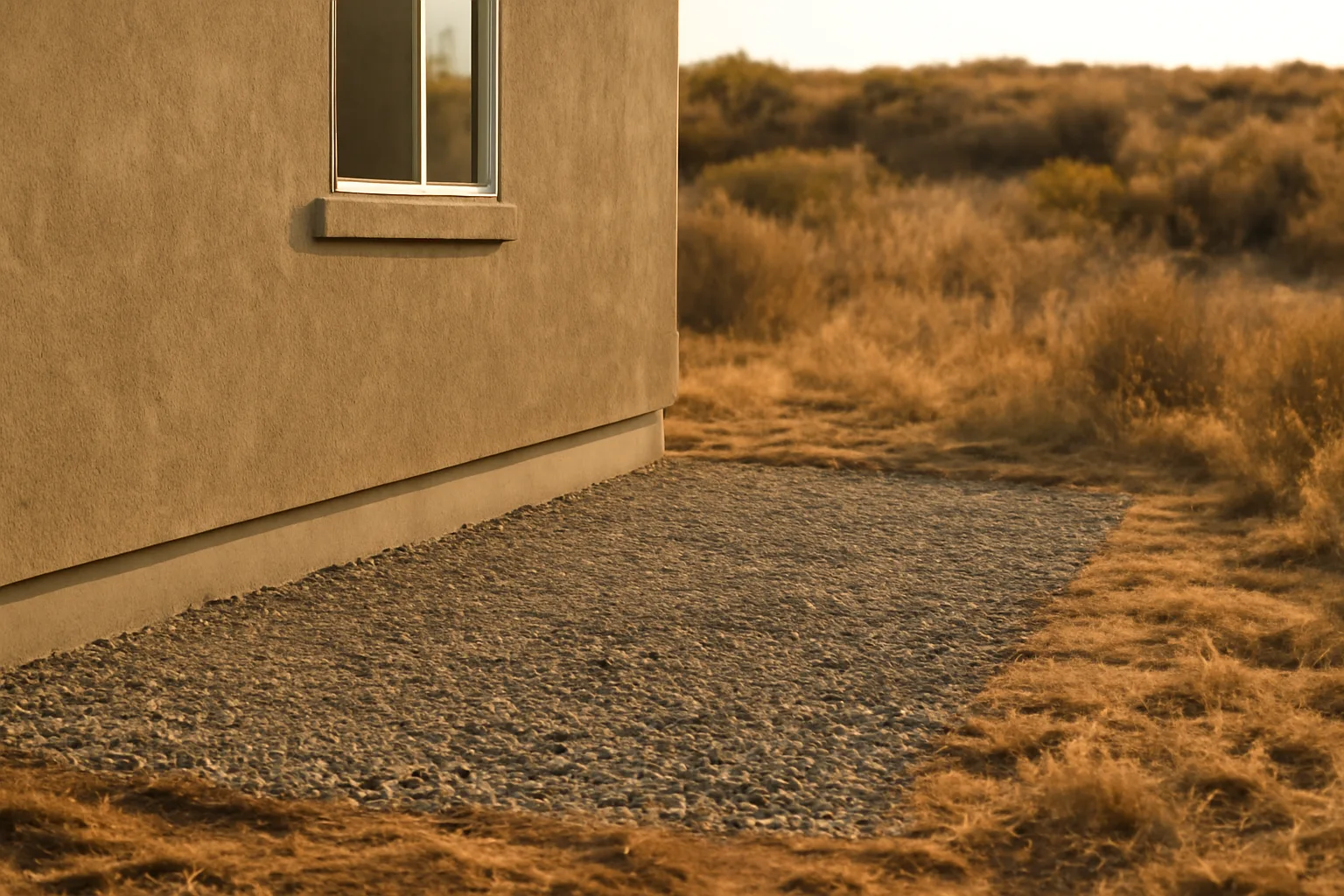
The mechanism that destroys most homes in a wildland fire isn't a wall of flame; it's embers landing on or near the structure and igniting something flammable within a few feet. This is why Zone 0 exists and why it's the highest-leverage single change most homeowners can make. Home-hardening priorities, in rough order of cost-effectiveness: seal or screen attic and foundation vents with 1/8-inch metal mesh, clear anything combustible within 5 feet of the foundation (mulch, wood fencing attached to the house, potted plants, firewood stacks), clean gutters and roof valleys of pine needles and leaves, and replace or box in open eaves where embers can collect. A wood or vinyl fence that touches the house acts as a wick; CAL FIRE specifically flags attached fencing as a common failure point in post-fire damage assessments [4]. Roofing material matters too. Class A fire-rated roofing (asphalt shingle, metal, tile) resists ignition far better than wood shake, and many California jurisdictions in high hazard zones already require Class A roofing on new construction and major reroofs. If your roof is original wood shake in a Very High Fire Hazard Severity Zone, that's a priority replacement, not a someday project. See our full breakdown at fire at a house for how ember intrusion actually destroys structures room by room.
Is Santa Barbara safe from fire?
No. No coastal California community, including Santa Barbara, is exempt from wildfire risk, and Santa Barbara County has a documented history that argues against complacency. The Thomas Fire in December 2017, which started in Ventura County and burned into Santa Barbara County, burned 281,893 acres and was, at the time, the largest wildfire in modern California history by acreage [6]. It was followed within weeks by the Montecito debris flow, a secondary disaster triggered by rain falling on the burned, denuded hillside above Montecito, which killed 23 people . Much of Santa Barbara County, including hillside neighborhoods like Montecito, Mission Canyon, and the foothills above the city, falls within CAL FIRE-mapped Very High Fire Hazard Severity Zones, which trigger the state's defensible space and building material requirements under PRC 4291 [4]. Downtown, flatter areas closer to the ocean carry lower wildfire risk, but county-wide, "safe from fire" isn't an accurate label for any part of the wildland-urban interface here. If you own property in Santa Barbara County's foothill communities, check your specific parcel against the CAL FIRE Fire Hazard Severity Zone viewer rather than relying on neighborhood reputation, since hazard zone boundaries can change block by block based on slope, vegetation, and prevailing wind exposure.
What should I document before my insurer sends a non-renewal or inspection letter?
Insurers increasingly use aerial and satellite imagery (through vendors like Zesty.ai or Betterview) combined with on-the-ground inspections to score wildfire risk on individual parcels, and defensible space compliance is one of the biggest scoring factors. If you get an inspection notice, you want your own documentation ready before the adjuster or inspector shows up. Build a dated record: photos of your Zone 0 clearance (0-5 feet), Zone 1 clearance (5-30 feet), roof condition, vent screening, and gutter cleanliness, taken from multiple angles and updated at least once per fire season. Keep receipts for any hardening work (roof replacement, vent screens, vegetation clearing contracts) since these establish a compliance timeline an inspector or underwriter can verify. This is exactly the gap our $99 one-time Wildfire Insurance Survival Kit is built to close: a structured document set at defensiblehome.com/survival-kit-builder that helps you organize dated photos, compliance records, and hardening receipts into the format insurers actually want to see. We don't file claims on your behalf or promise reinstated coverage or discounts; you compile and send your own documentation, and the outcome depends on your insurer's own underwriting decision.
How does defensible space work interact with washington state or other state rules?
Defensible space law isn't uniform across wildfire-prone states, and if you own property in more than one state, or you're comparing California's approach to others, the mechanisms differ even when the underlying 100-foot concept looks similar. Washington State's Department of Natural Resources runs its own defensible space and forest health cost-share and contracting programs for private landowners, with different clearance standards and cost-share eligibility than California's regulatory approach. If you're managing property there, our guide on wildfire defensible space clearing contracts washington state dnr walks through how those contracts and cost-share programs work. Colorado and Oregon each have their own state fire marshal offices and wildfire mitigation guidance, and neither currently mirrors California's PRC 4291 100-foot statutory mandate exactly; check your state fire marshal's office directly for the applicable local standard, since this is one area where "the law" genuinely means something different depending on which state line you're standing on.
What's the single most cost-effective thing I can do this year?
Clear the 5-foot ember-resistant zone around your foundation and screen your vents with 1/8-inch metal mesh. This is the cheapest, fastest, and highest-leverage project on the entire defensible space list, and it directly addresses the ignition mechanism (ember intrusion) that destroys most homes in wildland fires, according to Ready.gov's wildfire hardening guidance. A weekend of labor, some metal mesh, and removing anything combustible within arm's reach of your walls costs far less than a full landscape overhaul, and it's the exact zone California's Zone 0 rule targets. If you do nothing else on this list this year, do this one thing. For the full campaign of one-time actions worth doing, in priority order, see only you can prevent wildfires, which breaks the work down by weekend-sized projects.
Frequently asked questions
When does the California defensible space law go into effect?
The core 100-foot defensible space requirement under Public Resources Code 4291 has been law since a 2005 amendment; it's already in effect statewide in State Responsibility Areas and designated hazard zones. The newer Zone 0 (5-foot ember-resistant zone) rule from AB 3074 is still being finalized by the Board of Forestry; check CAL FIRE's site for your zone's current enforcement date.
Why won't people follow the defensible space law in California?
Cost, confusion about which zones are mapped, and uneven local enforcement are the main reasons. Clearing vegetation and hardening a home can cost thousands of dollars, many homeowners don't know their parcel is in a mapped hazard zone, and rural fire districts often lack staff to inspect every property every year.
How can I prevent wildfires from starting on my own property?
Avoid ignition sources: don't park hot vehicles on dry grass, avoid mowing or trimming during red flag warnings, and store firewood and propane at least 30 feet from structures. Maintain defensible space and screen vents with 1/8-inch metal mesh, since embers, not direct flame contact, ignite most homes.
How do I prepare for a wildfire evacuation?
Build a household plan with at least two evacuation routes, keep a physical folder with insurance documents, a photographed home inventory, and defensible space compliance records, and pack a go-bag with medications, documents, and essentials. Ready.gov recommends practicing the evacuation route before fire season, not during an active warning.
What fire-safe home rules take effect in 2026?
There's no single new statewide statute dated 2026; the relevant rule is California's Zone 0 ember-resistant zone requirement under AB 3074, which the Board of Forestry has been finalizing through rulemaking for years. Enforcement timelines vary by fire district, so confirm the current date directly with CAL FIRE or your local fire marshal.
Is Santa Barbara safe from fire?
No. Santa Barbara County includes CAL FIRE-mapped Very High Fire Hazard Severity Zones in the foothills, and the county experienced the 281,893-acre Thomas Fire in 2017 followed by a fatal debris flow in Montecito. Downtown flatland areas carry lower risk, but hillside neighborhoods should not be considered safe from wildfire.
How can we prevent forest fires at a community level?
Community-level prevention relies on prescribed burns, mechanical thinning, and grazing programs run by agencies like CAL FIRE and the U.S. Forest Service, plus neighborhood fuel-reduction coordination through programs like Firewise USA. Individual defensible space work only holds if neighboring properties also manage their fuel loads.
Did State Farm cancel all homeowners policies in California?
No. State Farm stopped writing new homeowners and commercial property policies in California starting May 2023, but it continued servicing existing policies. Existing customers were not automatically dropped, though renewal terms and underwriting scrutiny tightened statewide as insurers reassessed wildfire exposure.
What is Zone 0 and how is it different from the 100-foot defensible space rule?
Zone 0 is the ember-resistant zone within 5 feet of a structure, created under California AB 3074, requiring noncombustible materials and no vegetation directly against the home. It sits inside the broader 100-foot defensible space rule under PRC 4291, which governs vegetation spacing and fuel reduction farther from the structure.
How much does defensible space compliance typically cost?
Costs vary widely by parcel size, existing vegetation, and whether you hire a contractor or do the work yourself. Vent screening and Zone 0 clearance can cost under a few hundred dollars in materials for a DIY approach, while full-property vegetation clearing and roof or siding upgrades on an older home can run into the thousands of dollars.
Can my insurer require proof of defensible space compliance?
Insurers increasingly request or independently verify defensible space status using aerial imagery and on-site inspections as part of underwriting and renewal decisions. Keeping dated photos and receipts of your compliance work gives you documentation to reference if an insurer's risk assessment is questioned, though it does not guarantee any specific coverage outcome.
Does defensible space law apply to homes outside California?
Requirements vary by state. Washington State's Department of Natural Resources runs cost-share and contracting programs for private landowners rather than a single statutory mandate like California's PRC 4291. Colorado and Oregon have their own state fire marshal guidance; check the relevant state agency directly since standards differ meaningfully across state lines.
Sources
- California Department of Insurance, FAIR Plan policy growth data: California FAIR Plan policy count roughly doubled between 2020 and 2023 as private insurers pulled back in high-risk areas
- California Public Resources Code Section 4291: 100-foot defensible space clearance requirement around structures in State Responsibility Areas
- California Assembly Bill 3074 (2020): Directed the Board of Forestry and Fire Protection to develop Zone 0 ember-resistant zone regulations within 5 feet of structures
- CAL FIRE, Defensible Space (PRC 4291) guidance: Current defensible space zone requirements, Zone 0 rulemaking status, and Fire Hazard Severity Zone mapping
- California Government Code Section 51182: Defensible space maintenance and disclosure obligations for properties in State Responsibility Areas
- CAL FIRE, Thomas Fire incident record: Thomas Fire burned 281,893 acres in Ventura and Santa Barbara Counties starting December 2017