Last updated 2026-07-25
TL;DR
Stucco itself doesn't burn and resists radiant heat better than wood or vinyl siding, but a stucco home is not fireproof. Embers get in through vents, eaves, windows, and gaps around the stucco, not through the wall surface. Roof material, vents, and the first five feet of landscaping matter as much or more than the siding choice.
Are stucco homes fire resistant?
Stucco itself is basically noncombustible. It's cement, sand, lime, and water troweled over a wire lath, and there's nothing in that mix that ignites or feeds a fire. Compared to wood siding, vinyl, or old cedar shingles, stucco is a real upgrade in a wildfire. But "fire resistant" and "fireproof" are not the same claim, and this is where a lot of homeowners get burned, literally. CAL FIRE's own guidance on building materials notes that ember intrusion, not direct flame contact with walls, is the leading cause of home loss in wildfires. A stucco wall can survive radiant heat from a nearby fire just fine. It does nothing to stop the embers that land in your gutters, under your eaves, in a vented attic, or against a wood fence that's touching the house. Think of stucco as one good layer in a system. It's not the system. So the honest answer: stucco homes handle direct flame and radiant heat noticeably better than wood-clad homes, but stucco alone doesn't prevent a wildfire loss. The weak points are almost always somewhere else on the structure.
How do stucco homes actually fail in a wildfire?
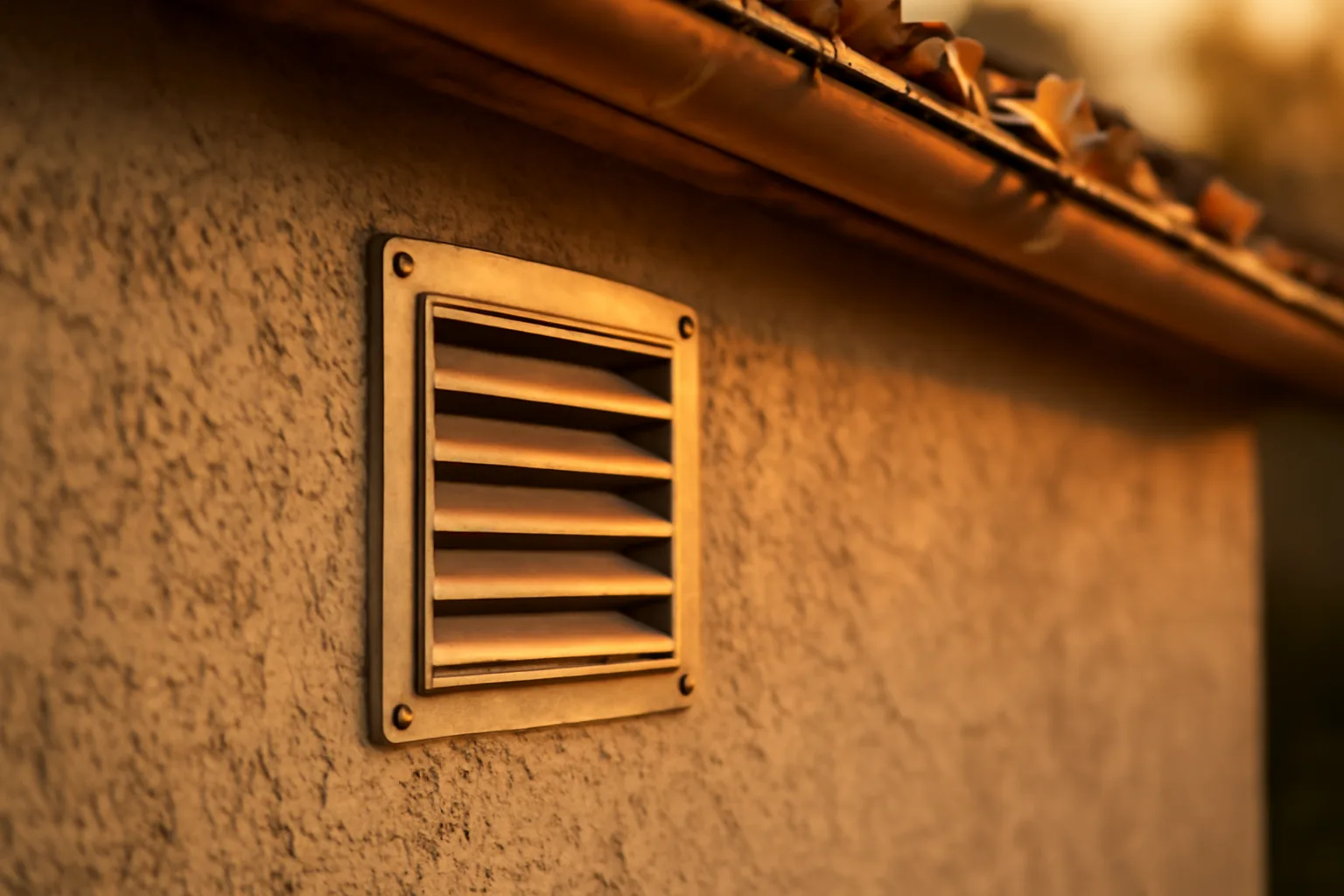
They fail at the gaps, not the wall. Ember entry points are the real story: attic and foundation vents without ember-resistant mesh, gaps where stucco meets trim or window frames, wood decks and fences attached directly to the house, and combustible mulch or plants pressed against the foundation. A 2020 study from the Insurance Institute for Business & Home Safety (IBHS) found that most home ignitions in wildfire-urban interface fires start from embers entering through vents or accumulating in gutters and on roofs, well before flames ever reach the structure. Stucco does nothing to address any of that. Here's a common failure sequence inspectors see: embers land in a wood-mulch bed against a stucco wall, ignite the mulch, and the flame plume then reaches an eave or a single-pane window. The stucco wall itself is untouched and still standing. The house behind it is gone. Another common one: a stucco house with a wood shake or shingle roof. The roof is the largest surface area on most homes and is a major ignition point. CAL FIRE explicitly recommends Class A fire-rated roofing (asphalt shingle, tile, metal, or treated wood systems tested to Class A) regardless of what the walls are made of.
Stucco vs. other siding: how much does it actually help?
| Stucco (cement plaster) | Noncombustible | Gaps at trim, vents, wall-to-deck junctions | |
|---|---|---|---|
| Fiber cement siding | Noncombustible | Joints, unprotected eaves | |
| Brick / masonry veneer | Noncombustible | Mortar joints, attached wood trim | |
| Vinyl siding | Combustible, melts/deforms under heat | Melts at fairly low temps, exposes sheathing | |
| Wood siding/shingles (untreated) | Combustible | Direct ignition from embers or flame contact | Stucco, fiber cement, and masonry all land in the same rough tier: noncombustible cladding. None of them is magic. All three depend on the same weak points, vents, eaves, windows, and anything wood that touches the wall. If you're comparing renovation options, the jump from wood siding to stucco or fiber cement is a genuinely meaningful hardening step. The jump from stucco to some other noncombustible cladding is mostly cosmetic from a fire standpoint. |
Here's a rough comparison based on ignition-resistance testing and CAL FIRE building material guidance. These are general categories, not lab-precise numbers, since actual performance depends on installation, thickness, and assembly details. | Siding material | Combustibility | Common failure point |
What actually needs to change if my home already has stucco?
If your walls are stucco, don't spend money re-cladding the house. Spend it on the vents, roof, and the first five feet. Start with vents. Install 1/8-inch or smaller corrosion-resistant metal mesh over every attic, foundation, and soffit vent, or replace with ember-and-flame-resistant vents rated for wildfire exposure. This is one of the cheapest, highest-value retrofits you can do, often a few hundred dollars in materials for a whole house. Next, look at the roof-wall intersection and gutters. Clear leaf and needle debris regularly, and consider gutter guards. Check for any gaps where stucco has cracked or pulled away from window and door frames; caulk or patch those. Then look outward. CAL FIRE's defensible space guidance calls for Zone 0, the first 5 feet from the structure, to be kept free of combustible mulch, stored materials, and vegetation, moving instead to gravel, pavers, or bare mineral soil. A stucco wall sitting behind a bed of bark mulch and a wood trellis is still a vulnerable wall. For a full room-by-room way to think through this, the defensible space clearing guidance and fire-safe landscaping next to the house cover the planting and hardscape side in more detail.
When does the California defensible space law go into effect?
California's core defensible space requirement, 100 feet of clearance around structures in State Responsibility Areas and some Local Responsibility Areas, has been law since 2005 under Public Resources Code Section 4291 [1]. That part isn't new and it isn't changing. What is newer and still being phased in is the Zone 0 (ember-resistant zone, 0-5 feet from structures) requirement created by Assembly Bill 3074 (2020), which added this zone to the defensible space statute [2]. CAL FIRE has been developing the specific regulations for what Zone 0 compliance looks like, and as of this writing those regulations are still working through the rulemaking process rather than being finalized and enforced statewide. Because the exact effective date and enforcement mechanism for Zone 0 keeps shifting as the regulation moves through the Board of Forestry process, check CAL FIRE's defensible space page directly for the current status in your area, and confirm with your local fire district or fire marshal's office, since enforcement timelines and specific standards vary by jurisdiction. [Local fire district requirements: enter your district here.]
What fire-safe home rules take effect in 2026?
There's no single nationwide "2026 fire code" that changes stucco or siding rules everywhere at once, and homeowners searching for this are often conflating a few different things: California's Zone 0 rulemaking timeline, Chapter 7A building code updates for new construction in wildfire hazard zones, and various state and local ember-resistant vent mandates. What's actually true: California's Building Code Chapter 7A (ignition-resistant construction standards for new homes in Fire Hazard Severity Zones) already requires things like ember-resistant vents, Class A roofing, and dual-pane tempered glass windows for new construction, and it applies today, not starting in 2026 [3]. If Zone 0 regulations finalize on a specific date, that date will be set by the Board of Forestry and Fire Protection and announced through CAL FIRE, not through a generic "2026 rule." Rather than chasing a rumored date, the more useful move is to check your specific fire district's current requirements now. [Fire district code cycle and effective dates: enter here.] Insurers, including the FAIR Plan in some cases, are increasingly asking for proof of current compliance regardless of what year a new rule technically starts.
Why won't people follow the defensible space law in California?
Cost, confusion about what's actually required, and enforcement that's inconsistent across the state are the three big reasons, based on what CAL FIRE and legislative analyses have documented. Cost is real. Clearing 100 feet around a home on a sloped, wooded lot can run into thousands of dollars, and Zone 0 hardscaping (gravel, pavers, removing mulch beds) adds more. Older or fixed-income homeowners in particular often defer this work. Confusion is also real. The law technically requires compliance, but the specific standard (what counts as adequate spacing, which plants are allowed how close) has historically been vague enough that homeowners genuinely don't know if they're compliant. That's part of why CAL FIRE has pushed to make Zone 0 more specific rather than left to interpretation. Enforcement is uneven. Some counties do vegetation inspections and issue citations for noncompliance under Public Resources Code 4291; many others don't have the staff to inspect every parcel every year. When people don't see anyone checking, following the letter of the law starts to feel optional, even though it isn't legally optional and even though it's directly tied to survival outcomes in fire behavior modeling [1].
How to prevent wildfires and how to prevent forest fires
Human activity causes the large majority of wildfires. National Interagency Fire Center data attributes roughly 85-90% of wildfires in the U.S. to human causes in recent years, including unattended campfires, debris burning, equipment sparks, and downed power lines, rather than lightning [4]. Practical prevention at the individual level: never leave a campfire unattended and drown it completely (stir the ashes, feel for heat) before leaving, per Ready.gov guidance. Avoid mowing dry grass or using power equipment that throws sparks during red flag warning days. Don't park or idle vehicles over dry grass, since a hot catalytic converter is a documented ignition source. Follow local burn permit rules and never burn debris on windy days. At the community level, defensible space compliance, ember-resistant construction, and coordinated fuel reduction projects (the kind CAL FIRE and state forestry agencies run) reduce the odds that an ignition, once it starts, becomes a home-destroying fire. Preventing the spark and hardening the structure are two different jobs, and both matter.
How to avoid forest fires and how to prepare for forest fires
Avoiding forest fires as an individual mostly comes down to fire-source discipline: fully extinguish campfires and cigarettes, keep vehicles and equipment off dry vegetation, follow local burn bans, and report unattended fires immediately. Preparing for one, whether you start it or not, is a different task. Ready.gov recommends every household in a fire-prone area build a go-bag with water, medications, important documents, and a change of clothes, and have a family communication and evacuation plan practiced in advance. CAL FIRE's "Ready, Set, Go!" program breaks this into three phases: Ready (year-round preparedness, defensible space, hardened home), Set (situational awareness when a fire is active nearby, bags packed), and Go (early evacuation, don't wait for a mandatory order if conditions look bad) [5]. For documentation specifically, before any fire threat is active, photograph your home's exterior, roof, vents, and the defensible space zones around it, and keep records of any hardening work you've done (vent upgrades, roof replacement, brush clearing receipts). This is the kind of paperwork insurers increasingly want, and it's also the foundation of the $99 Wildfire Insurance Survival Kit, which walks you through building that documentation yourself. It doesn't file claims for you or deal with your insurer on your behalf, it just helps you assemble what you'd otherwise scramble to find under pressure.
Is Santa Barbara safe from fire?
No area in Santa Barbara County's foothills or wildland-urban interface is "safe" from fire risk in any absolute sense; the county has a long, documented history of destructive fires, including the 2017 Thomas Fire (at the time one of the largest in modern California history) and the debris flow that followed in Montecito in January 2018 [6]. Much of Santa Barbara County is mapped by CAL FIRE as a Very High or High Fire Hazard Severity Zone, particularly in the foothill communities along the Santa Ynez Mountains [7]. Whether a specific property is "safe" depends heavily on its exact location relative to those zones, slope, vegetation, and how well the home and surrounding defensible space are hardened, not on the city's reputation generally. If you own or are considering a property there, check the parcel-specific Fire Hazard Severity Zone designation through CAL FIRE's mapping tool rather than relying on general area reputation [7], and talk to the local fire district about defensible space requirements specific to that jurisdiction. [Santa Barbara-area fire district contact and requirements: enter here.]
How can we prevent forest fires as a community?
Individual behavior matters, but community-level prevention is what actually moves the needle on large fires. Coordinated fuel reduction (prescribed burns, mechanical thinning, and defensible space enforcement across whole neighborhoods rather than single lots) reduces the continuous fuel that lets small ignitions become large fires. CAL FIRE's Fire Prevention Grants program funds exactly this kind of work at the community scale, supporting fuel breaks, vegetation management, and defensible space assistance for lower-income and elderly residents who can't afford it themselves [8]. If your HOA or neighborhood hasn't looked into whether you qualify for this kind of assistance, it's worth checking, since a single noncompliant lot can undercut an entire block's hardening work. Reporting matters too. Fast detection and reporting of unattended fires, downed lines, or suspicious smoke shortens response time dramatically, and most western fire agencies have dedicated non-emergency reporting lines for exactly this. Community chipper days, coordinated brush removal, and shared contractor scheduling (see wildfire defensible space clearing contracts for how this works in Washington State) also lower the cost barrier that keeps individual homeowners from doing the work alone.
What should a stucco homeowner actually prioritize, in order?
| Wall siding material | Ember entry through vents and gaps | |
|---|---|---|
| Direct flame contact with walls | Roof debris and radiant heat ignition | |
| Distance from wildland | Zone 0 (0-5 ft) condition, regardless of overall distance | Getting the order right saves money and actually reduces risk, instead of spending on the part that already looks fine. |
If you own a stucco home in a wildfire zone and have a limited budget, here's the order that matches how CAL FIRE and IBHS research rank ignition risk, roughly highest-impact first: Class A roofing if you don't already have it, ember-resistant vent mesh on every vent, Zone 0 clearance (remove mulch, wood fencing, and combustible items within 5 feet of the foundation), gutter and roof debris management, dual-pane tempered windows if you still have single-pane, and finally, patching any stucco cracks or gaps at trim. Notice that re-siding the house isn't on that list. If the walls are already stucco, that box is basically checked. The money is better spent everywhere else. A quick comparison of what typically drives home loss versus what people assume drives it: | Assumed main risk | Actual documented risk driver |
Frequently asked questions
Are stucco homes fire resistant?
Stucco itself is noncombustible and holds up well against radiant heat and direct flame compared to wood or vinyl siding. But a stucco home is not fireproof; most wildfire home losses start from embers entering through vents, roofs, or gaps, not from flames burning through the wall surface itself.
Does stucco stop embers from entering a house?
No. Stucco walls block embers fine, but embers get in through unscreened attic and foundation vents, gaps around windows and trim, and gutters full of debris. Ember-resistant mesh over every vent is a more important upgrade than the wall cladding itself.
When does the California defensible space law go into effect?
The core 100-foot defensible space requirement (Public Resources Code 4291) has applied since 2005. The newer Zone 0 (0-5 ft ember-resistant zone) requirement was authorized by AB 3074 in 2020, and its specific regulations are still moving through CAL FIRE's rulemaking process; check CAL FIRE's site for current status in your area.
Why won't people follow the defensible space law in California?
Cost of clearing brush and adding hardscape, confusion about the exact standard required, and inconsistent county-level enforcement are the main reasons. Clearing 100 feet on a sloped, wooded lot can cost thousands, and many counties lack staff to inspect every parcel regularly.
How to prevent wildfires from starting in the first place?
Fully extinguish campfires (stir ashes, feel for heat), avoid mowing dry grass on hot windy days, keep vehicles off dry vegetation, follow local burn permit rules, and maintain equipment that could spark. Roughly 85-90% of U.S. wildfires are human-caused, per National Interagency Fire Center data.
How to prepare for a wildfire if you live in a high-risk zone?
Build a go-bag with documents, medications, and water, harden your home (Class A roof, ember-resistant vents, Zone 0 clearance), and practice an evacuation route with your family. CAL FIRE's Ready, Set, Go! program breaks preparation into year-round readiness, active-threat alertness, and early evacuation.
What fire-safe home rules take effect in 2026?
There's no single nationwide 2026 rule change. California's Chapter 7A ignition-resistant construction code already applies to new homes in fire hazard zones today. Any Zone 0 regulation finalization date will come from the Board of Forestry via CAL FIRE, not a blanket 2026 mandate; confirm with your local fire district.
Is Santa Barbara safe from fire?
No part of Santa Barbara's foothill and wildland-urban interface areas is fully safe from fire risk; much of the county is mapped Very High or High Fire Hazard Severity Zone by CAL FIRE. Risk depends on the specific parcel's zone, slope, and hardening, not the city's general reputation.
Is stucco better than vinyl siding for wildfire protection?
Yes, meaningfully. Stucco is noncombustible; vinyl siding is combustible and can melt or deform at fairly low temperatures, exposing the wood sheathing beneath it to ignition. If you're choosing new siding in a wildfire zone, stucco, fiber cement, or masonry all outperform vinyl.
Do I need to replace my stucco if it has cracks?
Small cracks aren't a major fire risk by themselves, but gaps where stucco has pulled away from window frames, trim, or the roofline can let embers reach combustible material behind the wall. Patch or caulk visible gaps rather than replacing entire wall sections.
How can we prevent forest fires at the community level?
Coordinated fuel reduction (prescribed burns, mechanical thinning, defensible space enforcement across a whole neighborhood), fast reporting of unattended fires or downed power lines, and shared-cost brush clearing programs reduce risk more than any single household acting alone. CAL FIRE's Fire Prevention Grants fund exactly this kind of work.
What's the single most important fire hardening upgrade for a stucco house?
Ember-resistant vent mesh (1/8-inch or smaller metal mesh over attic, soffit, and foundation vents) is usually the highest-value, lowest-cost upgrade, since vents are a primary ember entry point regardless of what the exterior walls are made of.
Sources
- California Public Resources Code Section 4291: 100-foot defensible space clearance requirement around structures in State Responsibility Areas since 2005
- California Assembly Bill 3074 (2020): AB 3074 created the Zone 0 (ember-resistant zone) requirement added to defensible space law
- California Building Code, Chapter 7A: Chapter 7A requires ember-resistant vents, Class A roofing, and dual-pane tempered glass for new construction in Fire Hazard Severity Zones
- National Interagency Fire Center, Statistics: Roughly 85-90% of U.S. wildfires are human-caused
- CAL FIRE, Ready Set Go Program: Ready, Set, Go! three-phase wildfire preparedness framework
- CAL FIRE, Thomas Fire Incident Archive: 2017 Thomas Fire was one of the largest wildfires in modern California history, affecting Santa Barbara County
- CAL FIRE, Fire Hazard Severity Zone Maps: Fire Hazard Severity Zone mapping designates Very High and High zones including Santa Barbara County foothill areas
- CAL FIRE, Fire Prevention Grants Program: CAL FIRE funds community-level fuel reduction and defensible space assistance for lower-income and elderly residents