Last updated 2026-07-25
TL;DR
CAL FIRE requires defensible space out to 100 feet from structures in State Responsibility Areas, split into Zone 0 (0-5 ft), Zone 1 (5-30 ft), and Zone 2 (30-100 ft). The new Zone 0 ember-resistant regulation, required by SB 63 and Public Resources Code 4291, is being finalized by the Board of Forestry and is expected to take effect in 2026, though exact enforcement dates vary by local fire district.
What is CAL FIRE defensible space, exactly?
Defensible space is the buffer between your house and whatever's growing or stacked around it, wide enough that firefighters have a fighting chance and your home has a chance of surviving without them. CAL FIRE defines it as the area within 100 feet of a structure where vegetation is modified to reduce wildfire spread. The legal basis is California Public Resources Code Section 4291, which requires anyone who owns, leases, or controls a building in a State Responsibility Area (SRA) to maintain defensible space "a distance of 100 feet from each side and from the front and rear of the structure" [1]. That 100-foot number isn't a suggestion. It's written into state law and it's what CAL FIRE inspectors check during home inspections. The space is broken into zones, and each zone has different rules because fire behaves differently at different distances from your walls. Get the zone breakdown wrong and you can do a lot of expensive work that doesn't actually protect the house. For the full zone-by-zone breakdown with clearance distances and plant spacing, see defensible.
What are the defensible space zones (0, 1, and 2)?
| Zone 0 | 0-5 ft | Ember-resistant, noncombustible materials (new rule pending, expected 2026) [2] | |
|---|---|---|---|
| Zone 1 | 5-30 ft | Lean, clean, and green; remove dead plants, space shrubs | |
| Zone 2 | 30-100 ft | Reduced fuel volume, mowed dry grass, thinned tree canopy | CAL FIRE's own guidance calls Zone 0 the "ember-resistant zone" because most homes ignite from wind-driven embers landing in the first few feet of the property, not from a wall of flame marching up to the house. That's the zone getting the most regulatory attention right now, and it's also the cheapest zone to fix, mostly rock, pavers, and swept concrete instead of mulch and shrubs. For plant selection and spacing guidance in Zones 1 and 2, fire safe landscaping california next to house covers species choices and layout in more detail. |
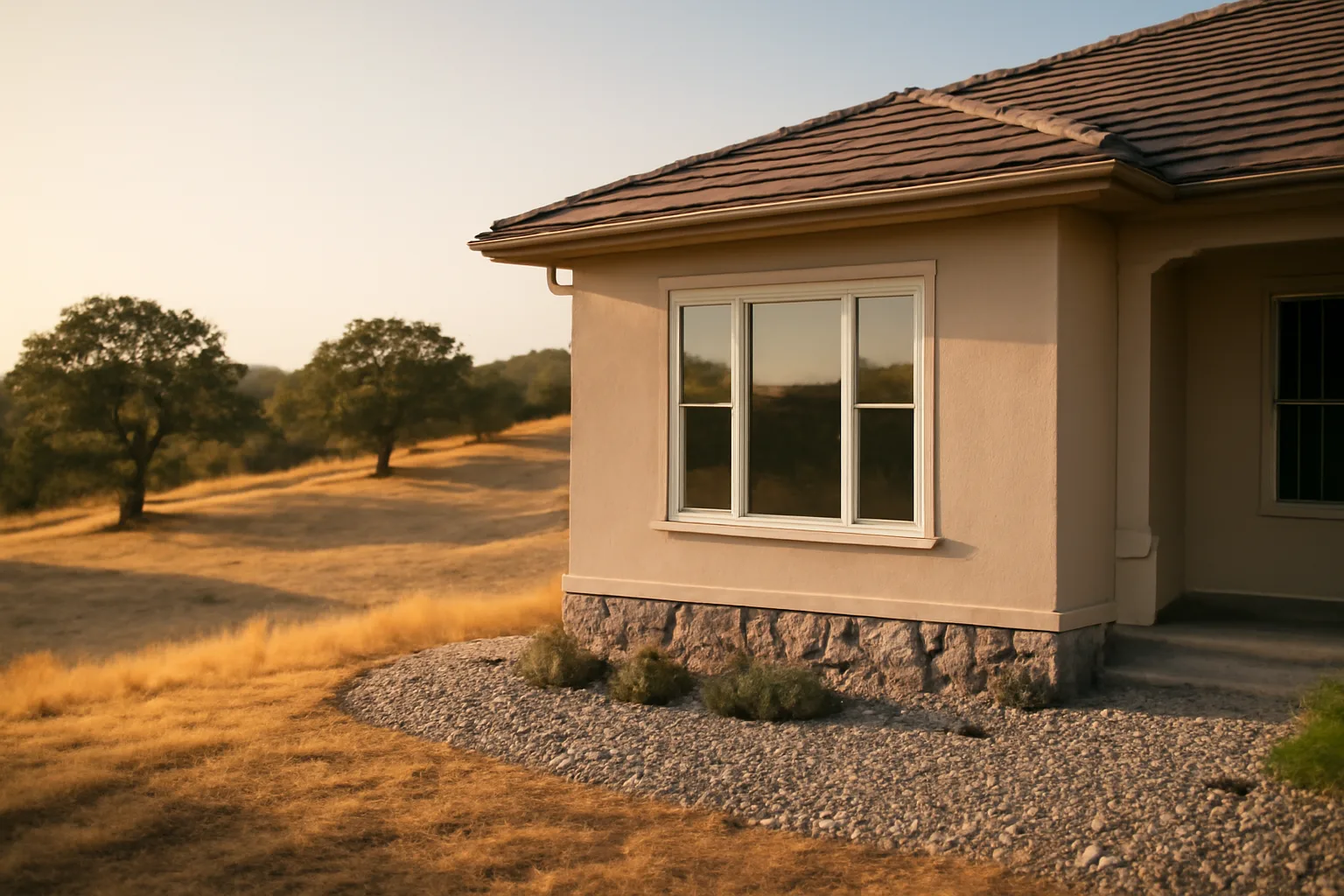
Zone 0 runs from your foundation out to 5 feet and is supposed to be nearly nonflammable: no bark mulch, no wood piles, no dead leaves against the siding. Zone 1 runs from 5 to 30 feet and calls for spaced-out, low, well-maintained plants with dead material removed. Zone 2 runs from 30 to 100 feet and allows more vegetation but still requires reduced fuel continuity, mowed grass, and spacing between shrubs and tree canopies. | Zone | Distance from structure | Core requirement |
When does the California defensible space law go into effect?
The base defensible space requirement under PRC 4291 has been in effect for years and already applies statewide in SRAs. What's new is Zone 0. Senate Bill 63 (2023) directed the Board of Forestry and Fire Protection to adopt an ember-resistant Zone 0 regulation, and as of 2024-2025 the Board has been in rulemaking, with draft regulations circulated for public comment [2]. The honest answer on timing is that the exact effective date has moved. Earlier drafts targeted 2023, then legislative and regulatory delays pushed adoption into 2025-2026 rulemaking cycles. CAL FIRE and Board of Forestry public materials describe Zone 0 as being "phased in" with local fire districts given lead time to adopt and enforce it, and most current guidance points to 2026 as the year full statewide enforcement is expected to begin [2] [3]. Here's the part that trips people up: even before a hard statewide enforcement date, local jurisdictions can adopt stricter or earlier local ordinances. Some California counties and fire districts have already started requiring ember-resistant zones ahead of the state deadline. Check with your local fire district for the specific enforcement date and any local amendments; this varies significantly by jurisdiction and changes as rulemaking finalizes. [Your local fire district's specific Zone 0 enforcement date: ___________] If you got a non-renewal notice, don't wait for the regulation to be final before you act. Insurers are already scoring homes on ember exposure in the first five feet, regulation or no regulation.
What fire safety rules take effect in 2026?
The single biggest 2026 milestone people are asking about is the Zone 0 ember-resistant zone rule under SB 63, which the Board of Forestry has been finalizing through formal rulemaking [2]. Once adopted, it will require homeowners in SRAs (and likely some Wildland-Urban Interface areas designated by local ordinance) to remove combustible mulch, stored wood, and dense plantings within 5 feet of structures, replacing them with gravel, pavers, concrete, or well-irrigated low groundcover. Separately, the State Fire Marshal maintains and periodically updates the Fire Hazard Severity Zone maps, which determine whether a property falls into a Moderate, High, or Very High zone. These maps affect both defensible space obligations and building code requirements under Chapter 7A of the California Building Code for new construction and major remodels [4]. Some counties have had updated maps take effect in the past two years, expanding the number of parcels subject to defensible space and ignition-resistant construction rules. Insurers are moving faster than regulators here. Some carriers already ask about Zone 0 conditions on inspection forms even though the state rule isn't fully in force, because ember intrusion in that 5-foot band is the leading cause of home ignition in wildfires, according to research cited by the Insurance Institute for Business & Home Safety and referenced in CAL FIRE's own defensible space materials. [Local fire district 2026 compliance deadline, if different from state timeline: ___________]
Why won't people follow the defensible space law in California?
Cost is the biggest one. Clearing 100 feet of vegetation, especially on a sloped lot with mature trees, can run from a few hundred dollars for a small flat lot to several thousand for a large, overgrown, or steep property. Retrofitting Zone 0 to hardscape (removing mulch, adding gravel or pavers near the foundation) adds more on top of that. For a homeowner already facing a non-renewal notice and shopping for a new policy, that's real money at a bad time. A second reason is simple awareness. A lot of homeowners have never had a defensible space inspection and don't know PRC 4291 exists until a neighbor gets cited or their insurer sends a notice. CAL FIRE conducts Defensible Space Inspections in SRAs, but capacity is limited, and enforcement has historically leaned on voluntary compliance and education rather than citations. A third reason, and this one's less discussed, is disagreement about aesthetics and ecology. Some homeowners like their mature landscaping, their oak canopy, their privacy hedges, and see 100 feet of "lean, clean, and green" as stripping the character out of their property. Others push back because they believe (sometimes correctly, sometimes not) that their specific microclimate or vegetation type is lower risk than the standard assumes. And some people just procrastinate. Defensible space work isn't glamorous, it doesn't show up when you sell the house the way a kitchen remodel does, and it competes with a hundred other home maintenance tasks. That's a mistake homeowners in fire-prone areas increasingly can't afford, given how aggressively insurers are using aerial imagery and third-party inspection data to flag properties for non-renewal.
How do you prevent wildfires around your own home?
You can't prevent lightning or an arsonist a mile away, but you can dramatically cut the odds your specific structure ignites. Start with the roof and gutters: clear pine needles and leaf litter, since roof debris is one of the most common ember-catch points. Then work outward from the house rather than starting at the property line. Five things that matter most, in rough order of impact: 1. Clear Zone 0 (0-5 ft) of mulch, firewood stacks, and dead vegetation against the walls. 2. Screen or box in vents with 1/8-inch metal mesh to stop ember entry, a requirement under California Building Code Chapter 7A for new construction in Fire Hazard Severity Zones [4]. 3. Remove dead branches and thin canopy in Zone 1 (5-30 ft), keeping a minimum spacing between shrub clusters. 4. Mow dry grass and maintain spacing between trees in Zone 2 (30-100 ft). 5. Keep gutters and roof valleys clear, especially before peak fire season. CAL FIRE's public messaging, echoing the old Smokey Bear line, still holds: "Only you can prevent wildfires" started as a US Forest Service campaign about human-caused ignition, and it's still relevant because most wildfires in California are human-caused (debris burning, equipment sparks, vehicle fires, unattended campfires), not lightning [5]. See only you can prevent wildfires for more on the ignition-source side of prevention, separate from home hardening.
How do you prepare for a wildfire before it happens?
Preparation splits into two tracks: hardening the property, and getting your household and paperwork ready to evacuate on short notice. Both matter, and most people only do one. On the property side, defensible space work (all three zones) is the foundation, paired with home hardening: ember-resistant vents, a Class A roof, and non-combustible siding or a 6-inch noncombustible zone at the base of walls. Ready.gov's wildfire preparedness guidance recommends creating and maintaining defensible space and using fire-resistant building materials as the two core actions homeowners in wildfire-prone areas should take before fire season. On the household side: know your evacuation routes (have two, since one may be blocked), keep a "go bag" with medications, documents, and chargers near the door, and sign up for local emergency alerts. Ready.gov specifically recommends assembling an emergency supply kit and having a family communication plan established before a wildfire threat, not during one. A piece people skip: documentation. Before fire season, photograph and inventory your home's exterior, interior, and any defensible space work you've done. If you're already dealing with a non-renewal or preparing to fight one, having dated photos of your cleared zones, your ember-resistant vents, and your hardscaped perimeter is the kind of evidence that matters when you're building your own file for an insurer or adjuster. That's the specific gap the $99 Wildfire Insurance Survival Kit is built around: a structured way to document defensible space and home hardening work so you have it organized before you need it, not after. Find it at /survival-kit-builder. To be clear, this is a documentation tool, not legal or insurance advice, and it doesn't negotiate with insurers or file claims on your behalf.
How do you prevent forest fires more broadly, beyond your own lot?
Individual defensible space work protects your house, but it doesn't stop a fire from starting in the wildland behind your subdivision. That's a different scale of problem, and it's mostly about ignition sources and fuel management on a landscape level. CAL FIRE and the US Forest Service both point to human activity as the dominant cause of wildfire starts nationally and in California specifically: debris burning, equipment use (mowers, chainsaws, grinders throwing sparks), vehicle exhaust systems parked on dry grass, unattended campfires, and fireworks [5]. Reducing forest fire starts at the community level means following local burn permit rules, avoiding outdoor equipment use during Red Flag Warning days, and reporting unattended fires immediately. At a larger scale, prescribed burning and mechanical fuel thinning on public lands (managed by CAL FIRE, the Forest Service, and local fire safe councils) reduce the total fuel load available to burn, which is why California has expanded its prescribed fire and fuel-treatment programs under the state's Wildfire and Forest Resilience Action Plan. Homeowners can support this indirectly by participating in local Fire Safe Council chipper days and community fuel-reduction projects, which extend the defensible space concept from individual lots to whole neighborhoods. None of this replaces your own defensible space work. A fuel break a mile away doesn't save your roof from embers that travel over a mile in wind-driven wildfires, which is a documented behavior in major California fire events. Your 100 feet is still your responsibility.
Is Santa Barbara safe from fire?
No part of Santa Barbara County is fully "safe" from wildfire, and large sections of it sit inside Very High Fire Hazard Severity Zones as mapped by CAL FIRE and the State Fire Marshal [4]. The county has a long, documented fire history, including the 1990 Painted Cave Fire and the 2017 Thomas Fire, which at the time was the largest wildfire in modern California history by acreage, followed by the deadly Montecito debris flow in January 2018. The foothill and canyon communities (Montecito, Mission Canyon, the San Roque area, parts of Goleta near the wildland interface) carry the highest exposure because of proximity to chaparral fuel, steep terrain, and wind patterns that push fire downslope fast. Lower, flatter, more urbanized parts of the city core carry meaningfully less wildfire risk, though ember cast during major wind events can still threaten structures well outside the immediate hazard zone map. If you own property in Santa Barbara County's WUI zones, check your specific parcel against the current Fire Hazard Severity Zone map maintained by CAL FIRE and the State Fire Marshal, since these maps are updated periodically and a property's zone designation affects both defensible space obligations and building code requirements [4]. Your local fire district (Santa Barbara County Fire, Montecito Fire Protection District, or others depending on address) can confirm your specific zone and any local defensible space ordinances beyond the state minimum. [Local fire district contact and defensible space inspection schedule for your specific address: ___________]
What does a CAL FIRE defensible space inspection actually check?
Inspectors (or, in many jurisdictions, local fire department staff conducting inspections on CAL FIRE's behalf) walk the property zone by zone. In Zone 0 they check for mulch, wood piles, dead leaves, and other combustibles within 5 feet of the structure. In Zone 1 they check plant spacing, dead vegetation removal, and whether tree canopies overhang the roof. In Zone 2 they check grass height, ladder fuels (low branches that let fire climb into tree canopies), and overall fuel continuity across the 30-100 foot band. Inspectors also typically note roof and gutter condition, vent screening, and whether firewood is stacked against the house (a surprisingly common violation). If your property fails, you'll usually get a written notice with a compliance deadline, not an immediate citation, though repeat noncompliance in some jurisdictions can lead to fines or, in extreme cases, the local agency doing the work and billing the owner. This is separate from, but related to, wildfire risk inspections some insurers now conduct using aerial or satellite imagery and third-party vendors. A property can pass a CAL FIRE defensible space inspection and still get flagged by an insurer's imagery-based model if, for example, the aerial photo is out of date or misreads a woodpile as vegetation. That's part of why keeping your own dated photo documentation matters, independent of what any inspector's report says. For more on how inspections work and what to expect, see inspections coverage and the related home hardening guidance.
Frequently asked questions
When does the California defensible space law go into effect?
The core defensible space requirement under Public Resources Code 4291 already applies statewide in State Responsibility Areas and has for years. The new Zone 0 ember-resistant rule under SB 63 is still in Board of Forestry rulemaking as of 2025, with statewide enforcement expected in 2026, though exact dates vary by local fire district.
Why won't people follow the defensible space law in California?
Cost, low awareness, and aesthetic disagreement are the three biggest reasons. Clearing 100 feet of vegetation and hardscaping Zone 0 costs real money, many homeowners don't know PRC 4291 exists until an inspection or insurance notice, and some resist losing mature landscaping they've maintained for years.
What fire safety rules take effect in 2026?
The main one is California's Zone 0 ember-resistant zone regulation under SB 63, requiring noncombustible materials within 5 feet of structures in State Responsibility Areas. The Board of Forestry has been finalizing this rule; exact local enforcement dates depend on your fire district's adoption timeline.
Is Santa Barbara safe from fire?
No. Much of Santa Barbara County, especially foothill communities like Montecito and areas near canyon terrain, sits in CAL FIRE's Very High Fire Hazard Severity Zone. The county has a documented history including the 1990 Painted Cave Fire and 2017 Thomas Fire. Lower, flatter urban areas carry less risk but aren't fire-proof, especially during ember-heavy wind events.
How wide does defensible space need to be around a house in California?
California law (Public Resources Code 4291) requires defensible space out to 100 feet from structures in State Responsibility Areas, broken into Zone 0 (0-5 ft), Zone 1 (5-30 ft), and Zone 2 (30-100 ft), each with different clearance standards.
What is Zone 0 in CAL FIRE defensible space rules?
Zone 0 is the 0-5 foot area immediately surrounding a structure. Under the pending SB 63 regulation, it's meant to be nearly nonflammable: no mulch, no wood piles, no dead vegetation touching the walls, with gravel, pavers, or concrete recommended instead.
How can we prevent forest fires at a community level?
Follow local burn permit rules, avoid outdoor equipment use on Red Flag Warning days, report unattended campfires, and support local Fire Safe Council fuel-reduction projects. Most California wildfires are human-caused, so reducing ignition sources matters as much as fuel management.
How do you prepare for a wildfire if you live in a high-risk zone?
Combine defensible space and home hardening (ember-resistant vents, Class A roof, cleared Zone 0) with household readiness: two evacuation routes, a go-bag with medications and documents, local emergency alert signup, and dated photo documentation of your property, per Ready.gov guidance.
Does CAL FIRE fine you for not maintaining defensible space?
Enforcement varies by local jurisdiction. Most areas issue a written notice with a compliance deadline first. Repeat or unaddressed violations can lead to fines, and in some cases the local fire agency can do the clearance work and bill the property owner.
How much does it cost to create defensible space around a home?
Costs vary widely based on lot size, slope, and existing vegetation density, ranging from a few hundred dollars for a small flat lot to several thousand for a large, overgrown, or steep property. Zone 0 hardscape retrofits (removing mulch, adding gravel or pavers) add further cost on top of vegetation clearing.
What's the difference between defensible space and home hardening?
Defensible space is vegetation and fuel management around the structure (Zones 0-2, out to 100 feet). Home hardening is building-level protection: ember-resistant vents, Class A roofing, non-combustible siding near the foundation, and dual-pane windows. Both are needed; one without the other leaves a gap embers can exploit.
Do all California homes need to follow the 100-foot defensible space rule?
The state-mandated 100-foot rule under PRC 4291 applies to structures in State Responsibility Areas. Many local jurisdictions extend similar or stricter requirements to Wildland-Urban Interface areas outside SRA boundaries, so check with your specific fire district for local ordinances.
Sources
- California Legislature, Public Resources Code Section 4291: 100-foot defensible space requirement in State Responsibility Areas
- California Board of Forestry and Fire Protection, SB 63 Zone 0 Rulemaking: Zone 0 ember-resistant zone rulemaking status and timeline under SB 63
- California Legislative Information, SB-63 Wildfires: defensible space: SB 63 directive requiring Board of Forestry to adopt ember-resistant zone regulations
- California Department of Forestry and Fire Protection, Fire Hazard Severity Zones: Fire Hazard Severity Zone maps and their link to building code and defensible space obligations
- USDA Forest Service, Wildfire Causes and Evaluations: Most wildfires are human-caused rather than natural ignition
- California State Fire Marshal, Building Materials Listing (Chapter 7A): Ignition-resistant construction requirements including vent screening in Fire Hazard Severity Zones