Last updated 2026-07-25
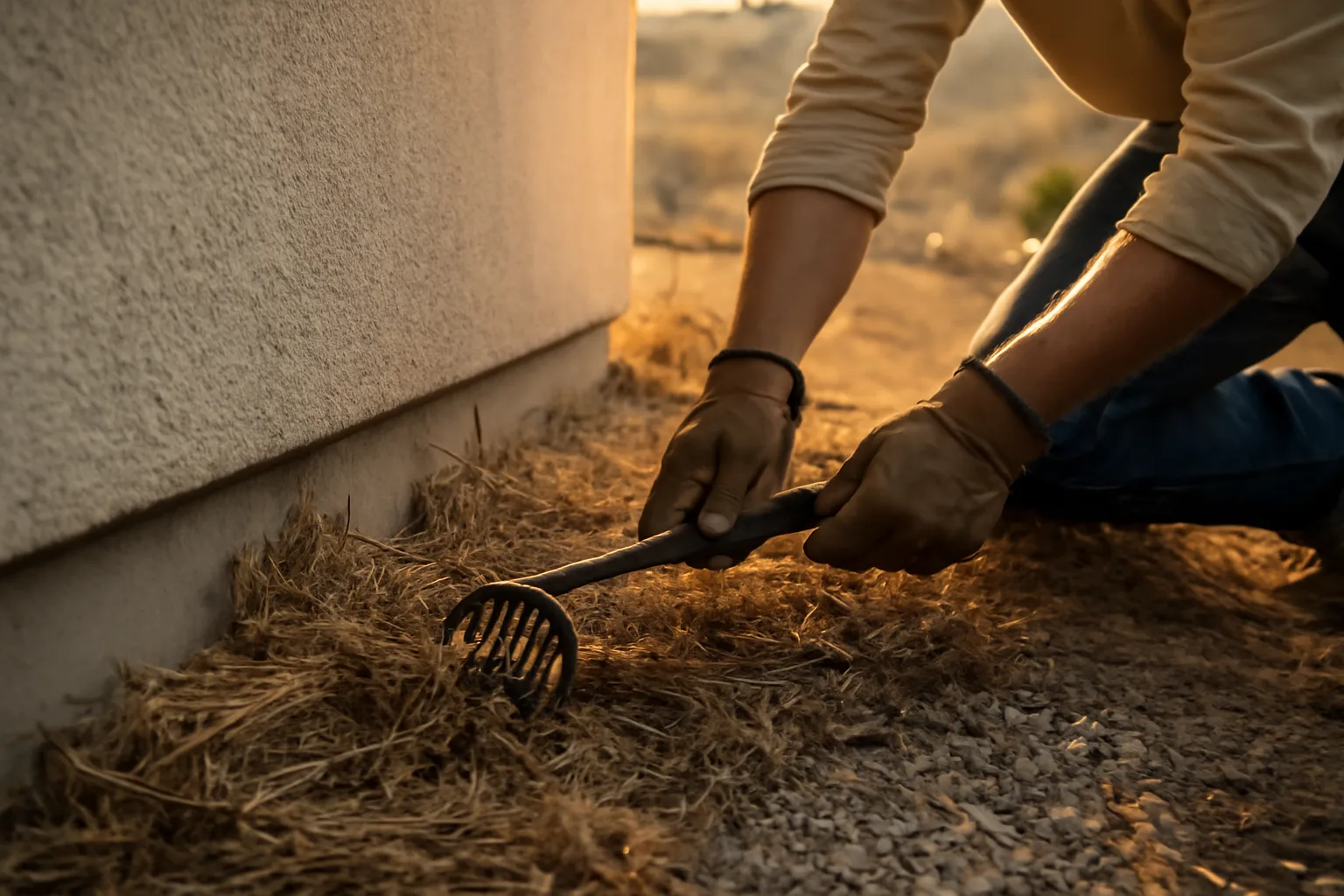
TL;DR
California's Zone 0 ember-resistant zone rule (SB 63, Gov. Code 51182) takes effect for new construction and eventually existing homes, though enforcement dates keep shifting. Insurers care most about defensible space compliance, roof and vent hardening, and proof you've done the work. None of it guarantees a renewal, but documentation is the strongest lever homeowners actually control.
When does the California defensible space law go into effect?
California's core defensible space law, Public Resources Code 4291, has been in effect since the 1960s and was substantially updated in 2005 to require 100 feet of clearance (or to the property line) around structures in State Responsibility Areas and designated wildland-urban interface zones [1]. That part isn't new and isn't changing in 2026. What's new is Zone 0. Zone 0 is the 0 to 5 foot ember-resistant zone immediately around a structure. It was authorized by Assembly Bill 3074 (2020) and later folded into Senate Bill 63 (2025), which amended Government Code Section 51182 [2]. The State Board of Forestry and Fire Protection has been working on the actual regulatory text for years, and the effective date has slipped more than once. As of this writing, the Board's target is for Zone 0 regulations to apply first to new construction in the State Responsibility Area and designated Very High Fire Hazard Severity Zones, with a phase-in period before existing homes are required to comply. Check the current status directly with the Board of Forestry, because this date has moved before and will likely move again: https://bof.fire.ca.gov and CAL FIRE's defensible space page https://www.fire.ca.gov/dspace. Local fire districts and county fire marshals sometimes adopt stricter or earlier local ordinances, so pull your own jurisdiction's rule sheet before assuming a statewide date applies to you. [Guided fill-in: check your county fire marshal's defensible space ordinance page for your specific compliance deadline.] Until Zone 0 rules are finalized and enforceable, insurers can't require it by law, but plenty already ask about it informally on inspection forms and renewal questionnaires. Doing the work now, even before it's mandatory, is the single best documentation move a homeowner in a high-risk zone can make.
What fire-safe home rules take effect in 2026 in California?
The honest answer: nobody outside the Board of Forestry has a locked-in date, and even they've pushed the Zone 0 timeline back multiple times since AB 3074 passed in 2020. What we can say for certain is what's already law and what's proposed. Already in force: PRC 4291's 100-foot defensible space requirement, the ember-resistant vent standards under California Building Code Chapter 7A for new construction in Fire Hazard Severity Zones (in effect since 2008 for new builds), and local fire district clearance ordinances that often exceed state minimums [3]. Proposed or phasing in around 2026: the Zone 0 ember-resistant zone rule under SB 63/Gov. Code 51182, which would eventually require homeowners in Very High Fire Hazard Severity Zones to remove combustible mulch, storage, and vegetation within 5 feet of the structure. The Board of Forestry's regulatory process (Title 14 CCR amendments) has to go through formal rulemaking, public comment, and OAL approval before it's enforceable, which is why dates keep sliding [2]. What this means practically: if you got a non-renewal or inspection letter this year, the inspector is almost certainly checking against PRC 4291 and Chapter 7A standards that already exist, not a Zone 0 rule that isn't fully live yet. Don't wait for 2026 to do Zone 0-style work anyway. Clearing combustible material within 5 feet of your foundation costs little and helps regardless of which regulation technically applies to your address.
How does defensible space compliance affect my insurance in California?
California's FAIR Plan and admitted insurers don't publish a formula that converts "cleared 100 feet" into "renewed policy," and anyone who tells you they do is guessing. What we know from state guidance is narrower but real. The California Department of Insurance's Safer from Wildfires regulation (effective 2022) requires insurers to give discounts or premium credits for specific mitigation actions, including defensible space compliance, Zone 0 vegetation management, ember-resistant vents, and Class A roofing, if the insurer offers homeowners coverage in wildfire-prone areas [4]. That's a real, citable requirement: insurers must factor in mitigation, more than wildfire risk scores. Separately, the FAIR Plan (California's insurer of last resort) doesn't require defensible space proof for eligibility, but a documented mitigation history is exactly what you want on hand if you're trying to move off FAIR Plan and back to an admitted carrier later, or if you're working through renewal terms with your current insurer. The practical move: get your defensible space inspection done by your local fire department or CAL FIRE unit, keep the paperwork, and photograph the work. When you request re-underwriting or a Safer from Wildfires discount, you're not asking for a favor, you're invoking a state regulation with your own evidence in hand. We don't file claims or contact insurers on your behalf. You send your own documentation; see CDI's mitigation guidance for consumers at https://www.insurance.ca.gov/01-consumers/140-catastrophes/MitigationVerificationForm.cfm [5].
Why won't people follow the defensible space law in California?
This is a fair question and the answer isn't laziness, mostly. CAL FIRE's own compliance surveys and multiple county-level audits have found non-compliance rates in the 30 to 50 percent range in some high-risk communities, and the reasons cluster into a few categories. Cost is real. Clearing 100 feet of vegetation on a sloped, brush-heavy lot can run from a few hundred dollars in DIY labor to $3,000 to $8,000+ for contractor-cleared acreage, depending on terrain and vegetation density. Retrofitting vents and roofing to Chapter 7A standards on an older home can run into five figures. There's no statewide subsidy that covers most of this, though some counties and CAL FIRE units run limited chipper programs and cost-share grants. Confusion is real too. Homeowners get letters from their insurer, their county, and sometimes their HOA, each referencing different zone distances and different deadlines. Renters and older homeowners on fixed incomes often don't have the physical capacity to do the clearing themselves and can't afford a contractor. And enforcement is genuinely uneven. PRC 4291 gives local fire officials authority to inspect and cite, but staffing is thin in a lot of rural fire districts, so the law exists on paper more consistently than it's checked in person. CAL FIRE's own defensible space program page acknowledges compliance depends heavily on local inspection capacity [1]. None of this means skip it. It means budget for it in phases (start with the 0-5 foot zone, it's cheapest and matters most) rather than trying to do all 100 feet at once.
How can we prevent wildfires and forest fires?
Prevention splits into two categories that get confused constantly: stopping ignitions, and stopping a started fire from becoming a disaster. Both matter, and homeowners have real influence over both. On ignition prevention, the numbers are stark: CAL FIRE and the National Interagency Fire Center attribute the large majority of California wildfires to human causes, including equipment use, unattended campfires, vehicle sparks (dragging chains, hot catalytic converters on dry grass), arson, and power line failures, rather than lightning. Ready.gov's wildfire prevention guidance emphasizes basics that actually move the needle: don't park or idle vehicles over dry grass, fully extinguish campfires and stir the ashes, avoid outdoor burning on red flag warning days, and maintain equipment (chainsaws, mowers, ATVs) so it doesn't throw sparks. On fire spread prevention, which is where defensible space and home hardening come in, the goal isn't to stop the fire in the forest. It's to make your specific structure hard to ignite when embers arrive, often well ahead of the flame front. CAL FIRE research (echoed in Institute for Business & Home Safety testing) shows embers, not direct flame contact, ignite most homes in wildfire disasters, which is why Zone 0 (the 5 feet around your house) and vent screening matter disproportionately compared to distant vegetation clearing [1]. A practical home-hardening list, roughly in order of cost-effectiveness: clear combustible debris and mulch within 5 feet of the foundation, screen attic and foundation vents with 1/8-inch metal mesh, clear gutters of leaf litter, move firewood piles and propane tanks away from the structure, and trim tree limbs overhanging the roof. See fire safe landscaping California next to house for zone-by-zone plant and mulch guidance.
How do I prepare for a wildfire before it happens?
Preparation has a documentation half and a physical half, and most guides only cover the physical half. Both matter for insurance and for your family's safety. Ready.gov's wildfire action plan recommends: build a go-bag with medications, documents, and supplies for at least 3 days, identify two evacuation routes out of your neighborhood, sign up for local emergency alerts, and know your community's evacuation zone designation before a fire starts, not during one. CAL FIRE's Ready for Wildfire program adds a specific pre-season checklist: clear roof and gutters, close eave vents if you have removable screens, and do a final walk-around 30 minutes before evacuation if time allows, removing patio furniture and doormats that can ignite from embers. On the documentation side, which is the part that actually helps with insurance later, take dated photos or video of your home's exterior, your defensible space clearance, roof condition, and any hardening upgrades (vents, roofing, siding) before fire season starts and after any work is done. Keep receipts for contractor work. If you get a non-renewal notice, this is exactly the packet an agent or the FAIR Plan needs to evaluate you, and it's the same packet you'd want if you ever have to document pre-loss condition for a claim. This is where a structured approach helps more than a shoebox of photos. Our $99 Wildfire Insurance Survival Kit is built around exactly this: a guided way to document defensible space, hardening upgrades, and home condition in the format insurers and adjusters actually want to see, before you need it. Start at /survival-kit-builder. We don't file claims or contact your insurer on your behalf; the kit helps you prepare your own documentation to send.
What are the defensible space zones and what do they require?
| Zone 0 (ember-resistant zone) | 0-5 feet | Remove combustible mulch, vegetation, and storage; noncombustible surfacing recommended (proposed under SB 63/Gov. Code 51182) [2] | |
|---|---|---|---|
| Zone 1 (lean, clean, green) | 5-30 feet | Remove dead vegetation, space trees and shrubs, keep grass under 4 inches | |
| Zone 2 (reduced fuel) | 30-100 feet | Thin vegetation, remove ladder fuels, maintain horizontal and vertical spacing between plants | Zone 0 is the newest and, per current fire behavior research, the most consequential because it's the zone embers land in first. Zone 1 and Zone 2 requirements have existed in current form since the 2005 update to PRC 4291. Distances can be shortened or lengthened by local ordinance, so always check your county or fire district's specific defensible space page. [Guided fill-in: insert your fire district's local defensible space ordinance link and any distance variations here.] For plant selection within these zones, see fire safe landscaping California next to house, and for the general defensible space framework across zones, defensible covers the baseline concepts most inspectors check first. |
California defensible space is broken into zones measured outward from the structure, and each has different requirements under PRC 4291 and CAL FIRE guidance [1]. | Zone | Distance from structure | Core requirement |
Is Santa Barbara safe from fire, and what does that mean for insurance there?
No California community is "safe" from wildfire in an absolute sense, and Santa Barbara County has direct history proving it: the 2017 Thomas Fire burned over 281,000 acres and was, at the time, the largest wildfire in modern California history, followed within weeks by the Montecito debris flow that killed 23 people, a disaster triggered by the burned, denuded hillsides above town [6]. The 2018 Whittier Fire and 2021 Alisal Fire also burned in the county. What matters for insurance purposes isn't a yes/no safety verdict, it's your specific parcel's Fire Hazard Severity Zone designation. CAL FIRE publishes these maps, and large parts of the Santa Barbara foothills, Montecito, Mission Canyon, and the San Marcos foothills are mapped as Very High or High Fire Hazard Severity Zone [7]. You can look up your exact parcel at CAL FIRE's FHSZ viewer: https://osfm.fire.ca.gov/what-we-do/fire-mapping-and-data/fire-hazard-severity-zones. Insurers use these same FHSZ maps, along with proprietary wildfire risk models, when deciding non-renewals. If you're in a Very High zone in Santa Barbara County (or anywhere else in California), expect more scrutiny, and expect defensible space and hardening documentation to matter more, not less, than it would in a Moderate zone.
How do I document mitigation work so it actually helps with my insurer?
Documentation only helps if it's dated, specific, and organized the way an underwriter or the FAIR Plan actually reviews it, more than a phone full of photos you'd have to scroll through to find. At minimum, keep: a defensible space inspection report from your local fire department or CAL FIRE unit (many counties offer free inspections on request), before-and-after photos of cleared zones with visible dates, contractor invoices for any vegetation removal or hardening work, and product spec sheets for anything you replaced (vents, roofing material, siding) showing it meets Chapter 7A ember-resistant standards. The California Department of Insurance provides a Wildfire Mitigation Verification Form that homeowners can use to formally document completed mitigation steps for submission to their insurer [5]. Filling this out isn't a guarantee of a discount or reinstatement, insurers still make their own underwriting decisions, but it's the state-sanctioned format they're required to consider under the Safer from Wildfires regulation. We're not a law firm, a public adjuster, or an insurance broker, and this isn't legal or claims advice. We don't file claims or contact your insurer on your behalf. What we do is help you build the documentation packet yourself, which you then send. If your home has already had a fire event nearby or on the property, see house fire and fire at a house for what post-incident documentation should look like.
What home hardening upgrades matter most for insurance and safety?
Not all hardening dollars are equal, and if you're working with a limited budget, sequence matters. Based on CAL FIRE's Wildfire Prepared Home standards and IBHS ember-testing research, the highest-impact, lowest-cost fixes come first. Priority order: (1) Zone 0 clearing within 5 feet, cheap or free if you do it yourself; (2) 1/8-inch metal mesh screens on all attic and foundation vents, typically $200-600 in materials for a standard home; (3) gutter guards or regular gutter clearing to stop ember-ignited debris fires; (4) Class A fire-rated roofing if you're already re-roofing, though replacing an intact roof solely for this is expensive ($10,000-$25,000+) and usually not the first move unless your roof is already due; (5) enclosing open eaves and replacing single-pane windows near grade with tempered glass. CAL FIRE's own guidance is blunt about priority: "Embers are the leading cause of home ignition during wildfires" and the 5-foot zone around the home "is the most important zone for reducing ember ignition" [1]. If your budget only covers one project this year, do Zone 0 and vent screening before you touch the roof or siding.
How do I actually prepare my household, more than my house, for a wildfire?
Physical hardening protects the structure. Household preparation protects your family and your ability to prove what happened afterward, and it's the piece people skip until it's too late. Ready.gov recommends every household in a wildfire-prone area maintain a go-bag (medications, copies of ID and insurance documents, a change of clothes, phone chargers, cash) staged near an exit, plus a communication plan naming an out-of-area contact everyone can reach if local networks are down. Sign up for your county's emergency alert system directly, don't rely on push notifications from a general weather app to catch a fast-moving evacuation order. Before fire season, walk your property and take a full video, narrating room by room, including the exterior, roof, vents, and defensible space zones. Store it off-device (cloud backup or emailed to yourself) so a destroyed phone doesn't take your only proof of pre-loss condition with it. This single habit, repeated every spring, is worth more for insurance purposes than almost anything else a homeowner can do for free. For a broader public-awareness framing of why individual action matters this much, only you can prevent wildfires covers the ignition-prevention side in more depth.
Frequently asked questions
When does the California defensible space law go into effect?
The core defensible space law, PRC 4291, has been in effect since the 1960s and was updated in 2005 to its current 100-foot standard. The newer Zone 0 ember-resistant zone rule (Gov. Code 51182, from SB 63/AB 3074) is still moving through Board of Forestry rulemaking, with dates that have shifted more than once. Check bof.fire.ca.gov for the current status.
Why won't people follow the defensible space law in California?
Cost, confusion, and uneven enforcement. Clearing 100 feet on a brush-heavy lot can run several thousand dollars, retrofitting vents and roofing runs higher, and CAL FIRE's own program materials note compliance depends heavily on local fire district inspection capacity, which is thin in many rural areas. Non-compliance in some high-risk counties has been estimated at 30-50 percent.
How do I prevent wildfires from starting?
Most California wildfires are human-caused, not lightning-caused. Fully extinguish and stir campfire ashes, avoid dragging trailer chains or driving over dry grass, don't do outdoor burning on red flag warning days, and keep equipment like mowers and chainsaws maintained so they don't throw sparks. Ready.gov and CAL FIRE both publish these as the top preventable ignition sources.
How do I prepare for a wildfire if I live in a high-risk zone?
Build a go-bag with medications, documents, and 3 days of supplies, identify two evacuation routes, sign up for local emergency alerts, and clear Zone 0 (5 feet around your home) of combustible material. Take dated photos of your home and defensible space before fire season so you have documentation if you're later evaluated for insurance or a claim.
What fire-safe home rules take effect in 2026 in California?
There's no single locked-in 2026 date. The Zone 0 ember-resistant zone rule under SB 63 (Gov. Code 51182) is in Board of Forestry rulemaking and expected to phase in for new construction first, then existing homes in Very High Fire Hazard Severity Zones. Confirm current status at bof.fire.ca.gov since this timeline has already slipped multiple times.
Is Santa Barbara safe from fire?
No California community is fully safe from wildfire. Santa Barbara County saw the 2017 Thomas Fire (over 281,000 acres, the largest in California history at the time) followed by a deadly debris flow in Montecito. Large parts of the county's foothill areas are mapped High or Very High Fire Hazard Severity Zone by CAL FIRE.
How can we prevent forest fires as individuals?
Individual actions matter more than most people assume: properly extinguishing campfires, avoiding vehicle and equipment sparks on dry vegetation, not burning outdoors on red flag days, and maintaining defensible space around structures so a wildfire that does start doesn't destroy homes. CAL FIRE and NIFC data attribute the large majority of California wildfires to human causes.
Does defensible space compliance guarantee my insurance gets renewed?
No. California's Safer from Wildfires regulation requires insurers to factor mitigation, including defensible space, Zone 0 clearing, and Chapter 7A vents and roofing, into pricing and availability decisions, but it doesn't guarantee renewal or a specific discount. Documentation strengthens your case; it doesn't override an insurer's underwriting decision.
What's the difference between Zone 0, Zone 1, and Zone 2 defensible space?
Zone 0 is 0-5 feet from the structure and requires removing combustible mulch and vegetation (proposed under SB 63). Zone 1 is 5-30 feet and requires lean, clean, green vegetation management. Zone 2 is 30-100 feet and requires thinning and reduced fuel continuity. All three are part of PRC 4291.
How much does it cost to clear defensible space in California?
Costs vary widely by lot size, slope, and vegetation density. DIY clearing of a standard suburban lot may cost little beyond your time and green waste disposal fees. Contractor-cleared brush on sloped, heavily vegetated acreage commonly runs $3,000 to $8,000 or more. Some counties offer chipper programs or cost-share grants; check your local fire department.
What vent screening do I need to meet California's ember-resistant standards?
California Building Code Chapter 7A, in effect for new construction in Fire Hazard Severity Zones since 2008, requires ember- and flame-resistant vents. For existing homes, retrofitting with 1/8-inch metal mesh over attic and foundation vents is a widely recommended, low-cost step, though it doesn't automatically meet the full Chapter 7A product certification standard required for new builds.
Can my insurer require me to comply with Zone 0 before it's law?
Not as a legal mandate, since Zone 0 isn't fully codified and enforceable yet. But insurers can and do ask about ember-resistant zone practices on renewal questionnaires and inspection forms today, and doing the work early strengthens your documentation regardless of the regulation's official effective date.
Where can I check my property's Fire Hazard Severity Zone in California?
CAL FIRE's Office of the State Fire Marshal publishes official Fire Hazard Severity Zone maps by parcel, viewable at the OSFM fire mapping and data page (osfm.fire.ca.gov). Your zone designation (Moderate, High, or Very High) affects both defensible space requirements and how insurers assess your risk.
Sources
- California Public Resources Code Section 4291: 100-foot defensible space clearance requirement around structures in State Responsibility Areas
- California Government Code Section 51182 (as amended by SB 63): Zone 0 ember-resistant zone requirement authorized under state law
- California Building Code, Chapter 7A (Title 24, Part 2): Ember- and flame-resistant construction standards for new homes in Fire Hazard Severity Zones since 2008
- California Department of Insurance, Safer from Wildfires regulation: Insurers must provide discounts for specific wildfire mitigation actions
- California Department of Insurance, Wildfire Mitigation Verification Form: State-provided form for homeowners to document mitigation for insurers
- CAL FIRE, Thomas Fire Incident Archive: 2017 Thomas Fire burned over 281,000 acres in Ventura and Santa Barbara counties
- CAL FIRE Office of the State Fire Marshal, Fire Hazard Severity Zone Maps: Parcel-level Fire Hazard Severity Zone designations used by insurers and local fire codes