Last updated 2026-07-25
TL;DR
The fire materials that matter most are Class A roofing, ember-resistant (WUI-listed) vents, dual-pane tempered windows, and noncombustible siding or the first 5 feet around your foundation. California's new zone 0 ember-resistant zone rule was set to take effect but has been delayed past its original date; check CAL FIRE's current rulemaking status before you spend money.
What fire materials actually stop a house from burning down?
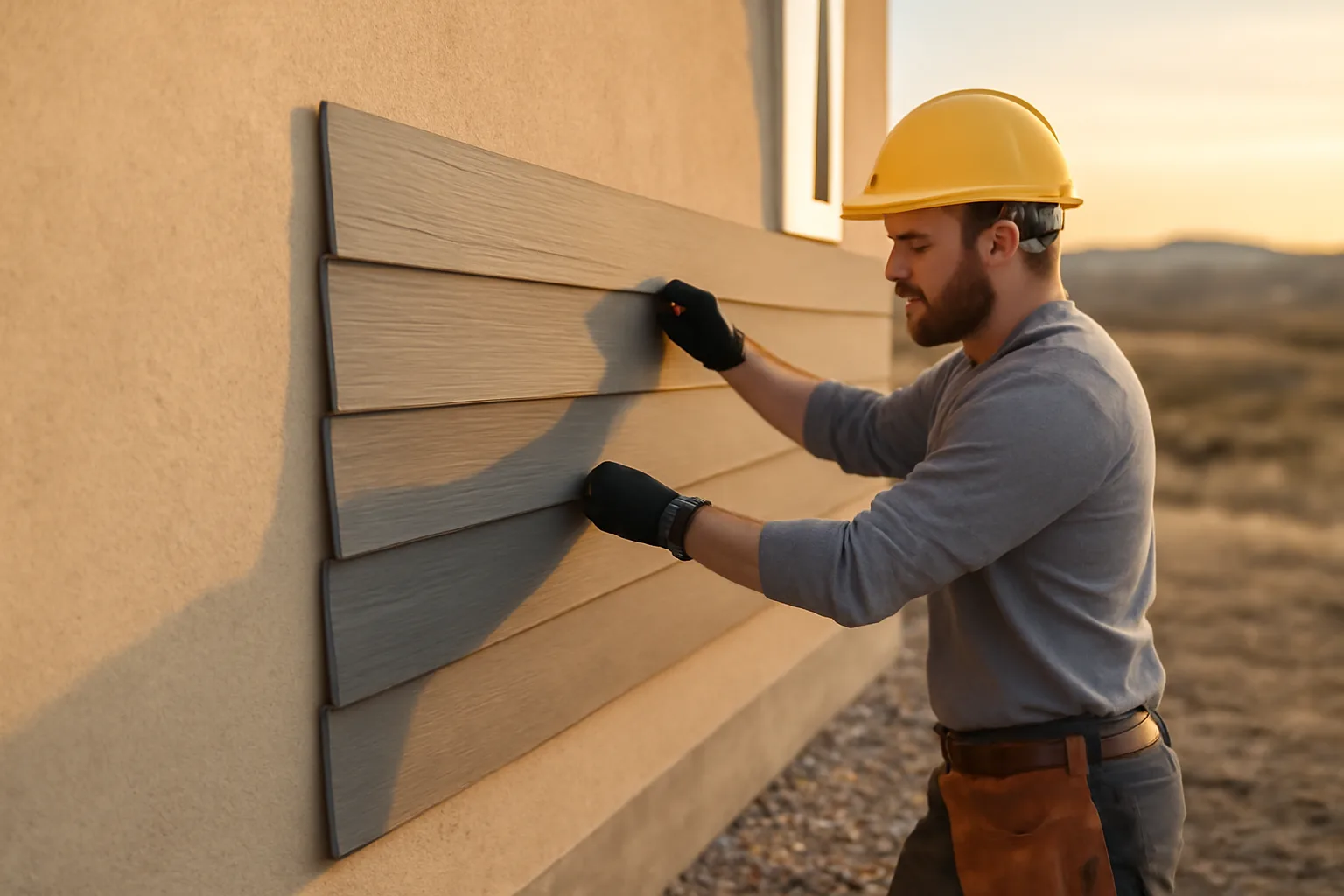
Embers, not flame fronts, destroy most homes in wildfires. The National Institute of Standards and Technology and CAL FIRE both point to the same finding: homes ignite because embers land on or near combustible materials, work into gaps, and smolder until they catch. So the materials that matter are the ones that block ember entry and stop small fires from spreading into the structure. Four things carry the most weight. A Class A fire-rated roof (asphalt shingle, tile, or metal, tested under ASTM E108) resists ignition far better than wood shakes or untreated shingles. Ember-resistant vents, sometimes called WUI (Wildland Urban Interface) vents, use fine mesh or intumescent material to block embers from entering attics and crawlspaces, a known failure point in post-fire investigations. Dual-pane windows with at least one tempered pane resist the radiant heat that shatters single-pane glass and lets embers and flame inside. And noncombustible siding, stucco, fiber cement, or brick, beats vinyl or wood siding, which can melt or ignite from radiant heat before the fire front even arrives. None of these are exotic. You can buy Class A shingles at any roofing supplier. The catch is cost and sequencing: reroofing a 2,000 square foot home runs roughly $8,000 to $25,000 depending on material (asphalt on the low end, tile or metal higher), and vent retrofits run a few hundred dollars per vent installed. If you're triaging, do vents and the 5-foot zone around the foundation first. They're cheap relative to a full re-roof and address the most common failure points.
When does the California defensible space law go into effect?
California's core defensible space law, Public Resources Code 4291, has been in effect for years and already requires 100 feet of defensible space clearance around structures in State Responsibility Areas (or to the property line, whichever is less) [1]. That part isn't new and isn't changing. What's newer is the "zone 0" ember-resistant zone rule, which would require the first 5 feet around a home to be nearly free of combustible material, no bark mulch, no wood fencing attached to the house, no combustible plants directly against siding. This was authorized by Assembly Bill 3074 (2020) and CAL FIRE's Board of Forestry has been developing the specific regulatory language since [2]. The honest answer on timing: this rule has been delayed multiple times. It was originally floated for 2023, then pushed toward 2025, and as of the most recent Board of Forestry updates it still hasn't been finalized statewide. Don't assume a hard date. Check CAL FIRE's defensible space page directly before budgeting around a specific deadline, because the effective date keeps moving and your local fire district may adopt stricter timelines on its own regardless of the state rule. [Guided fill-in: check with your local fire district or county fire marshal for the exact defensible space and zone 0 compliance date in your jurisdiction, since some counties have already adopted stricter local ordinances ahead of the state rule.]
What fire-safe home rules take effect in 2026?
There's no single nationwide "2026 fire code" that flips on for every homeowner. What's actually happening is a patchwork: California's zone 0 regulation remains under Board of Forestry review, some counties are adopting their own ember-resistant zone ordinances ahead of the state, and insurers in CA, CO, OR, and AZ are increasingly requiring defensible space documentation as a condition of renewal, independent of any statute. Colorado's wildfire mitigation disclosure requirements (HB23-1288) require sellers to disclose wildfire risk information at closing, and several Front Range counties have their own defensible space ordinances tied to specific fire districts [3]. Oregon's SB 762 wildfire risk map program has been through repeated revisions and delays after public pushback, and the state fire marshal's office has been the one implementing mapping and defensible space standards county by county [4]. Arizona doesn't have a statewide defensible space mandate comparable to California's, but local fire districts in areas like Prescott and Flagstaff enforce their own vegetation clearance rules. The practical move for 2026: don't wait for a single rule to "take effect." Contact your county fire marshal or local fire district now and ask what's already required in writing, because that's what an inspector will actually cite you on. [Guided fill-in: your local fire district's specific 2026 requirements, which vary by jurisdiction.]
Why won't people follow the defensible space law in California?
CAL FIRE inspection data has repeatedly found compliance rates well under half in many surveyed areas, and the reasons aren't mysterious: cost, labor, and confusion about what's actually required [1]. Clearing 100 feet of defensible space on a sloped, brush-covered lot isn't a weekend project. Homeowners on fixed incomes, especially retirees in fire-prone foothill communities, often can't afford to hire a crew, and DIY clearing on steep terrain is genuinely dangerous. There's also confusion: zone 1 (0-30 feet) and zone 2 (30-100 feet) have different clearance standards, and a lot of homeowners don't know the difference between "remove all vegetation" (wrong) and "space and prune vegetation to reduce continuity" (closer to correct) [1]. Then there's enforcement. Many California counties issue defensible space violations but follow up unevenly, and some homeowners simply gamble that inspectors won't return. That gamble has gotten more expensive since 2020, because insurers now frequently request proof of defensible space compliance before renewing a policy, sometimes independent of whether the county has cited the property at all. If you got a non-renewal notice or an inspection letter, treat it as the trigger to act now, not later. Insurers are increasingly using satellite and aerial imagery to check compliance from a distance, and a documented, dated record of work done matters more than a promise to comply. See our guide on fire safe landscaping in California for zone-by-zone plant and mulch specifics.
How to prevent wildfires around your own property
You can't prevent a wildfire from starting in the wilderness, but you can dramatically cut the odds that it destroys your specific house. That distinction matters: defensible space and home hardening are about survivability, not about stopping the fire itself. Start with ignition sources you control directly. Ready.gov and CAL FIRE both list debris burning, downed power lines, dragging trailer chains, and unmaintained equipment (mowers, chainsaws) as common wildfire ignition causes in wildland areas [5]. Keep a 5-foot noncombustible buffer around the house (the zone 0 concept mentioned above, worth doing now even before it's mandatory), clear dead vegetation and pine needles from gutters and roof valleys, and store firewood and propane tanks at least 30 feet from the structure. A one-page fact worth remembering: CAL FIRE's own research shows homes with both a Class A roof and enclosed eaves survive wildfires at meaningfully higher rates than homes missing either feature, because those two elements block the two most common ember entry points, roof debris and open eave vents. Beyond your lot line, community-level prevention matters too: report unattended campfires, follow local burn bans during red flag warnings, and support your local fire district's chipper day or vegetation removal programs if your area runs them.
How to prepare for a wildfire before it starts
Preparation splits into three buckets: the structure, the property, and the paperwork. Most guides only cover the first two. On the structure, work through Class A roofing, ember-resistant vents, tempered dual-pane windows, and noncombustible siding as covered above. On the property, maintain the defensible space zones (0-5, 5-30, 30-100 feet) with decreasing density requirements as you move outward from the house, per CAL FIRE's zone guidance [1]. Ready.gov also recommends an emergency go-bag with medications, copies of insurance documents, and a family communication plan, since evacuation windows in fast-moving fires can be under an hour. The paperwork piece gets overlooked constantly. Before a fire, or before your next insurance renewal review, photograph your roof, vents, siding, and cleared zones with a timestamp. Keep receipts for any hardening work. If your insurer sends a non-renewal or inspection letter, this documentation is what you send back, not a plea for leniency, just your own dated proof of the work completed. We are not a public adjuster and don't file claims or represent you in dealings with your insurer; you assemble the record and send it yourself. Our $99 Wildfire Insurance Survival Kit is built around exactly this: a structured way to document defensible space and hardening work so you have something concrete to hand an insurer, rather than starting from a blank folder after a non-renewal letter arrives. See also our breakdowns on what happens during a house fire and the anatomy of a fire at a house for what inspectors and investigators actually look at after the fact.
How to prevent forest fires and avoid forest fires in your area
Forest fire prevention at the individual level comes down to eliminating human-caused ignition sources, since most forest fires (not lightning-caused ones) start from people, according to National Park Service and CAL FIRE data pointing to debris burning, unattended campfires, and equipment sparks as leading causes [5]. Practical steps: never leave a campfire unattended, drown and stir ashes until cold before leaving a site, avoid parking or idling vehicles on dry grass (catalytic converters run hot enough to ignite dry vegetation), and check local burn restrictions before any outdoor debris burning, especially during red flag warning days. Chainsaws and mowers should carry spark arrestors where required, and outdoor equipment use is often restricted or banned entirely during high fire danger periods. At the community level, defensible space clearing isn't just personal protection, it slows fire spread between properties, which is why some fire districts require wildfire defensible space clearing contracts for larger parcels or shared boundary lines. If you live adjacent to open forest or wildland, coordinate with neighbors on shared clearance where property lines run through continuous fuel.
Is Santa Barbara safe from fire?
No coastal California community is "safe" from wildfire risk, and Santa Barbara County has direct experience with this: the 2017 Thomas Fire burned over 280,000 acres and was, at the time, the largest wildfire in modern California history, followed days later by the Montecito debris flow that killed 23 people when rain hit the burn scar [6]. Santa Barbara sits at the wildland-urban interface, with dense chaparral fuel on steep terrain right up against neighborhoods in Montecito, the foothills, and the Riviera area. CAL FIRE's Fire Hazard Severity Zone maps rate large sections of unincorporated Santa Barbara County as Very High Hazard . That designation triggers the state's 100-foot defensible space requirement and, for many properties, stricter local building and vegetation ordinances on top of it. The honest framing: Santa Barbara isn't uniquely dangerous compared to other chaparral-and-canyon communities in Southern California, but it's also not a place where you can assume distance from past fire scars means safety. If you own property in a Very High Hazard zone anywhere in the state, more than Santa Barbara, treat defensible space and home hardening as non-negotiable rather than optional insurance box-checking.
Class A roofing vs other roof types: how much does the material actually matter?
| Untreated wood shake | Non-rated / Class C | $12,000-$20,000 | Poor | |
|---|---|---|---|---|
| Asphalt shingle (Class A) | Class A | $8,000-$14,000 | Good | |
| Concrete or clay tile | Class A | $15,000-$25,000 | Very good | |
| Standing seam metal | Class A | $15,000-$25,000 | Very good | Cost ranges are rough national estimates and vary heavily by region, roof pitch, and whether tear-off is needed; get local quotes before budgeting. The bigger point holds regardless of price: if your roof isn't Class A rated and you're in a Fire Hazard Severity Zone, that's the first item on your hardening list, ahead of siding or landscaping, because roof ignition from direct ember fallout is one of the most documented home-loss mechanisms in wildfire investigations. |
The difference between roofing classes isn't marginal, it's close to the single biggest material choice you'll make for wildfire survivability. Untreated wood shake roofs are the material CAL FIRE and building codes specifically restrict in high hazard zones, because they ignite easily from wind-blown embers landing directly on the roof surface. | Roof material | Fire rating | Typical cost (2,000 sq ft) | Ember resistance |
What should I check before hiring a contractor for fire hardening work?
Verify licensing first, since wildfire hardening work (roofing, siding, vent retrofits) falls under standard state contractor licensing in California, Colorado, Oregon, and Arizona, and unlicensed work can void manufacturer warranties or create liability if something's installed wrong. Ask specifically whether the materials are WUI-rated or Class A rated, more than "fire resistant," since that marketing phrase has no enforced legal definition. Ember-resistant vents should carry a specific product listing (check for compliance with the relevant building code section your local jurisdiction enforces, often referencing California's Chapter 7A standards for WUI construction). Get everything in writing, including material specifications and model numbers, because that documentation is exactly what you'll want on hand if an insurer later asks for proof of hardening work. Get at least two quotes for any roofing or siding project over a few thousand dollars, and ask each contractor directly whether they've done WUI-compliant installs before, more than general roofing or siding work. The two aren't the same skill set.
How do I document fire hardening work for my insurer?
Photograph everything before, during, and after: the old roof or siding, the new material with visible product labels or model stickers, and the completed installation from multiple angles with a visible date stamp. Keep every receipt, permit, and contractor invoice in one folder, digital and physical. Insurers reviewing non-renewal appeals or renewal underwriting increasingly want to see specific, dated evidence, not a general claim that "we did defensible space work." A folder that shows a Class A roof installed on a specific date, ember-resistant vents with product documentation, and dated photos of your cleared 5-foot and 30-foot zones is a fundamentally stronger submission than a verbal assurance. We built the $99 Wildfire Insurance Survival Kit around exactly this gap: a structured way to organize your defensible space and hardening documentation into something an insurer can actually review, since most homeowners have the work done but not the paper trail to show for it. To be clear, we don't represent you to your insurer, file claims on your behalf, or promise any specific coverage or reinstatement outcome. You assemble your own documentation and send it yourself; this is not legal, insurance, or claims advice. For a broader walkthrough of what "defensible space" actually means zone by zone, see our core defensible space guide, and for a wider view of prevention messaging, see only you can prevent wildfires.
Frequently asked questions
When does the California defensible space law go into effect?
The core 100-foot defensible space law (Public Resources Code 4291) is already in effect and has been for years. The newer zone 0 (5-foot ember-resistant zone) rule authorized by AB 3074 is still under Board of Forestry review and has been delayed past earlier proposed dates. Check CAL FIRE's defensible space page for the current status in your county.
Why won't people follow the defensible space law in California?
Cost, labor, and confusion are the main reasons. Clearing 100 feet on sloped or brush-heavy land is expensive and physically demanding, many homeowners misunderstand zone 1 vs zone 2 requirements, and enforcement has historically been uneven across counties, though insurer scrutiny has made noncompliance riskier in recent years.
How to prevent wildfires from starting near my home?
Eliminate common ignition sources: don't burn debris on windy or dry days, keep vehicles and equipment off dry grass, use spark arrestors on mowers and chainsaws, and never leave a campfire unattended. Combine this with defensible space clearing so any nearby fire has less fuel to reach your structure.
How to prepare for a wildfire if I live in a high-risk zone?
Harden your home (Class A roof, ember-resistant vents, tempered windows), maintain defensible space in all three zones, build a go-bag with documents and medications, and set a family evacuation plan per Ready.gov guidance. Also photograph and document all hardening work in case your insurer requests proof later.
How to prevent forest fires when camping or working outdoors?
Drown and stir campfire ashes until cold before leaving, check local burn restrictions before any outdoor burning, avoid idling vehicles on dry grass, and use spark arrestors on chainsaws and other combustion equipment. Most forest fires are human-caused, so eliminating these specific ignition sources has outsized impact.
How to avoid forest fires on my own property line?
Coordinate defensible space clearing with neighbors where fuel is continuous across property lines, since a fire doesn't stop at a fence. Maintain your own 5, 30, and 100-foot zones per CAL FIRE guidance, and check whether your fire district requires a formal clearing contract for larger or shared parcels.
What fire-safe home rules take effect in 2026?
There's no single national 2026 rule. California's zone 0 ember-resistant zone regulation remains under state review, Colorado and Oregon have their own evolving disclosure and mapping programs, and many requirements are actually set at the county or fire district level. Check with your local fire marshal for what's binding where you live.
Is Santa Barbara safe from fire?
No coastal California community is fully safe from wildfire. Santa Barbara County experienced the 2017 Thomas Fire, over 280,000 acres burned, followed by a deadly debris flow. Much of the unincorporated county is mapped as Very High Fire Hazard Severity Zone by CAL FIRE, which triggers the state's 100-foot defensible space requirement.
How can we prevent forest fires as a community?
Support local fire district vegetation removal or chipper day programs, report unattended campfires or illegal burning, follow red flag warning burn bans, and coordinate defensible space clearing with neighbors on shared boundaries. Individual prevention adds up, but community-level fuel reduction slows fire spread between properties.
What is the difference between Class A, B, and C roofing for fire safety?
Class A roofing (tested under ASTM E108) offers the highest fire resistance and is required in many California Fire Hazard Severity Zones. Class B and C offer progressively less protection, and untreated wood shake roofs typically carry no fire rating at all, making them a common target for local bans in high-risk zones.
Are ember-resistant vents required by law?
In California, Chapter 7A of the building code requires ember- and flame-resistant vents for new construction and major remodels in Wildland-Urban Interface Fire Areas. Requirements for existing homes vary by county and fire district, so check with your local building department on retrofit requirements.
How much does it cost to make a home fire-resistant?
Costs vary widely: ember-resistant vent retrofits run a few hundred dollars per vent, a Class A reroof runs roughly $8,000 to $25,000 depending on material, and full defensible space clearing on a wooded lot can run into the thousands depending on terrain and vegetation density. Prioritize vents and the 5-foot zone first; they're the cheapest, highest-impact fixes.
Does defensible space actually stop a house from burning?
Defensible space reduces fuel near the structure so radiant heat and direct flame contact are less likely to ignite it, but it works alongside home hardening, not instead of it. CAL FIRE and NIST research both point to embers landing on vulnerable materials, more than approaching flame, as the primary way homes ignite even with clearance in place.
Sources
- California Public Resources Code Section 4291: 100 feet of defensible space clearance required around structures in State Responsibility Areas
- California Assembly Bill 3074 (2020): Authorizes the Board of Forestry to develop a 5-foot ember-resistant zone (zone 0) regulation
- Colorado House Bill 23-1288: Requires wildfire risk disclosure to home buyers in Colorado at time of sale
- Oregon Senate Bill 762 (2021): Establishes Oregon's wildfire risk mapping and defensible space standard-setting program
- CAL FIRE, Thomas Fire Incident Archive: 2017 Thomas Fire burned over 280,000 acres in Ventura and Santa Barbara counties
- CAL FIRE, Fire Hazard Severity Zone Maps: Fire Hazard Severity Zone maps rate portions of Santa Barbara County as Very High Hazard