Last updated 2026-07-25
TL;DR
Home Depot sells brick and stone veneer, but no single product labeled "fire resistant brick" satisfies wildfire building codes on its own. What matters is the whole wall assembly: noncombustible siding, ember-resistant vents, and Class A roofing tested to standards like ASTM E2707 or the California Chapter 7A code. Buy materials there, but plan the assembly first.
does home depot sell "fire resistant brick" for wildfire zones?
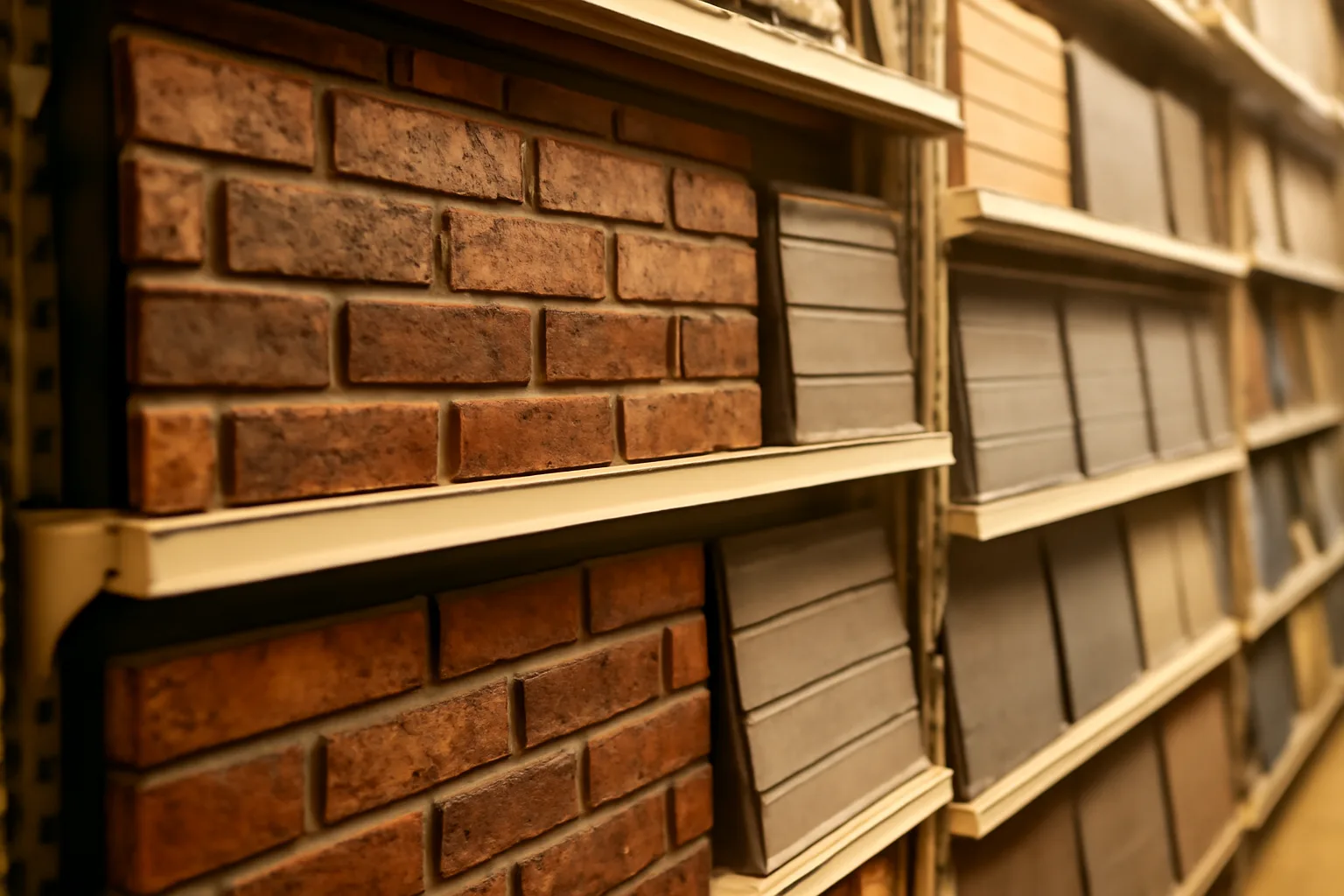
Home Depot sells brick veneer, concrete block, and manufactured stone, and all of these are noncombustible in the sense that they won't burn. But there's no single SKU on the shelf labeled "wildfire-rated brick" that meets a building code on its own. Brick and CMU (concrete masonry unit) are components of an ignition-resistant wall assembly, not a certified system by themselves. This matters because California's Chapter 7A code (the section of the state building code covering construction in Wildland-Urban Interface Fire Areas) doesn't certify individual bricks. It certifies wall assemblies, including the sheathing, the air gap, the fasteners, and the finish material, tested together under standards like ASTM E2707 (the standard test method for ignition of wood decking) or evaluated under the broader SFM 12-7A-1 through 12-7A-5 test series maintained by the California State Fire Marshal [1]. So if you're shopping at Home Depot for a wildfire retrofit, buy the brick or stone veneer as one layer of a system, not the whole solution. A brick veneer over combustible wood sheathing with gaps at the top, called a "weep screed" in stucco assemblies, can still let embers in behind the masonry if it's not detailed correctly. The code cares about the whole wall, more than the visible finish. If you want a home-hardening approach that actually maps to what inspectors check, start with the defensible space basics and layer in wall and vent upgrades from there.
what does california's chapter 7a code actually require for exterior walls?
California's Chapter 7A requires exterior walls in Wildland-Urban Interface Fire Areas to be either noncombustible construction, ignition-resistant material, or heavy timber, and any assembly used must be tested under the SFM standard test series or listed in the State Fire Marshal's Building Materials Listing Program [2]. In plain terms: stucco, fiber cement siding, brick veneer, and stone veneer over code-compliant sheathing all qualify as acceptable exterior wall coverings under Chapter 7A. Vinyl siding generally does not, because it melts and can expose the sheathing behind it to flame. Wood siding without fire-retardant treatment doesn't qualify either. The California Building Code section that governs this is Chapter 7A of the California Building Code (Title 24, Part 2), and local fire districts sometimes add stricter requirements on top of the state minimum. [Local fire district note: check with your county building department for any amendments to Chapter 7A adoption dates and enforcement zones in your specific area, since some counties enforce it more strictly on rebuilds than on existing homes.]
when does the california defensible space law go into effect?
California's core defensible space law, Public Resources Code 4291, has been in effect since it was last substantially amended in 2020, requiring 100 feet of defensible space clearance around structures in State Responsibility Areas and designated Very High Fire Hazard Severity Zones, or to the property line if it's closer [3]. The law itself isn't new; what keeps changing is enforcement and the zone-based clearance rules. CAL FIRE's own guidance breaks the 100 feet into two zones: Zone 0, the first 5 feet immediately around the structure, and Zone 1 and Zone 2 extending outward. Zone 0 has gotten the most attention lately because CAL FIRE and the state legislature have pushed for stricter ember-resistant landscaping rules right against the house. As of this writing, a statewide regulation defining specific Zone 0 requirements (things like no combustible mulch or plants within 5 feet of the structure) has been directed by state law (SB 63, chaptered in 2020, tasked the Board of Forestry with developing these standards) but the specific ember-resistant zone regulations have faced a longer rulemaking timeline than originally expected [4]. Check CAL FIRE's defensible space page directly for the current status before you assume a specific enforcement date, because rulemaking timelines shift. For the landscaping side of this, see fire safe landscaping california next to house for what's actually allowed within Zone 0 while the formal rule finalizes.
what fire safe rules for homes take effect in 2026?
There's a lot of noise online about a single sweeping "2026 wildfire code" but the honest answer is that most fire-hardening rules in California are phasing in gradually through Board of Forestry and Fire Protection rulemaking, not landing all at once on one date. What's actually moving: the Zone 0 ember-resistant zone standard under SB 63 has been in active rulemaking, and the Office of the State Fire Marshal and Board of Forestry have targeted phased effective dates that have shifted more than once as the regulatory process works through public comment periods [4]. Don't take a specific 2026 date as locked in without checking the Board of Forestry's current rulemaking page, because these dates move. Separately, insurers themselves are changing faster than the building code. California's Insurance Commissioner adopted regulations in 2024 requiring insurers writing FAIR Plan policies to give discounts or credits for wildfire mitigation efforts that meet the "Safer from Wildfires" framework, a regulation package finalized under the Department of Insurance in 2022 and expanded since [5]. That framework, not a single 2026 building code, is what's actually reshaping what homeowners do to their properties right now, because it ties directly to whether you can get or keep coverage. [Local fire district note: confirm your county's adoption timeline for the latest wildfire building code cycle, since some counties adopt state model code changes on a different schedule than the state's default effective date.]
why won't people follow the defensible space law in california?
The honest answer, based on what CAL FIRE inspectors and county fire officials describe publicly, is cost, labor, and confusion about what's actually required, not defiance. Clearing 100 feet of vegetation on a sloped, brush-covered lot isn't a weekend project. It can cost real money if you hire a contractor, and CAL FIRE's own defensible space guidance acknowledges that a lot of homeowners either don't know their property falls in a State Responsibility Area, don't understand the specific zone requirements, or assume a neighbor's overgrown lot next door means their own effort won't matter. There's also a genuine tension between defensible space rules and other priorities: erosion control, privacy screening, shade for energy costs, and in some cases local tree ordinances that conflict with clearance requirements. Homeowners sometimes get a defensible space violation notice and a tree protection notice from the same jurisdiction pointing in opposite directions. That's not an excuse, but it's a real reason compliance lags. Insurance non-renewal has become the sharper motivator than the legal requirement itself. A defensible space citation from CAL FIRE carries a modest fine; losing your homeowners policy carries a much bigger, faster cost. That's why more homeowners are treating defensible space work as insurance-survival prep, more than code compliance.
how to prevent wildfires (what individual homeowners actually control)
Most wildfires that threaten homes in California start from human activity or ember transport, not the fire itself walking up and torching a house. CAL FIRE's data shows the vast majority of wildfires in the state are human-caused, from equipment sparks, debris burning, vehicle fires, and unattended campfires [6]. At the individual level, you can't stop a wildfire from starting miles away, but you can dramatically reduce whether your specific structure ignites once embers arrive, and embers, not direct flame contact, are how most homes actually catch fire in wildland fire events. Research from the Insurance Institute for Business & Home Safety has found that ember intrusion through vents, gaps in roofing, and debris accumulation in gutters accounts for a large share of home ignitions during wildfires. That reframes "preventing wildfires" into two separate jobs: don't start one (defensible burning practices, spark arrestors on equipment, careful debris burning under permit) and don't let one that's already burning take your house (ember-resistant vents, noncombustible roofing, cleared gutters, Zone 0 clearance). Both matter, but only the second one is fully in your control once a fire is already burning nearby.
how to prepare for a wildfire
Wildfire prep splits into three timeframes: what you do this year, what you do this fire season, and what you do the day of an evacuation warning. This year: get defensible space clearance done to the CAL FIRE zone standards, upgrade or screen vents with 1/8 inch noncombustible mesh, clear roof and gutter debris, and document your home's current conditions with dated photos for insurance purposes. Ready.gov's wildfire preparedness guidance recommends building a go-bag with medications, documents, and basic supplies well before a warning, not during one. Every fire season: re-clear vegetation that's grown back (California brush regrows fast, sometimes within a single wet winter), check that your address is visible from the street for responding crews, and confirm your local emergency alert sign-up is current, since evacuation notices are often pushed through county-specific systems, more than a single statewide app. Day of a warning: load your go-bag, move any combustible patio furniture or doormats away from the structure if you have time, close windows and doors but leave them unlocked for firefighter access if instructed, and leave early rather than waiting for a mandatory order. Ready.gov specifically recommends leaving as soon as an evacuation is recommended rather than waiting for it to become mandatory, because roads clog and visibility drops fast once a fire is actively moving. This is also where having your documentation already organized pays off. A one-time reference like the $99 Wildfire Insurance Survival Kit exists for exactly this: a structured way to document your home's mitigation work and conditions before you need it for an insurance conversation, not during a crisis. We don't file claims or negotiate with insurers; you prepare your own file and send it yourself.
how to prevent forest fires and how to avoid forest fires
Forest fire prevention at the individual level is mostly about ignition sources: campfires, vehicles, equipment, and debris burning, since these account for the large majority of wildfire starts nationally, according to National Interagency Fire Center reporting cited by federal wildfire agencies [6]. Practical steps: never leave a campfire unattended and drown it completely (stir the ashes, feel for heat) before leaving, since a campfire that looks out doesn't mean it's out. Avoid driving or parking on dry grass, since a hot undercarriage or catalytic converter is a documented ignition source. Don't use equipment like chainsaws, mowers, or grinders during red flag warning conditions if you can avoid it, and keep a fire extinguisher and shovel nearby if you do. Check local burn permit requirements before any debris burning; most California counties require a permit and specific weather conditions. None of this is complicated, but it does require actually changing habits during high-risk months, which is where a lot of prevention messaging fails. Smokey Bear's "Only You Can Prevent Wildfires" campaign exists because ignition prevention is genuinely one of the few wildfire variables an individual fully controls; see only you can prevent wildfires for more on what that campaign actually asks people to do.
how to prepare for forest fires as a homeowner near wildland
If your home borders forest or wildland rather than urban brush, the prep looks similar to general wildfire prep but with more emphasis on the tree canopy itself. CAL FIRE's defensible space guidance for Zone 2 (the outer zone, 30 to 100 feet from the structure) calls for reduced fuel continuity: spacing between tree canopies, removing ladder fuels (shrubs and small trees that let fire climb from ground to canopy), and keeping dead and downed material cleared. Homes near forest also face a longer potential fire season and often less direct access for fire crews, since rural roads can be narrow, unpaved, or gated. Make sure your address is clearly marked and reflective, confirm there's a turnaround for fire apparatus if your driveway is long, and keep a water source (pond, tank, hydrant) noted for responding crews if one exists on your property. A propane tank, if you have one, needs its own clearance zone separate from structure defensible space; check with your propane provider and local fire marshal for the specific distance requirement in your district, since these vary.
is santa barbara safe from fire?
No coastal California community, including Santa Barbara, is fully "safe" from wildfire risk, and the area has a documented history of major fires, including the 1990 Painted Cave Fire and the 2017 Thomas Fire, which at the time was the largest wildfire in modern California history by acreage before later fires surpassed it [7]. Santa Barbara County has significant areas mapped as Very High Fire Hazard Severity Zones by CAL FIRE, particularly in the foothill communities like Montecito, Mission Canyon, and the areas bordering the Los Padres National Forest . The 2018 Montecito debris flow, which followed the Thomas Fire burn scar, is also a reminder that post-fire risk (denuded hillsides, mudslides after burned watersheds get heavy rain) is a real secondary hazard in this specific geography, more than the fire itself. If you own property in or near Santa Barbara's higher-risk zones, check your specific parcel against CAL FIRE's Fire Hazard Severity Zone maps directly, since risk varies block by block depending on slope, vegetation, and distance from wildland, and a general "is this city safe" question doesn't hold up at the property level.
how can we prevent forest fires (community and policy level)
At the community level, forest fire prevention leans on fuel reduction projects, prescribed burns, and enforcement of defensible space requirements across a neighborhood, since a single compliant home surrounded by unmanaged lots still faces real risk from ember cast and radiant heat. CAL FIRE and the U.S. Forest Service both run prescribed fire and mechanical thinning programs aimed at reducing the dense fuel loads that build up after decades of fire suppression, though funding and staffing for these programs varies year to year and has been a subject of ongoing state and federal budget debate. Community Wildfire Protection Plans, developed at the county or fire district level, are the formal mechanism many California counties use to coordinate fuel breaks, evacuation routes, and defensible space enforcement across a whole community rather than parcel by parcel. For individual homeowners, the most useful community-level action is often participating in a Firewise USA community (a National Fire Protection Association recognition program) or a local fire safe council, since these groups coordinate shared chipper days, group vegetation clearance, and grant funding that an individual homeowner usually can't access alone.
what to actually buy at home depot for a wildfire-hardening retrofit
| Vent covers/mesh | 1/8 inch noncombustible metal mesh, no larger | Blocks ember intrusion, the leading cause of home ignition in wildfires | |
|---|---|---|---|
| Roofing | Class A rated (asphalt shingle, tile, or metal) | Required in most WUI zones under Chapter 7A | |
| Siding/veneer | Fiber cement, stucco, brick, or stone veneer over rated sheathing | Noncombustible finish reduces direct flame contact risk | |
| Gutter guards | Metal, not plastic | Plastic guards melt and can trap embers with debris | |
| Deck boards | Ignition-resistant treated lumber or noncombustible composite | Decks are a common ignition point adjacent to structures | |
| Door/window trim | Metal or fiber cement, avoid vinyl near WUI | Vinyl melts and creates gaps under heat | Brick and stone veneer are genuinely useful, but only as one layer. Buy them, but budget separately for the sheathing, house wrap, and flashing details that actually make the assembly work, and confirm with your local building department that the full assembly is Chapter 7A compliant before you consider the job insurance-documentation-ready. |
If you're standing in the aisle trying to figure out what's genuinely useful, here's a practical short list, cross-checked against what Chapter 7A and NFPA wildfire guidance actually call for, not what's marketed as "fire resistant" on a shelf tag. | Item | What to look for | Why it matters |
Frequently asked questions
when does the california defensible space law go into effect?
The core law, Public Resources Code 4291, has been in effect since its 2020 amendment and requires 100 feet of defensible space around structures in State Responsibility Areas. Newer Zone 0 ember-resistant standards under SB 63 are still finalizing through Board of Forestry rulemaking, so check CAL FIRE's site for the current enforcement status in your area.
why won't people follow the defensible space law in california?
Mostly cost, labor availability, and confusion about zone requirements, not defiance. Clearing a sloped, brush-covered lot to 100 feet is expensive and physically demanding, and CAL FIRE reports many homeowners aren't sure their property falls in a State Responsibility Area or don't understand the layered zone rules.
how to prevent wildfires as an individual homeowner?
Two separate jobs: don't start one (never leave campfires unattended, avoid parking on dry grass, follow local burn permit rules) and don't let one already burning ignite your house (ember-resistant vents, Class A roofing, cleared gutters, defensible space). Most home losses in wildfires come from ember intrusion, not direct flame contact.
how to prepare for a wildfire?
Build a go-bag with medications and documents before fire season starts, clear defensible space to CAL FIRE zone standards, screen vents with 1/8 inch metal mesh, and sign up for your county's emergency alerts. When a warning comes, leave early rather than waiting for a mandatory order, per Ready.gov guidance.
how to prevent forest fires?
Fully extinguish campfires (stir ashes, feel for heat), avoid driving or parking on dry grass, follow local burn permit rules for debris burning, and avoid equipment use like chainsaws or grinders during red flag warning conditions. Most wildfires nationally are human-caused, not naturally ignited.
is brick a fire resistant building material for wildfire zones?
Brick itself won't burn, but a single brick or veneer product doesn't meet wildfire building code on its own. California's Chapter 7A requires the whole wall assembly, including sheathing and detailing, to be tested and listed, more than the visible finish material.
does home depot sell chapter 7a compliant siding?
Home Depot sells materials (fiber cement siding, brick veneer, stucco components) that can be part of a Chapter 7A compliant assembly, but no single product is sold pre-certified as "Chapter 7A compliant." Compliance depends on the full assembly and installation, which your local building department verifies.
what fire safe rules for homes take effect in 2026?
There's no single sweeping 2026 code; California's Zone 0 ember-resistant standard under SB 63 has been in phased rulemaking with shifting target dates. Separately, the state's 2022 "Safer from Wildfires" insurance regulation is already requiring insurers to credit mitigation work, which is driving faster homeowner action than the building code itself.
is santa barbara safe from fire?
No. Santa Barbara County has significant Very High Fire Hazard Severity Zone areas, especially in foothill communities near Los Padres National Forest, and has a documented history including the 1990 Painted Cave Fire and 2017 Thomas Fire. Check CAL FIRE's hazard maps at the parcel level rather than assuming city-wide safety.
how can we prevent forest fires at the community level?
Community-level prevention relies on prescribed burns, mechanical fuel thinning, and coordinated defensible space enforcement across whole neighborhoods, since one compliant home surrounded by unmanaged lots still faces ember and radiant heat risk. Firewise USA communities and local fire safe councils often coordinate this work and access grant funding individuals can't get alone.
what's the difference between fire resistant and fireproof materials?
Nothing is truly fireproof under sustained wildfire exposure. "Fire resistant" or "ignition resistant" materials, the terms used in California's building code, delay ignition and limit flame spread for a tested duration, but they can still fail under prolonged direct flame or extreme radiant heat.
do i need a permit to install fire resistant siding in a wildfire zone?
Usually yes. Exterior wall covering changes in a Wildland-Urban Interface Fire Area typically require a building permit so your local department can verify the assembly meets Chapter 7A, and permit requirements vary by county and by whether you're doing a full re-side or a repair.
Sources
- California State Fire Marshal, Building Materials Listing Program: Wildfire wall assemblies are tested and listed under the SFM 12-7A series, not certified as individual products
- California Building Standards Commission, California Building Code Chapter 7A: Chapter 7A requires exterior walls in WUI fire areas to be noncombustible, ignition-resistant, or heavy timber construction, tested per SFM standards
- California Public Resources Code Section 4291: Requires 100 feet of defensible space clearance around structures in State Responsibility Areas
- California Board of Forestry and Fire Protection, SB 63 Zone 0 Rulemaking: Zone 0 ember-resistant zone standards are in active rulemaking under SB 63 with shifting effective dates
- California Department of Insurance, Safer from Wildfires Regulation: Insurers must provide discounts or credits for wildfire mitigation actions meeting the Safer from Wildfires framework
- National Interagency Fire Center, Statistics: The large majority of wildfires nationally are human-caused rather than naturally ignited
- CAL FIRE, Fire Hazard Severity Zone Maps: Santa Barbara County includes areas mapped as Very High Fire Hazard Severity Zones, particularly in foothill communities