Last updated 2026-07-25
TL;DR
Home Depot doesn't stock gloves labeled specifically for wildfire defense, but its welding gloves (leather, sometimes with Kevlar stitching) and heavy leather work gloves handle ember exposure and brush clearing reasonably well. Look for leather or Nomex-blend pairs rated for at least 300-500°F contact heat, not cotton or synthetic gloves that melt.
do home depot gloves actually work for wildfire prep
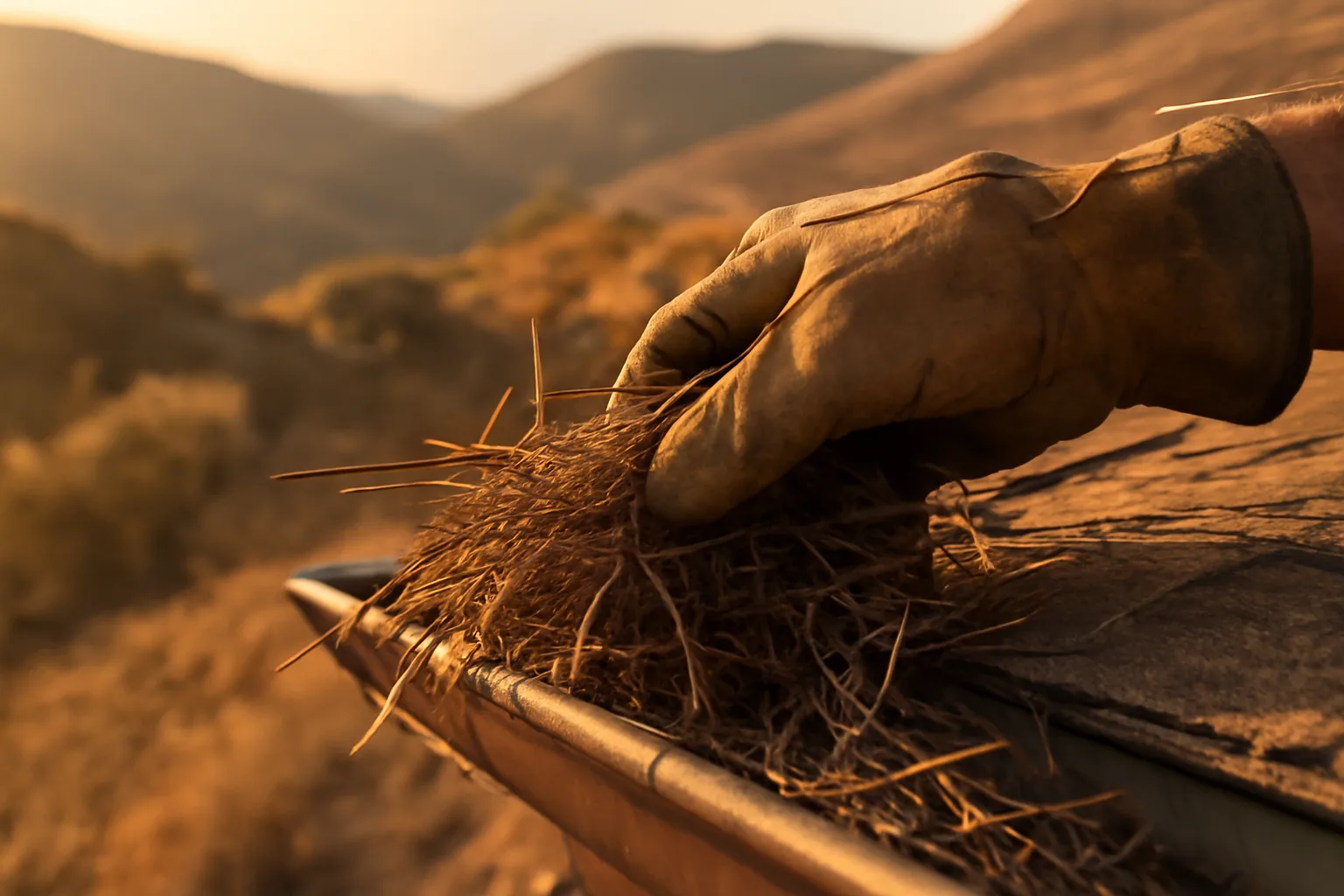
Yes, with a caveat. Home Depot doesn't sell a glove marketed as "wildfire glove." What it sells is welding gloves, heavy leather work gloves, and some cut-resistant gloves, and several of those overlap with what firefighters and defensible-space crews actually use for ember exposure and brush clearing. The category that matters most is leather welding gloves. Brands like Lincoln Electric, Forney, and Wells Lacy show up in Home Depot's welding aisle and online catalog, and most are rated for direct contact with sparks and short heat exposure in the 300 to 500°F range. That's roughly the same demand you get from handling hot embers, pulling burning debris off a roof, or working near a smoldering brush pile after a fire pass. What won't work: garden gloves with a cotton or synthetic knit back, rubber-dipped gloves, or anything advertised as "breathable" mesh. Those melt or scorch fast. If a glove's tag says polyester, nylon, or spandex anywhere in the blend, skip it for fire work. Leather, cowhide, or a leather-and-Kevlar combo is what you want. For actual structural firefighting, nothing sold at a home improvement store meets NFPA 1971, the standard for structural firefighting protective ensembles [1]. That gear is built for a different job (interior fire attack) and isn't what a homeowner needs anyway. What you need is ember and radiant-heat protection while you clear gutters, move a hose, or defend your own perimeter, and welding-grade leather gloves cover that reasonably well.
what should i actually look for on the label
Check three things: material, cuff length, and heat rating. Full-grain leather (cowhide or elkskin) is the baseline. A gauntlet cuff (extending 4 to 6 inches past the wrist) keeps embers from falling into the glove while you work overhead or near brush. Some welding gloves list a temperature rating, often something like "withstands direct flame contact up to 900°F for short duration" on the packaging insert. Treat these numbers as manufacturer claims, not third-party certified test results, unless the glove specifically states an ASTM F1060 (thermal protective performance) or NFPA rating. Most consumer welding gloves at Home Depot don't carry those certifications; they're built for welding spark exposure, not sustained flame contact. Avoid insulated winter work gloves with foam or synthetic fill. The fill can melt against skin even if the outer shell is leather. A lighter, uninsulated leather glove that you can move your fingers in is more useful for defensible-space work than a bulky winter glove. If you're clearing brush, adding a pair of cut-resistant gloves (often rated ANSI/ISEA A2 or higher) under or instead of leather gloves helps with thorny plants and saw work, but cut-resistant fabric (usually a knit blend) isn't the same as heat-resistant. Don't substitute one for the other.
how to prepare for a wildfire beyond gloves
Gloves are one line item in a much longer list. The federal starting point is Ready.gov's wildfire preparedness guidance, which recommends building a go-bag, planning two evacuation routes out of your neighborhood, and signing up for local emergency alerts before fire season starts. CAL FIRE's Ready for Wildfire program breaks preparation into three buckets: harden your home (Class A roofing, ember-resistant vents, enclosed eaves), maintain defensible space in the zones around the structure, and have a personal evacuation plan with a go-bag ready year-round. None of that requires special gear beyond basic PPE (gloves, eye protection, an N95 or P100 mask for smoke and ash) and hand tools. A practical prep list looks like this: leather gloves for ember and debris handling, safety glasses, a rake and shovel for clearing dead vegetation, a garden hose long enough to reach your roofline, and a documented inventory of your property (photos and video) stored somewhere other than your house. That last item matters more than most people think, especially if you're dealing with an insurer after a loss. For a structured way to pull that documentation together before something happens, the Wildfire Insurance Survival Kit is a one-time $99 tool that walks you through photographing and logging your home and defensible-space work so you have it ready if you ever need to show an insurer what you did. It doesn't file claims or negotiate coverage for you; you keep control of your own documentation and submit it yourself.
how to prevent wildfires around your own property
Most wildfire prevention at the homeowner level comes down to reducing ignition sources and breaking up fuel continuity, not gear. CAL FIRE's defensible space guidance divides the area around a home into Zone 0 (0-5 feet, ember-resistant zone), Zone 1 (5-30 feet), and Zone 2 (30-100 feet), with different vegetation and clearance rules for each. Zone 0 is the newest and strictest requirement. Under California's SB 63 (2024) and the framework built on Public Resources Code section 4291, Zone 0 requires homeowners to remove combustible materials, mulch, and most vegetation within 5 feet of the structure [2]. That means no bark mulch against the foundation, no wood piles against the house, and no overhanging branches within that first 5-foot ring. Outside your own lot, national-level forest fire prevention (the kind Smokey Bear campaigns talk about) is mostly about how people behave outdoors: fully extinguishing campfires, not parking hot vehicles on dry grass, following local burn ban rules, and reporting unattended fires. The U.S. Forest Service and CAL FIRE both point to human activity as the cause of the large majority of wildfires nationally, though exact percentages vary by year and region, so check your state's current fire cause statistics rather than relying on a single old number. For the property-specific rules, work in your specific fire district: [fill in local fire district name] sets clearance requirements that may be stricter than the state minimum, so check with them before doing major vegetation removal.
how do i prevent forest fires when i'm not a homeowner
If you're camping, hiking, or driving through wildland areas, forest fire prevention is mostly about eliminating accidental ignition sources. Ready.gov and the U.S. Forest Service both emphasize: never leave a campfire unattended, drown and stir campfire ashes until they're cold to the touch, don't park or idle vehicles over dry grass (catalytic converters can ignite it), and avoid using fireworks, exploding targets, or tracer ammunition in dry conditions. Check local burn restrictions before doing any outdoor burning, including debris piles or agricultural burns. Most states run a public burn-permit lookup tied to current weather and drought conditions, and permits get suspended fast when red flag warnings are in effect. If you see an unattended or growing fire, call 911 immediately rather than trying to handle it yourself. Reporting fast is the single most effective thing an individual can do; wildfires that get caught in the first few minutes are dramatically cheaper and safer to put out than ones that get a 20-minute head start.
when does the california defensible space law go into effect
California's core defensible space law isn't new; Public Resources Code 4291 has required 100 feet of defensible space clearance around structures in State Responsibility Areas since it was amended in 2005 [3]. What's changing is Zone 0. SB 63, signed in 2024, directs the Board of Forestry and Fire Protection to adopt Zone 0 ember-resistant zone regulations, and the state's current timeline targets these rules taking effect for existing homes on a phased basis, with enforcement details still being finalized through the rulemaking process [2]. As of this writing, CAL FIRE's own Zone 0 guidance describes the regulation as "in development," with the agency publishing draft standards for public comment before formal adoption. Because the exact effective date has moved during the rulemaking process, don't rely on a single date you saw somewhere online. Check CAL FIRE's Zone 0 page directly, and check with [your local fire district] for enforcement timing in your specific area, since some jurisdictions adopt stricter local ordinances ahead of the state deadline.
what fire safe rules for homes take effect in 2026
The honest answer is: it depends on your state and jurisdiction, and rulemaking is still moving. California's Zone 0 ember-resistant zone standard has been targeted for phased implementation, with the Board of Forestry and Fire Protection working through formal rulemaking under SB 63; check the board's current rulemaking docket for the exact applicability date for your property type [2]. Separately, California's wildfire-related building code updates (Chapter 7A of the California Building Code, covering ignition-resistant construction materials) apply to new construction and some remodels in Wildland-Urban Interface Fire Areas, and code cycles update roughly every three years [4]. If you're building or doing a major remodel in a WUI zone, check with your local building department on which code cycle applies to your permit. Oregon, Colorado, and Arizona each have their own separate timelines. Oregon's wildfire risk map and defensible space code requirements under Senate Bill 762 have gone through multiple revisions since 2021 after public pushback over risk classifications [5]. Colorado doesn't have a single statewide defensible space mandate; it's handled at the county and fire-district level, so check your county's wildfire mitigation ordinance directly. Because these dates keep shifting as agencies respond to public comment, verify directly with your state fire marshal's office before assuming a specific 2026 deadline applies to you.
why won't people follow the defensible space law in california
Compliance is genuinely uneven, and the reasons aren't mysterious: cost, labor availability, and enforcement gaps all play a part. Clearing 100 feet of defensible space on a sloped, brush-heavy lot can run from a few hundred dollars for a small flat yard to several thousand for a large hillside property, depending on vegetation density and whether you hire a contractor or do it yourself. Enforcement also varies a lot by county. Some fire districts do annual inspections and issue citations for non-compliance; others are stretched thin and rely mostly on complaint-driven inspections. A 2021 audit by the California State Auditor found that CAL FIRE's own defensible space inspection program had significant gaps in tracking compliance and following up on violations, which points to enforcement capacity as a real bottleneck, more than homeowner reluctance [6]. There's also a genuine disagreement problem: some homeowners believe removing mature trees or established landscaping hurts property value or shade cooling more than it helps fire safety, and they're not entirely wrong on the cooling tradeoff, even though the fire-safety case for clearance right next to the structure is well supported. The right answer usually isn't clearing everything; it's being strategic about the first 5 and 30 feet, where the science on ember ignition is clearest, and being more flexible further out. For a deeper breakdown of what belongs in each zone, see fire safe landscaping California next to house.
how to prepare for forest fires if you live near wildland
If your property borders wildland or open brush, preparation starts with the same defensible-space zones CAL FIRE outlines: an ember-resistant Zone 0 immediately against the structure, a lean Zone 1 out to 30 feet, and a thinned, spaced-out Zone 2 out to 100 feet where terrain allows. Beyond vegetation, check your home's own vulnerabilities: unscreened attic and foundation vents let embers in and are a major cause of home ignition during wildfires, according to CAL FIRE's home hardening guidance. Screening vents with 1/8-inch metal mesh, keeping gutters clear of dry leaves, and storing firewood at least 30 feet from the house are all low-cost fixes that matter more than most people expect. Have a go-bag ready year-round if you're in a high fire-risk area, more than during red flag warnings. Ready.gov recommends including copies of insurance documents, medications, and a battery-powered radio in that bag. If your area has a known fire-prone season, do your defensible-space clearing before it starts, not during a red flag warning when contractors and rental equipment are booked solid. For a wider look at what a documented, insurer-ready hardening plan looks like room by room, see defensible, and if you're dealing with a fire that's already reached a structure nearby, house fire and fire at a house cover immediate response steps.
is santa barbara safe from fire
No area in California's chaparral and coastal foothill zones can be called fully safe from fire, and Santa Barbara County has a long, well-documented wildfire history. The Thomas Fire (2017) burned over 281,000 acres and was followed within weeks by the Montecito debris flow, which killed 23 people after the burned hillsides above Montecito failed to hold soil during heavy rain . The Jesusita Fire (2009) and the Gap Fire (2008) also burned close to Santa Barbara neighborhoods in the foothills. What that history tells you: the risk isn't evenly distributed across the county. Homes in the foothills and canyon-adjacent neighborhoods (the wildland-urban interface areas mapped by CAL FIRE) carry meaningfully higher fire risk than homes closer to the coast or in denser, more cleared urban blocks. Check your specific address against CAL FIRE's Fire Hazard Severity Zone maps, which are publicly available and used by insurers and local building departments to set requirements. If you're in a foothill or canyon-adjacent Santa Barbara neighborhood, defensible space and Zone 0 hardening aren't optional extras; they're the main lever you control, since you can't change the terrain or the wind patterns that drove the Thomas Fire's spread.
how can we prevent wildfires at the community level
Individual defensible space work matters, but wildfires spread through neighborhoods largely because of ember cast between structures, more than direct flame contact with wildland vegetation. That means one homeowner's hardened, cleared property can still be at risk if the house next door has a wood pile against its wall or an unscreened vent. Community-level prevention usually involves coordinated efforts: neighborhood-wide chipper days for green waste, shared contracts for roadside brush clearing along shared access roads, and Firewise USA-style community programs that the National Fire Protection Association coordinates with local fire departments. Some California counties also run cost-share programs that subsidize a portion of defensible-space work for lower-income or elderly homeowners; check with your county fire department or local RCD (Resource Conservation District) for what's available in your area. If your neighborhood is served by a common access road, clearing vegetation along that road matters almost as much as clearing your own lot, since blocked or overgrown roads slow both evacuation and fire engine access. If you're dealing with a shared boundary or access-road clearing project, wildfire defensible space clearing contracts Washington State DNR covers how those shared clearing agreements typically get structured, even for readers outside Washington, since the contract structure translates across states.
what's the difference between fire-resistant and fireproof gloves
Nothing sold to consumers, including at Home Depot, is truly fireproof. "Fire-resistant" means the material resists ignition and slows heat transfer for a limited time and temperature range; it doesn't mean indefinite protection from direct flame. Leather is naturally fire-resistant because it chars rather than melts, which is why it's the base material for welding gloves, farrier gloves, and most fire-adjacent work gloves sold at hardware stores. Nomex (a DuPont aramid fiber) is a step up, used in actual firefighter turnout gear and some higher-end consumer gloves, because it resists ignition at much higher temperatures and doesn't melt onto skin the way synthetic fibers do. For homeowner wildfire prep, you don't need Nomex-rated gloves. A solid pair of leather welding gauntlets, the kind sold in Home Depot's welding and work-glove aisles for $15 to $40, covers ember handling, hot debris, and general defensible-space work. Save the higher-end Nomex gear for anyone doing actual fire suppression work, which isn't the job of a homeowner defending their own property from a safe distance.
a realistic wildfire prep checklist to pair with gloves
| Leather welding gloves | Ember and hot debris handling | $15-$40 | |
|---|---|---|---|
| N95/P100 respirator | Smoke and ash inhalation protection | $15-$30 (multi-pack) | |
| Metal vent screens (1/8-inch mesh) | Blocks ember intrusion into attic/foundation vents | $10-$25 per vent | |
| Long garden hose + nozzle | Wetting down roof and Zone 0 area | $30-$70 | |
| Go-bag with documents, meds, radio | Fast evacuation readiness | $50-$150 | |
| Property photo/video inventory | Insurer documentation after a loss | Free (your time) or $99 for a guided kit | That last line is where a lot of homeowners fall short, not because they don't do the mitigation work, but because they never document it. If your insurer sends a non-renewal notice or a wildfire inspection letter, having dated photos of your cleared Zone 0, screened vents, and stored firewood matters more than being able to describe the work verbally. The Wildfire Insurance Survival Kit is built around that exact gap: a one-time $99 tool to help you photograph, log, and organize your defensible-space and hardening work into something you can hand an insurer yourself. It's not a substitute for a public adjuster or an attorney, and it doesn't negotiate your policy or guarantee reinstatement; it just makes sure you have your own paper trail ready. |
Gloves solve one problem: protecting your hands while you work. Pair them with the rest of a basic kit so you're not improvising during a red flag warning. | Item | Why it matters | Rough cost |
Frequently asked questions
When does the California defensible space law go into effect?
The core 100-foot defensible space requirement (Public Resources Code 4291) has been in effect since 2005. The newer Zone 0 ember-resistant zone rule under SB 63 (2024) is still moving through Board of Forestry rulemaking, with a phased effective date; check CAL FIRE's Zone 0 page for the current applicability date for your property type.
Why won't people follow the defensible space law in California?
Cost, labor shortages, uneven enforcement, and disagreement over losing shade trees or landscaping all play a part. A 2021 California State Auditor report found gaps in CAL FIRE's own tracking and follow-up on defensible space compliance, showing enforcement capacity, more than homeowner reluctance, is part of the problem.
How do I prevent wildfires around my own home?
Maintain defensible space in the zones CAL FIRE defines (0-5, 5-30, and 30-100 feet), harden vents and roofing against embers, keep gutters and roof valleys clear of dry debris, and store firewood at least 30 feet from the structure. Most home ignitions during wildfires come from embers, not direct flame contact.
How do I prepare for a wildfire if I get a non-renewal letter?
Document your existing mitigation work with dated photos, complete any missing defensible-space or vent-screening work your fire district requires, and keep records of receipts and completion dates. Ready.gov also recommends having a go-bag and evacuation plan ready regardless of your insurance status.
How can we prevent forest fires when camping or hiking?
Fully extinguish campfires by drowning and stirring ashes until cold, never leave a fire unattended, avoid parking on dry grass, check local burn restrictions before any outdoor burning, and report unattended fires to 911 immediately. Most forest fires nationally start from human activity, not lightning.
What fire-safe rules for homes take effect in 2026?
There's no single nationwide 2026 deadline. California's Zone 0 rule is in phased rulemaking under SB 63, Oregon's wildfire risk map and code requirements under SB 762 have shifted multiple times since 2021, and Colorado handles it at the county level. Check your state fire marshal's site for your specific timeline.
Is Santa Barbara safe from fire?
No area of Santa Barbara County is fully safe from fire risk, especially foothill and canyon-adjacent neighborhoods. The 2017 Thomas Fire burned over 281,000 acres and was followed by a debris flow that killed 23 people in Montecito. Check your address against CAL FIRE's Fire Hazard Severity Zone maps for your specific risk level.
Do fire-resistant gloves from Home Depot meet firefighter standards?
No. Structural firefighting gloves must meet NFPA 1971, and most consumer welding or leather work gloves sold at Home Depot don't carry that certification. They're built for spark and heat exposure during welding or general work, which overlaps usefully with ember handling, but they aren't rated for interior fire attack.
What material should fire-resistant work gloves be made of?
Full-grain leather (cowhide or elkskin) is the standard base material because it chars instead of melting. Nomex, a DuPont aramid fiber used in actual firefighter turnout gear, offers higher heat resistance but costs more and isn't necessary for typical homeowner ember-handling and defensible-space work.
How much does defensible space clearing typically cost?
It varies widely by lot size, slope, and vegetation density, from a few hundred dollars for a small flat yard to several thousand for a large hillside property with heavy brush. Get quotes from local licensed contractors and check whether your county offers a cost-share or subsidy program for the work.
What's the difference between Zone 0, Zone 1, and Zone 2 in California?
Zone 0 is 0-5 feet from the structure and requires an ember-resistant area with minimal combustible material. Zone 1 is 5-30 feet, requiring lean, clean, and green landscaping. Zone 2 is 30-100 feet, focused on reduced fuel continuity. Requirements come from CAL FIRE's defensible space program under Public Resources Code 4291.
Can I use welding gloves instead of dedicated wildfire gloves?
Yes, for homeowner-level ember handling and defensible-space work, leather welding gloves are a practical, widely available choice. They aren't certified for structural firefighting, but that's not the job a homeowner needs them for. Avoid insulated winter gloves with synthetic fill, which can melt against skin.
Sources
- NFPA 1971: Standard on Protective Ensembles for Structural Fire Fighting and Proximity Fire Fighting: NFPA 1971 is the standard for structural firefighting protective ensembles
- California SB 63 (2024), Legislative Information: SB 63 directs Board of Forestry and Fire Protection to adopt Zone 0 ember-resistant zone regulations
- California Public Resources Code Section 4291: 100-foot defensible space clearance requirement around structures in State Responsibility Areas
- California Building Code, Chapter 7A: Ignition-resistant construction material requirements for Wildland-Urban Interface Fire Areas
- Oregon SB 762 (2021), Oregon State Legislature: Oregon's wildfire risk map and defensible space code requirements originate from SB 762
- CAL FIRE, Thomas Fire Incident Information: Thomas Fire (2017) burned over 281,000 acres in Ventura and Santa Barbara counties