Last updated 2026-07-25
TL;DR
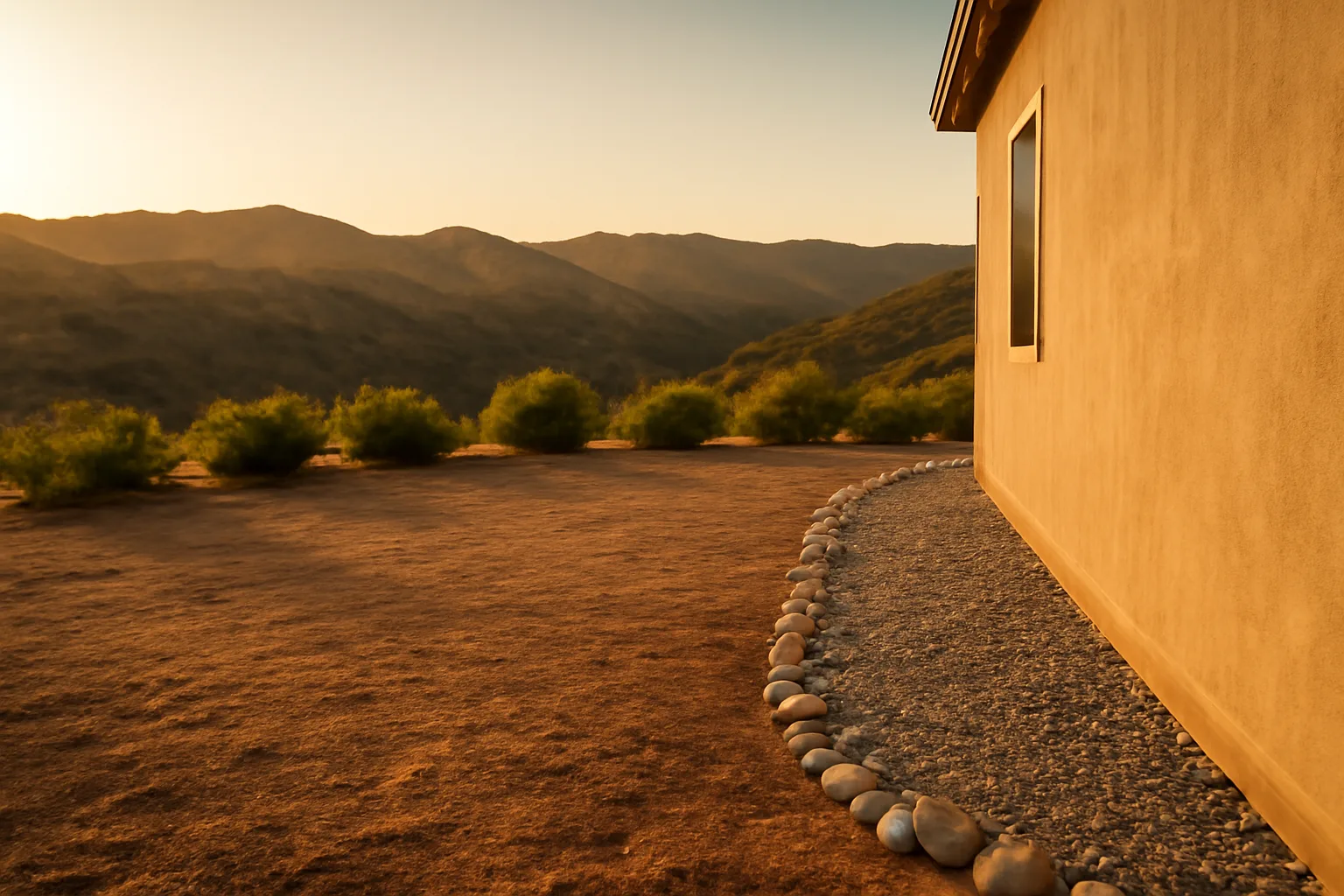
You confine a fire to an area by removing or reducing the fuel it needs, not by fighting flame directly. That means three defensible-space zones around the structure (0-5, 5-30, 30-100 feet per CAL FIRE), ember-resistant home hardening, and enough clearance between vegetation, fences, and roof lines that fire can't easily jump from wildland to house to neighbor.
How can you confine a fire to an area, practically speaking?
You confine a fire the same way firefighters do: you take away its fuel, oxygen, or heat source before it reaches the thing you want to protect. For a homeowner, that mostly means fuel. You can't control wind or humidity, but you can control what's stacked against your house, how close shrubs sit to your siding, and whether embers land on bare gravel or on a pile of dry mulch. CAL FIRE's defensible space framework breaks the property into three zones. Zone 0 is the 0 to 5 foot ring right against the structure, described by CAL FIRE as an "ember-resistant zone" where nothing combustible should sit, no bark mulch, no wood piles, no dense shrubs touching the wall. Zone 1 runs from 5 to 30 feet and calls for widely spaced, low-growing plants with lower branches removed. Zone 2 runs from 30 to 100 feet and focuses on reducing continuous fuel so fire can't run in a straight line toward the house. Think of it less as "stopping" a fire and more as "starving" it in the specific 100 feet that matters most to you. A wildfire crew a quarter mile away isn't going to save your roof if a wall of dry brush is touching your eaves. Confinement, at the residential scale, is fuel management plus structure hardening, not heroics. For a deeper walkthrough of what goes in each zone, see defensible space zones.
When does the California defensible space law go into effect?
California's core defensible space requirement, Public Resources Code 4291, has been in effect for years and requires 100 feet of defensible space (or to the property line) around structures in State Responsibility Areas and some Wildland-Urban Interface zones [1]. The law itself isn't new; what's changing is enforcement detail and the Zone 0 ember-resistant zone regulation. AB 3074 (2020) directed the Board of Forestry and Fire Protection to write specific regulations for the 0 to 5 foot ember-resistant zone. As of publication, those Zone 0 regulations are still moving through the Office of Administrative Law rulemaking process, and CAL FIRE has repeatedly pushed the expected effective date back; the Board's own materials describe Zone 0 as "forthcoming" regulation rather than settled law. Homeowners should treat 2025 to 2026 timelines as tentative until the Board of Forestry publishes a final adopted rule in the California Code of Regulations, because this has already slipped more than once. Bottom line: the general 100-foot defensible space law (PRC 4291) is already active and enforceable today. The stricter, more specific Zone 0 ember-resistant rule is the piece still pending. Don't wait for the final rule to clear your 0 to 5 foot zone; CAL FIRE's existing guidance already tells you to do it now.
What fire-safe home rules take effect in 2026?
Nothing at the state level is locked in as a hard 2026 date yet, and that's worth saying plainly because a lot of search results imply otherwise. What's actually true: the California Board of Forestry and Fire Protection has been developing Zone 0 ember-resistant zone regulations under AB 3074, and various public statements from CAL FIRE and legislative staff have floated 2025 or later start dates, but as of this writing no final regulation has been adopted with a locked effective date. Separately, insurers operating under California's updated "Safer from Wildfires" regulation (10 CCR 2644.9) are required to give discounts or credits to policyholders who complete recognized mitigation actions, including Zone 0 style clearance, ember-resistant vents, and Class A roofing [2]. That regulation is already in force through the California Department of Insurance, so the insurance-credit side is moving faster than the building-code side. What this means for you: don't wait on a specific 2026 date. Do the Zone 0 clearance CAL FIRE already recommends, ask your insurer directly which "Safer from Wildfires" credits apply to your policy, and check your local fire district's own defensible space ordinance since some counties (Los Angeles, San Diego, Marin among them) have adopted stricter local rules ahead of the state. [Guided fill-in: check your county fire department's defensible space page for local deadlines, since these vary by district.]
Why won't people follow the defensible space law in California?
This is a real, documented problem, more than anecdote. A 2022 report from the Legislative Analyst's Office and multiple CAL FIRE compliance audits have found inspection and enforcement rates are inconsistent across the state's more than 200 local fire jurisdictions, and voluntary compliance with PRC 4291 lags in many high-risk counties. Cost is the biggest barrier researchers point to: clearing brush on a half-acre sloped lot easily runs $2,000 to $8,000 for a one-time professional clearing, and it's not a one-time cost, it needs redoing every year or two as vegetation regrows. Other reasons show up again and again in county wildfire planning documents and academic surveys: people don't believe their specific property is at risk ("my neighborhood has never burned"), people are physically unable to do the labor themselves (older or disabled homeowners), people misunderstand what defensible space actually requires (thinking it means a bare dirt moonscape rather than spaced, low-fuel landscaping), and enforcement is genuinely spotty because most counties don't have enough inspectors to check every parcel every year. There's also a psychological piece worth naming honestly: defensible space work is invisible until the day it matters. Nobody gets a thank-you note for the ten years nothing happened. That's a hard thing to budget time and money against, and it's exactly why insurers are now tying premiums and non-renewal decisions to documented compliance instead of trusting the honor system.
How to prevent wildfires from starting in the first place
Most wildfires in the U.S. are human-caused, not lightning-caused. Ready.gov and the National Interagency Fire Center both note that debris burning, equipment sparks, unattended campfires, and vehicle-related ignition (dragging chains, hot catalytic converters on dry grass) account for the large majority of wildfire starts nationally [3]. At the household level, prevention means controlling ignition sources on your own property: don't burn debris on windy or red-flag days, keep chainsaws and mowers away from dry grass during peak fire season hours, store gasoline and propane away from vegetation, and make sure any outdoor grill or fire pit sits on a cleared, non-combustible surface at least 10 feet from structures or plants. CAL FIRE's Ready for Wildfire program specifically flags equipment use during red flag warnings as a top preventable ignition source. If you live near public land, report unattended campfires and downed power lines immediately; utility equipment failure has caused some of the largest and most destructive California wildfires on record, including the 2018 Camp Fire, per Cal Fire's own investigation findings. You personally can't stop every ignition source in a region, but you can make sure your own property isn't the one that starts it, and you can make sure your property isn't the one that catches when someone else's does.
How to prepare for a wildfire before it happens
Preparation splits into three buckets: defensible space, home hardening, and an evacuation plan with documentation ready to go. Ready.gov's wildfire preparedness guidance recommends assembling a go-bag with medications, copies of insurance documents, and identification at least 72 hours before predicted red-flag conditions, not waiting for an evacuation order [3]. On the property side, walk your Zone 0 (0 to 5 feet from the house) and remove anything combustible: mulch, stored firewood, dry leaves in gutters, patio furniture cushions. Check that vents are screened with 1/8 inch metal mesh (CAL FIRE's minimum recommended screen size to block ember intrusion). Confirm your roof and gutters are clear of pine needles and debris, since ember accumulation on roofs is one of the most common ways homes ignite during wildfire, according to CAL FIRE's post-fire structure assessments. On the documentation side, before fire season starts, photograph your defensible space work, your roof, your vents, and any hardening upgrades (dual-pane windows, ember-resistant vents, non-combustible siding). Insurers increasingly ask for this proof when deciding renewal, and having it organized before a non-renewal letter arrives puts you in a much stronger position than scrambling after the fact. This is exactly the gap the Wildfire Insurance Survival Kit is built to close: a $99 one-time toolkit that helps you organize the photos, inspection notes, and mitigation records insurers actually ask for, so you're not starting from zero when a renewal review or inspection letter shows up. It doesn't file claims or contact your insurer on your behalf; it just gets your paperwork in shape before you need it.
How to prevent forest fires and how to avoid forest fires on public land
These two questions get asked almost identically, so the answer is the same: control ignition sources and follow local fire restrictions. The U.S. Forest Service and Smokey Bear campaign (managed jointly with the Ad Council and state foresters) put the responsibility plainly: "Only you can prevent wildfires" is more than a slogan, it reflects the real data that the large majority of wildfires are human-caused [4]. Concrete steps that actually move the needle: fully extinguish campfires by drowning, stirring, and drowning again until cold to the touch (a still-warm campfire is the single most common wildfire ignition point tied to recreation, per National Park Service guidance); never park a hot vehicle on dry grass; check local and national forest fire restriction status before using any fireworks, sparklers, or off-road equipment; and report smoke or unattended fires to 911 or the local ranger district immediately rather than assuming someone else already has. See our related piece on only you can prevent wildfires for a longer breakdown of the actual data behind that campaign and what individual actions statistically matter most.
How to prepare for forest fires if you live near wildland
If your property backs up to national forest, BLM land, or a state park, your prep list is the same defensible-space and hardening work as anywhere in the WUI, but with tighter margins because response times can be longer in remote areas. CAL FIRE and most state forestry agencies recommend the full 100 feet of defensible space out to the property line where possible, and coordinating with neighbors matters more here than in denser suburbs, because a fire racing through untreated wildland fuel doesn't stop at a property line [1]. Practical steps specific to wildland-adjacent homes: clear a wider Zone 2 buffer if your lot allows it, keep a water source (pond, cistern, or hydrant) accessible and marked for fire crews, make sure your address is visible from the road in reflective, non-flammable lettering, and confirm your driveway can handle a fire engine (CAL FIRE's guidance generally calls for at least 10 to 12 feet of clearance width and 15 feet of vertical clearance for emergency vehicle access). If you're in Washington, Oregon, or Colorado near national forest boundaries, check whether your state offers cost-share programs for fuel reduction; Washington DNR, for instance, runs cost-share and contractor programs for defensible space clearing that can offset a meaningful chunk of the labor cost. See wildfire defensible space clearing contracts, Washington State DNR for how that program works.
Is Santa Barbara safe from fire?
No area in California's South Coast or Central Coast wildland-urban interface can honestly be called "safe" from fire risk, and Santa Barbara County has a well-documented history that argues against complacency. The 2017 Thomas Fire burned over 281,000 acres across Ventura and Santa Barbara counties (CAL FIRE's official incident record), and the subsequent Montecito debris flow in January 2018, triggered by rain on the burn scar, killed 23 people, according to Santa Barbara County's official incident summary [5]. The honest answer is that Santa Barbara sits in a landscape of chaparral, steep terrain, and Santa Ana/sundowner wind events, which is close to the textbook description of high wildfire risk terrain. CAL FIRE's Fire Hazard Severity Zone maps place large sections of the Santa Barbara foothills and surrounding unincorporated areas in "Very High" hazard zones [6]. That doesn't mean every house in the city limits is equally exposed; risk varies block by block depending on slope, vegetation, and distance from wildland, which is exactly why a property-specific defensible space assessment matters more than a general regional label. If you're evaluating a home purchase or a renewal decision in Santa Barbara, Montecito, or similar foothill communities, pull the parcel-specific CAL FIRE hazard severity zone map rather than relying on the city's general reputation, and ask your insurer directly what fire hazard tier your specific address falls into.
How can we prevent forest fires as a community, more than individually?
Individual defensible space work matters, but fire doesn't respect property lines, so community-scale coordination changes outcomes more than any single homeowner's effort. Research from the University of California Cooperative Extension and CAL FIRE's Fire Safe Councils program both point to neighborhood-level fuel breaks and coordinated clearing as more effective than isolated compliance [7]. Practical community actions: join or start a local Fire Safe Council (there are over 180 recognized Fire Safe Councils in California, many eligible for state grant funding for shared fuel reduction projects); coordinate defensible space timing with immediate neighbors so a fire can't run through one untreated lot to reach several treated ones; support local fire district ballot measures for equipment and staffing, since volunteer and rural districts are often underfunded relative to urban departments; and participate in Firewise USA, a National Fire Protection Association recognition program that requires a community risk assessment and an annual action plan . One underrated lever: pushing your HOA or local government to adopt and actually enforce a defensible space ordinance with teeth, since research from the LAO report cited earlier found enforcement gaps, more than individual non-compliance, are a major reason risk persists at the community scale.
What actually stops fire spread, zone by zone
| Zone 0 | 0-5 ft | Stop ember ignition at the structure | Remove all combustibles, use gravel/hardscape, no mulch touching walls | |
|---|---|---|---|---|
| Zone 1 | 5-30 ft | Reduce flame contact and ladder fuels | Space plants, remove low branches, mow dry grass to 4 inches or less | |
| Zone 2 | 30-100 ft | Slow fire spread before it reaches the home | Thin vegetation, remove dead material, break up continuous fuel | Notice the pattern: each zone does a different job. Zone 0 is about embers, which travel miles ahead of a fire front and are the leading cause of home ignition in wildfire disasters, per CAL FIRE's post-incident structure damage assessments. Zone 1 is about direct flame contact. Zone 2 is about slowing the fire's approach speed so firefighters have time and space to work. Skipping Zone 0 because Zones 1 and 2 look clean is one of the most common mistakes homeowners make, because embers don't need a wall of fire to ignite your house, they just need one dry pile of mulch against your siding. |
Here's a quick reference for what each defensible space zone is supposed to accomplish, based on CAL FIRE's official guidance: | Zone | Distance from structure | Primary goal | Key actions |
What documentation should you keep for insurers and inspectors?
If you've received a non-renewal notice, an inspection letter, or you're watching insurers pull out of your ZIP code, documentation is your strongest tool, even though you can't force a reinstatement. Photograph your Zone 0, 1, and 2 clearance work with date stamps, keep receipts for any professional clearing or hardening work, and save copies of any local fire department inspection reports. California's "Safer from Wildfires" regulation requires insurers to recognize specific mitigation actions with discounts, but the burden is on you to submit proof; the regulation doesn't create an automatic discount, it requires insurers to have a process for you to demonstrate compliance [2]. That means an unorganized shoebox of receipts often isn't enough. You want dated photos, a written record of clearing dates, and ideally a signed inspection or self-certification form if your county offers one. We built the Wildfire Insurance Survival Kit ($99, one-time) around exactly this gap: a structured way to organize photos, receipts, and mitigation records into the format insurers and adjusters actually ask for. It doesn't file your claim or talk to your insurer on your behalf, and it can't promise a reinstated policy or a discount; what it does is make sure you're not scrambling to reconstruct a year of yard work from memory when a renewal deadline lands in your mailbox. You can find it at [/survival-kit-builder].
How does confining a fire at the home level connect to home hardening?
Defensible space and home hardening are two halves of the same system, and doing only one leaves a real gap. Clearing brush 100 feet out does nothing if your roof is wood shake, your vents are unscreened, and your deck is untreated wood touching the ground. CAL FIRE's "Ready, Set, Go" guidance treats structure hardening (Class A roofing, ember-resistant vents, dual-pane tempered windows, non-combustible siding within 5 feet) as equally weighted with vegetation management. The cheapest, highest-impact hardening fixes in most cost-benefit analyses from CAL FIRE and university extension programs are: 1/8 inch metal mesh vent screens (a few hundred dollars total for most homes), clearing gutters and roof valleys of debris (free, just labor), and moving anything combustible out of the 0 to 5 foot zone (also mostly free). Full roof replacement and siding upgrades are expensive, often $10,000 to $30,000+, and should be prioritized based on your home's specific vulnerabilities rather than done wholesale. For a full walkthrough of hardening priorities ranked by cost and impact, see fire safe landscaping California next to house and our general house fire prevention guide, which covers ignition risks beyond wildfire too.
Frequently asked questions
When does the California defensible space law go into effect?
The general 100-foot defensible space requirement (Public Resources Code 4291) is already in effect and has been for years. The newer Zone 0 ember-resistant zone regulation, required by AB 3074, is still in the rulemaking process and has no confirmed final effective date yet; treat any specific 2025/2026 date you see as tentative until the Board of Forestry adopts a final rule.
Why won't people follow the defensible space law in California?
Cost is the top barrier (professional clearing can run $2,000-$8,000 per lot and needs redoing yearly), followed by inconsistent enforcement across the state's 200+ local fire jurisdictions, physical inability to do the labor, and underestimating personal risk. A 2022 LAO report found compliance and inspection rates vary widely by county.
How do you prevent wildfires from starting?
Most wildfires are human-caused. Don't burn debris on windy or red-flag days, keep equipment away from dry grass, fully extinguish campfires (drown, stir, drown again), and never park hot vehicles on dry vegetation. Report unattended fires or downed power lines immediately.
How do you prepare for a wildfire?
Clear your Zone 0 (0-5 ft) of all combustibles, screen vents with 1/8 inch metal mesh, clear gutters and roofs of debris, and build a go-bag with medications, ID, and insurance documents at least 72 hours before red-flag conditions, per Ready.gov guidance.
How can you confine a fire to an area on your own property?
Remove or space out fuel in three zones: 0-5 feet (no combustibles at all), 5-30 feet (spaced, low plants), and 30-100 feet (thinned vegetation, no continuous fuel path). Pair that with ember-resistant vents and a clean roof, since embers, not flame walls, ignite most homes.
What fire-safe home rules take effect in 2026?
No state rule is locked to a confirmed 2026 date as of this writing. California's Zone 0 ember-resistant regulation under AB 3074 is still pending final adoption. The separate 'Safer from Wildfires' insurance discount regulation is already active. Check your county fire district for any local ordinance deadlines.
Is Santa Barbara safe from fire?
No, not categorically. Santa Barbara County has Very High Fire Hazard Severity Zones per CAL FIRE mapping and a documented history including the 2017 Thomas Fire (281,000+ acres) and the fatal 2018 Montecito debris flow. Risk varies block by block based on slope and vegetation, so check your specific parcel's hazard zone.
How can we prevent forest fires as a community?
Join or start a local Fire Safe Council, coordinate defensible space clearing timing with neighbors, support Firewise USA community certification, and push for enforced local ordinances. Community-scale fuel breaks are more effective than isolated individual compliance because fire doesn't respect property lines.
What is Zone 0 and why does it matter most?
Zone 0 is the 0-5 foot ring directly around your house, per CAL FIRE guidance. It's the highest-priority zone because embers, not direct flame, ignite most homes during wildfires. Nothing combustible (mulch, firewood, dry plants) should touch the structure in this zone.
How much does defensible space clearing cost?
Professional brush clearing on a typical sloped residential lot generally runs $2,000 to $8,000 depending on lot size, terrain, and vegetation density, and it isn't one-time; regrowth means most properties need re-clearing every one to two years.
Does defensible space guarantee my insurance won't be cancelled?
No. Defensible space and hardening reduce risk and may qualify you for discounts under California's Safer from Wildfires regulation, but no mitigation guarantees renewal or reinstatement. Insurers make individual underwriting decisions; documentation of your work strengthens your position but isn't a guarantee.
What's the difference between defensible space and home hardening?
Defensible space is fuel management around the structure (the three zones). Home hardening is upgrading the structure itself: Class A roofing, ember-resistant vents, dual-pane windows, non-combustible siding near ground level. CAL FIRE treats both as equally necessary; doing only one leaves a real vulnerability.
Sources
- California Department of Insurance, 10 CCR 2644.9 Safer from Wildfires: Insurer requirement to recognize wildfire mitigation actions for discounts
- California Legislative Analyst's Office, Improving California's Forest and Wildfire Resilience: Inconsistent enforcement of defensible space compliance across local jurisdictions
- USDA Forest Service / Smokey Bear, Wildfire Prevention: Only you can prevent wildfires campaign origin and human-caused wildfire statistic
- CAL FIRE, Thomas Fire Incident Archive: Thomas Fire burned over 281,000 acres in Ventura and Santa Barbara counties
- CAL FIRE, Fire Hazard Severity Zone Maps: Santa Barbara foothill areas mapped as Very High Fire Hazard Severity Zones
- CAL FIRE, Fire Safe Councils Program: Fire Safe Council grant funding for community-scale fuel reduction projects
- National Fire Protection Association, Firewise USA: Firewise USA community recognition program requirements