Last updated 2026-07-25
TL;DR
Making a home fire resistant means combining a 5-foot noncombustible buffer (Zone 0), ember-resistant vents, a Class A roof, and 30-100 feet of managed vegetation. California's new Zone 0 rule (Gov. Code 51182) is drafted but not yet enforced as of mid-2026. Start with the roof, vents, and the first 5 feet; that's where most homes actually ignite.
What actually makes a home fire resistant, in order of priority?
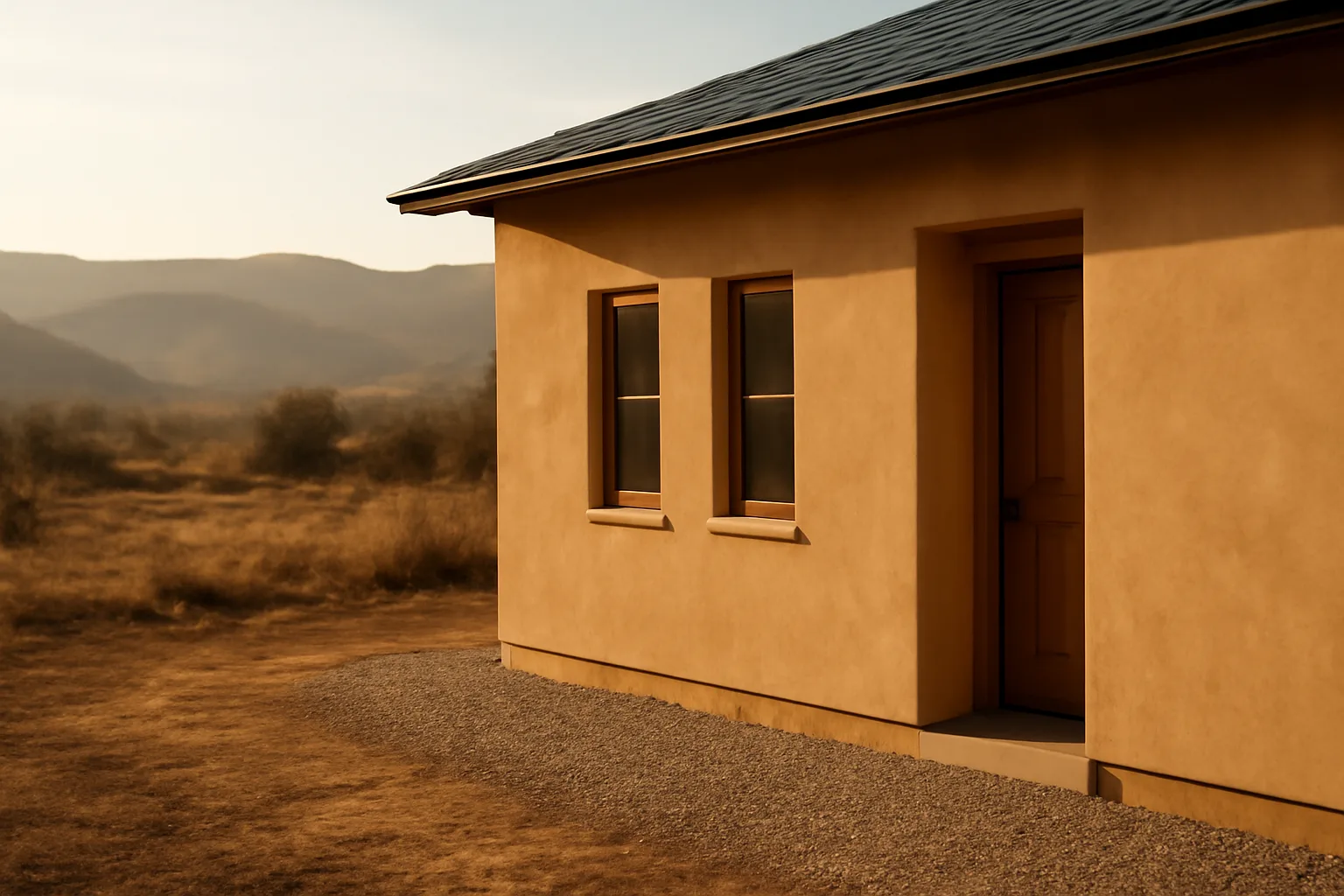
Homes almost never burn down because a wall of flame rolls through the neighborhood. They burn because embers, tiny burning pieces of debris that can travel a mile or more ahead of a fire front, land on something flammable and catch. That's the finding that reshaped how fire scientists think about home loss: research from the Insurance Institute for Business & Home Safety (IBHS) and the U.S. Forest Service points to embers and small flames as the dominant way homes ignite during wildfires, not direct contact with a fire front [1]. That changes the priority list. If you only have a weekend and a few hundred dollars, spend it on these things, roughly in this order: clear anything flammable within 5 feet of your walls, screen or replace vents so embers can't get into your attic or crawlspace, clean gutters and roof valleys of pine needles and leaves, and check that your roof covering is Class A rated (or at least not wood shake). After that, move outward: prune tree limbs 10 feet from the chimney and away from the roofline, space shrubs so fire can't ladder up into tree canopy, and thin vegetation out to 30 and then 100 feet. The research-backed version of this is CAL FIRE's defensible space model, which breaks your property into Zone 0 (0-5 feet, noncombustible), Zone 1 (5-30 feet, lean and clean), and Zone 2 (30-100 feet, reduced fuel volume). If you want the specifics of what's allowed in each zone, our defensible space zones guide walks through it property line by property line.
When does the California defensible space law (Zone 0) go into effect?
As of mid-2026, California's Zone 0 ember-resistant zone requirement is written into law but the enforceable regulations have not been finalized or activated. Government Code Section 51182, updated by AB 3074 (2020), directs the State Board of Forestry and Fire Protection to develop regulations for an ember-resistant zone within 5 feet of structures in State Responsibility Areas and designated high fire hazard severity zones in Local Responsibility Areas [2]. The statute itself states the intent plainly: the ember-resistant zone requirement "shall be phased in... upon the effective date of regulations" adopted by the Board [2]. That's the catch. The Board of Forestry has been working through the rulemaking process, holding workshops and taking public comment on draft Zone 0 regulations, but as of this writing the regulations have not been formally adopted and there's no statewide enforcement date locked in. CAL FIRE's own guidance describes Zone 0 as recommended best practice already, even while the mandatory version works through rulemaking. This is a guided fill-in you need to check locally: [CHECK YOUR LOCAL FIRE DISTRICT / STATE FIRE MARSHAL PAGE FOR CURRENT ZONE 0 ADOPTION STATUS AND ANY LOCAL ORDINANCE THAT MAY ALREADY REQUIRE IT]. Some cities and counties, including parts of the Los Angeles area, have moved ahead of the state and adopted their own 5-foot ember-resistant zone ordinances ahead of statewide rules. Don't wait for the state timeline if your city already requires it. And don't assume you're in the clear because the state hasn't finalized rules yet either; insurers are already asking about Zone 0 compliance on renewal inspections regardless of what's legally mandatory.
What fire-safe home rules take effect in 2026?
There isn't one single national "2026 fire code" that flips on for every homeowner. What's actually happening is a patchwork of state and local rules tightening around the same target: embers and defensible space. In California, expect continued rulemaking activity on Zone 0 (see above), plus the existing 100-foot defensible space clearance requirement under Public Resources Code 4291, which already applies to homes in State Responsibility Areas [3]. Colorado doesn't have a statewide mandatory defensible space law; it's handled county by county and through wildland-urban interface codes adopted locally, so "2026 rules" for a Colorado homeowner depend entirely on your county's wildfire mitigation ordinance. [CHECK YOUR COUNTY WILDFIRE MITIGATION OR WUI CODE FOR YOUR SPECIFIC 2026 REQUIREMENTS.] Oregon's Senate Bill 762 (2021) created a statewide wildfire risk map and defensible space framework administered through the Oregon Department of Forestry, with implementation timelines that have shifted more than once after public pushback over the risk map itself [4]. Arizona similarly leaves most defensible space and building requirements to county and municipal wildland-urban interface codes rather than one state law. The honest answer for "what changes in 2026" is: check your specific state fire marshal's office and county planning department, because the rules are genuinely still moving. [CHECK YOUR STATE FIRE MARSHAL'S OFFICE FOR THE CURRENT ADOPTION STATUS OF WUI BUILDING CODE PROVISIONS IN YOUR JURISDICTION.]
How do I harden my home against embers, room by room and zone by zone?
| Roof | Class A rated covering (asphalt shingle, metal, tile); clear needles from valleys | $8,000-$25,000 to replace; $0-$200 to clean | |
|---|---|---|---|
| Vents | 1/8-inch metal mesh or ember-resistant vents (no plastic screens) | $15-$60 per vent | |
| Gutters | Metal gutter guards, cleared quarterly in fire season | $5-$15/ft installed | |
| Siding | Noncombustible or ignition-resistant material (stucco, fiber cement, treated wood) | Varies widely by sq ft | |
| Windows | Dual-pane, tempered outer pane | $300-$1,000+ per window | |
| Zone 0 (0-5 ft) | Gravel, pavers, or bare soil; no bark mulch, no shrubs touching siding | $200-$2,000 DIY to hardscape | |
| Decks | Noncombustible decking or enclose underside; keep zone under deck clear | Varies | The deck detail trips people up constantly. A wood deck attached to the house is functionally an extension of your siding, and if there's stored firewood or a propane tank underneath, you've built a fuse. Enclose the underside with fine mesh or noncombustible skirting, and never store anything flammable under there. For a full walkthrough of hardening priorities by structure component, see our house fire resource, and if you're trying to figure out what your insurer's inspector is actually scoring, our inspections coverage breaks down the checklist format most carriers use. |
Ember resistance is mostly about closing gaps and removing fuel, not exotic materials. Here's the practical build-out, roughly matching what CAL FIRE and IBHS recommend for the ember-resistant zone and structure itself [1]: | Area | What to do | Rough cost |
How to prevent wildfires (and how to prevent forest fires) around your property?
Preventing ignition on your own land and preventing wildfire spread are related but not identical goals, and most homeowner guidance blends them without saying so. Here's the split. To reduce the odds that YOUR land starts a fire: never burn debris on red flag warning days, keep any outdoor equipment (mowers, chainsaws, grills) away from dry grass when in use, make sure trailer chains aren't dragging on pavement (a surprisingly common ignition source for roadside fires), and follow local burn permit rules exactly. The U.S. Forest Service and Ready.gov both list unattended debris burns and equipment sparks among the top human-caused ignition sources [5]. To reduce the odds that a wildfire reaches and destroys your structure once it's already burning nearby: that's defensible space and home hardening, covered above. This is the part homeowners actually control and where nearly all the return on effort lives, because you can't control lightning strikes or a neighbor's campfire three ridgelines over. On a broader "how can we prevent forest fires" level, agencies point to a short, consistent list: fully extinguish and stir campfires until cold to the touch, don't park hot vehicles on dry grass, check local fire restrictions before any outdoor burning, and maintain equipment so chains, mufflers, and spark arrestors aren't throwing sparks. None of this is complicated. Compliance is the actual problem, which is worth being honest about.
Why won't people follow the defensible space law in California?
This is a real, documented problem, and it's worth being straight about it rather than pretending compliance is universal. Multiple audits and state reports have found defensible space compliance rates well under 100% even in high-risk areas, and CAL FIRE's own inspection data has shown large shares of properties failing initial defensible space inspections in some jurisdictions. The reasons people cite aren't usually defiance. They're cost (removing large trees or clearing steep, brushy acreage can run into the thousands of dollars), physical capacity (older or disabled homeowners can't do the labor themselves and can't afford contractors), disagreement over what counts as "defensible" (some residents genuinely believe mature trees near a home look fine and don't understand ember dynamics), and simple procrastination because wildfire feels like someone else's problem until it isn't. There's also a structural issue: enforcement is uneven. CAL FIRE and local fire agencies conduct inspections and can issue notices of violation for noncompliance in State Responsibility Areas under Public Resources Code 4291, but staffing to inspect every parcel every year is limited, and follow-through on citations varies a lot by county [3]. A law that's rarely enforced in practice reads, functionally, as optional to a lot of homeowners, whatever the statute says. If your defensible space work stalled out because of cost or scale, that's genuinely common; it's not a moral failing, it's a resourcing problem, and it's worth tackling in phases (Zone 0 first, since it's cheapest and most effective, then work outward) rather than treating the whole 100 feet as one project.
How do I prepare for a wildfire if one is threatening my area right now?
If a wildfire is actively approaching, defensible space work is done; now it's about evacuation readiness and documentation. Ready.gov's wildfire guidance recommends having a "go bag" packed in advance with medications, copies of important documents, and enough supplies for several days, plus a communication plan for your household. Before you evacuate, if time allows: close all windows and doors (but leave them unlocked for firefighter access), remove flammable curtains, shut off gas at the meter if instructed by officials, move patio furniture and doormats inside or away from the house, and turn on exterior lights so your home is visible in smoke. Take your go bag, pets, and any irreplaceable documents; don't wait for a mandatory evacuation order if conditions look bad, because roads clog fast and visibility drops to near zero in heavy smoke. Separately, and this matters more than most people realize until they're filing a claim: walk your property with your phone camera before fire season every year and photograph every room, your roof, your defensible space work, and any major possessions. This is not about proving anything to an insurer in real time; it's about having your own baseline record. If you lose the home, that documentation is what lets you rebuild your claim accurately instead of trying to remember, from memory, what was in a garage that no longer exists. This is exactly the gap our $99 Survival Kit Builder is built to close: a structured way to build that documentation before you need it, so you're not starting from zero during the worst week of your life. We don't file claims for you; you send your own documentation, on your own timeline, to your own carrier.
How to prepare for forest fires as a neighborhood, more than individually?
Fire doesn't respect property lines, so individual hardening only goes so far if your neighbor's overgrown lot sits 15 feet from your fence. This is why Firewise USA, the National Fire Protection Association's recognition program, works at the neighborhood level: it organizes communities to do coordinated fuel reduction, share equipment for chipping and debris removal, and hold joint defensible space workdays [6]. Practically, this looks like: forming or joining a neighborhood association that schedules an annual chipper day (many fire districts subsidize or provide chipping services for free during specific weeks), agreeing on shared standards for the greenbelt or common areas between properties, and pushing your HOA (if you have one) to update covenants that currently ban gravel or hardscape in front yards, since some older HOA rules directly conflict with defensible space best practices. If you're the one homeowner on the block who's hardened your property and your neighbors haven't touched theirs, that's a real vulnerability, because embers and radiant heat from a burning structure next door can ignite yours regardless of your own Zone 0 work. Talk to your neighbors. It's the least glamorous fire prevention tactic and probably the most underrated one.
Is Santa Barbara safe from fire?
No California coastal community with wildland vegetation nearby is "safe" from fire risk, and Santa Barbara has a documented history that makes this concrete rather than theoretical. The Thomas Fire (2017) burned over 280,000 acres and was, at the time, the largest wildfire in modern California history, and it was directly followed by the Montecito debris flow in January 2018, which killed 23 people when fire-scarred hillsides above Montecito (immediately adjacent to Santa Barbara) failed during heavy rain [7]. Santa Barbara County sits at the interface of dense chaparral, steep terrain, and Santa Ana/sundowner wind events, which is close to the textbook definition of wildfire-prone geography. CAL FIRE's Fire Hazard Severity Zone maps place large portions of the hillside and foothill areas around Santa Barbara and Montecito in "Very High" hazard designation [8]. That doesn't mean every property in the 93101-93111 zip codes is equally exposed; risk varies enormously by elevation, slope, vegetation type, and distance from wildland. But the honest answer to "is Santa Barbara safe" is that it's a high-consequence wildfire area with a recent, severe fire history, and homeowners there should treat defensible space and hardening as a baseline requirement, not an extra.
What's the real cost and timeline to make a home fire resistant?
Budget matters, so here's a realistic range. Zone 0 hardscaping (removing mulch and combustible ground cover within 5 feet, replacing with gravel or pavers) typically runs $200 to $2,000 for a DIY approach on an average lot, or more if you're hiring a landscaper. Vent replacement with ember-resistant screens costs $15 to $60 per vent, and most homes have 4 to 12 vents, so budget $100-$700 total. A full roof replacement to a Class A covering is the big-ticket item, typically $8,000-$25,000+ depending on size and material, though if your roof is already asphalt shingle (which is Class A rated in most assemblies) you may not need this at all. Brush clearing for Zone 1 and Zone 2 on a larger rural lot is where costs scale fast; professional vegetation clearing on steep or heavily wooded acreage can run several thousand dollars per acre. If you're in Washington State or a similarly forested area, our guide on wildfire defensible space clearing contracts covers what a fair contractor quote looks like and what the state DNR offers in cost-share programs. Timeline-wise: Zone 0 work is a weekend project for most homeowners. Vent replacement is a day. Roof replacement is a job for licensed contractors and can take 1-2 weeks depending on scope and weather. Vegetation clearing on larger properties, especially with permitting or environmental review involved, can stretch into months if you're removing large trees or working near protected habitat, so start that work well before fire season, not during it.
What plants and landscaping choices actually reduce fire risk?
Plant choice matters less than plant placement and maintenance, which is a point that gets lost in a lot of "fire-resistant plant list" content. A well-spaced, well-watered oleander is less dangerous than a dead, unwatered native shrub jammed against your siding. That said, some general guidance holds up: avoid resinous, oily plants (junipers, certain pines) directly adjacent to structures, favor low-growing, high-moisture-content groundcover in Zone 0, and always maintain vertical and horizontal spacing between shrubs and tree canopy so fire can't "ladder" from ground fuel into tree crowns. Remove dead and dying vegetation on a schedule, more than once. This is the maintenance trap: homeowners do a big landscaping push, feel done, and then let it lapse for three years while grass and leaf litter rebuild exactly the fuel bed they cleared. CAL FIRE's defensible space guidance is explicit that Zone 1 and Zone 2 work is not one-time; it requires annual maintenance, especially removing dead material and mowing dry grass below 4 inches. For species-specific planting plans and spacing diagrams, see our fire-safe landscaping guide for California, which covers what to plant directly against a house versus what needs the full 5-foot buffer.
How do insurers actually score fire-resistant homes, and does hardening help with non-renewal?
Increasingly, yes, but with real limits you should know before you spend money expecting a specific outcome. California's FAIR Plan and the state's Safer from Wildfires regulation (effective 2022) require insurers to give discounts or premium credits for specific mitigation actions, including defensible space compliance and Zone 0-style hardening, when filed through the California Department of Insurance's approved rate filings [9]. Some major carriers now use IBHS's Wildfire Prepared Home designation program as a qualifying standard for these discounts [1]. What hardening does NOT reliably do is guarantee reinstatement after a non-renewal, or force a specific insurer to write you a policy. Underwriting decisions depend on the carrier's own risk models, your specific fire hazard severity zone, proximity to wildland, and sometimes factors entirely outside your control like regional loss history. Hardening improves your actual risk and your case for coverage; it does not obligate anyone to cover you. We don't file claims or promise coverage, discounts, or reinstatement, and you should be skeptical of anyone who does promise those things in exchange for a hardening project. What you can do is document your mitigation work thoroughly (photos, dated receipts, contractor invoices, before/after shots of cleared zones) and send that documentation yourself to your carrier or agent when you request a re-inspection or rate review. Good documentation is the one point that's actually in your control. For more on what carriers are asking for on renewal inspections and how FAIR Plans differ from standard policies, see our insurance-and-fair-plans coverage.
Frequently asked questions
When does the California defensible space law go into effect?
The core 100-foot defensible space requirement (Public Resources Code 4291) is already active in State Responsibility Areas. The newer Zone 0 (5-foot ember-resistant zone) requirement under Government Code 51182 is written into law but its enforcement regulations were still in the rulemaking process as of mid-2026 and had not been formally activated statewide. Check your local jurisdiction, since some cities have adopted Zone 0 rules ahead of the state.
Why won't people follow the defensible space law in California?
Cost, physical capacity, and inconsistent enforcement are the main drivers. Clearing large trees or brush on steep lots can cost thousands of dollars, older or disabled homeowners often can't do the labor themselves, and CAL FIRE and local fire agencies don't have staffing to inspect every parcel every year, so noncompliance often goes unaddressed until an inspection or insurance non-renewal forces the issue.
How do I prevent wildfires from starting on my own property?
Never burn debris on red flag warning days, keep mowers and equipment away from dry grass, make sure trailer safety chains aren't dragging sparks on pavement, and follow local burn permit rules exactly. The U.S. Forest Service lists unattended debris burns and equipment sparks among the top human-caused wildfire ignition sources.
How do I prepare for a wildfire that's already threatening my area?
Pack a go bag with medications, documents, and supplies in advance per Ready.gov guidance. If time allows before evacuating, close (but don't lock) windows and doors, remove flammable curtains, move furniture away from the house, and turn on exterior lights. Leave early; don't wait for a mandatory order if conditions look bad, since smoke can cut visibility and clog roads fast.
How can we prevent forest fires as individuals?
Fully extinguish campfires by stirring until cold to the touch, don't park or idle hot vehicles on dry grass, check local fire restrictions before any outdoor burning, and maintain chainsaws, mowers, and vehicles so mufflers and spark arrestors aren't throwing sparks. These are the consistent top recommendations from Ready.gov and the U.S. Forest Service.
What fire-safe home rules take effect in 2026?
There's no single national rule. California continues rulemaking on its Zone 0 ember-resistant zone requirement; Oregon's SB 762 wildfire risk framework keeps evolving after earlier pushback; Colorado and Arizona leave defensible space rules to individual counties and WUI codes. Check your specific state fire marshal and county planning department for what actually applies to your address.
Is Santa Barbara safe from fire?
No. Santa Barbara County has a severe recent wildfire history, including the 2017 Thomas Fire (over 280,000 acres, largest in California history at the time) followed by the deadly 2018 Montecito debris flow. CAL FIRE maps much of the surrounding foothill terrain as Very High Fire Hazard Severity Zone. Risk varies by specific property, but the area is genuinely high-risk, not low-risk.
What's the single most effective thing I can do to make my home fire resistant?
Clear the first 5 feet around your foundation (Zone 0) of anything combustible, mulch, wood piles, dry plants, and switch to gravel or pavers. Research from IBHS and the U.S. Forest Service points to embers and small flames in this immediate zone as the dominant cause of home ignition during wildfires, not direct flame contact from the fire front.
Does a metal roof make my home fireproof?
No roof makes a home fireproof, but a metal roof is Class A fire-rated and performs very well against ember ignition, since embers can't smolder into metal the way they can into wood shakes. Asphalt shingle roofs are also typically Class A rated. The bigger vulnerability is often the roof valleys and gutters filling with needles and leaves, which need regular clearing regardless of roofing material.
How much does it cost to harden a home against wildfire?
Zone 0 hardscaping runs roughly $200 to $2,000 DIY. Ember-resistant vent screens cost $15-$60 each, with most homes needing 4-12. A full Class A roof replacement, if needed, runs $8,000-$25,000 or more. Vegetation clearing on larger rural lots scales into thousands of dollars per acre depending on density and terrain.
Do fire-resistant plants exist, or does it not matter what I plant?
Plant choice matters somewhat (avoid oily, resinous plants like certain junipers near structures) but placement and maintenance matter more. A well-watered, well-spaced ornamental is safer than a dead, neglected native shrub touching your siding. CAL FIRE's guidance emphasizes annual maintenance and spacing over any single 'fireproof plant' list.
Will hardening my home guarantee my insurance gets reinstated?
No, and be wary of anyone claiming it will. Hardening reduces your actual fire risk and can qualify you for mitigation discounts under California's Safer from Wildfires regulation, but underwriting decisions depend on the carrier's own risk models and hazard zone data. Document your mitigation work thoroughly and submit it yourself to your carrier; it's not a guarantee of coverage.
What is Zone 0 and is it required now?
Zone 0 is the 0-5 foot ember-resistant zone immediately around a structure, required to be noncombustible under California's planned regulations (Government Code 51182). As of mid-2026, CAL FIRE recommends it as best practice, but the mandatory statewide enforcement regulations were still in the rulemaking process and not yet formally activated everywhere. Some local jurisdictions require it already.
Sources
- Insurance Institute for Business & Home Safety (IBHS), Wildfire Prepared Home standard: Embers and small flames, not direct fire-front contact, are the dominant way homes ignite during wildfires
- California Legislature, Government Code Section 51182: Ember-resistant Zone 0 requirement phase-in tied to Board of Forestry regulation adoption
- California Legislature, Public Resources Code Section 4291: 100-foot defensible space clearance requirement in State Responsibility Areas and enforcement authority
- Oregon Legislature, Senate Bill 762 (2021): Oregon's statewide wildfire risk map and defensible space framework under SB 762
- USDA Forest Service, Wildfire Prevention information: Debris burning and equipment sparks are among top human-caused wildfire ignition sources
- National Fire Protection Association, Firewise USA program: Neighborhood-level coordinated fuel reduction and recognition program structure
- CAL FIRE, Thomas Fire incident information: Thomas Fire (2017) burned over 280,000 acres, largest California wildfire at the time
- CAL FIRE, Fire Hazard Severity Zone Maps: Santa Barbara/Montecito foothill areas mapped as Very High Fire Hazard Severity Zone
- California Department of Insurance, Safer from Wildfires regulation: Insurers must offer premium discounts or credits for specific wildfire mitigation actions