Last updated 2026-07-25
TL;DR
Fire-resistant materials that matter most: Class A roofing (metal, tile, asphalt composite), ignition-resistant or noncombustible siding, tempered dual-pane windows, metal mesh vents (1/8 inch), and noncombustible decking within 5 feet of the house. CAL FIRE's Zone 0 ember-resistant construction rules take effect for new construction in 2026, with existing-home enforcement timing still being finalized.
What materials are actually fire resistant?
| Roofing | Metal, clay/concrete tile, Class A asphalt shingle | Wood shake, untreated wood shingle | |
|---|---|---|---|
| Siding | Stucco, fiber cement, brick, concrete block | Vinyl (melts), untreated wood | |
| Windows | Dual-pane, tempered outer pane | Single-pane, vinyl-framed with gaps | |
| Vents | 1/8-inch metal mesh, ember- and flame-resistant vents | Open eave vents, plastic vents | |
| Decking | Ignition-resistant or noncombustible composite, no gaps | Wood decking with debris underneath | |
| Fencing (at house) | Metal or noncombustible for last 5 feet | Wood fence attached directly to siding | None of this is exotic. Most of it is available at a regular building supply store. The cost is in labor and in doing it as a full system rather than one component. |
"Fire resistant" gets thrown around loosely, but for home hardening it means a material that resists ignition from embers and radiant heat long enough to matter in a wildfire, not that it's fireproof. Nothing is fireproof. The materials that consistently perform well in real wildfire damage studies share a few traits: they're noncombustible (metal, concrete, fiber cement, tile, stucco), they don't have gaps embers can lodge in, and they don't melt or warp at moderate heat exposure. CAL FIRE's home hardening guidance groups the priority materials into roofing, vents, windows, siding, decking, and gutters, because those are the components embers exploit first [1]. A Class A fire-rated roof (metal panels, concrete or clay tile, or Class A-rated asphalt composite shingles) is the single highest-leverage swap, since research from the Insurance Institute for Business & Home Safety (IBHS) found roof and vent vulnerabilities are the dominant pathway for home ignition in wildfires. Here's a quick reference on what actually holds up versus what doesn't, based on CAL FIRE and IBHS home hardening material categories: | Component | Fire-resistant choice | Common weak point |
Which roofing materials are fire resistant?
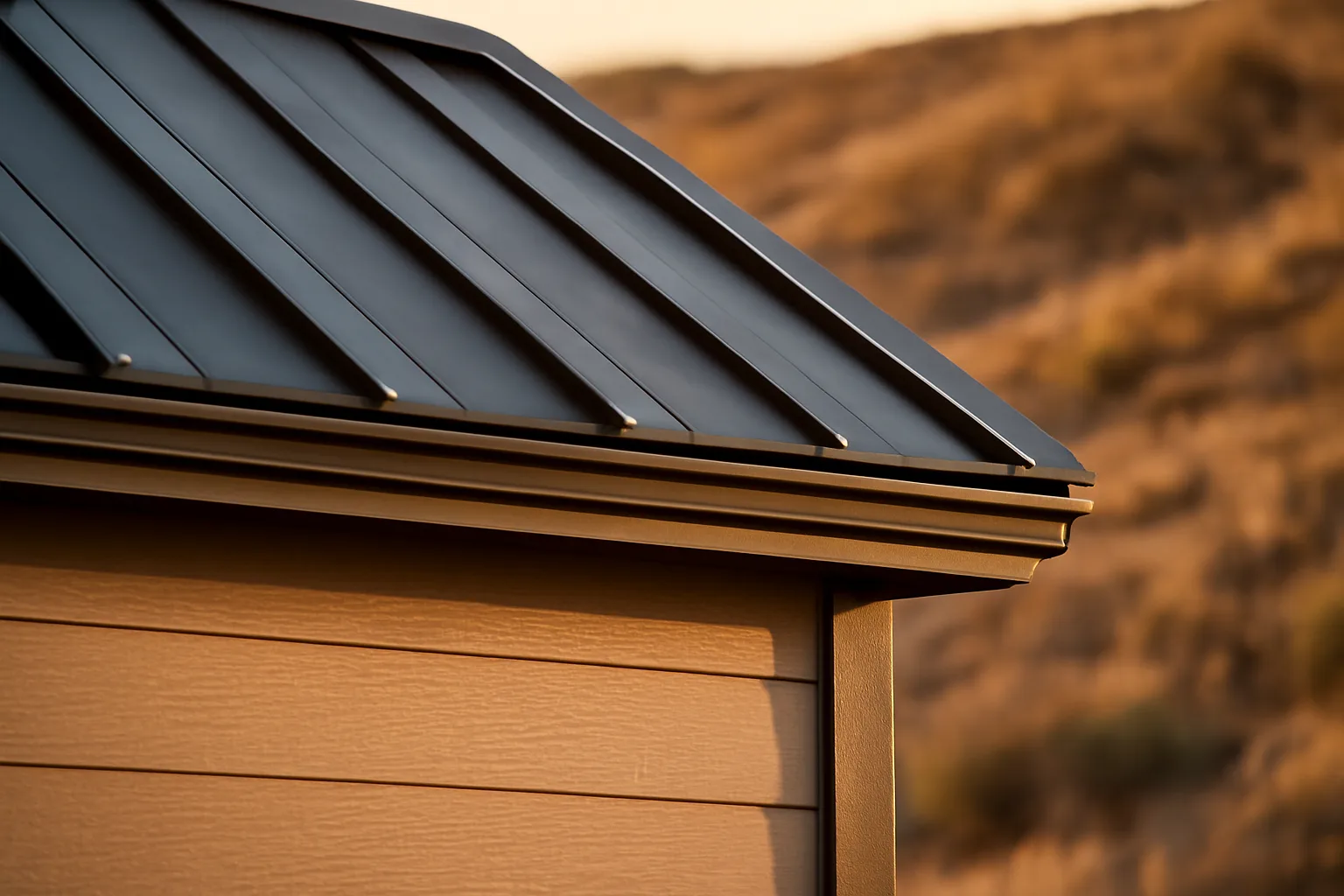
Class A roofing is the standard to ask for, and it means the roof assembly (more than the shingle) passed the toughest of three fire-test ratings under ASTM E108 or UL 790. Metal roofing, concrete and clay tile, and many asphalt composite shingle products carry Class A ratings when installed as a complete system. Wood shake and shingle roofs are the material CAL FIRE specifically flags as a liability in wildfire-prone areas, because they ignite from wind-blown embers well before a flame front ever arrives [1]. If you have one and you're facing a non-renewal letter, this is usually the first thing an inspector or underwriter will note. Cost matters here and it's worth being honest about it. A basic asphalt Class A shingle replacement runs roughly $4 to $7 per square foot installed in most Western markets as of 2025, while standing-seam metal roofing runs $9 to $16 per square foot, and concrete tile can run higher depending on structural bracing needs. That's a real range, not a guess, but get three local quotes because roofing labor costs shift a lot by region and roof complexity. Don't overlook the roof-to-wall transition and the gutters. Embers collect in gutters full of dry leaves and in the gap where roofing meets siding just as readily as they collect on the roof surface itself. Metal gutter guards and noncombustible fascia boards close that gap.
What siding and wall materials resist ignition best?
Stucco, fiber cement board, brick, and concrete block are the noncombustible or ignition-resistant siding choices CAL FIRE lists for the 5 feet immediately around a structure, an area sometimes called the ember-resistant zone or Zone 0 [1] [2]. Vinyl siding is a common problem: it doesn't burn easily but it softens and melts at fairly low heat, which lets flames reach the wall sheathing behind it. Untreated wood siding is worse, obviously, since it's a direct fuel source. Fiber cement board (brands like HardiePlank are common) is popular for retrofits because it looks like wood siding but has a Class A fire rating and doesn't require the full masonry redo that stucco or brick would. Expect to pay somewhere in the $6 to $12 per square foot installed range for fiber cement siding as of recent regional pricing, again varying by market and how much of the old siding needs to come off first. The part people skip: the first 5 feet of ground next to the house matters as much as the wall material itself. A wood fence butted directly against fiber cement siding still gives fire a fuel path straight to your wall. Swapping the last 5 feet of fence to metal, or adding a noncombustible gate section, closes that gap cheaply. For a fuller breakdown of what belongs in that zone, see our guide on fire safe landscaping California next to house.
Are tempered windows actually fire resistant?
Yes, and window failure is a bigger ignition pathway than most homeowners realize. Radiant heat from a fire even 100 feet away can crack a single-pane window, and once glass fails, embers and flame get direct access to curtains, furniture, and framing inside the house. CAL FIRE's home hardening guidance recommends dual-pane windows with at least one tempered pane, and multi-pane windows generally outperform single-pane in radiant heat exposure tests [1]. Metal or fiberglass window frames hold up better than vinyl frames, which can soften under sustained heat. Full window replacement is expensive, often $800 to $2,000 per window installed depending on size and frame material, so most homeowners can't do the whole house at once. If you're prioritizing, start with windows facing the most likely fire approach (uphill, downwind, or facing dense vegetation) and windows near vents or eaves where ember accumulation is worst.
What vent and deck materials stop ember intrusion?
Vents are the most underrated failure point. Embers are small enough to enter standard attic, foundation, and eave vents, and once inside a vent cavity they can ignite insulation, debris, or framing where nobody sees it happening until it's too late. CAL FIRE recommends 1/8-inch metal mesh screens on all vents, or vents specifically tested and listed as ember- and flame-resistant under the state's WUI vent standard [1] [2]. Decking is the other major component. Wood decks attached to the house, especially with gaps that collect leaves and needles underneath, are a documented ignition point in post-fire damage assessments. Ignition-resistant composite decking, or noncombustible materials like concrete or certain metal decking systems, reduce that risk substantially. If you keep a wood deck, at minimum clear all debris from underneath it and don't store firewood or propane tanks beneath or near it. One more detail people miss: gable end vents and soffit vents on older homes often have no ember-resistant screening at all, because they predate current codes. Retrofitting these is inexpensive (usually under $50 in materials per vent) but does require someone comfortable working at height or hiring it out.
When does the California defensible space law go into effect?
California's core defensible space requirement, 100 feet of clearance under Public Resources Code 4291, has been in effect for years and applies to homes in State Responsibility Areas and designated Very High Fire Hazard Severity Zones [3]. What's newer, and what people mean when they ask this question in 2025 and 2026, is the ember-resistant Zone 0 rule. CAL FIRE and the Board of Forestry have been developing the Zone 0 regulation (the 0 to 5 foot zone immediately around a structure) under SB 63 and related legislation, with a target of applying it to new construction first. As of this writing, the state's official guidance says the Zone 0 regulation is being finalized through the Board of Forestry's rulemaking process, and homeowners should check the current status directly on the Board of Forestry's defensible space page rather than relying on a fixed date, because the effective date and scope (new construction versus existing homes) have shifted during the rulemaking process [2]. The honest answer: don't wait for a hard deadline to act. Insurers are already scoring homes on ember-resistant Zone 0 practices, non-renewal letters increasingly cite vegetation and construction near the home specifically, and getting ahead of the regulation costs you nothing extra since it's the same work either way.
What fire-safe home rules take effect in 2026?
The most concrete 2026 date involves new construction. California's Zone 0 ember-resistant construction requirements have been targeted at new homes built in Very High Fire Hazard Severity Zones, with the Board of Forestry's rulemaking process aiming for adoption in this timeframe, though exact effective dates for existing homes remain undetermined as the regulation moves through public comment [2]. Outside California, several Western states are moving on similar timelines but through different mechanisms. Oregon's wildfire risk map and defensible space code work, done through Oregon Department of Forestry and the state fire marshal, has had a bumpy legislative history (the original map was withdrawn in 2022 after public pushback, then revised), so check the Oregon State Fire Marshal's current wildfire program page for where that stands before assuming a specific rule applies to your address [4]. Colorado and Arizona don't have a single statewide defensible space mandate like California's; instead, requirements come from county or local fire district ordinances, which is why we can't give you one universal answer here. [Fire district rule check: enter your county and fire district here to see the specific defensible space and construction material requirements that apply to your property, since these vary block by block near WUI boundaries.] The practical takeaway for 2026: if you're building new in a fire hazard zone, budget for ember-resistant construction from the start, because retrofitting Zone 0 compliance after the fact costs more than building it in."
Why won't people follow the defensible space law in California?
This one comes up a lot, and the honest answer is a mix of cost, confusion, and enforcement gaps, more than stubbornness. CAL FIRE's own compliance data has shown that a meaningful share of inspected properties fail defensible space inspections on first check, often because of vegetation management costs, unclear guidance on what specifically needs to change, or homeowners assuming an HOA or neighbor's overgrown lot is somebody else's problem [1]. Cost is real. Clearing 100 feet of defensible space on a lot with mature trees, brush, or a slope can run into thousands of dollars for tree trimming, chipping, and hauling, and that's before any structural hardening. Renters and lower-income homeowners in fire-prone areas often can't absorb that cost in a single season. Enforcement is uneven too. PRC 4291 gives local fire agencies inspection authority, but staffing for defensible space inspections varies enormously by county, and a lot of properties simply never get inspected in a given year. That doesn't make noncompliance smart, since insurers increasingly do their own aerial and drone-based property inspections independent of any fire agency visit, and a failed insurance inspection can trigger non-renewal even without a fire agency citation. There's also a genuine information gap. Homeowners get a letter citing "defensible space deficiencies" without a clear breakdown of what to fix first, in what order, and at what cost. That's largely the gap this whole site exists to close.
How do I prepare for a wildfire, step by step?
Preparing for a wildfire has two tracks that run at the same time: hardening the structure (the materials work covered above) and having an evacuation and documentation plan ready before you ever get a warning. Ready.gov's wildfire preparedness guidance breaks this into building an emergency kit, making a family communication plan, and knowing your evacuation routes in advance, since cell networks and normal routes can both fail during an active fire. On the materials side, prioritize in this order if budget is tight: roof first, vents second, the 5-foot zone around the foundation third, then windows, then siding. That order roughly matches where CAL FIRE's own research shows embers cause ignition most often [1]. Documentation matters more than people expect, and it's separate from the physical hardening work. Before a fire season starts, photograph your roof, vents, siding, windows, and the defensible space zones around your home, dated and organized, so you have a clear record of your property's condition and any hardening work you've completed. If you ever need to file an insurance claim or respond to a non-renewal notice, that documentation is yours to keep and submit, not something a public adjuster or a claims process generates for you. A structured version of this kind of prep, along with document checklists, is what our $99 one-time Wildfire Insurance Survival Kit is built around; it's a self-prep tool, not a claims or negotiation service. For a broader walkthrough of hardening priorities by zone, see defensible and our piece on what actually happens during a house fire versus a wildfire-driven home ignition.
How can we prevent wildfires and forest fires from starting?
Most wildfires in the US are human-caused, not lightning-caused. National Interagency Fire Center and US Forest Service data cited across federal wildfire prevention guidance consistently show that the large majority of wildfires nationally are started by people, whether through unattended campfires, equipment sparks, discarded cigarettes, or debris burning that gets away from the person doing it [5]. The prevention basics Smokey Bear and the US Forest Service have pushed for decades still hold up: fully drown and stir campfires until they're cold to the touch, never leave a fire unattended even briefly, check local burn restrictions before any debris burning, and avoid parking vehicles with hot undercarriages on dry grass, since catalytic converters can ignite roadside vegetation [6]. None of this is complicated, but compliance drops off during hot, dry, high-wind red flag warning days, which is exactly when the consequences are worst. On the home and community side, defensible space and ignition-resistant materials don't just protect your house individually. A neighborhood where most homes have hardened roofs, cleared vegetation, and ember-resistant vents is measurably harder for a wildfire to spread through structure to structure, which is part of why some fire districts and insurers are starting to look at block-level or community-level mitigation, more than individual parcels. Our piece on only you can prevent wildfires goes deeper into the human-caused ignition data and what individual homeowners can actually control.
Is Santa Barbara safe from fire risk?
No area in California's wildland-urban interface is "safe" from fire risk in an absolute sense, and Santa Barbara County has a documented history that argues against complacency: the 1990 Painted Cave Fire, the 2008 Tea Fire, and the 2017 Thomas Fire (followed by the deadly Montecito debris flow in January 2018) all hit the Santa Barbara area within the last few decades [7]. CAL FIRE's Fire Hazard Severity Zone maps classify large portions of the hillside and foothill communities around Santa Barbara and Montecito as Very High Fire Hazard Severity Zones, which is the state's top risk tier [8]. That said, risk isn't uniform even within the county. Homes right at the wildland edge, on steep slopes, or surrounded by dense chaparral carry meaningfully higher exposure than homes farther into flatter, more developed parts of the city. If you're evaluating a property in the Santa Barbara area, or you already own one and got a non-renewal notice, check your specific parcel against the current CAL FIRE Fire Hazard Severity Zone viewer rather than relying on the city's general reputation, since zone boundaries are drawn at a fairly granular level [8]. The practical answer for any WUI-adjacent city, Santa Barbara included: material hardening and defensible space reduce your risk relative to an unhardened neighbor, but they don't move you out of a high hazard zone on paper, and insurers price to the zone, more than to your individual mitigation work.
What's the fastest way to check what my specific fire district requires?
There's no single national or even single-state answer, because defensible space distances, vegetation clearance rules, and material requirements are set at the state level as a floor (like California's PRC 4291) but often layered with stricter county or local fire district ordinances on top [3]. A property in unincorporated Santa Barbara County, a property in the city of Boulder, Colorado, and a property in unincorporated Maricopa County, Arizona can all have meaningfully different specific requirements even if they're all in a WUI zone. The fastest reliable path is to go straight to the source rather than guessing from general guidance. Your state fire marshal's office publishes wildfire building code requirements; your county or local fire district publishes defensible space ordinances (often stricter than the state minimum); and your insurer, separately, often has its own mitigation checklist tied to renewal, which can go beyond what any government agency requires. [Fire district rule check: enter your address or parcel number here to pull the current defensible space zone requirements, vegetation clearance distances, and any local material ordinances specific to your fire district.] If you're doing this work partly to respond to an insurance non-renewal letter, cross-reference the insurer's specific stated reasons against both the state minimum and your local ordinance, since insurers sometimes cite mitigation standards that are stricter than what's legally required, and knowing the difference helps you decide where to spend money first.
Frequently asked questions
When does the California defensible space law go into effect?
The 100-foot defensible space requirement under Public Resources Code 4291 has been active law for years in State Responsibility Areas and Very High Fire Hazard Severity Zones. The newer ember-resistant Zone 0 construction rule (the 0-5 foot zone) is still moving through Board of Forestry rulemaking, with new construction targeted first; check the Board's current page for the exact effective date since it has shifted.
Why won't people follow the defensible space law in California?
Mostly cost and enforcement gaps, not stubbornness. Clearing 100 feet on a wooded or sloped lot can cost thousands, guidance on what exactly to change is often unclear, and local fire agencies don't have staffing to inspect every property every year. Insurers now do independent aerial inspections regardless, so noncompliance still risks non-renewal even without a citation.
What fire-safe home rules take effect in 2026?
California's Zone 0 ember-resistant construction standard is targeted at new homes in Very High Fire Hazard Severity Zones around this timeframe, though the Board of Forestry's rulemaking hasn't locked a final date for existing homes. Other states like Oregon and Colorado regulate through separate state fire marshal or local ordinance processes with their own timelines, so check your specific state and county.
Is Santa Barbara safe from fire?
No area of Santa Barbara County is risk-free. The region has had major fires including the 1990 Painted Cave Fire, 2008 Tea Fire, and 2017 Thomas Fire, and CAL FIRE maps large hillside areas around the city as Very High Fire Hazard Severity Zones. Risk varies sharply by exact parcel location, so check CAL FIRE's Fire Hazard Severity Zone viewer for your specific address.
How do I prevent wildfires from starting?
Most wildfires are human-caused. Fully drown and stir out campfires until cold, never leave any open flame unattended, follow local burn permit rules for debris burning, and don't park vehicles with hot exhaust or catalytic converters on dry grass. Check local red flag warning status before any outdoor burning or spark-generating work.
How do I prepare for a wildfire if I live in a high-risk zone?
Harden your home's roof, vents, and the 5 feet immediately around the foundation first, since that's where embers cause ignition most often. Separately, build an evacuation plan with routes and a communication plan (ready.gov has a free template), and photograph your home's exterior and defensible space work before fire season for your own records.
What's the single most fire-resistant roofing material?
Metal roofing and concrete or clay tile both carry Class A fire ratings and are the most fire-resistant common options. Class A asphalt composite shingles also qualify when installed as a full rated assembly. Wood shake and shingle roofs are the material CAL FIRE specifically warns against in wildfire-prone areas.
Is vinyl siding fire resistant?
Not really. Vinyl siding doesn't ignite as easily as wood, but it softens and melts at relatively low heat, exposing the wall sheathing behind it to flame. CAL FIRE recommends noncombustible or ignition-resistant options like stucco, fiber cement, or brick for wildfire-prone areas instead.
What size mesh should vents have to stop embers?
CAL FIRE recommends 1/8-inch metal mesh screening on all attic, foundation, eave, and soffit vents, or vents specifically listed as tested ember- and flame-resistant. Standard builder-grade vents often have larger openings or plastic housings that don't meet this standard, especially on homes built before current wildfire codes.
Are dual-pane windows enough, or do I need tempered glass too?
Dual-pane helps, but CAL FIRE specifically recommends at least one tempered pane because tempered glass resists cracking from radiant heat better than annealed glass. Metal or fiberglass frames outperform vinyl frames, which can soften under sustained fire exposure. Prioritize windows facing likely fire approach directions first if replacing all windows isn't in the budget.
How can we prevent forest fires as individuals, more than at home?
Follow local burn bans and red flag warnings, fully extinguish campfires and cigarettes, maintain vehicles and equipment to avoid spark-throwing malfunctions, and report unattended fires immediately. Since most wildfires are human-caused according to federal fire agency data, individual behavior during high-risk conditions has a real, measurable effect on ignition rates.
Does hardening my home's materials actually lower my insurance risk score?
Many insurers now factor construction materials and defensible space into underwriting and renewal decisions, and some state programs and insurer mitigation credits reference recognized standards like CAL FIRE's home hardening guidance. Coverage and pricing decisions are made by individual insurers though, so confirm directly with your carrier what specifically affects your policy.
What should I document before wildfire season in case I need to file a claim later?
Photograph and date your roof, vents, siding, windows, deck, and the defensible space zones around your home, plus any receipts for hardening work completed. Keep this organized and stored somewhere accessible outside the home. This is prep work you do yourself; it doesn't replace filing an actual claim or getting professional guidance if a loss occurs.
Sources
- CAL FIRE, Home Hardening guidance: Priority material categories (roofing, vents, windows, siding, decking, gutters) and 1/8-inch mesh vent recommendation
- California Board of Forestry and Fire Protection, Defensible Space / Zone 0 rulemaking: Zone 0 ember-resistant construction rule status and rulemaking timeline for 2026 and new construction
- California Public Resources Code Section 4291: 100-foot defensible space clearance requirement in State Responsibility Areas and Very High Fire Hazard Severity Zones
- Oregon State Fire Marshal, Wildfire Programs: Oregon's defensible space and wildfire risk map program status and revision history
- National Interagency Fire Center / US Forest Service, wildfire cause statistics: Majority of US wildfires are human-caused rather than natural (lightning)
- USDA Forest Service, Smokey Bear campfire safety guidance: Campfire drowning and stirring procedure to prevent wildfire ignition from abandoned campfires
- CAL FIRE, Thomas Fire incident information: 2017 Thomas Fire history in Santa Barbara/Ventura County area
- CAL FIRE, Fire Hazard Severity Zone Viewer: Fire Hazard Severity Zone classifications applying to Santa Barbara area hillside communities