Last updated 2026-07-25
TL;DR
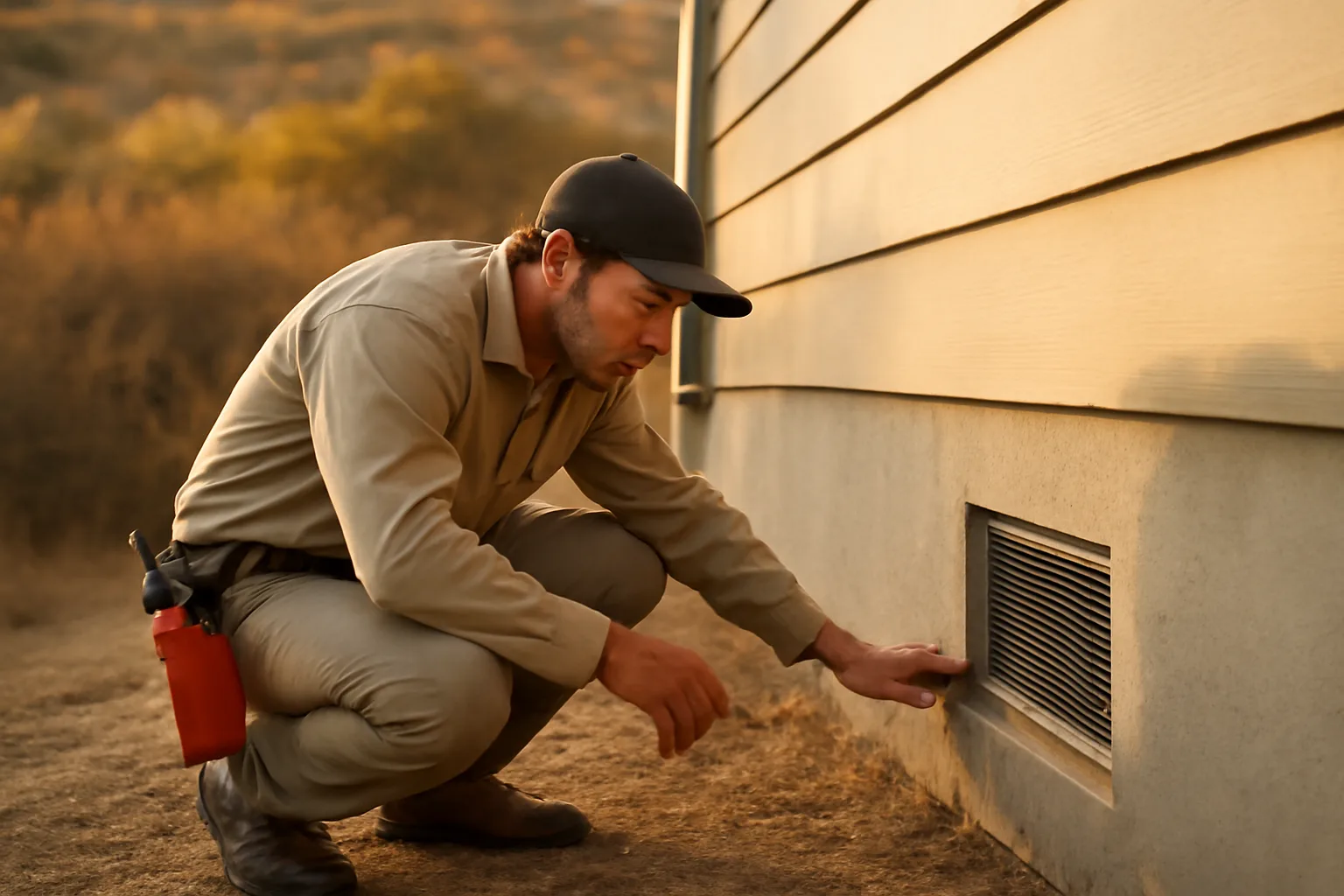
An NFPA wildfire mitigation specialist is someone trained (often through NFPA's Firewise USA program or state-run courses) to assess a home's ignition risk against NFPA 1140 and related standards. They're not firefighters and can't guarantee coverage. Expect a home assessment, a written report, and a prioritized hardening list you can hand to your insurer or contractor.
What is an NFPA wildfire mitigation specialist, exactly?
The term gets used loosely, and that's part of the confusion. NFPA (the National Fire Protection Association) doesn't issue a single nationwide license called "wildfire mitigation specialist." Instead, NFPA publishes the technical standards, like NFPA 1140, Standard for Wildland Fire Protection, and NFPA 1144, Standard for Reducing Structure Ignition Hazards from Wildland Fire, that state agencies, county fire districts, and private consultants train against [1] [2]. So when someone calls themselves an NFPA wildfire mitigation specialist, they usually mean one of three things: they've completed a wildfire mitigation training course built around NFPA standards (some states run these through their fire marshal's office), they're a Firewise USA site assessor working with NFPA's community recognition program, or they're a private consultant, arborist, or contractor who studied the NFPA framework and applies it to home assessments. None of these titles are regulated the way, say, a structural engineer's license is. There's no national exam or NFPA-issued card that says "wildfire mitigation specialist." That matters because if you're hiring one, you should ask directly: what training did you complete, what standard are you assessing against, and can I see a sample report. A vague answer is a red flag. Firewise USA itself is run by NFPA and is the most recognizable national program tied to the term. Communities (not individual homes) get Firewise USA recognition by completing a wildfire risk assessment, forming a board, and doing an annual mitigation project, and there are over 1,900 recognized sites across the country as of NFPA's most recent published count [3].
What does a wildfire mitigation assessment actually cover?
A real assessment walks the property in zones, from the structure outward, and checks specific ignition points, more than "is there brush nearby." Most frameworks (NFPA's included) break it into the home ignition zone concept originally developed by fire researcher Jack Cohen at the US Forest Service, now adopted across NFPA 1144 and CAL FIRE's defensible space guidance [2]. A competent assessment typically covers: roof material and condition, gutter debris, vents (are they ember-resistant, 1/8 inch mesh or smaller), siding material and any gaps, deck and fence attachment points, window glazing (single vs. dual pane, tempered glass), and the five-foot noncombustible zone immediately touching the foundation. Then it moves outward to vegetation spacing, tree canopy separation, and fuel continuity toward the property line. What a good report gives you is more than a checklist, it's prioritized. A cheap plastic gutter guard matters less than an open attic vent. A specialist worth paying should tell you which three fixes cut your risk the most for the money, not hand you a 40-item list with no ranking. If you want a structured way to organize this yourself before or after hiring someone, defensible space zone guidance breaks the property into the standard zone 0/1/2 model CAL FIRE and most western states now use.
How much does hiring a wildfire mitigation specialist cost?
Costs vary a lot by region and whether you're getting a volunteer Firewise USA-style walkthrough or a paid private consultant. There's no single national fee schedule, and I'd be skeptical of anyone who quotes a price before seeing your property. Rough ranges reported by state and county wildfire programs: many county fire departments and CAL FIRE unit assessments are free or low-cost, funded through state grant programs, while private consultants (often certified arborists or former fire personnel) charge anywhere from $150 to $500 for a residential site visit, more for larger acreage or complex terrain. Some insurers, particularly in California's FAIR Plan overflow market, have started referencing third-party assessments in underwriting conversations, though a private assessment does not guarantee reinstatement or a discount. Before paying anyone, check whether your county fire district or CAL FIRE unit offers a free defensible space inspection first, since many do under state grant funding. Ask your local fire district [fill in: contact info for defensible space inspections] whether they run this program before hiring a private specialist.
When does the California defensible space law go into effect?
California's defensible space requirement (100 feet of clearance around structures, under Public Resources Code 4291) has been in effect since it was expanded by the state legislature in 2004, and it currently applies statewide in State Responsibility Areas and designated Very High Fire Hazard Severity Zones [4]. What's changing is the enforcement detail level, specifically the "ember-resistant zone" (Zone 0) within 5 feet of structures. California's Board of Forestry and Fire Protection has been working through formal rulemaking to define Zone 0 requirements under SB 63 (2020) and related statute, but as of this writing that specific Zone 0 regulation has not been finalized into enforceable code; CAL FIRE's public guidance describes Zone 0 as recommended best practice pending the formal regulation [5]. So the honest answer: the base 100-foot defensible space law is already active and has been for two decades. The stricter 5-foot ember zone rule is still moving through the regulatory process, and homeowners in high-severity zones should check CAL FIRE's current rulemaking status directly rather than relying on a fixed date, because it has shifted more than once.
Why won't people follow the defensible space law in California?
Compliance gaps come down to cost, labor, and enforcement capacity, more than stubbornness. A 2021 study from the University of California's Cooperative Extension and related wildfire risk research programs found that homeowner compliance with defensible space requirements is inconsistent even in high-hazard zones, with cost of tree removal, physical ability to do the labor, and confusion over what's actually required cited as the top barriers [6]. There's also an enforcement reality: CAL FIRE and local fire departments issue inspection notices, but actual citation and fine enforcement varies enormously by jurisdiction, and many counties are understaffed relative to the number of parcels needing inspection. A homeowner might get a notice, do nothing, and face no real consequence for a year or more, which erodes urgency. And some of it is genuine confusion. The 100-foot rule sounds simple until you're standing in your yard trying to figure out whether a rule says thin canopy 6 feet apart or 10, whether dead brush 80 feet out counts, or whether your specific fire district has stricter add-ons. Rules do vary by local fire district on top of the state baseline. [Check with your local fire district: fill in specific local ordinance link] before assuming the state minimum is all that applies to your parcel. Money is the biggest single factor though. Removing large trees, thinning dense brush on a hillside, or replacing wood fencing that touches the house easily runs into thousands of dollars, and there's no statewide subsidy program covering most of that cost for private homeowners.
How to prevent wildfires (and what's actually in your control)
You can't prevent wildfires from starting in a wilderness area, but you have real control over ignition sources near your own property and in how a fire behaves once it reaches you. Nationally, human activity causes the large majority of wildfires: the National Interagency Fire Center and USDA Forest Service data consistently show that roughly 85-90% of wildfires in the US are human-caused, from unattended campfires to equipment sparks to arson, with the remainder from lightning. At the homeowner level, prevention means three things: eliminating ignition sources you control (debris burning, equipment use during red flag days, unmaintained spark arrestors on mowers), maintaining defensible space so embers landing near your home don't ignite it, and hardening the structure itself so wind-blown embers, the actual cause of most home losses in wildfire events, can't get in through vents, gaps, or combustible decking. CAL FIRE's own data attributes most home losses in wildland-urban interface fires to ember intrusion rather than direct flame contact, which is why vent screening and roof material matter more than people expect. If you're building a prevention plan, start with vents and roofing before landscaping, because embers travel miles ahead of a fire front and land on your home whether or not the fire ever reaches your fence line.
How to prepare for a wildfire, step by step
Preparation splits into three timeframes: year-round hardening, seasonal defensible space maintenance, and the 72-hour window when a fire is actually threatening your area. Ready.gov's wildfire preparedness guidance recommends assembling a go-kit, planning two evacuation routes, and signing up for local emergency alerts before fire season starts, not during it [7]. Year-round: maintain the ember-resistant zone near the foundation, clear gutters twice a year, keep a fire-resistant hose long enough to reach your roofline, and confirm your address is visible from the street for responding crews. Seasonal (before your area's typical fire season starts): clear dead vegetation in defensible space zones, trim tree limbs 10 feet from chimneys and roof lines, and move firewood stacks at least 30 feet from structures. When a fire threat is active in your area: pack your go-kit (medications, documents, chargers, a change of clothes), move flammable outdoor furniture inside or away from the house, close all windows and interior doors to slow fire spread, and leave early rather than waiting for a mandatory evacuation order, since roads clog fast once one is issued. For documentation you'll want after an event, whether for insurance or FEMA assistance, photographing your home's exterior conditions and defensible space work before fire season gives you a dated record. That's the kind of prep the $99 Wildfire Insurance Survival Kit is built around: a structured way to document your mitigation work and property conditions before you need it, not after.
How to prevent forest fires and avoid forest fires when you're outdoors
Most forest fire prevention advice centers on campfires and equipment, because that's where most human-caused ignitions start. The US Forest Service's Smokey Bear program guidance is specific: drown campfires completely, stir the ashes, and drown again until there's no heat or steam, because a fire that looks out is often still smoldering underground in root systems [8]. Other major ignition sources worth knowing: dragging trailer chains that spark on pavement, mowing dry grass during peak heat hours, parking vehicles with hot undercarriages over dry grass, and target shooting with certain ammunition types in dry conditions (several western states restrict this seasonally). Many national forests and BLM lands post seasonal fire restriction orders that ban campfires entirely during high-risk periods, and violating them carries real federal penalties, more than a warning. If you're recreating in fire country, checking current restriction status for the specific forest or district before you go matters more than general awareness, since restrictions change week to week based on fuel moisture and weather.
What fire-safe standards for homes take effect in 2026?
This is a genuinely moving target, and any specific claim needs a direct source check because rulemaking timelines shift. California's Zone 0 (ember-resistant zone) regulation, developed under SB 63 and Board of Forestry rulemaking, has had multiple proposed effective dates discussed publicly, and homeowners should check the Board of Forestry and Fire Protection's current rulemaking page directly rather than relying on any fixed 2026 date, since it has already been delayed from earlier proposed timelines [5]. Separately, California's Chapter 7A building code (the wildfire-resistant construction standard for new construction and major remodels in Fire Hazard Severity Zones) already applies to new builds and continues to apply to any qualifying remodel, and that's enforced through local building departments under the California Building Code, not a future date [9]. Oregon, Colorado, and other western states are running their own parallel processes: Oregon's statewide wildfire risk map and defensible space code rollout has had its own delayed timeline tied to legislative pushback, and Colorado's building codes are largely set at the local jurisdiction level rather than statewide. [Check with your state fire marshal: fill in specific state code adoption date] for the current status where you live, because a national "2026 fire-safe standard" as a single unified rule does not currently exist; what exists is a patchwork of state and local rules on different timelines.
Is Santa Barbara safe from fire?
No coastal California city, including Santa Barbara, is exempt from wildfire risk, and the region has direct history proving it: the 2017 Thomas Fire burned over 281,000 acres across Ventura and Santa Barbara counties and was, at the time, the largest wildfire in modern California history, followed within weeks by the Montecito debris flow that killed 23 people when burned hillsides couldn't absorb rainfall [10]. Santa Barbara County's terrain, dry chaparral hillsides, Santa Ana/sundowner wind patterns, and homes built directly against wildland, matches the profile CAL FIRE flags as Very High Fire Hazard Severity Zone territory in the foothill and Montecito-adjacent areas specifically, even though downtown Santa Barbara itself sits in a lower-risk zone . You can check the exact designation for any address through CAL FIRE's Fire Hazard Severity Zone viewer. So the honest framing: parts of Santa Barbara city proper carry moderate risk, while the hillside and canyon communities around it (Montecito, Mission Canyon, the foothills) carry some of the highest wildfire hazard designations in the state. "Safe" isn't the right word for any of it; "lower risk than the hills" is more accurate.
How can we prevent forest fires as a community, more than individually?
Individual defensible space only works at scale, since embers and fire don't respect property lines, which is exactly the logic behind NFPA's Firewise USA community model. A neighborhood where nine houses are hardened and one isn't still has a serious ignition risk, because that one house can reignite and threaten the rest. Community-level prevention that actually moves the needle: coordinated fuel reduction on shared open space and greenbelts, local ordinances requiring defensible space compliance with real enforcement (more than notices), community chipper days that make brush removal free or cheap for residents who can't afford a hauling service, and joining or forming a Firewise USA recognized site, which requires an annual community wildfire risk assessment and mitigation project but gives neighborhoods a structured framework and sometimes a stronger case to bring to insurers [3]. States are also pushing shared-cost models. Washington state's DNR, for example, runs cost-share and contractor programs for defensible space clearing that individual homeowners can tap into rather than paying full private contractor rates; details on wildfire defensible space clearing contracts in Washington state show how that structure works if you're in a state with a similar program. If your neighborhood has had a house fire or seen a neighbor's insurance dropped, that's often the trigger point that gets a community organized. It shouldn't take that, but realistically, it usually does.
How do I find a legitimate mitigation specialist near me?
Start with your state fire marshal's office and county fire department before searching for private consultants, since many states maintain lists of certified or state-trained wildfire mitigation assessors, and some of these assessments are free or state-subsidized. [Check with your state fire marshal: fill in specific certification list link] for a vetted roster in your area. If you go private, ask for three things before hiring: a sample report from a past client (with names redacted), the specific standard they assess against (NFPA 1144, CAL FIRE's defensible space guidelines, or a state-specific code), and whether they carry liability insurance for the visit itself. A legitimate specialist won't hesitate on any of these. Be wary of anyone who leads with a guarantee about insurance reinstatement or premium reduction. No mitigation specialist, public or private, can promise an insurer will reinstate a policy or lower a rate. What they can do is document the work so you have it on record when you talk to your carrier or apply for FAIR Plan or admitted-market coverage. For fire-resistant plant choices to pair with structural hardening, fire-safe landscaping next to the house covers the plant spacing and species side of the same zone-based approach a mitigation specialist would recommend.
Frequently asked questions
When does the California defensible space law go into effect?
The core 100-foot defensible space requirement under Public Resources Code 4291 has been active statewide in high-risk zones since it was expanded in 2004. The stricter 5-foot Zone 0 ember-resistant rule is still in Board of Forestry rulemaking and hasn't been finalized into enforceable statewide code as of this writing; check CAL FIRE's current rulemaking status directly since the timeline has shifted before [5][6].
Why won't people follow the defensible space law in California?
Cost is the biggest barrier: tree removal and brush thinning can run thousands of dollars with no statewide subsidy for most homeowners. Confusion over specific requirements, inconsistent local enforcement, and physical inability to do the labor are the other major factors cited in UC Cooperative Extension wildfire compliance research [7].
How do I prevent wildfires around my own home?
Focus on ember intrusion points first: ember-resistant vents (1/8 inch mesh), a noncombustible 5-foot zone at the foundation, and Class A roofing. Then maintain defensible space in the 30-100 foot zones. CAL FIRE data shows most home losses in wildfire events come from embers, not direct flame contact, so structure hardening matters as much as landscaping [4].
What's the fastest way to prepare for a wildfire this season?
Clear gutters and the 5-foot zone around your foundation, pack a go-kit with medications and documents, sign up for local emergency alerts, and photograph your home's exterior and defensible space for your records. Ready.gov recommends doing this before fire season starts, not during an active threat [9].
How can communities prevent forest fires beyond individual homes?
Coordinated fuel reduction on shared open space, enforced local defensible space ordinances, community chipper days, and joining NFPA's Firewise USA program (which requires an annual community risk assessment and mitigation project) all work at a scale individual homeowners can't reach alone. Over 1,900 US communities currently hold Firewise USA recognition [3].
What new fire-safe home standards take effect in 2026?
There's no single unified national 2026 standard. California's Zone 0 ember-resistant zone rule has been delayed multiple times and isn't finalized; check the Board of Forestry's current rulemaking page. Chapter 7A building code already applies to new construction in Fire Hazard Severity Zones, enforced by local building departments, not a future date [6][11].
Is Santa Barbara, California safe from wildfire?
No part of the region is fully exempt. The 2017 Thomas Fire burned over 281,000 acres across Santa Barbara and Ventura counties, followed by a deadly Montecito debris flow. Hillside communities like Montecito and Mission Canyon carry Very High Fire Hazard Severity Zone designations; downtown Santa Barbara itself is lower risk but not zero [12][13].
What does an NFPA wildfire mitigation specialist actually assess?
They walk the property zone by zone: roof material, vent mesh size, siding gaps, deck attachment points, the 5-foot noncombustible zone at the foundation, then vegetation spacing outward to the property line. A good report ranks fixes by risk reduction per dollar rather than listing everything with equal weight.
How much does a wildfire mitigation assessment cost?
Many county fire departments and CAL FIRE units offer free assessments through state grant funding. Private consultants typically charge $150 to $500 for a residential visit, more for larger or complex properties. Check your local fire district for a free program before paying for a private one.
Can a mitigation specialist guarantee my insurance gets reinstated?
No, and you should be skeptical of anyone who says so. A specialist can document your hardening and defensible space work, which you can send to your insurer, but no assessor can promise reinstatement, a discount, or new coverage. That decision sits entirely with the carrier.
What causes most wildfires in the United States?
Roughly 85-90% of US wildfires are human-caused, according to National Interagency Fire Center and USDA Forest Service data, from unattended campfires and equipment sparks to arson and debris burning. The remainder come from lightning strikes [8].
How do I avoid starting a forest fire while camping?
Drown your campfire completely, stir the ashes, and drown again until there's no heat or steam left, per US Forest Service guidance. Avoid parking hot vehicle undercarriages over dry grass, check for active fire restrictions before your trip, and never leave a fire unattended even briefly [10].
Sources
- NFPA, NFPA 1140 Standard for Wildland Fire Protection: NFPA 1140 is the standard governing wildland fire protection that mitigation training is built around
- NFPA, NFPA 1144 Standard for Reducing Structure Ignition Hazards from Wildfire: NFPA 1144 governs structure ignition hazard reduction from wildland fire
- NFPA, Firewise USA Program: Firewise USA has recognized over 1,900 community sites and requires an annual risk assessment and mitigation project
- California Public Resources Code Section 4291: The statutory basis for California's 100-foot defensible space requirement
- California Board of Forestry and Fire Protection, Zone 0 Rulemaking: The Zone 0 ember-resistant zone regulation is still in rulemaking and not yet finalized statewide
- National Interagency Fire Center, Statistics: Roughly 85-90% of US wildfires are human-caused
- USDA Forest Service, Smokey Bear campfire safety guidance: Drown, stir, and drown again campfire extinguishing method
- California Department of Forestry and Fire Protection, Building Materials Listing / Chapter 7A: Chapter 7A wildfire-resistant construction standards apply to new construction in Fire Hazard Severity Zones
- CAL FIRE, Thomas Fire Incident Archive: The 2017 Thomas Fire burned over 281,000 acres across Ventura and Santa Barbara counties
- CAL FIRE, Fire Hazard Severity Zone Viewer: Fire Hazard Severity Zone designations vary by specific address, including hillside areas near Santa Barbara