Last updated 2026-07-25
TL;DR
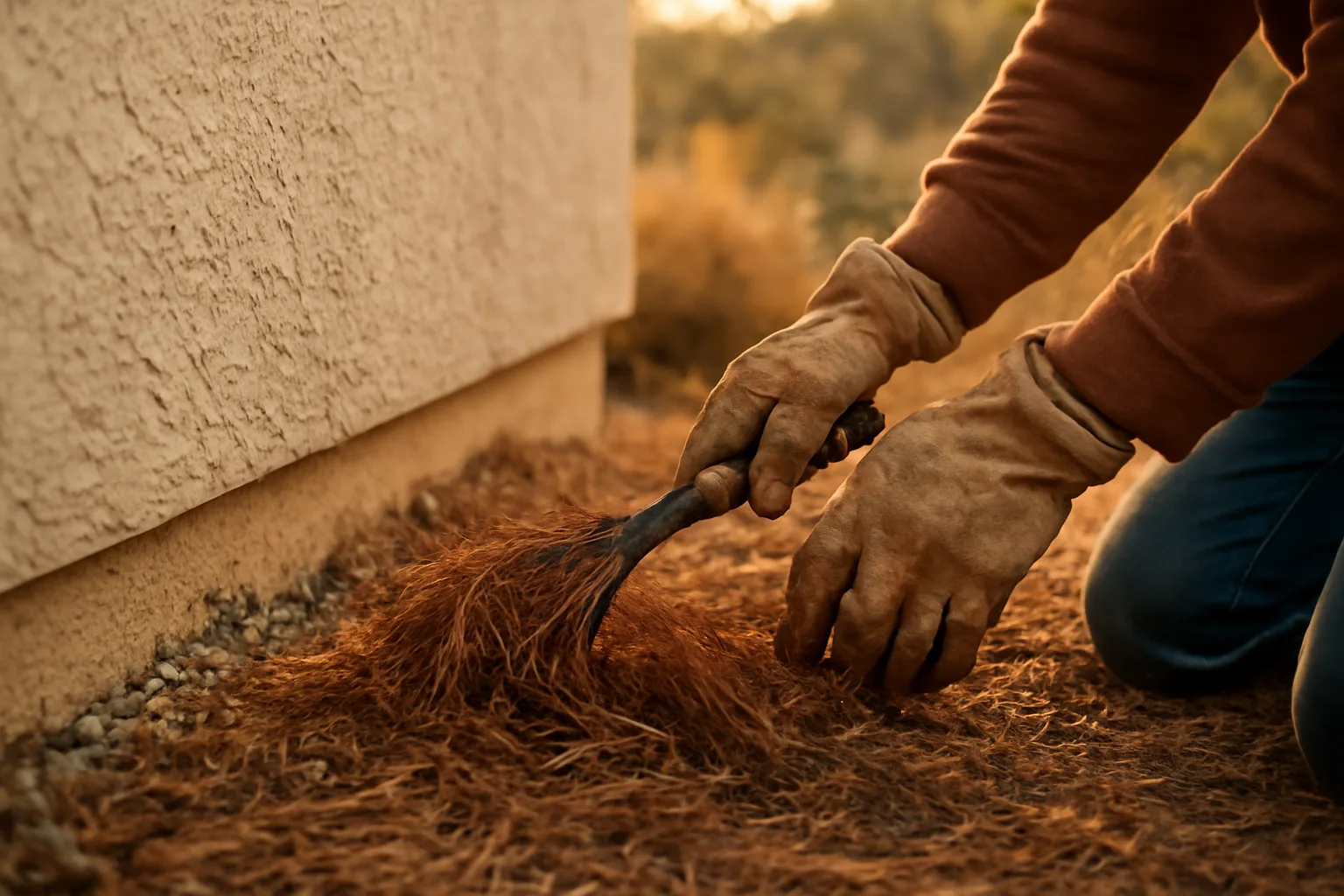
Preparing for a wildfire means clearing the 5 feet around your foundation (Zone 0), hardening vents and roofs against embers, and documenting it all before your insurer asks. California's Zone 0 ember-resistant rule is still pending final regulations as of 2026; most damage comes from embers landing on or near structures, not flame fronts, per CAL FIRE and NIST research.
when does the california defensible space law go into effect
California's defensible space rules already apply today under existing law, but the newest layer, the Zone 0 ember-resistant zone within 5 feet of structures, has been delayed multiple times and still isn't final as of mid-2026. Here's the actual timeline. Assembly Bill 3074 (2020) directed the Board of Forestry and Fire Protection to develop regulations for a new "ember-resistant zone" extending 0 to 5 feet from buildings in State Responsibility Areas and designated Very High Fire Hazard Severity Zones [1]. The statute itself set a target implementation date of January 1, 2023, but rulemaking dragged. The Board of Forestry has continued revising draft regulations, with workshops and public comment rounds running into 2024 and 2025, and no final adopted regulation as of this writing [2]. What's already in effect is the older three-zone framework under Public Resources Code 4291, which requires 100 feet of defensible space clearance around structures in State Responsibility Areas (30 feet of lean, clean, and green maintenance, then extended fuel reduction out to 100 feet or the property line) [3]. That part isn't new and isn't waiting on anything. If you got a non-renewal or inspection letter, the 100-foot rule is almost certainly what your local fire agency is enforcing right now. Check with your county fire marshal or CAL FIRE unit before assuming Zone 0 applies to you today. Requirements differ by fire district, and some jurisdictions (parts of unincorporated San Diego County, for example) have already adopted local Zone 0-style ordinances ahead of the state rule. [Guided fill-in: confirm your specific district's current defensible space ordinance with your local fire department or CAL FIRE unit before doing work.]
what fire safe home rules take effect in 2026
As of 2026, no new statewide California ember-resistant Zone 0 building or landscaping mandate has taken full legal effect for homeowners; the regulation remains in the rulemaking pipeline at the Board of Forestry and Fire Protection. That said, don't read "not yet mandatory" as "not worth doing." CAL FIRE's own guidance already recommends treating the 5 feet around your home as noncombustible now: no bark mulch, no wood fencing attached to the house, no stored firewood or propane tanks touching the structure. Insurers are increasingly asking for exactly this in their own inspection checklists even where it isn't yet law, because it's the single biggest predictor of survival in ember-driven fires. Oregon and Washington have moved faster on codified defensible space in some ways. Oregon's Senate Bill 762 (2021) created a statewide wildfire risk map and defensible space standards tied to risk classification, administered through the Oregon Department of Forestry [4]. Colorado doesn't have one statewide defensible space law; it's handled through county wildfire mitigation ordinances and the state's Wildfire Risk Public Awareness Program. Arizona similarly leaves specifics to counties and the Arizona Department of Forestry and Fire Management's Firewise guidance. Bottom line: don't wait for a firm 2026 mandate date to do the work. Insurers pulling policies in 2024 and 2025 are already scoring homes against ember-zone standards that aren't technically law yet. [Guided fill-in: ask your insurer's underwriting or loss-control department directly whether they use a Zone 0 style checklist, and request it in writing if they do.]
why won't people follow the defensible space law in california
Compliance with California's defensible space law is uneven, and the honest reasons are cost, confusion about property lines, and simple neglect, not defiance. CAL FIRE conducts defensible space inspections in State Responsibility Areas and has reported non-compliance rates that vary widely by county, with some post-fire assessments finding a meaningful share of destroyed homes had incomplete defensible space at the time of the fire [5]. That's not the same as saying most homeowners are ignoring the law. Several real barriers show up again and again. Cost is the biggest one. Removing mature trees, thinning brush on a slope, and hauling debris away can run into the thousands of dollars, and low-income and elderly homeowners on fixed incomes often can't absorb that in one season. Second, a lot of the required clearance falls on neighboring or absentee-owned parcels, and there's no simple mechanism forcing a neighbor two lots over to clear their land even though your defensible space technically extends onto it. Third, people genuinely don't know the rule exists or think a green, well-watered yard already counts (it often doesn't, since "lean, clean, and green" refers to fuel volume and arrangement, not lawn color). Enforcement is also thin. CAL FIRE and local fire departments do inspections, but staffing means many properties simply never get visited before a fire arrives. Non-compliance can carry fines and, after a fire, can affect liability determinations, but the practical deterrent for most rural landowners is weak. If you want a structured way to work through the requirement instead of guessing, see defensible space zone planning.
how to prepare for a wildfire, step by step
| 1 | Clear 0-5 ft (Zone 0): remove mulch, wood fencing, stored fuel touching structure | $0-$500 (mostly labor) | |
|---|---|---|---|
| 2 | Screen vents with 1/8 inch metal mesh, box in eaves | $300-$1,500 | |
| 3 | Clean gutters and roof debris, install gutter guards | $150-$800 | |
| 4 | Clear 5-30 ft (Zone 1): space trees, remove ladder fuels | $500-$3,000+ | |
| 5 | Extend to 30-100 ft (Zone 2): thin brush, mow dry grass | $1,000-$5,000+ depending on acreage | |
| 6 | Class A fire-rated roofing upgrade (if replacing anyway) | $8,000-$25,000+ | Costs are rough ranges based on typical residential jobs reported by CAL FIRE community wildfire protection outreach and general contractor pricing; actual cost depends heavily on lot size, slope, and local labor rates. Get local quotes before budgeting. Don't skip the paperwork side. Photograph every completed defensible space task with a timestamp, keep contractor receipts, and save before-and-after images of vents, roofing, and cleared zones. That documentation is what you'll hand an insurer or adjuster later, not a verbal description. For a structural approach to the roof, siding, and vent work specifically, see fire safe landscaping next to your house and home hardening priorities. |
Preparing for a wildfire means working outward from your house: harden the structure itself, clear the 5 feet touching it, then widen fuel breaks out to 30 and 100 feet, and build an evacuation and documentation plan alongside the physical work. Start with a walk-around, not a shopping list. Stand at each side of your house and look for anything that could catch an ember: dry leaves in gutters, a wood pile against the wall, a deck with gaps underneath collecting debris. Ready.gov's wildfire preparedness guidance frames this as reducing your home's "ignition potential," the combination of what's on the structure and what's touching it. Here's a rough sequence that matches how CAL FIRE and most state forestry agencies prioritize the work: | Priority | Action | Typical cost range |
how to prevent wildfires from starting in the first place
Most wildfires are human-caused, and the single biggest prevention lever an individual homeowner has is controlling ignition sources on their own property and during outdoor activity, not the fire itself once it's burning. Nationally, roughly 85 to 90 percent of wildland fires are started by people, according to the U.S. Forest Service, through causes like unattended campfires, debris burning, equipment use, and discarded cigarettes [6]. That number shifts by year and region, but the pattern holds across most western states. Practical prevention steps that actually move the needle: Never leave a campfire unattended, and drown it completely (more than dampen it) before walking away; embers can smolder in ash for days. Avoid mowing or using power equipment on dry grass during red flag warning days, since a mower blade striking a rock is a documented ignition source for grass fires. Keep vehicles off dry roadside grass; a hot catalytic converter or dragging trailer chain can ignite dry vegetation in seconds. If you burn debris, check local burn permit rules first; many counties suspend burn permits entirely during fire season. Utility equipment and power lines cause a smaller but disproportionately destructive share of major wildfires (the 2018 Camp Fire and 2021 Marshall Fire both had utility-related ignition findings), which is outside individual control, but it's worth knowing your utility's public safety power shutoff protocol so you're not caught without warning.
how to avoid forest fires and reduce your personal risk
Avoiding forest fires as a homeowner really means two separate things: not causing one, and not being caught unprepared when one starts nearby. Both matter equally. On the "not causing one" side, the campfire, equipment, and debris-burning rules above cover most of it. On the "not being caught unprepared" side, the work is defensible space, home hardening, and an evacuation plan you've actually practiced, more than written down. One thing people underestimate: the fire doesn't have to reach your property to threaten your home. Wind-driven embers can travel over a mile ahead of the flame front, according to research cited by the National Institute of Standards and Technology on the 2007 Witch Fire and other California wildfire structure loss studies [7]. That's why ember-resistant construction (Zone 0, vent screens, Class A roofing) matters even for homes that feel geographically buffered by distance from wildland vegetation. If your home is in a suburban pocket near open space rather than deep in the wildland-urban interface, don't assume distance protects you. See defensible space zone planning for how the zone system accounts for ember travel, more than direct flame contact.
how to prepare for forest fires as a household, more than a property
Preparing for a forest fire at the household level means having a go-bag, a communication plan, and a pre-decided evacuation trigger, built before smoke is visible from your window, not during the event. Ready.gov recommends assembling an emergency kit with at least a three-day supply of water and food per person, a battery or hand-crank radio, medications, copies of identification documents, and a change of clothes, stored somewhere you can grab it in under five minutes. Add pet carriers and pet food if you have animals; shelters routinely turn away unaccompanied pets during evacuations. Agree on an out-of-area contact person everyone in the household calls or texts if local phone networks are jammed, which happens often during mass evacuations. Decide your evacuation trigger in advance: will you leave at a Level 1 ("be ready") notice, or wait for Level 3 ("go now")? Deciding this ahead of time, while calm, produces better decisions than deciding it while watching a smoke column. CAL FIRE's Ready, Set, Go program uses this same three-tier framework and is worth reviewing regardless of which state you're in, since most western fire agencies now use a version of it [8]. Document your home's condition before fire season starts: photos of every room, receipts for major appliances and furniture, a video walkthrough narrated with dates. If you're ever filing a claim, this record is what supports it. We don't file claims or handle insurer communications on your behalf (that's public adjuster territory and outside our scope), but having your own organized documentation before anything happens puts you in a stronger position no matter who you work with. A $99 one-time Wildfire Insurance Survival Kit (/survival-kit-builder) is built around exactly this: a structured way to capture defensible space photos, contractor receipts, and home inventory documentation in the format insurers actually want to see, before you ever get a non-renewal letter.
how can we prevent forest fires at the community level
Community-level forest fire prevention works through coordinated fuel breaks, shared defensible space enforcement, and Firewise USA-style neighborhood programs, because individual compliance without neighbor compliance leaves gaps embers exploit anyway. A single homeowner clearing perfect defensible space next to a neighbor with an untouched brush lot doesn't fully protect either property; fire behaves as a system, not a series of isolated parcels. The National Fire Protection Association's Firewise USA program organizes neighborhoods to plan and fund shared fuel reduction, often with matching grants through state forestry agencies [9]. Ask your county fire department or state forestry office (CAL FIRE, Oregon Department of Forestry, Colorado State Forest Service, or Arizona Department of Forestry and Fire Management) whether a Firewise chapter already exists near you; joining one, or starting one, is often the fastest way to get shared clearance projects funded and coordinated. At the policy level, community wildfire protection plans (CWPPs), required for many federal grant programs under the Healthy Forests Restoration Act of 2003, map local risk and prioritize fuel treatment projects across jurisdictions [10]. If your area doesn't have one, ask your county emergency management office; it's a public document once adopted.
is santa barbara safe from fire
No area in California's coastal or foothill wildland-urban interface, including Santa Barbara, is meaningfully "safe" from wildfire risk, and Santa Barbara County has a documented history of some of the state's most destructive fires. The Thomas Fire (December 2017 into January 2018) burned over 281,000 acres across Ventura and Santa Barbara counties and was, at the time, the largest wildfire in modern California history by acreage; it was followed within weeks by the Montecito debris flow that killed 23 people, a disaster directly tied to the burn scar left by the fire [11]. The 2009 Jesusita Fire and 1990 Painted Cave Fire both burned into Santa Barbara's urban edge as well. Much of Santa Barbara's hillside and foothill neighborhoods sit within CAL FIRE-mapped Very High Fire Hazard Severity Zones, which triggers the same defensible space and home hardening disclosure requirements under state law as any other high-risk area [12]. If you own property there, check your specific parcel against CAL FIRE's Fire Hazard Severity Zone viewer rather than relying on general reputation about the area; hazard zoning is done at a granular, map-based level, not by city name.
what to do first if you already got a non-renewal or inspection letter
If you've already received a non-renewal or wildfire inspection letter, the first move is reading it closely for the specific deficiency cited, then documenting your corrective action in writing before your renewal window closes, not after. Insurance non-renewal letters in wildfire states typically cite one of a few things: distance to vegetation, roof condition or age, presence of overhanging trees, or general area risk scoring unrelated to your specific property. California Insurance Code Section 675.1 and related FAIR Plan rules govern some of this process, and California also has a one-year moratorium on non-renewals for homes in or near a declared wildfire disaster area, though it applies narrowly and doesn't cover general area risk scoring . Ask your agent explicitly which category applies to your notice. Whatever the stated reason, do the physical work first (defensible space clearance, vent screening, dead vegetation removal), then send your insurer photo documentation with dates, before the appeal or renewal deadline, not after. Some insurers have an internal reconsideration process even outside formal appeals; ask in writing whether one exists for your policy. We can't promise reinstatement or act as your representative with the insurer, and nothing here is legal or insurance advice, but organized documentation of what you've actually fixed is the strongest thing you control. For related structural priorities, see house fire risk factors and what happens during a fire at a house, and for the general prevention message that anchors most state campaigns, see only you can prevent wildfires.
Frequently asked questions
When does the California defensible space law go into effect?
The core defensible space law (100 feet of clearance under Public Resources Code 4291) is already in effect and has been for years. The newer Zone 0 ember-resistant zone regulation, targeted for 2023 under Assembly Bill 3074, is still in rulemaking as of 2026 and hasn't been finalized by the Board of Forestry and Fire Protection [1][2].
Why won't some people follow California's defensible space law?
Cost, confusion over property lines that cross onto neighboring or absentee-owned land, low awareness that the rule exists, and thin enforcement staffing are the main reasons, not intentional defiance. CAL FIRE inspections find variable compliance rates across counties, and post-fire assessments have linked incomplete defensible space to some home losses [6].
How do I prevent wildfires from starting near my home?
Never leave campfires unattended and fully drown ashes, avoid mowing dry grass or using equipment on red flag days, keep vehicles off dry roadside vegetation, and follow local burn permit rules. Roughly 85-90% of wildland fires are human-caused according to the U.S. Forest Service, so controlling ignition sources is the highest-leverage prevention step [8].
How do I prepare for a wildfire if I live in a high-risk zone?
Harden your home (vent screens, Class A roofing, ember-resistant Zone 0), clear defensible space out to 100 feet where required, build a go-bag and evacuation plan, and photograph your property's condition for insurance documentation before fire season. Ready.gov recommends a minimum three-day emergency supply kit per household member [7].
What's the difference between preventing wildfires and preventing forest fires?
Practically, there's no meaningful difference; both terms describe uncontrolled vegetation fire in wildland or wildland-adjacent areas. "Forest fire" tends to describe timber-heavy terrain while "wildfire" is the broader term used by CAL FIRE and most agencies covering grass, brush, and forest fuels alike.
What fire safe home rules take effect in 2026?
No finalized statewide California Zone 0 mandate has taken full legal effect as of 2026; the Board of Forestry and Fire Protection's ember-resistant zone regulation remains in rulemaking. Some counties have adopted local Zone 0-style ordinances ahead of the state rule, so check your specific fire district directly [2].
Is Santa Barbara safe from wildfire?
No. Santa Barbara County has a documented history of major destructive fires, including the 2017 Thomas Fire (over 281,000 acres) and the 2009 Jesusita Fire, and much of its foothill terrain sits in CAL FIRE-mapped Very High Fire Hazard Severity Zones [13][14]. Check your specific parcel on CAL FIRE's hazard zone map rather than assuming general safety.
How can communities work together to prevent forest fires?
Through shared fuel breaks, Firewise USA neighborhood programs, and county-adopted Community Wildfire Protection Plans that coordinate risk mapping and fuel treatment across property lines. Individual defensible space work has limited value if adjacent, unmanaged land still carries heavy fuel loads [11][12].
What is Zone 0 and why does it matter more than the 100-foot rule?
Zone 0 is the 0-5 foot ember-resistant area immediately touching your home, where embers (not flame contact) most often ignite structures. Research on past California wildfire structure losses shows wind-driven embers can travel over a mile ahead of a fire front, making the space right against your walls disproportionately important [9].
Do I have to clear defensible space on my neighbor's property?
No, you can't force clearance on land you don't own, which is one reason compliance gaps persist. If required defensible space extends onto a neighboring parcel, contact that owner directly or your local fire department, which may have authority to require compliance or connect you to a Firewise USA coordinated project [11].
What should I do first after getting an insurance non-renewal letter for wildfire risk?
Read the letter for the specific deficiency cited, complete the corrective work (defensible space, vents, roof), and send dated photo documentation to your insurer before your renewal deadline. This isn't legal or insurance advice, and documentation doesn't guarantee reinstatement, but it's the strongest thing within your control.
Are Oregon, Colorado, and Arizona defensible space rules the same as California's?
No. Oregon's Senate Bill 762 created statewide risk mapping and defensible space standards tied to risk classification through the Oregon Department of Forestry [5]. Colorado and Arizona largely leave specifics to county ordinances and state forestry Firewise guidance rather than one statewide mandate like California's Public Resources Code 4291.
Sources
- California Legislative Information, Assembly Bill 3074 (2020): AB 3074 directed creation of a 0-5 foot ember-resistant zone regulation
- California Board of Forestry and Fire Protection, Zone 0 rulemaking: Zone 0 regulations remain in development with no final adopted rule as of 2026
- California Public Resources Code Section 4291: 100 feet of defensible space clearance required around structures in State Responsibility Areas
- Oregon State Legislature, Senate Bill 762 (2021): Oregon statewide wildfire risk mapping and defensible space standards
- CAL FIRE, Defensible Space Inspections Program: CAL FIRE conducts defensible space compliance inspections in State Responsibility Areas
- USDA Forest Service, wildfire causes statistics: Approximately 85-90% of wildland fires are human-caused
- CAL FIRE, Ready Set Go program: Three-tier evacuation notification framework used by CAL FIRE and other state agencies
- National Fire Protection Association, Firewise USA program: Firewise USA organizes neighborhood-level coordinated fuel reduction projects
- Healthy Forests Restoration Act of 2003: Establishes Community Wildfire Protection Plans as a basis for federal fuel treatment funding priority
- CAL FIRE, Thomas Fire incident information: Thomas Fire burned over 281,000 acres across Ventura and Santa Barbara counties in 2017-2018
- CAL FIRE, Fire Hazard Severity Zone viewer: Santa Barbara foothill areas are mapped within Very High Fire Hazard Severity Zones
- California Department of Insurance, wildfire non-renewal moratorium information: California law provides a one-year non-renewal moratorium for properties in or near declared wildfire disaster areas