Last updated 2026-07-25
TL;DR
Wildfire home hardening means upgrading your roof, vents, siding, windows, and the 5 feet around your foundation (Zone 0) so embers can't ignite your house. California's Zone 0 ember-resistant zone rule is finalized but enforcement dates depend on local jurisdictions adopting it; most other hardening (vents, roofing, gutters) is enforceable now under existing codes.
What does "wildfire home hardening" actually mean?
| 1/8-inch metal mesh over vents | $50-$300 | Attic/crawlspace ember entry | |
|---|---|---|---|
| Clean gutters + gutter guards | $150-$800 | Roof-edge ignition | |
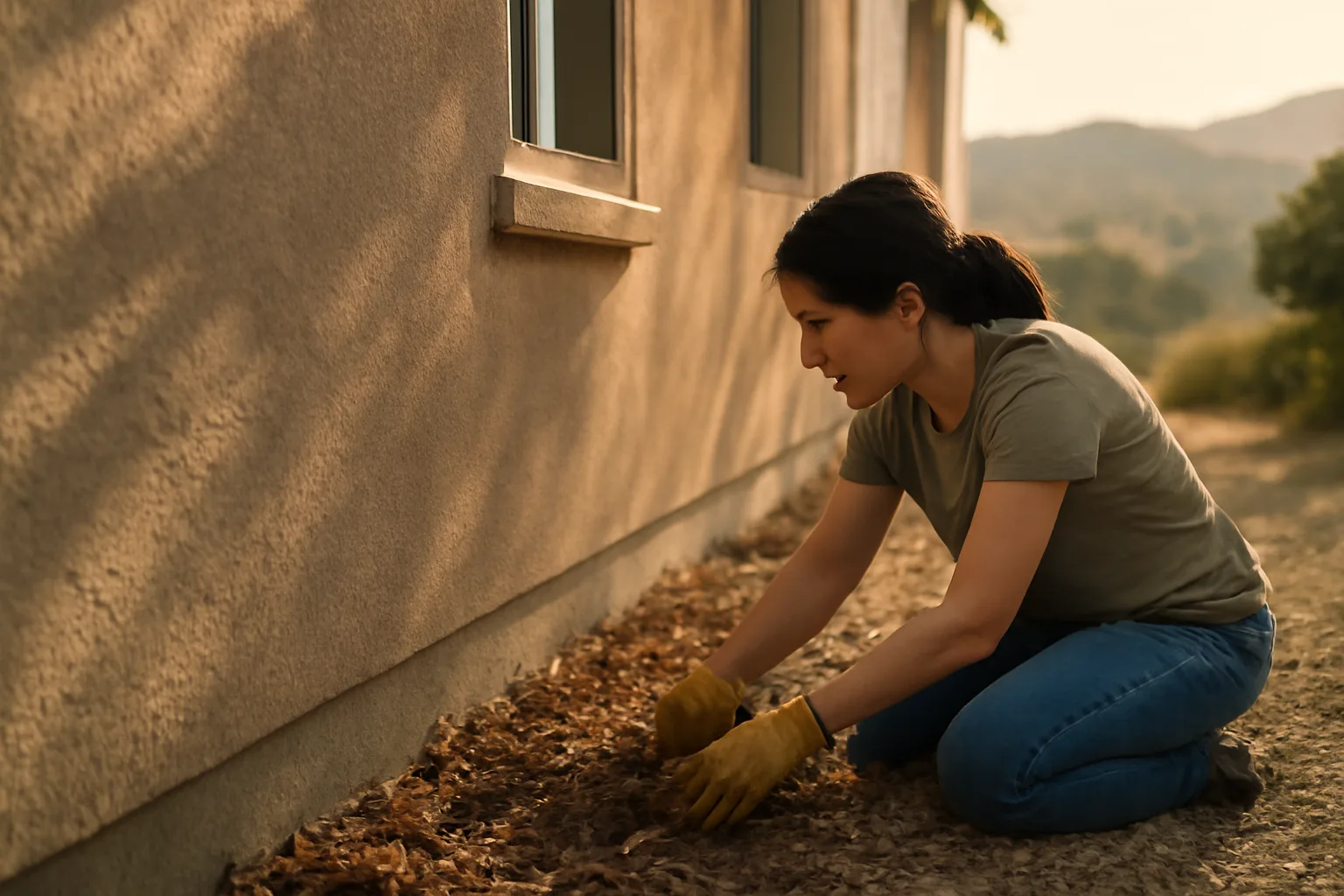
| Remove combustible mulch within 5 ft (Zone 0) | $200-$1,000 | Ground-level ignition against siding | |
| Class A fire-rated roof (on reroof) | $8,000-$25,000+ | Direct ember ignition on roof | |
| Dual-pane tempered windows | $3,000-$12,000 | Radiant heat glass failure | |
| Ember-resistant vents (WUI-listed) | $500-$2,500 | Attic ember intrusion | Costs vary enormously by region and contractor; treat these as planning ranges, not quotes. |
Home hardening means changing the physical parts of a house that let embers or flame get in: the roof, vents, gutters, siding, windows, decks, and the ground within a few feet of the foundation. It's different from defensible space, which is about clearing vegetation on the lot. Hardening is about the structure itself. CAL FIRE's own guidance is blunt about why this matters more than most people assume: "Embers are a major cause of home ignitions during wildfires... Embers can travel more than a mile" from the fire front [1]. That means a house can burn even if the flame front never reaches the property line. A single ember lands in a dry gutter, in a vent screen with too-large mesh, or on a wood mulch bed against the siding, and the house goes up hours after the fire passed nearby. The order of priority most fire scientists and CAL FIRE literature agree on: roof first, vents second, the 5 feet closest to the house third, then decks and windows. Landscaping matters, but a fire-hardened structure with bad landscaping survives more often than a fire-vulnerable structure with perfect landscaping. If you want the deeper landscaping-specific breakdown, see fire safe landscaping in California next to the house. A rough hardening priority list, cheapest fixes first: | Fix | Typical cost | Ember risk it closes |
When does the California defensible space law go into effect?
California's core defensible space law, the 100-foot clearance requirement under Public Resources Code 4291, has been in effect for years and is not new [2]. What's newer, and what people mean when they ask this question in 2025-2026, is the Zone 0 ember-resistant zone rule. CAL FIRE's Board of Forestry finalized emergency regulations for Zone 0, the 5 feet immediately around a structure, in 2025. The rule requires that this zone be kept clear of combustible materials: no bark mulch, no dry vegetation, no stored wood, no combustible fencing attached to the house. The regulation text describes Zone 0 as intended to "reduce the risk of home ignition from embers, direct flame contact, and radiant heat" [3]. Here's the part that trips people up: the regulation applies to homes in State Responsibility Area (SRA) and designated Very High Fire Hazard Severity Zones within local jurisdictions, but actual enforcement and inspection timing depends on your local fire district or city adopting and implementing it. CAL FIRE's own program page notes enforcement dates have shifted as the agency works through the rulemaking and local adoption process. If you got a letter from your county or fire district referencing Zone 0 compliance, that letter's deadline is the one that matters for you, not a single statewide date. Guided fill-in: check your specific enforcement date and inspection requirements at [your local fire district's defensible space page] or by calling [your county fire marshal's office]. Rules and start dates vary by jurisdiction even within California. For the 30-foot and 100-foot zones (Zone 1 and Zone 2), the requirements have been enforceable under PRC 4291 for years and are checked during routine CAL FIRE and local fire agency inspections, especially in years following a nearby fire. If you're unclear on how the zones break down, our defensible space zones explainer covers Zone 0 through Zone 2 distance by distance.
What fire-safe home rules take effect in 2026?
Nothing statewide and universal locks in on a single date in 2026; what's happening instead is a rolling wave of local adoption of the Zone 0 standard plus continued phase-in of California's wildfire-related building code updates for new construction and major remodels in Wildland-Urban Interface (WUI) areas under California Building Code Chapter 7A [4]. Chapter 7A already requires, for new construction and additions in WUI zones: ignition-resistant exterior siding, dual-pane or tempered windows, ember-resistant vents, and Class A roof coverings. These are not new for 2026, they've applied to new builds since the mid-2000s and were strengthened over subsequent code cycles. What changes year to year is which jurisdictions have adopted the current code cycle and which counties add local amendments on top. The honest answer for a homeowner asking "what changes in 2026": check two things. First, whether your county or city has adopted Zone 0 as a mandatory retrofit requirement (some have set 2026 or later compliance deadlines for existing homes, others haven't finalized dates). Second, whether your insurer or FAIR Plan has its own hardening deadline tied to your policy renewal, which is often stricter and faster than any government deadline. Guided fill-in: confirm your jurisdiction's specific 2026 compliance date at [your county planning/building department] or [your local fire district website]. Insurer-imposed deadlines should be confirmed directly in your non-renewal or conditional-renewal letter.
Why won't people follow the defensible space law in California?
Cost, confusion, and low perceived enforcement are the three real reasons, and it's worth being honest about all three instead of just saying people are careless. Cost is real. Removing brush, limbing trees, and hardening a roof on an older home can run into five figures. A 2021 Headwaters Economics analysis of wildfire mitigation found that retrofitting an existing home for ember resistance (vents, roofing, gutters, and the 5-foot zone) commonly runs from a few thousand dollars for modest fixes to well over $30,000 for full retrofits including new roofing and windows. For a fixed-income retiree on a rural parcel, that's not a weekend project, it's a second mortgage. Confusion is real too. Zone boundaries (0, 1, 2), which apply to your specific parcel, whether your city or county has adopted stricter local amendments, and whether your HOA has separate landscaping rules that conflict with fire rules, all create a fog that makes people default to doing nothing. Some HOA covenants historically required specific hedges or mulch types that directly conflict with Zone 0 guidance; that friction is a documented complaint in public comment periods on the Board of Forestry's Zone 0 rulemaking. Enforcement has historically been inconsistent. CAL FIRE and local fire agencies do conduct defensible space inspections, and PRC 4291 gives them authority to issue notices of violation, but on-the-ground capacity to inspect every parcel every year is limited, especially in sprawling SRA counties. When enforcement feels unlikely, procrastination wins, especially against a cost that feels large and a benefit that feels abstract until the year a fire actually threatens the street. None of this is a reason to skip it. It's context for why the compliance rate isn't 100%, and why insurers have started requiring proof of compliance directly rather than trusting that homeowners did the work.
How do I prepare for a wildfire, step by step?
Preparation splits into two tracks that most guides blur together: getting your house physically ready to survive an ember storm, and getting your household ready to evacuate safely. Do both, in this rough order. House readiness, working outward from the walls: 1. Close the ember gaps: screen or replace vents with 1/8-inch metal mesh, clear gutters, remove anything combustible within 5 feet of the foundation (Zone 0). 2. Check the roof for missing shingles, moss buildup, and debris in valleys. 3. Move firewood stacks, propane tanks, and wooden furniture at least 30 feet from the house. 4. Trim tree branches so none overhang the roof or come within 10 feet of the chimney. 5. Confirm your address is visible from the road for responding crews. Ready.gov's wildfire preparedness page recommends creating and practicing a household evacuation plan with at least two routes out of the neighborhood, since a single blocked road during a fast-moving fire has stranded evacuees in past California fires [5]. Build a go-bag with medications, copies of insurance documents, chargers, and a change of clothes per person, and keep it somewhere you can grab it in under two minutes. Household readiness:
- Sign up for local emergency alerts (most counties have a reverse-911 or Nixle-style system; enrollment is usually not automatic).
- Photograph and video every room and closet of your home, including opening drawers and cabinets, for insurance documentation before anything happens.
- Know your evacuation zone designation if your county uses one (Sonoma, Los Angeles, and several other CA counties do).
- Keep a physical, printed list of emergency contacts; cell networks and phone batteries fail during evacuations. That documentation step, the room-by-room video, is the single most skipped task and the one that matters most after a fire, whether your home burns or you just need to show an insurer or adjuster the condition of a home that has smoke damage but didn't burn. Building this kind of pre-loss record from scratch under stress is exactly the gap our $99 Wildfire Insurance Survival Kit is built to close: a structured way to document your home's condition and hardening work before you ever need to send it to anyone. We don't file claims or handle insurer communications for you; the kit just helps you build the paper trail you'd otherwise have to improvise during an evacuation.
How can we prevent wildfires from starting in the first place?
Most wildfires are not lightning-caused, they're started by people, and that means most are preventable at the point of ignition. The National Interagency Fire Center and multiple federal studies attribute the large majority of U.S. wildfires to human causes, including equipment sparks, unattended campfires, debris burning, and downed power lines, rather than natural causes [6]. At the individual level, prevention looks unglamorous: don't burn debris on windy or red-flag-warning days, fully drown and stir campfire ashes until they're cold to the touch, keep vehicles off dry grass (a hot catalytic converter or dragging trailer chain can ignite roadside grass in seconds), and maintain equipment like chainsaws and mowers so they aren't throwing sparks into cured vegetation. Smokey Bear's long-running message, formalized by the U.S. Forest Service, is still the simplest framing: "Only you can prevent forest fires" (later updated to wildfires) remains the Forest Service's core public message because most ignition sources are human and preventable [7]. If you want the fuller history and current campaign messaging behind that phrase, see only you can prevent wildfires. At the community level, prevention is about reducing fuel and ignition points before red flag days: coordinated brush clearing along roads, utility vegetation management near power lines (a major cause of California's largest fires in the last decade), and enforcement of burn bans during dry seasons. At the home level, "preventing" a wildfire from destroying your specific house is really about hardening and defensible space, since you can't prevent a fire started five miles away by someone else's campfire. The distinction matters: you can't always prevent forest fires near you, but you have significant control over whether your house catches when one arrives.
How do I prepare for a forest fire if I live near wildland?
Preparing for a forest fire as opposed to a smaller brush or grass fire means planning for longer smoke exposure, longer potential evacuation windows, and a fire that may move through the tree canopy rather than just along the ground, which changes ember production and travel distance. CAL FIRE's Ready for Wildfire program frames it as three phases: Ready (year-round hardening and defensible space), Set (situational awareness when fire risk is elevated in your area), and Go (evacuating early rather than waiting for a mandatory order) [1]. The Set phase is the one people skip. It means loading the car, confirming your go-bag, and moving pets and important documents into the vehicle before an evacuation order comes, not after. Forest fires specifically push embers farther and longer than grass fires because burning canopy material (bark, pine cones, needles) is lofted higher and carries further on wind. That's part of why the ember travel distance CAL FIRE cites, over a mile, is a forest and wildland-urban interface figure, not a suburban grass fire figure [1]. If you live adjacent to timber or heavy brush rather than open grassland, your Zone 2 (100-foot) clearance work matters more, not less, and your roof and vent hardening matters more too, since you're more likely to face a longer ember exposure window during a slow-moving evacuation.
Is Santa Barbara safe from wildfire risk?
No California city adjacent to wildland vegetation is "safe" from wildfire risk in an absolute sense, and Santa Barbara County has a well-documented fire history that argues against complacency. The Thomas Fire (2017) burned into the Santa Barbara area and was followed by the deadly Montecito debris flow in January 2018, which killed 23 people after rain hit the Thomas Fire burn scar . The Jesusita Fire (2009) and Tea Fire (2008) both burned into Santa Barbara city neighborhoods directly. CAL FIRE's Fire Hazard Severity Zone maps classify large portions of the Santa Barbara foothills and adjacent unincorporated areas as Very High or High severity zones, which is the same classification system used to determine where defensible space law and Chapter 7A building code requirements apply . You can look up a specific address on CAL FIRE's FHSZ viewer to see its exact zone designation rather than relying on general reputation. What this means practically: if you own property in or near Santa Barbara's foothill neighborhoods (Mission Canyon, the Riviera, upper State Street corridor, Montecito, Hope Ranch adjacent to open space), you're very likely in a mapped hazard zone and subject to the same defensible space and hardening rules as any other California WUI homeowner. "Safe" isn't the right frame; "how mapped and how hardened" is.
What's the fastest way to document my home for an insurer before a non-renewal decision?
Insurers and FAIR Plans in wildfire states increasingly want proof of hardening work, more than a claim that you did it. That means photos of your vents (showing 1/8-inch mesh), photos of the 5-foot zone around your foundation showing no combustible mulch or debris, a photo of your roof material, and receipts or contractor invoices for any hardening work completed. California's Insurance Code Section 10140.1 and the state's Safer from Wildfires regulation (adopted by the Department of Insurance) require insurers to give discounts or credits for specific mitigation actions, including Zone 0 compliance and community-level Firewise USA recognition, but the insurer still needs documentation from you to apply it . Without photos and dates, you're asking an adjuster or underwriter to take your word for it, and in a non-renewal environment, that's a weak position. The practical move: build a dated folder (photos plus a simple written log of what was done, when, and by whom) before you ever get a renewal notice, not after. If you've already gotten a non-renewal or conditional letter, that folder becomes the backbone of what you send back showing compliance. This is the specific gap the $99 Wildfire Insurance Survival Kit is built for: a guided structure for building that documentation packet yourself. To be clear about what it isn't: it doesn't file claims on your behalf, promise a reinstatement, discount, or coverage outcome, or replace your own conversations with your insurer. You build and send your own documentation; we just make sure you don't miss the pieces an underwriter actually wants to see.
What should I harden first if I have a limited budget?
If you can only do three things this year, do these in order: vents, gutters, and the 5-foot zone. All three are cheap relative to roofing or window replacement, and all three close the ember-entry pathways that account for most home ignitions during wildfires, per CAL FIRE's ember-focused guidance [1]. 1. Vents: Replace standard vent screens with 1/8-inch metal mesh, or upgrade to WUI-listed ember-resistant vents. Cost: roughly $50-$300 in materials for a DIY approach; more if hiring a contractor for multiple attic and foundation vents. 2. Gutters: Clean them and consider metal gutter guards. A gutter full of dry leaves is an ember catcher's mitt sitting right at your roofline. Cost: $150-$800 depending on home size. 3. Zone 0 cleanup: Remove bark mulch, dead plants, stored firewood, and anything combustible within 5 feet of your foundation and any attached structure like a fence or deck. Replace mulch with gravel, pavers, or bare mineral soil. Cost: often under $500 in materials if you do the labor yourself. After those three, the next-highest-value dollar generally goes to roof condition (patching or replacing missing/damaged material, not necessarily a full reroof) and then window glazing if your windows are single-pane. Full reroofing with Class A material and full window replacement are the most expensive items on the list and are usually best timed to coincide with work you'd do anyway (a reroof at end of shingle life, window replacement during a remodel) rather than as standalone wildfire projects, unless your insurer is specifically requiring it for renewal.
How does defensible space work with a contractor if I can't do it myself?
Many homeowners, especially those managing acreage or steep slopes, hire out defensible space clearing rather than doing it themselves, and the contracting landscape varies by state. In Washington, for example, the state Department of Natural Resources runs cost-share and contractor referral programs specifically for defensible space clearing work, which is a useful model for understanding what a legitimate contract and scope of work should look like even if you're in California, Colorado, or Arizona. See our breakdown of wildfire defensible space clearing contracts under Washington State DNR for what a real contract scopes, prices, and timelines look like. When hiring a contractor anywhere, get a written scope that specifies exact zone boundaries (0, 1, 2), what's being removed versus limbed versus spaced, and disposal method for cut material (chipping on-site, hauling, or burn pile where legal). Ask for proof of insurance and, in states that license this work, verify any required contractor license. Get before-and-after photos as part of the deliverable, since that documentation does double duty for your insurer. Guided fill-in: check your state's specific contractor licensing and cost-share program requirements at [your state forestry or fire marshal's office] before signing anything.
What happens after a house fire, and how does hardening change the outcome?
When a wildfire hits a neighborhood, the difference between a house that survives and one that doesn't is very often the small stuff: an open vent, a wood fence touching the siding, dry leaves in a gutter, a deck stacked with firewood. Post-fire investigations by CAL FIRE and independent researchers (including work associated with the Insurance Institute for Business & Home Safety) have repeatedly found that homes with hardened features (metal mesh vents, Class A roofs, cleared 5-foot zones) survive at meaningfully higher rates in the same fire event than unhardened neighbors, even when structures are close together [1]. That's the core, slightly uncomfortable truth of wildfire home hardening: it's often not about stopping a massive wall of flame, it's about stopping the small ember that lands hours before or after the main fire front passes and finds one weak point. For what actually happens physically to a structure during ignition and how investigators trace cause, our house fire and fire at a house explainers go through the mechanics in more detail. If your home has already been damaged by wildfire, smoke, or an adjacent fire event, documentation timing matters enormously for any insurance conversation you have afterward. Photograph everything before cleanup or repair starts, keep every receipt, and don't assume verbal descriptions to an adjuster will be remembered accurately weeks later.
Frequently asked questions
When does the California defensible space law go into effect?
The 100-foot defensible space requirement under Public Resources Code 4291 has been enforceable for years. The newer Zone 0 (5-foot ember-resistant zone) rule was finalized by California's Board of Forestry, but exact enforcement and inspection dates depend on your local fire district or county adopting it, so check your specific jurisdiction's timeline directly.
Why won't some people follow California's defensible space law?
Cost, confusion over zone boundaries, and inconsistent enforcement are the main reasons. Full retrofits can run tens of thousands of dollars, zone rules and local amendments vary by county, and inspection capacity is limited across large State Responsibility Areas, so compliance rates stay below what the law technically requires.
How do you prevent wildfires from starting?
Most wildfires are human-caused, not lightning-caused. Prevention means not burning debris on windy or red-flag days, fully drowning campfire ashes, keeping vehicles off dry grass, maintaining equipment that can spark, and following local burn bans, since these ignition sources account for the large majority of wildfire starts nationally.
How do you prepare for a wildfire?
Harden your home (vents, gutters, 5-foot ember-resistant zone, roof condition), plan two evacuation routes, build a go-bag with medications and documents, sign up for local emergency alerts, and photograph your home's contents for insurance purposes before any fire threat, following the Ready, Set, Go framework CAL FIRE and Ready.gov both promote.
How do you prevent forest fires specifically, as opposed to grass fires?
Same human-ignition prevention rules apply (campfires, debris burning, equipment sparks) but forest fire prevention also depends on fuel reduction in timber and heavy brush, since canopy fires produce more embers that travel farther, over a mile per CAL FIRE, making forest-adjacent properties need stronger Zone 2 clearance and roof/vent hardening.
How do you avoid forest fires near your property?
You can't fully avoid a forest fire started elsewhere, but you control whether your house ignites when one arrives. Focus on ember-entry points (vents, gutters, the 5-foot zone), maintain your defensible space zones out to 100 feet, and avoid activities on your own property (burning, sparking equipment) that could start one.
How do you prepare for a forest fire if you live in a wildland-urban interface area?
Prioritize hardening (Class A roof, ember-resistant vents, cleared 5-foot zone) since forest fires loft embers over a mile, per CAL FIRE. Plan for longer evacuation windows and heavier smoke exposure than a grass fire, keep a go-bag ready, and move to the 'Set' phase (loading the car, confirming routes) before an official evacuation order.
What fire-safe home rules take effect in 2026?
No single nationwide date applies. What's rolling out is local adoption of California's Zone 0 ember-resistant zone standard on a jurisdiction-by-jurisdiction basis, plus continued Chapter 7A building code enforcement for new construction in WUI zones. Check your specific county or fire district for their 2026 compliance date, since it varies.
Is Santa Barbara safe from wildfire?
No. Santa Barbara County has burned repeatedly (Tea Fire 2008, Jesusita Fire 2009, Thomas Fire 2017, followed by the deadly Montecito debris flow in 2018) and large parts of its foothill neighborhoods are mapped by CAL FIRE as Very High or High Fire Hazard Severity Zones, the same classification triggering defensible space and building code requirements.
How can we prevent forest fires as a community?
Community prevention focuses on reducing fuel loads through coordinated brush clearing, enforcing burn bans during dry seasons, maintaining utility infrastructure since downed power lines have caused some of California's largest fires, and educating residents on debris burning and campfire safety, since most fires are human-caused rather than natural.
Does home hardening actually work, or is defensible space enough?
Both matter, but hardening (vents, roof, 5-foot zone) is what stops the ember that starts a fire hours after the flame front passes nearby. Post-fire studies referenced in CAL FIRE guidance show hardened homes survive at higher rates than unhardened neighbors in the same fire event, even at close spacing.
What's the cheapest wildfire hardening upgrade with the biggest impact?
Replacing vent screens with 1/8-inch metal mesh, cleaning gutters, and clearing the 5-foot zone around your foundation of mulch and debris. Together these often cost under $1,000-$1,500 and close the most common ember-entry pathways into a home, according to CAL FIRE's ember-ignition guidance.
Will hardening my home get my insurance reinstated after a non-renewal?
Hardening improves your risk profile and gives you documentation to submit, but no contractor, guide, or kit can promise reinstatement, a discount, or coverage; that decision belongs entirely to your insurer or the state FAIR Plan. Focus on documenting the work thoroughly and submitting it yourself through your insurer's process.
Sources
- CAL FIRE, Ready for Wildfire - Embers: Embers can travel more than a mile from a wildfire and cause most home ignitions
- California Legislature, Public Resources Code Section 4291: 100-foot defensible space clearance requirement around structures in SRA/VHFHSZ
- California Board of Forestry and Fire Protection, Zone 0 Ember-Resistant Zone rulemaking: Zone 0 regulation defines the 5-foot ember-resistant zone requirement
- California Department of General Services, 2022 California Building Code Chapter 7A: Chapter 7A requires ignition-resistant construction materials for new WUI buildings
- USDA Forest Service, Smokey Bear campaign history: Smokey Bear's message that most wildfires are preventable and human-caused
- CAL FIRE, Fire Hazard Severity Zone Viewer: Fire Hazard Severity Zone maps classify Santa Barbara foothill areas as Very High or High severity
- California Department of Insurance, Safer from Wildfires regulation: Insurers must provide discounts for specific wildfire mitigation actions including Zone 0 compliance