Last updated 2026-07-25
TL;DR
Wildfire mitigation systems means the combination of defensible space zones, home hardening (roof, vents, siding), and documentation that insurers and fire marshals accept as proof of reduced risk. California's ember-resistant zone rule (SB 3901/Zone 0) is still in rulemaking, not law yet, despite 2025 target dates. No single product replaces a written mitigation plan.
What is a wildfire mitigation system, exactly?
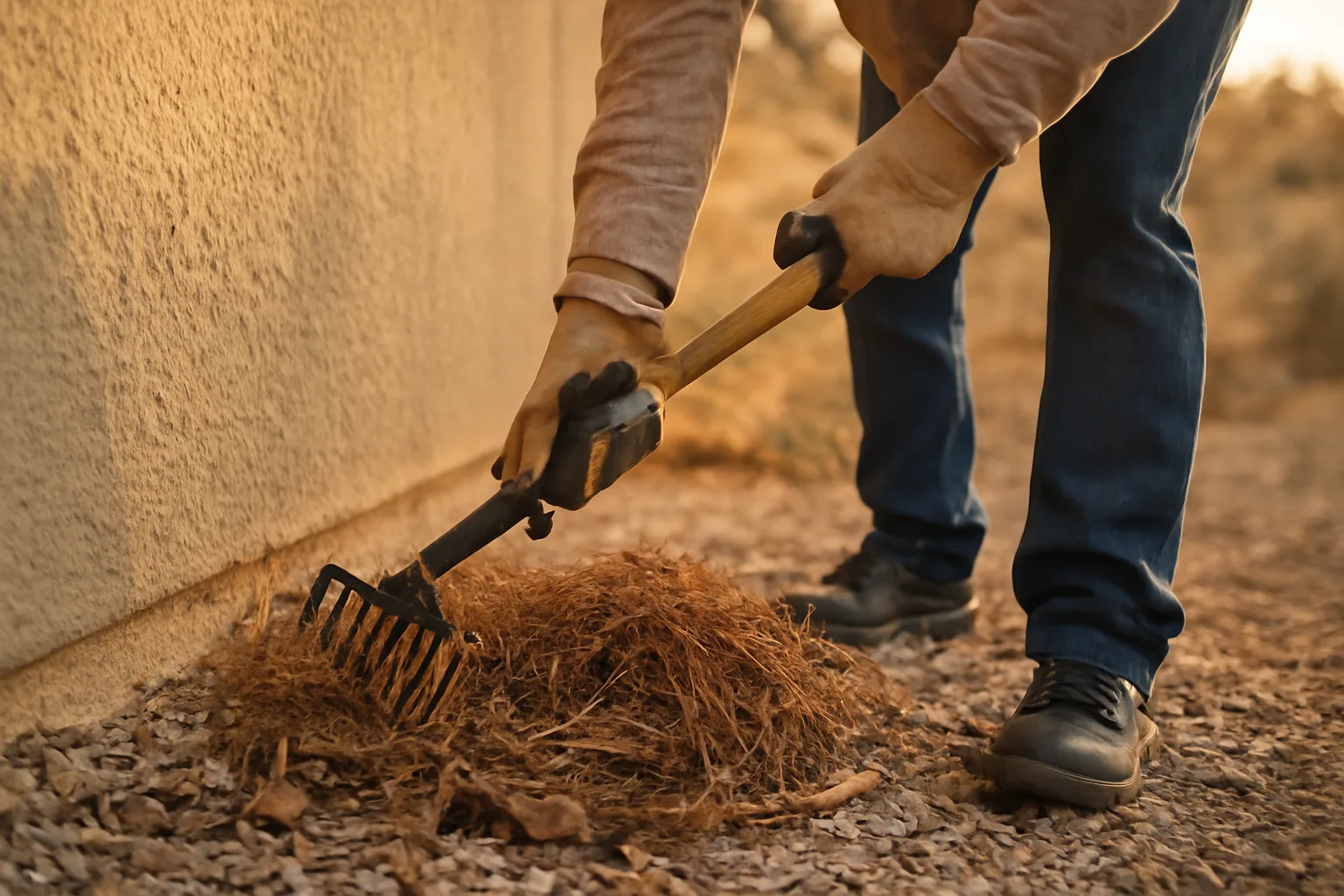
A wildfire mitigation system isn't one product. It's the layered combination of defensible space clearing, home hardening materials, and maintenance records that together lower the chance your house ignites during an ember storm or direct flame contact. CAL FIRE breaks the property into zones: Zone 0 (0-5 feet from structures, the "ember-resistant zone"), Zone 1 (5-30 feet, lean and green), and Zone 2 (30-100 feet, reduced fuel). Home hardening covers the building itself: Class A fire-rated roofing, ember-resistant vents, enclosed eaves, dual-pane tempered glass, and noncombustible siding within 6 inches of grade. No single upgrade does the job alone. A new metal roof with an unscreened attic vent still lets embers in. A cleared Zone 1 with a wood fence touching the house still gives fire a path straight to your siding. Insurers and fire inspectors increasingly want to see the whole system documented together, not a receipt for one improvement. If you got a non-renewal notice, the inspector or underwriter isn't grading you on effort. They're grading the property against a checklist, usually built around the same zone and hardening framework CAL FIRE publishes. Understanding that checklist is the fastest way to know what to fix first.
When does the California defensible space law go into effect?
The base defensible space law, Public Resources Code 4291, has been in effect since 2005 and currently requires 100 feet of clearance (or to the property line) around structures in State Responsibility Areas and certain Local Responsibility Areas [1]. That part isn't new and isn't waiting on anything. What's genuinely pending is the Zone 0 "ember-resistant zone" regulation authorized by SB 63 (2020, formerly referenced as SB 901 rulemaking) requiring noncombustible materials within 5 feet of structures. CAL FIRE and the Board of Forestry have missed self-imposed deadlines more than once; a 2023 target date slipped, and as of this writing the regulation is still working through the formal rulemaking and public comment process rather than being final and enforceable statewide [2]. Here's the honest answer: if someone tells you "Zone 0 is law now, you have until [date]," ask them for the specific Board of Forestry regulation number and adoption date. Until the Board of Forestry finalizes and files the regulation with the Secretary of State, it's a draft, not an enforceable statute. Check the Board of Forestry and Fire Protection's rulemaking page directly for the current status before you spend money assuming a hard deadline [2]. In the meantime, some insurers are already asking for 5-foot noncombustible zones as an underwriting condition, years ahead of any state mandate. That's a business decision by the carrier, not a legal requirement. Worth doing anyway, because it works, but don't confuse insurer preference with statute.
What fire-safe home rules take effect in 2026?
There's no single nationwide "2026 fire-safe home" rule. What's actually happening is a patchwork: California's Zone 0 regulation remains in Board of Forestry rulemaking with no confirmed 2026 enforcement date as of this writing [2], while some local jurisdictions and insurers are moving faster than the state. Oregon's statewide wildfire risk map and defensible space code requirements, tied to Senate Bill 762 (2021), have gone through multiple revisions after public pushback, with implementation timelines pushed back repeatedly since the original 2022 rollout [3]. Colorado doesn't have one statewide defensible space law; it's largely handled county by county and through local fire district codes. The practical move: check your specific fire district's website today, because the rule that applies to your address is set locally, not nationally. [Guided fill-in: Enter your county + fire district here to see current defensible space clearance distances and any pending 2026 code changes.] Rather than waiting for a firm 2026 date that may slip again, treat the direction of travel as settled: tighter ember zones near the house, mandatory Class A roofing on new construction, and vent screening requirements are the trend across every wildfire-prone state. Building to that standard now, even before it's mandatory where you live, is what insurers reward.
Why won't people follow the defensible space law in California?
Compliance rates are genuinely low in some high-risk counties, and the reasons aren't usually stubbornness. Cost is the biggest one: clearing 100 feet around a home on a hillside lot can run into the thousands of dollars, and low-income and elderly homeowners on fixed incomes often can't absorb it in one season. CAL FIRE's own defensible space inspection data has shown compliance rates well under 100% in surveyed SRA parcels in past inspection cycles, with local variation being large; some counties inspect a small fraction of parcels each year simply due to staffing limits. Enforcement is uneven because most counties don't have enough inspectors to check every property annually. Other barriers: confusion about which zone rules apply (SRA vs. LRA vs. local ordinance can differ), disagreement with neighbors over shared fence lines and trees, and a genuine belief among some rural residents that clearing native vegetation harms erosion control or wildlife habitat, which is a real tradeoff foresters do have to manage, more than an excuse. There's also a documentation gap. Many homeowners do the work but never photograph or log it, so when an inspector or insurer asks for proof, there's nothing to show. That's a fixable problem and one of the more common ones. If you've done the clearing, write it down: date, what was removed, before-and-after photos. That paper trail is often what turns a non-renewal into a renewal.
How to prevent wildfires from starting near your home
Most wildfires near homes aren't started by lightning. Roughly 85-90% of wildfires in the U.S. are human-caused, according to National Interagency Fire Center data cited by the U.S. Forest Service, from things like unattended campfires, debris burning, equipment sparks, and downed power lines [4]. At the property level, prevention means removing the specific things that turn a nearby fire into a house fire. Dead vegetation within 5 feet of the structure is the single highest-risk item CAL FIRE flags in Zone 0 guidance. Dry leaves in gutters, mulch beds touching siding, and firewood stacked against the house are the three most common inspection failures reported anecdotally by CAL FIRE defensible space inspectors, though CAL FIRE doesn't publish a single ranked national list of failure items by frequency. Outdoor equipment matters more than people think. Mowing dry grass with metal blades, using power tools that throw sparks, and parking vehicles with hot catalytic converters over dry grass all cause ignitions every fire season, which is why many California counties impose burn bans and mowing restrictions during red flag warning days. If you want the single highest-leverage action: clear Zone 0 first. It's the smallest area, the cheapest to do yourself, and the one most directly tied to whether embers ignite your house rather than just burning nearby brush.
How to prepare for a wildfire (before, during, after)
Preparation splits into three phases, and most people only do the first one. Before fire season: harden the home (Class A roof, ember-resistant vents, enclosed eaves), clear defensible space zones, and build a go-bag. Ready.gov recommends assembling an emergency kit with water (one gallon per person per day for several days), medications, copies of insurance documents, and a battery-powered radio. Photograph every room of your house and every major exterior feature for insurance documentation before anything happens, not after. During an active threat: sign up for your county's emergency alert system before you need it (Nixle, Everbridge-based systems, or Wireless Emergency Alerts vary by county). Know your evacuation zone number. Ready.gov's wildfire guidance specifically recommends closing all windows and doors, removing flammable curtains, and shutting off gas at the meter if time allows before evacuating. After: document everything before cleanup starts. Insurance adjusters need photos of damage in place, not after debris removal. Keep every receipt for temporary housing, meals, and replacement items; most homeowner policies cover "additional living expenses" but only with documentation. This is also where a lot of people get stuck: they don't know what their policy actually requires them to submit, or in what order. That's the gap a $99 Wildfire Insurance Survival Kit is built to close: a structured way to organize the photos, receipts, and mitigation records insurers actually ask for, before you're doing it under stress with an adjuster on the phone. We don't file claims on your behalf; you send your own documentation to your insurer, just organized and complete.
How to prevent forest fires (and how that's different from home protection)
Forest fire prevention and home protection are related but not the same problem. Forest-scale prevention is about fuel load reduction across large landscapes: prescribed burns, mechanical thinning, and fuel breaks managed by agencies like the U.S. Forest Service and CAL FIRE. The U.S. Forest Service's prescribed fire program treats millions of acres annually as part of the national Wildfire Crisis Strategy, which targets fuel reduction treatments across high-risk landscapes over a 10-year period announced in 2022 [5]. That's a landscape-level tool individual homeowners can't replicate, but you can support it: many states allow, and some counties require, permitted burn piles only on specific low-wind, high-humidity days, and violating those permit conditions is a common ignition cause. At the individual level, "preventing forest fires" mostly means not causing accidental ignitions: fully extinguishing campfires (drown, stir, drown again), maintaining spark arrestors on ATVs and chainsaws, avoiding target shooting in dry grass, and not parking on dry vegetation. Smokey Bear's message, "Only you can prevent wildfires," turns 80 years old in 2024 and remains the U.S. Forest Service's core public messaging campaign because human-caused ignition is still the dominant driver of wildfire starts [6]. For more on how that campaign's logic still applies to daily habits near your property, see only you can prevent wildfires.
How to avoid forest fires as a homeowner or visitor
If you live near forested land or recreate in it, avoidance comes down to timing and habits more than gear. Check your local fire danger rating (posted by most national forests and CAL FIRE units) before doing anything with an open flame, and treat "Red Flag Warning" days as a hard stop on burning, welding, or grinding outdoors. Campfires need a cleared area at least 3 feet in diameter down to mineral soil, and should never be left even briefly unattended, per standard Forest Service and CAL FIRE guidance repeated in most state campfire permit rules. Fireworks are illegal on all federal forest land year-round, more than during drought. For property owners at the wildland-urban interface, avoidance also means not creating fuel continuity: don't let ornamental juniper or dry ornamental grasses form an unbroken line from a wild area into your Zone 1. For plant-specific guidance on what to put in the ground instead, see fire safe landscaping California next to house. If you tow trailers or drive off-road vehicles in dry grass, check for a spark arrestor and avoid dragging chains, both classic and preventable ignition sources during late summer and fall.
How to prepare for forest fires if you live at the edge of wildland
Living at the wildland-urban interface means preparing at both the property scale and the neighborhood scale, because your defensible space only works if your neighbors' does too. Start with Zone 2 (30-100 feet): CAL FIRE guidance calls for reducing fuel by removing dead and dying vegetation, spacing tree canopies, and removing "ladder fuels" (shrubs and low branches that let ground fire climb into tree crowns). This zone is where most rural acreage lives, and it's the hardest to fully clear on a large lot, so prioritize the area closest to structures and access roads first. Access matters as much as clearing. Fire departments won't risk a truck on a driveway they can't turn around on, and CAL FIRE's guidance for rural access recommends maintaining clear driveways with adequate width and turnaround space for fire apparatus. If your driveway is narrow, overgrown, or gated without lockbox access, that's a documented risk factor some inspectors will flag. Community-level programs help too. Firewise USA, run through the National Fire Protection Association, recognizes neighborhoods that coordinate mitigation work together, and some insurers give informal underwriting credit to homes in recognized Firewise communities, though this varies by carrier and isn't guaranteed by any statute [7].
Is Santa Barbara safe from fire?
No coastal California city is "safe" from wildfire risk in an absolute sense, and Santa Barbara County has a documented history that argues against complacency. The 1990 Painted Cave Fire burned into Santa Barbara's foothills and destroyed over 400 structures in a matter of hours, driven by sundowner winds specific to the region's topography [8]. The 2017 Thomas Fire, at the time one of the largest in modern California history, burned into Santa Barbara County and was followed by the deadly Montecito debris flow in January 2018. Santa Barbara's risk profile is shaped by the same sundowner wind pattern that made the 1990 fire so destructive: hot, dry downslope winds funneling through the Santa Ynez Mountains toward the coast, which can turn a small ignition into a fast-moving fire in the wildland-urban interface neighborhoods above the city [8]. That said, "risk" isn't uniform across the county. Homes tight against the foothills in Montecito, Mission Canyon, or the Riviera face materially higher exposure than homes downtown near the beach. If you're evaluating a property purchase or your own risk, CAL FIRE's Fire Hazard Severity Zone maps show parcel-level hazard classification, and that's a better answer than any general statement about a whole city or county. The honest takeaway: Santa Barbara isn't uniquely doomed, but it's also not a place to skip defensible space work because it's coastal and pretty. The foothill neighborhoods have burned before and will again.
How can we prevent forest fires at the community and policy level?
Individual home hardening only goes so far if the neighborhood around you is untreated. Community-scale prevention needs coordinated fuel reduction, shared access road maintenance, and consistent code enforcement, which is why several states have moved toward mandatory community-level programs rather than relying on individual compliance alone. Oregon's Senate Bill 762 created a statewide wildfire risk map system specifically to target defensible space code requirements at the community level based on measured risk, more than voluntary participation [3]. Washington State's Department of Natural Resources runs cost-share and contractor programs to help communities fund large-scale defensible space clearing; details vary by county and grant cycle, and homeowners looking into contractor options should check current DNR program terms directly (see wildfire defensible space clearing contracts Washington State DNR). At the policy level, prescribed burning remains the most cost-effective large-scale fuel reduction tool available, but it requires coordination, favorable weather windows, and public tolerance for planned smoke, all of which have made scaling it up slower than fire scientists would like. The Forest Service's 10-year Wildfire Crisis Strategy explicitly frames this as a landscape-scale problem that individual property owners can't solve alone, even with perfect defensible space compliance [5]. What individuals can actually do to support this: participate in local Firewise USA programs, show up to county fire safe council meetings, and support local bond measures or grant applications for shared fuel breaks. None of that replaces doing your own Zone 0 work, but it's the piece that individual mitigation can't cover on its own.
What does an insurer actually want to see documented?
| Dated Zone 0 clearance photos | Yes | Rarely | |
|---|---|---|---|
| Roof material spec sheet / receipt | Yes | Sometimes | |
| Vent screening proof | Sometimes | Rarely | |
| Local FD defensible space certificate | Often (where available) | Sometimes | |
| Itemized mitigation cost log | Occasionally | Rarely | Closing that gap is exactly what organized documentation solves, whether you build the file yourself or use a structured tool like the $99 Wildfire Insurance Survival Kit to make sure nothing's missing before you send it in. To be clear: this is about organizing your own documentation to send to your insurer; it isn't a claims filing service. |
Insurers reviewing wildfire risk generally want proof, not promises. That usually means dated photos of Zone 0 clearance, receipts or contracts for any hardening work (new roof, vent replacement), and, where available, a completed defensible space inspection certificate from your local fire department. California's Safer from Wildfires regulation (adopted by the Department of Insurance, effective 2022) requires insurers to give discount credit for specific mitigation actions, including a wildfire prevention program at the community level (like Firewise USA) and individual home hardening steps, though the exact discount percentages and qualifying actions are set by each insurer's approved rate filing, not by a single statewide table . That's an important nuance: the regulation requires that credit be given for real mitigation, but doesn't set one universal discount amount across all carriers. The practical gap for most homeowners isn't doing the work, it's proving the work. A property that's been fully cleared and hardened but has no photos, no dated invoices, and no inspection paperwork looks identical to an untouched property from an underwriter's desk 2,000 miles away. Here's a simple table of what typically gets asked for versus what most homeowners actually have on hand: | Documentation type | Commonly requested by insurers | Typically on hand |
What hardening upgrades matter most if you're on a budget?
If money's tight, prioritize in this order: vent screening, gutter and roof debris removal, Zone 0 clearance, then everything else. This order comes from where embers actually enter a structure, which is the dominant ignition mechanism in wildland-urban interface fires, more than direct flame contact. 1/8-inch metal mesh screens on all attic, foundation, and eave vents cost relatively little (often under $200-$400 in materials for a typical home, though contractor installation adds labor cost) and block the ember intrusion pathway that ignites attics and crawlspaces. Gutter guards or simply clearing gutters before fire season removes one of the most common ember-catch points on a house, and it's free if you do it yourself. Zone 0 clearance, meaning gravel, pavers, or bare mineral soil in the 5 feet closest to the house instead of mulch, bark, or plants, is the next priority and can be done incrementally: start with the side of the house facing the prevailing wind or nearest wildland fuel. Roof replacement is the most expensive item on any hardening list and, if your roof is already Class A rated (most concrete tile, metal, and many asphalt composition shingles qualify), it's not worth redoing just for insurance purposes. Check your roofing material's actual fire rating before assuming you need a new roof; that's often the biggest wasted expense homeowners take on unnecessarily. For a broader look at what actually reduces risk versus what's cosmetic, see defensible and house fire prevention basics.
Frequently asked questions
When does the California defensible space law go into effect?
The base 100-foot defensible space law (PRC 4291) has been in effect since 2005. The newer 5-foot ember-resistant Zone 0 regulation is still in Board of Forestry rulemaking as of this writing, with no confirmed final enforcement date; check the Board of Forestry's rulemaking page for current status before assuming a specific deadline applies to you [3].
Why won't people follow the defensible space law in California?
Mainly cost, staffing shortages that limit local inspections, confusion over which zone rules apply to a given parcel, and disagreements over shared property lines. Many homeowners who do comply also fail to document it with photos or receipts, so inspectors and insurers can't verify work that was actually completed.
How do I prevent wildfires from starting near my property?
Remove dead vegetation within 5 feet of your house, keep gutters clear, don't mow dry grass with metal blades on hot days, and fully extinguish any outdoor fire (drown, stir, drown again). About 85-90% of U.S. wildfires are human-caused, per National Interagency Fire Center data cited by the U.S. Forest Service, so most prevention is behavioral, not structural.
How do I prepare for a wildfire if I get evacuation warnings?
Sign up for your county's emergency alert system now, know your evacuation zone number, and pre-pack a go-bag with medications, insurance documents, and water per Ready.gov guidance (one gallon per person per day). Photograph your home's interior and exterior before fire season so you have documentation ready if you need to file anything later.
What's the difference between preventing forest fires and protecting my home?
Forest fire prevention is landscape-scale work like prescribed burns and fuel breaks, mostly run by agencies like the U.S. Forest Service and CAL FIRE. Home protection is defensible space and hardening at your specific property. Both matter, but only the second one is fully in your control.
What fire-safe home rules take effect in 2026?
There's no single confirmed 2026 nationwide rule. California's Zone 0 regulation is still in rulemaking with no locked enforcement date. Oregon's SB 762 wildfire risk map and code requirements have already been delayed multiple times since 2022. Check your specific state fire marshal and local fire district for the rule that actually applies to your address.
Is Santa Barbara safe from wildfire?
No California wildland-urban interface city is fully safe from wildfire. Santa Barbara's foothill neighborhoods have burned before, including the 1990 Painted Cave Fire that destroyed over 400 structures in hours, driven by sundowner winds. Risk varies sharply by neighborhood; check CAL FIRE's Fire Hazard Severity Zone map for your specific parcel.
How can communities prevent forest fires beyond individual home hardening?
Through coordinated fuel breaks, shared access road maintenance, prescribed burning programs, and participation in Firewise USA. Oregon's SB 762 and Washington DNR's cost-share programs are examples of state-level efforts to fund community-scale mitigation, since individual defensible space work loses effectiveness if neighboring properties stay untreated.
What's the single most important wildfire mitigation upgrade for my house?
Ember-resistant vent screening (1/8-inch metal mesh) plus a clear, noncombustible Zone 0 (the 5 feet closest to your house). Embers, not direct flame contact, ignite most homes in wildland-urban interface fires, and vents and the immediate perimeter are the primary entry points.
Do insurers actually give discounts for defensible space and hardening?
California's Safer from Wildfires regulation requires insurers to credit specific mitigation actions, but each insurer sets its own qualifying actions and discount amounts through its approved rate filing. There's no single statewide discount table, so check your specific policy or ask your insurer what documentation they require for credit.
How much does defensible space clearing typically cost?
Costs vary enormously by lot size, slope, and vegetation density, ranging from a few hundred dollars for a small, flat suburban lot done by the homeowner to several thousand dollars for a large rural parcel needing professional tree removal and chipping. There's no single reliable national average; get local quotes.
What is Zone 0 and is it required yet?
Zone 0 is the 5-foot ember-resistant zone immediately around a structure, requiring noncombustible materials like gravel or pavers instead of mulch or plants. It's authorized under California law but the specific regulation is still in Board of Forestry rulemaking, not yet finalized and enforceable statewide as of this writing.
Can I do defensible space work myself or do I need a contractor?
Most Zone 0 and Zone 1 work (clearing dead vegetation, replacing mulch with gravel, trimming low branches) is doable yourself with basic tools. Larger Zone 2 work on sloped or heavily wooded acreage, and any large tree removal, usually needs a licensed contractor or arborist for safety and proper permitting.
Sources
- California Public Resources Code Section 4291: 100-foot defensible space clearance requirement around structures in State Responsibility Areas
- California Board of Forestry and Fire Protection, Rulemaking: Zone 0 ember-resistant zone regulation status remains in rulemaking, not finalized as enforceable statute
- Oregon State Legislature, Senate Bill 762 (2021): Oregon's statewide wildfire risk map and defensible space code requirement framework
- USDA Forest Service, Wildfire Causes and Evaluations: Roughly 85-90% of U.S. wildfires are human-caused per National Interagency Fire Center data
- USDA Forest Service, Wildfire Crisis Strategy: 10-year national fuel treatment strategy targeting high-risk landscapes announced in 2022
- USDA Forest Service / Ad Council, Smokey Bear campaign history: Smokey Bear 'Only you can prevent wildfires' campaign history and ongoing public messaging
- National Fire Protection Association, Firewise USA program: Firewise USA community recognition program for coordinated neighborhood mitigation
- California Department of Insurance, Safer from Wildfires regulation: Regulation requiring insurer discount credit for documented wildfire mitigation actions, effective 2022