Last updated 2026-07-25
TL;DR
Utilities harden power lines with covered conductor, undergrounding, and stronger poles to cut wildfire ignition risk near your home. Covered wire costs roughly $250,000-$500,000 per mile versus $500,000-$3 million per mile to bury lines (CPUC, 2021). None of this replaces your own defensible space work, and insurers still score your property separately from utility upgrades.
what does utility wildfire mitigation actually mean for homeowners
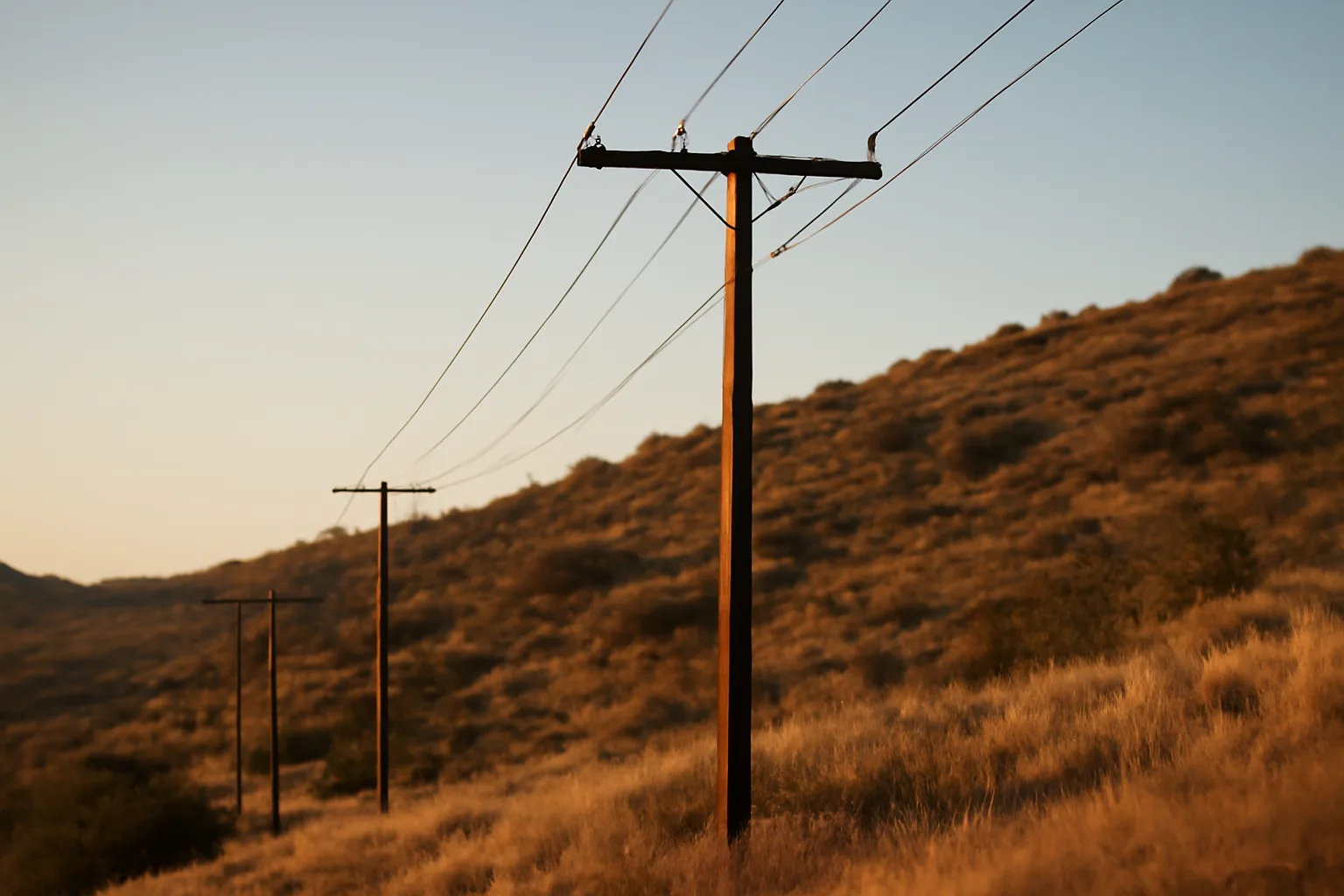
When people search for "utility cable solutions wildfire mitigation," they're usually trying to figure out one of two things: whether their power company's upgrades near their property will help their insurance situation, or what physical hardening on the utility side even looks like. Short answer: utility line work reduces ignition risk from sparking or downed wires, but it does almost nothing for the insurer's view of your specific home unless you document it yourself. Utilities in wildfire-prone states use a handful of core approaches. Covered conductor (sometimes called "covered wire" or "tree wire") wraps bare aluminum lines in insulating material so a branch contact or wire slap doesn't throw sparks. Undergrounding buries the line entirely, which removes wind and vegetation contact risk but costs the most and takes the longest to install. Stronger, more fire-resistant poles (steel or composite instead of wood) reduce the odds of a pole failure sparking a fire during high wind events. Enhanced Powerline Safety Settings, also called fast-trip settings, shut circuits down within a fraction of a second if they detect a fault, before a spark can catch nearby fuel. Pacific Gas & Electric's 2024 Wildfire Mitigation Plan update describes a portfolio approach: "Covered conductor... is one of the most effective wildfire risk reduction tools available to PG&E" [1]. San Diego Gas & Electric and Southern California Edison run comparable programs, each filed annually with the California Public Utilities Commission (CPUC). Ask your utility (via their wildfire mitigation plan page, usually linked from their main site) whether your specific circuit or feeder is scheduled for covered conductor, undergrounding, or vegetation clearance. That tells you about ignition risk from the grid. It tells you nothing about whether your roof, vents, and defensible space zones pass an insurer's wildfire risk model, which is a separate problem you have to solve yourself.
which utility wildfire mitigation methods actually reduce ignition risk
| Covered conductor | $250,000-$500,000 | Fast (months per segment) | Doesn't stop fallen-tree strikes | |
|---|---|---|---|---|
| Undergrounding | $500,000-$3,000,000+ | Slow (years, permitting-heavy) | Cost limits scale | |
| Pole hardening | Varies by material/terrain | Moderate | Doesn't address vegetation contact | |
| Fast-trip settings | Low (software/relay) | Fast | More frequent outages | Source: CPUC Wildfire Mitigation Plan filings and PG&E 2024 WMP update [1] [2]. |
Covered conductor, undergrounding, pole hardening, and fast-trip protective settings are the four methods with real field data behind them. They are not interchangeable, and cost drives which one a utility picks for a given stretch of line. Covered conductor is the workhorse for utilities trying to harden thousands of miles quickly and affordably. The CPUC's Wildfire Mitigation Plan guidance and utility filings put installed cost at roughly $250,000 to $500,000 per mile depending on terrain and existing pole condition [2]. It doesn't eliminate ignition risk (a fallen tree can still take down a covered line), but it sharply cuts the sparking-from-contact scenario that caused several major California fires. Undergrounding is the gold standard for risk reduction because it removes wind, vegetation, and animal contact entirely. It's also the most expensive option by a wide margin: PG&E's own estimates and CPUC proceedings cite figures from roughly $500,000 up to $3 million or more per mile, depending on soil conditions, urban density, and whether other utilities (water, gas, telecom) share the trench [2]. That cost is why undergrounding gets prioritized for the highest-risk, highest-consequence circuits rather than rolled out everywhere. Pole hardening (replacing wood poles with steel or composite, or reinforcing crossarms) matters most in high-wind corridors where a pole failure, not vegetation contact, is the likely ignition scenario. Fast-trip settings are the cheapest and fastest to deploy: software and relay changes rather than physical construction. The tradeoff is more nuisance outages, because the system trips on faults that in the past might have cleared themselves without incident. | Method | Approx. cost per mile | Deployment speed | Main limitation |
why won't people follow the defensible space law in california
This comes up constantly, and the honest answer is a mix of cost, confusion, and enforcement gaps, more than stubbornness. California's defensible space statute, Public Resources Code Section 4291, requires 100 feet of defensible space clearance around structures in State Responsibility Areas (and now in some Local Responsible Areas too), broken into Zone 0 (0-5 feet), Zone 1 (5-30 feet), and Zone 2 (30-100 feet) [3]. CAL FIRE's own compliance data shows the problem isn't awareness, it's follow-through. Statewide defensible space inspection programs regularly find noncompliance rates in the range of 20 to 40 percent depending on county and year, and CAL FIRE has said publicly that most homes inspected need at least some corrective work. The reasons people give, and that make sense once you've priced it out: removing mature trees or regrading slopes can run into the thousands of dollars, elderly or disabled homeowners can't physically do the labor, rental properties have absentee landlords with no urgency, and some homeowners simply don't know their parcel is in a State Responsibility Area until a notice arrives. There's also a real disagreement in some communities between defensible space rules and other priorities, like erosion control on slopes or local tree protection ordinances. A homeowner who removes a large oak for clearance can run into a separate local permit fight. None of that makes the fire risk go away, but it explains why compliance lags even in high-risk zones. If you're building your own compliance file, start with a walk of your property using the fire safe landscaping california next to house guide before you spend money on anything utility-adjacent.
when does the california defensible space law go into effect
Public Resources Code Section 4291 has been law since long before the current wildfire crisis; the 100-foot clearance requirement itself dates to a 2005 amendment (Senate Bill 1369, chaptered 2004) that expanded clearance from 30 feet to 100 feet around structures in State Responsibility Areas [3]. So the base law is already in effect and has been enforced by CAL FIRE and local fire agencies for close to two decades. What's newer, and what people are often actually asking about, is Zone 0, the ember-resistant zone within 0-5 feet of a structure. The California Board of Forestry and Fire Protection has been developing Zone 0 regulations under a mandate from Assembly Bill 3074 (2020), which directed the Board to define "ember-resistant zone" requirements [4]. As of the Board's public timeline, Zone 0 regulations have moved through rulemaking with an intended effective date that has been pushed back multiple times; check the Board of Forestry and Fire Protection's current rulemaking page for the exact date, because it has shifted year to year and is genuinely a moving target as of this writing. The honest move here: don't wait for a firm Zone 0 date to act. Clearing the 0-5 foot zone of combustible mulch, dead leaves, and stored items costs little and matters regardless of when the rule technically takes effect.
what fire safe rules for homes take effect in 2026
There isn't one single national "2026 fire code" homeowners should expect. What's happening instead is a patchwork: California's Zone 0 ember-resistant zone rulemaking has targeted implementation windows that have included 2026 in various Board of Forestry draft timelines, Oregon's wildfire risk map and defensible space code updates continue to roll out county by county, and Colorado and Arizona mostly leave defensible space specifics to county and local fire district codes rather than one state law. Rather than chase a headline date, treat this as an ongoing compliance target: check CAL FIRE's Zone 0 guidance page and your Board of Forestry and Fire Protection's current rulemaking status directly, since draft effective dates in this rulemaking have moved before and could move again [4]. If you're in Colorado or Arizona, your requirement almost certainly comes from your county wildfire ordinance or fire protection district, not a statewide statute, so check with your local fire marshal's office for the actual applicable code and deadline in your area. [Local fire district or county wildfire ordinance name and effective date: ______ (fill in from your county fire marshal or fire protection district website)]
how to prevent wildfires: what actually works at the property level
Preventing ignition at your own property comes down to breaking the chain between an ember or flame and something that burns. That's it. Everything else is detail. CAL FIRE's defensible space framework breaks this into the three zones already mentioned: Zone 0 (0-5 feet, ember-resistant, no combustible mulch or plants touching the structure), Zone 1 (5-30 feet, well-spaced and low fuel-volume landscaping), and Zone 2 (30-100 feet, reduced fuel load, mowed grass, thinned trees) [3]. Ready.gov's wildfire preparedness guidance adds the structural side: Class A fire-rated roofing, ember-resistant vents, and enclosed eaves are the features most associated with survived structures in post-fire damage assessments. The order of operations that actually moves the needle, cheapest and highest-impact first: clear anything combustible within 5 feet of the house (mulch, stored firewood, dry leaves in gutters), install ember-resistant vent screens (1/8-inch metal mesh, not the standard fiberglass screen), and only then move to bigger-ticket items like re-roofing or removing large trees in Zone 1. For a structured room-by-room and zone-by-zone approach, the defensible space clearing contracts piece walks through what a contractor should actually be doing on-site, and it applies conceptually even outside Washington.
how to prepare for a wildfire before it happens
Preparation splits into three buckets: home hardening, an evacuation plan, and documentation you'll need if you do have a claim or an insurance nonrenewal fight later. Most people only do the first one, if that. Ready.gov's wildfire action guide recommends assembling a go-bag with medications, copies of insurance documents, and a battery radio, and identifying two evacuation routes out of your neighborhood in case one is blocked by fire or traffic. CAL FIRE's "Ready, Set, Go!" program adds a timeline structure: Ready means your home is hardened and your bag is packed year-round, Set means you're actively monitoring conditions and loading the car when a fire is reported nearby, and Go means you leave immediately when told to, not when you feel like it [5]. On the insurance side, preparation also means photographing your home's defensible space compliance, your roof material, and your vent screens before there's any fire threat at all. If you've already gotten a nonrenewal notice or a home-hardening inspection letter, that documentation is what you send back, not a request for special treatment (we don't file claims or handle policy disputes on a homeowner's behalf; the paperwork trail is yours to build and send).
how to prevent forest fires versus preventing fires at your home
These are genuinely different problems and the search traffic conflates them constantly. "Preventing forest fires" at a landscape level is mostly about ignition source control: campfire restrictions, spark-arrester requirements on equipment, utility line hardening (the subject of this article), and prescribed burns to reduce accumulated fuel load before a lightning strike or human ignition can turn into a large fire. The U.S. Forest Service and CAL FIRE both point to human activity as the dominant ignition source nationally; CAL FIRE's incident data attributes the large majority of California wildfires to human causes (equipment use, unattended campfires, arson, vehicle sparks) rather than lightning . That's why campfire bans, red flag warning restrictions on outdoor equipment, and utility Public Safety Power Shutoffs during high wind events are the primary landscape-level prevention tools, alongside prescribed fire to reduce fuel continuity. Preventing fire at your own house is a narrower, more controllable problem: defensible space, ember-resistant construction, and keeping ignition sources (grills, generators, cigarettes) away from dry vegetation. You can't personally stop a forest fire from starting three ridgelines away. You can meaningfully reduce the odds that fire, once it arrives, actually takes your structure.
how to avoid forest fires when you're the one causing the risk
If the question is really "how do I personally avoid starting a wildfire," the answer is boring and specific: don't use equipment that throws sparks (mowers, chainsaws, grinders) during red flag warning days or on dry grass, fully extinguish campfires with water stirred into the ash until it's cold to the touch, don't park or idle vehicles over dry grass (catalytic converters routinely start fires this way), and follow any local burn permit or burn ban rules before doing any debris burning. CAL FIRE's fire prevention guidance specifically flags vehicle and equipment-caused ignitions as a recurring, preventable category, distinct from lightning or powerline causes . Most of these ignitions happen in July through October in California, which lines up with peak dry fuel conditions, so the avoidance behavior that matters most is simply timing: don't do spark-producing work outdoors during red flag warnings, full stop.
is santa barbara safe from fire
No coastal California community is "safe" from fire in an absolute sense, and Santa Barbara County has direct experience proving it: the 2017 Thomas Fire (at the time the largest wildfire in modern California history) burned into Santa Barbara County and directly preceded the January 2018 Montecito debris flow, which killed 23 people after rain hit the burn scar . The 2018 Holiday Fire and other more recent incidents have also burned within or adjacent to city and county limits. What makes Santa Barbara's risk profile specific is the wildland-urban interface geography: steep chaparral-covered foothills sit directly above dense residential neighborhoods, with the same Santa Ana-adjacent wind patterns (locally called sundowner winds) that drove the Thomas Fire's rapid overnight run. Sundowner wind events are a locally specific and well-documented fire-weather pattern for the South Coast; they behave differently from the more famous Santa Ana winds further south and can push fire downslope toward the coast overnight when humidity would normally be recovering. So the realistic answer is: Santa Barbara is not immune, has burned significantly within the last decade, and sits in a genuinely high-risk wildland-urban interface. Homeowners there should treat defensible space and home hardening as standard maintenance, not a one-time project, precisely because the terrain and wind pattern that caused the Thomas Fire haven't changed.
how can we prevent forest fires as a community, more than individually
Community-level prevention works differently than individual defensible space work, and it's the layer most homeowners underestimate. A single hardened home surrounded by unmaintained neighboring lots is still vulnerable, because fire spreads structure to structure through radiant heat and embers, more than through wildland fuel. Firewise USA, the National Fire Protection Association's community recognition program, organizes neighborhoods to coordinate defensible space, share chipper days for vegetation debris, and apply for grant funding together rather than each homeowner solving it alone . Getting your neighborhood Firewise-recognized can also matter for insurance: some carriers and state FAIR Plans have started referencing community mitigation status, though this varies significantly by insurer and isn't guaranteed to affect your premium or renewal. Beyond Firewise, community-level prevention includes coordinated support for utility undergrounding and covered-conductor projects (since utilities often prioritize based on community risk scores, and public comment during CPUC proceedings genuinely shapes prioritization), local fuel break maintenance on shared open space, and pushing local governments to enforce existing defensible space codes on absentee-owned or vacant lots, which are frequently the actual noncompliance problem in a neighborhood, not the occupied homes.
how utility hardening interacts with your own insurance documentation
This is where the utility cable question actually connects back to your insurance file, and it's a connection most homeowners miss. Insurers evaluating wildfire risk for underwriting generally look at property-level and parcel-level factors (defensible space, roof material, vent screening, proximity to fuel), not at whether the utility company covered conductor on your specific street. Wildfire risk models used by major carriers and the state-run FAIR Plans weigh structural and vegetation factors far more heavily than utility infrastructure status, because utility upgrades are the utility's asset, not yours, and can't be verified by the insurer at the parcel level easily. That means even if your utility completes a covered-conductor project on your line this year, it likely won't show up as a factor in your renewal decision unless you specifically document and submit it alongside your own defensible space and hardening evidence. This is exactly the gap a documentation kit like the $99 Wildfire Insurance Survival Kit (a one-time-purchase packet at /survival-kit-builder) is built to close: it walks you through photographing and organizing your Zone 0/1/2 compliance, roof and vent specs, and any relevant utility or fire district notices into the kind of packet an underwriter can actually use. We don't file claims or promise reinstatement or a discount; you assemble the documentation and send it yourself.
what to actually do this month if you got a nonrenewal notice
If a nonrenewal or inspection letter already arrived, the clock matters more than the theory. Start with the three things an underwriter or reinstatement reviewer actually wants to see: current dated photos of your Zone 0-5 foot perimeter, your roof material and condition, and your vent screening. CAL FIRE's defensible space checklist (available through fire.ca.gov) is the actual document underwriters reference when a policy cites defensible space as a factor, so working from that checklist rather than guessing is worth the hour it takes [3]. Next, check whether your property sits in a Local Responsible Area or State Responsibility Area, because the applicable code section and inspection authority differ. Your county assessor's parcel lookup or your local fire department can confirm this in a five-minute phone call. Then check your specific fire district's local requirements, since many counties layer additional rules (mandatory ember-resistant vents, specific plant setback distances) on top of the state minimum: [Local fire district: name, phone, and current defensible space ordinance link: ______]. Finally, build a dated file, not a folder of random photos. Insurers and FAIR Plan reviewers respond better to organized, timestamped documentation than to a pile of snapshots. For a broader look at what "defensible" actually means as a standard your specific property needs to meet, see defensible, and for background on how structures actually ignite during a wildfire event, fire at a house and house fire both cover the mechanics in more depth.
Frequently asked questions
When does the California defensible space law go into effect?
The core 100-foot defensible space requirement under Public Resources Code Section 4291 has been in effect since a 2005 amendment expanded it from 30 to 100 feet. It already applies in State Responsibility Areas. The newer Zone 0 ember-resistant zone rule is still in rulemaking through the Board of Forestry and Fire Protection, with effective dates that have shifted; check the Board's current page for the latest status.
Why won't people follow the defensible space law in California?
Mostly cost and capacity, not defiance. Removing mature trees or regrading slopes can cost thousands, elderly or disabled owners can't do the physical labor, absentee landlords ignore notices, and some owners don't realize their parcel sits in a State Responsibility Area. CAL FIRE inspection data regularly shows noncompliance in the 20-40 percent range depending on county and year.
How to prevent wildfires at the property level?
Clear combustibles within 5 feet of your structure (Zone 0), install ember-resistant 1/8-inch metal mesh vent screens, maintain reduced fuel in the 5-30 foot and 30-100 foot zones, and use Class A fire-rated roofing. These layered defenses are the core of CAL FIRE's defensible space framework and address the ember and radiant-heat exposure that ignites most structures.
How to prepare for a wildfire if you live in a high-risk zone?
Harden your home (vents, roofing, defensible space), pack a go-bag with medications and insurance documents, and identify two evacuation routes in advance, per Ready.gov guidance. Follow CAL FIRE's Ready, Set, Go! framework: stay hardened and packed year-round, actively monitor conditions when a fire is reported nearby, and evacuate immediately once ordered.
How to prevent forest fires at a landscape level?
Landscape-level prevention relies on controlling ignition sources: campfire restrictions, spark-arrester rules for equipment, utility Public Safety Power Shutoffs during high wind, and prescribed burns to reduce fuel buildup. CAL FIRE data shows most California wildfires are human-caused, so behavior restriction during red flag conditions matters more than most people assume.
How to avoid forest fires if you're doing outdoor work?
Avoid spark-producing equipment (mowers, grinders, chainsaws) on dry grass or during red flag warnings, fully extinguish campfires with water stirred into cold ash, don't park or idle vehicles over dry vegetation, and get a burn permit before any debris burning. Vehicle and equipment ignitions are a recurring, preventable cause tracked separately by CAL FIRE.
How to prepare for forest fires if you live near wildland areas?
Treat preparation as ongoing maintenance, not a one-time task: keep Zone 0-2 clearance current every season, maintain ember-resistant vents and roofing, keep a packed go-bag, and photograph your compliance work regularly. Wildland-adjacent homes should also confirm their specific county or fire district ordinance, since requirements often exceed the state minimum.
What fire safe rules for homes take effect in 2026?
There's no single 2026 national rule. California's Zone 0 ember-resistant zone regulation has targeted various implementation windows in Board of Forestry draft timelines, some including 2026, but the date has moved before. Colorado and Arizona homeowners should check their county or fire protection district ordinance directly, since those states largely handle this locally.
Is Santa Barbara safe from fire?
No. Santa Barbara County was directly affected by the 2017 Thomas Fire, once the largest wildfire in modern California history, which preceded the deadly 2018 Montecito debris flow. Steep chaparral foothills above dense neighborhoods and local sundowner wind patterns make the area a genuine wildland-urban interface risk, not a low-risk coastal exception.
How can we prevent forest fires as a neighborhood rather than individually?
Coordinate through programs like Firewise USA (run by the National Fire Protection Association), which organizes shared chipper days, group grant applications, and neighborhood-wide defensible space standards. Fire spreads structure to structure through embers and radiant heat, so one hardened home surrounded by neglected lots is still exposed; community coordination closes that gap.
Does utility line undergrounding or covered conductor help my insurance rate?
Not directly and not automatically. Insurers mostly score parcel-level factors like defensible space, roofing, and vent screening, not utility infrastructure status on your street, because utility upgrades are hard for an insurer to verify parcel by parcel. If your utility hardens your line, you likely need to document and submit that yourself alongside your own hardening evidence for it to factor into underwriting.
What's the difference between covered conductor and undergrounding power lines?
Covered conductor wraps power lines in insulating material to prevent sparking from branch or wire contact, costing roughly $250,000-$500,000 per mile. Undergrounding buries the line entirely, removing wind and vegetation contact risk completely, but costs roughly $500,000 to $3 million or more per mile, per CPUC and utility wildfire mitigation plan filings.
What should I do first if I got a wildfire insurance nonrenewal letter?
Photograph your Zone 0-5 foot perimeter, roof material, and vent screening with current dated photos, confirm whether you're in a State or Local Responsibility Area, and check your specific fire district's local ordinance. Build a dated, organized file rather than random photos; that's what underwriters and FAIR Plan reviewers actually respond to.
Sources
- California Public Utilities Commission, Wildfire Mitigation Plan proceedings: Cost ranges for covered conductor and undergrounding per mile
- California Public Resources Code Section 4291: 100-foot defensible space clearance requirement and zone structure
- California Board of Forestry and Fire Protection, Zone 0 rulemaking: Zone 0 ember-resistant zone regulation status and mandate under AB 3074
- CAL FIRE Ready, Set, Go! program: Ready, Set, Go! evacuation preparedness framework
- NFPA Firewise USA program: Firewise USA community wildfire mitigation coordination program