Last updated 2026-07-25
TL;DR
Defensible space architecture means designing the space around your house, more than clearing brush, using three concentric zones (0-5 ft, 5-30 ft, 30-100 ft) with different materials and spacing rules at each. California's Zone 0 ember-resistant zone rule is in rulemaking now, with a real effective date still pending as of 2025.
What is defensible space architecture, exactly?
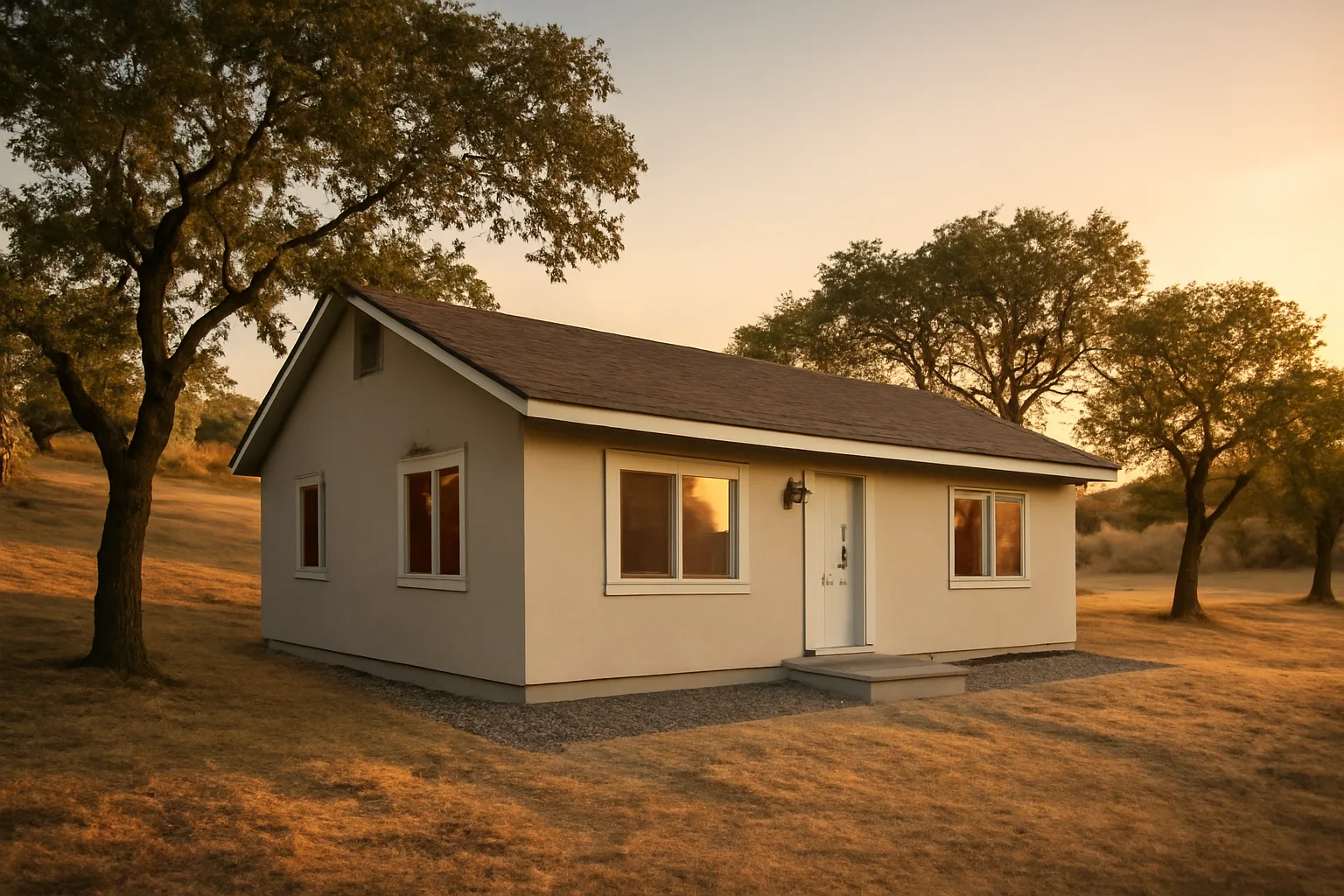
Defensible space architecture is the practice of designing and arranging the structure and landscape around a home so wildfire can't easily reach it or ignite it directly. It's more than "clear the brush." It's zone-based planning: what touches the house, what sits near it, and what's further out, each with different material and spacing rules. CAL FIRE defines defensible space as "the natural and landscaped area around a structure that has been modified to reduce fire danger," built around three zones measured from the exterior wall: Zone 0 (0-5 feet), Zone 1 (5-30 feet), and Zone 2 (30-100 feet) [1]. The architecture part is the design decisions inside those zones: gravel instead of bark mulch against the foundation, spaced tree canopies instead of continuous shrub lines, noncombustible fencing sections near the house instead of wood running straight to the siding. Most homeowners think of this as landscaping. Insurers and fire agencies think of it as risk engineering. Both are right. The difference matters because a landscaping mindset optimizes for looks; an architecture mindset optimizes for interrupting an ember's path to your walls, vents, and eaves. For the zone-by-zone breakdown of what goes where, see defensible.
What are the defensible space zones and what goes in each one?
| Zone 0 | 0-5 ft | Stop ember ignition | Noncombustible materials only | |
|---|---|---|---|---|
| Zone 1 | 5-30 ft | Reduce flame contact | Lean/clean/green, 6 ft limb-up | |
| Zone 2 | 30-100 ft | Slow fire spread | Reduced fuel, crown spacing by slope | For plant-level detail on what survives inspection near a foundation, see fire safe landscaping california next to house. |
Three zones, three different jobs. Zone 0 stops embers from igniting the structure directly. Zone 1 keeps flame from building toward the house. Zone 2 slows a running crown fire before it reaches your property line. Zone 0 (0-5 feet from structure): Ember-resistant zone. CAL FIRE's guidance calls for noncombustible material immediately next to the house, no combustible mulch, no stored wood, no plants directly against siding, and attention to anything that touches a wall, deck, or fence connected to the house [1]. This is the zone getting new statutory teeth in California (more below). Zone 1 (5-30 feet): Lean, clean, and green. Remove dead vegetation, space out shrubs, keep grass mowed to under 4 inches, and prune tree limbs up 6 feet from the ground (or one-third of the tree's height, whichever is less) [1]. Trees need at least 10 feet of horizontal spacing between canopies in this zone. Zone 2 (30-100 feet): Reduced fuel volume, not bare dirt. Cut annual grass to 4 inches, remove ladder fuels that let ground fire climb into tree canopies, and space tree crowns based on slope, with wider spacing required on steeper ground [1]. | Zone | Distance from home | Primary goal | Key rule |
When does the California defensible space law (Zone 0) go into effect?
As of this writing, there is no enforced statewide Zone 0 compliance deadline. The requirement exists in law (Government Code Section 51182, amended by AB 3074 in 2020) but its specific technical standards are still moving through CAL FIRE's Board of Forestry rulemaking process, and enforcement dates get pushed as that process continues [2] [3]. Here's the actual timeline. AB 3074, signed in 2020, added the ember-resistant zone (Zone 0) concept to California's defensible space statute and directed the State Fire Marshal and Board of Forestry to develop regulations defining what Zone 0 compliance looks like [2]. The Board of Forestry has been working through that regulatory process since, with draft regulations, public comment periods, and revisions. CAL FIRE's own defensible space program page has, at various points, referenced target implementation years, but the formal regulation had not been finalized and adopted as enforceable code as of late 2024 into 2025 [3]. What this means practically: check your specific fire district's local ordinance right now, because some California counties and fire-safe councils already require Zone 0-style ember-resistant zones ahead of the state deadline, using their own local authority. [Local fire district clearance requirements go here: contact your local fire district or county fire marshal's office for the specific ordinance number and effective date that applies to your parcel.] Don't wait for a state deadline that keeps moving. Insurers reviewing your policy for renewal are looking at current condition, not future compliance dates.
What fire-safe home rules take effect in 2026?
Nobody has a single confirmed, government-published "2026 fire-safe home rule" that applies uniformly across states right now, and any source claiming a fixed nationwide 2026 code should be checked against your specific state fire marshal's page before you rely on it. What's real is this: several states are actively tightening wildland-urban interface (WUI) building codes on a rolling basis, and California's Zone 0 regulation, whenever finalized, is expected to apply to homes in the state's designated Fire Hazard Severity Zones and WUI areas once adopted [2] [3]. If you're hearing "2026" from a news story or contractor, it likely traces back to the multi-year Board of Forestry rulemaking timeline for AB 3074's Zone 0 standards, not a separate law. Treat any specific 2026 date as provisional until you see it on fire.ca.gov or your county's building department page. What you can act on today, regardless of when Zone 0 becomes formally enforceable: harden vents with 1/8-inch noncombustible mesh, replace wood mulch within 5 feet of the house with gravel or rock, and clear anything combustible off decks and under stairs. These are the same measures Zone 0 regulation is expected to require, and doing them now means you're not scrambling later. Chapter 7A of the California Building Code already sets ignition-resistant construction standards for new construction and remodels in WUI zones, covering roofing, siding, vents, and windows [4].
How do I prepare my home for a wildfire, step by step?
Preparation has two tracks that run in parallel: physical hardening of the structure and documentation of what you did. Skip the documentation and you're rebuilding your defensible space history from memory during a claims dispute or non-renewal appeal. Physical steps, roughly in order of cost-effectiveness: 1. Clear Zone 0 first. Remove combustible mulch, stored items, and plants within 5 feet of every exterior wall. 2. Screen vents with 1/8-inch metal mesh; embers entering attic and crawlspace vents cause a large share of home ignitions in wildfires [1]. 3. Clean roof and gutters of leaf litter and needles; do this before fire season and again mid-season if you're near conifers. 4. Prune trees so canopies don't touch the roof, and limb up trees within 30 feet. 5. Move firewood stacks and propane tanks at least 30 feet from the structure. 6. Address Zone 1 and Zone 2 spacing per the table above. Ready.gov's wildfire preparedness guidance adds household-level steps beyond landscaping: assemble a go-bag, know two ways out of your neighborhood, and sign up for local emergency alerts before fire season, not during an evacuation order. For a walkthrough on how a fire actually moves through a structure once it reaches you (useful for prioritizing which gap to close first), see house fire and fire at a house.
How to prevent wildfires (and forest fires) from starting near your home
Most wildfires near homes start from something specific and preventable: equipment sparks, unattended debris burns, dragging trailer chains, or unmaintained power equipment. CAL FIRE and the U.S. Forest Service both point to human activity, not lightning, as the dominant ignition source in populated areas, and Smokey Bear's long-running message reflects that: "Only you can prevent wildfires" because most ignitions are things people directly control [5] [6]. Practical prevention around your own property: - Mow before 10 a.m. and never on Red Flag Warning days; a mower blade hitting a rock is a documented ignition source for grass fires.
- Keep chainsaws, mowers, and trimmers away from dry grass when the engine is running.
- Never burn debris on windy days, and check your county's burn permit rules first. Many counties suspend all outdoor burning during fire season regardless of permit status.
- Store gasoline and other fuels in approved containers away from ignition sources.
- Douse and stir campfires and burn piles until they're cold to the touch, more than cool to the eye. On the broader question of "how can we prevent forest fires" at a landscape level rather than a single-property level, prevention shifts toward forest management: prescribed burns, fuel breaks, and thinning overstocked stands. The U.S. Forest Service treats prescribed fire as a primary tool for reducing the fuel loads that turn small ignitions into large fires [6]. That's public land policy, though; a homeowner's real control is almost entirely at the structure and the first 100 feet.
Why won't people follow the defensible space law in California?
Cost, confusion, and enforcement gaps are the three real reasons, not laziness. CAL FIRE inspections in some counties find non-compliance rates well above half of properties checked, and the pattern holds across income levels once you control for tree canopy and terrain [1] [3]. Cost is real: removing large trees, regrading slopes, or replacing wood fencing near a house can run into the thousands of dollars, and low-income and elderly homeowners in wildfire zones are disproportionately unable to absorb that outlay without assistance programs, many of which have limited funding and long waitlists. Confusion is also real. The zone distances, spacing rules, and what counts as "noncombustible" vary by local ordinance on top of the state baseline, and homeowners often can't get a straight answer about which rule applies to their specific parcel without a site visit from their fire district. That's why this article repeatedly points you back to your local fire district's specific ordinance rather than assuming one statewide standard covers you. Enforcement is uneven. Some California counties issue defensible space inspection notices and follow up with citations for non-compliance; others rely on self-certification with limited field verification. Government Code Section 51182 puts the legal obligation on the property owner in State Responsibility Areas and some designated Very High Fire Hazard Severity Zones, but the practical enforcement intensity depends heavily on local fire agency staffing and budget [2]. There's also a psychological piece nobody likes to say out loud: people who haven't been through a wildfire evacuation underestimate the speed of ember-driven ignition. A property can look "fine" for years and then lose to embers landing in a gutter full of dry leaves during one bad wind event.
Is Santa Barbara safe from fire risk?
No part of Santa Barbara County is fully "safe" from wildfire risk, and large sections of the county sit inside CAL FIRE's designated Fire Hazard Severity Zones, particularly the foothill and wildland-interface communities along the Santa Ynez range. Santa Barbara has a documented history of major destructive fires, including the 2017 Thomas Fire, which at the time was the largest wildfire in modern California history by acreage before being surpassed by later fires, and which triggered the deadly Montecito debris flow in January 2018 [7]. CAL FIRE's Fire Hazard Severity Zone maps, which insurers and building departments both use, classify specific Santa Barbara County parcels as Moderate, High, or Very High severity zone, with the foothill communities adjacent to open wildland generally rated highest [1]. You can look up your specific parcel on CAL FIRE's FHSZ viewer rather than relying on the city's general reputation, because risk varies block by block depending on slope, vegetation, and distance to wildland fuel. If you live in Santa Barbara or a similar coastal-adjacent wildfire zone, the honest framing isn't "is my city safe" but "what's my parcel's specific hazard rating, and have I done the defensible space work that rating implies." That's true whether you're in Montecito, Ojai, Malibu, or the Sierra foothills.
How should I document defensible space work for my insurer?
Insurers reviewing a non-renewal or a renewal-at-risk policy want to see dated, specific evidence, not a general claim that you "did the work." Photos with timestamps, receipts for tree removal or gravel installation, and a written record of what zone each task addressed all matter more than a verbal summary. Build a simple record: before/after photos of each zone, receipts or contractor invoices, and a copy of any local fire district inspection or self-certification form you filed. If your county has a defensible space inspection program, keep the inspection result on file even if it's a pass with no citations; that's evidence of a maintained, not one-time, effort. This is also where the $99 one-time Wildfire Insurance Survival Kit is built to help: it organizes photo documentation, zone checklists, and receipt tracking into the format insurers and adjusters actually ask for, so you're not assembling it from scratch during a stressful non-renewal window. To be direct about what it isn't: it doesn't file a claim on your behalf or promise reinstatement or a discount. You prepare the documentation; you send it. What it does is make sure the documentation exists and is organized before you need it. For a broader look at how documentation choices affect claims and coverage decisions generally, see defensible.
What about contractors and clearing work outside California?
Defensible space rules aren't unique to California. Colorado, Oregon, and Arizona all have their own wildfire-adjacent building and vegetation codes, administered at the state or county level, and Washington State's Department of Natural Resources runs cost-share and contractor programs for defensible space clearing work on private land. If you're hiring out clearing work, get a written scope that specifies which zone the work covers, what's being removed versus retained, and what documentation (photos, invoices, before/after) the contractor will provide you at completion. That paperwork becomes your insurance file. See wildfire defensible space clearing contracts washington state dnr for a model of what a clearing contract should specify, even if you're not in Washington; the structure of a good contract transfers across states. [State-specific defensible space statute and effective dates go here for CO/OR/AZ: link to the specific state fire marshal statute page for your state.]
What's the fastest, cheapest defensible space fix if I only have a weekend?
Zone 0 work, done by hand, is the highest-value use of a single weekend. Clear the 5 feet immediately around your house first: rake mulch back to gravel or bare mineral soil, move firewood and propane away from the structure, and pull anything combustible off the deck. Second priority if you have any time left: vent screening. A roll of 1/8-inch noncombustible mesh and an afternoon can close the ember-entry gaps in attic and foundation vents that CAL FIRE identifies as a major home-ignition pathway [1]. What's not worth doing in a rush: major tree removal or regrading. Those need planning, sometimes permits, and often a professional assessment of which trees are actually load-bearing risk versus which are fine at current spacing. Don't take down a mature oak on a Saturday afternoon because a checklist said "reduce canopy density"; get an arborist's read on spacing first. For the full zone-by-zone landscaping choices, both what to plant and what to remove, see fire safe landscaping california next to house, and for the general prevention mindset that Smokey Bear's campaign is built around, see only you can prevent wildfires.
Frequently asked questions
When does the California defensible space law go into effect?
There's no single confirmed enforcement date yet. AB 3074 (2020) created the Zone 0 ember-resistant zone concept and directed the Board of Forestry to write implementing regulations, but as of 2025 those regulations were still in rulemaking. Check your local fire district for ordinances that may already require Zone 0 compliance ahead of the state deadline.
Why won't people follow the defensible space law in California?
Cost, confusion about which rules apply to their specific parcel, and uneven local enforcement. Removing trees or replacing combustible fencing can cost thousands, local ordinances vary on top of the state baseline, and not every county actively inspects or cites for non-compliance, so many owners simply never get a clear, funded directive to act.
How can I prevent wildfires from starting near my home?
Avoid mowing dry grass midday, never run outdoor power equipment near dry vegetation, keep debris burns fully doused and stirred until cold, store fuel in approved containers away from ignition sources, and check local burn permit rules before any outdoor fire. Most wildfires near homes start from human activity, not lightning.
How do I prepare for a wildfire if I get an evacuation warning?
Clear Zone 0 and Zone 1 now, not during a warning. Have a go-bag ready, know two evacuation routes, and sign up for local emergency alerts in advance. Ready.gov recommends preparing an emergency plan and supply kit before fire season starts, since evacuation windows during an active fire can be under an hour.
How to prevent forest fires on a larger, landscape scale?
That's mostly public land management: prescribed burns, mechanical thinning, and fuel breaks reduce the dense fuel loads that turn small ignitions into large runs. The U.S. Forest Service treats prescribed fire as a core tool for this. Individual homeowners have limited control here beyond their own property's first 100 feet.
What fire-safe home rules take effect in 2026?
No confirmed, finalized nationwide 2026 rule exists as of this writing. Any specific 2026 date you've seen likely traces to California's ongoing Zone 0 rulemaking under AB 3074, which hasn't been finalized as enforceable code. Check fire.ca.gov directly before relying on any specific 2026 compliance date.
Is Santa Barbara safe from wildfire?
No California community adjacent to wildland is fully safe from fire risk. Santa Barbara County includes CAL FIRE-designated Moderate to Very High Fire Hazard Severity Zones, especially in foothill communities, and the county experienced the 2017 Thomas Fire and the subsequent 2018 Montecito debris flow. Check your specific parcel on CAL FIRE's FHSZ map rather than relying on general reputation.
What's the difference between Zone 0, Zone 1, and Zone 2?
Zone 0 (0-5 feet from the structure) requires noncombustible material and no plants or mulch touching the house. Zone 1 (5-30 feet) requires lean, clean, spaced vegetation with limbs pruned 6 feet up. Zone 2 (30-100 feet) requires reduced fuel volume and wider tree crown spacing, especially on slopes.
Does defensible space work guarantee my insurance won't be cancelled?
No. Defensible space work reduces structural risk and gives you documentation to submit during a review, but no landscaping or hardening project guarantees renewal or reinstatement. Insurers weigh a range of considerations including the surrounding parcel's Fire Hazard Severity Zone rating, which an individual homeowner can't change.
How much does it cost to bring a property into defensible space compliance?
Costs vary enormously by lot size, terrain, and tree cover, from a few hundred dollars for DIY Zone 0 clearing and vent screening to several thousand dollars for professional tree removal, regrading, or fence replacement. There's no single reliable national average because vegetation density and labor rates vary too much by region.
Who enforces defensible space rules in California?
Local fire districts and county fire agencies handle inspection and enforcement under authority from Government Code Section 51182 in State Responsibility Areas and some Very High Fire Hazard Severity Zones. Enforcement intensity varies by county depending on staffing and budget; some counties actively inspect and cite, others rely more on self-certification.
What's the single best first step if I got a non-renewal or inspection letter?
Read the letter for the specific deficiencies cited, address Zone 0 first (it's the cheapest, fastest, highest-impact fix), photograph everything before and after, and keep receipts. Don't wait for a state deadline; insurers act on current condition and documented evidence, not future compliance dates.
Sources
- CAL FIRE, Defensible Space: Definition and zone breakdown (Zone 0, Zone 1, Zone 2) with specific distances and maintenance requirements
- California Legislative Information, Government Code Section 51182: Legal defensible space obligation on property owners in State Responsibility Areas, amended by AB 3074
- California Board of Forestry and Fire Protection, Defensible Space Zone 0 Rulemaking: Zone 0 ember-resistant zone regulations still in active rulemaking, not yet finalized as enforceable code
- California Building Standards Commission, California Building Code Chapter 7A: Chapter 7A sets ignition-resistant construction standards for new construction in WUI zones
- USDA Forest Service, Smokey Bear: Origin and message of the 'Only you can prevent wildfires' campaign tied to human-caused ignition
- USDA Forest Service, Prescribed Fire: Prescribed fire as a primary tool for reducing fuel loads that drive large wildfires
- CAL FIRE, Thomas Fire Incident Information: 2017 Thomas Fire in Santa Barbara/Ventura counties and its scale at the time