Last updated 2026-07-25
TL;DR
Zone 0 is the 0 to 5 foot ring around a home where California's proposed ember-resistant zone rule would ban combustible mulch, plants, and stored items. The regulation, required by AB 3074 (2020), has not yet taken final effect as of mid-2025; CAL FIRE has been developing the standards through public rulemaking, with enforcement expected to follow adoption plus a compliance grace period.
What is defensible space zone 0?
Zone 0 is the strip of ground within 5 feet of your house, deck, and attached structures. It's the newest and strictest of California's defensible space zones, sitting inside Zone 1 (5 to 30 feet) and Zone 2 (30 to 100 feet). The idea is simple: embers, not walls of flame, destroy most homes in wildfires, and embers can travel over a mile ahead of a fire front. If they land on bark mulch, a dry shrub, or a stack of firewood touching your siding, that small ignition can spread to the house in minutes. CAL FIRE's existing defensible space guidance already treats the area closest to structures as the highest priority, describing it as the zone where homeowners should remove "all dead and dying vegetation" and keep flammable material off the ground within 5 feet of the home. Zone 0 formalizes that into an enforceable, non-negotiable standard: no combustible mulch, no wood fencing that touches the house, no stored firewood, no combustible furniture cushions, nothing that can carry an ember into contact with the structure. This isn't a California-only concept in spirit, even where it isn't yet law. Colorado, Oregon, and Arizona fire agencies use similar language (sometimes called the "immediate zone" or "ember-resistant zone") in their own defensible space education, borrowing from the national Firewise USA framework run by the National Fire Protection Association. But California is the state actually writing it into a specific numeric regulation, which is why so much of the national conversation centers on it.
When does the California defensible space law (Zone 0) go into effect?
As of mid-2025, California's Zone 0 ember-resistant zone requirement has not taken final legal effect for existing homes, even though the legislature ordered it years ago. Assembly Bill 3074, signed in September 2020, directed the Board of Forestry and Fire Protection to develop regulations for a new "ember-resistant zone" within 5 feet of a structure, and it set an original operative date of January 1, 2023 for the underlying statute [1]. That statutory date passed without final regulations in place. The Board of Forestry has been working through the formal rulemaking process, which under California's Administrative Procedure Act requires draft text, public comment periods, and Office of Administrative Law review before anything becomes enforceable. CAL FIRE's own public materials on defensible space describe Zone 0 as a standard "once adopted" rather than one that is already being cited on inspection reports statewide, which tells you the rule is still moving through that pipeline as of this writing. The practical answer for a homeowner: don't wait for a hard enforcement date to act. Local fire agencies and insurance inspectors are already asking about the same things Zone 0 will require, bare ground or noncombustible surfaces immediately against the house, no vegetation touching siding, no wood piles under decks, because that's what actually stops embers regardless of whether the statute is finalized in your county yet. If you got a non-renewal letter, the insurer's inspector isn't waiting for the regulation to catch up. Treat the draft Zone 0 standard as the floor, not a future nice-to-have. For exact local requirements and any interim county or city ordinances that may already mirror Zone 0, check with your local fire district: [guided fill-in: contact your local fire marshal or fire protection district for the current defensible space ordinance in your jurisdiction].
What does the ember-resistant zone actually require?
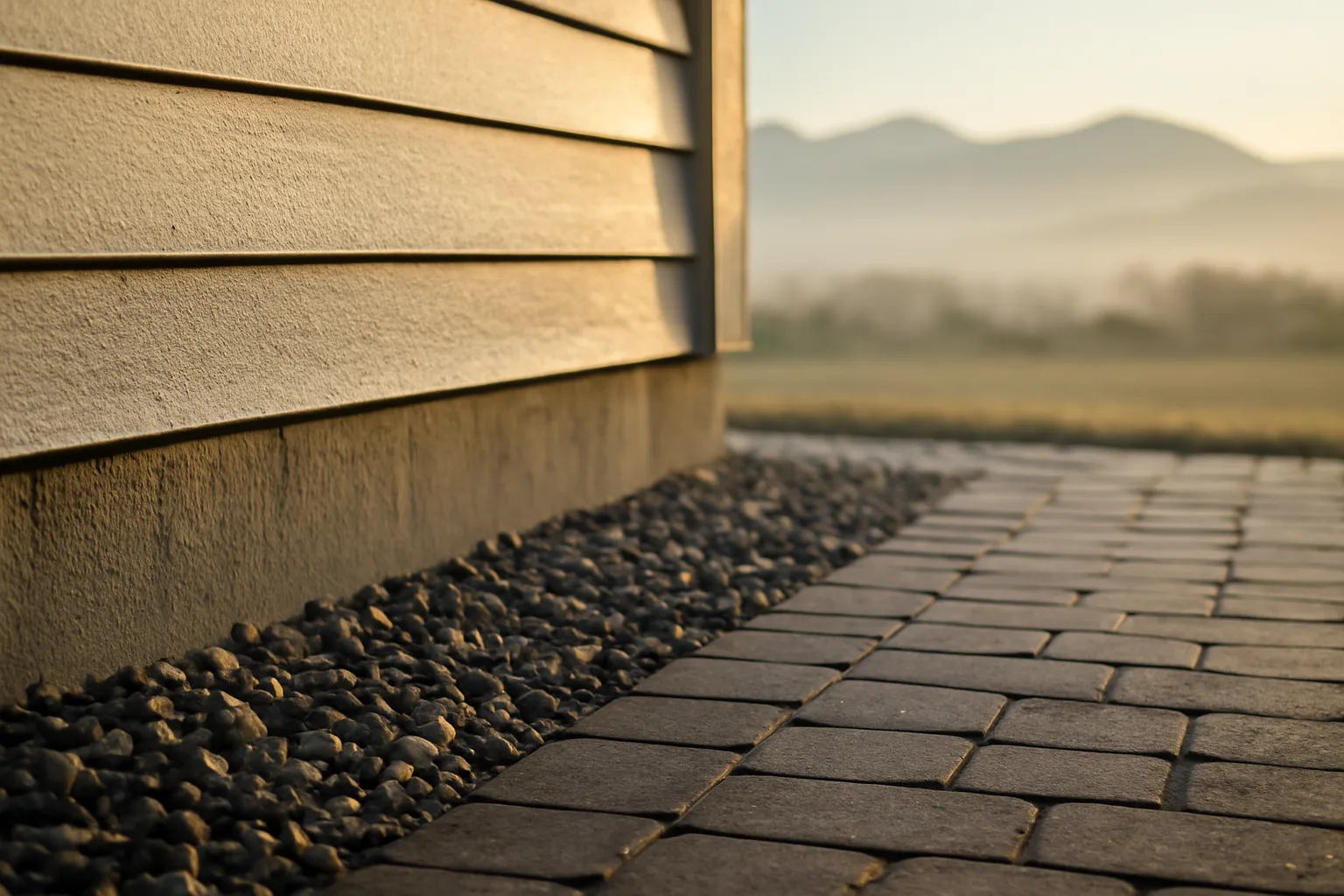
Based on CAL FIRE's published defensible space guidance and the Board of Forestry's draft framework, Zone 0 generally means the 0 to 5 foot ring around the structure should have: - No combustible mulch (bark, wood chips) directly against the foundation or under windows
- No dead vegetation, leaf litter, or pine needles allowed to accumulate
- No firewood or lumber stacks stored against or under the structure
- No combustible fencing or gates attached directly to the house without a noncombustible transition
- Non-combustible ground cover instead: gravel, pavers, concrete, or well-irrigated low, green groundcover kept short and hydrated
- Nothing flammable stored under decks, stairs, or in crawlspace vents CAL FIRE lists this as "the most important zone to reduce a home's vulnerability to fire" because it's the last line of defense before ember ignition reaches the structure itself. Zone 1 (5-30 feet) and Zone 2 (30-100 feet) allow more vegetation, spaced and maintained properly, but Zone 0 is meant to be nearly bare of anything that burns. This is also where home hardening and defensible space overlap most directly. Vents, siding material, and deck construction all interact with what's touching them in Zone 0. A vinyl-clad ember vent means nothing if a stack of firewood sits three feet away against the same wall. For the structure side of that equation, see our guide on fire safe landscaping in California next to the house.
Why won't people follow the defensible space law in California?
Compliance with defensible space rules in California has historically been inconsistent, and the reasons aren't mysterious: cost, labor, aesthetics, and confusion about what's actually required. CAL FIRE and local fire agencies conduct defensible space inspections, but enforcement capacity varies enormously by county. A homeowner in unincorporated San Diego County may get an annual inspection with a follow-up notice; a homeowner in a smaller rural district may go years without one. Penalties for noncompliance exist on paper (California Public Resources Code Section 4291 authorizes local agencies to enforce clearance requirements and issue citations [2]), but actual citation rates are low relative to the number of parcels in high fire severity zones, largely because inspection staffing hasn't scaled with the size of the wildland-urban interface. There's also a real cost barrier. Removing established landscaping, replacing mulch with gravel, and re-grading slopes for proper spacing can run from a few hundred dollars in DIY labor to several thousand for a professionally landscaped lot with mature plantings. For homeowners already facing a non-renewal notice and shopping for expensive FAIR Plan coverage, spending on hardscaping can feel like throwing money at a house they might not be able to insure anyway. And frankly, some of it is habit and aesthetics. People like their bark mulch beds and their foundation shrubs. Retrofitting 30 years of landscaping into an ember-resistant ring is a bigger project than most people expect when they first read "clear 5 feet around your house." None of that changes the fire physics, but it explains the compliance gap.
How to prevent wildfires around your own property
You can't prevent a wildfire from starting in the wildland, but you have real control over whether your property helps it spread or gives it fuel to jump from house to house. Most home ignitions during wildfires happen from embers landing on or near the structure, not from direct flame contact with an approaching fire front, according to research summarized by the National Institute of Standards and Technology and echoed in CAL FIRE's own guidance [3]. The things that matter most, in rough order of impact: clearing Zone 0 combustibles, covering vents with 1/8 inch metal mesh, cleaning gutters and roofs of debris, moving firewood and propane tanks at least 30 feet from structures, and maintaining Zone 1/Zone 2 vegetation spacing so fire can't run through your yard as a continuous fuel ladder. Outside your lot line, the biggest lever most homeowners actually pull is reducing human-caused ignition sources: not parking on dry grass (catalytic converters routinely start roadside fires), maintaining chainsaws and equipment with spark arrestors, and following local burn permit rules. CAL FIRE's "Prevent Wildfires" resources note that human activity causes the large majority of wildfires nationally, which is also the entire premise behind the Forest Service's long-running Smokey Bear message that only you can prevent wildfires. Our guide on that campaign's practical lessons is here: only you can prevent wildfires.
How to prepare for a wildfire (a working checklist)
Preparation splits into two tracks: hardening your property before fire season, and having an evacuation plan ready before you ever get a warning. On the property side: complete Zone 0 clearing, verify ember-resistant vents, clean roof and gutter debris at least twice a year, and keep a garden hose with enough reach to cover the whole house. Ready.gov recommends creating a household disaster plan that includes two ways out of every room and a designated meeting spot outside the immediate area [4]. On the documentation side, before fire season starts: photograph or video every room of your house, save receipts for major purchases and renovations, and store a copy of your insurance policy declarations page somewhere other than the house itself (cloud storage, email to yourself, a safe deposit box). This isn't just sentimental. If you ever need to file a claim after a fire, having a dated record of what you owned and what condition your home hardening work was in matters enormously, and it's far easier to gather calmly in July than to reconstruct from memory in October. A lot of homeowners never get around to this until they've already received a non-renewal letter; that's genuinely one of the better trigger points to finally do it, since you're already gathering paperwork for the insurer anyway. Ready.gov's wildfire action guide also recommends signing up for local emergency alerts, knowing your community's evacuation routes in advance, and preparing a go-bag with medications, documents, and supplies for at least three days [4].
How to prevent forest fires and avoid forest fires (what's actually in your control)
"Preventing forest fires" and "preventing wildfires near your home" are related but not identical questions, and it's worth separating them because the actions differ. Forest fire prevention, in the broad sense usually meant by campfire and recreation contexts, comes down to: fully extinguishing campfires (drown, stir, drown again, feel for heat), never leaving a fire unattended, following local burn bans during red flag warnings, not driving or parking on dry grass, and maintaining equipment that can throw sparks. CAL FIRE's incident data consistently shows human activity, not lightning, as the dominant ignition source in California specifically, which is why so much prevention messaging targets everyday behavior rather than land management alone. Avoiding forest fires as a homeowner near wildland means something more specific: making your own property boring to fire. A fire that reaches a well-hardened home with clean Zone 0, no fuel ladder in Zone 1/2, and ember-resistant vents often just... stops, or slows enough for suppression crews to hold a line. That's the entire strategic logic behind defensible space zones, and it's backed by post-fire structure assessments CAL FIRE and insurers use to understand which homes survived and why. For the landscaping side of this work, see fire safe landscaping in California next to the house, and for the structural side, see defensible.
What fire-safe home rules take effect in 2026?
There's real ambiguity in public discussion right now about "2026" wildfire rules, and it's worth being precise instead of guessing. As of mid-2025, no single nationwide "2026 fire safe homes" law has been enacted. What's actually happening is a patchwork of state-level actions, several of which have 2025-2026 timelines attached: California's Zone 0 regulation, discussed above, has been in Board of Forestry rulemaking with no final adopted operative date confirmed publicly as of this writing; homeowners in high or very high fire severity zones should watch for Board of Forestry and Fire Protection announcements and check with their local fire district for the current status [1]. Separately, California's FAIR Plan and its relationship to private insurance has seen regulatory changes through the California Department of Insurance's Sustainable Insurance Strategy, which includes new rules tying insurer participation in the market to writing more policies in wildfire-distressed areas, with phased implementation through 2025 and beyond [5]. That's an insurance market rule, not a building or landscaping code, but it's often what people mean when they ask what's changing in 2026 for wildfire-area homeowners. If you saw a specific claim about a national "2026 fire safe homes" mandate, treat it skeptically until you can trace it to a specific bill number or state agency page. Check your specific fire district or county building department: [guided fill-in: confirm current defensible space and building code timelines with your local fire marshal or planning department].
Is Santa Barbara safe from fire?
No area in California's wildland-urban interface is "safe" from fire in an absolute sense, and Santa Barbara County has a long, well-documented history of large, damaging wildfires, including the 1990 Painted Cave Fire, the 2008 Tea Fire, and the 2017 Thomas Fire, which at the time was the largest wildfire in modern California history and burned into Santa Barbara and Ventura counties [6]. The Thomas Fire also triggered the deadly Montecito debris flow in January 2018, a reminder that wildfire risk in this region compounds with post-fire flood and mudslide risk on steep coastal terrain. Santa Barbara County is classified with significant Very High Fire Hazard Severity Zone acreage under CAL FIRE's hazard mapping program, particularly in the foothill communities along the base of the Santa Ynez Mountains . That doesn't mean every home in the city or county faces equal risk. Homes deep in dense urban blocks near the coast face materially lower wildfire exposure than homes in Montecito, Mission Canyon, or the San Marcos foothills, where wildland vegetation sits close to structures. If you own property in or near Santa Barbara's foothill communities, the honest answer is: your risk is real, it's documented in state hazard maps, and defensible space work (especially Zone 0) is one of the few things you directly control that measurably changes your home's odds in the next fire.
How much does Zone 0 compliance actually cost?
| Removing mulch/vegetation within 5 ft | $0-150 (tools, disposal fees) | $300-800 | |
|---|---|---|---|
| Replacing with gravel or pavers (5 ft ring, average home) | $200-600 (materials) | $1,000-3,000 | |
| Ember-resistant vent retrofits (per vent) | $15-40 (materials) | $75-150 installed | |
| Firewood/propane relocation | $0 | N/A | |
| Gutter guards / debris clearing | $50-150 | $150-400 | These are planning-level estimates, not quotes, since materials, labor rates, and lot conditions vary by region; get local bids before budgeting a project. For homeowners weighing where to spend limited money after a non-renewal, the Zone 0 ring around the house tends to be the highest-value work per dollar, because it directly addresses the ember-ignition pathway that destroys the most homes. This is also the point where a lot of homeowners realize they need organized proof of the work for their insurer, dated photos, receipts, a written scope of what was cleared and replaced. We built the $99 Wildfire Insurance Survival Kit for exactly that gap: it's a one-time tool to organize your defensible space documentation, photos, and property records into something you can hand an inspector or attach to your own coverage appeal. We don't negotiate with insurers or file claims on your behalf, and we can't promise reinstatement or a discount; you prepare and send your own documentation, we just help you get it organized. Check it out at /survival-kit-builder if that sounds useful. |
Costs vary enormously based on your existing landscaping and lot size, but here's a rough range based on typical defensible space contractor work in California wildfire zones. | Zone 0 task | Typical DIY cost | Typical contractor cost |
What should you document before and after Zone 0 work?
Insurers increasingly ask for proof of mitigation work, more than a claim that you did it, especially in states where non-renewals are climbing. Before starting any Zone 0 project, take wide and close photos of the current condition: mulch beds, vegetation touching the house, stored firewood, vent conditions. Date-stamp everything, either through your phone's native metadata or by including a dated newspaper or printed calendar in one shot. After the work, photograph the same angles again. Keep receipts for gravel, pavers, contractor invoices, and vent hardware. If a local fire department or contractor performs a defensible space inspection, request a written copy of their findings, even an informal checklist, since some insurers accept third-party inspection confirmation as documentation. This record serves two purposes. First, it's your evidence if you ever need to demonstrate mitigation to an insurer during underwriting or a coverage dispute; you're the one sending it, not us. Second, it's the same documentation you'd want after a fire loss to prove your home's condition and value. For a broader look at what documentation matters after a fire event, see our guide on house fire recovery basics and fire at a house response steps.
How does Zone 0 fit with Zone 1 and Zone 2?
Zone 0, Zone 1, and Zone 2 work together as concentric rings, and skipping one undermines the others. Zone 0 (0-5 feet) is the ember-resistant zone described throughout this article. Zone 1 (5-30 feet, or to your property line if closer) requires removing dead vegetation, spacing trees and shrubs so fire can't jump crown to crown, and keeping grass mowed low. Zone 2 (30-100 feet, or to your property line) allows more natural vegetation but still requires reduced fuel density, removed dead material, and spacing between tree canopies. A property with excellent Zone 0 work but a solid wall of untrimmed shrubs in Zone 1 still has a fuel path that can carry fire right up to the ember-resistant ring, at which point Zone 0's job is just to stop that flame from directly contacting the house rather than preventing the fire event entirely. All three zones matter together; treat Zone 0 as the last and most important line, not the only one.
Frequently asked questions
When does the California defensible space law go into effect?
The underlying statute (AB 3074) set a 2023 target, but as of mid-2025 the Board of Forestry and Fire Protection has not finalized the Zone 0 ember-resistant zone regulation through the full rulemaking process. Check with your local fire district for any interim ordinances already in effect in your county, since some jurisdictions apply stricter rules ahead of the state regulation.
Why won't some people follow California's defensible space law?
Cost, inconsistent enforcement, and attachment to existing landscaping are the main reasons. Public Resources Code Section 4291 allows citations for noncompliance, but inspection staffing varies by county, and the compliance cost (removing mulch, adding hardscape) can run into the thousands for a mature landscape, which discourages voluntary action.
How can I prevent wildfires from starting near my property?
Fully extinguish campfires, avoid parking or driving on dry grass, maintain spark arrestors on equipment, follow local burn permit rules during red flag warnings, and keep your defensible space zones clear. Most California wildfires are human-caused, so behavior around ignition sources matters as much as vegetation management.
How do I prepare for a wildfire if I live in a high-risk zone?
Complete defensible space work in all three zones, harden vents and roof debris, sign up for local emergency alerts, and build a go-bag with medications and documents for at least three days per Ready.gov guidance. Photograph your home and belongings and store copies of insurance documents outside the house before fire season starts.
What is the difference between Zone 0, Zone 1, and Zone 2?
Zone 0 is 0-5 feet from the structure and requires near-total removal of combustibles. Zone 1 is 5-30 feet and requires vegetation spacing and dead-material removal. Zone 2 is 30-100 feet and allows more natural landscape but still requires reduced fuel density and canopy spacing.
What fire-safe home rules take effect in 2026?
No confirmed single national 2026 mandate exists as of mid-2025. California's Zone 0 rule remains in Board of Forestry rulemaking, and California's Sustainable Insurance Strategy includes phased FAIR Plan and market changes rolling out through 2025-2026. Check your specific county and state agency for confirmed timelines rather than relying on general claims.
Is Santa Barbara safe from wildfire?
No, Santa Barbara County has significant Very High Fire Hazard Severity Zone acreage, particularly in foothill communities, and has experienced major fires including the 2017 Thomas Fire and 1990 Painted Cave Fire. Risk varies sharply by neighborhood; foothill and canyon properties face materially higher exposure than dense coastal blocks.
How much does it cost to create a Zone 0 ember-resistant ring?
Rough planning estimates run from a few hundred dollars for DIY mulch removal and basic gravel replacement to $1,000-3,000+ for a professionally installed hardscape ring around an average home, plus $75-150 per vent for ember-resistant retrofits. Get local contractor bids since costs vary by region and lot condition.
What counts as a combustible item in Zone 0?
Bark or wood mulch, dead leaves and pine needles, firewood stacks, wood fencing attached directly to the house, combustible outdoor furniture cushions, and anything stored under a deck or crawlspace vent all count as combustibles that Zone 0 rules target for removal within 5 feet of the structure.
How do I prevent forest fires when camping or recreating?
Fully drown, stir, and drown campfires again until cold to the touch, never leave a fire unattended, follow posted burn restrictions, and avoid using equipment that throws sparks during dry, windy conditions. Most forest fires in California are traced to human activity rather than natural causes.
Does homeowners insurance require Zone 0 compliance?
There's no single statewide insurance mandate tied directly to the still-finalizing Zone 0 regulation, but many insurers already ask about ember-resistant clearance, vent screening, and vegetation management during underwriting and non-renewal reviews, since these factors closely track the same fire physics Zone 0 targets.
What should I photograph before starting defensible space work?
Wide shots of your whole property, close-ups of vegetation touching the house, mulch beds, stored firewood, and vent conditions, all date-stamped. Take matching after-photos once work is done, and keep contractor invoices and material receipts as part of your documentation record for insurers.
Sources
- California Legislative Information, AB 3074 (2020): Statutory basis and original 2023 operative date for the ember-resistant zone requirement
- California Public Resources Code Section 4291: Legal authority for defensible space clearance requirements and local enforcement
- CAL FIRE, Wildfire Prevention: Human activity as the dominant cause of California wildfires
- California Department of Insurance, Sustainable Insurance Strategy: Phased insurance market reforms tied to wildfire-distressed areas and FAIR Plan participation
- CAL FIRE, Thomas Fire Incident Archive: 2017 Thomas Fire size and impact on Santa Barbara and Ventura counties
- CAL FIRE, Fire Hazard Severity Zone Maps: Santa Barbara County's Very High Fire Hazard Severity Zone classification in foothill areas