Last updated 2026-07-25
TL;DR
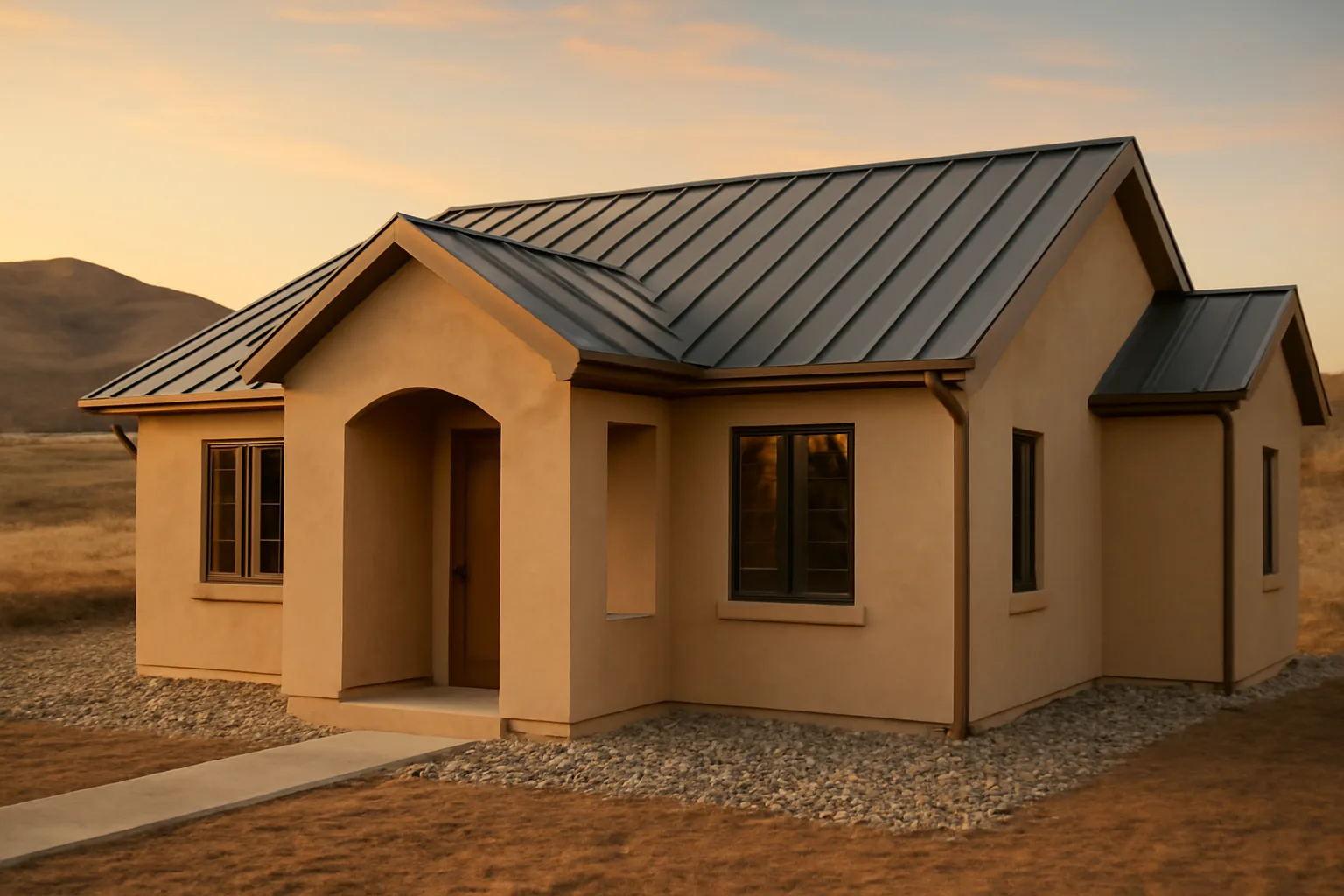
A fire resistant home uses a Class A roof, ember-resistant vents, dual-pane tempered windows, noncombustible siding within 5 feet of the ground, and 5 feet of gravel or rock (Zone 0) around the foundation. California's Zone 0 ember-resistant rule was proposed for 2023 but still has no enforced statewide effective date as of mid-2025. Budget $15,000 to $60,000+ depending on how much you retrofit versus build new.
What actually makes a house fire resistant?
A fire resistant home survives wildfire mainly by stopping embers, not by fighting flames head-on. Research from the Insurance Institute for Business & Home Safety (IBHS) and the U.S. Forest Service has shown for decades that most homes lost in wildfires ignite from windblown embers landing on roofs, in gutters, under decks, or against siding, not from a wall of flame rolling through. CAL FIRE's own guidance states plainly that "embers are the leading cause of home ignition during wildfires" [1]. That means the fixes that matter most aren't heroic. They're boring: a Class A roof, ember-resistant vents, tempered dual-pane windows, noncombustible material in the first 5 feet around the house, and gutters that don't fill with dry leaves. IBHS testing found homes built or retrofitted to their Wildfire Prepared Home standard, which centers on these same ember-entry points, held up dramatically better in real wildfire events than homes built to code minimums [2]. The order of operations matters. Roof and vents first, because that's where most ignitions start. Then windows and the 0-5 foot zone around the foundation, because embers pile up there and radiant heat from nearby burning vegetation or fencing can crack glass. Siding and decking come next. Landscaping and defensible space clearing are the last mile, not the first step, though most fire districts want to see all of it eventually. For a full room-by-room and zone-by-zone breakdown of retrofit priorities, see our guide on home hardening priorities.
What roof, vents, and siding do I actually need?
| Roof | Wood shake, untreated | Class A asphalt, metal, or tile | $6-$12+/sq ft |
|---|---|---|---|
| Vents | Open mesh 1/4-1/2 inch | Ember-resistant WUI vent, 1/8 inch mesh | $30-$150/vent |
| Windows | Single-pane | Dual-pane, tempered outer layer | $600-$1,200/window |
| Siding | Vinyl, wood shake | Stucco, fiber cement, metal | $8-$16/sq ft |
| Decking | Untreated wood | Ignition-resistant composite or noncombustible | $15-$35/sq ft |
You need a Class A fire rated roof assembly, corrosion resistant metal mesh over every vent opening (typically 1/8 inch, though some newer specs call for finer mesh), and noncombustible or ignition resistant siding, at minimum for the bottom 6 inches near grade. Roofing: asphalt composition shingles, metal roofing, clay or concrete tile, and some treated wood shakes can all achieve a Class A rating when installed as a full assembly (underlayment matters as much as the surface material). Class A is the highest of three fire ratings under ASTM E108 / UL 790 testing, meaning the assembly resists severe fire exposure. Cost for a new Class A asphalt roof runs roughly $6 to $12 per square foot installed in most Western wildfire zones as of 2024-2025, with metal and tile running higher. Vents: standard vents with quarter-inch or half-inch mesh let embers straight into your attic or crawlspace. Ember-resistant vents (sometimes stamped WUI or Wildland Urban Interface rated) use finer, non-melting mesh, often 1/8 inch or a flame-and-ember tested baffle design. California's Chapter 7A building code (Title 24, Part 2) has required ember and flame resistant vents in new construction in State Fire Marshal designated Wildland-Urban Interface zones since 2008 [3]. Retrofitting existing vents typically costs $30 to $150 per vent plus labor. Siding: stucco, fiber cement board, brick, and metal siding are noncombustible or highly ignition resistant. Vinyl siding can melt and expose sheathing to ember intrusion; wood shake siding is the highest risk material you can put on a house in a fire zone. If a full re-side isn't in the budget, prioritize the lowest 6 to 12 inches of wall, since that's where ember piles and radiant heat from burning mulch or fencing do the most damage. | Component | Weak/vulnerable version | Fire resistant version | Rough retrofit cost |
When does the California defensible space law go into effect?
California's core defensible space law, the 100-foot clearance requirement under Public Resources Code 4291, has been in effect for years already; it's not new. What's still pending is the Zone 0 (0-5 foot ember-resistant zone) regulation that CAL FIRE and the Board of Forestry have been developing since a 2020 legislative mandate (AB 3074). AB 3074, signed in 2020, directed the Board of Forestry and Fire Protection to adopt regulations creating an ember-resistant zone within 5 feet of structures in State Responsibility Areas and designated Wildland-Urban Interface areas [4]. The Board released draft Zone 0 regulations in 2023 and again in 2024, but as of mid-2025 those regulations had not been finalized or given a statewide enforced effective date; the Board's own materials describe the rulemaking as still in progress, with implementation timelines that have already slipped past the informal 2023 and 2025 target dates discussed in early drafts [5]. Practically, if you're in a California high or very high Fire Hazard Severity Zone, don't wait for a final effective date to act. Insurers and CAL FIRE inspectors are already grading homes informally against Zone 0 concepts (bare mineral soil, gravel, or hardscape within 5 feet, no combustible mulch, no wood fencing attached to the house). Getting ahead of the rule protects your home and your insurance file whether or not the regulation is locked in yet. Check your specific fire district's current requirements here: [fire district rules and mitigation requirements vary; confirm with your local fire authority or CAL FIRE unit before starting work].
What fire-safe home rules take effect in 2026?
There's no single nationwide "2026 fire code" that applies to all homes; rules come from a mix of state building codes, the International Wildland-Urban Interface Code (IWUIC) adoption cycles, and state-specific legislation, and they vary by state and even by county. California's Title 24 Building Energy Efficiency and Chapter 7A (wildfire) standards run on a triennial code cycle; the 2025 California Building Code (based on the 2021 International Building Code with state amendments) took effect January 1, 2026 for new construction in most jurisdictions, per the California Building Standards Commission's code adoption schedule [6]. If California's Zone 0 ember-resistant zone regulation is finalized before then, it's expected to be folded into that same code cycle rather than issued as a standalone mid-year rule, though as of this writing the Board of Forestry has not published a locked final date. Colorado, Oregon, and Arizona each handle this differently. Oregon's SB 762 (2021) created a statewide wildfire risk map and defensible space code framework administered through the Oregon State Fire Marshal and Department of Forestry, with home hardening standards phased in based on risk classification rather than a single fixed date [7]. Colorado has no single statewide wildfire building code; defensible space and hardening rules come from county and fire district ordinances, so "2026 rules" in Colorado means checking your county, not a state law. Arizona similarly leaves most defensible space and building requirements to local jurisdictions and the Arizona State Forestry Division's guidance rather than a uniform state mandate. Bottom line: if you're asking what takes effect in 2026 specifically for your house, the honest answer is it depends entirely on your state, county, and fire district. [Confirm your local fire district's current and upcoming requirements before budgeting a retrofit.]
Why won't people follow the defensible space law in California?
Cost, confusion about what's actually required, and low perceived enforcement risk are the three biggest reasons compliance lags, based on state audits and CAL FIRE's own public messaging. California's Public Resources Code 4291 requires 100 feet of defensible space clearance (or to the property line, whichever is less) around structures in State Responsibility Areas, and it has for years, but a 2021 California State Auditor report on wildfire found that local governments and CAL FIRE inspection programs were inconsistent, with many jurisdictions lacking the staff to inspect every parcel annually and follow up on violations [8]. When enforcement is spotty, some homeowners reasonably conclude the risk of a citation is lower than the cost and hassle of the work. Cost is real too. Clearing brush, limbing trees, and removing ladder fuels on a large rural lot can run into the thousands of dollars if you hire it out, and many homeowners in State Responsibility Areas are older, on fixed incomes, or dealing with steep or hard-to-access terrain where DIY clearing isn't realistic. There's also genuine confusion about what "100 feet" actually requires. It's not a dirt moonscape; PRC 4291 defensible space allows for irrigated lawns, spaced and pruned trees, and green landscaping, but a lot of homeowners picture bulldozed lots and either overcomply in ways that hurt property value or undercomply because they assume it means removing everything. None of that changes the fact that defensible space is one of the strongest predictors of home survival in wildfire, per CAL FIRE's post-fire structure assessments. Skipping it because enforcement is thin is a bet against your own house.
How do I prevent wildfires from starting near my property?
Most wildfires near homes start from human causes, not lightning, so the highest-leverage prevention is controlling ignition sources on your own land: mowing dry grass before 10am, keeping equipment exhaust and chains away from dry vegetation, and never burning debris on red flag warning days. The National Interagency Fire Center and U.S. Forest Service data consistently show that the large majority of wildfires nationwide are human-caused, from causes like unattended campfires, equipment sparks, downed power lines, vehicle exhaust or dragging chains, and debris burning. Ready.gov's wildfire prevention guidance specifically flags checking local burn restrictions and never leaving a fire unattended as basic prevention steps. On your own property, the practical list is short: keep a metal mesh spark arrestor on any outdoor equipment engine, don't mow or use trimmers on dry grass during hot afternoon hours (a lawnmower blade hitting a rock is a real ignition source), store gas cans and propane away from structures, and clear dead vegetation from around any fire pit, grill, or burn barrel. If you live somewhere that allows agricultural or debris burning, check with your local fire authority for burn permit requirements and red flag warning restrictions before lighting anything. This is different from defensible space clearing, which protects your house from a fire that's already coming. Prevention is about not being the spark in the first place.
How do I prepare for a wildfire before one starts?
Preparing for a wildfire means doing the physical hardening and defensible space work months or years before fire season, plus building an evacuation plan, a go-bag, and a documentation file you can hand to your insurer, all before you ever see smoke. Ready.gov's wildfire preparedness guidance recommends building a family emergency communication plan, knowing at least two evacuation routes out of your neighborhood, and preparing a go-bag with medications, documents, and supplies for at least three days per person, kept somewhere you can grab it fast. CAL FIRE's "Ready, Set, Go!" program frames this in three stages: Ready means your home is hardened and your bags are packed; Set means you're actively monitoring conditions and have your car loaded; Go means you leave immediately when told to, without waiting to see how bad it gets [9]. The insurance side of preparation matters just as much as the physical side. Before fire season, walk your property and photograph or video every room, your roof, your defensible space clearing, and any hardening upgrades you've made (new vents, roof replacement, ember-resistant siding). Keep receipts for materials and labor. If you're ever hit with a non-renewal notice or a post-fire claim, that documentation is the difference between a fast, well-supported claim file and a slow fight over what your home used to look like. This is exactly the gap a defensible space documentation habit closes, and it's the specific problem our $99 Wildfire Insurance Survival Kit is built to solve: a structured way to document your hardening work and defensible space compliance so you (not us) can hand insurers a clean, organized file. We don't negotiate with insurers, file claims on your behalf, or promise coverage, discounts, or reinstatement; you prepare the record and you send it. Start at /survival-kit-builder.
How do I prevent forest fires and avoid contributing to them?
The individual actions that prevent forest fires are almost all about controlling sparks and heat sources in dry conditions: fully extinguish campfires (drown, stir, drown again), never park a hot vehicle on dry grass, follow local burn ban rules, and report unattended fires or suspicious smoke immediately. Campfires deserve special attention because they're one of the most common recreational causes of forest fire. The U.S. Forest Service and National Park Service both recommend the "drown, stir, feel" method: pour water on the fire, stir the ashes with a shovel, pour more water, and feel with the back of your hand to confirm there's no heat before leaving. A campfire that looks out on top but is still hot underneath can reignite hours later if wind picks up. Vehicles are an underrated cause. Catalytic converters and hot exhaust systems can ignite dry grass in minutes if you park or drive off-road onto vegetation; this is common enough that several Western states issue specific public warnings about it during high fire danger periods. If you see smoke or an unattended fire, call 911 or your local fire authority immediately rather than assuming someone else has reported it. Fast reporting in the first minutes of a fire start is one of the few variables ordinary people can control that meaningfully affects how big a fire gets before crews arrive.
How can we prevent forest fires at a community level?
Community-level forest fire prevention works through coordinated fuel reduction, prescribed burns run by trained agencies, local burn permit enforcement, and neighborhood-wide defensible space compliance, since one unhardened lot next door can undo a hardened home's protection. CAL FIRE and the U.S. Forest Service both run prescribed fire and fuel reduction programs specifically to reduce the density of dead and overgrown vegetation that lets wildfires spread fast and burn hot. These programs are agency-run for a reason: prescribed burning by untrained individuals is itself a significant cause of escaped wildfires, so this isn't a DIY category. At the neighborhood level, the most effective thing a community can do is coordinate defensible space compliance across adjoining properties, since embers and radiant heat don't respect property lines. A single neighbor with a wood shake roof, unmaintained dry brush, or a wood pile against their house can put an entire block at risk even if everyone else has hardened their homes. Firewise USA, the National Fire Protection Association's community recognition program, exists specifically to organize neighborhood-wide risk reduction and has documented insurance and outcome benefits for participating communities, though results vary by region and fire behavior. Reporting illegal or unpermitted burning, supporting local fuel reduction funding measures, and pushing your HOA or municipality to enforce vegetation and defensible space ordinances are the realistic levers most homeowners actually have.
Is Santa Barbara safe from fire risk?
No part of Santa Barbara County is fully safe from wildfire risk; large sections of the county, including foothill and wildland-adjacent neighborhoods, sit within CAL FIRE-designated Fire Hazard Severity Zones, and the region has a documented history of major fires including the 1990 Painted Cave Fire and the 2017 Thomas Fire, which was, at the time, the largest wildfire in modern California history. CAL FIRE's Fire Hazard Severity Zone maps, updated for Local Responsibility Areas in 2024-2025, classify specific Santa Barbara County parcels as moderate, high, or very high hazard based on vegetation, terrain slope, and fire weather modeling; you can look up any specific address on CAL FIRE's FHSZ viewer [10]. Coastal and heavily urbanized flat areas of the city of Santa Barbara itself generally carry lower zone ratings than the foothill communities and areas near Montecito and the wildland interface, but "lower risk" is not the same as "no risk," especially given how wind-driven embers travel. If you own or are considering property in Santa Barbara County, the only reliable answer is to check your specific parcel's Fire Hazard Severity Zone designation directly rather than relying on the county's general reputation. A property two streets apart can carry very different zone ratings depending on slope and vegetation exposure.
What's the realistic budget for hardening an existing home?
A phased retrofit for an existing 2,000 to 2,500 square foot home typically runs $15,000 to $60,000+ depending on how much of the envelope needs replacement, with vents and gutter guards at the cheap end and a full roof and siding replacement at the expensive end. Here's a rough phased approach many homeowners use, cheapest and highest-impact first: Phase 1 ($500-$3,000): Install ember-resistant vent screens over all attic, foundation, and eave vents. Add noncombustible gutter guards. Clear the first 5 feet around the foundation of mulch, wood chips, and combustible plantings, replacing with gravel or hardscape. Phase 2 ($3,000-$15,000): Replace single-pane windows with dual-pane, tempered-glass units, prioritizing the sides of the house facing prevailing wildfire wind direction or nearby wildland. Remove or replace wood fencing that attaches directly to the house (a wood fence is a fuse straight to your siding). Phase 3 ($10,000-$40,000+): Roof replacement to a full Class A assembly if you're not already there. Re-side vulnerable walls, at minimum the bottom 6-12 inches, with noncombustible material. Insurers in California, Colorado, Oregon, and some Arizona markets have started offering premium credits or renewal consideration for documented hardening work, though this varies enormously by carrier and state and is never certain. Keep every receipt and photo regardless; even without a confirmed discount, a documented hardening file is what you'll need if you ever have to demonstrate compliance to an insurer, a FAIR Plan, or a post-fire claims adjuster.
Frequently asked questions
When does the California defensible space law go into effect?
The core 100-foot clearance law (Public Resources Code 4291) is already in effect and has been for years. The newer Zone 0 ember-resistant 0-5 foot rule, mandated by AB 3074 in 2020, was drafted by the Board of Forestry in 2023-2024 but as of mid-2025 had no finalized statewide enforced effective date. Check your local fire district for current requirements.
Why won't people follow the defensible space law in California?
Cost, inconsistent enforcement, and confusion about what's required are the main reasons. A 2021 California State Auditor report found inspection and enforcement varied widely across jurisdictions, and clearing large rural lots can cost thousands of dollars, especially for older or fixed-income homeowners on steep terrain.
How do I prevent wildfires from starting?
Keep spark arrestors on outdoor equipment, avoid mowing dry grass in hot afternoons, never leave campfires unattended, follow local burn permit rules, and don't park hot vehicles on dry vegetation. Most wildfires are human-caused, so controlling ignition sources on your own property is the highest-leverage prevention step.
How do I prepare for a wildfire?
Harden your home's roof, vents, windows, and 0-5 foot zone; clear defensible space; build a go-bag with 3+ days of supplies per person; know two evacuation routes; and photograph your home and upgrades for insurance documentation. Ready.gov and CAL FIRE's Ready, Set, Go! program both offer step-by-step checklists.
How do I prevent forest fires when camping or working outdoors?
Fully extinguish campfires using drown-stir-drown-feel, follow local burn bans during high fire danger, keep equipment exhaust and hot vehicle parts off dry grass, and report any unattended fire or suspicious smoke to 911 immediately. Most forest fires start from preventable human causes, not lightning.
What fire-safe home rules take effect in 2026?
There's no single national 2026 rule. California's updated Title 24/Chapter 7A code cycle took effect January 1, 2026 for new construction. Oregon phases in requirements through its statewide risk map under SB 762. Colorado and Arizona largely leave rules to counties and local fire districts, so check locally.
Is Santa Barbara safe from fire risk?
No. Large parts of Santa Barbara County, especially foothill and wildland-adjacent neighborhoods, sit in CAL FIRE-designated high or very high Fire Hazard Severity Zones. The county has a history of major fires including the 2017 Thomas Fire. Check your specific parcel on CAL FIRE's FHSZ viewer rather than relying on general reputation.
What is Zone 0 and do I need it now?
Zone 0 is the proposed 0-5 foot ember-resistant zone around a structure, requiring gravel, hardscape, or bare mineral soil instead of mulch, wood fencing, or combustible plants. California's regulation isn't finalized statewide, but insurers and CAL FIRE inspectors already informally grade homes against it, so acting early is reasonable.
What's the single most important upgrade for a fire resistant home?
A Class A rated roof assembly combined with ember-resistant vent screens, since most home ignitions during wildfire start from windblown embers entering through roof and vent openings, not from direct flame contact, according to CAL FIRE and IBHS research.
Does hardening my home actually lower my insurance premium?
It varies by carrier and state. Some California, Colorado, and Oregon insurers offer credits or renewal consideration for documented hardening, but none guarantee a discount or reinstatement. Keep photos and receipts regardless; that documentation is what you'd present to an insurer or FAIR Plan on your own.
How much does it cost to build a new home to full wildfire-resistant standards?
Building fire-resistant from the start (Class A roof, ember vents, tempered dual-pane windows, noncombustible siding, Zone 0 landscaping) typically adds a modest percentage to overall construction cost compared to retrofitting later, since it's cheaper to spec these materials during initial construction than to redo an existing envelope.
Can I do defensible space clearing myself or do I need a contractor?
Small residential lots are often manageable DIY with hand tools and a weekend or two. Larger rural parcels, steep terrain, or heavy fuel loads usually need a contractor with brush-clearing equipment. Requirements and accepted methods vary by fire district, so confirm specifics with your local fire authority first.
Sources
- CAL FIRE, Home Hardening: Embers are the leading cause of home ignition during wildfires
- IBHS, Wildfire Prepared Home Standard: Homes hardened to reduce ember entry points perform significantly better in wildfire events
- California Building Standards Commission, Title 24 Part 2 Chapter 7A: Chapter 7A requires ember and flame resistant vents in new construction in State Fire Marshal WUI zones since 2008
- California Legislature, AB 3074 (2020): AB 3074 mandated Board of Forestry regulations creating an ember-resistant zone within 5 feet of structures
- California Board of Forestry and Fire Protection, Zone 0 Rulemaking: Zone 0 ember-resistant zone regulations remain in rulemaking without a finalized statewide effective date as of mid-2025
- California Building Standards Commission, Code Adoption Cycle: The 2025 California Building Code took effect January 1, 2026 for new construction
- Oregon State Legislature, SB 762 (2021): SB 762 created a statewide wildfire risk map and phased defensible space/building code framework in Oregon
- California State Auditor, Wildfires Report 2021-117: Local governments and CAL FIRE inspection programs showed inconsistent enforcement of defensible space requirements
- CAL FIRE, Ready Set Go: CAL FIRE's Ready, Set, Go program frames wildfire preparation in three action stages
- CAL FIRE, Fire Hazard Severity Zone Maps: CAL FIRE Fire Hazard Severity Zone maps classify Santa Barbara County parcels as moderate, high, or very high hazard