Last updated 2026-07-25
TL;DR
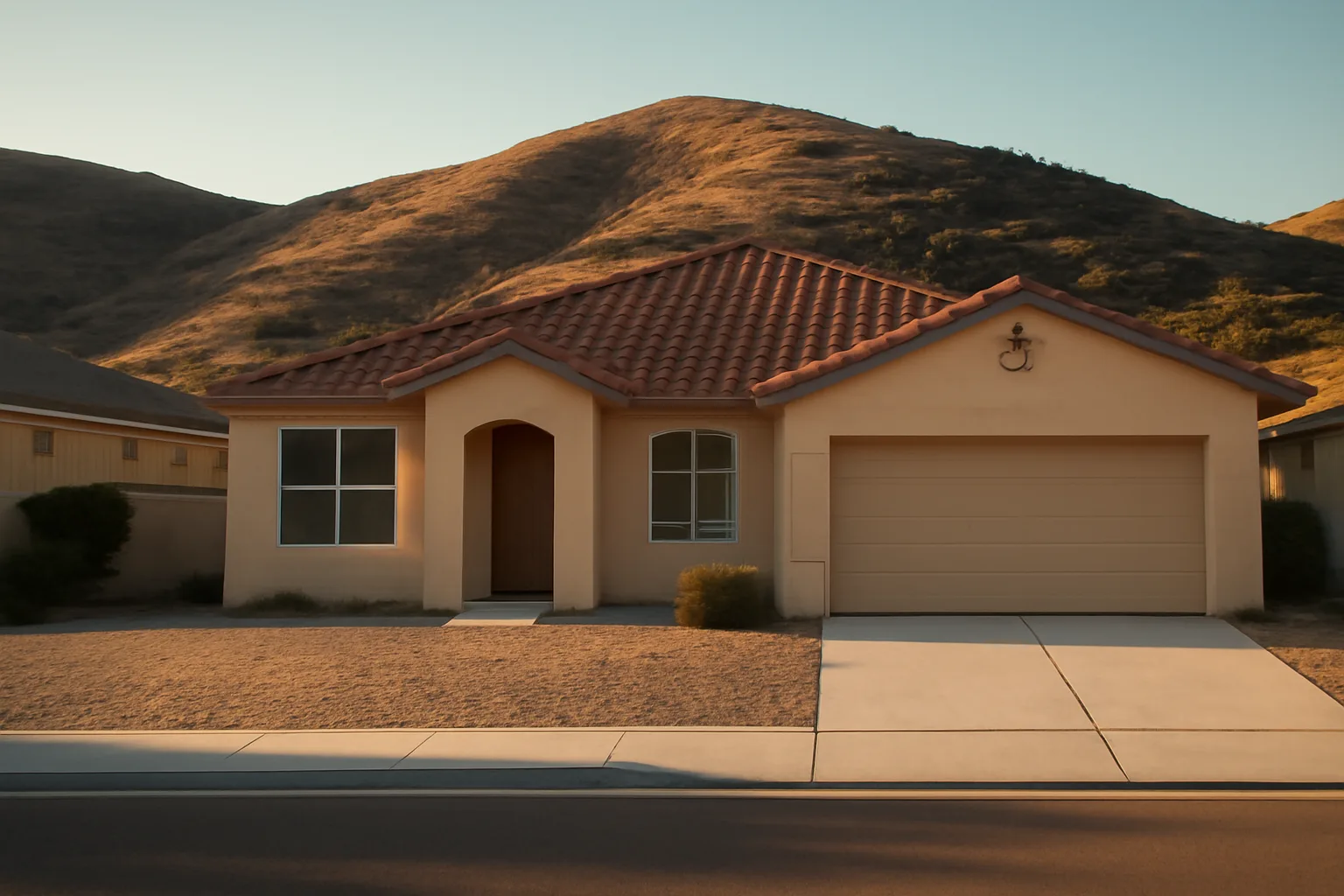
KB Home built a fire-resistant demonstration community near Escondido, CA using ignition-resistant materials like Class A roofing, tempered dual-pane windows, and stucco siding, tested against California's wildland-urban interface code (Chapter 7A). The lessons apply to any older home in a fire zone: the roof, vents, and windows matter more than the landscaping most people focus on first.
What did KB Home build near Escondido, and why does it matter now?
KB Home, one of the largest homebuilders in the country, built a community in the San Diego County area (near Escondido and the broader North County wildland-urban interface) using fire-resistant construction methods after the devastating 2007 Witch Creek and Harris fires tore through the region. Those fires burned roughly 197,990 acres combined and destroyed more than 1,500 homes across San Diego County, according to CAL FIRE incident records [1]. The builder's pitch was straightforward: build to the state's newer wildland-urban interface standards from the start, rather than retrofitting later. That meant Class A fire-rated roofing, ember-resistant vents, dual-pane tempered windows, and non-combustible or ignition-resistant siding like stucco or fiber cement, all requirements that became mandatory statewide under California Building Code Chapter 7A for new construction in high fire hazard severity zones [2]. Why this matters to you if you're not buying a new KB Home: the same construction choices are exactly what CAL FIRE and most insurance underwriters now look for when they assess an existing home's wildfire risk. If your house was built before 2008 (when Chapter 7A first took effect for new construction in state responsibility areas), there's a good chance it's missing one or more of these features. That gap is a big part of why non-renewal notices have spiked in California's higher-risk zip codes over the past five years. This isn't really a story about one builder or one subdivision. It's a useful case study in what "fire-resistant home" actually means in practice, broken into parts you can inspect on your own house this weekend.
What actually makes a home fire-resistant (roof, vents, windows, siding)?
Four building components decide most of a home's survival odds in a wildfire, and none of them is landscaping. Roofing. A Class A fire rating is the highest resistance rating under standardized roofing tests (ASTM E108 or UL 790). Composition shingle, tile, and metal roofs can all achieve Class A when installed correctly. Wood shake roofs, common on older homes, are the opposite: untreated wood shakes are highly combustible and are restricted under Chapter 7A in high hazard zones [2]. Vents. Embers, not direct flame contact, cause most home ignitions during wildfires. A 2005 study by the Institute for Business & Home Safety found embers can travel over a mile ahead of the fire front and enter homes through unscreened attic and foundation vents, igniting insulation and debris inside the structure. California code now requires ember- and flame-resistant vents (typically 1/8 inch mesh or listed ember-resistant vent products) for new construction in fire hazard zones [2]. Windows. Dual-pane windows with at least one tempered pane resist heat-shattering far better than single-pane glass. When a window fails from radiant heat, it opens a direct path for embers and flame into the living space. Siding and eaves. Stucco, fiber cement, and other non-combustible sidings resist ignition where vinyl or untreated wood siding does not. Eaves and soffits need the same ember-resistant detailing as vents, since they're a common entry point. KB Home's Escondido-area project bundled all four into the base construction spec rather than treating them as upgrades. For an existing home, retrofitting a Class A roof plus ember-resistant vents typically runs several thousand dollars depending on roof size and material choice; exact costs vary enough by [contractor and region] that you'll want at least two local quotes before budgeting.
When does the California defensible space law go into effect?
California's core defensible space requirement, Public Resources Code Section 4291, has been in effect since well before recent headlines, but a significant expansion is landing in phases through 2025 and 2026. The existing law requires 100 feet of defensible space around homes in State Responsibility Areas and designated Very High Fire Hazard Severity Zones within local jurisdictions, broken into two zones: Zone 0 (0-5 feet, the ember-resistant zone) and the broader Zone 1/Zone 2 areas out to 100 feet. Zone 0 is the newer piece. Assembly Bill 3074 (2020) directed CAL FIRE, in consultation with the Office of the State Fire Marshal, to develop regulations for an ember-resistant zone within 5 feet of structures. As of this writing, CAL FIRE's Board of Forestry has been working through the formal rulemaking process for Zone 0 regulations, with the Board's stated target for adoption and phased implementation continuing into 2025 and 2026 [3]. Check the current status directly on the Board of Forestry's Zone 0 rulemaking page before assuming a firm date, because rulemaking timelines shift. Once adopted, Zone 0 will require homeowners to remove combustible materials (mulch, wood piles, dry vegetation, combustible fencing attached to the house) within that first 5 feet. This is the same zone KB Home effectively hardwired into its Escondido-area builds using stucco, hardscape, and non-combustible ground cover right up against the foundation. For the existing 100-foot rule that's already enforceable, read our breakdown of defensible space zones to see exactly what's expected at each distance.
What fire-safe home rules take effect in 2026?
Several California requirements are converging around 2025-2026, and the details differ by which one you're asking about. Zone 0 ember-resistant zone regulations: as noted above, CAL FIRE's Board of Forestry has been developing formal Zone 0 rules under AB 3074, with phased compliance timelines under discussion that extend into 2026 for existing structures (new construction requirements typically apply sooner). Confirm the current adopted timeline on the Board of Forestry's regulatory page, since this has moved before [3]. Wildfire disclosure and home hardening retrofit incentives: separate from Zone 0, California has been expanding requirements around Home Hardening disclosures at time of sale (Government Code Section 4291 area disclosures paired with Civil Code Section 1102.6c) and low-cost retrofit grant programs administered through Cal OES and CAL FIRE. Local fire district amendments: many California fire districts adopt their own supplemental defensible space or building ordinances on top of state minimums, often with different effective dates. Check with [your local fire district] directly, since a city or county amendment can move faster or slower than the state timeline. The honest answer to "what takes effect in 2026" is that it depends which specific regulation you mean, and the state's own rulemaking calendar is the only reliable source, not secondhand summaries. Bookmark CAL FIRE's defensible space page and check it each fire season.
When does the California defensible space law go into effect, and has it already started?
Yes, it's already in effect for the core 100-foot rule. Public Resources Code Section 4291 has required defensible space clearance around structures in State Responsibility Areas since long before the current wave of insurance non-renewals, with the modern zone-based structure (Zone 1 and Zone 2) refined through subsequent legislation over the past two decades. What confuses people is that CAL FIRE and the legislature keep adding layers on top of that base law. Zone 0 is the newest layer, still working through rulemaking as of 2024-2025. So the honest way to think about it: the 100-foot law is here now and enforceable, Zone 0 is coming and partly phased in, and local jurisdictions can add stricter rules on top of both. If you got a defensible space inspection notice, it almost certainly refers to the existing 100-foot law, not the still-developing Zone 0 rule. Don't wait for Zone 0 finalization to start clearing; inspectors are citing homeowners under the current law right now.
Why won't people follow the defensible space law in California?
This is a real, well-documented problem, and it's not simply stubbornness. A few honest reasons show up again and again in CAL FIRE inspection data and academic research. Cost is the biggest one. Clearing 100 feet of vegetation, removing overhanging tree limbs, and maintaining that clearance every year isn't free, and for homeowners on fixed incomes or larger rural parcels the labor and equipment costs add up fast. There's no statewide subsidy that covers most of this work for most homeowners. Enforcement is inconsistent. CAL FIRE and local fire departments conduct defensible space inspections, but staffing limits mean not every property gets checked every year, and penalties for non-compliance vary by jurisdiction. Some homeowners simply calculate, rightly or wrongly, that the odds of inspection and fine are low. Aesthetic and ecological disagreement. Some homeowners value dense vegetation, privacy screening, or native habitat and see defensible space clearing as destructive to landscaping they've invested in for years. A 2020 study published through UC Cooperative Extension on wildfire risk perception found that homeowner attitudes toward vegetation removal are strongly shaped by aesthetic preference and a belief (not always accurate) that their specific property is lower risk than official maps suggest [4]. Confusion about what's actually required. The zone system, the differences between state and local rules, and the newer Zone 0 proposal genuinely confuse people. It's not always clear whether a homeowner is looking at the state minimum or a stricter local ordinance. None of these reasons make skipping defensible space work a good idea. Homes with compliant defensible space and hardened construction have measurably better survival rates in wildfire case studies, including post-fire assessments CAL FIRE has published after major incidents. But understanding why compliance lags helps explain why insurers have gotten so aggressive about requiring proof, more than self-reported compliance.
How to prevent wildfires (what's actually in your control)
Most wildfires in the U.S. are human-caused, not lightning-caused. The National Interagency Fire Center and USDA Forest Service data consistently show that roughly 85-90% of wildfires nationally are started by human activity: unattended campfires, equipment sparks, downed power lines, arson, and debris burning [5]. That statistic matters because it means individual behavior genuinely moves the needle. If you're asking "how do I prevent wildfires" as a homeowner or someone recreating in fire country, the highest-leverage actions are: Never leave a campfire unattended, and drown, stir, and feel it cold before walking away, per Ready.gov and USDA Forest Service guidance [5]. Avoid outdoor equipment use (mowing, chainsaws, grinding) during red flag warning days when dry vegetation and wind combine. Maintain vehicle and equipment spark arrestors, since dragging chains, mower blades hitting rock, and overheated exhaust systems all start fires in dry grass. Report downed power lines immediately rather than assuming someone else will. Follow local burn permit rules exactly, including seasonal burn bans that many counties impose during dry months. None of this replaces hardening your own home, but it does reduce the number of ignitions that turn into the fires threatening your neighborhood in the first place.
How to prepare for a wildfire (before it starts)
Preparation splits into two tracks that need to happen well before smoke is visible: the home itself, and your family's evacuation plan. For the home: complete defensible space clearing to your zone's requirement, clear roof and gutters of debris regularly, store firewood and propane tanks at least 30 feet from structures, and consider ember-resistant vent retrofits if your home predates 2008 construction codes [2]. For the family: Ready.gov recommends building a go-bag with medications, copies of insurance and identification documents, a battery radio, and at least three days of food and water per person, plus a written evacuation plan with two routes out of your neighborhood in case one is blocked. Document your home's condition before fire season starts. Photos and video of your roof, vents, defensible space clearance, and interior contents give you a baseline if you ever need to show an insurer or adjuster what existed before a loss. This is exactly the kind of documentation packet our $99 one-time Wildfire Insurance Survival Kit is built around: a structured way to photograph and log your home's hardening work and belongings so you have your own record, not one that depends on an insurer's memory of what you told them. To be clear, we don't file claims or handle your insurer communications for you; the kit helps you prepare your own documentation, which you send yourself. Sign up for your county's emergency alert system (many California counties use systems like Genasys or Everbridge) before fire season, not during it, since sign-up portals can slow under load during an actual emergency.
How to prevent forest fires and avoid forest fires while recreating
Forest fire prevention while camping, hiking, or driving through wildland areas comes down to a short, boring list that most fires prove people don't actually follow. Check current fire restrictions before you go. The Forest Service and CAL FIRE publish current burn bans and campfire restrictions by district, and these change through the season [1] [5]. Use only designated fire rings or established fire pits, never build a new one in dry duff or grass. Keep a shovel and water source at any campfire, and never leave it unattended even for a few minutes. Don't park hot vehicles on dry grass; catalytic converters and exhaust systems routinely ignite roadside grass fires in late summer. Pack out cigarettes rather than field-stripping and dropping them; smoking-caused wildfires remain a documented ignition source in CAL FIRE incident reports [1]. If you see smoke or an unattended fire, report it immediately rather than assuming it's controlled; delayed reporting is a recurring factor in fires that grow from something manageable into something catastrophic.
How to prepare for forest fires if you live near wildland
If your home backs up to forest or wildland, the preparation checklist above still applies, but a few things deserve extra attention specifically because of proximity to continuous fuel. Extend your defensible space thinking beyond the legal minimum. The 100-foot state requirement is a minimum, not necessarily enough on steep slopes or in dense fuel types; CAL FIRE's own guidance notes that fire behavior on slopes above 20% can require larger clearance distances for meaningful protection. Coordinate with neighbors. A single property's defensible space work is far less effective if the adjoining parcel is untreated, since fire doesn't respect property lines. Some California communities have organized Firewise USA groups (a National Fire Protection Association program) specifically to coordinate neighborhood-scale fuel reduction [6]. Know your evacuation trigger points in advance, not during the event. Many rural fire departments recommend deciding ahead of time what conditions (visible smoke at X distance, an official evacuation warning, a specific wind shift) will trigger your household to leave, rather than deciding in the moment under stress. For a broader look at what's expected at each distance from your home, our defensible space zones guide breaks down Zone 0 through Zone 2 requirements in plain language.
Is Santa Barbara safe from fire?
No California coastal or foothill community, including Santa Barbara, can be called simply "safe" from wildfire, and the county's own fire history argues against complacency directly. Santa Barbara County has experienced some of the state's most destructive fire events. The 2017 Thomas Fire burned 281,893 acres across Ventura and Santa Barbara counties, making it (at the time) the largest wildfire in modern California history, and it was directly followed by the January 2018 Montecito debris flow that killed 23 people when rain hit the fire-scarred hillside [7]. The 1990 Painted Cave Fire destroyed 641 structures in the Santa Barbara area in a matter of hours, driven by extreme sundowner winds [8]. Santa Barbara's specific risk driver is its wind pattern: sundowner winds, a local downslope wind event similar to Santa Ana winds, can push fire rapidly from the foothills toward dense neighborhoods with little warning. That's a different mechanism than the more familiar Santa Ana-driven fires further south, but the outcome (fast-moving, wind-driven fire reaching structures quickly) is similar. So the honest answer: Santa Barbara is not fire-safe, it's fire-prone with a specific and well-documented wind hazard, and residents there should treat defensible space and home hardening with at least the same seriousness as Escondido, Paradise, or any other California community that's burned before.
How can we prevent forest fires at the community level?
Individual defensible space work matters, but community-scale prevention closes gaps that no single homeowner can fix alone. Coordinated fuel breaks along ridgelines and community perimeters, often managed through Fire Safe Councils or local fire districts, reduce the continuous fuel that lets a wildfire run unchecked toward a neighborhood. Utility infrastructure hardening (undergrounding lines, vegetation clearance around power equipment, public safety power shutoffs during extreme wind events) addresses the fact that power line failures remain a documented cause of some of California's largest and most destructive fires, including the 2018 Camp Fire, which CAL FIRE's investigation attributed to PG&E transmission equipment . Community chipper days and green waste programs make it financially and logistically easier for individual homeowners to actually complete the vegetation clearing the law already requires, removing the cost barrier that keeps many properties non-compliant. Firewise USA recognition, a National Fire Protection Association program, gives neighborhoods a structured framework for joint risk assessment and coordinated mitigation work, with over 1,500 recognized sites nationally as of recent NFPA reporting [6]. None of this replaces individual homeowner responsibility. But a single hardened home surrounded by untreated neighboring parcels is still vulnerable, which is exactly the dynamic KB Home's Escondido-area project tried to avoid by building an entire subdivision to the same standard rather than leaving it to individual buyers to retrofit later.
What should I actually do this weekend if I got a non-renewal notice?
Start with the roof and vents, not the landscaping, since those are usually the fastest wins for both fire safety and insurer documentation. Walk your property line and measure your actual defensible space clearance against your local fire district's requirement; [check with your local fire district] for the specific distances and any amendments beyond the state's base 100-foot rule. Photograph everything: roof material and condition, vent screens, window type, siding, and the state of vegetation clearance at 5, 30, and 100 feet. Insurers increasingly want documented proof of mitigation work, more than a homeowner's word, and a non-renewal appeal or a request for reconsideration goes further with dated photos than without them. Get written quotes for the highest-impact retrofits: ember-resistant vents, Class A roof repair or replacement if needed, and removing combustible material within 5 feet of the foundation. Check whether your county or utility offers a home hardening rebate or a chipper day program to offset costs; availability varies widely and changes year to year, so [check current local program listings] rather than relying on older news coverage. If you want a structured way to pull all of this together, our Wildfire Insurance Survival Kit is a $99 one-time tool for organizing your home's mitigation documentation and home inventory in one place before you need it. We don't file claims or handle insurer communications for you; you compile the record and send it yourself, on your own timeline.
Frequently asked questions
When does the California defensible space law go into effect?
The core 100-foot defensible space law (Public Resources Code Section 4291) is already in effect and has been enforced for years in State Responsibility Areas and Very High Fire Hazard Severity Zones. The newer Zone 0 ember-resistant zone rule (within 5 feet of structures) is still working through CAL FIRE Board of Forestry rulemaking, with phased implementation discussed into 2026. Check CAL FIRE's site for the current adopted status.
Why won't people follow the defensible space law in California?
Cost, inconsistent enforcement, aesthetic disagreement over removing vegetation, and genuine confusion about which rules apply (state minimum versus stricter local ordinances) are the main documented reasons. UC Cooperative Extension research on wildfire risk perception found homeowners often underestimate their own property's risk relative to official hazard maps, which reduces motivation to comply.
How do I prevent wildfires as an individual?
Roughly 85-90% of U.S. wildfires are human-caused, according to National Interagency Fire Center and USDA Forest Service data, so individual behavior matters. Never leave campfires unattended, avoid outdoor equipment use on red flag days, maintain spark arrestors, and report downed power lines immediately.
How do I prepare for a wildfire if I live in a high-risk zone?
Complete defensible space clearing to your zone's requirement, harden your roof and vents, build a go-bag with medications and documents per Ready.gov guidance, and write a two-route evacuation plan. Photograph your home's condition and mitigation work before fire season so you have your own dated record.
How can we prevent forest fires at a community level?
Coordinated ridgeline fuel breaks, utility infrastructure hardening, community chipper days that lower the cost barrier to compliance, and Firewise USA neighborhood programs (an NFPA initiative with over 1,500 recognized U.S. sites) all reduce risk in ways individual homeowners can't achieve alone.
What fire-safe home rules take effect in 2026?
It depends which rule. CAL FIRE's Zone 0 ember-resistant zone regulations under AB 3074 have phased timelines extending into 2026 for existing structures, but the exact adopted schedule should be confirmed on the Board of Forestry's current rulemaking page, since dates have shifted before.
Is Santa Barbara safe from fire?
No. Santa Barbara County has a documented history of destructive fires, including the 2017 Thomas Fire (281,893 acres, the largest California wildfire at the time) and the 1990 Painted Cave Fire, which destroyed 641 structures in hours. Sundowner winds create a specific fast-moving fire risk for foothill neighborhoods there.
What made KB Home's Escondido-area homes fire-resistant?
KB Home built homes near Escondido after the 2007 Witch Creek and Harris fires using Class A fire-rated roofing, ember-resistant vents, dual-pane tempered windows, and non-combustible siding like stucco, built into the base construction spec rather than added as upgrades, aligning with California's Chapter 7A wildland-urban interface code.
How to prevent forest fires while camping or hiking?
Check current fire restrictions before heading out, use only designated fire rings, never leave a campfire unattended, keep water and a shovel nearby, and don't park hot vehicles on dry grass. Pack out cigarettes rather than field-stripping them, since smoking is a documented ignition source in CAL FIRE incident data.
What's the difference between Zone 0, Zone 1, and Zone 2 defensible space?
Zone 0 covers 0-5 feet from the structure and focuses on removing combustible material near the foundation; it's still finalizing under CAL FIRE rulemaking. Zone 1 covers roughly 5-30 feet and Zone 2 covers 30-100 feet, both already required under Public Resources Code Section 4291 in applicable fire hazard zones.
Does defensible space actually help homes survive wildfires?
Post-fire assessments published by CAL FIRE after major incidents consistently show homes with compliant defensible space and hardened construction (Class A roofs, ember-resistant vents) survive at meaningfully higher rates than untreated homes nearby, though no clearance level guarantees survival against extreme, wind-driven fire behavior.
What should I do first if my home insurance was non-renewed for wildfire risk?
Start with roof and vent condition, then measure your defensible space against your local fire district's specific requirement. Document everything with photos, get quotes for the highest-impact retrofits, and check for local rebate programs before assuming you have to pay full retrofit cost out of pocket.
Sources
- CAL FIRE, Top 20 Largest California Wildfires / 2007 Witch and Harris Fire incident data: 2007 Witch Creek and Harris fires burned roughly 197,990 acres and destroyed over 1,500 homes in San Diego County
- California Building Standards Commission, California Building Code Chapter 7A: Chapter 7A requires Class A roofing, ember-resistant vents, and ignition-resistant materials for new construction in high fire hazard severity zones
- California Board of Forestry and Fire Protection, Zone 0 rulemaking: CAL FIRE's Board of Forestry is developing Zone 0 ember-resistant zone regulations under AB 3074 with phased implementation timelines
- University of California Cooperative Extension, wildfire risk perception research: Homeowner attitudes toward vegetation removal are shaped by aesthetic preference and risk perception that may not match official hazard maps
- USDA Forest Service, wildfire prevention statistics: The large majority of U.S. wildfires are human-caused rather than lightning-caused
- National Fire Protection Association, Firewise USA program: Firewise USA is an NFPA program with over 1,500 recognized neighborhood sites nationally coordinating wildfire risk reduction
- CAL FIRE, Thomas Fire incident summary: The 2017 Thomas Fire burned 281,893 acres across Ventura and Santa Barbara counties
- CAL FIRE, Camp Fire investigation findings: CAL FIRE's investigation attributed the 2018 Camp Fire to PG&E transmission equipment