Last updated 2026-07-25
TL;DR
CAL FIRE's defensible space framework divides the 100 feet around a home into Zone 0 (0-5 ft, ember-resistant), Zone 1 (5-30 ft, lean and clean), and Zone 2 (30-100 ft, reduced fuel). Zone 0 rules under AB 3074 aren't enforceable yet; CAL FIRE is still finalizing regulations, with a 2026 target. Local fire districts can require more.
What is the CAL FIRE defensible space map and what do the zones mean?
The "map" people search for isn't a single document you download. It's the zone diagram CAL FIRE uses to explain defensible space: three concentric rings around a structure, each with different clearance rules. Zone 0 runs from the wall of your house out to 5 feet. Zone 1 runs from 5 feet to 30 feet. Zone 2 runs from 30 feet to 100 feet, or to your property line, whichever comes first. The logic is simple even if the paperwork isn't. Embers travel far ahead of a fire front, sometimes a mile or more, and they're what actually ignites most homes in a wildfire, not the wall of flame itself. Zone 0 exists to stop an ember from finding fuel right at your foundation. Zone 1 and Zone 2 exist to slow or stop a fire from reaching the structure at all by breaking up continuous fuel. California Public Resources Code section 4291 is the underlying law that requires 100 feet of defensible space clearance around buildings in State Responsibility Areas and some local responsibility areas designated as Very High Fire Hazard Severity Zones [1]. CAL FIRE's own guidance describes it as clearance "to reduce the risk to your home from a wildfire and provide firefighters a safe area to defend your home". If you want the zone-by-zone specifics on what to remove and what's allowed to stay, that's covered in defensible space zones guidance, including planting distances and mulch types.
When does the California defensible space law (Zone 0) go into effect?
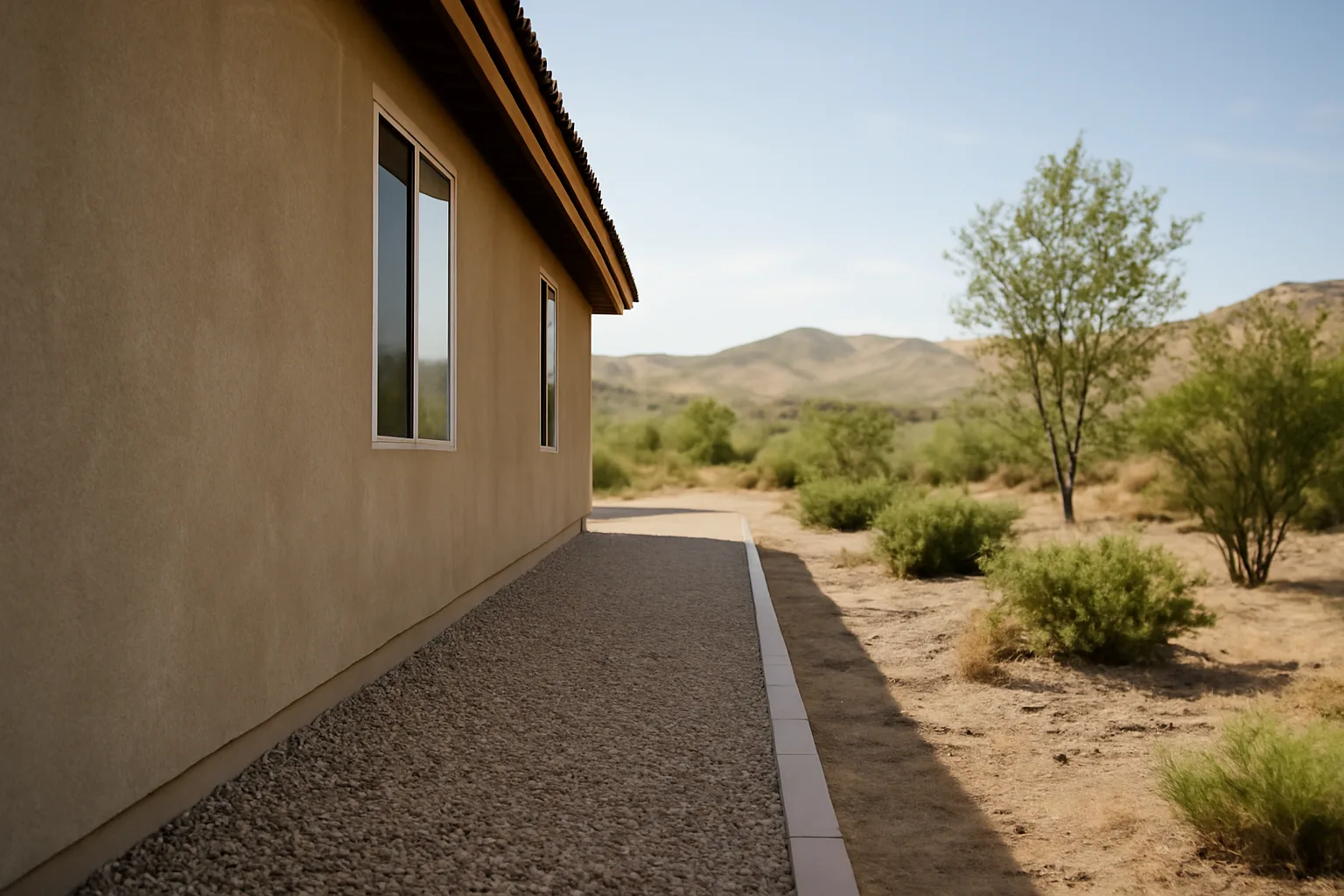
Short answer: not yet, and that's the most confusing part of this whole topic. Assembly Bill 3074, passed in 2020, added the Zone 0 ember-resistant zone concept to Public Resources Code 4291, but it explicitly said the requirement doesn't take effect until the State Fire Marshal, working with CAL FIRE's Board of Forestry, adopts implementing regulations [2]. As of this writing those regulations are still in draft and rulemaking process. The Board of Forestry and Fire Protection has been working through a formal rulemaking package for Zone 0, with public comment periods running through 2024 and into 2025. Official guidance and several fire agencies have pointed to 2026 as the realistic year enforcement could begin, but no final adopted regulation with a hard enforcement date existed at time of publication [3]. Californians in high fire hazard zones should not assume Zone 0 is already legally mandatory; treat draft guidance as "do this now anyway" advice, not an enforceable deadline yet. That's the honest state of things: the concept is law, the enforcement mechanism isn't finished. Check your county or CAL FIRE unit's current bulletins before assuming a specific date, because rulemaking timelines shift. Once adopted, the draft framework describes Zone 0 as requiring no combustible mulch, no wood fencing attached to the structure, and no combustible items (furniture, doormats, stored firewood) within that 5-foot ring [2]. Homeowners who want to get ahead of it can start now voluntarily; retrofitting gravel or hardscape in that 5-foot band is one of the cheaper, highest-value moves in this whole topic area.
What fire-safe home rules take effect in 2026?
Nobody has a single confirmed statewide date locked in stone, and any article claiming otherwise is guessing. What's real: the Board of Forestry and Fire Protection's rulemaking process for Zone 0 has repeatedly targeted 2025-2026 as the window for final adoption, based on Board meeting agendas and public workshop schedules [3]. Some fire-adjacent building code updates, including changes tied to the California Building Code's Chapter 7A (wildland-urban interface construction standards), also cycle on a triennial code adoption schedule that lines up with 2025-2026 updates [4]. Separately, insurance-side changes are moving faster than the building code side. The California Department of Insurance's "Safer from Wildfires" regulation, effective since 2022, already requires insurers to give discounts or recognition for specific mitigation actions, including defensible space and home hardening measures, when calculating wildfire risk scores [5]. That regulation is enforceable now; it's not a 2026 thing. So when someone asks "what fire safe for homes take effect in 2026," the honest answer is: probably the Zone 0 defensible space regulation finalization, possibly aligned building code updates, but treat any specific month or day as unconfirmed until CAL FIRE or the State Fire Marshal publishes the adopted rule text.
Why won't people follow the defensible space law in California?
Cost is the biggest one. Clearing and maintaining 100 feet of defensible space on a sloped, brush-covered lot isn't a weekend project; it can run into thousands of dollars a year for larger properties, and low-income and elderly homeowners often can't do the physical labor themselves or afford a contractor. Confusion is close behind. Rules genuinely vary by jurisdiction. What's required in a CAL FIRE State Responsibility Area differs from a local fire district's ordinance inside city limits, and homeowners get conflicting instructions from a CAL FIRE inspector one year and a local fire marshal the next. Enforcement is inconsistent too. CAL FIRE and local fire agencies typically issue a defensible space inspection notice, give the homeowner a chance to correct violations, and escalate to citations only after repeated non-compliance; actual citations are relatively rare compared to the number of parcels inspected, which reduces the felt urgency for a lot of people. There's also a perception gap. Some homeowners genuinely believe a fire won't reach their specific street, especially after living somewhere for decades without a close call. That belief is statistically risky in most of the Wildland Urban Interface zones CAL FIRE maps as Very High Fire Hazard Severity Zones, but it's psychologically common and worth naming honestly rather than pretending everyone who skips clearance is just lazy. Finally, some homeowners resist because they misunderstand what's required. Zone 1 and Zone 2 don't mean bulldozing every tree; CAL FIRE's own guidance calls for thinning and spacing, not clear-cutting a lot. That misconception alone stops some people from starting.
How to prevent wildfires around your own property
You can't stop a wildfire from starting somewhere else, but you can dramatically change whether it takes your house when it arrives. This is the actual, defensible difference between defensible space and wildfire prevention in the broader sense. Start with ignition sources you control. CAL FIRE and local agencies report that a large share of wildfires in California are human-caused, not lightning-caused, tracing back to equipment use, vehicle-related sparks, unattended debris burns, and power line issues. On your own property, that means: don't run mowers or trimmers on dry grass during red flag warnings, keep chainsaws and equipment away from dry vegetation, and never leave a debris burn unattended, permitted or not. Then work outward from the house using the zone framework. Zone 0 (0-5 ft): remove combustible mulch, move firewood stacks and patio furniture cushions out of this ring. Zone 1 (5-30 ft): remove dead plants, dead branches, and dry leaf litter; keep tree canopies spaced so fire can't jump crown-to-crown; keep grass mowed to 4 inches or less as most local ordinances require. Zone 2 (30-100 ft): thin vegetation, remove ladder fuels (low branches that let ground fire climb into tree canopies), and space out shrubs and trees. For plant-specific guidance on what's genuinely lower-risk to plant near a house versus what to avoid, see fire safe landscaping California next to house.
How to prepare for a wildfire (before, during, and after)
Preparation splits into three timelines and people conflate them constantly, which causes a lot of wasted panic-buying right before fire season instead of steady work months ahead. Months before fire season: do your defensible space clearance, harden vulnerable points on the house (ember-resistant vents, no gaps under decks, Class A fire-rated roofing where you can afford it), and build a go-bag. Ready.gov recommends every household have an emergency supply kit with at least a 3-day supply of water (one gallon per person per day) and non-perishable food, plus a battery-powered radio and flashlight. During an active fire threat: monitor official alerts (Cal Fire's incident maps, local county emergency alert systems, NOAA weather radio), know your evacuation routes before you need them, and don't wait for a mandatory order if conditions look bad and you have somewhere safe to go. Ready.gov's wildfire guidance specifically advises keeping your gas tank at least half full during fire season and knowing at least two ways out of your neighborhood. After a fire or evacuation: document everything before you touch anything, if it's safe to return. Photos and video of your property's pre-fire and post-fire condition, receipts for mitigation work you've already done, and a written inventory matter enormously for insurance conversations later, even though we're not going to tell you how to negotiate that claim here; that's your insurer's and, if you choose, a licensed public adjuster's job, not a content site's. This is genuinely where a lot of homeowners get caught flat-footed: they've done real mitigation work, spent real money and weekends on it, but have no organized record of it when an insurer sends a non-renewal or inspection letter. Keeping a simple, dated folder of before/after photos, contractor receipts, and clearance measurements is the single most useful thing you can do in an afternoon. That's the specific gap our $99 one-time Wildfire Insurance Survival Kit is built to close: a structured way to assemble and organize that documentation yourself. We don't file claims or talk to your insurer for you; you send your own record, in your own name.
How to prevent forest fires and avoid forest fires more broadly
Beyond your own lot, prevention is mostly about not being the ignition source and supporting the systems that catch fires early. Campfires and debris burning cause a meaningful share of wildland fires nationally. The U.S. Forest Service and state agencies consistently point to unattended or improperly extinguished campfires as a recurring, preventable cause. Drown it, stir it, feel it, repeat, is the standard extinguishing method taught by federal land agencies: dump water, stir the ashes, check for heat, and don't leave until it's cold to the touch. Vehicles and equipment matter more than people expect. Dragging safety chains, driving off-road onto dry grass with a hot undercarriage, and using power equipment during red flag warning days are all documented ignition sources in California's wildfire history. If your county issues a red flag warning, that's not a suggestion; it means humidity is low, wind is high, and any spark has a real chance of becoming a fire within minutes. On the policy side, defensible space compliance across a whole neighborhood matters more than any single home's perfect Zone 0. Fire behaves differently street to street depending on how many neighbors have cleared brush, because a fire that catches one poorly-maintained lot can radiate to well-prepared neighbors through radiant heat and embers. This is part of why some California mutual aid and community wildfire protection plans focus on block-level and watershed-level clearance, more than individual parcels.
Is Santa Barbara safe from fire?
No California coastal city is "safe" from wildfire risk in any absolute sense, and Santa Barbara County has a documented history that argues against complacency. The Thomas Fire in December 2017, which started in Ventura County and spread into Santa Barbara County, burned over 281,000 acres and was, at the time, the largest wildfire in modern California history by acreage [6]. It was followed weeks later by the Montecito debris flow in January 2018, triggered by rain falling on the Thomas Fire's burn scar, which killed 23 people [7]. Santa Barbara County includes substantial Wildland Urban Interface area, and CAL FIRE's Fire Hazard Severity Zone maps designate portions of the county, particularly the foothill communities like Montecito, Mission Canyon, and parts of Goleta, as Very High Fire Hazard Severity Zones . If your property sits in or near one of those zones, the same Public Resources Code 4291 defensible space requirements apply to you as they do anywhere else in a State Responsibility Area. The honest framing: Santa Barbara isn't uniquely dangerous compared to other Southern California WUI communities, but it isn't exempt either. Check your specific parcel against CAL FIRE's Fire Hazard Severity Zone viewer rather than relying on general reputation about the area.
Do defensible space rules differ by fire district, and how do I find mine?
| Your Fire Hazard Severity Zone designation | CAL FIRE's FHSZ viewer, by county | |
|---|---|---|
| Local defensible space ordinance specifics | [Your county/city fire department name] website or planning department | |
| Whether you're in a State Responsibility Area or Local Responsibility Area | CAL FIRE unit boundary maps | |
| Current inspection cycle and deadlines | [Your local fire district name], typically annual | |
| Any additional vegetation/roofing rules beyond PRC 4291 | [Your city or county municipal code], wildfire or fire prevention chapter | If you've recently gotten a non-renewal or inspection letter, the letter itself often names the specific inspecting agency; that's your fastest path to the actual local rule that applies to your parcel, rather than relying on statewide averages. |
Yes, significantly, and this is the part CAL FIRE's statewide guidance can't fully answer for you. State law (PRC 4291) sets the 100-foot baseline, but individual fire districts, counties, and cities can and often do add stricter local ordinances on top of it: shorter grass height limits, additional roofing material requirements, ember-resistant vent mandates ahead of the statewide Zone 0 rule, or defensible space distances beyond 100 feet for specific high-risk parcels [1]. Because of that, treat the following as a guided fill-in rather than a fixed answer: | What to check | Where to find it |
What happens if you don't comply with a defensible space inspection?
Consequences escalate, they don't jump straight to the worst case. Most CAL FIRE and local fire agency inspections start with a notice of violation and a correction deadline, typically 30 to 90 days depending on the jurisdiction, giving homeowners a real chance to fix the problem before penalties apply. If you miss that window, agencies can issue citations, and in some counties, contract for the clearance work to be done and bill the property owner for the cost. Public Resources Code 4291 explicitly authorizes this kind of recourse in State Responsibility Areas when a homeowner fails to maintain required clearance after notice [1]. Separately, and this is the part that surprises people more than fines: non-compliance is increasingly a factor insurers weigh directly. Under California's Safer from Wildfires regulation, insurers are required to factor in specific mitigation actions when setting wildfire risk scores, which means documented defensible space compliance can be the difference between a renewal offer and a non-renewal notice, independent of any government citation [5]. That's the practical stakes for most readers of this article: it's not really about avoiding a fine. It's about staying insurable at all in a market where several major carriers have already pulled back from wildfire-prone ZIP codes.
How do I document defensible space work for my insurer?
Take dated, wide-angle photos of all three zones before you start work and again after, standing in the same spots so before/after comparisons are obvious. Keep every receipt: contractor invoices, equipment rental, dump fees for cleared brush. Note specific measurements (distance cleared, canopy spacing, mulch type used in Zone 0) rather than vague descriptions like "cleared brush." Many insurers and some CAL FIRE units also accept self-certification forms or third-party defensible space inspection certificates; check whether your county fire department offers a free inspection and written report, since a government-issued document tends to carry more weight than homeowner photos alone. Keep copies of everything in one place, not scattered across text messages and a shoebox of receipts, because insurance non-renewal and appeal timelines move fast and you won't have time to reconstruct a year of work from memory.
Frequently asked questions
When does the California defensible space law go into effect?
The core 100-foot clearance law (Public Resources Code 4291) is already in effect. The newer Zone 0 (0-5 ft ember-resistant zone) requirement, added by AB 3074, does not take effect until the State Fire Marshal and Board of Forestry finalize implementing regulations, which as of publication were still in the rulemaking process, with 2026 commonly cited as the likely adoption window.
Why won't people follow the defensible space law in California?
Cost, physical labor demands on elderly or low-income owners, confusion from overlapping state and local rules, inconsistent enforcement, and simple disbelief that fire will reach their specific property are the main reasons. Misunderstanding matters too; many owners think compliance means clear-cutting their whole lot, when CAL FIRE guidance actually calls for thinning and spacing, not removing every plant.
How can I prevent wildfires on my own property?
Remove ignition sources (debris burns, equipment sparks, dry vegetation near mowers), follow the CAL FIRE zone framework (Zone 0: 0-5 ft ember-resistant, Zone 1: 5-30 ft lean and clean, Zone 2: 30-100 ft reduced fuel), and maintain clearance annually since vegetation regrows every season, undoing prior work if left unmaintained.
How do I prepare for a wildfire if I live in a high-risk zone?
Build an emergency kit with at least a 3-day water and food supply per Ready.gov guidance, keep your gas tank half full during fire season, know two evacuation routes, complete defensible space clearance annually, and harden vulnerable points on your home like vents and under-deck gaps before fire season starts.
How can we prevent forest fires more broadly, more than around homes?
Fully extinguish campfires (drown, stir, feel, repeat), avoid debris burning and equipment use during red flag warnings, keep vehicles off dry grass, and support community-level defensible space compliance, since a poorly cleared lot can radiate heat and embers onto well-prepared neighboring properties.
What fire-safe home rules take effect in 2026?
No single confirmed date exists yet. The Zone 0 ember-resistant zone regulation under AB 3074 has repeatedly targeted 2025-2026 for final adoption by the Board of Forestry and Fire Marshal, and building code updates on a triennial cycle may also land in that window, but treat any specific date as unconfirmed until officially published.
Is Santa Barbara safe from fire?
No, not in any absolute sense. Santa Barbara County includes Very High Fire Hazard Severity Zones per CAL FIRE mapping, particularly in foothill communities, and the region experienced the 281,000-plus-acre Thomas Fire in 2017 followed by a deadly debris flow in 2018. Check your specific parcel against CAL FIRE's hazard zone viewer rather than general reputation.
What are CAL FIRE's three defensible space zones?
Zone 0 (0-5 feet from structures): ember-resistant, minimal combustibles. Zone 1 (5-30 feet): lean, clean, and green, with spaced vegetation. Zone 2 (30-100 feet): reduced fuel load through thinning and removing ladder fuels. The 100-foot total requirement comes from California Public Resources Code section 4291.
Does defensible space clearance guarantee my home won't burn?
No. Defensible space significantly improves survivability and gives firefighters a safer area to defend a structure, but it does not guarantee anything against extreme fire behavior, ember storms, or fires that outpace suppression resources. It reduces risk; it does not eliminate it.
What happens if I don't comply with a defensible space inspection notice?
Most agencies issue a notice with a correction deadline first, typically 30 to 90 days. Continued non-compliance can lead to citations or, in some counties, the agency performing the clearance and billing the property owner under PRC 4291. Non-compliance can also affect insurance renewal decisions under California's wildfire risk scoring rules.
How do local fire district rules differ from CAL FIRE's statewide defensible space rules?
State law sets a 100-foot baseline, but individual counties, cities, and fire districts can add stricter local requirements: different grass height limits, roofing standards, or vent requirements. Always check your specific fire district's ordinance in addition to statewide CAL FIRE guidance, since local rules can be more restrictive.
What should I photograph for insurance purposes after doing defensible space work?
Take dated, wide-angle before-and-after photos of Zones 0, 1, and 2 from the same standing positions, plus close-ups of specific compliance items like vents, roofing, and cleared mulch. Keep contractor receipts and measurements. Government-issued inspection reports, if your county fire department offers them, carry extra weight.
Sources
- California Public Resources Code section 4291: 100-foot defensible space clearance requirement and enforcement authority
- California Legislative Information, AB 3074 (2020): Zone 0 ember-resistant zone requirement created, contingent on Board of Forestry regulations
- California Board of Forestry and Fire Protection, Zone 0 rulemaking: Ongoing Zone 0 rulemaking process and target adoption timeline
- California Building Standards Commission, Title 24 adoption cycle: Triennial building code adoption cycle affecting Chapter 7A WUI standards
- California Department of Insurance, Safer from Wildfires regulation: Insurers required to factor in defensible space and mitigation actions when calculating wildfire risk scores
- CAL FIRE, Thomas Fire incident information: Thomas Fire burned over 281,000 acres in December 2017
- CAL FIRE, Fire Hazard Severity Zone Maps: Fire Hazard Severity Zone designations including areas in Santa Barbara County