Last updated 2026-07-25
TL;DR
Fire resistant vents use 1/8-inch metal mesh, baffles, or intumescent material to block wind-blown embers from entering attics and crawlspaces, the top cause of home ignition in wildfires. California's Chapter 7A requires them in high-risk zones; they run $25 to $150 each installed, and insurers increasingly ask for proof during inspections.
what is a fire resistant vent and why does it matter
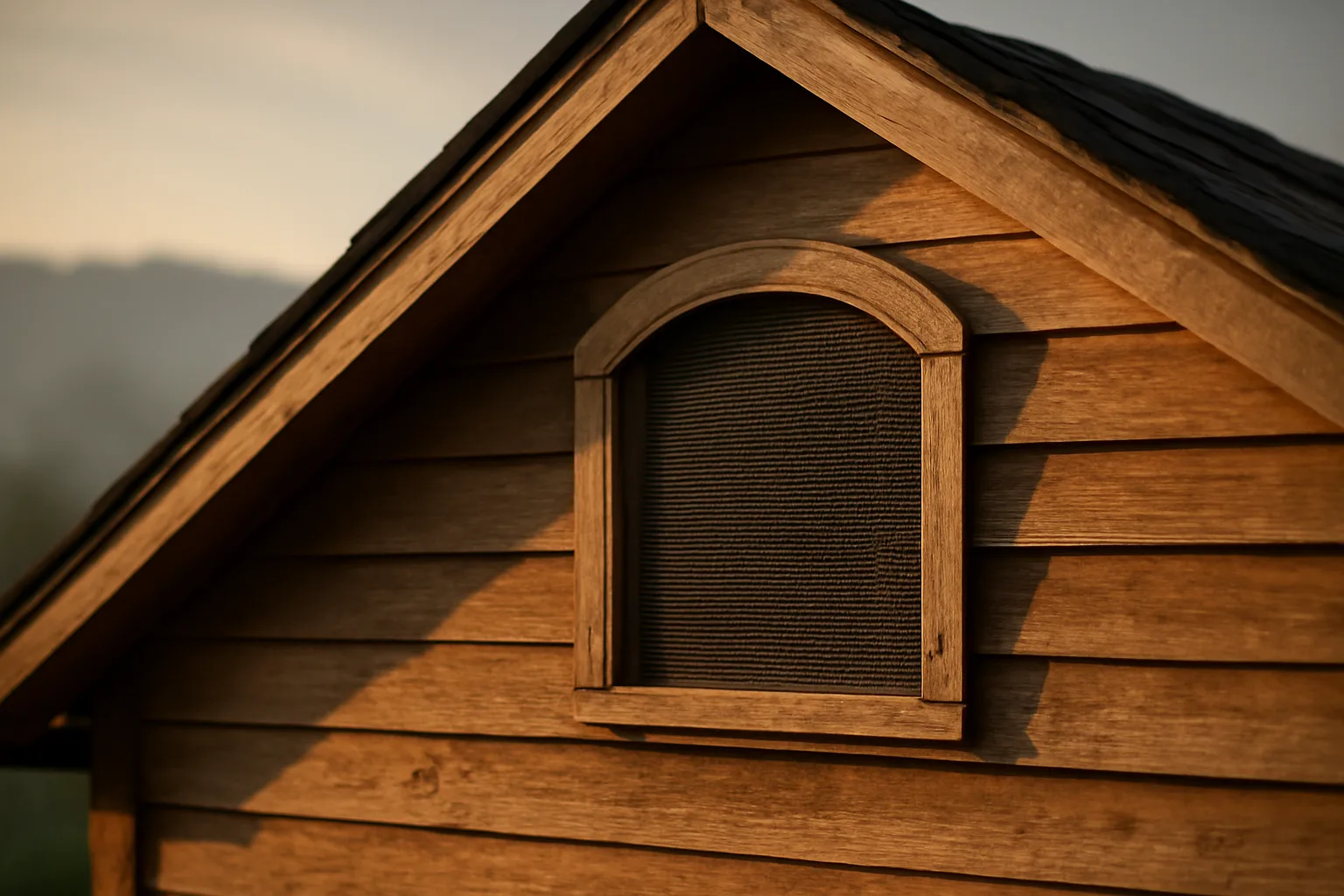
A fire resistant vent (also called an ember-resistant vent or WUI vent) is a vent cover built to keep flaming embers from blowing into an attic, crawlspace, or soffit during a wildfire. Regular vents are just open holes covered with plastic screen or nothing at all. Embers can travel more than a mile ahead of a fire front, and once one lands inside a vent opening, it can smolder in insulation or debris for hours before anyone notices. CAL FIRE's research on home ignition names embers and small flames as the primary way homes catch fire in wildfires, not the wall of flame itself. That's the whole reason vent design got serious regulatory attention starting in the 2000s. A house can survive direct radiant heat from a wildfire and still burn down because embers got into a vent, ignited attic insulation, and nobody was home to catch it. A true ember-resistant vent has 1/8-inch or smaller metal mesh (some codes require 1/16-inch), often paired with a baffle or intumescent material that swells shut when it gets hot enough to block flame passage even if the mesh partially melts. Cheap fixes like stapling standard window screen over an old vent don't meet code and don't perform the same in a real ember storm, because that mesh is usually too large a gauge and offers zero flame-blocking design.
what makes a vent "fire resistant" versus just a regular vent cover
| Standard vent screen | 1/4 inch or larger | None | $5-15 (not code compliant) |
|---|---|---|---|
| Code-minimum WUI mesh vent | 1/8 inch metal mesh | Blocks embers only | $25-60 |
| Listed SFM 12-7A-1 vent | 1/8 inch or finer | Tested ember/flame resistance | $50-100 |
| Intumescent flame-blocking vent | 1/8 inch + expanding seal | Closes opening under heat | $80-150 |
The difference comes down to three things: mesh size, flame-blocking design, and third-party testing. A regular vent cover keeps out bugs and rain. A fire resistant vent is engineered and tested to block embers and, in the best products, to physically close off airflow when temperatures spike. California's building code (Chapter 7A of Title 24, Part 2) requires vents in new construction and additions within Wildland-Urban Interface Fire Areas to either use 1/8-inch corrosion-resistant, non-combustible mesh, or to be listed products tested to the SFM 12-7A-1 standard for exterior wildfire exposure. [1] That standard, maintained by the California State Fire Marshal, involves subjecting a vent assembly to a controlled ember and flame exposure to confirm it doesn't let flame pass through or ignite material behind it. Some premium vent products add an intumescent strip, a material that expands when heated and physically seals the vent opening within seconds of flame contact. These cost more (often $80 to $150 per vent installed) but they're the closest thing to a passive fire door for your attic. Cheaper compliant options use just fine metal mesh without the intumescent seal, which blocks embers but not radiant heat as effectively. | Vent type | Mesh size | Flame-blocking action | Typical installed cost |
when does the california defensible space law go into effect
California's defensible space requirements aren't new; Public Resources Code 4291 has required a minimum 100 feet of defensible space clearance around homes in State Responsibility Areas since it was amended in 2005. [2] What's changing is enforcement and a newer companion rule: the "ember-resistant zone" (sometimes called Zone 0) within 5 feet of structures. CAL FIRE and the Board of Forestry have been developing Zone 0 regulations under SB 63 (2023) and earlier SB 1260 (2018) authority, which directs the agency to adopt ember-resistant zone regulations for homes in high and very high fire hazard severity zones. [3] As of this writing, CAL FIRE's official guidance describes Zone 0 as recommended defensible space best practice, with formal regulatory adoption and enforcement timelines still moving through the state's rulemaking process; homeowners should check CAL FIRE's Defensible Space page and their local fire district for the current enforcement date in their area, since implementation has been pushed back more than once. Don't wait for the enforcement date to act. Insurance non-renewal notices are already citing vent and ember-zone conditions well ahead of any formal mandate, because insurers use their own underwriting criteria, stricter than state minimums in many cases.
what fire safe home rules take effect in 2026
There isn't one single national "2026 fire safe homes" law. What's actually happening is a mix of state-level rulemaking and insurer requirements converging around the same year, which causes a lot of confusion for homeowners searching for a single answer. In California, the Board of Forestry and Fire Protection has been working through the ember-resistant Zone 0 rulemaking process, with the state's own materials describing a target implementation window that has shifted as the rule moves through public comment. [3] Check the Board of Forestry's current rulemaking page directly for the vent, roofing, and defensible space specifics that will apply to your property, because requirements differ by Fire Hazard Severity Zone designation and whether your home is new construction or existing. Separately, California's FAIR Plan and admitted insurers have been tightening their own inspection criteria under the state's Safer from Wildfires regulation (10 CCR 2644.9), which since 2022 requires insurers to give discounts for specific mitigation actions, including ember-resistant vents, when calculating wildfire risk scores. [4] That regulatory framework is why insurers are asking about vents now, regardless of when the building code catches up. Colorado, Oregon, and Arizona each have their own state fire marshal offices and, in some cases, local jurisdiction wildfire codes, but none currently has a statewide Chapter 7A-equivalent vent mandate as sweeping as California's. Check your state fire marshal's office and county building department directly; requirements vary block by block in the wildland-urban interface.
why won't people follow the defensible space law in california
Cost, confusion, and enforcement gaps are the three real reasons compliance lags, according to state agency assessments and independent research on wildfire mitigation adoption. Cost is the obvious one. Retrofitting vents, clearing 100 feet of vegetation, and hardening a home's exterior easily runs into the thousands of dollars for an average property, and CAL FIRE's own defensible space guidance acknowledges vegetation clearance has to happen annually, not once. For homeowners already facing non-renewal and higher premiums, finding another $3,000 to $10,000 for hardening work feels impossible. Confusion is real too. PRC 4291's 100-foot rule, local fire district ordinances, HOA rules, and insurer wildfire scoring criteria don't always agree on specifics, and homeowners genuinely don't know which standard applies to them or whether doing the work will actually restore their insurance eligibility. It might not; insurers weigh a lot more than vents and clearance when they score a property, including proximity to fuel, slope, and roof material. Enforcement is inconsistent. CAL FIRE and local fire agencies conduct defensible space inspections, but capacity varies widely by county, and a citation doesn't always follow a failed inspection on the first visit. Absent a hard deadline with teeth, some homeowners deprioritize the work, especially renters or owners of vacant/seasonal properties who aren't around to see the notice. None of that changes the actual risk. It just explains the gap between what the law says and what's on the ground.
how to prevent wildfires and forest fires from starting in the first place
Human activity causes the overwhelming majority of wildfires in the U.S. Roughly 85 percent of wildfires are human-caused, according to the U.S. Department of Agriculture's Forest Service. [5] That means most prevention is about behavior, more than home hardening. The basics that actually move the needle: never leave a campfire unattended and fully drown and stir ashes until cold before leaving, don't park or idle vehicles on dry grass (catalytic converters run over 500 degrees Fahrenheit and are a documented ignition source), avoid outdoor debris burning during red flag warnings, maintain trailer chains so they don't drag and spark on pavement, and keep any outdoor equipment with a spark arrestor code-compliant. Smokey Bear's "Only you can prevent wildfires" campaign, run by the Forest Service since 1944, exists because individual behavior really is most of the equation. Read more: [only you can prevent wildfires] At the property level, prevention blends into hardening: clearing dead vegetation, maintaining a lean and clean 5-foot zone around structures, and keeping gutters free of dry leaves and needles that catch embers. Ready.gov's wildfire preparedness page also recommends keeping a fire extinguisher and garden hose accessible and knowing your evacuation routes before fire season starts, not during it.
how to prepare for a wildfire before it starts
Preparation splits into three buckets: the house, the go-bag, and the plan. Skipping any one of them is how people end up making bad decisions under smoke and stress. For the house: install ember-resistant vents, clear the 5-foot zone immediately around the structure of anything combustible (mulch, wood piles, dry plants), and maintain the wider defensible space zones per your local fire district's requirement. Ready.gov specifically recommends creating a 30-foot "lean, clean and green" zone and removing dead vegetation within 100 feet where terrain allows. For the go-bag: Ready.gov's checklist includes water, medications, copies of insurance and identification documents, a battery-powered radio, and N95 masks for smoke exposure. Store copies of your home inventory and insurance documents somewhere other than the house itself, since a lot of people lose paper records in the same fire that takes the house. For the plan: know two evacuation routes out of your neighborhood (not one, since fire can block roads), agree on a family meeting point outside the immediate area, and sign up for your county's emergency alert system before fire season, not after a red flag warning is already posted. This is exactly the gap a lot of homeowners discover only after they get a non-renewal letter: they have the house hardening halfway done but no organized documentation to show an insurer or adjuster what mitigation work actually happened. A DefensibleHome $99 Wildfire Insurance Survival Kit is built around that specific problem: a structured way to log and photograph vent upgrades, defensible space clearing, and roof/siding work so you have insurer-ready documentation rather than a phone full of undated photos. We don't file claims for you; you build the record and send it to your insurer yourself.
is santa barbara safe from fire
No coastal California city is "safe" from wildfire risk, and Santa Barbara County has direct experience proving it. The Thomas Fire in December 2017 burned over 281,000 acres across Ventura and Santa Barbara counties and was, at the time, the largest wildfire in modern California history. [6] The fire's aftermath also triggered the Montecito debris flow in January 2018, which killed 23 people, a reminder that wildfire risk compounds into secondary hazards like mudslides on burned hillsides. CAL FIRE's Fire Hazard Severity Zone maps classify significant portions of unincorporated Santa Barbara County, especially foothill and canyon communities like Montecito, Mission Canyon, and the Riviera area, as Very High or High hazard zones. [7] Homes directly in the city's flat downtown core face lower direct wildfire exposure than hillside properties, but embers and smoke can affect a much wider area than the fire perimeter itself. If you own property anywhere in Santa Barbara County's wildland-urban interface, check your specific parcel against CAL FIRE's FHSZ viewer rather than assuming city limits offer protection. Insurance non-renewals in the area have followed the same pattern as the rest of California's WUI: insurers pulling back regardless of a specific home's individual hardening, based on zip-code-level risk modeling.
how to check if your existing vents meet current fire codes
Look for a stamp or label on the vent itself first. Vents tested and listed to the State Fire Marshal's SFM 12-7A-1 standard typically carry a label from the testing lab (often Intertek or UL) referencing that standard number. [1] If you can't find any labeling and the vent looks original to a home built before the mid-2000s, assume it doesn't comply. Second, physically inspect the mesh. Hold a ruler or coin against the screen. Standard 1/4-inch hardware cloth or window screen (roughly 18x16 mesh, much finer than 1/4 inch but still not code-rated) doesn't meet the 1/8-inch ember-resistant standard used in Chapter 7A construction. If you can fit a pencil tip through easily, it's not compliant. Third, check every vent type on the house, more than the obvious attic vents. Foundation and crawlspace vents, soffit vents, ridge vents, and gable end vents all need to meet the same standard in a Chapter 7A jurisdiction. It's common for a home to have compliant attic vents but old, unscreened crawlspace vents that nobody thought to check. If you're unsure, a local licensed contractor familiar with WUI retrofit work or your county building department can confirm compliance status. Some counties, including parts of California under AB 38 disclosure requirements for homes sold in high fire hazard zones, now require sellers to disclose vent and defensible space compliance status at time of sale. [8]
what does it cost to retrofit vents on an existing home
Most homes have somewhere between 6 and 15 vent openings depending on size and roof design (attic, gable, soffit, foundation, and ridge vents combined). At $50 to $150 installed per vent depending on type and accessibility, a full-house retrofit typically runs $500 to $2,000 for materials and labor, though homes with hard-to-reach foundation vents or extensive soffit venting can run higher. That's a real expense, but it's small compared to the cost of losing insurance coverage entirely or facing a total loss. It's also one of the cheaper hardening line items compared to a full roof replacement (often $15,000 to $30,000+ for a Class A assembly) or exterior siding replacement. Some insurers and state programs offer partial reimbursement or grant programs for wildfire hardening, though availability changes year to year and by county; check with your county's office of emergency services or your insurer directly rather than assuming a program exists. California's Wildfire Mitigation Financial Assistance Program has, in past cycles, funded portions of vent and roof retrofit costs for qualifying low-income homeowners, but funding rounds open and close on their own schedule.
Frequently asked questions
When does the California defensible space law go into effect?
The core 100-foot defensible space requirement (Public Resources Code 4291) has been active since a 2005 amendment; it's not new. What's still moving through rulemaking is the ember-resistant Zone 0 requirement (5 feet around structures), authorized by SB 63 and SB 1260, with CAL FIRE and the Board of Forestry setting the enforcement timeline. Check CAL FIRE's defensible space page for the current status.
Why won't people follow the defensible space law in California?
Cost, confusion between overlapping state, local, and insurer rules, and inconsistent enforcement are the main reasons. Vegetation clearance also has to be redone annually, which adds ongoing expense. CAL FIRE and independent reviews of mitigation adoption cite affordability as the single biggest barrier for lower-income and elderly homeowners.
How to prevent wildfires from starting?
About 85% of wildfires are human-caused, per the U.S. Forest Service. Prevention means fully extinguishing campfires, avoiding parking on dry grass, not burning debris during red flag warnings, and keeping equipment spark-arrestor compliant. At the property level, clearing dead vegetation and maintaining defensible space zones reduces the odds a spark near your home becomes a structure fire.
How to prepare for a wildfire?
Harden your home (ember-resistant vents, cleared 5-foot zone, Class A roof), pack a go-bag with water, medications, and copies of ID and insurance documents, and set an evacuation plan with two routes and a family meeting point. Ready.gov's wildfire checklist covers the full list; do this before fire season starts, not during a red flag warning.
How to prevent forest fires?
Same behavioral rules as wildfire prevention generally: fully drown and stir out campfires, don't drive or park on dry vegetation, avoid outdoor burning in dry, windy conditions, and report unattended fires immediately. Land management agencies also use prescribed burns and fuel reduction thinning to lower the fuel load that lets small ignitions become large fires.
How to avoid forest fires when recreating outdoors?
Check local fire restrictions before you go, since many public lands ban campfires entirely during high-risk periods. Use a camp stove instead of an open fire where allowed, never leave any flame unattended, and fully extinguish (water, stir, feel for heat) before leaving. Avoid shooting, welding, or using power equipment in dry grass, all documented ignition sources.
What fire safe home rules take effect in 2026?
There's no single nationwide 2026 rule. California's ember-resistant Zone 0 regulation has moved through Board of Forestry rulemaking with shifting target dates; check the Board's current rulemaking page for your zone's actual timeline. Separately, insurers are already requiring vent and defensible space upgrades under California's 2022 Safer from Wildfires discount regulation, regardless of the building code timeline.
Is Santa Barbara safe from fire?
No part of Santa Barbara County's wildland-urban interface is fire-safe by default. The 2017 Thomas Fire burned over 281,000 acres across Santa Barbara and Ventura counties and led to a deadly Montecito debris flow in January 2018. CAL FIRE classifies large parts of the county's foothill communities as High or Very High Fire Hazard Severity Zones.
How can we prevent forest fires as a community?
Community-level prevention combines individual behavior (extinguishing fires fully, avoiding ignition sources) with coordinated defensible space work, since embers travel between properties. Local fire-safe councils, HOA-organized clearing days, and consistent enforcement of local burn bans during red flag conditions all reduce the chance one property's neglect becomes a neighborhood fire.
What mesh size is required for a fire resistant vent in California?
Chapter 7A of California's Building Code requires vents in Wildland-Urban Interface Fire Areas to use 1/8-inch or smaller corrosion-resistant, non-combustible mesh, or be a listed product tested to the State Fire Marshal's SFM 12-7A-1 standard for wildfire exposure resistance.
Do fire resistant vents actually stop a house from burning down?
They significantly reduce one major ignition pathway (embers entering attics and crawlspaces) but they're not a guarantee. CAL FIRE's home ignition research identifies embers and small flame contact as the primary way homes ignite in wildfires, which is why vents matter, but roofing, siding, and defensible space all have to work together.
Will installing fire resistant vents lower my insurance premium?
It might help, but it's not guaranteed. California's Safer from Wildfires regulation (10 CCR 2644.9) requires insurers to offer some discount recognition for wildfire mitigation actions including ember-resistant vents, but the size of any discount and whether it restores non-renewed coverage depends on the individual insurer's underwriting rules.
How do I know if my home's vents are already ember-resistant?
Check for a manufacturer's label referencing SFM 12-7A-1 testing. If there's no label, measure the mesh; anything larger than 1/8-inch openings doesn't meet code. Check every vent type on the house, including foundation, soffit, gable, and ridge vents, since homes are frequently compliant in one spot and not another.
Sources
- California State Fire Marshal, SFM 12-7A-1 Standard reference (Title 24, Part 2, Chapter 7A): Vents in WUI Fire Areas must use 1/8-inch or smaller mesh or be listed/tested to SFM 12-7A-1
- California Legislative Information, Public Resources Code Section 4291: 100 feet of defensible space clearance has been required around structures in State Responsibility Areas since the 2005 amendment
- California State Senate, SB-63 Fire prevention: wildfire risk: ember-resistant zones: SB 63 directs CAL FIRE/Board of Forestry to establish ember-resistant Zone 0 regulations
- California Department of Insurance, 10 CCR Section 2644.9 (Safer from Wildfires): Insurers must recognize wildfire mitigation actions including ember-resistant vents in wildfire risk scoring since 2022
- USDA Forest Service, Wildfire Causes and Evaluation: Approximately 85 percent of wildfires in the U.S. are human-caused
- CAL FIRE, Thomas Fire incident archive: The 2017 Thomas Fire burned over 281,000 acres across Ventura and Santa Barbara counties
- CAL FIRE, Fire Hazard Severity Zone Maps: Significant portions of unincorporated Santa Barbara County are classified as High or Very High Fire Hazard Severity Zones
- California Legislative Information, Assembly Bill 38 (2019) Wildfire Disclosure: Homes sold in high fire hazard zones may be subject to disclosure requirements related to defensible space and home hardening compliance