Last updated 2026-07-25
TL;DR
A "fire retardant home" uses non-combustible roofing, siding, and vents plus a cleared perimeter to resist ember ignition, the leading cause of home loss in wildfires. No material makes a house fireproof. California's Zone 0 ember-resistant zone rule, delayed for years, is now expected to take effect around 2026 for many parcels once the State Board of Forestry finalizes regulations.
what does a "fire retardant home" actually mean
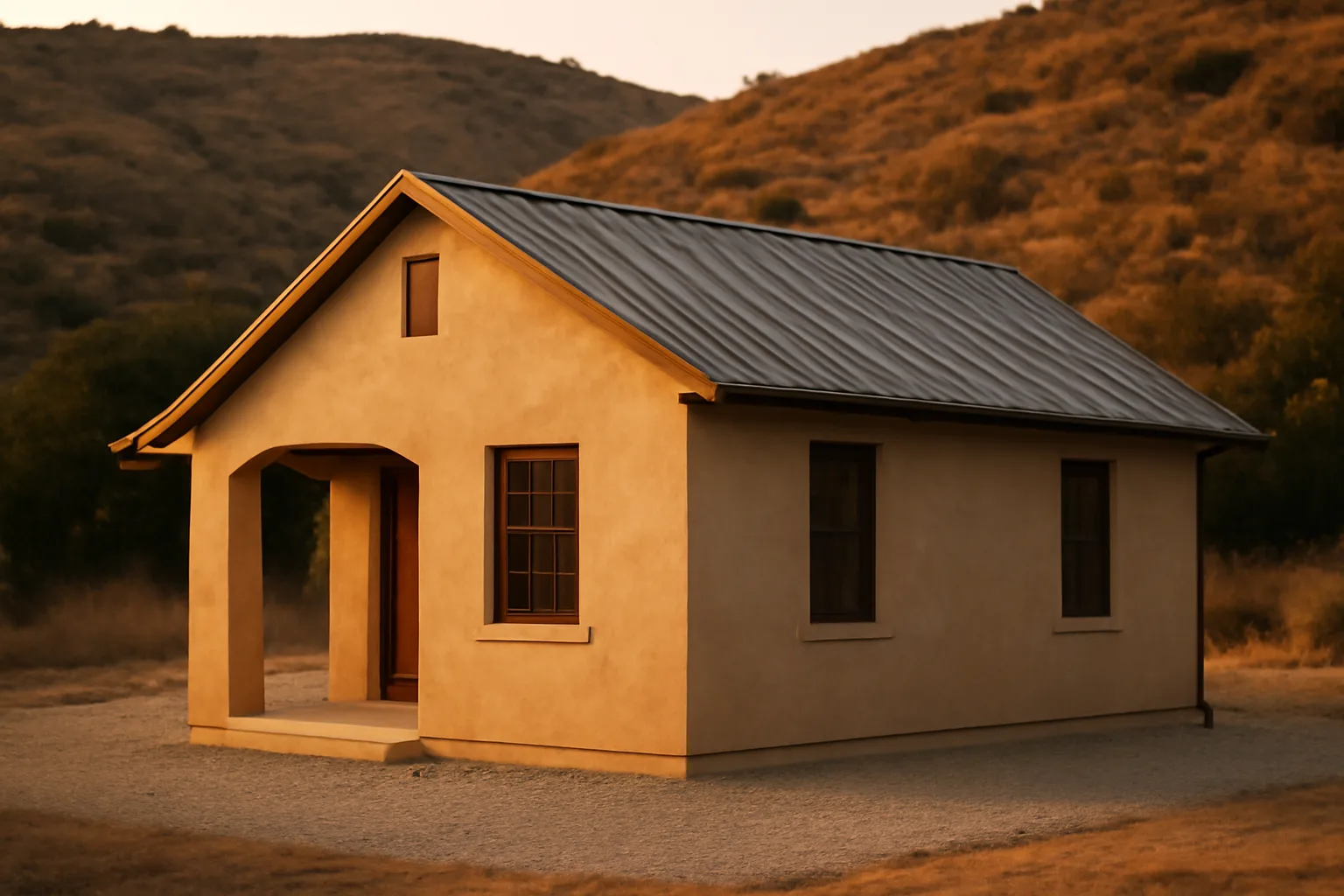
There's no legal or building-code term called a "fire retardant home." What people mean is a house built and maintained to resist ignition from embers, radiant heat, and direct flame contact during a wildfire. That's a combination of materials (Class A roofing, ignition-resistant siding, tempered dual-pane windows, ember-blocking vents) and space (a cleared, non-combustible zone right against the structure). CAL FIRE's research and the broader wildfire science community are blunt about this: embers, not the flame front, cause most home losses. The Insurance Institute for Business & Home Safety (IBHS) and CAL FIRE both point to embers landing on roofs, in gutters, under decks, and against siding as the dominant ignition pathway in the wildland-urban interface. A house can survive a fire front passing a quarter mile away and still burn down three hours later because a single ember got into a vent or landed on dry mulch against the foundation. So when someone asks "how do I make my home fire retardant," the honest answer is: you can't make it fireproof, but you can make it dramatically harder to ignite. That's the whole game. For a broader walkthrough of which upgrades matter most, see defensible space fundamentals and how they interact with home hardening.
which building materials actually resist fire, and which are marketing
Class A roofing (asphalt shingle, metal, tile, or slate) is the single highest-value material upgrade, because roofs catch the most embers. CAL FIRE's home hardening guidance lists Class A assemblies as a baseline requirement in its recommended standards for the wildland-urban interface. For siding, ignition-resistant materials include stucco, fiber cement board (like HardiePlank), and treated or naturally fire-resistant wood in some jurisdictions. Vinyl siding is a bad idea in fire country. It melts and deforms well before it flames, and once it deforms it exposes the sheathing underneath to direct flame. Windows matter more than people think. Single-pane glass can crack from radiant heat alone, long before flame touches it, creating an opening for embers and fire to enter the structure. Dual-pane windows with at least one tempered pane hold up far better. CAL FIRE recommends dual-pane windows with the exterior pane tempered as part of standard hardening advice. Vents are the sleeper issue. Standard attic and foundation vents have quarter-inch mesh, which does nothing to stop embers. Ember-resistant vents (sometimes labeled WUI-rated or meeting the 1/8-inch mesh plus baffle design) are cheap relative to everything else on this list, usually $30 to $150 per vent installed, and they close one of the most common entry points for house fires. If you want to see how this plays out when prevention fails, house fire and fire at a house cover the mechanics of structure ignition and spread in more detail. What's mostly marketing: spray-on "fire retardant" coatings for the exterior of an existing home, sold direct to consumers. Some have real Underwriters Laboratories testing behind them for specific applications (mostly landscaping and temporary structure protection), but there's no consumer product that turns a vinyl-sided house into a hardened one. If a product claims to make your whole house "fireproof," that's a red flag, not a selling point.
what fire safe home rules take effect in 2026
| Zone 0 (ember-resistant) | 0-5 ft | No combustibles, non-combustible surface | In rulemaking, expected ~2026 | |
|---|---|---|---|---|
| Zone 1 | 5-30 ft | Lean, clean, low fuel volume | Existing law, PRC 4291 | |
| Zone 2 | 30-100 ft | Reduced fuel continuity, spacing | Existing law, PRC 4291 | This table reflects the general structure under California Public Resources Code 4291 plus the pending Zone 0 addition; your local fire district may layer additional requirements on top. |
California's long-delayed "Zone 0" ember-resistant zone requirement is the big one. State law (Assembly Bill 3074, chaptered in 2020) directs the State Board of Forestry and Fire Protection to adopt regulations requiring an ember-resistant zone within five feet of structures in the state's Fire Hazard Severity Zones and Wildland-Urban Interface areas [1]. The Board has been working through the rulemaking process for years. As of the most recent public timeline, draft regulations were expected to move toward adoption with compliance dates likely landing around 2026 for existing homes, though exact enforcement dates depend on final rulemaking and vary by whether you're in a state responsibility area or a local one [1] [2]. Don't take a specific date as locked in. This is a guided fill-in for a reason: check your county's Fire Hazard Severity Zone map and your local fire district's adopted timeline before assuming a rule applies to you on a specific calendar date. CAL FIRE's Fire Hazard Severity Zone maps are the starting point [3]. What Zone 0 actually requires, in the draft framework: no combustible mulch, no dry vegetation, no stored firewood, no combustible furniture or fencing attachments within 5 feet of the structure. Gravel, pavers, and non-combustible hardscape are the compliant replacements. This is a much stricter standard than the existing 100-foot defensible space law, and it's the zone most homeowners get wrong because it's also the zone people love to decorate with bark mulch and potted plants right next to the front door. Fire Hazard Severity Zone rule comparison | Zone | Distance from structure | Core requirement | Status as of 2025 |
when does the california defensible space law go into effect
California's core defensible space law isn't new. Public Resources Code Section 4291 has required 100 feet of defensible space clearance around structures in State Responsibility Areas since it was substantially amended in 2005, extending the prior 30-foot requirement to 100 feet [4]. So if you're asking when it "goes into effect," the honest answer is: it already has, for most of the state's higher-risk areas, and has for two decades. What's actually new and still rolling out is the Zone 0 ember-resistant zone rule described above, plus updated enforcement mechanisms. Some counties and fire districts have also adopted local ordinances stricter than the state minimum, so "when does it go into effect" really depends on which layer of law you're asking about: state PRC 4291 (already active), your county's Fire Hazard Severity Zone designation (check CAL FIRE's maps [3]), and your local fire district's specific enforcement calendar (guided fill-in: contact your local fire department or district for their current inspection cycle). CAL FIRE's own defensible space page states the requirement plainly: "California law requires 100 feet of defensible space clearance around homes and structures" in State Responsibility Areas. That's not a future date. That's current law that many homeowners are only now hearing about because their insurer just sent a non-renewal letter tied to a defensible space inspection failure.
why won't people follow the defensible space law in california
why don't more people follow the defensible space law
Cost, labor, and disbelief are the three real reasons, and none of them are irrational on their face. Cost is the most cited barrier. Clearing 100 feet of defensible space on a sloped, brush-heavy lot can run anywhere from a few hundred dollars for a small flat lot with a chainsaw and a weekend, to $3,000-$10,000+ for larger or steep parcels requiring contractors, chipping, and disposal. There's no statewide subsidy that covers most of this cost for most homeowners, though some counties run chipper day programs or grant-funded assistance for qualifying residents. If you're in Washington State, similar cost-sharing programs exist through DNR contracts, covered in our guide to wildfire defensible space clearing contracts washington state dnr. Labor and time are real constraints too. A 100-foot radius around even a modest home is a lot of ground, and doing it right (more than cutting, and hauling and disposing of the debris so it doesn't become its own fuel pile) takes real hours that a lot of working homeowners don't have on a random Saturday. Disbelief is a factor that doesn't get discussed enough. People who've lived somewhere for 20 or 30 years without a major fire near their home develop a reasonable-seeming, if statistically wrong, sense that it won't happen to them. That's a known pattern in disaster preparedness research generally: normalcy bias causes people to underweight low-frequency, high-consequence events until they've personally witnessed one nearby. Enforcement gaps matter as well. Inspections happen, but not every property gets checked every year, and penalties for non-compliance historically haven't been severe enough to force action ahead of an actual notice. That's changing as insurers, more than fire departments, start treating defensible space compliance as a condition of coverage. A failed inspection now often means a non-renewal letter, which is a much sharper incentive than a fire code citation ever was.
how do you actually prepare for a wildfire, step by step
Start outside-in: the further you get from your house, the less precise you need to be, but the closer in, the more it matters. Zone 0 (0-5 ft): clear all combustible mulch, dead plants, stored wood, and flammable outdoor furniture right against the structure. Replace with gravel, rock, or pavers. This is the newest and most overlooked zone. Zone 1 (5-30 ft): remove dead vegetation, space out shrubs, keep grass mowed short, trim tree limbs up 6-10 feet from the ground so fire can't ladder from grass to canopy. See our full breakdown at fire safe landscaping california next to house for plant-by-plant guidance. Zone 2 (30-100 ft): thin trees so canopies aren't touching, remove fallen branches and needle litter, break up continuous fuel beds. On the house itself: clean gutters and roof valleys of leaf litter (a shockingly common ignition point), install ember-resistant vents, check that your roof is Class A rated, and confirm your address is visible from the street for responders. Store a go-bag with documents, medication, and irreplaceable items somewhere you can grab it in under two minutes, per Ready.gov's wildfire action guidance. Document everything before a fire ever threatens you. Photos and video of your home's exterior, your defensible space work, receipts for hardening upgrades. This isn't just fire prep, it's insurance prep. If your carrier ever questions your mitigation status, or if you need to file a claim after a fire, dated documentation is the difference between a fast resolution and a drawn-out fight. This is the one spot where our $99 Wildfire Insurance Survival Kit actually earns its price: it's a structured way to organize that documentation into something an adjuster or underwriter can actually use, before you're standing in front of a burned lot trying to remember what your kitchen looked like. We don't file claims or negotiate with insurers on your behalf; you send your own documentation, we just help you build it right.
how do you prevent wildfires and forest fires from starting in the first place
Most wildfires in the US are human-caused, not lightning-caused. Research from the University of Colorado Boulder found that human activity accounts for roughly 84% of wildfires and 44% of burned area in the contiguous United States between 1992 and 2012 [5]. That means prevention is mostly about behavior, not landscaping. The big controllable causes: unattended campfires, debris burning on windy or dry days, dragging trailer chains that spark on pavement, mowing dry grass with metal blades in the afternoon heat, fireworks, and downed or arcing power lines. Ready.gov and CAL FIRE both push the same basic behavioral rules: never leave a fire unattended, drown campfires completely (more than douse, stir the ashes and check for heat), avoid outdoor burning during red flag warnings, and keep vehicles off dry grass. On defensible space as fire prevention rather than just fire survival: a cleared, well-maintained property doesn't just protect your house from an approaching fire, it reduces the odds that a spark on your own property (mower blade, cigarette, grill) turns into a spreading fire in the first place. That's the same logic behind only you can prevent wildfires, the decades-old Smokey Bear message that turns out to be statistically accurate: individual behavior is the dominant variable. At a community level, fuel breaks, prescribed burns, and utility infrastructure hardening (undergrounding lines, faster shutoff protocols during high-wind events) matter more than any one homeowner's actions. But since you can't control your utility's maintenance schedule, the highest-leverage thing you personally control is your own ignition sources and your own defensible space.
is santa barbara safe from fire
No coastal California city is "safe" from fire risk in the way that phrase implies, and Santa Barbara has direct, recent history proving it. The Thomas Fire in December 2017 burned into Santa Barbara County and was, at the time, the largest wildfire in modern California history by acreage, and it was followed weeks later by the Montecito debris flow that killed 23 people when rain hit the burn scar [6]. The Jesusita Fire (2009) and Tea Fire (2008) both burned into the Santa Barbara foothills and destroyed homes in neighborhoods that residents considered low-risk. Santa Barbara's geography is part of the problem: steep foothill terrain, chaparral vegetation that's adapted to burn, and Santa Ana/sundowner wind events that can push fire downslope into dense neighborhoods fast. CAL FIRE's Fire Hazard Severity Zone maps classify large portions of the Santa Barbara foothills and adjacent unincorporated areas as Very High severity zones [3]. So the honest framing isn't "is Santa Barbara safe," it's "which specific parcel, and how hardened is the specific structure." A home in the flats near the ocean with irrigated landscaping faces meaningfully lower risk than a home tucked into a canyon in the foothills with native chaparral against the fence line, even though both have a Santa Barbara address. If you're evaluating a property there or anywhere in a similar interface zone, pull the parcel's specific Fire Hazard Severity Zone designation rather than relying on the city's general reputation.
what fire safe standards for homes take effect in 2026
The most consequential 2026-adjacent change is the Zone 0 ember-resistant zone rule discussed above, which the California Board of Forestry and Fire Protection has been developing under the mandate of AB 3074 [1]. Expect the final regulation to specify the 5-foot non-combustible perimeter, likely with phased compliance windows that differ for new construction versus existing homes, and likely tied to Fire Hazard Severity Zone designation rather than a single statewide date. Separately, California's building code (Chapter 7A of the California Building Code, governing materials and construction in Wildland-Urban Interface Fire Areas) gets revised on the state's regular 3-year code cycle, and local jurisdictions can adopt amendments on their own schedule. If you're building new or doing a major remodel in a WUI-designated area, Chapter 7A compliance (Class A roof, ignition-resistant siding, dual-pane tempered windows, ember-resistant vents) is already mandatory, not a 2026 future item . Outside California, similar momentum exists but on different timelines. Oregon's statewide wildfire risk map and defensible space code work (under Senate Bill 762, passed 2021) has had its own rocky rollout, with the original map withdrawn and revised after public pushback; check the Oregon Department of Forestry's current status page for where that stands in your county . Colorado and Arizona don't have a single statewide Zone 0-style mandate as of this writing; rules are set more heavily at the county and fire-district level, which is exactly why this article keeps pointing you back to your local fire district for the specific compliance date that applies to your address.
Frequently asked questions
When does the California defensible space law go into effect?
The core 100-foot defensible space requirement (Public Resources Code 4291) has been active since 2005. What's newly rolling out is the Zone 0 ember-resistant zone rule, which the Board of Forestry is finalizing with compliance expected to phase in around 2026, varying by Fire Hazard Severity Zone and local jurisdiction.
Why won't people follow the defensible space law in California?
Cost of clearing (often $500-$10,000+ depending on lot size and slope), the time and labor required, normalcy bias after years without a nearby fire, and inconsistent enforcement all contribute. That's changing fast as insurers now treat defensible space compliance as a condition of keeping coverage.
How do you prevent wildfires?
Since roughly 84% of U.S. wildfires are human-caused, the highest-leverage prevention is behavioral: fully drown campfires, avoid outdoor burning on windy or red-flag days, keep vehicles off dry grass, maintain equipment that can spark, and clear defensible space so a small spark can't spread across your property.
How do you prepare for a wildfire?
Clear defensible space in zones out to 100 feet, harden your home with Class A roofing and ember-resistant vents, clean gutters and roof valleys, pack a go-bag with documents and medication, and photograph your property's condition and upgrades before a fire ever threatens, per Ready.gov guidance.
How do you prevent forest fires?
Follow local burn restrictions and red flag warnings, never leave campfires unattended, extinguish cigarettes fully, avoid dragging metal chains or mowing dry grass in the heat of the day, and report unauthorized burning. Most forest fires start from preventable human activity, not lightning.
How do you avoid forest fires when hiking or camping?
Check current fire restrictions before you go, use only designated fire rings, keep campfires small, never leave a fire unattended even briefly, and drown and stir ashes until they're cool to the touch. Avoid open flame entirely during red flag warning days.
How do you prepare for forest fires as a nearby homeowner?
Same fundamentals as wildfire prep generally: 100 feet of defensible space, ember-resistant home features (Class A roof, mesh vents, dual-pane windows), a packed go-bag, and a family evacuation plan with two routes out, since forest fires can cut off primary roads fast.
What fire safe standards for homes take effect in 2026?
California's Zone 0 ember-resistant zone rule, requiring a non-combustible 5-foot perimeter around structures, is expected to phase in around 2026 as the State Board of Forestry finalizes rulemaking under AB 3074. Exact dates vary by Fire Hazard Severity Zone; check your county's current status before assuming a fixed date applies.
Is Santa Barbara safe from fire?
No California foothill community is fully safe from fire. Santa Barbara has direct history with the 2017 Thomas Fire, the 2009 Jesusita Fire, and the 2008 Tea Fire. Risk varies enormously by specific parcel; foothill and canyon properties in Very High Fire Hazard Severity Zones face far greater risk than flat, coastal-adjacent lots.
How can we prevent forest fires as a community?
Beyond individual behavior, community-level prevention relies on fuel breaks, prescribed burns, utility infrastructure hardening (undergrounding power lines, faster shutoffs during high wind), and consistent enforcement of local burn bans. Individual defensible space work still matters because it reduces the odds a spark on any one property becomes a spreading fire.
What makes a home actually fire retardant instead of just fire resistant marketing?
Real ignition resistance comes from tested, code-referenced materials: Class A roofing, fiber cement or stucco siding, dual-pane windows with a tempered exterior pane, and 1/8-inch ember-resistant vents, combined with a cleared, non-combustible zone at the foundation. Spray-on consumer coatings that claim to "fireproof" a whole house are not equivalent to these tested assemblies.
Does defensible space compliance actually affect my insurance coverage?
Increasingly, yes. Many California insurers now request proof of defensible space compliance and home hardening before renewal, and a failed inspection is a commonly cited reason for non-renewal letters. This isn't guaranteed to restore or guarantee coverage, but documented compliance is something you can show an underwriter or file with your own records.
Sources
- California Legislative Information, Assembly Bill 3074 (2020): AB 3074 directs the Board of Forestry to adopt an ember-resistant zone (Zone 0) regulation within 5 feet of structures
- California Board of Forestry and Fire Protection, Zone 0 rulemaking status: Zone 0 ember-resistant zone regulations are in active rulemaking with expected phased compliance dates
- CAL FIRE, Fire Hazard Severity Zone Maps: Fire Hazard Severity Zone maps classify parcel-level wildfire risk including areas in Santa Barbara County
- California Public Resources Code Section 4291: State law requires 100 feet of defensible space clearance around structures in State Responsibility Areas
- Balch et al., Proceedings of the National Academy of Sciences (2017): Human-caused ignitions account for approximately 84% of wildfires and 44% of burned area in the contiguous US, 1992-2012
- California Building Standards Commission, California Building Code Chapter 7A: Chapter 7A of the California Building Code mandates ignition-resistant construction materials in Wildland-Urban Interface Fire Areas