Last updated 2026-07-25
TL;DR
Home Depot sells Type X (1-hour, 5/8 inch) and Type C fire-resistant drywall, both useful for wildfire hardening, but neither one alone satisfies California's Chapter 7A ignition-resistant construction standard. You need the whole wall assembly tested and listed, more than the board. Check your local fire district's building code before you buy.
What is fire-resistant drywall and does Home Depot actually sell it?
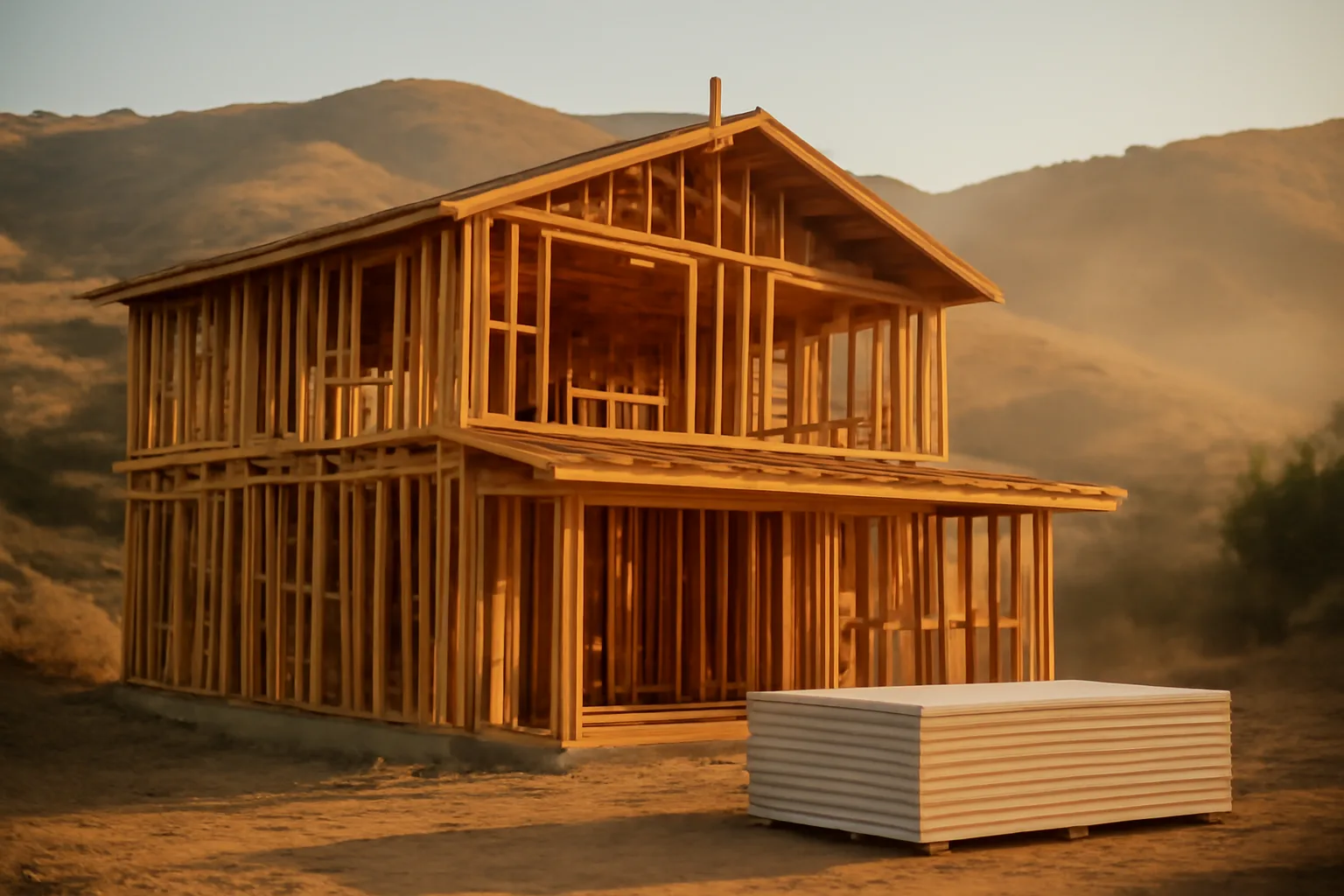
Yes, Home Depot carries fire-resistant drywall, usually labeled Type X or Type C. Type X is 5/8 inch thick and has added glass fiber reinforcement that gives it roughly a one-hour fire rating in a tested wall assembly [1]. Type C is a newer formulation with even more glass fiber and sometimes vermiculite, and it holds together longer under direct flame, which is why it shows up in garage ceilings and furnace rooms. You'll find these under brand names like USG Sheetrock Fire-Resistant, National Gypsum's ProForm, and CertainTeed's ProRoc, usually in 4x8 or 4x12 sheets. Prices at Home Depot for standard 5/8 inch Type X run somewhere in the $15 to $25 per sheet range as of 2024-2025, depending on your market and whether it's a lighter 'ultralight' formulation. Here's the catch nobody tells you at the store: buying Type X drywall does not automatically make your house wildfire-compliant. Fire rating in drywall refers to how it performs in a standardized fire test inside a wall or ceiling assembly, measured against ASTM E119, the standard fire test method [2]. That's a structural fire test, meant to slow fire spread between rooms or floors during a house fire. It's a different test than what California's wildfire building code requires for exterior assemblies exposed to embers and radiant heat.
Does Type X drywall meet California's Chapter 7A wildfire code?
Not by itself. California's Chapter 7A of the Building Code covers 'materials and construction methods for exterior wildfire exposure' in Wildland-Urban Interface Fire Areas, and it requires exterior wall assemblies to be tested and listed under standards like SFM 12-7A-1 (ignition resistant material) or to use approved noncombustible or ignition-resistant assemblies [3]. A sheet of Type X gypsum board on its own doesn't carry that listing. What matters is the full assembly: siding, sheathing, house wrap, framing, and yes, sometimes drywall as interior protection, tested together. Where Type X drywall genuinely helps under Chapter 7A is inside attached garages and on the garage side of a shared wall with living space, because those still need standard fire-separation ratings regardless of wildfire exposure. It also helps on eave undersides in some assemblies and in specific soffit and rated-wall configurations, but you need the specific listing report, more than the box label, to know if your assembly qualifies. If you're rebuilding or remodeling in a Wildland-Urban Interface zone, ask your building department for the Chapter 7A checklist before you buy materials. Requirements differ by county fire authority even within California, so what passes in Butte County may need documentation differently than in San Diego County. This is exactly the kind of thing worth confirming with your local fire district's inspector before you spend money on materials.
When does the California defensible space law go into effect?
California's defensible space requirement under Public Resources Code 4291 has been in effect for decades, requiring 100 feet of defensible space clearance (or to the property line, whichever is less) around structures in State Responsibility Areas and some Local Responsibility Areas designated as Very High Fire Hazard Severity Zones [4]. That's not new. What is newer, and still rolling out, is the ember-resistant "Zone 0" rule. Assembly Bill 3074, signed in 2020, directed the Board of Forestry and Fire Protection to develop regulations for a 0 to 5 foot ember-resistant zone immediately around structures [5]. As of early 2025, CAL FIRE and the Board of Forestry have been finalizing that Zone 0 regulation, with an original target of January 1, 2023 that slipped, and more recent guidance pointing toward late 2025 or 2026 for formal adoption and enforcement in Very High Fire Hazard Severity Zones. Check CAL FIRE's defensible space page directly for the current status, because this date has moved before and could move again [6]. Don't wait for the regulation to become official before you act. Insurers are already scoring homes on ember-zone risk today, and the FAIR Plan and private carriers use similar underwriting criteria in the meantime.
Why won't people follow the defensible space law in California?
Cost, labor, and confusion are the three real reasons, not defiance. Clearing 100 feet of vegetation on a hillside lot can run into the thousands of dollars if you hire a crew, and many homeowners, especially retirees on fixed incomes, simply can't afford it every year. Vegetation regrows, so this isn't a one-time job, it's an annual maintenance cost. There's also a real gap in enforcement. CAL FIRE and local fire departments conduct defensible space inspections, but capacity is limited relative to the number of parcels in Very High Fire Hazard Severity Zones, so violations often go unaddressed for years unless a neighbor complains or an inspector happens by. Some homeowners also misunderstand the rule, thinking it means clearing to bare dirt, which isn't required and actually increases erosion risk. Zone 1 (30 feet from structures) requires removing dead vegetation and spacing live plants, not scorched earth. Zone 2 (30 to 100 feet) allows more natural landscape with reduced fuel continuity. Clear guidance on what's actually required, versus rumor, would probably fix a good chunk of the noncompliance.
How do you prevent wildfires from starting near your home?
Most wildfires near homes don't start from lightning, they start from equipment, debris burning, vehicles, and power lines. Ready.gov's wildfire prevention guidance points to keeping flammable materials away from structures, maintaining equipment (mowers, chainsaws, grills) so they don't throw sparks, and never burning debris on windy or Red Flag Warning days. On your own property, the highest-yield actions are: clear dead leaves and needles from gutters and roof valleys, keep a 5-foot noncombustible zone right against the foundation, store firewood at least 30 feet from structures, and don't let dry grass touch fences or decks. None of this requires a permit or a contractor, just a weekend and a rake. If you live near public land, report unattended campfires and downed power lines immediately rather than assuming someone else will. CAL FIRE's "One Less Spark" campaign specifically targets equipment-caused ignitions, which account for a meaningful share of wildfires during peak season [7].
How do you prepare for a wildfire before it happens?
Preparation splits into three buckets: home hardening, defensible space, and an evacuation plan with documentation ready to go. Ready.gov recommends having a go-bag, a family communication plan, and multiple evacuation routes practiced in advance, because you may not get more than a few minutes of warning. On the home side, harden the parts most vulnerable to embers first: vents (use 1/8 inch metal mesh, ember-resistant vents are better), roof edges, and anything within 5 feet of the house. Embers, not direct flame contact, cause most home losses in wildfires, according to research from the Insurance Institute for Business & Home Safety. Documentation matters more than people expect. Before a fire, photograph every room, your roof, attic, and defensible space work, and keep receipts for hardening projects. If you're ever filing a claim or responding to a nonrenewal notice, having dated, organized proof of what you did before the fire changes the conversation. This is the exact gap our $99 Wildfire Insurance Survival Kit is built to close: a structured way to document your home and mitigation work before you need it, not after. Get it at /survival-kit-builder. We don't file claims or handle insurer communications for you; you send your own documentation.
How do you prevent forest fires and reduce fire risk on wildland land?
Forest fire prevention on public or shared land comes down to fuel reduction, ignition control, and fast reporting. The U.S. Forest Service and CAL FIRE both run prescribed burn and mechanical thinning programs specifically to reduce the dense fuel loads that make wildfires explosive rather than manageable [8]. As an individual, the highest-impact things you can do near wildland areas are: never leave a campfire unattended, fully extinguish (drown, stir, feel for heat) before leaving, avoid parking hot vehicles on dry grass, and follow local burn bans during Red Flag conditions. Fireworks, target shooting with certain ammunition types, and dragging trailer chains have all caused real wildfires in dry grass and brush. If you own land adjacent to forest or wildland, working with your local fire district or a state forestry program on fuel breaks can help beyond just your own parcel; fire doesn't respect property lines, so community-level defensible space work multiplies your own efforts.
How do you avoid forest fires when recreating or living near wildland?
Avoiding forest fires as a person moving through wildland comes down to a short checklist: check current fire restrictions before camping or burning anything, carry a shovel and water if you're doing any spark-producing activity, and know the local Red Flag Warning status, which the National Weather Service issues when conditions (low humidity, high wind, dry fuels) make fire spread dangerous. Cigarettes tossed from vehicles remain a real ignition source in dry roadside grass. So does driving or parking on dry vegetation, since catalytic converters and exhaust systems run hot enough to ignite grass. If you smell smoke or see unattended fire, call 911 immediately rather than trying to handle it yourself unless it's small and you have appropriate tools. For property near wildland, the same defensible space principles apply as structure protection: reduce continuous fuel, space out vegetation, and remove ladder fuels (low branches, shrubs) that let fire climb from ground level into tree canopy.
What fire-safe home rules take effect in 2026?
The most significant pending rule is California's Zone 0 ember-resistant zone requirement (the 0-5 foot zone around structures), which the Board of Forestry has been developing under AB 3074 with recent timelines pointing toward adoption affecting Very High Fire Hazard Severity Zones around 2025-2026 [5] [6]. This isn't finalized as of this writing, so treat any specific date as provisional and check CAL FIRE's defensible space program page directly before making assumptions. Separately, several California insurers and the FAIR Plan have been updating wildfire mitigation discount programs tied to the Safer From Wildfires framework, a joint standard from the Department of Insurance, CAL FIRE, and the Office of the State Fire Marshal that recognizes specific mitigation actions (ember-resistant vents, Zone 0 clearance, roof types) for potential premium credits [9]. These are insurer-administered discounts, not something we can promise or apply for on your behalf. Oregon has its own parallel process: the state's wildfire risk map and defensible space code requirements under Senate Bill 762 have gone through legal challenges and revisions since 2022, so Oregon homeowners should check with the Oregon State Fire Marshal directly rather than relying on older news coverage of the original map [10].
Is Santa Barbara safe from fire risk?
No coastal California community, including Santa Barbara, is fully insulated from wildfire risk, and much of the hillside area above the city sits in a CAL FIRE-designated Very High Fire Hazard Severity Zone [11]. The 2017 Thomas Fire, which was one of the largest wildfires in California history at the time, burned into Santa Barbara County and was followed by the deadly Montecito debris flow in January 2018, which killed 23 people, a stark reminder that wildfire risk compounds into secondary hazards like post-fire mudslides on steep terrain . Properties in the foothills and canyon areas (Montecito, Mission Canyon, San Roque) carry meaningfully higher wildfire exposure than flatter coastal neighborhoods closer to the water, largely because of dense chaparral fuel, steep slopes, and wind patterns like the Sundowner winds that can push fire rapidly downhill toward homes. If you're in or near Santa Barbara's wildland-urban interface, check your specific parcel against the CAL FIRE Fire Hazard Severity Zone viewer rather than assuming coastal proximity protects you. Insurance nonrenewals have hit Santa Barbara County hillside homes specifically because of this hazard zone designation, independent of whether a fire has ever reached that particular property.
What can we do as a community to prevent forest fires?
Individual defensible space work matters, but fire moves across property lines, so community-scale coordination multiplies the effect. Firewise USA, a program run through the National Fire Protection Association in partnership with the U.S. Forest Service, helps neighborhoods organize shared fuel reduction, mutual defensible space standards, and joint funding applications for larger projects . Coordinating with neighbors on things like shared fuel breaks, synchronized brush clearing schedules, and community chipper days (many fire districts offer free slash disposal days specifically to reduce the excuse of "I don't have anywhere to put the branches") closes the gap between what individual homeowners can afford and what actually protects a whole block. Reporting hazards collectively also works better than individually. If your HOA or neighborhood association formally documents unmaintained lots or fire code violations to the local fire marshal, it tends to get more traction than a single anonymous complaint.
Fire-rated drywall comparison: what to actually buy
| Product type | Fire rating context | Typical use | Meets Chapter 7A alone? | |
|---|---|---|---|---|
| Standard 1/2 inch drywall | No fire rating | Interior walls, non-garage | No | |
| Type X (5/8 inch) | ~1-hour rating in tested assembly (ASTM E119) [1] [2] | Garage ceilings, shared walls with living space | No, needs listed assembly | |
| Type C | Enhanced glass fiber/vermiculite, holds integrity longer under direct flame | Furnace rooms, some 1-2 hour rated assemblies | No, needs listed assembly | |
| Fiber cement backer (not drywall) | Noncombustible, used as siding substrate | Exterior wall assemblies under Chapter 7A | Only as part of a listed exterior assembly | The honest takeaway: buy Type X for your garage ceiling and shared walls, it's cheap insurance against interior fire spread and most building codes require it there anyway regardless of wildfire zone. But don't assume any drywall product solves your wildfire exterior exposure. That's a siding, vent, and roofing problem, addressed through Chapter 7A listed assemblies, not through what's in the drywall aisle. |
Frequently asked questions
Does Home Depot sell wildfire-rated drywall specifically?
No, Home Depot sells standard Type X and Type C fire-resistant drywall rated for structural fire spread (ASTM E119), not a wildfire-specific product. Wildfire exterior protection under California's Chapter 7A code comes from tested wall assemblies (siding, sheathing, vents), not from a drywall product alone. Check with your building department for what your local Wildland-Urban Interface zone actually requires.
When does the California defensible space law go into effect?
The core 100-foot defensible space requirement under Public Resources Code 4291 has been law for years already. The newer Zone 0 ember-resistant zone rule (0-5 feet from structures), directed by AB 3074, has been in development by the Board of Forestry with adoption expected around 2025-2026; check CAL FIRE's defensible space page for the current status since the timeline has shifted before.
Why won't people follow the defensible space law in California?
Mostly cost and confusion, not defiance. Annual vegetation clearing on hillside lots can cost thousands of dollars, enforcement capacity is limited relative to the number of parcels in high-hazard zones, and some homeowners misunderstand the rule as requiring bare dirt clearing rather than managed vegetation spacing.
How can I prevent wildfires from starting on my property?
Maintain equipment that can spark (mowers, chainsaws), never burn debris on windy or Red Flag Warning days, keep dead vegetation cleared from gutters and roof valleys, and store firewood at least 30 feet from structures. Ready.gov's wildfire guidance emphasizes ignition prevention as the first line of defense, since equipment and debris burning cause a large share of wildfires.
How do I prepare for a wildfire evacuation?
Build a go-bag, plan multiple evacuation routes, and practice them with your household. Photograph your home and defensible space work before fire season so you have dated documentation if you ever need it for insurance purposes. Sign up for local emergency alerts and know your zone's evacuation status system in advance.
What's the difference between preventing forest fires and preventing house fires?
Forest fire prevention focuses on ignition sources in wildland (campfires, equipment sparks, fireworks) and fuel reduction across large landscapes. House fire prevention in wildfire zones focuses on ember resistance, defensible space right around the structure, and building materials. Both matter, but the tools and scale differ significantly.
What fire-safe building rules take effect in 2026?
California's Zone 0 ember-resistant zone regulation is the major pending rule, with adoption targeted around 2025-2026 for Very High Fire Hazard Severity Zones, though the exact date has moved before. Oregon's wildfire risk map and defensible space code under Senate Bill 762 has also gone through revisions; check your state fire marshal directly for current status.
Is Santa Barbara, California safe from wildfire risk?
No area of Santa Barbara is fully safe from wildfire, and hillside neighborhoods sit in CAL FIRE-designated Very High Fire Hazard Severity Zones. The 2017 Thomas Fire and the subsequent 2018 Montecito debris flow, which killed 23 people, show the compounded risk of wildfire and post-fire mudslides in the area's steep terrain.
Is Type X drywall the same as fire-resistant drywall?
Type X is one specific formulation of fire-resistant drywall, using glass fiber reinforcement to achieve roughly a one-hour fire rating in tested wall assemblies under ASTM E119. Type C is a related but enhanced formulation with more fire resistance. Both are commonly sold as 'fire-resistant' or 'fire-rated' drywall at home improvement stores.
Does fire-resistant drywall stop wildfire embers?
No. Fire-resistant drywall is an interior/structural product tested for fire spread between rooms, not for exterior ember exposure. Ember intrusion into homes typically happens through vents, eaves, and gaps around windows or roofing, which require ember-resistant vents and Chapter 7A listed exterior assemblies, not interior drywall.
What's the cheapest way to reduce wildfire risk to my home?
Clearing the 5-foot zone immediately around your foundation of anything flammable (mulch, plants, firewood, doormats) costs nothing but labor and is one of the highest-impact actions available. Cleaning gutters and roof valleys of dead debris is a close second, both addressing the ember intrusion pathways that cause most home losses.
How do I document my home's wildfire mitigation for insurance purposes?
Photograph your roof, vents, defensible space zones, and any hardening work, and keep dated receipts for materials and labor. Organize this before a fire happens, not after. We don't file claims or handle insurer communications on your behalf; you send your own documentation directly, which is the approach behind our $99 Wildfire Insurance Survival Kit.
Sources
- USG, Sheetrock Brand Fire-Resistant Gypsum Panels (Type X) product data: Type X drywall is 5/8 inch thick with glass fiber reinforcement giving roughly a one-hour fire rating in a tested assembly
- ASTM International, ASTM E119 Standard Test Methods: Fire-resistance ratings for building assemblies including drywall are measured under ASTM E119 standard fire test methods
- California Office of the State Fire Marshal, Building Materials Listing Program (SFM 12-7A-1): Chapter 7A requires ignition-resistant materials and assemblies tested and listed under standards like SFM 12-7A-1
- California Public Resources Code Section 4291: State law requires 100 feet of defensible space clearance around structures in State Responsibility Areas
- California Legislature, Assembly Bill 3074 (2020): AB 3074 directed the Board of Forestry and Fire Protection to develop ember-resistant Zone 0 regulations
- CAL FIRE, Defensible Space (Public Resources Code 4291): CAL FIRE's defensible space program page provides current status on Zone 0 regulation adoption timeline
- CAL FIRE, One Less Spark campaign: CAL FIRE's One Less Spark campaign targets equipment-caused wildfire ignitions
- USDA Forest Service, Prescribed Fire and Fuels Treatment: The Forest Service uses prescribed burns and mechanical thinning to reduce fuel loads that drive severe wildfires
- California Department of Insurance, Safer from Wildfires regulation: Safer from Wildfires is a joint framework from the Department of Insurance, CAL FIRE, and State Fire Marshal recognizing mitigation actions for insurer discount consideration
- CAL FIRE, Fire Hazard Severity Zone Viewer: Hillside areas above Santa Barbara are designated Very High Fire Hazard Severity Zones by CAL FIRE
- National Fire Protection Association, Firewise USA program: Firewise USA, run with the U.S. Forest Service, coordinates neighborhood-level wildfire fuel reduction and mitigation