Last updated 2026-07-25
TL;DR
Home Depot carries fiber cement (James Hardie, Allura), some engineered wood, and metal siding options that meet noncombustible or ignition-resistant standards used in wildfire codes like California's Chapter 7A. Vinyl siding, even where sold as a wildfire-zone product, is not accepted in many high fire-hazard jurisdictions. Always check your local building department before buying, since Home Depot's shelf tags don't guarantee code compliance in your specific fire district.
does home depot sell fire resistant siding?
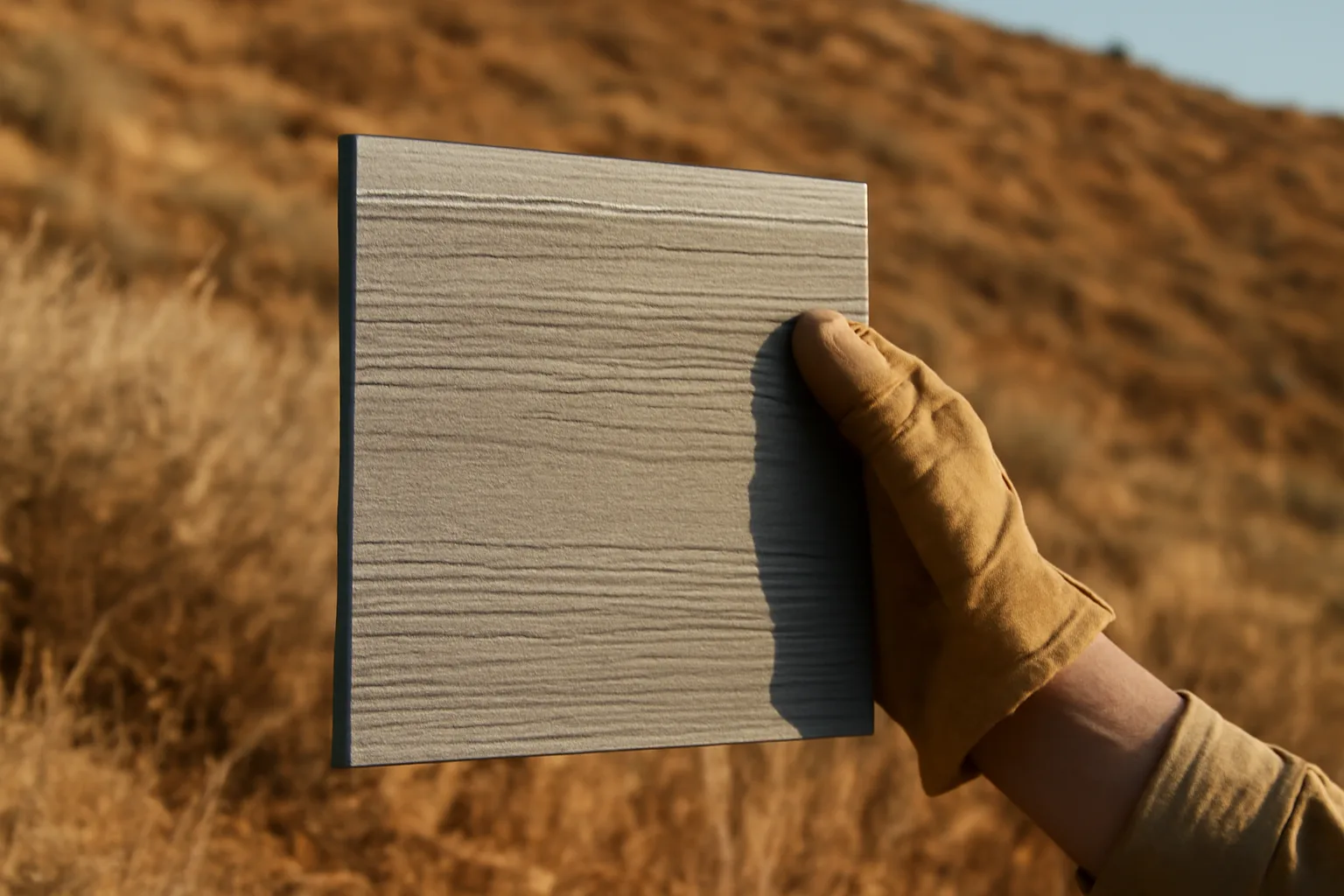
Yes, but the store's own labeling can be misleading if you're shopping for a wildfire retrofit. Home Depot stocks fiber cement siding from brands like James Hardie and Allura, which is noncombustible and widely accepted under California's Chapter 7A wildland-urban interface building code. It also carries metal siding (steel and aluminum panels) and some engineered wood products with Class A fire ratings. What it does not clearly do is flag which specific SKUs meet your local fire marshal's requirements. A product can be marketed as "fire resistant" on the box and still fail to meet the ignition-resistant construction standards required in a California Very High Fire Hazard Severity Zone, an Oregon SB 762 zone, or a Colorado county with its own wildfire building overlay. The store's job is to sell siding. Your job is to confirm the product's fire test data (ASTM E84, ASTM E119, or the WUI-specific test in California's SFM Standard 12-7A-1) matches what your permit office asks for [1]. If you got a non-renewal letter or a defensible space inspection notice, don't assume anything with "fire" in the product name on Home Depot's website will satisfy the inspector. Bring the spec sheet to your building department first.
what siding materials actually meet wildfire building codes?
| Fiber cement (Hardie, Allura) | Yes | Wide | Accepted under Chapter 7A [1] |
|---|---|---|---|
| Metal panel/lap siding | Yes | Moderate | Accepted |
| Stucco | Yes | Special order/contractor | Accepted |
| Engineered wood (treated) | No, but ignition-resistant if tested | Limited | Case-by-case, needs test data |
| Standard vinyl | No | Wide | Often rejected in VHFHSZ |
| Untreated wood/cedar shake | No | Wide | Rejected in most WUI codes |
Three material categories reliably meet the strictest wildfire siding rules: noncombustible materials (fiber cement, stucco, metal, masonry), ignition-resistant treated wood tested to the specific WUI standard, and heavy-timber products meeting minimum thickness rules. California's Chapter 7A (Building Materials for Exterior Wildfire Exposure) requires exterior wall coverings in Wildland-Urban Interface Fire Areas to be noncombustible, ignition-resistant material, or approved through testing under SFM Standard 12-7A-1 [1]. Fiber cement is the most common compliant choice at Home Depot because it's inherently noncombustible (it's cement, sand, and cellulose fiber) and doesn't require a special fire treatment or third-party listing to qualify in most jurisdictions. James Hardie explicitly markets its HardiePlank and HardiePanel lines as noncombustible per ASTM E136 testing [2]. Metal siding (steel, aluminum, zinc) is also noncombustible by definition and accepted almost everywhere, though it can be pricier per square foot and dents more visibly than fiber cement. Vinyl siding is the one to watch. It's inexpensive, it's everywhere at Home Depot, and it is explicitly NOT an approved material under Chapter 7A in most California high-hazard zones because vinyl softens and drips flaming material well below typical wildfire radiant heat exposure. Some manufacturers sell "fire retardant" vinyl, but check whether your local building department accepts it, because many California counties still reject vinyl outright for new construction or major remodels in a VHFHSZ regardless of the retardant treatment. | Material | Noncombustible? | Typical Home Depot availability | Common wildfire code status |
what fire safe home rules take effect in 2026?
California's Zone 0 ember-resistant zone rule, the 5-foot noncombustible buffer around structures required by SB 63 (2020) and detailed in Government Code Section 51182, was originally set for adoption by the Board of Forestry with a compliance deadline that has been repeatedly delayed. As of the most recent Board of Forestry rulemaking timeline, the state has been working toward final regulatory text with an anticipated effective enforcement window pushed into 2025-2026, but as of this writing the regulation had not been finalized into a hard statewide compliance date; check CAL FIRE's Zone 0 page for the current status before assuming a specific 2026 deadline applies to you [3]. Separately, several jurisdictions are layering their own local ember-resistant construction and siding rules on faster timelines than the state's Zone 0 rule, so "2026" as a single national or even single-state deadline is not accurate. Oregon's wildfire hazard map and defensible space code under SB 762 has its own rulemaking and appeals timeline through the Oregon Department of Forestry, separate from anything in California. The honest answer: there is no single "2026 fire safe home law" that applies everywhere. There is a patchwork of state and local rules moving at different speeds. Confirm your county or city's specific adoption date directly with your local building department or fire marshal before making purchasing or renovation decisions based on a rumored deadline. [State fire marshal contact: insert local fire district guidance here.]
when does the california defensible space law go into effect?
California's core defensible space law, Public Resources Code Section 4291, has been in effect since it was last substantially amended in 2005, requiring 100 feet of defensible space clearance around structures in State Responsibility Areas and designated Very High Fire Hazard Severity Zones [4]. This is not a future law. It is current, enforceable, and inspected annually by CAL FIRE and local fire departments in many jurisdictions. What's newer and still evolving is the Zone 0 ember-resistant zone requirement under SB 63 (2020), which amends the same section of law to add a 0-5 foot noncombustible zone immediately around the home. That piece has had its regulatory adoption pushed back multiple times by the Board of Forestry and Fire Protection; as of the most recent public updates, final regulatory language and a hard compliance date were still being finalized [3]. Don't assume it's active in your county until you check directly. Section 4291 itself states property owners must "maintain defensible space of 100 feet from each side and from the front and rear of the structure" with modified clearance requirements based on slope and vegetation type [4]. That part of the law is not going anywhere and is actively enforced today.
why won't people follow the defensible space law in california?
Nobody has a clean national dataset on this, but CAL FIRE's own inspection data gives a partial picture: in recent inspection cycles, a meaningful share of properties in State Responsibility Areas failed initial defensible space inspections, most commonly for vegetation too close to structures rather than total non-compliance. The reasons people don't comply usually aren't defiance. They're cost, physical ability, and confusion. Clearing 100 feet of brush on a hillside lot isn't a weekend project for most homeowners, especially older residents or those without equipment. Contractor costs for defensible space clearing can run from a few hundred dollars for a small flat lot to several thousand dollars for steep, overgrown terrain. Some homeowners also genuinely don't know the rule applies to them because notification varies by county and not every property gets a direct mailer. There's also a real tension homeowners feel between defensible space rules and privacy or wildlife landscaping preferences. Removing mature trees near a home is emotionally hard even when it's the safest choice. None of that changes the legal requirement, but it explains the compliance gap better than assuming people are ignoring the law on purpose. If you're not sure where your property stands, defensible space work planning is the place to start before you touch a single shrub.
how to prevent wildfires
Roughly 85 to 90% of wildfires in the U.S. are human-caused, according to the National Interagency Fire Center and cited consistently by federal wildfire agencies, meaning most prevention is about behavior, not luck. That includes not burning debris on windy days, making sure trailer chains aren't dragging sparks on the highway, properly extinguishing campfires, and maintaining vehicles and equipment that can throw sparks into dry grass. At the home level, prevention means reducing what CAL FIRE calls the "home ignition zone," the area within 100 feet of a structure where embers, direct flame contact, and radiant heat cause most structure losses. That's not really about stopping the fire in the forest. It's about making sure your specific house doesn't ignite when a fire does happen nearby, which is a different and more controllable problem. Community-level prevention matters too: coordinated brush clearing across a neighborhood, maintained fuel breaks, and following local burn bans during red flag warnings. One compliant house next to ten overgrown lots is safer than zero compliant houses, but it's still at serious risk from radiant heat and embers traveling from neighboring properties.
how to prepare for a wildfire
Ready.gov recommends every household in a wildfire-prone area build a go bag with at least three days of supplies, know two ways out of the neighborhood, and sign up for local emergency alerts before fire season starts, not during an active evacuation warning [5]. Preparation splits into three buckets: the house itself, your documents, and your evacuation plan. For the house: clear the defensible space zones required by your fire district, harden vents with 1/8-inch metal mesh to block embers, and clear gutters and roof valleys of dead leaves and needles, since ember entry through vents and roof debris causes a large share of home ignitions during wildfires according to research from the Insurance Institute for Business & Home Safety [6]. For documents: photograph every room, save receipts for major purchases and renovations (including any fire-resistant siding installs), and keep a copy of your insurance policy declarations page somewhere other than the house itself, since a burned or evacuated home means you can't grab paperwork from a filing cabinet. For evacuation: know your zone, know two routes out, and don't wait for a mandatory order if conditions look bad. Voluntary evacuation orders exist because officials expect things to get worse. This is exactly the gap our $99 Wildfire Insurance Survival Kit is built for: a one-time structured way to organize your defensible space records, siding and roofing upgrade receipts, and home inventory into something you can hand an inspector or adjuster instead of scrambling through folders during a red flag warning. Check it out at survival-kit-builder. We don't file claims or handle insurer communications for you; the kit just helps you build your own documentation.
how to prevent forest fires (and how is this different from home prevention?)
Forest fire prevention at the landscape level is mostly about fuel management: prescribed burns, mechanical thinning, and maintaining fuel breaks along ridgelines and roads, work typically done by state and federal forestry agencies rather than individual homeowners. If you own forested land, though, you have direct responsibility for fuel loads on your own parcel, including dead and downed timber, ladder fuels (low branches that let ground fire climb into tree canopies), and defensible space around any structures. The individual actions that matter most: don't leave campfires unattended or improperly extinguished (drown, stir, drown again, per most Forest Service guidance), avoid using equipment that throws sparks during dry, windy conditions, and follow local burn permit rules exactly, including checking daily burn bans before any outdoor burning. Homeowners with acreage should also maintain access roads wide enough for fire engines and keep them clear of overhanging brush, since blocked or narrow access is a documented factor in structures that firefighters can't defend during fast-moving fires.
how to avoid forest fires
Avoiding forest fires as an individual mostly comes down to eliminating ignition sources during high-risk conditions: no debris burning, no fireworks, no parking hot vehicles on dry grass, and no dragging chains or equipment that sparks. Red flag warnings from the National Weather Service signal exactly when these behaviors become most dangerous, since they indicate low humidity, high wind, and dry fuels together . If you're recreating in fire-prone areas, that means fully extinguishing campfires (they should be cool to the touch, more than smokeless), disposing of cigarettes properly, and checking current fire restrictions before any trip, since restriction levels change fast during fire season and vary by forest unit, more than by state.
how to prepare for forest fires as a property owner
If you own land near or within a forested area, preparation means the same defensible space and hardening work as any wildfire-prone home, plus attention to fuel management on the broader parcel. Clear ladder fuels (low branches, shrubs under trees) that let ground fires climb into tree canopies, since crown fires spread dramatically faster and are much harder to stop than surface fires. Maintain at least the 100-foot defensible space required under California PRC 4291 where applicable, or your local equivalent, and extend thinning further on steep slopes since fire moves faster uphill [4]. Keep a water source accessible (a pond, tank, or hydrant) with fire department access, and make sure your driveway and any internal roads meet minimum width and clearance for fire apparatus. For siding and structure work specifically on forest properties, the same noncombustible material rules apply: fiber cement, metal, or stucco over vinyl or untreated wood, especially on any structure within a mile of continuous forest fuel.
is santa barbara safe from fire?
No coastal California city is "safe" from wildfire risk in an absolute sense, and Santa Barbara County has a documented history of major fires, including the 1990 Painted Cave Fire and the 2017 Thomas Fire, which at the time was the largest wildfire in modern California history and burned into Santa Barbara and Ventura counties . Large portions of the Santa Barbara foothills and surrounding unincorporated areas are mapped by CAL FIRE as Very High Fire Hazard Severity Zones, meaning Chapter 7A construction rules and PRC 4291 defensible space requirements apply directly. That said, risk varies enormously by exact location. A condo in flat, urbanized downtown Santa Barbara faces a very different exposure than a home in the Riviera or foothill neighborhoods adjacent to chaparral. If you're evaluating a specific address, check CAL FIRE's Fire Hazard Severity Zone viewer directly rather than relying on the city's general reputation, since hazard zone maps are parcel-specific, not citywide.
how can we prevent forest fires as a community?
Community-level prevention works best when it's coordinated rather than left to individual households: shared fuel breaks along property lines, neighborhood chipper days to remove cleared brush, and collective enforcement of local burn restrictions during dry periods all reduce risk more than any single home's efforts. Firewise USA, a program run through the National Fire Protection Association, organizes exactly this kind of neighborhood-level action and is recognized by many insurers and some state programs as a factor in wildfire risk reduction, though it does not guarantee coverage or reinstatement . Local fire safe councils, often volunteer-run and partially funded through CAL FIRE grant programs, coordinate larger-scale fuel reduction projects that individual homeowners can't do alone, like maintaining shaded fuel breaks along ridgelines that protect an entire neighborhood rather than one lot. If your neighborhood doesn't have one, starting a conversation with neighbors about coordinated clearing, even informally, moves the needle more than one perfectly hardened house surrounded by untouched brush. See only you can prevent wildfires for more on individual responsibility inside these larger prevention efforts, and fire safe landscaping next to your house for the specific plant and mulch choices that matter in Zone 0 and Zone 1.
what should you actually buy at home depot for a wildfire retrofit?
For siding specifically: fiber cement lap or panel siding (James Hardie or Allura lines) is the safest default purchase for most homeowners in a Very High Fire Hazard Severity Zone, since it's noncombustible, widely stocked, and accepted under Chapter 7A in most California jurisdictions [1] [2]. Metal siding is the next best option, particularly for accent areas or full retrofits where budget allows. Skip standard vinyl siding entirely if your property is in a mapped high-hazard zone, even if a specific product is marketed with fire-retardant additives, unless your building department has explicitly confirmed it in writing for your address. Skip cedar shake and untreated wood siding outright; it's one of the most consistently cited materials in post-fire damage assessments for structures that ignited from ember exposure [6]. Beyond siding, the same trip to Home Depot is a good time to pick up ember-resistant vent covers (1/8-inch metal mesh), noncombustible gutter guards, and Class A-rated roofing materials if you're doing a fuller hardening project. None of these purchases substitute for the defensible space clearing work itself; hardened materials and clear space work together, not as alternatives. For a broader look at prioritizing which hardening project to tackle first (siding, vents, roofing, or defensible space clearing), see house fire risk factors and how insurers and inspectors weigh them differently.
Frequently asked questions
When does the California defensible space law go into effect?
The core 100-foot defensible space requirement under Public Resources Code Section 4291 has been in effect since 2005 and is enforced now. The newer Zone 0 ember-resistant zone rule under SB 63 has had its regulatory adoption repeatedly delayed by the Board of Forestry; check CAL FIRE directly for the current status rather than assuming a fixed date.
Why won't people follow the defensible space law in California?
It's rarely defiance. Cost of clearing steep or heavily overgrown lots, physical inability to do the work, unclear notification about who the rule applies to, and reluctance to remove mature trees or shrubs all contribute. CAL FIRE inspection data shows vegetation-related failures are the most common non-compliance issue, not total refusal to comply.
Does Home Depot sell siding that meets California's Chapter 7A wildfire code?
Yes. Fiber cement siding from James Hardie and Allura, both sold at Home Depot, is noncombustible per ASTM E136 testing and generally accepted under Chapter 7A. Metal siding also qualifies. Standard vinyl siding is typically not accepted in Very High Fire Hazard Severity Zones regardless of marketing claims.
Is vinyl siding ever acceptable in a wildfire zone?
Rarely, in strict jurisdictions. Standard vinyl softens and drips well below typical wildfire radiant heat exposure, which is why it's commonly rejected under Chapter 7A in California Very High Fire Hazard Severity Zones. Some fire-retardant vinyl products exist, but confirm acceptance with your local building department before purchasing, since approval varies by jurisdiction.
What fire safe home rules take effect in 2026?
There's no single confirmed nationwide or statewide 2026 deadline. California's Zone 0 ember-resistant zone rule has been anticipated for finalization around this timeframe, but the Board of Forestry had not locked a hard enforcement date as of the most recent public updates. Check CAL FIRE and your local building department for your exact jurisdiction's timeline.
How to prevent wildfires as an individual homeowner?
Focus on your home ignition zone: clear defensible space per your local fire district's requirement, use noncombustible siding and roofing, screen vents with 1/8-inch metal mesh, and remove dead vegetation and debris from gutters and roof valleys. About 85 to 90% of wildfires are human-caused, so behavior around fire sources also matters directly.
How to prepare for a wildfire if you get an evacuation warning?
Know your evacuation zone and two routes out before fire season starts. Keep a go bag with three days of supplies, copies of insurance documents stored off-site, and photos of your home's condition and any hardening upgrades. Sign up for local emergency alerts and don't wait for a mandatory order if conditions look bad.
How to prevent forest fires on land you own?
Maintain fuel breaks, remove ladder fuels (low branches and brush that let ground fire climb into tree canopies), keep access roads clear for fire apparatus, and follow local burn permits exactly. Don't leave campfires unattended and avoid spark-throwing equipment during dry, windy conditions.
How to avoid forest fires while recreating outdoors?
Fully extinguish campfires until they're cool to the touch, check current fire restrictions before your trip since they change fast by forest unit, avoid fireworks and debris burning, and pay attention to red flag warnings, which signal the low humidity and high wind conditions when small sparks turn into large fires.
Is Santa Barbara safe from fire?
No, especially in foothill and unincorporated areas mapped as Very High Fire Hazard Severity Zones. Santa Barbara County has a documented history of major fires including the 1990 Painted Cave Fire and the 2017 Thomas Fire. Risk varies enormously by exact address, so check CAL FIRE's hazard zone viewer for your specific parcel.
How can we prevent forest fires as a neighborhood or community?
Coordinate fuel breaks across property lines, organize chipper days for cleared brush, and enforce local burn restrictions collectively. Programs like Firewise USA through the National Fire Protection Association help organize this at the neighborhood level, though participation doesn't guarantee insurance coverage or reinstatement.
Does buying fire-resistant siding guarantee my insurance won't be non-renewed?
No. Siding is one factor among many insurers and inspectors weigh, alongside roofing material, defensible space clearance, vent screening, and overall community risk. Upgrading siding can support your case in an appeal or renewal application, but it's documentation to combine with other hardening work, not a standalone guarantee.
What's the cheapest fire-resistant siding option at Home Depot?
Fiber cement lap siding is generally the most cost-effective noncombustible option, typically running less per square foot installed than metal siding or stucco, though exact pricing varies by region and contractor. Check current per-square-foot quotes locally since material costs fluctuate and installation labor often costs more than the material itself.
Sources
- California Building Standards Commission, Chapter 7A: Chapter 7A requires noncombustible or ignition-resistant exterior wall coverings in WUI fire areas, tested per SFM 12-7A-1
- CAL FIRE, Zone 0 Ember-Resistant Zone: SB 63 Zone 0 regulatory adoption status and timeline
- California Public Resources Code Section 4291: 100-foot defensible space requirement text and slope-based modifications
- National Interagency Fire Center, Wildfire Statistics: 85 to 90% of wildfires in the U.S. are human-caused
- CAL FIRE, Thomas Fire Incident Information: The 2017 Thomas Fire was the largest wildfire in modern California history at the time, burning in Ventura and Santa Barbara counties
- National Fire Protection Association, Firewise USA: Firewise USA organizes neighborhood-level wildfire risk reduction efforts