Last updated 2026-07-25
TL;DR
If you're searching "how to make fire at home," you likely mean safe fireplace/wood-stove or backyard fire use, not wildfire prevention. This guide covers both: safe combustion basics indoors and outdoors, plus the defensible-space and home-hardening steps CAL FIRE and state fire marshals require to reduce wildfire risk and keep insurance in force.
What does "how to make fire at home" actually mean here?
This phrase gets searched two very different ways, and we're answering both because the second one is why you're probably on a wildfire-prep site in the first place. Sense one: you want to build a fire safely at home, in a fireplace, wood stove, fire pit, or chimenea. That's a combustion and ventilation question. Sense two, and the one most readers on this site care about: you got a non-renewal letter or a neighbor lost coverage, and you're trying to understand fire risk around your house, not start one. We'll cover safe home fire-building first, quickly, because it matters and because embers from your own fire pit are a real ignition source during red flag conditions. Then the rest of this article is about the thing that actually keeps your house standing and your policy in force: defensible space, home hardening, and the law changes coming in 2025 and 2026.
How do you build a fire at home safely (fireplace, wood stove, fire pit)?
Use dry, seasoned wood (under 20% moisture), a metal screen or spark arrestor, and at least 10 feet of clearance from structures, fences, and dry vegetation for any outdoor fire. Never burn during a red flag warning or local burn ban, and keep a hose or extinguisher within reach. Indoors, have your chimney and flue inspected annually; creosote buildup is a leading cause of chimney fires. For outdoor fire pits and chimeneas, most local fire codes require a spark screen with mesh no larger than half an inch, and a clearance of 10 to 25 feet from any structure or overhanging vegetation depending on your fire district. Check your specific county or city fire marshal's burn permit rules before lighting anything; requirements vary block to block in wildfire-prone counties. Here's the part people skip: even a legal, permitted backyard fire is a bad idea on a hot, dry, windy day. Local agencies issue red flag warnings for exactly that combination, and most wildfires that start near homes begin with something mundane, a fire pit ember, a mower spark, a cigarette, not lightning. Ready.gov notes that "wildfires can happen anywhere" and that most are caused by human activity. If you want a genuinely useful next step, read about defensible space clearing around your own fire pit and grill, more than your property line.
How do you prevent wildfires?
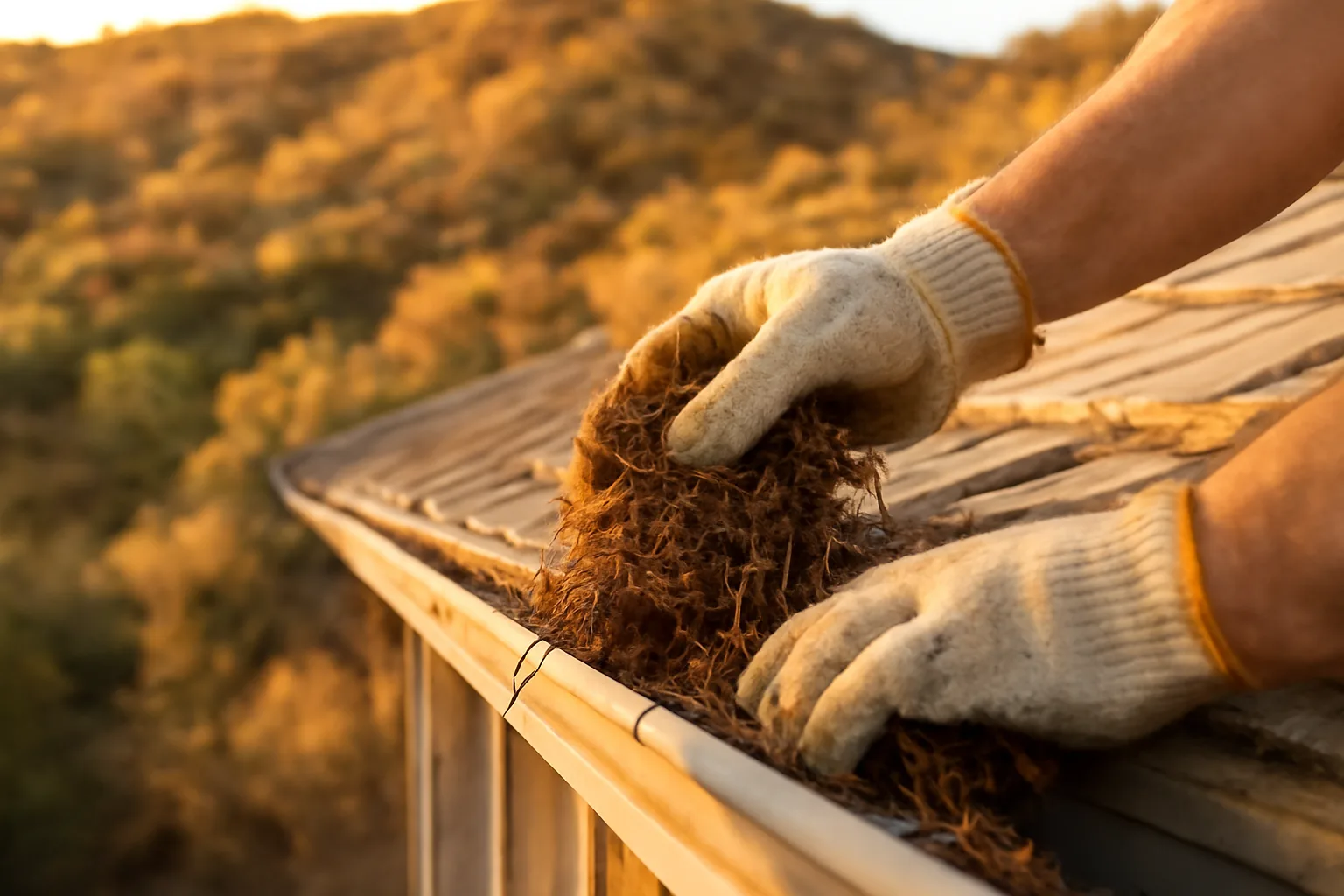
You prevent wildfires mostly by controlling ignition sources and keeping vegetation from carrying fire to structures, not by hoping for rain. CAL FIRE's core guidance is defensible space in the zone immediately around a home, plus home hardening against embers, which travel miles ahead of a fire front. The specific actions that matter most, in rough order of impact: 1. Clear dead vegetation, pine needles, and debris from your roof, gutters, and within 5 feet of your house (CAL FIRE's Zone 0). 2. Keep flammable items (woodpiles, propane tanks, patio furniture cushions) off the immediate perimeter. 3. Maintain vertical and horizontal spacing between trees and shrubs out to 100 feet where terrain allows. 4. Never leave outdoor fires, grills, or equipment with hot exhaust unattended during dry, windy conditions. 5. Report unattended fires and downed power lines immediately. CAL FIRE states plainly that "most wildfires are caused by humans" and that defensible space "significantly increases your home's chance of surviving". That's not marketing language, it's the agency's own framing, and it's why insurers now ask for documentation of exactly this work.
How do you prepare for a wildfire?
Preparing for a wildfire means doing the vegetation and structure work before fire season, plus having an evacuation plan, a go-bag, and your documentation ready. Ready.gov recommends assembling an emergency kit with water, medications, and important documents, and having a family communication plan established before a wildfire threat exists. The practical checklist: - Create defensible space (see the zone breakdown below). - Harden vulnerable points: vents, eaves, windows, and decks, since embers exploit gaps more than flame contact does. - Keep a go-bag with medications, copies of ID, insurance policy numbers, and photos of your property (interior and exterior, dated). - Sign up for local emergency alerts through your county's system. - Know two evacuation routes out of your neighborhood, not one. On the insurance side specifically, photograph your defensible space work as you do it, dated and time-stamped, because that documentation is what you'll need if an insurer requests proof of mitigation or if you're contesting a non-renewal decision. We built a $99 Wildfire Insurance Survival Kit for exactly this gap: a structured way to document your home's mitigation work so you have something concrete to send an insurer or underwriter, not a claims service. We don't file claims or contact your insurer on your behalf; you send your own documentation, on your own terms.
How do you prevent forest fires (and are "forest fires" different from wildfires near homes)?
"Forest fire prevention" and "wildfire prevention near homes" overlap almost completely once a fire reaches the wildland-urban interface, which is where most CA/CO/OR/AZ homeowners actually live. The U.S. Forest Service and Smokey Bear campaign focus on preventing human-caused ignition in wildland areas: campfires, debris burning, equipment sparks, and discarded cigarettes. The Smokey Bear program (run by the USDA Forest Service, the National Association of State Foresters, and the Ad Council since 1944) is built around the message that individual behavior around fire sources prevents most wildland ignitions. That's the origin of the famous line: "Only you can prevent wildfires." If you want the fuller context on that campaign and what it actually asks of individuals, see only you can prevent wildfires. Practically, for a homeowner near forest or wildland, forest-fire prevention and home defensible-space work are the same task: clear fuel, control ignition sources, and don't add fuel load around structures.
When does the California defensible space law go into effect?
California's core defensible space law, Public Resources Code 4291, has been in effect for years and currently requires 100 feet of defensible space clearance around structures in State Responsibility Areas and some local agency zones [1]. The newer piece, the Zone 0 ember-resistant zone rule (0 to 5 feet from structures), was passed through legislation and is expected to become enforceable through regulations that CAL FIRE and the Board of Forestry have been developing, with a target implementation that has been pushed back multiple times. As of the most recent Board of Forestry rulemaking timeline, Zone 0 regulations were not yet finalized or enforceable statewide; check the CAL FIRE defensible space page directly for the current status before assuming a compliance deadline has passed [1] [2]. Because these dates have moved before, don't rely on any single source (including this one) for the exact enforcement date; confirm with your local fire district or CAL FIRE unit before a real estate transaction or insurance deadline. [Local fire district note: enforcement timelines and inspection schedules vary by county and fire district. Confirm your specific compliance date with your local fire marshal or CAL FIRE unit office.]
What fire-safe home rules take effect in 2026?
California's Zone 0 (ember-resistant zone, 0-5 feet from structures) regulations have been anticipated for a 2023-2026 rollout window, but the exact effective date has shifted as the Board of Forestry and Fire Protection works through rulemaking; as of this writing, check CAL FIRE's defensible space program page for the current status rather than assuming a fixed 2026 date [1] [2]. Separately, some insurers and the California FAIR Plan have been tightening their own underwriting requirements ahead of any state mandate, meaning you may face insurer-driven defensible space documentation requests before the state regulation is even final. That's the practical reality worth planning around: the insurance industry's timeline is often faster than the regulatory one. [Local fire district note: some counties and cities have already adopted local ordinances requiring ember-resistant zones ahead of any statewide Zone 0 rule. Ask your local fire marshal whether your jurisdiction has a local ordinance already in force.] Oregon and Colorado have their own parallel efforts: Oregon's wildfire hazard map and defensible space code requirements are administered through the Oregon Department of Forestry and State Fire Marshal, and Colorado counties increasingly require defensible space certificates for building permits in high-risk zones. None of these are unified into one national deadline, so the honest answer is: check your specific state fire marshal's page for your state's current rule status.
Why won't people follow the defensible space law in California?
Cost, labor shortage, and confusion about what's actually required are the three biggest reasons homeowners fall out of compliance, based on CAL FIRE inspection data and reporting on defensible space enforcement gaps. Clearing 100 feet of vegetation on a sloped, wooded lot can run from a few hundred dollars in DIY labor to several thousand dollars for a contracted crew, and many homeowners, especially older residents or those on fixed incomes, simply can't absorb that cost every year. There's also a real information gap. CAL FIRE's own defensible space guidance runs many pages and includes zone-specific rules that change based on slope, vegetation type, and structure type; it's genuinely confusing to interpret correctly without a site visit. Some homeowners also distrust that the work will actually reduce their risk meaningfully, especially after watching a neighbor do everything right and still face a non-renewal. And frankly, enforcement has been inconsistent. CAL FIRE conducts defensible space inspections, but capacity varies by unit, and follow-through on citations for non-compliance is not universal across all State Responsibility Areas. That inconsistency doesn't help voluntary compliance rates.
How do you avoid forest fires as a homeowner or visitor?
Avoiding forest fires means controlling every ignition source you bring into a wildland area: campfires, vehicle exhaust and catalytic converters on dry grass, power equipment sparks, cigarettes, and fireworks. Most forest and wildland fires near populated areas start from one of these, not lightning. Specific habits that matter: - Never park a hot vehicle over dry grass; catalytic converters can exceed 1,000°F and have started roadside fires. - Fully drown and stir campfires until cold to the touch, more than until the flame is out. - Avoid mowing or using string trimmers on dry grass during peak heat hours or red flag conditions. - Check local burn ban status before any outdoor burning, including debris piles. - Report smoke or unattended fire immediately rather than assuming someone else will. These are individual behaviors, and they're exactly what the Smokey Bear "Only you can prevent wildfires" message targets. It's not really about forests being mysterious tinderboxes. It's about small human mistakes on dry, windy days.
How do you prepare for forest fires if you live near wildland?
Preparing for forest fires near your home combines the same defensible space and hardening work described above with wildland-specific awareness: know your area's fire history, evacuation routes, and whether you're in a State Responsibility Area with mandatory clearance requirements. CAL FIRE maintains Fire Hazard Severity Zone maps that show whether your property sits in a Moderate, High, or Very High severity zone, which affects both your legal obligations and your insurance risk profile [2]. If you're near forest or heavy wildland, the 100-foot defensible space zone (broken into Zone 1, 0-30 feet, and Zone 2, 30-100 feet under PRC 4291) matters more than it does for a suburban lot with a small yard, because you have more fuel load to manage [1]. Get a site-specific assessment from your local fire department or a CAL FIRE unit if you're unsure which zone rules apply to your slope and vegetation type. For the practical mechanics of matching a work plan to those zones, see our breakdown of defensible space clearing requirements and how contractors typically price the work.
Is Santa Barbara safe from fire?
No location in California's wildland-urban interface is "safe" from fire risk, and Santa Barbara County specifically has a documented history of major destructive fires, including the 1990 Painted Cave Fire and the 2017 Thomas Fire, which was, at the time, the largest wildfire in modern California history, burning over 281,000 acres according to CAL FIRE's incident archive [3]. The Thomas Fire also triggered the deadly Montecito debris flow in January 2018. Santa Barbara's terrain, steep coastal mountains, dense chaparral, and seasonal Santa Ana-type sundowner winds, creates conditions that CAL FIRE's Fire Hazard Severity Zone maps classify as High or Very High in many foothill and canyon communities [2]. Homes in Montecito, Santa Barbara's foothills, and the San Marcos Pass area sit in some of the highest-risk zones in the county. The honest answer for anyone asking this about their own neighborhood, in Santa Barbara or anywhere else, is to check your specific parcel against your state's Fire Hazard Severity Zone map rather than relying on the county's general reputation. A property two miles apart can carry very different risk classifications depending on slope, vegetation, and wind exposure.
What should you document for insurance before or after a non-renewal letter?
| Dated photos of Zone 0 (0-5 ft) | Shows ember-zone compliance | |
|---|---|---|
| Roof and gutter debris-clearing photos | Addresses top ignition point for embers | |
| Vent screening photos (1/8 inch mesh) | Shows ember-intrusion mitigation | |
| Vegetation clearance photos, Zones 1 and 2 | Shows PRC 4291 compliance | |
| Contractor invoices for clearing/hardening | Proves professional work, more than claims | |
| Prior inspection reports, if any | Shows compliance history over time | We don't file claims on your behalf, contact insurers for you, or promise reinstatement, coverage, or discounts; we're not a law firm, insurance agency, or claims adjuster. What we do is help you organize this documentation into something you can send yourself. That's the whole idea behind the $99 Wildfire Insurance Survival Kit: a one-time structured way to build this file before you need it, not a service that talks to your insurer for you. If you're rebuilding after a fire loss or dealing with a total loss claim, our house fire and fire at a house guides walk through documentation needs specific to that situation. |
Document your defensible space and home-hardening work with dated, timestamped photos of your roof, gutters, vents, deck, and the 5, 30, and 100-foot zones around your structure, plus receipts for any professional clearing or hardening work. Insurers and the California FAIR Plan increasingly ask for this kind of evidence when evaluating renewal risk, and having it organized before you're asked saves real time during a coverage crisis. A reasonable documentation set includes: | Item | Why it matters |
Frequently asked questions
When does the California defensible space law go into effect?
The core 100-foot defensible space requirement under Public Resources Code 4291 has been in effect for years already. The newer Zone 0 (0-5 foot ember-resistant zone) rule has been in Board of Forestry rulemaking with shifting target dates; confirm current status directly on CAL FIRE's defensible space page since the enforcement date has moved before.
Why won't people follow the defensible space law in California?
Cost, labor shortages, confusing zone-specific rules, and inconsistent enforcement across CAL FIRE units are the main reasons. Clearing 100 feet of vegetation can cost hundreds to thousands of dollars, and many homeowners on fixed incomes or with sloped, wooded lots struggle to keep up with annual maintenance requirements.
How do you prevent wildfires around your own home?
Clear dead vegetation and debris within 5 feet of your house (CAL FIRE's Zone 0), keep gutters and roofs clean, maintain 100 feet of managed vegetation where terrain allows, and control ignition sources like fire pits, grills, and equipment during dry, windy conditions. Most wildfires are human-caused, per CAL FIRE and Ready.gov guidance.
How do you prepare for a wildfire if you get a non-renewal letter?
Start defensible space and home-hardening work immediately, photograph it with dates, gather contractor invoices, and check your state's Fire Hazard Severity Zone map for your parcel. Build an evacuation plan and go-bag per Ready.gov guidance. Documentation of mitigation work is what insurers ask for when reconsidering coverage.
How do you prevent forest fires versus wildfires near your house?
The prevention behaviors overlap almost completely in wildland-urban interface areas: control ignition sources (campfires, equipment sparks, cigarettes) and manage fuel load. The U.S. Forest Service's Smokey Bear campaign targets wildland ignition specifically, while CAL FIRE's defensible space program targets the fuel load right around structures.
How do you avoid forest fires when camping or working outdoors?
Drown and stir campfires until cold, never park hot vehicles on dry grass, avoid mowing dry vegetation during peak heat, check local burn bans before any outdoor burning, and report unattended smoke immediately. Catalytic converters can exceed 1,000°F and are a documented cause of roadside ignition.
How do you prepare for forest fires if you live in a high-severity zone?
Check your property against your state's Fire Hazard Severity Zone map, complete zone-based defensible space clearing (Zone 1: 0-30 ft, Zone 2: 30-100 ft under California's PRC 4291), and harden vents, eaves, and decks against embers, which cause most home ignitions during wildfires, not direct flame contact.
What fire-safe home rules take effect in 2026 in California?
California's Zone 0 ember-resistant zone regulations (0-5 feet from structures) have targeted a 2023-2026 rollout, but the exact enforceable date has shifted multiple times during Board of Forestry rulemaking. Check CAL FIRE's defensible space page directly rather than assuming a fixed 2026 deadline has arrived.
Is Santa Barbara safe from fire?
No, Santa Barbara County has significant wildfire history, including the 2017 Thomas Fire (over 281,000 acres, the largest California wildfire at the time) and the 1990 Painted Cave Fire. Many foothill and canyon communities carry High or Very High CAL FIRE Fire Hazard Severity Zone classifications due to steep terrain and seasonal winds.
How can we prevent forest fires as a community, more than individually?
Community-level prevention combines individual ignition-source control with coordinated fuel management: shared defensible space standards, community chipper days, local burn ban enforcement, and public reporting of hazards. CAL FIRE and state forestry agencies note that human activity causes most wildfires, so community-wide behavior change compounds individual efforts.
How do you build a fire at home safely without starting a wildfire?
Use seasoned dry wood, a spark screen with mesh under half an inch, and at least 10 feet of clearance from structures and dry vegetation. Never burn during red flag warnings or local burn bans, keep water or an extinguisher nearby, and fully extinguish any outdoor fire, stirring ashes until cold.
What is Zone 0 and when will it be required?
Zone 0 is CAL FIRE's proposed ember-resistant zone covering 0 to 5 feet immediately around a structure, requiring removal of combustible materials like mulch, plants, and stored items. It's been in Board of Forestry rulemaking with a shifting target date; it is not yet a finalized statewide requirement as of this writing.
Does clearing defensible space actually help keep insurance coverage?
It's not guaranteed, but insurers and the California FAIR Plan increasingly weigh documented mitigation work in underwriting decisions. Photographing your Zone 0, 1, and 2 work with dates, plus keeping contractor invoices, gives you real evidence to submit; it doesn't guarantee renewal or a discount, and outcomes vary by insurer.
Sources
- California Public Resources Code Section 4291: 100 feet of defensible space clearance requirement around structures in State Responsibility Areas, with Zone 1 (0-30 ft) and Zone 2 (30-100 ft) distinctions.
- CAL FIRE, Fire Hazard Severity Zones: CAL FIRE maintains Fire Hazard Severity Zone maps classifying properties as Moderate, High, or Very High risk.
- CAL FIRE, Thomas Fire incident archive: The 2017 Thomas Fire burned over 281,000 acres and was, at the time, the largest wildfire in modern California history.
- USDA Forest Service and Ad Council, Smokey Bear campaign history: The Smokey Bear program, run since 1944 by the USDA Forest Service, National Association of State Foresters, and Ad Council, targets human-caused wildland ignition through the 'Only you can prevent wildfires' message.
- Smokey Bear / USDA Forest Service: Offers guidance on how to properly build, maintain, and extinguish a campfire to prevent forest fires.
- National Fire Protection Association: Describes home hardening measures homeowners can take to prepare for wildfire exposure.
- U.S. Consumer Product Safety Commission: Provides safety recommendations for using fire pits and outdoor fire features at home.