Last updated 2026-07-25
TL;DR
Mitigating wildfire risk means working outward in zones: noncombustible materials and a 5-foot ember-free gap right at the house, then thinned, spaced vegetation out to 100+ feet. Pair that with an evacuation plan, go-bag, and documentation of what you've done. No single fix stops a wildfire; the combination of home hardening and defensible space is what the research shows actually saves structures [1][2].
What actually stops a house from burning in a wildfire?
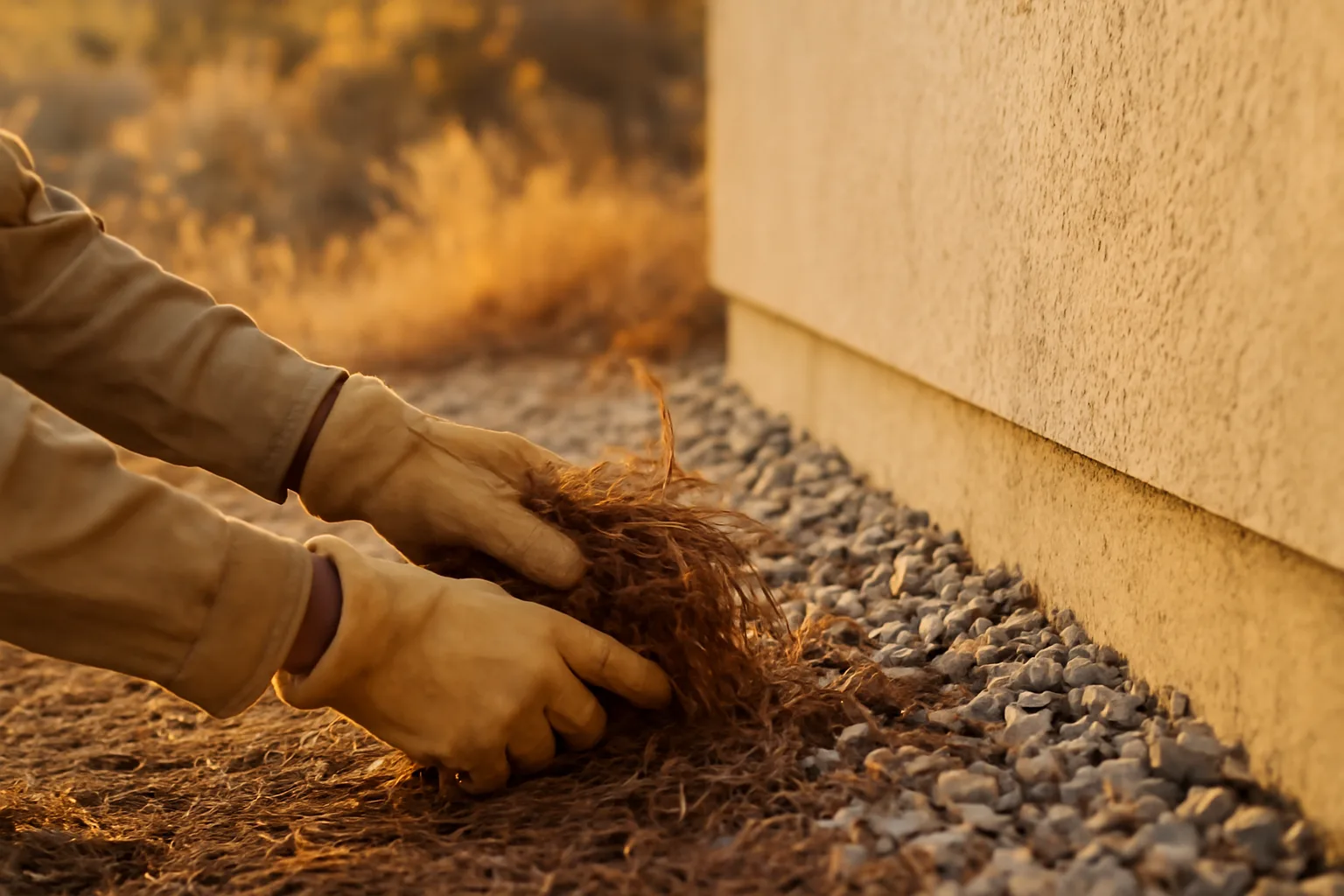
Two things working together: what your house is made of, and what's allowed to grow or sit near it. Research from the Insurance Institute for Business & Home Safety (IBHS) and CAL FIRE points to the same conclusion, most homes ignite from embers landing on or near the structure, not from a wall of flame rolling through. Embers can travel a mile or more ahead of a fire front. They land in gutters full of dry leaves, under wood decks, in vent openings, and in mulch beds pushed right up against siding. That's why the first 5 feet around your foundation matters as much, arguably more, than the 100 feet of brush clearing beyond it. CAL FIRE's guidance is blunt about it: "Embers are the leading cause of home ignition during wildfires". If you only have budget or time for one project this year, do the 5-foot zone. It's cheap relative to re-siding or replacing a roof, and it closes the most common ignition path. Hardening and defensible space aren't competing strategies, they're sequential. A fire-resistant roof doesn't help much if there's a woodpile stacked against the wall under it. A perfectly cleared yard doesn't help if embers get into an open attic vent. For the material-by-material breakdown of roofing, siding, vents, and decking, see fire safe landscaping california next to house.
How do I prevent wildfires from starting near my property?
Most wildfires are human-caused, not lightning. Roughly 85% of wildfires in the U.S. are started by people, according to the National Park Service, through things like unattended campfires, debris burning, equipment sparks, and downed power lines. On your own property, the controllable ignition sources are: mowing dry grass in the heat of the day (a mower blade hitting a rock throws sparks), dragging trailer chains, parking hot vehicles on dry grass (catalytic converters run over 1,000°F), and burn piles left unattended. CAL FIRE and most local fire districts require permits for outdoor burning, and permit rules tighten or suspend entirely during red flag warnings; check with your local fire district before burning anything. If you have a generator, chainsaw, or grinder, keep a shovel and charged fire extinguisher within reach. Spark arrestors are required on OHVs and chainsaws in many wildfire-prone counties. None of this is exotic advice, it's the boring stuff that actually accounts for most start events.
How do I prepare for a wildfire before one starts?
Preparation splits into three tracks: the house, the yard, and the family plan. Ready.gov's wildfire page frames it as "prepare a family emergency plan... and build an emergency kit" [1], which sounds obvious until you realize most people do none of it until a red flag warning is already up. For the house: clear the 5-foot zone, clean gutters and roof valleys of debris, screen attic and foundation vents with 1/8-inch metal mesh (this is now required in California's Zone 0 regulations, more on that below), and move firewood stacks at least 30 feet away. For the yard: work outward in the three zones CAL FIRE defines, roughly 0-5 feet, 5-30 feet, and 30-100 feet, thinning and spacing vegetation so fire can't carry through it as a continuous fuel ladder. For the family: build a go-bag (medications, copies of ID and insurance documents, a change of clothes, phone chargers), know two ways out of your neighborhood, and set a rally point if you get separated. Ready.gov recommends practicing your evacuation route, more than writing it down [1]. Document what you've done. Photos of cleared zones, receipts for vent screening or roof work, and a running list of hardening projects matter twice: once for your own peace of mind, and once if you're contesting a non-renewal or applying for reinstatement. See defensible for a documentation checklist you can adapt.
When does the California defensible space law go into effect?
California's baseline defensible space law (Public Resources Code 4291) already applies today. It requires 100 feet of defensible space clearance around structures in State Responsibility Areas and certain local fire districts, not something you can wait on [2]. What's newer, and often confused with a single "2026 law," is the Zone 0 ember-resistant zone regulation. The State Board of Forestry and Fire Protection has been developing Zone 0 rules under Assembly Bill 3074 (2020), which defines an ember-resistant zone in the 0-5 foot area immediately around structures [3]. As of this writing, the Board has been through multiple rulemaking rounds; the regulation has not had a single fixed statewide effective date locked in across all cycles, and timelines have shifted more than once. Homeowners in high or very high fire hazard severity zones should check the Board of Forestry's current rulemaking status directly rather than assume a specific 2026 date, because the proposed compliance timeline has moved before [3]. What is fixed: the general 100-foot defensible space requirement under PRC 4291, and local ordinances that in some counties already mandate stricter clearance or ember-resistant materials ahead of the state Zone 0 rule. Your fire district's requirement can be stricter than the state minimum, so check local rules before you assume state law is the ceiling. ___FILL_IN: local fire district defensible space ordinance link/contact___
What fire-safe home rules take effect in 2026?
The honest answer: it depends on which state and which specific rule you mean, and some dates have already shifted once. In California, the Zone 0 (ember-resistant zone) regulation from the Board of Forestry, authorized under AB 3074, has been the rule most commonly associated with a 2026 timeline in public discussion, but the Board's own rulemaking calendar has adjusted before and homeowners should verify current status rather than rely on a fixed date [3]. Oregon's defensible space and home hardening code requirements, tied to its wildfire risk map program under Senate Bill 762 (2021), have also had a rocky rollout, the original risk map was paused and reissued after public pushback in 2022, which affected implementation timing for associated building code standards [4]. Colorado doesn't have a single statewide Zone 0 style mandate; wildfire mitigation requirements there are set mostly at the county and fire district level, so "2026 rules" in Colorado really means whatever your county has adopted, not a state law. Bottom line: don't plan your 2026 budget around a headline date without checking your specific state fire marshal's office and local fire district. ___FILL_IN: state fire marshal 2026 rule status link___
Why won't people follow the defensible space law in California?
Cost, labor, and enforcement gaps are the three real reasons, not ignorance of the law. A lot of homeowners know about the 100-foot rule and still don't fully comply. Cost is real: thinning mature trees, removing stumps, and regrading slopes for defensible space can run into the thousands of dollars, and low-income and elderly homeowners in rural SRAs are disproportionately affected. CAL FIRE has acknowledged defensible space compliance is inconsistent enough that it runs annual inspection and outreach programs rather than relying on the law alone. Labor is the other bottleneck. In a lot of rural counties there simply aren't enough licensed vegetation management contractors to do the work at scale, especially right after a bad fire season when everyone wants the same crews at once. Enforcement varies a lot by jurisdiction too. Some fire districts do door-to-door inspections and issue citations; others rely almost entirely on self-certification or complaint-driven response. That inconsistency means a homeowner in one county might get a hard deadline and fine, and a homeowner in the next county over might never hear from anyone. This isn't an excuse to skip it, it's context for why compliance rates aren't higher even though the law has existed since well before recent wildfire seasons made it front-page news.
How can we prevent forest fires as a community, more than a homeowner?
Individual defensible space only works at scale if your neighbors do it too. Fire doesn't respect property lines, and a single unmanaged lot with dense brush next to a cleared one can still carry fire straight through a neighborhood. Community-level prevention that actually moves the needle: Firewise USA sites (a National Fire Protection Association recognition program), coordinated neighborhood chipper days, HOA-enforced landscaping standards in fire hazard zones, and shared funding for fuel breaks along common boundaries. Reporting matters too. If you see downed power lines, unpermitted burning during a red flag warning, or a neighbor's overgrown lot in a high hazard zone, most counties have a non-emergency line or code enforcement contact for exactly that. ___FILL_IN: local fire district reporting/non-emergency contact___ The Firewise USA program specifically measures success at the community level, more than individual homes, because that's where the research says the risk reduction compounds [5].
How do I harden my home against wildfire, more than clear the yard?
| Roof | Highest-risk surface for ember landing | Class A roofing material (asphalt shingle, metal, tile) | |
|---|---|---|---|
| Vents | Embers enter attic/crawlspace | 1/8-inch metal mesh screening | |
| Gutters | Collect leaf litter, embers ignite it | Metal gutter guards, clean seasonally | |
| Decking | Combustible surface near structure | Ignition-resistant or noncombustible decking material | |
| Siding | Direct wall ignition | Fiber cement, stucco, or other noncombustible siding | |
| Windows | Heat can shatter single-pane glass | Dual-pane, tempered glass | This table isn't exhaustive but it's the order IBHS research suggests matters most, roof and vents first, because that's where embers land and enter. If you're re-roofing anyway after storm damage or age, upgrading to Class A material at that point is far cheaper than doing it as a standalone wildfire retrofit later. For a full walkthrough of what a fire district inspector actually checks during a home hardening assessment, see house fire and fire at a house. |
Hardening means upgrading the materials and openings on the structure itself so embers can't get in or ignite it. The priority order, based on IBHS research on ignition points: | Component | Vulnerability | Fix |
How do I prepare for evacuation if a wildfire is approaching?
Have a bag packed before red flag warnings start, not after you smell smoke. Ready.gov recommends a kit that covers at minimum three days: water, non-perishable food, a battery or hand-crank radio, flashlight, first aid kit, medications, and copies of important documents [1]. Sign up for your county's emergency alert system now (most are opt-in, not automatic). Know your evacuation zone designation if your county uses one (California's Genasys/Zonehaven system is common in high-risk counties). Have a plan for pets and livestock, because evacuation centers often can't accept animals without prior arrangement. Keep your gas tank above half full during fire season. It sounds trivial until you're stuck in evacuation traffic with 40 miles to go and gas stations along the route are closed or overwhelmed. If you get an evacuation warning (not yet an order), that's the moment to load the car, not wait. Orders can come with very little notice once a fire moves fast in wind-driven conditions.
Is Santa Barbara safe from fire risk?
No California coastal or foothill community, Santa Barbara included, is meaningfully "safe" from wildfire risk; the city's own hillside neighborhoods sit directly against chaparral-covered slopes that have burned before and will burn again. The 2017 Thomas Fire burned over 281,000 acres across Ventura and Santa Barbara counties and was followed by the deadly Montecito debris flow in January 2018, which killed 23 people, a reminder that wildfire risk in this specific region compounds with post-fire mudslide risk on steep terrain [6]. Much of Santa Barbara County, particularly the foothill and canyon-adjacent neighborhoods (Mission Canyon, San Roque, parts of Montecito and Summerland), sits within a State Responsibility Area or a Very High Fire Hazard Severity Zone as mapped by CAL FIRE . If you own property in one of these zones, the 100-foot defensible space law applies to you directly, not as a hypothetical. The practical answer for anyone asking "is my area safe" about any specific city: check your parcel against CAL FIRE's Fire Hazard Severity Zone viewer rather than going on reputation or how the area felt on a calm day . Coastal fog and ocean proximity reduce some risk in a handful of neighborhoods, but Santa Barbara's topography (steep canyons funneling wind) works against that reduction in a lot of the hillside areas.
What should I document for insurance if I've received a non-renewal or inspection letter?
Photograph and date every mitigation project you complete: cleared zones, vent screening, roof replacement, defensible space measurements. Insurers and FAIR Plan reviewers respond to evidence, not claims of "we did the work." Keep receipts, contractor invoices, and before/after photos organized by project and date. If your fire district does a defensible space inspection, keep a copy of the inspection result or certificate. If you're in a state with a FAIR Plan (California FAIR Plan, or similar high-risk pools in other states), reinstatement or new coverage applications often ask for exactly this kind of documentation. This is where a structured kit helps more than a shoebox of receipts. DefensibleHome's $99 Wildfire Insurance Survival Kit is built around this exact problem, organizing your mitigation documentation, defensible space photos, and hardening records into the format insurers and adjusters actually want to see, without us ever contacting your insurer, filing a claim, or negotiating on your behalf. You do the sending; we help you build the packet. Start at /survival-kit-builder if you're already staring down a non-renewal letter. We're not a public adjuster and we don't promise coverage, discounts, or reinstatement, that's between you and your insurer or FAIR Plan. What we can help with is making sure your documentation looks as complete and credible as the work you've actually done.
What's the single highest-leverage thing to do first?
Clear the 5-foot ember-resistant zone around your foundation this weekend. It's the cheapest, fastest project on this entire list and it addresses the single most common ignition path researchers have found. After that, in order of cost-effectiveness: screen your vents with 1/8-inch mesh, clean your gutters and roof valleys, move firewood and propane tanks 30+ feet from the house, and then start on the 5-30 foot zone thinning. Big-ticket items (roof replacement, siding replacement, dual-pane windows) matter, but they're multi-year projects for most households on a budget. Do them when you're already replacing that component for other reasons if the budget doesn't allow doing it as a standalone wildfire project right now. For the full zone-by-zone plan with specific plant spacing and clearance distances, see defensible, and for landscaping choices that meet fire-safe standards without turning your yard into gravel, see fire safe landscaping california next to house. If you want the broader campaign-level framing on prevention (the Smokey Bear message, essentially, updated for homeowners), only you can prevent wildfires covers that angle.
Frequently asked questions
When does the California defensible space law go into effect?
The core 100-foot defensible space requirement under Public Resources Code 4291 already applies today, it's not a future date [5]. The newer Zone 0 ember-resistant zone rule (0-5 feet around structures) has been in rulemaking by the Board of Forestry under AB 3074, with timelines that have shifted before. Check the Board of Forestry's current status rather than assuming a fixed date.
Why won't people follow the defensible space law in California?
Mostly cost and contractor availability, not ignorance. Vegetation thinning and slope work can cost thousands, licensed vegetation contractors are scarce in some rural counties, and enforcement is inconsistent, some fire districts inspect door-to-door, others rely on complaints. CAL FIRE runs ongoing outreach specifically because compliance has never been universal [2].
How do I prevent wildfires from starting on my own property?
Avoid mowing dry grass in the afternoon heat, don't park hot vehicles on dry grass, keep burn piles attended and permitted, and maintain spark arrestors on chainsaws and OHVs. About 85% of U.S. wildfires are human-caused according to the National Park Service, mostly from preventable everyday activities, not arson [3].
How do I prepare for a wildfire if I live in a fire-prone area?
Build a three-day emergency kit per Ready.gov guidance, clear the 5-foot zone around your house, screen vents with metal mesh, and know two evacuation routes out of your neighborhood [4]. Sign up for your county's emergency alerts now, not when smoke is already visible.
How can we prevent forest fires as a neighborhood?
Coordinate defensible space across property lines through programs like Firewise USA, run neighborhood chipper days, and enforce landscaping standards through your HOA if you have one. Fire doesn't stop at a property line, so one uncleared lot can undo a whole street's mitigation work [8].
What fire-safe home rules take effect in 2026?
It depends on your state. California's Zone 0 ember-resistant zone rule under AB 3074 has been associated with 2026 in public discussion, but the Board of Forestry's rulemaking timeline has shifted before. Oregon and Colorado handle this at the state map program or county level respectively; check your specific state fire marshal's page for current status.
Is Santa Barbara safe from wildfire?
No. Much of Santa Barbara County's foothill and canyon terrain sits in a Very High Fire Hazard Severity Zone per CAL FIRE mapping [10], and the region has already experienced the 2017 Thomas Fire (281,000+ acres) followed by a deadly debris flow in Montecito [9]. Check your specific parcel on CAL FIRE's hazard viewer rather than assuming safety from reputation.
What's the difference between defensible space and home hardening?
Defensible space is vegetation and fuel management in zones extending out to 100 feet from your house. Home hardening is upgrading the structure itself (roof, vents, siding, decking) so embers can't ignite it. Research shows you need both; hardening without cleared space, or clearing without hardening, leaves major gaps [1][2].
How much does it cost to create defensible space around a house?
Costs vary enormously by lot size, slope, and existing vegetation density, from a few hundred dollars for basic 5-foot zone cleanup to several thousand for full 100-foot thinning on a wooded, sloped lot. There's no single reliable national average; get quotes from local licensed vegetation management contractors for your specific property.
What is the 5-foot rule for wildfire defensible space?
It's the zone immediately around your foundation (0-5 feet) where CAL FIRE recommends removing all combustible materials, mulch, dead vegetation, and debris, since this is where wind-blown embers most commonly ignite structures [2]. California's proposed Zone 0 regulation would make elements of this mandatory in high-risk zones.
Do I need a permit to burn debris or brush on my property?
In most wildfire-prone counties, yes, and permits are often suspended entirely during red flag warnings or fire season bans. Requirements vary by fire district, so check with your local fire department or air quality district before burning anything, even a small pile.
What should I do first if I got a wildfire insurance non-renewal letter?
Read the letter for the specific reason cited (often defensible space, roof condition, or vent screening), photograph and document any mitigation work you've already done, and gather receipts and before/after photos. This documentation is what supports any reinstatement request or new policy application; a public adjuster isn't required to organize it yourself.
Sources
- California Public Resources Code Section 4291: 100 feet of defensible space clearance required around structures in State Responsibility Areas
- California Board of Forestry and Fire Protection, Zone 0 Rulemaking (AB 3074): Zone 0 ember-resistant zone regulation development and shifting compliance timeline under AB 3074
- Oregon State Legislature, Senate Bill 762 (2021): Oregon wildfire risk map and defensible space code framework established, later paused and revised
- National Fire Protection Association, Firewise USA Program: Firewise USA is a community-level wildfire risk reduction recognition program measuring neighborhood-scale outcomes
- InciWeb / National Interagency Fire Center, Thomas Fire Incident Records: The 2017 Thomas Fire burned over 281,000 acres across Ventura and Santa Barbara counties
- CAL FIRE, Fire Hazard Severity Zone Viewer: Fire Hazard Severity Zone maps designate Very High risk areas including parts of Santa Barbara County