Last updated 2026-07-25
TL;DR
You can't prevent every wildfire, but CAL FIRE attributes roughly 95% of California wildfires to human causes. Cutting risk means clearing defensible space in the 0-30 and 30-100 foot zones, hardening your home's roof and vents, and following equipment and burn rules. No single step guarantees safety, but stacking them measurably improves your odds.
How to prevent wildfires: what actually moves the needle
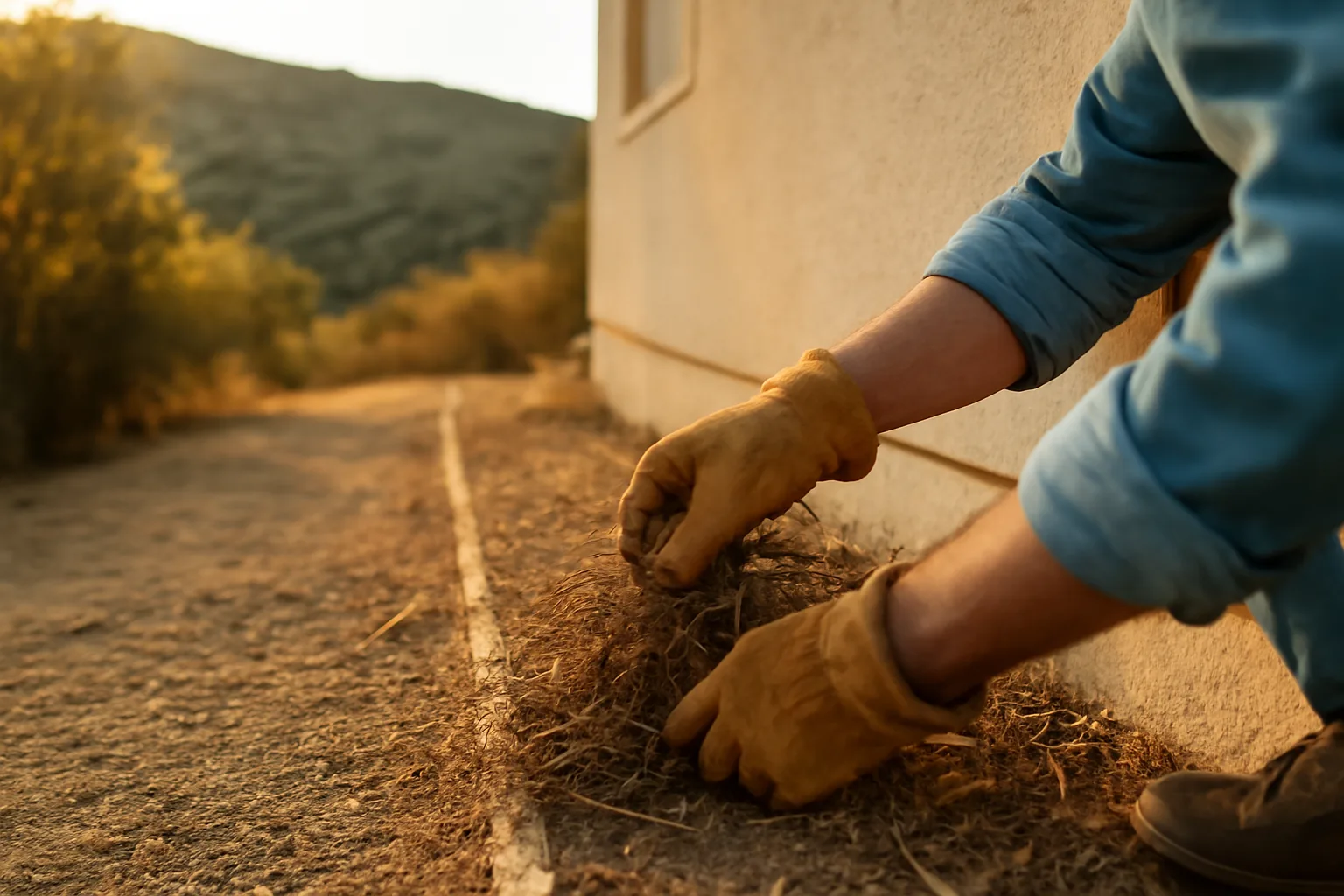
Most California wildfires start with people, not lightning. CAL FIRE's own numbers put human-caused ignitions at about 95% of wildfires statewide, from downed power lines, vehicle sparks, unattended campfires, equipment use on dry grass, and arson [1]. That means prevention is mostly about controlling ignition sources, not hoping for rain. The practical list looks like this: don't drive or park on dry grass (a hot catalytic converter can hit 1,000+ degrees Fahrenheit), mow before 10am on hot dry days, keep chainsaws and mowers away from vegetation on Red Flag days, make sure trailer chains aren't dragging on pavement, and fully drown and stir campfires until they're cold to the touch. CAL FIRE's Red Flag Warning guidance asks residents to avoid any outdoor spark-producing activity during those alerts [1]. For property owners, prevention also means defensible space. It doesn't stop a fire from starting somewhere else, but it changes whether your house survives when one arrives. That's a different problem than ignition prevention, and it's the one homeowners actually control. We cover the specific zone requirements below, and you can see how landscaping choices interact with those zones in fire safe landscaping california next to house. If you've already gotten a non-renewal or inspection letter, prevention thinking shifts again: you're more than reducing fire risk, you're building a paper trail an insurer or underwriter can actually see.
When does the California defensible space law go into effect?
California's defensible space requirement under Public Resources Code 4291 is already active law, not a future date. It requires 100 feet of defensible space (or to the property line, whichever is less) around structures in State Responsibility Areas and designated Very High Fire Hazard Severity Zones [2]. The confusion around a '2026 date' usually points to something else: proposed statewide Zone 0 ember-resistant zone regulations. The Board of Forestry and Fire Protection has been developing Zone 0 regulations (the 0-5 foot zone immediately around structures) under SB 63 and related legislation, with an original target of January 1, 2023 for regulation development and phased-in enforcement discussed for years after that [3]. As of the Board's public rulemaking materials, the Zone 0 regulations have not been finalized or taken statutory effect for existing homes; timelines have slipped multiple times. Homeowners should check the Board of Forestry's Defensible Space page directly for the current status rather than relying on a fixed date, because it has moved before [3]. What is settled now: the two-zone system under PRC 4291 (0-30 feet and 30-100 feet) applies today if you're in a State Responsibility Area or VHFHSZ, and local fire districts can add stricter requirements on top of the state minimum [2]. Check with your local fire district or fire safe council for anything beyond the state floor.
What fire-safe rules for homes take effect in 2026?
There isn't one single statewide '2026 fire code' homeowners should expect to hit all at once; the reality is a patchwork of local and state timelines. The most consequential proposed change remains the Zone 0 ember-resistant zone rule (noncombustible materials within 5 feet of the structure), which the Board of Forestry has discussed phasing toward roughly 2025-2026 for new construction in high-hazard zones, with existing homes potentially getting longer compliance windows [3]. Separately, insurers operating under California's updated Sustainable Insurance Strategy and the Department of Insurance's wildfire mitigation regulations have been rolling out new rating factor rules tied to Safer from Wildfires standards, which recognize community and home-level mitigation (including Zone 0-style hardening, ember-resistant vents, and Firewise USA participation) in rate-setting starting in phases through 2025-2026 [4]. The honest answer: don't plan around a single 2026 deadline. Instead, track two things separately, your local building and fire code (ask your building department directly, because dates vary by jurisdiction) and your insurer's own mitigation credit program timeline (ask your carrier or check the CDI Safer from Wildfires page) [4]. Both move independently of each other, and both move independently of PRC 4291, which is already in force.
How to prepare for a wildfire (the home checklist)
Preparing for a wildfire has two tracks that run in parallel: getting your property physically ready and getting your household ready to evacuate. Ready.gov's wildfire preparedness guidance breaks it into before, during, and after actions, and the 'before' list is the one most homeowners skip. Before fire season: clear the 0-5 foot zone of anything combustible (mulch, dry plants, stored firewood, doormats), keep gutters clear of leaves and needles, install 1/8-inch metal mesh over vents to block embers, and keep a garden hose long enough to reach all sides of the house. Ready.gov specifically recommends assembling a go-bag with medications, copies of insurance and identification documents, a battery radio, and a list of emergency contacts, plus knowing two ways out of your neighborhood in case one road is blocked. During an active threat: sign up for your county's emergency alert system before you need it (Cal Alert, Nixle, or your county's specific system), because cell towers can get overloaded during a fast-moving fire. Ready.gov also recommends practicing your evacuation route with your household at least twice a year, which almost nobody actually does until it's too late. After the immediate threat: photograph every room and the exterior of your home before you evacuate if there's time, because that documentation matters enormously later, whether for insurance claims you file yourself or for a non-renewal appeal. A one-time hardening and documentation pass, like what's in the [survival-kit-builder], gives you a structured way to capture all of that before an inspector or adjuster asks.
How to prevent forest fires and how to avoid forest fires (same rules, wider scope)
'Forest fire' and 'wildfire' get used interchangeably, but the prevention rules are the same whether you're worried about your backyard or a national forest. The U.S. Forest Service and Smokey Bear's campfire safety rules are the backbone: build fires only in designated rings, keep them small, never leave them unattended, and drown, stir, and feel for heat before walking away [5]. For recreational and rural land use, the biggest preventable ignition sources are the ones people don't think of as fire hazards: dragging trailer chains, mowing dry grass with metal blades, parking on dead vegetation, target shooting with steel-core ammunition on dry land, and welding or grinding without a spotter and water source nearby. CAL FIRE's PRC 4442 and 4443 equipment-use regulations require spark arrestors on chainsaws and specific clearance and water-extinguisher requirements for mowing, welding, and grinding operations on wildland-adjacent land during fire season [6]. Campfire and debris burn permits matter more than people expect. In California, most counties require a burn permit even for small debris piles, and many suspend all outdoor burning during declared fire season regardless of permit status [1]. Check current status directly with your local fire district or CAL FIRE unit before burning anything, because permit rules and burn bans change week to week depending on conditions.
How to prepare for forest fires (community and rural land angle)
If you own rural acreage or live adjacent to forest land, wildfire prep looks different than a suburban lot; you're managing fuel load across a much bigger area. Ready.gov and CAL FIRE both point to defensible space plus fuel break maintenance as the two core actions for larger properties [1]. A fuel break is a strip of reduced or removed vegetation, often along ridgelines, property lines, or roads, that slows fire spread and gives firefighters a place to make a stand. Unlike a homeowner's 100-foot defensible space, fuel breaks on larger rural parcels often need mechanical mastication, prescribed grazing, or contracted vegetation clearing, which is a bigger job than DIY brush clearing. If you're coordinating that kind of work, wildfire defensible space clearing contracts washington state dnr walks through how these contracts typically get scoped, even if you're not in Washington; the contract structure translates. Rural prep also means water access planning: know where your nearest hydrant, pond, or static water source is, and make sure your driveway and access road can handle a fire engine (CAL FIRE generally wants at least 10-12 feet of vertical clearance and a driveway that supports 40,000+ lbs. of vehicle weight for engine access, though exact numbers are set locally, so confirm with your local fire district).
Why won't people follow the defensible space law in California?
This is worth being honest about, because it's not simply a matter of ignorance. Compliance research and CAL FIRE's own program data point to a mix of cost, labor availability, aesthetic preference, and enforcement gaps. Cost is real. Removing mature trees, regrading slopes, and replacing landscaping within 100 feet can run into the thousands of dollars for a typical lot, and low-income and elderly homeowners, especially those on fixed incomes in rural counties, often can't absorb that without help. Labor is also a bottleneck; in high-risk counties, licensed tree services and vegetation contractors get booked out for months during fire season, especially right before inspection cycles. There's also a genuine belief gap. Some homeowners see defensible space as removing privacy screening or mature landscaping they've maintained for decades, and they weigh that loss against a wildfire risk that feels abstract until it isn't. Enforcement varies too: PRC 4291 gives local fire agencies authority to inspect and cite noncompliance, but staffing for inspections is thin in many rural counties, so many properties simply don't get checked most years [2]. None of that changes the outcome in a fire. Defensible space compliance is one of the few factors that shows up consistently in post-fire structure survival analyses, and it's also increasingly what insurers and FAIR Plan underwriters ask to see documented before they'll write or renew a policy.
How can we prevent forest fires at the community level?
Individual defensible space work matters, but wildfire behavior doesn't respect property lines; a single non-compliant lot in a Firewise community can undo a neighborhood's collective hardening work. That's why CAL FIRE and Cal OES both push community-level programs, more than individual checklists [1]. Firewise USA (run through the National Fire Protection Association, recognized by CAL FIRE) organizes neighborhoods to do collective risk assessments, coordinate chipper days for green waste, and apply for state and federal mitigation grants together, which spreads cost across many households instead of one. Community Wildfire Protection Plans (CWPPs), required under the Healthy Forests Restoration Act for federal fuels-reduction funding priority, map out where a county or fire district will focus limited mitigation dollars [7]. At the practical neighborhood level, the highest-value collective actions are: shared chipper or green-waste disposal days (because hauling brush is often the actual barrier to compliance, not the labor of cutting it), coordinated road and driveway clearance so fire apparatus can get through, and neighborhood-wide ember-resistant vent retrofits, since a single ember-vulnerable house downwind can ignite neighbors through radiant heat and flying embers even if your own home is hardened.
Is Santa Barbara safe from fire?
No coastal California city is 'safe' from wildfire in an absolute sense, and Santa Barbara County has some of the most documented major fire history in the state. The 2017 Thomas Fire burned over 281,000 acres across Ventura and Santa Barbara counties and was, at the time, the largest wildfire in modern California history, followed within weeks by the Montecito debris flow that killed 23 people [8]. Santa Barbara County sits in a landscape of chaparral-covered foothills against a Mediterranean climate with strong offshore Sundowner winds, a combination CAL FIRE and county hazard mapping both flag as high-risk. Much of the county's foothill and mountain-adjacent area (Montecito, Mission Canyon, parts of the Riviera and San Roque) falls inside CAL FIRE's Very High Fire Hazard Severity Zone maps, which you can check parcel-by-parcel on CAL FIRE's FHSZ viewer . If you live in or near Santa Barbara, the honest framing isn't 'is my city safe,' it's 'is my specific parcel in a VHFHSZ, and have I done the defensible space and hardening work that zone requires.' Check your exact designation directly on CAL FIRE's mapping tool, because risk varies block to block, more than city to city .
What insurers and inspectors actually want to see
If you've received a non-renewal letter or an inspection notice, the practical goal shifts from generic prevention to documented compliance. Insurers and FAIR Plan underwriters increasingly want proof, more than a compliant yard. That means: dated photos of your 0-30 and 30-100 foot zones, a copy of any defensible space inspection certificate from your local fire department, receipts for vent screening or roofing upgrades, and a clear record of when work was done. California's Safer from Wildfires regulation formally requires insurers to give rating credit for specific documented mitigation actions, which is a meaningful shift, but only if you can prove you did the work [4]. This is the exact gap the $99 one-time Wildfire Insurance Survival Kit is built for: a structured way to document your defensible space zones, hardening upgrades, and inspection history in the format insurers and FAIR Plan underwriters actually ask for. It doesn't file a claim or promise reinstatement or a discount; you send your own documentation, and the outcome is between you and your carrier. What it does is make sure you're not showing up to that conversation with a shoebox of unlabeled phone photos. If you're starting from a non-renewal letter, only you can prevent wildfires has more on turning basic prevention habits into something a claims adjuster or underwriter can actually verify.
Where to start if you're overwhelmed
If none of this feels doable all at once, here's the actual priority order that matches what CAL FIRE and post-fire research both point to. Do these in sequence, not all at once, and don't let the size of the 100-foot zone stop you from doing the 5-foot zone first. First, clear the 0-5 foot zone around your house: no mulch, no stored wood, no dry plants touching siding. This is the cheapest step and has the highest documented impact on ember ignition. Second, screen your attic and foundation vents with 1/8-inch metal mesh; embers entering vents are one of the most common ways homes ignite from a distance, well before flames arrive [1]. Third, clear the 5-30 foot zone of ladder fuels (anything that lets fire climb from grass to shrub to tree). Fourth, extend to 100 feet where your lot allows it, prioritizing anything uphill or upwind of the house, since fire moves faster uphill and with wind. If you're dealing with an active non-renewal, do the documentation step in parallel, not after. Photograph each zone as you finish it, dated and labeled, and keep receipts for any contractor work. For the roofing, siding, and vent-specific hardening steps that matter most to underwriters, see house fire and defensible for the deeper technical breakdown, and fire at a house for what actually happens during an ignition event, which explains why the vent and eave details matter as much as the yard.
Frequently asked questions
When does the California defensible space law go into effect?
PRC 4291's 100-foot defensible space requirement is already in effect in State Responsibility Areas and Very High Fire Hazard Severity Zones; it's not a future date. The proposed Zone 0 (0-5 foot ember-resistant zone) regulation is still moving through Board of Forestry rulemaking and hasn't taken final statutory effect for existing homes as of the Board's latest public materials.
Why won't people follow the defensible space law in California?
Mostly cost, labor shortages, and thin enforcement. Clearing 100 feet of vegetation can cost thousands of dollars, contractors get booked out during fire season, and rural counties often lack staff to inspect every parcel every year. Some homeowners also resist removing mature landscaping they value, even knowing the fire risk.
How do you prevent wildfires overall?
Since CAL FIRE attributes about 95% of California wildfires to human causes, prevention mostly means controlling ignition sources: no parking on dry grass, drowning campfires completely, avoiding outdoor equipment use on Red Flag days, and following local burn permit rules. Property-level defensible space then protects structures if a fire does start nearby.
What's the difference between preventing wildfires and preparing for one?
Prevention targets ignition sources (campfires, equipment sparks, downed lines); preparation assumes a fire will happen nearby and focuses on defensible space, home hardening, evacuation routes, and a go-bag. You need both, because even perfect personal prevention habits don't stop a fire that starts somewhere else and spreads to you.
How to prepare for a wildfire if I live in a high-risk zone?
Clear the 0-5 foot zone around your home, screen vents with 1/8-inch metal mesh, pack a go-bag with medications and documents, sign up for your county's emergency alert system, and know two evacuation routes. Ready.gov recommends practicing the evacuation route with your household at least twice a year.
How to prevent forest fires when camping or on rural land?
Use designated fire rings only, keep fires small, never leave them unattended, and drown, stir, and feel for heat before leaving. Avoid parking or driving on dry grass, since a hot catalytic converter can ignite vegetation, and check local burn permit and fire season status before any debris burning.
What fire-safe home rules take effect in 2026 in California?
There's no single fixed 2026 statewide deadline; it's a patchwork. The Board of Forestry's proposed Zone 0 ember-resistant zone rule has been discussed for phased 2025-2026 implementation, and insurers are rolling out Safer from Wildfires mitigation credit programs on their own timelines. Check your local building department and your insurer directly for actual dates.
Is Santa Barbara safe from fire?
No California community adjacent to wildland is fully safe from fire. Santa Barbara County saw the 281,000-plus acre Thomas Fire in 2017, and much of its foothill terrain sits inside CAL FIRE's Very High Fire Hazard Severity Zone maps. Check your specific parcel on CAL FIRE's FHSZ viewer rather than assuming city-wide safety.
How can communities prevent forest fires, more than individual homes?
Through coordinated programs like Firewise USA and Community Wildfire Protection Plans, which organize shared chipper days, coordinated road clearance, and grant-funded fuels reduction across a neighborhood. A single non-compliant lot can undermine a whole street's hardening work, so collective action matters as much as individual defensible space.
What's the fastest, cheapest wildfire prevention step for a homeowner?
Clearing combustible material within 5 feet of your house (mulch, dry plants, stored wood, doormats) and screening vents with 1/8-inch metal mesh. Both cost little beyond your own labor and address the most common way homes ignite from a distance: wind-blown embers, not direct flame contact.
Does defensible space actually stop a house from burning down?
Nothing guarantees a home survives a wildfire, but defensible space and ember-resistant construction consistently show up in post-fire assessments as factors distinguishing surviving homes from destroyed ones. It's risk reduction, not a guarantee, which is also why insurers increasingly ask for documented proof of the work.
Do I need a permit to burn debris on my property in California?
In most California counties, yes, even for small debris piles, and many counties suspend all outdoor burning during declared fire season regardless of permit status. Check current burn status and permit requirements directly with your local fire district or CAL FIRE unit before burning anything.
Sources
- CAL FIRE, Wildfire Prevention: about 95% of California wildfires are human-caused, and Red Flag Warning guidance on avoiding spark-producing activity
- California Public Resources Code Section 4291: 100 feet of defensible space required around structures in SRA and VHFHSZ
- California Board of Forestry and Fire Protection, Defensible Space / Zone 0: status and timeline of proposed Zone 0 ember-resistant zone regulations
- California Department of Insurance, Safer from Wildfires: insurers required to give rating credit for documented wildfire mitigation actions
- USDA Forest Service, Campfire Safety: drown, stir, and feel for heat campfire extinguishing procedure
- California Public Resources Code Sections 4442-4443: spark arrestor and equipment-use clearance requirements for mowing, welding, and grinding during fire season
- Healthy Forests Restoration Act of 2003, Community Wildfire Protection Plans: CWPPs required for federal fuels-reduction funding prioritization
- CAL FIRE, Thomas Fire Incident Archive: Thomas Fire burned over 281,000 acres across Ventura and Santa Barbara counties in 2017