Last updated 2026-07-25
TL;DR
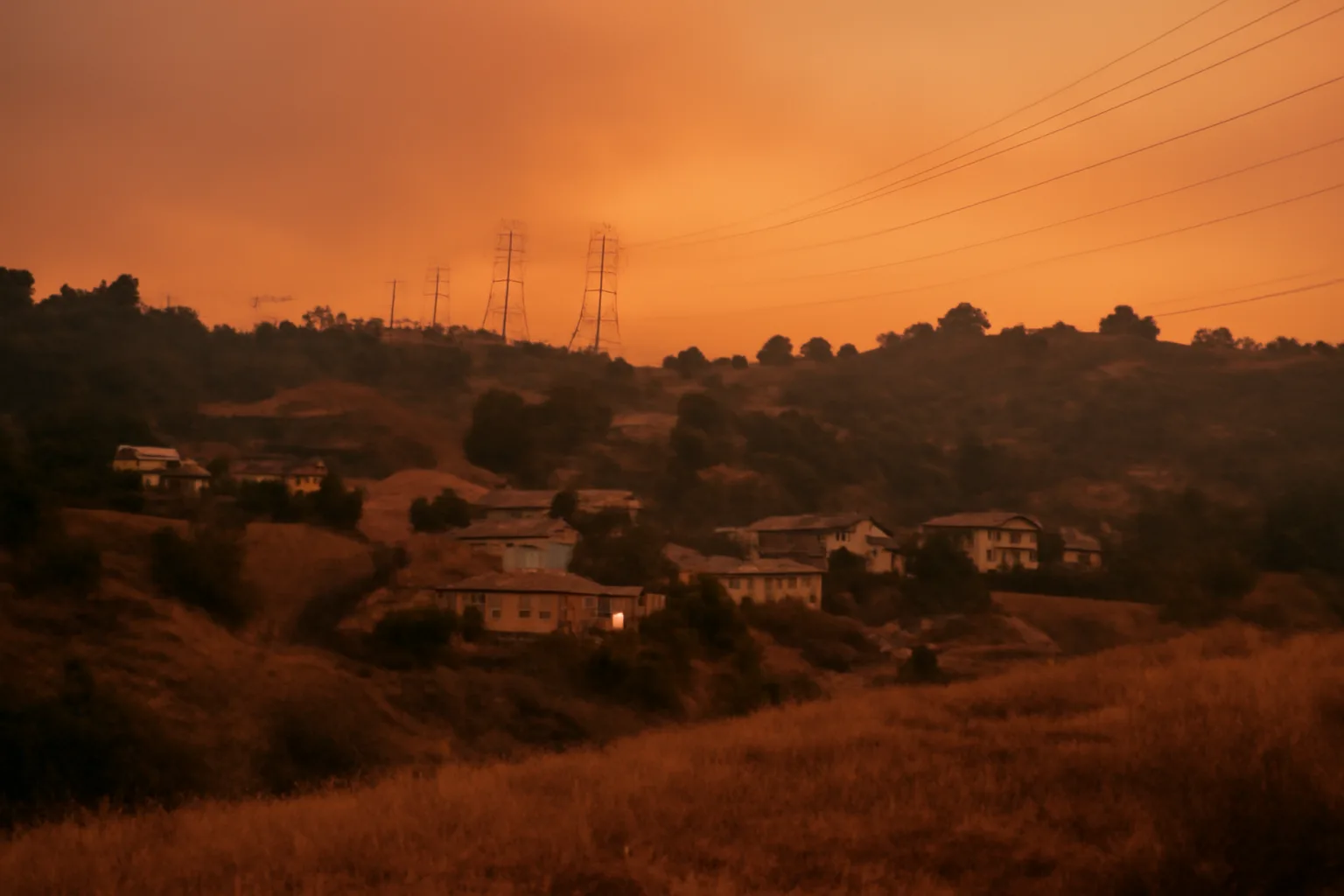
Utility wildfire mitigation plans are state-mandated documents (required in CA under Public Utilities Code 8386, and similar in OR, CO, AZ) that spell out how power companies reduce ignition risk: vegetation clearance around lines, grid hardening, and Public Safety Power Shutoffs. They matter to homeowners because insurers increasingly check utility risk scores, and PSPS events can strand you without power for days.
what is a utility wildfire mitigation plan
A utility wildfire mitigation plan (WMP) is a formal document, usually filed with a state utilities commission every year or every three years, that lays out how an electric utility will reduce the odds its equipment starts a fire. It covers vegetation management along power lines, equipment inspections, weather monitoring, and the conditions under which the utility will shut off power preemptively (a Public Safety Power Shutoff, or PSPS). In California, this isn't optional. Public Utilities Code Section 8386 requires every electric utility to prepare a wildfire mitigation plan and submit it to the Office of Energy Infrastructure Safety (OEIS) for approval [1]. The statute specifically requires the plan to include "the plan's objectives and a description of the utility's current wildfire risk" along with a list of specific mitigation activities and metrics to track progress [1]. These plans got serious attention after the 2017-2018 California wildfire seasons, when PG&E equipment was found responsible for the 2018 Camp Fire, the deadliest wildfire in California history with 85 civilian fatalities according to CAL FIRE's investigation summary [2]. That fire alone pushed the state to overhaul how utilities are regulated on this front. If you live near overhead power lines in a fire-prone area, this plan is the reason your neighborhood might lose power on a windy, dry day even when there's no fire nearby yet. It's also the reason a utility crew might show up to trim trees on your property line without much warning.
when does the california defensible space law go into effect
California's core defensible space law, requiring 100 feet of defensible space clearance around structures in State Responsibility Areas, has been in effect since 2005 under Public Resources Code Section 4291 [3]. What's changing is the enforcement and the new "ember-resistant zone" (Zone 0) requirement within 5 feet of structures. Zone 0 was created by Assembly Bill 3074 (2020), which added requirements for an ember-resistant zone to Public Resources Code 4291 [4]. As of this writing, CAL FIRE's Board of Forestry has been working through the formal rulemaking process to define exactly what Zone 0 requires (bare mineral soil, hardscape, or specific noncombustible materials within that 5-foot ring). Check the Board of Forestry's current rulemaking status directly, because proposed effective dates have shifted more than once [5]. The important nuance: the 100-foot defensible space requirement is already law and already enforced through CAL FIRE inspections and local fire agency inspections. Zone 0 is the piece still moving through rulemaking. Don't wait for the final Zone 0 regulation to start clearing combustibles next to your house. Every inspector and fire scientist agrees the space right against your walls is the highest-risk zone regardless of what the regulation ultimately requires. For a walkthrough of what defensible space actually looks like zone by zone, see our guide on fire safe landscaping next to your house.
what fire safe rules for homes take effect in 2026
Nothing in California's defensible space or Zone 0 rules has a confirmed statewide 2026 effective date as of this writing. What does have real 2026-adjacent movement is the Zone 0 regulation working through the Board of Forestry and Fire Protection's rulemaking docket, and insurers' own use of wildfire risk scores that increasingly mirror what the state is proposing. Here's the honest situation: the legislature set the framework in 2020 (AB 3074), but implementing regulations require a public comment period, environmental review, and Office of Administrative Law approval before they become enforceable. That process has taken years, not months. Rather than repeat a specific date that may already be wrong by the time you read this, check CAL FIRE's Board of Forestry rulemaking page directly for the current status [5]. Mitigation and inspection rules also vary by local fire district. Some jurisdictions (parts of Santa Barbara County, Marin County, and the Oakland hills, for example) already require stricter defensible space or ember-resistant construction than the state minimum. Fill in your specific district here: ______________ (check with your local fire department or the county fire marshal's office for district-specific deadlines and enforcement dates). What you can act on today, regardless of the regulatory calendar: clear combustible mulch, dead plants, and stored items from the 5 feet closest to your house, and get a Home Ignition Zone inspection if your fire district offers one. That's covered in more depth in our inspections hub.
how do utility wildfire mitigation plans affect PSPS shutoffs
Your WMP determines the wind speed, humidity, and fuel moisture thresholds that trigger a Public Safety Power Shutoff in your specific area. These thresholds aren't uniform. A utility might cut power at sustained winds of 25 mph in one high-risk circuit and wait until 45 mph in a lower-risk area. California's three big investor-owned utilities (PG&E, Southern California Edison, and San Diego Gas & Electric) each publish their own PSPS protocols as part of their WMP filings with OEIS. Ready.gov's wildfire preparedness guidance recommends having a plan for extended power outages as part of basic wildfire readiness, including battery backups for medical equipment and a way to keep food cold. If you're in a high fire-threat district, expect PSPS events during red flag conditions, sometimes lasting 24 to 72 hours. Utilities are required to notify customers in advance when possible, but notification windows can be as short as a few hours during fast-moving wind events. Sign up directly for your utility's PSPS alert system rather than relying on general news coverage; the alerts are specific to your account and circuit.
how to prevent wildfires
Most wildfires start from a source you can actually control: unattended debris burns, dragging trailer chains, mowing dry grass with metal blades, and discarded cigarettes. CAL FIRE's own wildfire prevention guidance lists these as the leading preventable ignition sources in California, alongside equipment use during red flag warning days [6]. On your own property, the highest-leverage actions are: clear dead vegetation and debris within 5 feet of structures, keep gutters free of dry leaves and needles, store firewood at least 30 feet from the house, and never use power equipment (mowers, trimmers, grinders) on dry grass during high wind or red flag warnings. At the community level, prevention means supporting defensible space enforcement, not fighting it. A lot of neighborhoods lose homes not because one house failed but because one neglected lot ignited and spread. Ready.gov specifically recommends removing dead vegetation and maintaining a noncombustible zone around the home as core wildfire prevention steps for homeowners. If you burn debris legally in a rural area, always check for burn day restrictions with your local air district or fire department first. Many California counties suspend burn permits entirely during dry season regardless of what your permit says.
how to prepare for a wildfire
Wildfire preparation has three real phases: home hardening (structural and vegetation work done months or years ahead), an evacuation plan (practiced, more than written down), and a go-bag ready at all times during fire season. Ready.gov's wildfire preparedness page recommends assembling an emergency supply kit, planning two evacuation routes out of your neighborhood, and signing up for local emergency alerts before fire season starts, not during an active incident. Don't wait for a red flag warning to figure out where your pets' carriers are. Documentation matters more than most people think. Before a fire threatens your area, photograph or video every room of your house, your exterior, your roof, and any recent upgrades (new roof, ember-resistant vents, defensible space work). Insurers ask for proof of pre-loss condition and proof of mitigation work, and "I'm pretty sure I did that" doesn't hold up as well as a dated photo or receipt. This is where the $99 Wildfire Insurance Survival Kit from DefensibleHome comes in: it's a one-time, self-guided way to organize your home inventory, mitigation records, and defensible space documentation into a single packet before you ever need it. We don't file claims on your behalf. You still send your own documentation. It just means you're not scrambling to remember what work you did three years ago when a claim or non-renewal notice shows up. Get started at /survival-kit-builder. Beyond documentation, review your homeowner's policy now for wildfire-specific exclusions and check whether your state's FAIR Plan would even cover you if you're dropped. That's a separate conversation worth having with your agent before you're in crisis mode.
how to prevent forest fires
Forest fire prevention outside your immediate property line comes down to responsible use of fire and equipment on public and private wildland. The U.S. Forest Service and CAL FIRE both point to human activity, not lightning, as the cause of the vast majority of wildfires nationally; campfires, vehicle exhaust systems, and equipment sparks are recurring culprits [6]. Specific habits that prevent forest fires: fully extinguish campfires with water (more than dirt) until they're cold to the touch, avoid parking vehicles on dry grass where a hot exhaust or catalytic converter can ignite it, and follow local fire restrictions, which tighten automatically during drought conditions in most Western states. If you manage or own forested land, thinning overgrown stands and removing ladder fuels (the small trees and brush that let ground fires climb into the canopy) reduces the odds a fire spreads catastrophically once it starts. This is slower and less dramatic than firefighting, but it's the difference between a fire that stays low-intensity and one that becomes unstoppable. Report unattended fires and suspicious smoke immediately. Early detection, more than any single prevention technique, is what keeps a small fire from becoming a mega-fire.
how to avoid forest fires
Avoiding forest fires as a homeowner or recreational user means matching your behavior to current conditions, not the conditions from last week. Check your local fire danger rating before any activity involving heat, sparks, or flame, whether that's a campfire, welding project, or even driving through tall grass. During red flag warnings (issued by the National Weather Service when conditions favor rapid fire spread), avoid all outdoor burning, defer equipment use that could throw sparks, and postpone any activity that could ignite dry vegetation. These warnings are specific and time-bound; they're not a general seasonal advisory. If you live at the wildland-urban interface, avoiding forest fires also means not treating your own defensible space work as optional because "the forest service will handle it." Public land agencies manage vast acreage with limited crews. Your five feet of Zone 0 and your 100 feet of defensible space are the parts of the equation only you control. See our guide on defensible space work for what a proper inspection actually checks.
how to prepare for forest fires
Preparing for a forest fire threat near your property means the same core steps as urban wildfire prep, adjusted for typically longer response times from fire crews in remote areas. Have a written evacuation plan with at least two routes, since forest roads can be blocked by fallen trees or fire activity faster than city streets. Maintain a defensible space perimeter that accounts for slope; fire moves faster uphill, so if your home sits above a slope with forest fuel below it, CAL FIRE guidance recommends extending your effective clearance distance on the downhill side. A flat 100-foot radius doesn't account for how fire actually behaves on terrain. Stock a go-bag with N95 or better respirator masks, since forest fire smoke exposure often precedes any direct flame threat by days, and can affect air quality hundreds of miles from the fire itself. Finally, know your area's specific evacuation zone designation if your county uses one (many California and Colorado counties now do), and understand the difference between an evacuation warning and an evacuation order. A warning means get ready to leave. An order means leave now.
is santa barbara safe from fire
No area in California's wildland-urban interface is fully "safe" from fire, and Santa Barbara County has direct experience with this: the 2017 Thomas Fire burned over 281,000 acres across Ventura and Santa Barbara counties and was, at the time, the largest wildfire in modern California history according to CAL FIRE incident records [7]. The Thomas Fire was followed by the January 2018 Montecito debris flow, which killed 23 people when rain fell on the fire-scarred hillsides [7]. Santa Barbara County has since adopted some of the more active defensible space and building code enforcement in the state, particularly in the foothill communities of Montecito, Santa Barbara, and Goleta. That doesn't make those neighborhoods immune. It means the risk is well understood locally and mitigation work is taken seriously by local fire agencies. If you're evaluating whether a specific Santa Barbara neighborhood is defensible, the honest answer depends on lot-specific factors: slope, vegetation type and density, distance to open wildland, and the age and materials of the structure itself. CAL FIRE's fire hazard severity zone maps, available through the state's official mapping tool, show the specific zone designation for any address in the state [8]. Check your exact parcel rather than relying on the county's general reputation. Mitigation and inspection requirements vary by local fire district within Santa Barbara County. Fill in your specific district here: ______________ (contact the Santa Barbara County Fire Department or your city fire marshal for current defensible space inspection schedules).
how can we prevent forest fires as a community
Community-level forest fire prevention works best when it combines individual defensible space compliance with coordinated fuel breaks and shared evacuation planning. A single non-compliant lot in a Firewise-type community can undermine the defensible space work of every neighbor around it, since fire doesn't respect property lines. Many fire-prone communities now organize through programs like Firewise USA (administered by the National Fire Protection Association) or local Fire Safe Councils, which coordinate neighborhood-wide chipping days, shared fuel reduction projects, and joint evacuation drills. These programs work because they turn an individual homeowner's $2,000 defensible space job into a community-wide fuel break that actually slows fire spread at scale. Utilities matter here too. Their wildfire mitigation plans increasingly include community-facing elements: funding for local fuel reduction partnerships, undergrounding lines in the highest-risk corridors, and grants for vegetation management near shared infrastructure. Ask your utility whether they fund or partner with local Fire Safe Councils; several of California's major utilities do, as part of the community engagement sections required in their WMP filings [1]. If your neighborhood hasn't organized around this yet, the state's Fire Safe Council network and your county fire department are the two best starting points. Community coordination beats individual heroics almost every time in wildfire outcomes.
why won't people follow the defensible space law in california
Compliance gaps come down to a mix of cost, confusion about what's actually required, and simple procrastination, not defiance. Clearing 100 feet of defensible space on a wooded lot can run into thousands of dollars in labor and equipment, and many homeowners, especially retirees on fixed incomes, genuinely can't absorb that cost in one season. There's also real confusion about what the law requires versus what's recommended. Public Resources Code 4291 sets the legal minimum, but it doesn't specify exact plant species, exact clearance techniques, or how to handle slope adjustments, leaving homeowners to interpret guidance from multiple sources (CAL FIRE, their insurer, their local fire department) that don't always agree in emphasis. Some homeowners also resist because they moved into a wooded area specifically for the trees and privacy, and defensible space work can feel like it's undoing the reason they bought the property. That's a real emotional cost, even when the safety logic is sound. Enforcement itself is uneven. CAL FIRE and local fire agencies conduct defensible space inspections, but staffing and inspection frequency vary widely by district, and there's often a gap between an official inspection notice and any real penalty for non-compliance. Insurers have started filling that enforcement gap themselves, using non-renewal as the consequence homeowners actually respond to. For more on how insurers use this information, see our guide on what happens after a house fire and fire at a house for post-incident documentation steps.
how utility risk data connects to your insurance
Insurers increasingly pull the same wildfire risk data utilities use for their mitigation plans (CAL FIRE fire hazard severity zone maps, utility PSPS frequency data, and vegetation density around your specific parcel) when deciding whether to renew your policy. A property sitting in a high-frequency PSPS zone, even one that's never burned, can read as higher risk to an underwriter using third-party wildfire scoring models. This is part of why non-renewal notices sometimes feel disconnected from your actual defensible space work. The insurer's model may weight utility infrastructure risk and regional fire history more heavily than your individual mitigation efforts, at least until you can document those efforts directly. That documentation gap is exactly where homeowners get stuck. You did the work: cleared the brush, installed ember-resistant vents, replaced the wood fence section touching the house. But if you can't produce dated photos, contractor invoices, and a clear inventory when the non-renewal letter or claim adjuster shows up, that work doesn't count for much in the paperwork. This is a documentation and organization problem, not a legal one, and it's solvable without hiring anyone. Building a paper trail before you need it (photos dated and organized by defensible space zone, receipts for hardening upgrades, a full home inventory) is the single most useful thing a homeowner in a non-renewal state can do this season. We're not a public adjuster and we don't file claims or promise reinstatement or discounts. What we built is a self-guided way to get that documentation organized in one sitting instead of scattered across old emails and phone photos. If you want a structured starting point, the $99 Wildfire Insurance Survival Kit walks through exactly what to photograph and record, zone by zone.
Frequently asked questions
When does the California defensible space law go into effect?
The core 100-foot defensible space requirement under Public Resources Code 4291 has been law since 2005. The newer Zone 0 ember-resistant zone requirement (5 feet from structures) was authorized by AB 3074 in 2020 but is still moving through CAL FIRE Board of Forestry rulemaking; check the board's site for the current effective date.
Why won't people follow the defensible space law in California?
Mostly cost, confusion, and inconsistent enforcement, not defiance. Clearing 100 feet of vegetation can cost thousands of dollars, the exact requirements aren't always clear to homeowners, and inspection frequency varies widely by fire district, so consequences for non-compliance feel inconsistent.
How can I prevent wildfires around my own home?
Clear dead vegetation and debris within 5 feet of your house, keep gutters free of dry leaves and needles, store firewood at least 30 feet away, and never run mowers or trimmers on dry grass during red flag warnings. CAL FIRE lists debris burns, equipment sparks, and discarded cigarettes as leading preventable ignition sources.
How do I prepare for a wildfire if I get an evacuation warning?
Have two evacuation routes planned and practiced, a go-bag ready with essentials and pet supplies, and your home documented with dated photos of every room, the exterior, and any mitigation upgrades. Ready.gov recommends signing up for local alerts before fire season, not during an active incident.
What fire safe rules for homes take effect in 2026?
No confirmed statewide 2026 date exists as of this writing for California's Zone 0 ember-resistant zone rule; it's still in CAL FIRE Board of Forestry rulemaking. The existing 100-foot defensible space law is already enforced. Check your local fire district for any district-specific 2026 deadlines.
Is Santa Barbara safe from fire?
No wildland-urban interface area is fully safe. Santa Barbara County experienced the 2017 Thomas Fire (over 281,000 acres) followed by the deadly 2018 Montecito debris flow. The county has strong defensible space enforcement now, but risk still depends on your specific parcel's slope, vegetation, and proximity to wildland.
How do forest fires typically start?
The large majority of wildfires in the U.S. are human-caused, from unattended campfires, equipment sparks, vehicle exhaust on dry grass, and discarded cigarettes, according to CAL FIRE and U.S. Forest Service data. Lightning causes a minority of ignitions, though those often occur in remote areas that burn larger before detection.
What is a Public Safety Power Shutoff (PSPS) and why does my utility do it?
A PSPS is a preemptive power shutoff a utility triggers during high-wind, low-humidity conditions to prevent its equipment from sparking a wildfire. The specific wind speed and humidity thresholds are set in each utility's wildfire mitigation plan and can vary by circuit.
How do utility wildfire mitigation plans get approved in California?
Under Public Utilities Code Section 8386, every California electric utility must submit a wildfire mitigation plan to the Office of Energy Infrastructure Safety (OEIS) for review and approval, typically on an annual or multi-year cycle, detailing risk assessment and specific mitigation activities.
Does clearing defensible space guarantee my insurance won't be non-renewed?
No. Defensible space work reduces your risk and gives you documentation to show an insurer, but it doesn't guarantee renewal. Insurers weigh regional risk data, utility infrastructure risk, and fire hazard severity zone maps alongside your individual mitigation work.
What's the difference between an evacuation warning and an evacuation order?
An evacuation warning means conditions could worsen quickly and you should be ready to leave immediately. An evacuation order means leave now; it's mandatory in the areas covered. Many counties in CA, CO, and OR now use numbered evacuation zones to communicate this precisely.
How much does defensible space clearing typically cost?
Costs vary widely by lot size, slope, and vegetation density, often ranging from a few hundred dollars for a small, already-maintained yard to several thousand dollars for a heavily wooded acre-plus lot needing significant tree and brush removal. Get quotes from licensed local contractors for your specific parcel.
Can my utility company make me remove trees on my own property?
Utilities have legal easement rights to trim or remove vegetation that threatens power lines, even on private property, as part of their required vegetation management under state wildfire mitigation plan rules. Check your specific utility's vegetation management notice process, since notification requirements vary by company and state.
Sources
- California Legislative Information, Public Utilities Code Section 8386: requirement that CA electric utilities file wildfire mitigation plans with the state
- CAL FIRE, Camp Fire incident information: Camp Fire fatality count and status as deadliest CA wildfire
- California Legislative Information, Public Resources Code Section 4291: 100-foot defensible space requirement in State Responsibility Areas, in effect since 2005
- California Legislative Information, Assembly Bill 3074 (2020): creation of the ember-resistant Zone 0 requirement amending PRC 4291
- California Board of Forestry and Fire Protection, Zone 0 rulemaking: current status of Zone 0 ember-resistant zone regulation rulemaking
- CAL FIRE, Wildfire Prevention: human-caused ignition sources including debris burning and equipment use as leading wildfire causes
- CAL FIRE, Thomas Fire incident information: Thomas Fire acreage and status as largest CA wildfire at the time, and subsequent Montecito debris flow deaths
- CAL FIRE, Fire Hazard Severity Zone Maps: official parcel-level fire hazard severity zone designations used to assess local wildfire risk