Last updated 2026-07-25
TL;DR
Vinyl siding has no meaningful fire rating in the way homeowners hope. It softens around 165°F and melts closer to 320°F, well below the temperatures a wildfire ember bed or radiant heat wave produces. It's not banned in most wildfire codes, but fiber cement, stucco, and treated wood siding perform far better and are what most insurers and inspectors want to see in Wildland Urban Interface zones.
does vinyl siding have a fire rating?
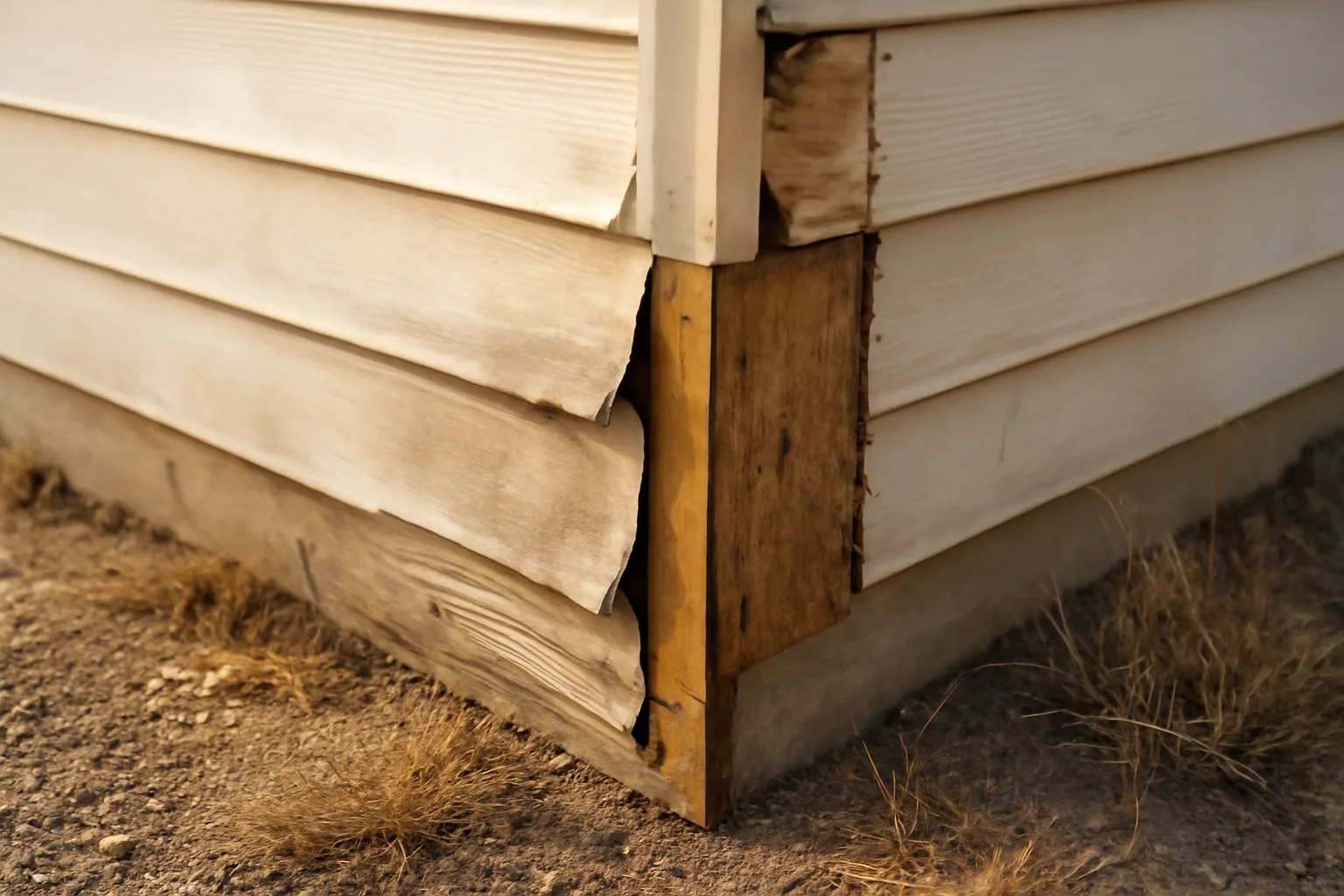
Not in the way most people mean it. Vinyl siding is tested under ASTM D635 for flame spread and self-extinguishing behavior, and it's rated under some local codes as a Class B or C material depending on the backing and installation, but it doesn't carry a fire-resistance rating like a wall assembly does (those are measured in hours, like a 1-hour or 2-hour rated wall). Vinyl siding is a vinyl (PVC) product, and PVC starts softening around 165°F and melts around 320°F. A wildfire's radiant heat alone can exceed 500°F near a structure, and direct flame contact runs into the thousands. So the honest answer: vinyl siding doesn't resist fire, it deforms and often ignites or falls away, exposing the sheathing behind it. That matters more than people think, because exposed sheathing (usually OSB or plywood) is what actually burns and lets fire into the wall cavity. The siding itself isn't usually the primary combustible load in a home ignition, but it's often the first failure point that opens the door for embers. CAL FIRE's guidance on Wildland Urban Interface construction is blunt about material class rather than brand: for homes in higher-risk zones, materials need to meet ignition-resistant standards under California's Building Code Chapter 7A, and vinyl siding by itself generally does not meet that bar without a rated backing assembly [1].
what temperature does vinyl siding melt or ignite at?
Vinyl (PVC) siding softens around 165°F, sags and deforms by roughly 250°F, and reaches melting/ignition territory around 320°F to 400°F depending on the specific compound and additives used. That's a wide range because manufacturers vary in the exact PVC blend, but every published figure sits well below what a wildfire produces. For comparison, radiant heat from a wildfire front can hit 1,000°F to 1,200°F at close range, and direct flame contact is higher still. Embers landing in gutters or against siding don't need direct flame exposure to cause damage. Sustained heat from a nearby burning shed, fence, or mulch bed is often enough to soften and warp vinyl long before the main fire front arrives. This is why insurers underwriting in wildfire zones increasingly ask about siding material specifically, more than defensible space. A melted section of vinyl siding creates a gap. Gaps let embers and heat into the wall cavity. That's the actual failure mechanism, and it's documented in post-fire structure assessments from CAL FIRE and the Insurance Institute for Business & Home Safety, both of which point to combustible siding and unscreened vents as top contributors to home loss in WUI fires [2].
is vinyl siding banned in wildfire zones?
In most places, no, it's not outright banned, but it's heavily discouraged and sometimes practically excluded by code requirements. California's Chapter 7A (Building Code, Title 24, Part 2) governs construction in Wildland-Urban Interface Fire Areas and requires ignition-resistant exterior wall coverings; vinyl siding alone typically doesn't satisfy this without a compliant assembly behind it, which is why most new construction and major remodels in high fire hazard severity zones use fiber cement, stucco, or treated materials instead [1]. Colorado doesn't have a single statewide WUI building code; it's handled county by county, so whether vinyl siding is restricted where you live depends on your local fire district and building department. Oregon's Senate Bill 762 created a statewide framework for wildfire risk mapping and defensible space, with building code standards for the wildland-urban interface expected to phase in, though the exact material requirements are still being finalized through the Oregon State Fire Marshal's rulemaking process [3]. Arizona similarly leaves specific material bans to county and municipal codes rather than a single state mandate. Bottom line: check your specific fire district's building code before you assume vinyl is fine or assume it's banned. Neither blanket assumption is safe. Fire safe landscaping California next to house covers the broader defensible space rules that often get enforced alongside siding requirements.
what siding material has the best fire rating?
| Vinyl (PVC) | ~165°F softens, ~320-400°F melts | Deforms and falls away, exposing sheathing | |
|---|---|---|---|
| Wood (untreated) | ~300°F ignition, lower with prolonged exposure | Combustible, needs treatment or 7A-compliant assembly | |
| Fiber cement | Noncombustible per ASTM E136 | Common Chapter 7A compliant choice | |
| Stucco (3-coat) | Noncombustible | Long track record in CA wildfire zones | |
| Metal (steel/aluminum) | Noncombustible, but conducts heat | Can transfer heat to framing if not detailed correctly | Fiber cement (brands like HardiePlank) is the most common recommendation from fire-hardening contractors because it's noncombustible under ASTM E136 testing and is widely stocked, moderately priced, and simple for most siding crews to install. Stucco performs just as well but costs more to repair or match if it cracks. Metal siding is noncombustible but needs careful detailing at seams and fasteners so heat doesn't transfer straight into wood framing behind it. |
Fiber cement, stucco (traditional 3-coat or synthetic over a rated assembly), and some treated or engineered wood products significantly outperform vinyl. Here's roughly how common siding materials compare on fire behavior, based on ignition-resistance testing referenced in CAL FIRE's WUI building materials guidance and industry ASTM fire testing standards [1] [4]: | Siding material | Ignites/softens at | Notes |
will replacing vinyl siding lower my insurance non-renewal risk?
It can help, but it's rarely the single factor that flips a non-renewal decision. Insurers and the state FAIR Plans that back up private carriers in high-risk areas look at the whole picture: defensible space compliance, roof material, vent screening, siding, and proximity to vegetation. Siding material is one line item among several on most wildfire risk models used by carriers like the California FAIR Plan and Colorado's Fair Access to Insurance Requirements (FAIR) Plan. That said, siding is one of the more visible, verifiable upgrades an inspector can note, and it directly addresses the ember-intrusion pathway that shows up repeatedly in post-fire loss studies. If you're already re-siding for other reasons (storm damage, age, resale), choosing a Chapter 7A compliant material instead of vinyl is a reasonable use of that spend. If your vinyl siding is otherwise fine and you're just trying to satisfy an inspection letter, ripping it out purely for insurance purposes is a bigger financial swing (often $8,000 to $20,000+ for a typical single-family home, depending on square footage and material) than most other mitigation steps, like clearing the first five feet around the foundation or screening vents, which cost far less and often carry more weight in inspection checklists. Document what you do either way. Photos, receipts, contractor invoices, and before/after shots matter when you're building a paper trail for an insurer or dispute. A resource like the $99 Wildfire Insurance Survival Kit is built around organizing exactly that kind of documentation so you're not scrambling when a renewal letter or adjuster request shows up.
when does the california defensible space law go into effect?
California's core defensible space law, requiring 100 feet of defensible space clearance around structures in State Responsibility Areas (or as adopted locally in Very High Fire Hazard Severity Zones), has been in effect since 2005 under Public Resources Code Section 4291. What's newer and still rolling out is the "ember-resistant zone" requirement, sometimes called Zone 0, for the 0-5 foot area immediately next to structures. CAL FIRE and the Board of Forestry have been developing specific Zone 0 regulations under SB 63 (2023) and earlier authorizing legislation, with the target being regulations that take effect for existing structures; as of the most recent CAL FIRE guidance, enforcement details and exact compliance deadlines are still being finalized through the regulatory process, so homeowners should check current status directly with CAL FIRE's defensible space page rather than assume a fixed date has already passed. Check your specific fire district's bulletin for local enforcement timing, since counties and CAL FIRE units can differ in inspection scheduling even under the same state law.
what fire safe standards take effect in 2026?
This is genuinely a moving target, and reporting on it varies. Some California building code updates connected to Chapter 7A and Zone 0 ember-resistant zone standards have been discussed with target implementation windows in the mid-2020s, but as of now there isn't a single, universally confirmed "2026 fire safe standard" that applies uniformly across all states. The most reliable approach: check CAL FIRE's official defensible space and building standards pages directly, plus your state fire marshal's office, since Oregon (via SB 762 rulemaking through the Oregon State Fire Marshal) and Colorado (via county-level adoption) are on different timelines entirely [3]. If you've heard a specific 2026 date from a neighbor or an inspector, ask them to point you to the actual regulation number, more than a rumor. Regulatory rollouts in this space have already slipped past earlier announced dates more than once, so treat any specific date you hear secondhand as provisional until you see it on an official.gov page.
why won't people follow the defensible space law in california?
Cost, labor availability, and enforcement gaps are the three big reasons, based on patterns reported by CAL FIRE and county fire agencies rather than any single study. Clearing 100 feet of defensible space on a sloped, brush-heavy lot can run into thousands of dollars in contractor fees, and many rural or semi-rural homeowners simply don't have that cash sitting around, especially on top of already-rising insurance premiums. There's also an enforcement reality: CAL FIRE and local fire departments conduct defensible space inspections, but the actual citation and fine process (violations can result in fines up to $500 under PRC 4291's enforcement provisions in some jurisdictions) doesn't happen uniformly across every parcel every year, so some homeowners gamble that they won't be inspected in a given season. Add in disagreements over what counts as compliant (removing mature trees people don't want to lose, disputes with neighbors over shared property lines) and you get a real compliance gap that CAL FIRE itself has acknowledged in public messaging campaigns like "Ready, Set, Go!" aimed at closing it through education rather than just enforcement.
how to prepare for a wildfire (and a house fire generally)
Preparation splits into three buckets: home hardening, defensible space, and an evacuation plan with documentation ready to go. Ready.gov's wildfire preparedness guidance recommends creating and maintaining defensible space, using fire-resistant building materials, and having a family emergency communication plan established before fire season starts, not during an evacuation warning [5]. Practically, that means: clear the 0-5 foot zone around your foundation of anything combustible (mulch, dry plants, stored firewood), screen attic and foundation vents with 1/8 inch metal mesh to block ember intrusion, keep gutters clear of leaves and debris, and know your two ways out of the neighborhood in case one route is blocked. Keep copies of your insurance policy, a home inventory with photos, and ID documents somewhere you can grab fast or already stored digitally offsite. The siding conversation fits into home hardening specifically. If you're planning any exterior work, pair it with vent screening and gutter guards since those are cheaper wins that address the same ember-intrusion problem. House fire and fire at a house go deeper into structure-specific ignition points if you want the fuller picture.
how to prevent wildfires and forest fires
Most wildfires are human-caused, not lightning-caused. Depending on the region and year, roughly 85-90% of wildfires in the U.S. are attributed to human activity according to figures cited by the National Park Service and echoed in CAL FIRE's public messaging, including unattended campfires, debris burning, equipment sparks, and discarded cigarettes . Preventing forest fires at the individual level mostly comes down to controllable habits: fully extinguish campfires (drown, stir, drown again), don't park or idle vehicles over dry grass (catalytic converters run hot enough to ignite it), avoid outdoor burning during red flag warnings, and maintain equipment like chainsaws and mowers that can throw sparks. At the community level, prevention leans on defensible space compliance, vegetation management along power line corridors, and coordinated fuel reduction projects, which is part of why programs like Smokey Bear's "Only You Can Prevent Wildfires" campaign exist: individual behavior genuinely moves the needle on ignition sources, even though it can't stop lightning-caused fires or control weather conditions that drive fire behavior once a fire starts. Only you can prevent wildfires covers this messaging history and the practical prevention checklist in more detail.
is santa barbara safe from fire?
No area in California's coastal or foothill zones is fully "safe" from wildfire risk, and Santa Barbara County has direct experience with this: the 2017 Thomas Fire burned over 281,000 acres and was, at the time, the largest wildfire in modern California history, followed just weeks later by the deadly Montecito debris flow that killed 23 people when rain hit the burn scar . Santa Barbara city and county sit at the edge of chaparral-covered foothills, which is classic wildfire fuel terrain, and CAL FIRE maps parts of the county within Very High Fire Hazard Severity Zones. That doesn't mean every neighborhood carries equal risk. Homes right up against open hillside or canyon terrain face materially higher exposure than homes in flatter, more urbanized parts of the city. If you're evaluating a specific address, check CAL FIRE's Fire Hazard Severity Zone viewer for that parcel rather than relying on general reputation, since risk in Santa Barbara County varies block by block depending on slope, vegetation, and distance to open space .
so is it worth replacing vinyl siding just for fire risk?
If your vinyl siding is old, cracked, or already needs replacement, upgrading to fiber cement or stucco is a reasonable and defensible choice for a wildfire zone, and it's the kind of upgrade an insurer or inspector will actually notice. If your vinyl siding is in good shape and you're just anxious after a neighbor's non-renewal letter, spend your money on cheaper, higher-impact fixes first: ember-resistant vent screens (roughly $50-200 in materials for a typical home), clearing the 0-5 foot zone, and a Class A fire-rated roof if yours isn't already one. Siding replacement is a real project, not a weekend fix, and it's expensive enough that it should be planned alongside other exterior work rather than rushed in isolation. Use whatever documentation and mitigation records you build up (contractor invoices, before/after photos, inspection checklists) as your evidence file for insurance conversations. That's exactly the gap something like the $99 Wildfire Insurance Survival Kit is meant to fill: a simple, one-time way to organize your mitigation proof so you're not digging through email threads when a carrier asks for it. We don't file claims or negotiate with insurers on your behalf; you stay in control of what you send and when.
Frequently asked questions
Does vinyl siding have a fire rating?
Not a formal fire-resistance rating like a wall assembly. Vinyl siding is tested for flame spread under ASTM standards, but it softens around 165°F and melts near 320-400°F, well below wildfire radiant heat levels. Most Wildland-Urban Interface building codes prefer noncombustible alternatives like fiber cement or stucco instead.
Is vinyl siding banned in California wildfire zones?
Not banned outright, but California's Chapter 7A building code requires ignition-resistant exterior wall coverings in Wildland-Urban Interface Fire Areas, which vinyl siding alone typically doesn't satisfy without a compliant backing assembly. Check your local fire district's building department for the specific requirement on your parcel.
What temperature does vinyl siding melt at?
Vinyl (PVC) siding softens around 165°F, sags by around 250°F, and reaches melting or ignition temperatures around 320-400°F depending on the specific compound. Wildfire radiant heat can exceed 1,000°F, far above any of these thresholds.
When does the California defensible space law go into effect?
The core 100-foot defensible space requirement under Public Resources Code Section 4291 has been in effect since 2005. Newer Zone 0 (0-5 foot ember-resistant zone) regulations are still being finalized by CAL FIRE and the Board of Forestry; check CAL FIRE's official page for current enforcement status.
Why won't people follow the defensible space law in California?
Cost of clearing brush-heavy or sloped lots, inconsistent enforcement across parcels, and disputes over what counts as compliant clearing are the main reasons cited by fire agencies. It's not usually denial of risk, it's often financial constraint plus uneven inspection frequency.
How can I prevent wildfires around my home?
Extinguish campfires completely, avoid outdoor burning during red flag warnings, keep equipment maintained to avoid sparks, and maintain defensible space and ember-resistant zones around structures. Roughly 85-90% of wildfires are human-caused, so individual behavior genuinely reduces ignition risk.
How do I prepare for a wildfire?
Clear defensible space, harden your home's vents and siding, keep gutters debris-free, and prepare an evacuation plan with two routes out. Ready.gov recommends having your family communication plan and document copies ready before fire season starts, not during an evacuation warning.
What fire safe standards take effect in 2026?
There's no single confirmed nationwide 2026 standard. California's Zone 0 ember-resistant zone rules and parts of Oregon's SB 762 wildfire building code framework are in active rulemaking with target implementation windows discussed for the mid-2020s, but check CAL FIRE and your state fire marshal directly for confirmed dates.
Is Santa Barbara safe from wildfire?
No coastal or foothill California community is fully safe from wildfire. Santa Barbara County experienced the 2017 Thomas Fire, which burned over 281,000 acres, and risk varies significantly by neighborhood depending on slope and proximity to open chaparral terrain. Check CAL FIRE's Fire Hazard Severity Zone maps for a specific address.
What siding material is best for wildfire zones?
Fiber cement and traditional stucco are noncombustible and widely used in Wildland-Urban Interface construction under California's Chapter 7A code. Metal siding is also noncombustible but needs careful detailing at seams so heat doesn't transfer directly to wood framing behind it.
Will new siding stop my insurance non-renewal?
Not by itself. Insurers weigh siding material alongside roof type, vent screening, defensible space compliance, and terrain. Fire-resistant siding helps your overall risk profile and inspection results, but it's rarely the single factor that reverses a non-renewal decision.
How much does it cost to replace vinyl siding with fire-resistant siding?
Typically $8,000 to $20,000 or more for a full single-family home, depending on square footage and material choice (fiber cement generally costs less than full stucco). It's a significant expense, so many homeowners prioritize cheaper fixes like vent screening and defensible space clearing first.
Sources
- ASTM International, ASTM D635 Standard Test Method: Vinyl siding flame spread and self-extinguishing behavior is tested under ASTM D635
- Oregon State Legislature, Senate Bill 762 (2021): Oregon SB 762 created a statewide framework for wildfire risk mapping and defensible space standards
- ASTM International, ASTM E136 Standard Test Method: Fiber cement siding is classified as noncombustible under ASTM E136 testing
- California Public Resources Code Section 4291: California's 100-foot defensible space clearance requirement has been law since 2005
- CAL FIRE, Thomas Fire incident summary: The 2017 Thomas Fire in Santa Barbara and Ventura Counties burned over 281,000 acres