Last updated 2026-07-25
TL;DR
Defensible space is the area around a structure, cleared or thinned of flammable vegetation, that slows a wildfire's approach and gives firefighters room to work. California law requires up to 100 feet of defensible space around homes in wildfire hazard zones, split into two zones with different rules for each.
What does defensible space actually mean?
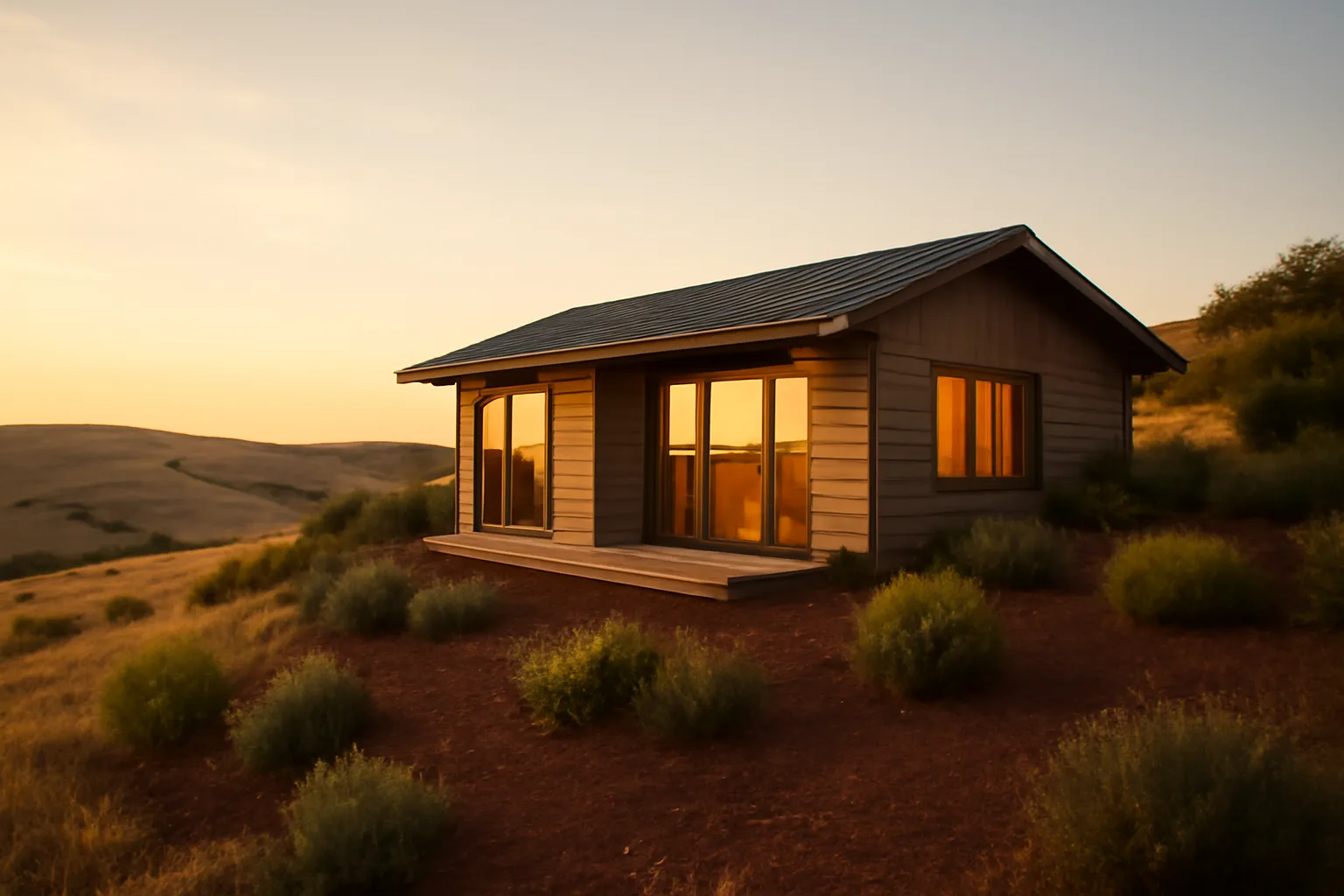
Defensible space is the buffer between your house and the wildland around it, an area where vegetation is cut back, spaced out, or removed so a wildfire loses momentum before it reaches your walls. It's not a legal term invented by insurers. CAL FIRE defines it plainly: "Defensible space is the buffer you create between a building on your property and the grass, trees, shrubs, or any wildland area that surrounds it." The point isn't to turn your yard into gravel. It's to remove the continuous fuel path (the dead branches, the pine needle mats, the shrubs touching your siding) that lets a ground fire become a house fire. Firefighters also need that space to safely defend a structure or decide it's too risky to try. In California, defensible space is measured out to 100 feet from a structure, or to the property line, whichever is closer. [1] If you've read an inspection letter and it references "Zone 0" or "100 feet," this is what it's talking about. The rest of this article breaks down what's required in each zone and why the rules keep changing.
What are the defensible space zones and what do they require?
| Zone 0 (ember-resistant zone) | 0 to 5 feet | Remove combustible mulch, vegetation, and debris; no combustible items against the structure | |
|---|---|---|---|
| Zone 1 (lean, clean, green) | 5 to 30 feet | Remove dead plants, dead branches, and debris; space out shrubs and trees; keep grass under 4 inches | |
| Zone 2 (reduced fuel zone) | 30 to 100 feet | Cut annual grass to 4 inches; remove fallen leaves, needles, and small branches; space trees for crown separation | Zone 0 is the newest addition. CAL FIRE and the Board of Forestry developed the ember-resistant zone standard because most homes ignite from windblown embers landing on or near the structure, not from a direct flame front. [2] The exact plant list, mulch restrictions, and spacing formulas vary by local fire district, so check with your county fire marshal or CAL FIRE unit before you start cutting; a canyon lot in Santa Barbara County and a forested lot in El Dorado County can have different local overlays even under the same state law. For a walkable checklist of what goes in each zone, see defensible. |
California's defensible space rule (Public Resources Code 4291) splits the 100-foot perimeter into two zones, and regulators have since added a third for the area closest to the house. [1] | Zone | Distance from structure | Core requirement |
When does the California defensible space law go into effect?
The base defensible space requirement, 100 feet of clearance under Public Resources Code 4291, has been law since it was last amended in 2005, and it already applies today to homes in State Responsibility Areas and designated Very High Fire Hazard Severity Zones. [1] What's new is Zone 0. The California Board of Forestry and Fire Protection has been working on formal Zone 0 regulations (the ember-resistant zone within 5 feet of a structure) under Assembly Bill 3074 (2020), which directed the Board to develop this standard. [3] As of this writing, the Board has been through multiple rulemaking drafts, and the regulation has not been finalized into an enforceable statewide requirement with a hard compliance deadline. CAL FIRE's public guidance describes the Zone 0 concept and recommends starting now, but the binding regulatory text and its effective date have moved multiple times during rulemaking. [2] Don't wait for the ink to dry on Zone 0. Insurers, inspectors, and your own fire risk don't care whether the regulation is finalized; the ember zone around your house is the single highest-value place to work on regardless of the legal deadline. Check your county fire marshal's page or CAL FIRE's Board of Forestry rulemaking page for the current status before assuming a specific date applies to your property.
What fire-safe home rules take effect in 2026?
There isn't one single national "2026 rule." What's actually happening is a mix of state-level regulatory finalization and insurance industry shifts, and they're easy to conflate. In California, the Zone 0 ember-resistant space regulation (from AB 3074) has been in active rulemaking, and coverage of the process has referenced target implementation timelines that have shifted. Rather than repeat a date that may already be outdated, check the CAL FIRE defensible space page and your county's building or fire department directly for the current status before you plan around a specific 2026 date. Separately, California's Safer from Wildfires regulation (adopted by the Department of Insurance in 2022) requires insurers to give discounts or recognition for documented mitigation, including defensible space and home hardening steps, and insurers have been phasing in compliance with that framework. [4] If your non-renewal letter or your agent mentioned new discount categories, that's likely what's driving it, not a single 2026 building code cutoff. Colorado, Oregon, and Arizona each have their own timelines for wildfire hazard mapping and mitigation requirements, and none of them mirror California's law exactly. If you're in one of those states, check your state fire marshal's office (see FAQ below) rather than assuming California's rule applies to you.
Why won't people follow the defensible space law in California?
Compliance rates are genuinely uneven, and it's more than laziness. Cost is the biggest barrier: clearing brush, removing trees, and re-landscaping 100 feet around a home can run from a few hundred dollars for a small lot with a weekend of DIY work to several thousand dollars for a wooded acre needing tree removal and chipping. Retired homeowners on fixed incomes, and people who inherited rural property, often can't absorb that cost in one season. There's also a knowledge gap. A lot of homeowners genuinely don't know the zones exist or think "defensible space" means a fire break bulldozed around the house, not the more nuanced spacing-and-thinning work the law actually requires. Local fire agencies run inspection programs, but staffing is thin in many rural counties, so enforcement is inconsistent, and inconsistent enforcement teaches people the rule is optional. Some resistance is aesthetic or cultural too. People move to wooded or brushy land specifically for the tree cover and privacy, and cutting it back can feel like undoing the reason they bought the property. None of that changes the fire physics, but it explains why compliance lags even where the law is clear. If you're facing a non-renewal, treating defensible space as documented proof of lower risk rather than a chore tends to motivate action faster than the statute alone.
How do I prevent wildfires from starting near my property?
Most wildfires near homes start from something avoidable: equipment sparks, unattended debris burns, dragging trailer chains, parking a hot vehicle on dry grass, or unmaintained power equipment. The U.S. Forest Service and CAL FIRE both point to human causes as the dominant ignition source for wildfires overall. [5] On your own property, the highest-value habits are simple. Don't mow dry grass in the afternoon heat; do it early morning when humidity is higher. Keep chainsaws and mowers away from dry vegetation when the blade could strike a rock. Never leave a campfire or burn pile unattended, and check local burn permit rules, many counties suspend all outdoor burning during red flag warnings. Store gas cans and propane away from structures and vegetation. If you have a wood chipper or masonry work happening as part of defensible space clearing, keep equipment away from cured grass. A surprising number of wildfires start from mitigation work itself, a spark from a grinder or chainsaw hitting dry fuel during the exact project meant to prevent fire.
How do I prepare for a wildfire before it happens?
Preparation splits into three buckets: the house, the documents, and the evacuation plan. Ready.gov recommends creating and maintaining defensible space, hardening your home with ember-resistant vents and Class A roofing, and preparing a go-bag with medications, copies of important documents, and supplies for at least three days. Before fire season starts, walk your property and do the Zone 0 to Zone 2 work described above. Clean gutters and roof valleys of pine needles and leaves; these are the number one spot embers land and ignite. Move firewood stacks at least 30 feet from the house. Check that your address is visible from the road (firefighters waste time on unmarked driveways). On the documentation side, photograph your home's exterior, roof, vents, and defensible space work before fire season, and keep dated records. If you're facing an insurance non-renewal, that documentation is often what convinces an underwriter you're a lower risk than the algorithm assumed. This is where a Wildfire Insurance Survival Kit can help: it's a $99 one-time toolkit built to help homeowners organize before-and-after photos, mitigation receipts, and inspection records into the kind of packet insurers and adjusters actually want to see. It doesn't file claims for you (that's public adjuster territory, and we're not one); it just helps you build your own file.
How do I prevent forest fires when I'm out recreating?
Forest fire prevention away from home comes down to fire discipline in the backcountry. Fully extinguish campfires: drown, stir, and feel for heat before you leave, the Forest Service's standard guidance is that a campfire isn't out until it's cold to the touch. [6] Don't drive or park on dry grass; catalytic converters and exhaust systems run hot enough to ignite vegetation in seconds. Follow local fire restrictions, which escalate through stages during dry years and often ban campfires, charcoal, and even smoking outside vehicles during Stage 2 closures. Dispose of cigarettes properly, never toss them from a vehicle window. If you're towing a trailer, make sure safety chains aren't dragging; a dragging chain throwing sparks onto dry roadside grass is a documented ignition source for wildfires. Check your state or national forest's current fire restriction status before any trip; these change week to week during fire season.
How do I avoid forest fires and reduce my personal risk?
Avoiding forest fires as an individual really means two things: don't cause one, and don't be caught by one. On the causation side, follow the same rules as above (campfire discipline, equipment care, no burning during red flag warnings). On the exposure side, check fire danger ratings before hiking, camping, or driving into forested backcountry during peak season (typically June through October in the West, though this shifts by region and drought year). Sign up for your county's emergency alert system so you get evacuation notices in real time; most California counties, plus many in Oregon, Colorado, and Arizona, run free opt-in text alert systems through their office of emergency services. If you live at the edge of a forest or wildland area, defensible space work is the single biggest lever you personally control. It's the difference between a fire that has to work to reach your house and one that walks right up to it through unbroken fuel.
How can we prevent forest fires as a community?
Individual defensible space work matters, but fire doesn't respect property lines. A house with perfect Zone 0 clearance next to a neighbor's overgrown lot is still exposed, embers travel, and radiant heat from a burning structure next door can ignite yours regardless of your own prep. Communities that actually reduce risk tend to do a few things together: coordinated fuel reduction on shared open space and greenbelts, Firewise USA-style neighborhood programs recognized by the National Fire Protection Association, and pooled contracts for chipping and debris removal so individual homeowners aren't each paying full price alone. [7] Local fire safe councils, often volunteer-run, also organize chipper days and grant-funded fuel breaks in many California and Oregon counties. If your HOA or neighborhood doesn't have one, starting a conversation with your county fire department about a Firewise recognition process is a concrete, low-cost first step. For contractor-based clearing programs in Washington State, see wildfire defensible space clearing contracts washington state dnr.
Is Santa Barbara safe from fire?
No coastal California community, including Santa Barbara, is exempt from wildfire risk, and much of the county is officially mapped as high or very high fire hazard by CAL FIRE. Santa Barbara County has burned repeatedly and significantly: the Thomas Fire (2017) burned over 281,000 acres across Ventura and Santa Barbara counties, and the Jesusita Fire (2009) burned roughly 8,700 acres and destroyed 80 homes within the city's wildland-urban interface. [8] The hills above Santa Barbara (Montecito, Mission Canyon, the Riviera, the foothill neighborhoods) sit directly against chaparral-covered slopes, which is about as high-risk a wildland-urban interface as exists in California. CAL FIRE's Fire Hazard Severity Zone maps for Santa Barbara County show large swaths of the foothill and mountain communities rated Very High. [9] So: "safe from fire" isn't really the right framing for Santa Barbara or most of coastal-adjacent Southern California. The more useful question is whether a specific property has done its defensible space and hardening work, because that's the variable homeowners actually control. Check your specific address against CAL FIRE's hazard severity zone viewer rather than relying on the city's general reputation.
What happens after a wildfire reaches a home without defensible space?
When a fire front reaches an unmitigated property, ignition tends to happen fast and through predictable weak points: embers lodging in gutters full of dry leaves, flames climbing shrubs planted against siding, and heat radiating through single-pane windows. Studies from the Insurance Institute for Business & Home Safety have found that structure ignition in wildfires is driven heavily by embers and small flames contacting combustible material within a few feet of the house, which is exactly the zone that Zone 0 rules target. This is also where home hardening and defensible space work together rather than as separate projects. A cleared yard with a wood shake roof and unscreened attic vents is still highly vulnerable; a hardened home surrounded by dense unmanaged brush is also still vulnerable. You need both. For a rundown of what hardening upgrades matter most, see fire safe landscaping california next to house and house fire. If your home has already been through a fire scare, or you've had a near-miss, documenting what survived and why (metal roof, cleared brush, ember-resistant vents) is useful both for your own future planning and for insurance conversations. See fire at a house for what that documentation should include.
What does defensible space have to do with my insurance non-renewal?
A lot, increasingly. California's Safer from Wildfires regulation requires insurers to factor in documented mitigation, including defensible space compliance, home hardening upgrades, and community-level Firewise recognition, when setting rates and underwriting decisions. [4] That doesn't guarantee reinstatement or a discount; it means insurers are supposed to have a framework that accounts for it. In practice, homeowners who've done the Zone 0 through Zone 2 work, and can prove it with dated photos, receipts, and a defensible space inspection certificate from their local fire department, have something concrete to put in front of an underwriter or the California FAIR Plan. We don't file that paperwork for you, and we're not a public adjuster or attorney, but organizing the proof is squarely something you control. That's the gap the Wildfire Insurance Survival Kit is built to close: a one-time $99 toolkit for building your own mitigation and damage documentation file, not a claims service. If you want to understand how defensible space compares to other mitigation categories insurers look at, see comparisons style breakdowns on hardening versus landscaping investment.
Frequently asked questions
When does the California defensible space law go into effect?
The core 100-foot defensible space requirement under Public Resources Code 4291 already applies today in State Responsibility Areas and Very High Fire Hazard Severity Zones. The newer Zone 0 (0-5 feet) ember-resistant standard from AB 3074 has been in rulemaking with the Board of Forestry; check CAL FIRE's site for the current finalized status before assuming a fixed date.
Why won't people follow the defensible space law in California?
Cost, lack of awareness, and thin local enforcement are the main drivers. Clearing 100 feet around a home can cost hundreds to several thousand dollars depending on lot size and tree removal needs, and many rural counties don't have enough inspectors to enforce compliance consistently, which reduces the perceived urgency.
What are the three defensible space zones in California?
Zone 0 (0-5 feet) requires an ember-resistant area free of combustible mulch and debris. Zone 1 (5-30 feet) requires lean, clean, and green spacing of vegetation. Zone 2 (30-100 feet) requires reduced fuel loads, mowed grass, and tree spacing for crown separation.
How do I prevent wildfires from starting on my own property?
Avoid mowing dry grass in afternoon heat, keep chainsaws and mowers away from rocks near dry vegetation, never leave debris burns or campfires unattended, and check local burn permit status before any outdoor burning, especially during red flag warnings.
How do I prepare for a wildfire if I live in a high-risk zone?
Complete defensible space work in all zones, harden your home with ember-resistant vents and a Class A roof, build a go-bag with medications and document copies, and plan two evacuation routes. Ready.gov recommends doing this preparation before fire season, not during an active warning.
How can we prevent forest fires as individuals when camping or hiking?
Fully extinguish campfires until cold to the touch, never park on dry grass, follow posted fire restriction stages, and dispose of cigarettes properly. Most forest fires are human-caused, so individual discipline in the backcountry directly reduces ignition risk.
Is Santa Barbara, California safe from wildfire?
No. Large parts of Santa Barbara County, especially foothill neighborhoods like Montecito and Mission Canyon, are mapped Very High on CAL FIRE's Fire Hazard Severity Zone maps. The area has burned repeatedly, including the 2017 Thomas Fire and 2009 Jesusita Fire. Safety depends on individual property mitigation, not the city's overall reputation.
What fire-safe home rules take effect in 2026?
There's no single confirmed nationwide 2026 rule. California's Zone 0 regulation has moved through multiple rulemaking phases without a fixed final date at time of writing; check CAL FIRE and your county fire marshal directly. Insurance-side changes from California's Safer from Wildfires regulation are being phased in separately by individual insurers.
Does defensible space actually stop a wildfire?
Defensible space doesn't guarantee a home survives, but it measurably reduces ignition risk by removing the continuous fuel path fire needs to reach a structure, and it gives firefighters safer space to defend the property. Research from the Insurance Institute for Business & Home Safety links ember and small-flame contact with nearby vegetation to most structure ignitions.
How much does it cost to create defensible space around a home?
Costs vary widely by lot size, terrain, and vegetation density, from a few hundred dollars for basic DIY clearing on a small lot to several thousand dollars for wooded acreage needing professional tree removal and chipping. Local fire-safe councils sometimes offer subsidized chipper days that reduce cost.
What's the difference between defensible space and home hardening?
Defensible space is vegetation and fuel management around the structure (the 0-100 foot zones). Home hardening is upgrading the structure itself, ember-resistant vents, Class A roofing, dual-pane windows, so it resists ignition even if embers or heat reach it. Both are needed; neither alone is sufficient.
Who inspects defensible space compliance in California?
Local fire departments, county fire marshals, or CAL FIRE units (depending on jurisdiction) conduct defensible space inspections, often annually before fire season. Requirements and inspection schedules vary by fire district, so check with your specific local fire agency for their process and any local overlays on the state rule.
Do other states besides California require defensible space?
Colorado, Oregon, and Arizona each have wildfire mitigation guidance and, in some counties, defensible space requirements, but none mirror California's Public Resources Code 4291 exactly. Requirements vary by state fire marshal office and local fire district, so check your specific state and county rules rather than assuming California's law applies.
Sources
- California Public Resources Code Section 4291: 100 feet of defensible space required around structures in State Responsibility Areas
- CAL FIRE, Zone 0 Ember-Resistant Zone guidance: Description and rationale for the Zone 0 ember-resistant zone within 5 feet of a structure
- California Legislature, Assembly Bill 3074 (2020): AB 3074 directed the Board of Forestry to develop the ember-resistant zone (Zone 0) standard
- California Department of Insurance, Safer from Wildfires regulation: Insurers must account for wildfire mitigation, including defensible space, in underwriting and rating
- USDA Forest Service, Wildfire Causes and Evaluations: Human activity is a dominant cause of wildfire ignitions
- USDA Forest Service, Campfire Safety: A campfire must be cold to the touch before it is considered fully extinguished
- National Fire Protection Association, Firewise USA: Firewise USA is a recognized community-level wildfire risk reduction program
- CAL FIRE, Thomas Fire incident information: The Thomas Fire burned over 281,000 acres across Ventura and Santa Barbara counties in 2017
- CAL FIRE, Fire Hazard Severity Zone Maps: Fire Hazard Severity Zone maps identify Very High hazard areas in Santa Barbara County foothill communities