Last updated 2026-07-25
TL;DR
California wildfire mitigation means clearing three defensible space zones (0-5, 5-30, 30-100 feet) and hardening your home's roof, vents, and siding under state law. New Zone 0 ember-resistant rules are in rulemaking now with a likely 2026 effective date. Check your local fire district for exact deadlines and bring dated photos to your insurer.
What does wildfire mitigation actually mean in California right now
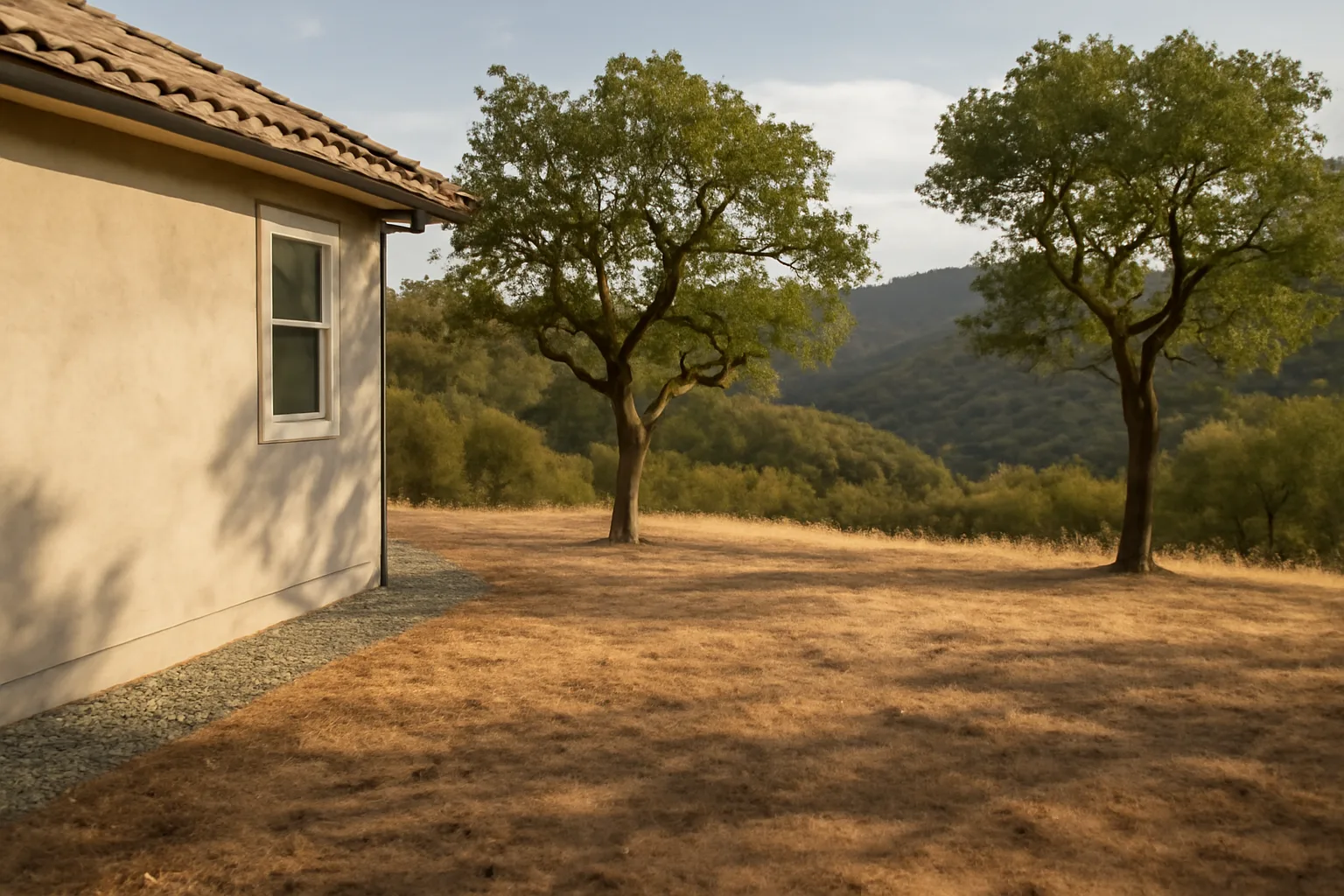
Wildfire mitigation in California is two connected jobs: clearing vegetation around your house (defensible space) and hardening the structure itself so embers can't get in. State law, Public Resources Code 4291, requires homeowners in State Responsibility Areas and some Local Responsibility Areas to maintain defensible space out to 100 feet from structures, or to the property line, whichever is closer [1]. CAL FIRE breaks that 100 feet into zones. Zone 0 is the 0-5 foot band right against your house, the most dangerous zone because it's where wind-blown embers land on mulch, furniture, and siding and ignite the structure directly. Zone 1 runs 5-30 feet and calls for widely spaced, low fuel plants. Zone 2 runs 30-100 feet and focuses on reducing continuous fuel that lets fire run toward the house. The part people miss: defensible space is about survival odds, not guaranteed protection. CAL FIRE's own research group, the Wildfire and Structure Ignition Team, has repeatedly found that ember exposure, not direct flame contact, destroys most homes in wildland-urban interface fires. That's why the newest rules target the first five feet so hard. If you want a walkthrough of the specific plant spacing and material rules by zone, see our defensible space zone guide.
When does the California defensible space law go into effect
The core defensible space requirement (100 feet, three zones) has been law since Public Resources Code 4291 was last substantially amended in 2005, and it's enforced today in every State Responsibility Area. That part isn't new. What's new is Zone 0. Assembly Bill 3074 (2020) directed the Board of Forestry and Fire Protection to write ember-resistant zone regulations for the 0-5 foot area around homes in high and very high fire hazard severity zones [2]. The Board has been through multiple rulemaking drafts. As of this writing the regulation has not been finalized into the California Code of Regulations, and CAL FIRE's public messaging has pointed to a 2026 target for adoption and phase-in, with compliance timelines that will likely stagger by hazard zone once the rule is final. Here's the honest uncertainty: rulemaking timelines slip. Treat any specific 2026 date as the current target, not a locked-in deadline, and check CAL FIRE's Zone 0 regulation page before you budget for compliance. If your property is in a Very High Fire Hazard Severity Zone, assume you'll eventually need to remove combustible mulch, wood fencing attached to the house, and stored items within 5 feet of exterior walls, because that's the direction every draft has gone. Local fire districts can and do move faster than the state. [Fill in: check with ______ Fire Protection District or your county fire marshal for any local Zone 0 ordinance already in effect, since some jurisdictions adopted ember-resistant zone rules ahead of the state.]
What fire-safe home rules take effect in 2026
The headline 2026 change is the Zone 0 ember-resistant zone rule described above, but it sits inside a bigger push on home hardening standards that CAL FIRE has published since 2021 under its wildfire-prone building standards guidance. Expect the finalized rule to require, at minimum: no combustible mulch or bark within 5 feet of the structure, no wood fencing or gates directly attached to the house within that zone (metal or masonry connectors instead), removal of combustible furniture and storage against exterior walls, and non-combustible ground cover like gravel, pavers, or concrete immediately adjacent to the foundation. Separately, California's building code already requires ember- and fire-resistant construction for new homes built in Wildland-Urban Interface fire areas under Chapter 7A of the California Building Code, covering things like dual-pane tempered glass, ember-resistant vents, and Class A roofing [3]. That chapter applies to new construction and major remodels, not automatically to existing homes, which is exactly why the Zone 0 vegetation/clearance rule matters so much for people who already own their house and can't retrofit the whole structure overnight. If you're deciding what to fix first on an older home, our home hardening priority breakdown walks through the order that actually moves the needle on survivability versus what's mostly cosmetic.
Why won't people follow the defensible space law in California
Three real reasons show up again and again: cost, labor shortage, and enforcement that's inconsistent. Clearing and maintaining defensible space on a typical half-acre to one-acre lot with brush, oak, or chaparral can run from a few hundred dollars for basic mowing to several thousand dollars for tree limbing, chipping, and hauling, depending on terrain and vegetation density. There's no single statewide number because costs vary by county and by how overgrown the property already is. For homeowners on fixed incomes, that's a real barrier, not laziness. Enforcement is uneven. CAL FIRE and local fire agencies do conduct defensible space inspections in State Responsibility Areas, and failing to comply can result in a citation, but staffing for inspections is limited relative to the number of parcels, so many properties simply don't get visited every year. Homeowners who've gone years without an inspection sometimes assume the rule is theoretical. There's also a genuine disagreement about aesthetics and shade. People like their trees close to the house for cooling and privacy, and removing them feels like giving up something they value for a risk that feels abstract until a fire actually happens nearby. None of that makes noncompliance a good bet. Insurers increasingly use defensible space evidence, or the lack of it, as part of underwriting and renewal decisions, on top of the life-safety reason to do the work.
How to prevent wildfires: what actually reduces ignition risk
Preventing wildfires is really two different problems: stopping ignitions in the first place, and stopping a started fire from becoming a home-destroying event. Homeowners have real influence on both. On ignition prevention: most wildfires in California are human-caused. CAL FIRE and the National Interagency Fire Center data consistently show the large majority of California wildfires start from human activity, equipment use, vehicles, power lines, and debris burning, rather than lightning. Practical steps: don't mow dry grass mid-day in fire season, keep vehicles off dry grass (catalytic converters and hot exhaust systems ignite grass routinely), maintain equipment with spark arrestors, and follow local burn permit rules exactly. On structure protection once a fire starts nearby: this is where defensible space and home hardening earn their keep. Class A roofing, ember-resistant vents, enclosed eaves, and a clean Zone 0 collectively determine whether wind-blown embers, which can travel over a mile ahead of a fire front, find fuel against your house or don't. Read our explainer on how house fires start and spread if you want the mechanics behind ember ignition specifically, since it applies whether the fire is wildland or structural in origin.
How to prepare for a wildfire before one starts
Preparing for a wildfire means having your defensible space done, your documentation ready, and an evacuation plan rehearsed, not scrambled together when you smell smoke. Start with Ready.gov's wildfire action guide, which recommends creating a go-bag with medications, documents, and supplies for at least three days, signing up for local emergency alerts, and identifying two evacuation routes in case one is blocked. Ready.gov also recommends photographing your home's exterior and defensible space work periodically, both for insurance purposes and to have a record if you need to demonstrate compliance to an inspector or insurer later. A practical prep checklist: - Clear Zone 0 (0-5 ft): no mulch, no stored items, no attached wood fencing against the house
- Clear Zone 1 (5-30 ft): prune tree limbs 6+ feet off the ground, space shrubs, remove dead vegetation
- Clear Zone 2 (30-100 ft): reduce continuous grass and brush, maintain mowed height
- Clean gutters and roof of pine needles and leaf litter before fire season
- Store firewood at least 30 feet from the house, off the ground
- Photograph the entire defensible space perimeter with a timestamp, every season
- Keep a folder (physical or digital) of receipts for any brush clearing, roofing, or vent upgrades That documentation habit matters more than most people realize. If you're facing a non-renewal notice or a wildfire risk inspection, dated photos and receipts are the difference between an insurer taking your word for it and an insurer having proof. We built a $99 Wildfire Insurance Survival Kit specifically to organize that kind of documentation into something you can hand an underwriter or adjuster without having to reconstruct three years of yard work from memory. We don't file claims or contact your insurer on your behalf; the kit just helps you build the paper trail yourself.
How to prevent forest fires and how to avoid forest fires on your land
If you own wooded acreage, the prevention playbook is defensible space scaled up, plus fuel breaks and controlled debris management, not any special forest-specific magic. CAL FIRE's Forest Health program and vegetation management program both emphasize reducing fuel continuity, thinning dense stands so fire can't crown (jump tree to tree through the canopy), and removing ladder fuels, the small trees and brush that let ground fire climb into the canopy. For larger parcels this often means working with a Registered Professional Forester or a local Fire Safe Council, many of which run chipper days and cost-share programs that substantially cut the price of removing dead and downed material. On the avoidance side: most forest fire starts on private land trace back to equipment use (chainsaws, mowers, grinders throwing sparks), unattended campfires, and debris burning outside permit windows. California's burn permit system, run through CAL FIRE and local air districts, restricts when outdoor burning is legal, and violating those windows is one of the most common and most preventable ignition sources [1]. If you're weighing whether to hire a contractor for large-scale clearing versus doing it yourself, our comparison of defensible space clearing contracts covers pricing structures and what to put in a contract, even though it's framed around Washington's DNR program, the same contract questions (scope, debris hauling, per-acre vs. flat pricing) apply in California.
Is Santa Barbara safe from fire
No coastal California city is safe from fire in an absolute sense, and Santa Barbara County has a documented history of major destructive fires, so the honest answer is that risk depends heavily on which part of the county you're in. The Thomas Fire (2017) burned over 280,000 acres across Ventura and Santa Barbara counties and was, at the time, the largest wildfire in modern California history by acreage [4]. It was followed by the Montecito debris flow in January 2018, a disaster directly caused by the burned, denitrified hillsides losing their ability to hold soil during heavy rain, which killed 23 people [5]. That sequence is the clearest illustration anywhere in the state of why wildfire risk doesn't end when the flames go out; burned watersheds create years of downstream flood and debris flow risk. Parts of Santa Barbara city itself sit in or near State Responsibility Area and Very High Fire Hazard Severity Zone mapping from CAL FIRE, particularly foothill neighborhoods adjacent to open chaparral. You can check your specific address against CAL FIRE's Fire Hazard Severity Zone viewer, which is the actual authoritative source rather than general reputation . If your property sits in a mapped high or very high zone, the defensible space and Zone 0 rules discussed above apply to you directly, regardless of how the city's downtown or beachfront areas are generally perceived.
How can we prevent forest fires as a community, more than individually
Individual defensible space work helps your own house, but wildfire spread is a neighborhood problem, and CAL FIRE, university extension researchers, and FEMA all point to the same conclusion: your risk is tied to your neighbors' properties, more than your own. A single non-hardened, overgrown parcel next to yours can radiate embers and heat onto your cleared property regardless of how well you've done your own work. That's the logic behind Firewise USA, a National Fire Protection Association program that helps neighborhoods coordinate mitigation, share equipment and chipper days, and qualify collectively for some insurance and grant programs . California has hundreds of recognized Firewise communities, and joining or starting one is one of the higher-value moves a homeowner can make beyond their own property line. Local Fire Safe Councils, funded partly through CAL FIRE grants, run community chipping days, host defensible space workshops, and sometimes offer direct cost-share for vegetation removal on lower-income properties. Contacting your county's Fire Safe Council is worth doing before you assume you have to pay full retail for a contractor crew. [Fill in: your local Fire Safe Council or Firewise USA chapter name and contact link, since coverage and programs vary significantly by county.]
Which mitigation rules actually vary by fire district
| Defensible space distance | 100 ft or to property line [1] | Some districts require full 100 ft regardless of lot line | |
|---|---|---|---|
| Zone 0 ember-resistant rules | Pending, targeted 2026 [2] | [Fill in: local ordinance name/date if already adopted] | |
| Inspection frequency | Not fixed statewide | [Fill in: your district's inspection cycle] | |
| Compliance deadline (seasonal) | Not fixed statewide | [Fill in: your district's clearance-by date] | |
| Citation/fine for noncompliance | Varies by jurisdiction | [Fill in: your district's fine schedule] | Call your local fire department's prevention bureau or your county fire marshal's office directly and ask for the current defensible space ordinance number. That's the only way to know the actual deadline and fine schedule that applies to your address. |
California sets the statewide floor through Public Resources Code 4291 and CAL FIRE's zone framework, but local fire districts and counties can and do add stricter requirements, different inspection cadences, and different enforcement mechanisms. Don't assume the state minimum is what your district actually enforces. Things that commonly vary locally: how often inspections happen (annual in some high-risk districts, on-complaint-only in others), whether the district issues a courtesy notice before a citation, whether brush clearing must happen by a specific calendar date (often May 1 or June 1 in Southern California districts, ahead of peak fire season), and whether the district has already adopted a local Zone 0 ordinance ahead of the state's pending rule. | Rule element | State minimum (PRC 4291) | Check locally |
Frequently asked questions
When does the California defensible space law go into effect
The 100-foot, three-zone defensible space requirement under Public Resources Code 4291 has been in effect since a 2005 amendment and applies today in State Responsibility Areas. The newer Zone 0 ember-resistant rule for the 0-5 foot area, authorized by AB 3074, is still in rulemaking with a widely cited 2026 target for adoption; check CAL FIRE's Zone 0 page for the current status.
Why won't people follow the defensible space law in California
Cost, uneven enforcement, and attachment to shade trees near the house are the three biggest reasons. Clearing brush and limbing trees can run from a few hundred to several thousand dollars depending on lot size and terrain, and many parcels go years without an inspection, so the rule can feel more theoretical than it actually is.
How to prevent wildfires from starting on my property
Keep vehicles off dry grass, avoid mowing in the heat of the day during fire season, maintain spark arrestors on equipment, and follow local burn permit rules exactly. Most California wildfires are human-caused, not lightning-caused, so equipment use and debris burning are the highest-value things to control.
How to prepare for a wildfire if I get an evacuation warning
Have a go-bag ready with medications and documents, know two evacuation routes, and sign up for local emergency alerts ahead of time, per Ready.gov guidance. Photograph your home and defensible space beforehand so you have documentation regardless of outcome, and don't wait for a mandatory order if conditions look bad.
How to prevent forest fires on larger wooded properties
Thin dense stands to reduce ladder fuels and canopy continuity, remove dead and downed material, and work with a Registered Professional Forester or local Fire Safe Council for cost-share programs. The same defensible space logic applies, just scaled to more acreage and often requiring heavier equipment.
How to avoid forest fires when doing yard or land work
Avoid running chainsaws, mowers, or grinders on dry, windy days when sparks can ignite dry grass, and never burn debris outside your local air district's permitted burn window. Keep a shovel and water source on hand during any spark-producing work in fire season.
What fire-safe home rules take effect in 2026 in California
The main expected change is a finalized Zone 0 ember-resistant zone regulation covering the 0-5 feet around structures in high and very high fire hazard zones, targeting removal of combustible mulch, attached wood fencing, and stored items against the house. The rule stems from AB 3074 and is still moving through Board of Forestry rulemaking, so confirm final adoption dates on CAL FIRE's site.
Is Santa Barbara safe from fire
No, parts of Santa Barbara County sit in CAL FIRE's mapped Very High Fire Hazard Severity Zones, and the county experienced the 281,000-plus acre Thomas Fire in 2017 followed by a deadly debris flow in Montecito in January 2018. Check CAL FIRE's Fire Hazard Severity Zone viewer for your specific address rather than relying on general reputation.
How can we prevent forest fires as a neighborhood, more than alone
Join or start a Firewise USA community through the National Fire Protection Association, which coordinates shared chipper days, mitigation workshops, and sometimes grant or insurance eligibility across a whole neighborhood. Your own defensible space work is undermined if the parcel next door stays overgrown, so community coordination matters as much as individual compliance.
What is defensible space Zone 0 in California
Zone 0 is the 0-5 foot area immediately surrounding a home, identified by CAL FIRE research as the highest-risk zone for ember ignition. Pending state regulation under AB 3074 would require removing combustible mulch, attached wood fencing, and stored combustibles from this zone in high and very high fire hazard severity areas.
Does defensible space actually stop a wildfire from destroying my house
Defensible space improves survival odds significantly but doesn't guarantee it; CAL FIRE's structure ignition research consistently finds that ember exposure, not direct flame contact, destroys most homes in wildland-urban interface fires. Combining cleared defensible space with hardened features like Class A roofing and ember-resistant vents gives the best realistic protection.
Can I get cited or fined for not clearing defensible space in California
Yes, local fire agencies and CAL FIRE can issue citations for noncompliance with Public Resources Code 4291 in State Responsibility Areas, though fine amounts and enforcement frequency vary by jurisdiction. Contact your county fire marshal's office for the specific fine schedule and inspection cycle in your district.
Sources
- California Public Resources Code Section 4291: 100-foot, three-zone defensible space requirement around structures in State Responsibility Areas
- California Legislature, AB 3074 (2020): Authorization for Board of Forestry to develop ember-resistant Zone 0 regulations
- California Building Standards Commission, California Building Code Chapter 7A: Wildland-Urban Interface fire-resistant construction standards for new buildings
- CAL FIRE, Thomas Fire Incident Archive: Thomas Fire burned over 280,000 acres across Ventura and Santa Barbara counties in 2017
- National Fire Protection Association, Firewise USA: Firewise USA program for community-level wildfire mitigation coordination