Last updated 2026-07-25
TL;DR
Wildfire prevention means clearing defensible space (usually 100 feet, with a new 0-5 foot ember-resistant zone in California), hardening your roof and vents, and removing dead vegetation before fire season. California's Zone 0 rule is finalized but enforcement timing is still being phased in through 2026-2027. No zone is fully fire-safe, including Santa Barbara.
How do you actually prevent wildfires from starting and spreading?
Wildfire prevention splits into two very different jobs: stopping ignitions in the first place, and stopping a fire that's already burning from destroying your house. Most people conflate these, and it matters because the second job is the one you can actually control. On the ignition side, the numbers are blunt. Roughly 85% of wildfires in the U.S. are human-caused, according to the National Interagency Fire Center's long-running analysis of ignition sources cited by the U.S. Forest Service [1]. That means downed power lines, unattended campfires, dragging trailer chains, mowing dry grass at midday, fireworks, and arson account for the overwhelming majority of starts. Lightning causes the rest, and it tends to cause the biggest and most remote fires because those ignitions often go undetected for hours. On the survival side, the frame shifts entirely. Once a wildfire is burning miles away and embers are raining down on your neighborhood, you are no longer preventing a wildfire. You're preventing your specific structure from igniting. CAL FIRE's own research, based on post-fire structure assessments after major California fires, found that embers and small flames, not the wildfire's main flame front, are the primary way homes ignite during wildfires. That single fact is why defensible space and home hardening (not fire trucks) save most houses that survive. So "preventing wildfires" as a homeowner really means three layers: reduce ignition risk on your own property, harden the structure against embers, and clear the vegetation that would otherwise carry fire to your walls. We break each of those down below.
When does the California defensible space law go into effect?
California's core defensible space law, requiring 100 feet of cleared and managed space around structures in State Responsibility Areas and designated Wildland-Urban Interface zones, has been in effect since 2005 under Public Resources Code Section 4291 [2]. That's not new. What's changing now is the addition of a stricter "Zone 0" rule for the first 5 feet around the home. Assembly Bill 3074 (2020) directed the Board of Forestry and Fire Protection to develop ember-resistant zone regulations for the 0-5 foot area immediately touching the house. The Board finalized proposed Zone 0 regulations and they moved through the state's formal rulemaking process, with CAL FIRE's own program pages describing the ember-resistant zone as "the most vulnerable area of a home". As of early 2025, state officials indicated an intended effective date around 2025-2026 for new construction and phased enforcement afterward for existing homes, but the exact statewide enforcement start date has shifted more than once as the rulemaking and local ordinance adoption process plays out. Here's the honest answer: there is no single fixed "go live" date you can bank on for every property. The base 100-foot law (PRC 4291) has been enforceable for two decades. Zone 0 is being layered in through 2025-2027, county by county, with local fire districts often adopting or enforcing timelines on their own schedule. If you got a non-renewal or inspection letter, don't guess. Ask your local fire district or your county's CAL FIRE unit directly what Zone 0 enforcement timeline applies to your parcel right now. [Local fire district Zone 0 enforcement date: ___]
What fire-safe rules for homes take effect in 2026?
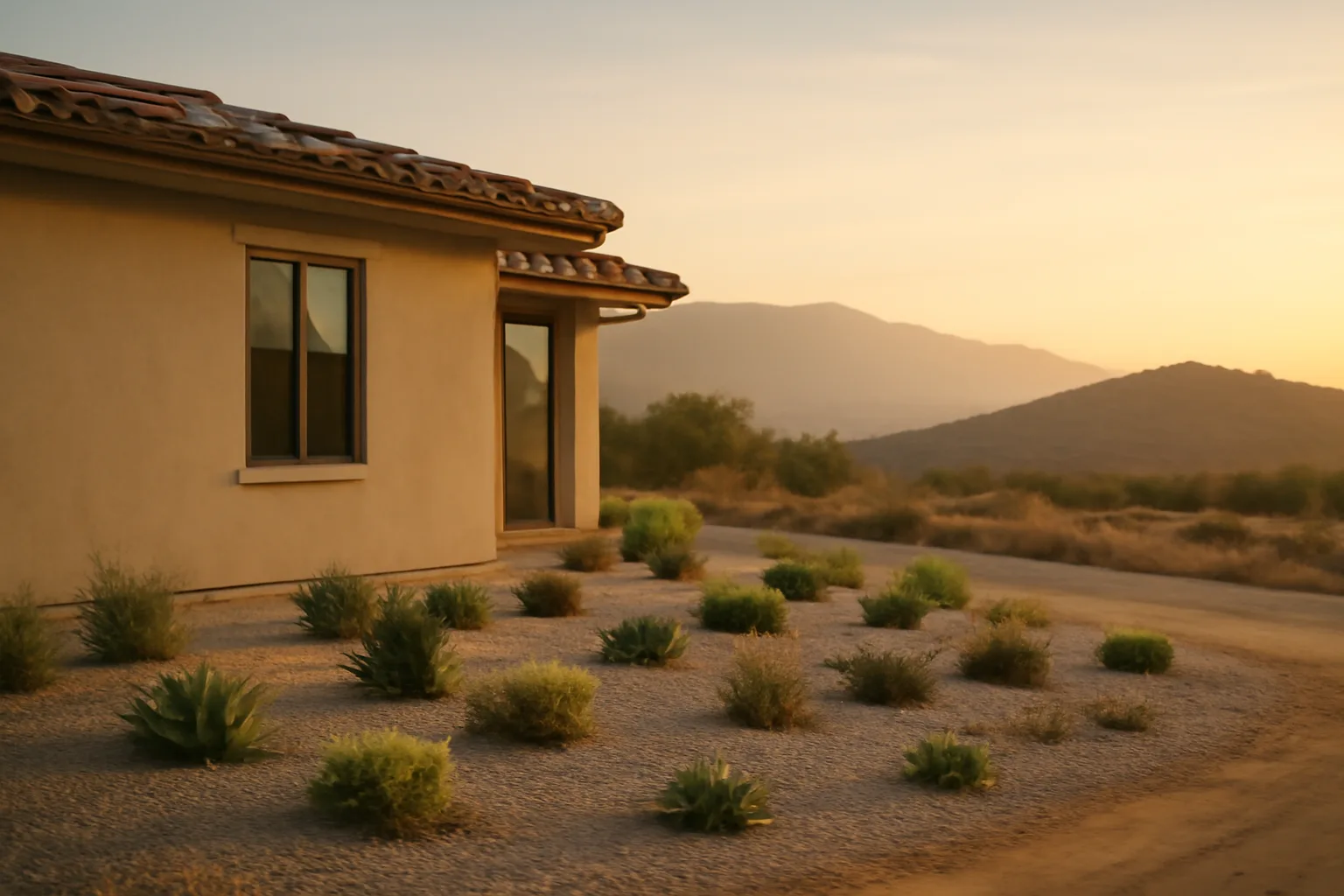
The biggest 2026-adjacent change is Zone 0 (the 0-5 foot ember-resistant zone), which the California Board of Forestry has been finalizing for phased rollout starting with new construction and moving to existing homes on a delayed timeline. CAL FIRE's guidance describes Zone 0 as requiring homeowners to remove combustible mulch, stored firewood, dry vegetation, and anything flammable within 5 feet of the structure, replacing it with hardscape, gravel, or well-irrigated low-growing plants. Outside California, other states are moving too, though on different schedules. Colorado's legislature has funded wildfire mitigation grant programs and expanded defensible space guidance through its Division of Fire Prevention and Control, but Colorado does not have a single statewide mandatory defensible space statute the way California does; most requirements come from county or local fire district codes. Oregon passed Senate Bill 762 (2021), which directed the state to map wildfire risk and develop a statewide defensible space code, though implementation was paused and revised after public pushback over the risk maps in 2022-2023. Arizona's rules are almost entirely local and county-based, run through individual fire districts rather than one state law. The practical takeaway: "2026 rules" really means "California's Zone 0 phase-in plus whatever your specific county or fire district has adopted separately." There is no single national 2026 wildfire code. [Confirm your local fire district's 2026 requirement here: ___]
Why won't people follow the defensible space law in California?
Compliance with PRC 4291 has been a known problem for years, and it's not really about people not caring. CAL FIRE inspection data reviewed in state legislative hearings has repeatedly shown compliance rates well under 50% in many high-risk counties in a given inspection cycle, with cost, labor, and confusion over the rules cited as the top reasons. Cost is the biggest one. Clearing 100 feet around a home on a sloped, oak-covered, or brush-heavy lot can run from a few hundred dollars for a small flat lot to several thousand dollars for a large, overgrown, or steep property, especially if it requires tree removal, chipping, or hauling. For a lot of homeowners, especially retirees on fixed incomes in places like the Sierra foothills, that bill competes directly with mortgage and insurance payments. The second reason is genuine confusion. The 100-foot rule has different requirements in different zones (Zone 1 is 0-30 feet, Zone 2 is 30-100 feet, and now Zone 0 is 0-5 feet), and what's required in each zone differs by vegetation type, slope, and local ordinance. Homeowners often don't know which trees they're allowed to remove, whether they need a permit, or how their specific fire district interprets the state minimum. Third, enforcement has historically been light. Many counties don't have the staff to inspect every parcel every year, so some owners have simply never been checked, and non-compliance carries little immediate consequence until a wildfire or an insurance inspection forces the issue. That's changing fast now that insurers are using their own inspection contractors to check defensible space before renewing a policy, which is a big part of why non-renewal letters have spiked.
How to prevent wildfires (what individual homeowners can control)
You can't stop lightning, but you can eliminate almost every human-caused ignition source on your own property, and that's most of what "preventing wildfires" means at the household level. The basics, all backed by CAL FIRE's Ready for Wildfire program [3]: never leave a campfire unattended and drown it completely before leaving, don't mow or use power equipment (chainsaws, trimmers, angle grinders) on dry grass between 10am and 6pm during fire season, make sure trailer chains aren't dragging on pavement, keep vehicles off dry grass (catalytic converters run over 1,000°F), and don't burn debris on red flag warning days. Check for local burn permit requirements before any outdoor burning; many counties suspend all burning during peak season regardless of permit status. At the landscape level, the goal is removing the fuel that would let any ignition (yours or a wildfire ember) turn into a house fire. That means keeping dead leaves, pine needles, and dry grass off your roof and out of gutters, spacing trees so their canopies don't touch, and keeping firewood stacks at least 30 feet from the house. For details on plant spacing and species selection near structures, see fire safe landscaping in California next to house. On the ember side specifically, cover your gutters, screen your attic and foundation vents with 1/8 inch metal mesh (not fiberglass, which melts), and make sure nothing combustible sits against your siding. A pile of mulch or a wood pile against a wall is a common ignition point CAL FIRE flags in post-fire assessments.
How to prepare for a wildfire before it happens
Preparation has three parts: the home, the go-bag, and the plan. Do all three before fire season starts, not after a red flag warning is issued. For the home: complete your defensible space clearing (Zones 0, 1, and 2), clean gutters and roof debris, and store any propane tanks or firewood at least 30 feet away. Ready.gov's wildfire preparedness guidance recommends assembling an emergency kit with at least a 3-day supply of water (one gallon per person per day) and non-perishable food, a battery-powered radio, and copies of important documents in a waterproof container. For evacuation: know two routes out of your neighborhood, not one, since wildfire can close roads fast. Keep your car's gas tank at least half full during fire season. Ready.gov specifically recommends packing an emergency kit that stays in your car so you're not searching the house for supplies while smoke is already visible. For documentation: before anything happens, photograph every room, closet, and the exterior of your home, plus your yard's defensible space work. This matters twice: it helps you remember what you owned if you have to file a claim, and if you're facing a non-renewal, dated photos of completed clearing work are the single most useful thing you can hand an inspector or an insurer. This is the gap a $99 one-time Wildfire Insurance Survival Kit is built to close: it organizes that documentation (photos, receipts, inspection checklists) into the format insurers actually ask for, so you're not scrambling during a renewal review. It doesn't file claims on your behalf; you send your own documentation.
How to prevent forest fires (the bigger picture beyond your yard)
Forest fire prevention at scale is mostly about fuel management and ignition reduction across whole landscapes, and it's largely out of any single homeowner's hands, but it shapes the risk your neighborhood faces. The U.S. Forest Service and CAL FIRE both run prescribed burn and fuel reduction programs designed to remove the dense underbrush and small trees that let fires climb into the forest canopy, where they become nearly impossible to control. CAL FIRE's Vegetation Management Program specifically uses prescribed fire and mechanical thinning on both private and public land to reduce that ladder fuel [4]. At the community level, many high-risk areas have Fire Safe Councils or Firewise USA communities (a National Fire Protection Association program) that organize shared roadside clearing, chipper days, and evacuation route maintenance. These matter because a single unmanaged lot next to yours can undo your own defensible space work; embers don't respect property lines. If you live adjacent to state or federal forest land, ask your local ranger district or CAL FIRE unit whether a fuel reduction or prescribed burn project is planned nearby, and whether there's a defensible space cost-share program for adjoining private parcels. Some states run reimbursement or grant programs for exactly this. [Local fuel reduction program status: ___]
How to avoid forest fires when you're outdoors or on your property
Most "avoiding forest fires" advice is really ignition avoidance, and it's simple, repetitive, and constantly ignored, which is why it keeps causing fires. Campfires: only in designated fire rings, never during a burn ban, and drowned with water (more than kicked with dirt) until it's cold to the touch. CAL FIRE's Ready for Wildfire program states plainly that you should "drown the campfire with water, stir the ashes, and drown again" before leaving a site [3], because a fire that looks out can smolder underground in root systems for days. Vehicles and equipment: don't park or drive on dry grass, ever, even briefly. A hot undercarriage or catalytic converter is a common and completely preventable ignition source. Chain-dragging from a loose trailer hitch is another repeat offender in state fire-cause reports. Debris burning and fireworks: check local burn day restrictions before burning anything outdoors, and understand that in most Western wildfire zones, fireworks (even "safe and sane" consumer fireworks) are banned outright in unincorporated wildland areas regardless of what's legal in the nearest city. Smoking: field-toss cigarettes are a classic roadside ignition source. If you smoke outdoors in fire country, use a proper receptacle, not the ground.
How to prepare for forest fires if you live near wildland
If your property backs up to national forest, BLM land, or unmanaged open space, treat that boundary as your highest-risk zone, not your lowest. Extend your defensible space thinking out to the full 100 feet where terrain allows, and pay special attention to slope: fire moves uphill dramatically faster than on flat ground, so a home at the top of a canyon or draw needs more clearance, not less. Coordinate with neighbors if you can. A shared evacuation plan, a shared understanding of which roads flood with traffic first, and a phone tree for red flag warning days cost nothing and save real time when minutes matter. Many county offices of emergency services or CAL FIRE units maintain community wildfire protection plans (CWPPs) for wildland-adjacent neighborhoods; ask if yours has one and what it recommends specifically for your street. Sign up for your county's emergency alert system before fire season, not during it. Most Western counties run reverse-911 style systems (Nixle, Everbridge-based platforms, or similar) that push evacuation orders straight to your phone, and they only work if you're registered in advance.
Is Santa Barbara safe from fire?
No place in Santa Barbara County's foothill or wildland-adjacent neighborhoods is safe from fire in an absolute sense, and the county's own history proves it. The Thomas Fire (2017) burned over 281,000 acres and was, at the time, the largest wildfire in modern California history, directly threatening the city of Santa Barbara and Montecito [5]. It was followed weeks later by the January 2018 Montecito debris flow, which killed 23 people, a disaster caused specifically by rain falling on the Thomas Fire's burn scar . That one-two sequence (fire followed by post-fire mudslide) is a defining risk pattern for the whole Santa Barbara foothill area, and it's a reminder that wildfire risk doesn't end when the flames go out. Denuded, burned hillsides lose the root structure that normally holds soil in place, so the next heavy rain can trigger debris flows on slopes that had never flooded before. Santa Barbara city proper, closer to the coast and away from the foothills, carries meaningfully lower direct wildfire exposure than the Riviera, Mission Canyon, or Montecito foothill neighborhoods, which sit directly against chaparral-covered slopes. If you're evaluating a property in the area, ask specifically about its distance from wildland vegetation, its slope position, and whether it sits in a mapped debris-flow hazard zone, more than whether it's "in Santa Barbara." Insurers increasingly price these micro-locations very differently even within the same zip code.
How can we prevent forest fires as a community, more than a homeowner?
Individual defensible space work matters, but wildfire behavior in a dense neighborhood is a shared problem, and researchers keep finding that one unmitigated property can put a whole block at risk. CAL FIRE's structure ignition research specifically points to embers landing on flammable material near structures (mulch, dry vegetation, wood decks) as the dominant cause of home loss during wildfires, meaning your risk is partly a function of your neighbor's yard, more than yours. Community-level prevention that actually works: organized chipper days (many fire districts subsidize these so residents will actually clear brush), shared roadside and right-of-way clearing along the only road out of a subdivision, joining or forming a Firewise USA community (run through the National Fire Protection Association) to access grant funding and coordinated planning, and pushing your local HOA or fire district to enforce defensible space compliance on absentee-owned or vacant lots, which are consistently the worst offenders in county compliance data. If you're dealing with an insurer non-renewal specifically because of a neighbor's uncleared lot, document it. Photograph the adjacent parcel's overgrowth from your own property line, note the address, and include it in the packet you send to your insurer or agent explaining your own home's defensible space status. It won't force your neighbor to comply, but it shows the insurer you understand and have addressed the risk specific to your parcel. For a broader look at how mitigation plays out state by state, see wildfire defensible space clearing contracts in Washington state (DNR) and defensible for baseline definitions.
What does defensible space actually require, zone by zone?
| Zone 0 (ember-resistant zone) | 0-5 feet | Remove combustible mulch, firewood, dry vegetation; use hardscape or gravel | |
|---|---|---|---|
| Zone 1 | 5-30 feet | Remove dead plants/debris, space trees, keep grass mowed to under 4 inches [2] | |
| Zone 2 | 30-100 feet | Reduce fuel volume, space trees and shrubs, clear dead material [2] | The statute itself, PRC 4291, states that a person who owns, leases, controls, operates, or maintains a building in a State Responsibility Area or Very High Fire Hazard Severity Zone must "maintain defensible space of 100 feet from each side and from the front and rear of the structure" [2]. The exact 100-foot requirement can extend to your property line if your lot is smaller, and it doesn't require you to clear a neighbor's land, only to manage what's within your own boundary out to that distance. A home hardening component runs alongside defensible space: ember-resistant vents, Class A fire-rated roofing, enclosed eaves, and dual-pane tempered glass windows are the structural side of the same problem. For a walkthrough of what a fire actually does to an unhardened structure, see house fire and fire at a house. |
California's defensible space rule under PRC 4291 breaks the 100 feet around a home into zones, each with different requirements, and this structure is being adopted in modified forms by other states too. | Zone | Distance from structure | Core requirement |
Frequently asked questions
When does the California defensible space law go into effect?
The base 100-foot defensible space law (Public Resources Code 4291) has been enforceable since 2005. The newer Zone 0 rule (0-5 feet, ember-resistant zone) is being phased in through the Board of Forestry's rulemaking process starting around 2025-2026, with exact enforcement dates varying by county and fire district. Confirm your local timeline with your fire district directly.
Why won't people follow the defensible space law in California?
Cost, confusion, and light enforcement are the top three reasons. Clearing a large or sloped lot can run into several thousand dollars, the zone rules differ by property and vegetation type, and many counties historically haven't had staff to inspect every parcel every year. Insurance inspections are now closing that enforcement gap faster than the state ever did.
What fire-safe rules for homes take effect in 2026?
California's Zone 0 ember-resistant zone rule (0-5 feet around the structure) is the main change tied to 2025-2026, phasing in first for new construction. There's no single national 2026 wildfire code; Oregon, Colorado, and Arizona each handle defensible space through separate state or local processes on different timelines.
How do I prevent wildfires on my own property?
Never leave campfires unattended, avoid mowing dry grass in the heat of the day, keep vehicles off dry grass, and check local burn restrictions before any outdoor burning. Combine that with defensible space clearing and ember-resistant home hardening, since CAL FIRE's research shows embers, not the fire front, ignite most homes.
How do I prepare for a wildfire?
Complete defensible space clearing, harden vents and roofing against embers, and build a go-kit with at least 3 days of water and food per Ready.gov guidance. Know two evacuation routes, keep your gas tank half full during fire season, and photograph your home and property for insurance documentation before anything happens.
How can we prevent forest fires at a larger scale?
Fuel reduction through prescribed burns and mechanical thinning, run by agencies like CAL FIRE's Vegetation Management Program and the U.S. Forest Service, reduces the underbrush that lets fires climb into forest canopies. At the community level, Firewise USA groups and shared chipper days extend that same fuel reduction to private land near wildland.
How do I avoid forest fires when I'm outdoors?
Fully drown campfires with water and stir the ashes, per CAL FIRE's Ready for Wildfire guidance. Never park on dry grass, secure trailer chains so they don't drag and spark, check local burn day rules before burning debris, and treat any fireworks in wildland areas as prohibited regardless of local city rules.
Is Santa Barbara safe from fire?
No. Santa Barbara County's foothill neighborhoods (Montecito, Mission Canyon, the Riviera) sit directly against chaparral slopes and have burned before, most notably in the 2017 Thomas Fire, which was followed by a deadly 2018 debris flow on the burn scar. Coastal Santa Barbara proper carries lower direct wildfire exposure, but foothill areas remain high risk.
What is Zone 0 and why does it matter more than the rest of the 100 feet?
Zone 0 is the 0-5 foot ember-resistant zone directly against your home, and CAL FIRE calls it the most vulnerable area of a structure. Combustible mulch, firewood, or dry plants here are common ignition points during ember storms, which is why the state added stricter rules here on top of the existing 100-foot requirement.
Does defensible space actually stop a wildfire?
Defensible space doesn't stop a wildfire from burning through a landscape; it reduces the chance that your specific structure ignites from radiant heat or direct flame contact, buying firefighters safer access and giving embers less fuel to catch near your walls. Combined with home hardening, it's the main factor CAL FIRE links to homes surviving major fires.
What's the difference between defensible space and home hardening?
Defensible space is vegetation and fuel management around the property (the 100-foot zones). Home hardening is physical construction upgrades to the structure itself: ember-resistant vents, Class A roofing, enclosed eaves, and tempered dual-pane windows. Insurers and CAL FIRE both treat them as separate but complementary requirements.
Can my insurer cancel my policy for not clearing defensible space?
Insurers increasingly send inspection or non-renewal letters tied to defensible space compliance, vegetation near the home, and roof condition. We don't file claims or promise reinstatement; you document your completed mitigation work yourself and submit it through your agent or insurer's process.
Sources
- USDA Forest Service, wildfire cause statistics: Roughly 85% of wildfires are human-caused
- California Public Resources Code Section 4291: 100 feet of defensible space required in SRA/VHFHSZ, zone definitions
- CAL FIRE, Ready for Wildfire campfire safety guidance: Drown campfire with water, stir ashes, and drown again before leaving
- CAL FIRE, Vegetation Management Program: Prescribed fire and mechanical thinning reduce ladder fuel in forests
- CAL FIRE, Thomas Fire incident archive: Thomas Fire burned over 281,000 acres in 2017