Last updated 2026-07-25
TL;DR
The single biggest wildfire-safety move is clearing the 0-5 foot zone around your foundation (California's new Zone 0 rule, effective 2026, requires this). Combine that with ember-resistant vents, a metal roof or Class A assembly, and 100 feet of graduated defensible space. No single upgrade guarantees safety, but these four cut structure ignition risk the most, according to CAL FIRE and post-fire damage studies.
How can homeowners actually prevent wildfires from destroying their house?
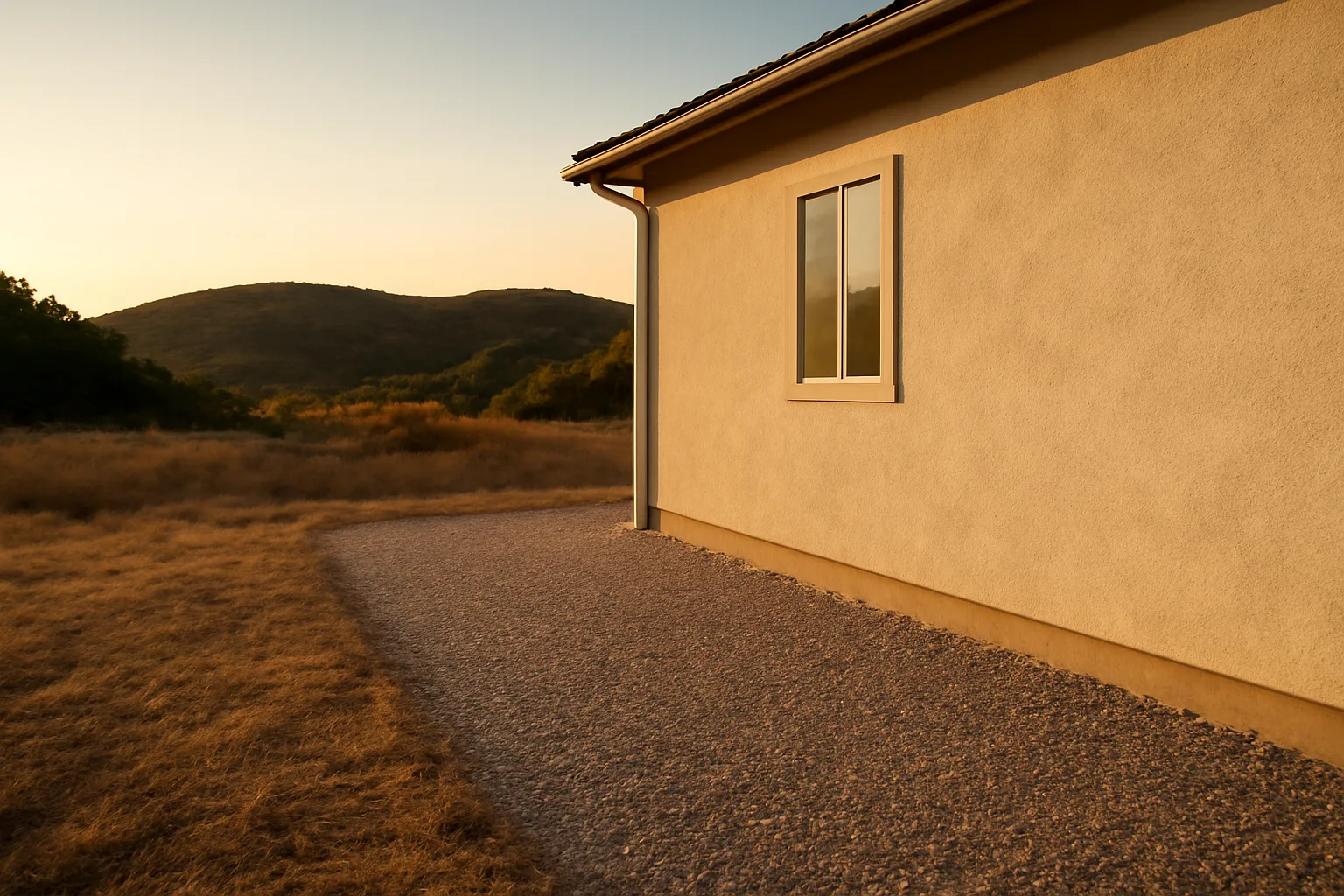
You can't stop a wildfire from reaching your property in most of California, Colorado, Oregon, or Arizona's wildland-urban interface. What you can control is whether your house ignites once embers land on it, and that's the fight that actually matters. Research from the Insurance Institute for Business & Home Safety (IBHS) and CAL FIRE both point to the same conclusion: most homes lost in wildfires burn from embers landing on or near the structure, not from a wall of flame rolling through. That changes the whole strategy. Instead of thinking "how do I stop the fire," think "how do I stop embers from finding fuel." Embers can travel a mile or more ahead of a fire front, riding wind currents, and they'll find every gap: a vent screen with quarter-inch mesh instead of an eighth-inch, a pile of mulch against the siding, a wood fence that runs straight into your wall. The practical hierarchy, in order of impact: harden the first five feet around your foundation (this is now called Zone 0 in California), upgrade vents and roofing, then work outward through defensible space zones to 100 feet. If you only do one thing this year, do Zone 0. It's the cheapest zone to treat and the one most correlated with home survival in post-fire assessments. For a full room-by-room and yard-by-yard breakdown, see our home hardening priorities guide and our defensible space zone walkthrough.
When does the California defensible space law (Zone 0) actually go into effect?
California's Zone 0 ember-resistant zone requirement, created by Assembly Bill 3074 (2020) and codified in Public Resources Code Section 4291.5, does not yet have a final enforcement date as of this writing. The State Board of Forestry and Fire Protection has been working through rulemaking, and the timeline has slipped more than once. As of the Board's most recent public materials, draft regulations for Zone 0 (the 0 to 5 foot ember-resistant zone) were undergoing formal rulemaking review, with an anticipated effective date sometime in 2026 for homes in State Responsibility Areas and certain Wildland-Urban Interface zones in Very High Fire Hazard Severity Zones [1]. That date is not locked. Rulemaking has been delayed before, and local fire districts may adopt or enforce related standards on their own timeline. Here's the honest uncertainty: California statute directs the Board to adopt regulations, but as of mid-2024 reporting, the Board had not finalized the regulatory text, meaning the "2026" figure circulating in news coverage is a target, not a guarantee. Check your specific fire district's current requirement before you spend money, because [mitigation rules vary by fire district, confirm your local requirement here]. What the statute itself says is clearer than the timeline: PRC 4291.5 directs the Board to "develop regulations for ember-resistant zones" within 5 feet of a structure, covering combustible mulch, vegetation, and attached items like fences and gates [2]. Whatever the exact enforcement date turns out to be, the underlying requirement (bare ground, gravel, or hardscape in that 5-foot ring, no combustible mulch, no wood fencing touching the house) is coming, and doing it now costs you nothing in downside.
What fire-safe home rules take effect in 2026?
| California | Zone 0 ember-resistant zone (PRC 4291.5) | Draft regulations in Board of Forestry rulemaking process; target effective date reported around 2026 [1] | |
|---|---|---|---|
| California | Defensible space 100-ft requirement (PRC 4291) | Already in effect statewide in SRA and VHFHSZ areas | |
| Colorado | Local wildfire mitigation codes (no single statewide defensible space law) | Set county-by-county; Colorado State Forest Service publishes model guidance, not a mandate | |
| Oregon | Senate Bill 762 wildfire risk map and defensible space rules | Statewide risk map process ongoing after 2022 map withdrawal; new rules under Oregon Department of Forestry review [3] | |
| Arizona | No statewide defensible space mandate | Handled through county ordinances and the Arizona State Forestry Division's community programs | The pattern across all four states: statewide statutes set a floor or a framework, but your actual obligation comes from your county, fire protection district, or, in some cases, your insurer's own inspection checklist. [Confirm your local district's current defensible space requirement before doing major work]. If you got a non-renewal or inspection letter, the letter itself often cites the specific standard the insurer is using, which may be stricter than state law. Read it carefully before you assume CAL FIRE's baseline is what you need to hit. |
Multiple states are pushing new wildfire building and defensible space rules toward 2025-2026 timelines, and the details differ enough that a rule you read about in a news article may not apply to your county. Here's what's actually documented, state by state. | State | Rule | Status as of 2025 |
Why won't people follow the defensible space law in California?
CAL FIRE's own inspection data gives a blunt answer: compliance is inconsistent, and the reasons are mostly money, labor, and confusion, not defiance. In post-fire assessments and legislative hearings, three barriers come up again and again. Cost is the biggest one. Removing dense brush, limbing up mature trees, and replacing wood fencing near the house can run from a few hundred dollars for a small lot with volunteer labor to several thousand dollars for a larger property needing a contractor and equipment. For homeowners on fixed incomes, especially older residents in fire-prone rural areas, that's a real barrier, not an excuse. Second, defensible space work is not a one-time job. Vegetation grows back. A property that passed inspection two years ago can fail today simply because nobody re-cleared it. CAL FIRE requires an annual assessment for many parcels, and that recurring labor cost is easy to underestimate. Third, there's genuine confusion about what's required where. The 100-foot rule under PRC 4291 has different specifics depending on slope, vegetation type, and whether you're in a State Responsibility Area or a Local Responsibility Area with its own ordinance. Homeowners often don't know which rules apply to their specific parcel, and enforcement has historically been light, some counties do defensible space inspections only when time and staffing allow. CAL FIRE's own program page states plainly that "defensible space is your home's first line of defense against wildfire" and frames the 100 feet as split into two zones with different maintenance standards. The intent isn't punitive, it's survivability math: embers that can't find continuous fuel from the wildland edge to your walls are far less likely to ignite the structure.
How do you prepare for a wildfire before one starts?
Preparing for a wildfire happens in three phases: harden the structure, clear the property, and get your documentation and evacuation plan ready before you ever smell smoke. Waiting until a fire is reported nearby is too late for the structural work; that part has to happen months or years ahead. Start with the house itself. Class A fire-rated roofing, ember-resistant vents (look for those tested to the flame and intrusion test standard in California's Building Code Chapter 7A), and dual-pane or tempered glass windows are the upgrades with the strongest evidence behind them, because most home ignitions during wildfires come from embers entering through vents, gutters, or gaps in siding, not direct flame contact. Next, work through the defensible space zones outward from the house: Zone 0 (0-5 ft, near-zero combustibles), Zone 1 (5-30 ft, spaced and maintained vegetation), and Zone 2 (30-100 ft, reduced fuel load, mowed grass, thinned trees). Ready.gov's wildfire preparedness guidance recommends the same graduated approach and adds practical items: keep gutters clear of leaves and needles, store firewood at least 30 feet from the house, and maintain a garden hose long enough to reach every part of the property. Finally, prepare your documentation and evacuation kit. Ready.gov recommends every household have a family emergency communication plan, a go-bag with essentials for at least 72 hours, and copies of critical documents (insurance policy, ID, medical records) stored somewhere you can grab fast or access remotely [4]. This is also the moment to photograph your home, inside and out, and your defensible space work. If your insurer non-renews or an adjuster later disputes damage, dated photos and receipts are the difference between a fast claim and a fight. That documentation gap is exactly what our $99 one-time Wildfire Insurance Survival Kit is built to close: a structured way to document your hardening work, defensible space clearing, and home inventory before you need it, not after. To be clear, we don't file claims for you or promise coverage or discounts; you're preparing your own documentation to send.
How do you prevent forest fires and wildfires from starting in the first place?
Roughly 85% of wildfires in the United States are caused by people, according to the National Park Service, through unattended campfires, debris burning, equipment sparks, and discarded cigarettes [5]. That means prevention at the ignition-source level is mostly about individual behavior, not infrastructure. The practical list: fully extinguish campfires (drown, stir, and feel for heat, don't just kick dirt on them), avoid parking or driving on dry grass where a hot exhaust or catalytic converter can ignite it, follow local burn-day restrictions for debris piles, and keep chainsaws, mowers, and other spark-producing equipment away from dry vegetation during red flag warning days. CAL FIRE's public information campaigns and the long-running Smokey Bear program both center on this same behavioral message, and it's worth remembering that "only you can prevent wildfires" isn't just a slogan, it reflects the actual ignition-cause data [5]. Utility equipment and power lines are another major ignition source, especially in California, where several of the state's largest fires have been traced to utility infrastructure failures. Homeowners can't control utility maintenance, but you can report sagging lines or sparking equipment near your property to your utility immediately. On your own property, the prevention list overlaps heavily with the hardening list: keep dry vegetation cleared, don't store gasoline or propane near ignition sources, and if you do prescribed or debris burning, follow your local fire district's burn permit rules exactly. For more on what a fire at a house actually looks like once it starts and how fast structures ignite, see our breakdown of house fire progression and what happens during a fire at a house.
How do you prepare for forest fires if you live near wildland, more than in a subdivision?
If your property backs directly onto national forest, BLM land, or unmanaged wildland, your defensible space math changes, because your fuel break has to work against a much more intense and less predictable fire behavior than a suburban lot surrounded by other cleared yards. The first move is talking to your local fire district or state forestry office about the specific slope and fuel type behind your home. Fire moves faster uphill, and CAL FIRE's defensible space guidance explicitly adjusts required clearance distances based on slope percentage, more than flat-ground rules. A 30-degree slope behind your house can call for expanded Zone 2 treatment beyond the standard 100 feet, depending on your local ordinance. Second, if you're doing your own vegetation clearing work near a forest boundary, understand that in some states this crosses into regulated territory. Washington State's Department of Natural Resources, for example, runs defensible space cost-share and contractor programs specifically for rural, forest-adjacent property owners. If you're in a similar situation, check whether your state runs something comparable before hiring a contractor blind. (See our guide on wildfire defensible space clearing contracts and Washington State DNR programs for how one state structures this.) Third, coordinate with neighbors if you can. Defensible space works best as a contiguous fuel break; one carefully cleared lot next to three overgrown ones still leaves embers a path in from the side. Some fire-adapted communities organize joint clearing days specifically because individual compliance without neighborhood coordination leaves gaps.
How do you avoid forest fires when visiting or living in high-risk areas?
Avoiding forest fires as a visitor or resident comes down to knowing the fire danger level before you act and adjusting behavior to match it, not following a fixed checklist regardless of conditions. Red Flag Warnings, issued by the National Weather Service when low humidity, high wind, and dry fuels combine, mean any spark has an outsized chance of becoming a fire; during those days, avoid outdoor burning, power tool use on dry grass, and towing chains that can spark on pavement. Check your local fire danger rating (posted by most national forests and CAL FIRE units) before camping, and follow current campfire restrictions exactly. Many areas move to campfire bans well before a formal fire ban is announced publicly, based on fuel moisture readings. For residents, "avoiding" a forest fire mostly means the same defensible space and hardening work covered above, plus situational awareness: know your evacuation routes before smoke shows up, sign up for your county's emergency alert system, and don't wait for a mandatory evacuation order if conditions look bad and you have somewhere safe to go early. Voluntary early evacuation is consistently safer than waiting, because the roads that were clear at 2pm can be gridlocked or closed by 4pm once a fire moves fast.
Is Santa Barbara safe from fire, and how do coastal California cities compare?
No California city with wildland or steep chaparral terrain nearby, including Santa Barbara, is "safe" from fire in an absolute sense, but risk varies enormously by specific neighborhood, more than by city name. Santa Barbara County has experienced some of the state's most destructive fire events, including the 2017 Thomas Fire, which at the time was the largest wildfire in modern California history, burning over 281,000 acres across Santa Barbara and Ventura counties , and the debris flow that followed in Montecito in January 2018 killed 23 people, a stark reminder that wildfire risk doesn't end when the flames go out . Within Santa Barbara city and county limits, risk is highly localized. Neighborhoods built directly against the foothills, in the wildland-urban interface along the base of the Santa Ynez Mountains, carry meaningfully higher fire risk than flatter areas closer to the coast and further from continuous wildland fuel. CAL FIRE's Fire Hazard Severity Zone maps, available through the state's mapping tool, show this variation at the parcel level, more than the city level, so "is Santa Barbara safe" really depends on which specific street you mean . The honest takeaway for anyone house-hunting or already living there: check your specific parcel's Fire Hazard Severity Zone designation directly rather than relying on the city's general reputation, and if you're in a Very High or High zone, assume the full defensible space and hardening requirements apply to you, because they almost certainly do.
What's the difference between wildfire prevention, mitigation, and defensible space?
These three terms get used loosely, but they mean different things, and mixing them up leads to spending money on the wrong priority. Prevention means stopping an ignition from happening at all (extinguishing campfires, avoiding sparks). Mitigation means reducing damage if a fire does start nearby (home hardening, fuel breaks, community fuel reduction projects). Defensible space is a specific subset of mitigation: the graduated, zoned clearing of vegetation and combustibles around a structure, defined in California by PRC 4291 and its associated zones. Here's why the distinction matters for your budget. If you spend everything on prevention behavior (which costs nothing) but skip mitigation, your house is still vulnerable to a fire that started three ridgelines away and that you had zero chance of preventing. If you spend everything on defensible space clearing but ignore vent screens and roofing, embers can still get inside your attic through an unscreened vent even with perfect landscaping outside. The realistic homeowner strategy blends all three: behave safely (free), harden the structure (moderate cost, high payoff), and maintain defensible space zones (recurring cost, required by law in many areas, and directly tied to survivability in post-fire studies). None of the three substitutes for the others.
What should you document before and after wildfire season for insurance purposes?
Insurers increasingly want proof of mitigation work, more than a claim that you did it, especially in states where non-renewals have spiked and companies are using wildfire risk models to decide who stays covered. Document your defensible space and hardening work the way you'd document a home renovation: dated photos, receipts, and a written record of what was done and when. At minimum, photograph each defensible space zone (0-5 ft, 5-30 ft, 30-100 ft) separately, dated, ideally twice a year since vegetation regrows. Keep receipts for any contractor work, including brush clearing, tree trimming, and vent or roofing upgrades. If your local fire district does voluntary inspections, keep the inspection report, even an informal one, since some insurers now ask for exactly that kind of third-party verification before renewal. We built the $99 one-time Wildfire Insurance Survival Kit around exactly this gap: a structured template for organizing your mitigation photos, receipts, and home inventory so you're not scrambling to reconstruct it after a non-renewal letter or, worse, after a fire. To be direct about what this is and isn't: it's a documentation tool. We don't file claims on your behalf or promise reinstated coverage or lower premiums. You gather the proof; you decide what to send and when. For the property-level clearing that generates the photos in the first place, see our guide on defensible space zones and fire-safe landscaping directly next to the house.
Frequently asked questions
When does the California defensible space law go into effect?
The core 100-foot defensible space requirement under Public Resources Code 4291 is already in effect statewide in State Responsibility Areas. The newer Zone 0 ember-resistant zone rule (PRC 4291.5) is still in rulemaking as of this writing, with news coverage pointing to a possible 2026 effective date, though the Board of Forestry has not finalized that timeline.
Why won't people follow the defensible space law in California?
Mainly cost, recurring labor, and confusion about which rules apply to their specific parcel. Clearing brush and upgrading vents can run from a few hundred to several thousand dollars, and because vegetation regrows, it's an annual task, not a one-time fix, which many homeowners underestimate.
How do I prevent wildfires from starting on or near my property?
Fully extinguish campfires, avoid driving or parking on dry grass, follow local burn-day restrictions, and keep equipment that can spark away from dry vegetation, especially during red flag warnings. About 85% of U.S. wildfires are human-caused, according to the National Park Service, so behavior is the highest-payoff prevention tool.
How do I prepare for a wildfire if I live in a high-risk zone?
Harden your home (Class A roof, ember-resistant vents, dual-pane windows), clear defensible space in zones out to 100 feet, and prepare a go-bag plus document copies per Ready.gov guidance. Photograph your home and mitigation work for insurance purposes before fire season starts, not after.
What fire-safe home rules take effect in 2026?
California's Zone 0 ember-resistant zone rule is the most cited 2026 target, though not yet finalized in regulation. Oregon and Colorado are updating wildfire risk mapping and local codes on similar timelines, but neither has one statewide 2026 mandate comparable to California's. Check your county or fire district directly.
Is Santa Barbara safe from wildfire?
No area of Santa Barbara backed by wildland terrain is fully safe; the county experienced the 281,000-acre Thomas Fire in 2017 and the deadly Montecito debris flow in January 2018. Risk varies by parcel, check CAL FIRE's Fire Hazard Severity Zone map for your specific street rather than judging by the city's general reputation.
How can we prevent forest fires as a community, more than individually?
Coordinate defensible space clearing with neighbors so fuel breaks are contiguous, support local fuel-reduction and prescribed burn programs, and report sparking utility equipment immediately. Individual compliance helps, but a single cleared lot next to overgrown ones still leaves embers a path in from the side.
What is Zone 0 and why does it matter more than the outer defensible space zones?
Zone 0 is the 0-5 foot ring immediately around your home's foundation, and it's the area most correlated with home survival in post-fire assessments because it's where embers landing near the structure most often find combustible fuel. California's proposed Zone 0 rule under PRC 4291.5 would require bare ground, gravel, or hardscape there.
Do I need a permit to clear defensible space on my property?
Usually not for basic vegetation clearing and pruning, but larger tree removal, grading, or work near protected habitat can require local permits. Check with your county planning department or local fire district before major clearing, since rules vary by jurisdiction and some areas restrict removal of native oak or protected species.
How often do I need to redo defensible space clearing?
At least annually, since grasses and brush regrow within a single season in most climates. CAL FIRE inspections in State Responsibility Areas are typically conducted on a recurring basis, and many insurers now request updated, dated photos each renewal cycle rather than a one-time proof of compliance.
What roofing material is best for wildfire safety?
Class A fire-rated roofing (concrete tile, metal, or certain fire-treated asphalt shingle products) offers the strongest ember resistance. California's Building Code Chapter 7A sets ignition-resistant construction standards for homes in Wildland-Urban Interface fire areas, and roofing is one of the most heavily weighted components in that standard.
Can I do defensible space work myself, or do I need a contractor?
Basic brush clearing, mulch replacement, and vegetation spacing in Zones 1 and 2 are commonly done by homeowners themselves. Tree removal, work on steep slopes, or ember-resistant vent and roofing upgrades usually call for a licensed contractor, both for safety and because some insurers want professional documentation.
Sources
- California Board of Forestry and Fire Protection, Zone 0 Rulemaking: Zone 0 ember-resistant zone regulations under development with a targeted 2026 timeframe
- California Public Resources Code Section 4291.5: Statutory requirement directing the Board of Forestry to develop ember-resistant zone regulations within 5 feet of a structure
- Arizona Department of Forestry and Fire Management: Arizona manages wildfire mitigation through county ordinances and state forestry community programs rather than a statewide defensible space mandate
- CAL FIRE, Thomas Fire Incident Archive: The 2017 Thomas Fire burned over 281,000 acres across Santa Barbara and Ventura counties
- CAL FIRE, Fire Hazard Severity Zone Viewer: Fire Hazard Severity Zone designations vary by parcel, not uniformly by city