Last updated 2026-07-25
TL;DR
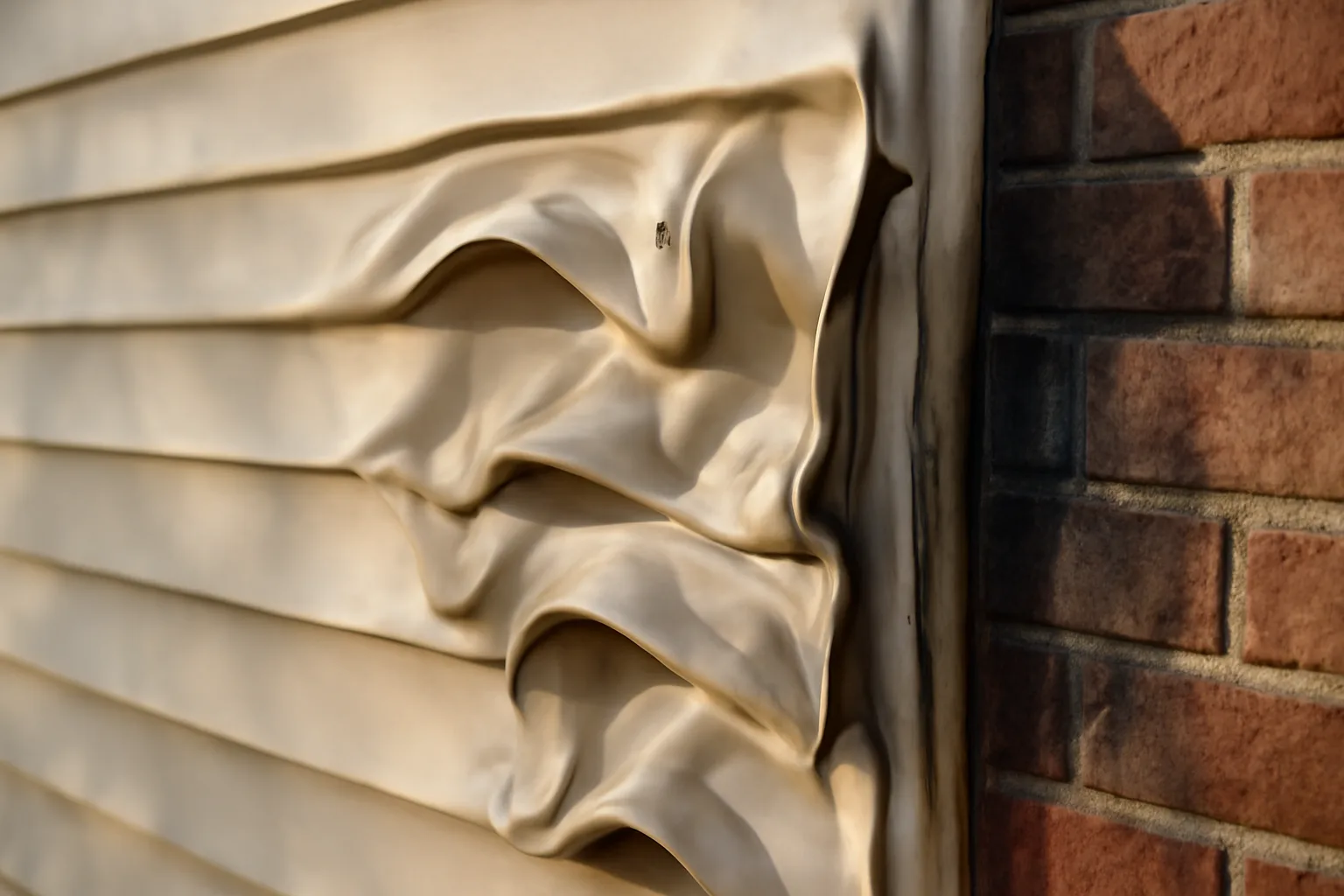
No. Vinyl siding is not fire resistant. It softens around 165°F and melts near 220°F, well below the temperatures a wildfire or radiant heat exposure produces. It can drip, deform, and expose the wall sheathing behind it, letting flame and embers reach combustible framing. Fiber cement, stucco, and metal siding hold up far better in wildfire zones.
is vinyl siding fire resistant or does it just resist casual flame?
Vinyl siding is not fire resistant in any meaningful wildfire sense. It's made from PVC (polyvinyl chloride), a plastic that softens at roughly 165°F and melts around 220°F, according to the Vinyl Siding Institute's own installation guidance, which warns against installing vinyl near grills, dark-colored window films, or reflective glass that can concentrate heat onto the siding [1]. A wildfire's radiant heat, and even the heat off a burning shrub a few feet from a wall, blows past those numbers without much effort. Here's the distinction that matters: vinyl doesn't ignite as easily as, say, dry paper or shredded bark, so in a casual sense people call it "resistant to catching fire." But melting isn't the same as surviving. Once vinyl softens, it sags off the wall. Once it melts, it can drip in burning globs onto mulch, deck boards, or anything flammable below it, and it exposes whatever is behind it, usually OSB or plywood sheathing, foam insulation, or old original siding, none of which is fire rated either. In wildfire-specific testing, vinyl siding has performed poorly compared to noncombustible claddings. It's not on the list of materials California's Chapter 7A ignition-resistant construction standards treat as compliant for the wildland-urban interface. If you're rebuilding or re-siding a home in a state Fire Hazard Severity Zone in California, vinyl alone generally won't satisfy the exterior wall covering requirements under Chapter 7A.
what actually happens to vinyl siding in a wildfire?
In direct flame contact, vinyl siding burns and can contribute fuel once it's alight, though PVC does contain chlorine that makes it somewhat self-extinguishing in isolation. The bigger problem in wildfires isn't direct flame, it's radiant heat and embers. Embers can travel a mile or more ahead of a fire front, according to research summarized by the Insurance Institute for Business & Home Safety (IBHS), and can smolder in gaps, gutters, and against siding for hours [2]. When radiant heat from a nearby burning structure, vehicle, or vegetation hits vinyl siding, it softens and deforms well before ignition temperature is reached elsewhere on the structure. That gap between panels then lets embers and heat reach the wall assembly behind it. If that assembly includes foam insulation or older wood sheathing, you now have a hidden ignition source burning inside your wall while the exterior looks intact from a distance. This is why many post-fire investigations, including CAL FIRE's after-action work on several major California fires, keep coming back to three vulnerabilities: exterior wall coverings, vents, and decking. Vinyl fits into the first category as one of the weaker performers homeowners commonly still have on their homes, especially in older neighborhoods built before wildfire-specific codes existed.
what siding materials actually hold up better in wildfire zones?
| Vinyl (PVC) siding | Softens ~165°F, melts ~220°F [1] | Deforms and exposes sheathing well before flame arrival | |
|---|---|---|---|
| Wood siding (untreated) | Ignites depending on species/moisture, generally 300 to 500°F | Combustible fuel source itself | |
| Fiber cement siding | Noncombustible per ASTM E136 classification | Common Chapter 7A-compliant choice | |
| Stucco (3-coat) | Noncombustible | Long-standing WUI standard, needs proper substrate | |
| Metal siding (steel/aluminum) | Noncombustible, but aluminum can deform under high heat | Strong performer, check trim and fastener details | |
| Brick/masonry veneer | Noncombustible | Excellent, but full assembly (including mortar joints) matters | California's Chapter 7A standards require exterior wall coverings on new construction and rebuilds in Fire Hazard Severity Zones to be noncombustible, ignition-resistant, or tested to meet specific WUI performance criteria under standards like the State Fire Marshal's approved products list. If you're weighing a full re-side versus targeted hardening, our guide on fire safe landscaping in California next to the house covers the other half of the equation, since siding choice matters a lot less if a fence or shrub bed is feeding flame straight to the wall. |
Fiber cement, stucco, brick, and metal siding all significantly outperform vinyl in wildfire exposure. None of them are literally fireproof, but they don't melt, sag, or contribute fuel the way vinyl and most wood sidings do. | Material | Approx. softening/failure point | Wildfire performance notes |
when does the california defensible space law go into effect?
California's core defensible space law, requiring 100 feet of vegetation clearance (or to the property line) around structures in State Responsibility Areas and some Local Responsibility Areas, has been in effect since 2005 under Public Resources Code section 4291. It's not new. What is changing is the more detailed "zone 0" ember-resistant zone rule for the first 5 feet around structures. That Zone 0 regulation was authorized by Assembly Bill 3074 (2020) and is being developed by the Board of Forestry and Fire Protection. As of this writing, the Board has been working through rulemaking, and CAL FIRE's own defensible space page notes the ember-resistant zone requirement applies once regulations are finalized and adopted, with an expected phase-in for existing homes after that. Because rulemaking timelines shift, check your specific fire district's adopted timeline rather than relying on a single date; [your local fire district's adopted defensible space timeline]. CAL FIRE's public guidance describes the goal plainly: keep the area immediately next to the home "free of combustible materials" including mulch, dead vegetation, and stored items. Separately, a broader set of wildfire-related building and insurance provisions, often referenced loosely as "2026 fire safe rules," reflects several tracks moving at once: Zone 0 rulemaking, updates to the state's Safer from Wildfires framework tied to insurance discounts, and local jurisdictions adopting their own accelerated timelines. There isn't one single federal or state "2026 vinyl siding ban," so treat any specific date claim about siding materials with caution and confirm against your county building department and [your fire district's current code adoption date].
why won't people follow the defensible space law in california?
Cost, labor shortages, and unclear enforcement are the three reasons that come up most often in reporting and in CAL FIRE's own outreach materials. Clearing 100 feet of defensible space on a sloped, wooded, or brush-heavy lot can run into thousands of dollars in tree work, chipping, and hauling, and many homeowners, especially older or fixed-income residents, simply can't absorb that cost every year as vegetation regrows. There's also a knowledge gap. Some homeowners assume clearing everything to bare dirt is required (it's not, and can actually cause erosion problems) or assume a single clearing lasts indefinitely, when in reality defensible space needs annual maintenance since grass and brush regrow every season. CAL FIRE's compliance approach in most counties starts with an inspection notice and a correction period rather than an immediate citation, but enforcement intensity varies a lot by county and by whether the parcel is in a State Responsibility Area versus a Local Responsibility Area. And frankly, some people just don't believe it will happen to them until a neighbor's house burns or they get the non-renewal letter. That's usually when defensible space work and documentation both become urgent at once, which is the exact moment a lot of our readers land here.
how to prevent wildfires around your own property
You can't prevent wildfire ignition sources like lightning or downed power lines, but you can dramatically cut the odds that a wildfire becomes a structure fire once it reaches your property. CAL FIRE and Ready.gov both organize this around defensible space zones and home hardening working together, not either alone [3]. The practical priority list, roughly in order of cost-effectiveness: clear dead vegetation and debris within 5 feet of the structure (Zone 0), remove anything flammable from under decks and against exterior walls, screen or box in vents with 1/8-inch metal mesh to block ember entry, clean gutters and roof valleys of pine needles and leaves, and keep grass mowed short within 30 feet. None of that requires a contractor. The bigger-ticket items, ember-resistant vents, Class A roofing, dual-pane tempered windows, and noncombustible siding, are the home-hardening side of the equation, and they matter because embers cause the majority of home ignitions in wildfires, not direct flame contact, according to IBHS research on wildfire home losses [2]. Our defensible overview breaks the zones down further if you want a room-by-room, zone-by-zone checklist for your specific property.
how to prepare for a wildfire (evacuation and documentation)
Preparing for a wildfire means having an evacuation plan, a go-bag, and property documentation ready before you get a warning, not after. Ready.gov recommends building a family emergency plan that includes two meeting points, an out-of-town contact, and a go-bag with medications, copies of documents, and supplies for at least three days [3]. For homeowners already dealing with insurance non-renewal or inspection letters, documentation is its own category of preparation. Photograph and video your defensible space work, your roof, vents, and siding, with timestamps, before wildfire season and after any mitigation work. Keep receipts for tree removal, brush clearing, and any hardening upgrades. This isn't about proving anything to an insurer in the moment of a claim (we don't handle claims or negotiate with insurers here, and you should always send your own documentation directly), it's about having a clear, dated record if you ever need to show an insurer, a new carrier, or a FAIR Plan underwriter what condition your property was actually in. This is genuinely the gap our $99 Wildfire Insurance Survival Kit was built to close: a structured way to document defensible space, hardening upgrades, and property condition so you're not scrambling for photos and receipts during fire season or after a non-renewal notice.
how to prevent forest fires and how to avoid forest fires
Most forest fires are human-caused, so prevention mostly comes down to controlling ignition sources: campfires, equipment sparks, fireworks, and vehicle exhaust systems dragging on dry grass. The U.S. Forest Service's long-running Smokey Bear program exists specifically because roughly 85% of wildland fires in the U.S. are human-caused according to National Interagency Fire Center data cited on Smokey's own program history [4]. Practical prevention steps: fully drown and stir campfires until they're cold to the touch, never leave a fire unattended, avoid parking or idling vehicles on dry grass, follow local burn permit rules (many counties suspend burn permits entirely during red flag warnings), and check local fire restrictions before using fireworks, chainsaws, or equipment that throws sparks. During red flag warning days, even a lawnmower blade striking a rock can start a fire. If you're a landowner near wildland areas, maintaining fuel breaks and following your fire district's brush clearance requirements does double duty: it protects your own structures and reduces the fuel load that lets fires spread toward neighbors.
how to prepare for forest fires as a rural or wildland-adjacent property owner
Preparing for forest fires as a property owner near wildland areas means treating your defensible space work as infrastructure, not a one-time chore. Annual brush clearance, maintained access roads for fire apparatus, a water source firefighters can actually reach, and clearly marked addresses all make a measurable difference in whether a structure gets defended during an active fire. If you're managing acreage rather than a suburban lot, look into your state's cost-share programs. Washington State's Department of Natural Resources, for example, runs defensible space and fuel reduction cost-share programs that can offset clearing costs on larger parcels, and similar programs exist through CAL FIRE grants and county resource conservation districts in California. Our guide on wildfire defensible space clearing contracts with Washington State DNR walks through how those contracts work if you're in that state. Rural properties should also plan for the possibility that firefighters won't be able to reach every structure during a major fire event. That's a hard thing to sit with, but it's the honest reality CAL FIRE communicates in its own defensible space materials: homes with proper clearance and hardening survive on their own far more often, because crews prioritize defensible, defendable structures when resources are stretched thin.
what fire-safe rules for homes take effect in 2026?
There is no single nationwide "2026 fire safe home rule." What's actually happening in 2026 is a patchwork: California's Zone 0 ember-resistant zone regulation is expected to move through final adoption and phase-in, several counties are adopting stricter local wildfire building codes ahead of state timelines, and insurance regulators in California have been implementing the Safer from Wildfires framework, which ties specific mitigation actions, including defensible space and home hardening, to potential insurance benefits [5]. Because this varies by state and even by fire district within a state, don't rely on a single number here. Check directly with [your state fire marshal's office] and [your county building department] for the specific code cycle and effective date that applies to your address. If you're rebuilding after a fire loss, your local building department will tell you which code edition (often the California Building Code Chapter 7A edition current at permit time) governs your rebuild, and that's the version that actually controls whether vinyl siding is allowed on your project.
is santa barbara safe from fire, and how do i judge my own area's risk?
No coastal or inland California community is "safe" from fire risk in an absolute sense, and Santa Barbara County has a documented history of major wildfires, including the 1990 Painted Cave Fire and the 2017 Thomas Fire, which was at the time the largest wildfire in modern California history by acreage before being surpassed by later fires . Parts of Santa Barbara County, particularly the foothill and wildland-urban interface neighborhoods, sit within CAL FIRE-designated Very High Fire Hazard Severity Zones. Rather than asking whether a whole city or county is "safe," the more useful question is whether your specific parcel sits inside a Fire Hazard Severity Zone, and CAL FIRE publishes searchable maps by address that answer that directly. Two houses a quarter mile apart can have very different risk profiles depending on slope, vegetation, and prevailing wind exposure. If your address falls in a Moderate, High, or Very High zone, defensible space and home hardening requirements likely apply to you regardless of how safe the broader city feels.
how can we prevent forest fires as a community, more than a homeowner?
Community-level prevention works because fire doesn't respect property lines, so one neighbor's unmaintained lot can undo another's careful hardening work. Fire-adapted communities programs, often run through county fire safe councils, coordinate neighborhood-wide chipping days, shared fuel breaks, and joint grant applications for larger clearance projects that individual homeowners couldn't fund alone. Simple community actions that move the needle: reporting unmaintained vacant lots to code enforcement, participating in county chipper day programs (many are free or subsidized), supporting local Firewise USA recognition (a National Fire Protection Association program that formalizes neighborhood-level mitigation standards), and pushing HOAs to update covenants that currently prohibit gravel, hardscape, or fire-resistant landscaping in favor of purely aesthetic rules written before wildfire risk was a serious factor. If you've had a house fire or watched a neighbor go through one, or you're dealing with a fire at a house nearby, that's often the moment neighbors start actually organizing. Waiting for that moment is understandable but expensive; earlier coordination is cheaper for everyone on the block.
should you replace vinyl siding before or after an insurance non-renewal letter?
If you've already received a non-renewal or inspection letter, prioritize documentation and the cheapest, highest-impact hardening first, then evaluate siding replacement as a longer-term project. Re-siding an entire home in fiber cement or stucco typically runs several dollars per square foot in materials alone before labor, which for an average home can mean a five-figure project. That's not something you can turn around before a 30 or 60-day non-renewal deadline in most cases. What you can do quickly: clear the 5-foot Zone 0 perimeter, screen vents, clean gutters and roof debris, remove flammable items from against walls and under decks, and photograph everything with timestamps. Those are the actions CAL FIRE's own defensible space guidance treats as baseline expectations, and they cost far less than re-siding. If full siding replacement is realistic for your timeline and budget, fiber cement is generally the best value-for-performance upgrade over vinyl in wildfire zones: noncombustible, widely available, and commonly accepted under Chapter 7A exterior wall covering provisions. Vinyl replacement with more vinyl doesn't move the needle on wildfire risk at all, even though it might satisfy a purely aesthetic HOA requirement.
the bottom line on vinyl siding and wildfire risk
Vinyl siding was engineered for cost, low maintenance, and weather resistance in general climates, not for wildfire exposure, and it shows. A material that softens at 165°F and melts around 220°F simply isn't built for the radiant heat a wildfire throws off from a hundred feet away, let alone direct flame contact [1]. If you're facing a non-renewal letter or an inspection deadline, the honest priority order is: document your current property condition, knock out the free and cheap defensible space and hardening steps first, then plan for bigger material upgrades like siding replacement on a realistic timeline and budget. Our $99 Wildfire Insurance Survival Kit is built around exactly that documentation step, giving you a structured way to record and organize your property's condition and mitigation work, so if a carrier or FAIR Plan underwriter asks for evidence, you're not digging through old phone photos trying to remember when you cleared that brush pile. None of this is legal, insurance, or claims advice, and we don't file claims, negotiate with insurers, or promise coverage outcomes on anyone's behalf. You prepare the documentation, you send it yourself, and you decide what to do with it.
Frequently asked questions
Is vinyl siding fire resistant enough for wildfire zones?
No. Vinyl siding softens around 165°F and melts near 220°F, according to Vinyl Siding Institute installation guidance, well below wildfire radiant heat exposure levels. It's generally not compliant with California's Chapter 7A wildland-urban interface exterior wall covering standards. Fiber cement, stucco, brick, and metal siding all perform significantly better and are more commonly accepted for wildfire-zone rebuilds.
When does the California defensible space law go into effect?
The core 100-foot defensible space clearance requirement under Public Resources Code section 4291 has been in effect since 2005. The newer Zone 0 ember-resistant zone rule (the first 5 feet around structures) is in rulemaking through the Board of Forestry and Fire Protection; check your local fire district for its specific adopted timeline since phase-in dates vary.
Why won't people follow the defensible space law in California?
Cost, labor availability, and unclear enforcement are the top reasons cited in CAL FIRE outreach and local reporting. Clearing 100 feet on a wooded or sloped lot can cost thousands annually, requires repeat maintenance as vegetation regrows, and enforcement intensity varies significantly by county and by whether the parcel sits in a State or Local Responsibility Area.
How to prevent wildfires from destroying my home?
Combine defensible space (clearing vegetation in zones out to 100 feet) with home hardening (ember-resistant vents, Class A roofing, noncombustible siding, dual-pane windows). CAL FIRE and IBHS both note embers, not direct flame, cause most home ignitions during wildfires, so sealing entry points for embers matters as much as vegetation clearance.
How do I prepare for a wildfire if I get an evacuation warning?
Have a go-bag ready with medications, documents, and 3+ days of supplies, per Ready.gov guidance. Know two meeting points and an out-of-town contact. Before fire season, photograph your property's condition, defensible space work, and any hardening upgrades with timestamps so you have documentation ready regardless of what happens.
How can we prevent forest fires from starting in the first place?
Most wildland fires are human-caused. Fully extinguish and stir campfires until cold, never leave fires unattended, avoid parking on dry grass, follow local burn permit and red flag warning restrictions, and be careful with equipment that throws sparks (mowers, chainsaws, grinders) during dry, windy conditions.
What fire-safe home rules take effect in 2026?
There's no single national 2026 rule. California's Zone 0 ember-resistant zone regulation is moving through adoption, some counties are adopting stricter local codes early, and the state's Safer from Wildfires insurance framework continues rolling out. Confirm exact effective dates with your state fire marshal and county building department, since timelines vary by jurisdiction.
Is Santa Barbara safe from wildfire risk?
No California community is fully safe from wildfire. Santa Barbara County has experienced major fires including the 1990 Painted Cave Fire and 2017 Thomas Fire. Check CAL FIRE's Fire Hazard Severity Zone maps for your specific address rather than judging risk at the city level, since risk varies sharply by parcel, slope, and vegetation.
Does vinyl siding melt in a house fire even without direct wildfire contact?
Yes. Vinyl siding melts around 220°F, a temperature easily reached from radiant heat off a nearby structure fire, burning vehicle, or even a grill placed too close to a wall, according to Vinyl Siding Institute guidance. This is why manufacturers themselves warn against installing vinyl near heat sources.
What siding material is best for wildfire-prone homes?
Fiber cement, stucco, brick, and metal siding all outperform vinyl and untreated wood because they're noncombustible and don't melt or sag under radiant heat. Fiber cement is often the best value option since it's widely available, commonly Chapter 7A-compliant, and costs less than brick or full masonry veneer.
How to avoid forest fires when camping or working on rural land?
Drown and stir campfires completely until cold to the touch, check local burn permit status before any outdoor burning, avoid using spark-throwing equipment during red flag warnings, and never park or idle vehicles over dry grass since catalytic converters can ignite vegetation within minutes.
Can I get an insurance discount for replacing vinyl siding with fire-resistant material?
Possibly, depending on your carrier and state framework, such as California's Safer from Wildfires program, but discounts and reinstatement decisions are made by insurers, not by mitigation contractors or documentation services. Document your upgrade with photos, receipts, and dates, and submit that directly to your insurer or agent yourself.
Sources
- CAL FIRE, Fire Hazard Severity Zone Maps: Fire Hazard Severity Zones are mapped by address and govern Chapter 7A exterior wall covering requirements
- California Public Resources Code Section 4291: 100-foot defensible space clearance requirement has been law since 2005 in State Responsibility Areas
- USDA Forest Service, Smokey Bear Wildfire Prevention Program History: Approximately 85% of wildland fires in the U.S. are human-caused
- California Department of Insurance, Safer from Wildfires: California's Safer from Wildfires framework ties specific mitigation actions to insurance program requirements
- National Interagency Fire Center / CAL FIRE, Thomas Fire Incident Records: The 2017 Thomas Fire in Santa Barbara and Ventura counties was the largest wildfire in modern California history at the time