Last updated 2026-07-25
TL;DR
Outthinking wildfire means planning around embers, not flames. Most homes ignite from windblown embers landing on roofs, in gutters, or against wood fences, not from a wall of fire. CAL FIRE's zone 0 rule (5 feet of noncombustible material around the structure) becomes enforceable in some jurisdictions starting July 1, 2026. Focus there first.
What does it actually mean to "outthink" wildfire?
Outthinking wildfire means you stop picturing a wall of flame marching toward your house and start picturing embers. That's the mental shift that separates homes that survive from homes that don't. CAL FIRE and multiple post-fire damage assessments have found that most home ignitions during wildfires come from embers landing on or near the structure, not from direct flame contact with the main fire front. Embers can travel over a mile ahead of a fire under wind-driven conditions. A house can be a quarter mile from the nearest flame and still burn down because a single ember got into a vent, landed in dry gutter debris, or ignited a wood mulch bed against the siding. This is good news, actually. You can't stop a 60 mph firestorm. You can absolutely stop an ember from finding fuel on your property. That's a solvable engineering and landscaping problem, not a battle against nature. The rest of this article is built around that reframe: work backward from "where would an ember land and what would it find," and fix those spots first. The practical order of operations, most bang for your effort: zone 0 (0-5 feet from the structure), then roof and vents, then gutters, then the 5-30 foot zone, then everything past that. Insurers who send non-renewal or inspection letters are increasingly checking exactly this list, in roughly this order.
How to prevent wildfires around your own home
You can't prevent a wildfire from starting in the wilderness, but you can dramatically cut the odds that it becomes a house fire once it reaches your neighborhood. That's really the honest scope of "prevention" for a homeowner. Start with ignition sources you control directly. Ready.gov's wildfire preparedness guidance recommends keeping the area within 5 feet of your home completely clear of anything combustible, including mulch, dry leaves, stored firewood, and wood fencing that attaches directly to the house. CAL FIRE calls this zone 0 and it's the single highest-leverage change most homeowners can make. Second, harden the openings. Embers get into attics through vents with standard mesh screening (they need 1/8 inch metal mesh, not the 1/4 inch stuff sold at most hardware stores). Check your gutters twice a year and clear pine needles and leaf litter; a gutter full of dry debris is basically a fuse running along your roofline. Third, deal with what's actually flammable near you: propane tanks, wood piles, dead vegetation, and anything with a gasoline or oil residue. Move these at minimum 30 feet from structures. Outside your own lot, the most useful thing you can do is coordinate with neighbors. Wildfire doesn't respect property lines, and a defensible-space effort that stops at your fence line while your neighbor's dead brush pile sits 10 feet away doesn't accomplish much. If you're dealing with a shared perimeter or HOA-adjacent land, our guide on wildfire defensible space clearing contracts walks through how contractor agreements typically work, even outside Washington state, since the contract structure translates. For a broader campaign-level answer, CAL FIRE's long-running message is still the right one: only you can prevent wildfires in the sense that human-caused ignitions (debris burning, equipment sparks, unattended campfires, dragging trailer chains) account for the overwhelming majority of wildfire starts nationally, not lightning.
How to prepare for a wildfire before it happens
Preparing for a wildfire means having three things ready before you ever smell smoke: a hardened home, an evacuation plan, and documentation of what you own. Ready.gov's wildfire action guide recommends assembling a go-bag with medications, copies of insurance documents, chargers, and a battery radio, and doing it well before fire season, not during an evacuation warning. Know two routes out of your neighborhood, not one, since the "obvious" route is often the one that gets closed by fire crews or gridlock. Sign up for your county's emergency alert system. Most California counties run their own reverse-911 style system separate from federal Wireless Emergency Alerts, and enrollment isn't automatic in every county. Document your home's condition and your defensible space work with photos and dated records, before a fire, not after. If you're facing a non-renewal letter or trying to keep coverage, insurers and FAIR Plan administrators increasingly want to see evidence you've done the work, more than a verbal claim that you have. Photograph your roof, vents, gutters, and the 0-5 and 5-30 foot zones from multiple angles, dated. Keep receipts for any brush removal, tree trimming, or vent upgrades. A reasonable middle step here, and one we built specifically because most homeowners don't have a system for this: DefensibleHome's $99 one-time Wildfire Insurance Survival Kit at /survival-kit-builder gives you a structured way to document defensible-space work and home-hardening steps in the format insurers actually want to see. To be clear: we don't file claims, deal with your insurer on your behalf, or promise reinstatement or a discount. You prepare the documentation and send it yourself.
How to prepare for forest fires if you live near wildland areas
If your home backs up to forest or wildland, the prep list is the same as general wildfire prep but with tighter margins and less warning time. Distance to fuel matters enormously here. CAL FIRE's defensible space standard applies zone-based clearing out to 100 feet from structures where terrain allows: zone 0 (0-5 ft, noncombustible), zone 1 (5-30 ft, lean and green, well-spaced), and zone 2 (30-100 ft, reduced fuel load, larger spacing between trees and shrubs). If your property backs directly onto wildland, you may need to go further than the legal minimum, since slope and prevailing wind direction change how much clearance actually helps. For the zone-by-zone mechanics of what "lean and green" and spacing actually mean in practice, our defensible space zones breakdown covers the specific spacing formulas by slope grade. Homes on steep slopes need more clearance than the standard chart shows, because fire moves faster uphill; a rule of thumb used by several state forestry agencies is that fire behavior roughly doubles in intensity for every 10 degrees of upslope grade, though this varies by fuel type and wind, so treat it as a planning heuristic, not a formula to build code around. If you're near forest, also think about your access road. Fire engines need turnaround space and a road width that can handle two-way traffic (yours out, theirs in). Narrow, brush-choked driveways are a common reason firefighters can't defend an otherwise well-prepared home.
How to avoid forest fires and reduce human-caused ignitions
Most forest fires start from human activity, not natural causes, which means "avoiding" them is mostly about ignition discipline during dry, windy conditions. Nationally, roughly 85-90% of wildfires are human-caused according to figures cited by the U.S. Forest Service and National Park Service over multiple recent years, with causes including unattended campfires, debris burning, equipment sparks, and arson [1]. Lightning accounts for the rest, and lightning fires tend to burn more total acreage per fire because they often start in remote areas that take longer to reach. Practical avoidance steps for anyone in a fire-prone area: never burn debris on a red flag warning day, check local burn permit status before any outdoor burn (most counties suspend permits seasonally), keep chains from dragging on trailers (a well-documented spark source), and don't park hot vehicles on dry grass, since catalytic converters run over 500 degrees Fahrenheit. If you have equipment with a two-stroke engine (chainsaws, weed trimmers), check your local fire district's rules on spark arrestors; many wildland-urban interface zones require them by law, and it's a cheap part to skip that carries real liability if it starts a fire.
When does the California defensible space law go into effect?
California's core defensible space requirement, Public Resources Code 4291, has been in effect for years and currently requires 100 feet of defensible space clearance around structures in State Responsibility Areas and some Local Responsibility Areas designated as Very High Fire Hazard Severity Zones [2]. That part isn't new. What's newer and more specific is the zone 0 ember-resistant zone rule. California's SB 63 (2024) directed the Board of Forestry and Fire Protection to adopt regulations for a 0-5 foot ember-resistant zone around structures, and the statute set an operative framework tied to regulatory adoption rather than a single fixed date for all homeowners [3]. The Board of Forestry has been working through the rulemaking process, and enforcement timing varies by jurisdiction because local fire districts and CAL FIRE units phase in inspections differently. Here's the honest answer: there is no single nationwide "the law kicks in on this exact date" answer, because implementation is layered (state statute, Board of Forestry regulations, and local fire district enforcement schedules). [Check your local fire district's specific enforcement timeline] before assuming a date, since Los Angeles County, Orange County, and inland counties near the Sierra foothills have moved at different paces. If you take away one number from this section: 5 feet is the zone getting the most new regulatory attention right now, more than the already-established 100 foot standard. Get that zone right first.
What fire-safe rules for homes take effect in 2026?
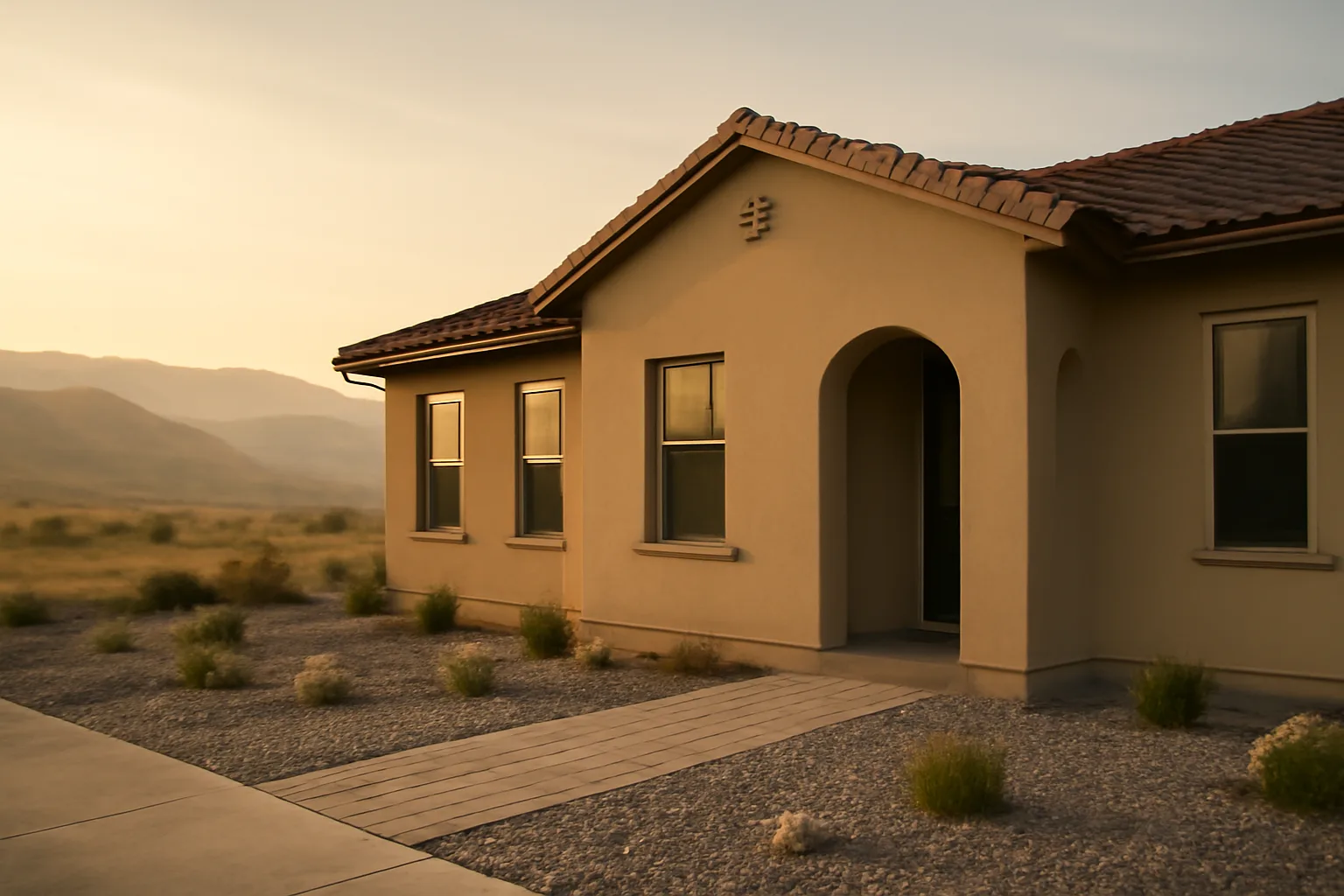
The most talked-about 2026 date connects to California's zone 0 ember-resistant zone regulations. Public reporting and Board of Forestry materials have referenced a target implementation window around 2026 for the 0-5 foot zone 0 standard to become enforceable for existing homes in high-risk zones, following the SB 63 rulemaking process [3]. Some coverage and agency statements have referenced July 1, 2026 as an anticipated compliance date, though the exact enforcement date and which properties it applies to first (new construction versus retrofits of existing homes) has moved during the rulemaking process, so [confirm the current effective date and applicability with your local fire district or the Board of Forestry directly] before treating any specific date as final. What we do know with more confidence: the substance of the rule. Zone 0 will require the area within 5 feet of a home's foundation to be free of combustible mulch, vegetation, and stored items, essentially a noncombustible buffer using gravel, pavers, or bare mineral soil instead of bark mulch or plants touching the siding [3]. For homeowners in Very High Fire Hazard Severity Zones, the practical move is to just start now rather than wait for a final date. Retrofitting zone 0 (removing mulch beds, replacing wood fencing sections that touch the house, moving planters away from foundations) typically costs far less than a full defensible-space clearing project, and doing it early means you're not scrambling during a compliance deadline crunch alongside every other homeowner on your street. For the landscaping specifics of what plants and materials are allowed close to structures under California's evolving standard, see fire-safe landscaping next to your house.
Why won't people follow the defensible space law in California?
Compliance with defensible space law in California is inconsistent, and the reasons are more mundane than defiance: cost, labor, confusion about what's required, and simple procrastination compete with genuine risk awareness. CAL FIRE inspection data has repeatedly shown that a meaningful share of properties inspected in Very High Fire Hazard Severity Zones fail initial defensible space compliance checks, though the specific pass/fail rate varies significantly by county and year, so [check your local fire district's most recent inspection compliance report] for a current number rather than relying on a statewide figure, since CAL FIRE doesn't publish one consistent annual pass-rate statistic across all units. The practical barriers are real. Clearing 100 feet of defensible space on a hillside lot can cost thousands of dollars if you hire a contractor, and DIY clearing on steep terrain is genuinely dangerous work. Older homeowners, renters who don't control landscaping decisions, and people who inherited property with mature trees close to the house all face different versions of the same problem: the fix is expensive or physically hard, and enforcement historically has been inconsistent (a letter, not a fine, in many counties, at least until a fire actually happens nearby). There's also a documentation gap. Even homeowners who do the work often don't photograph or log it, so when an insurer or inspector asks for proof, they have nothing to show beyond "I did it, trust me." That gap is a big part of why insurance non-renewals have spiked in fire-prone counties even among homeowners who genuinely maintained their property. Insurers and their inspectors want records, more than current-state compliance, and most homeowners have never been asked to keep records before. If you're dealing with a recent non-renewal or inspection letter yourself, our house fire and fire at a house guides cover what documentation actually helps versus what's noise when you're trying to demonstrate compliance after the fact.
Is Santa Barbara safe from fire?
No coastal California county, including Santa Barbara, is "safe" from wildfire in any absolute sense, and Santa Barbara County has a documented history of major destructive fires despite its ocean-moderated climate. The Thomas Fire (December 2017 into January 2018) burned over 281,000 acres across Ventura and Santa Barbara counties and was, at the time, the largest wildfire in modern California history by acreage [4]. The subsequent Montecito debris flow in January 2018, worsened by the burned, denuded hillsides from the Thomas Fire, killed 23 people, a grim reminder that wildfire risk doesn't end when the flames go out; post-fire landslide and debris flow risk can persist for years on burned slopes [5]. Santa Barbara County has significant portions mapped as Very High Fire Hazard Severity Zone by CAL FIRE, particularly in the foothill communities along the Santa Ynez range and in Montecito, Carpinteria, and the Santa Barbara riviera area . Sundowner winds, a local downslope wind pattern specific to the Santa Barbara south coast, can push fire behavior to extreme levels quickly, which is part of why the Thomas Fire spread so fast in December, historically a quieter fire month elsewhere in the state. So the honest answer for any specific address in Santa Barbara: [check your property's specific Fire Hazard Severity Zone designation on CAL FIRE's map viewer] rather than relying on general reputation, since risk varies block by block depending on slope, vegetation, and distance from wildland fuel, and coastal proximity alone doesn't remove risk the way many assume.
How can we prevent forest fires at the community level?
Community-level forest fire prevention works best as a combination of fuel management, ignition-source control, and shared defensible space, since individual homeowner effort loses most of its value if the property next door is untreated. Coordinated fuel breaks, community chipper days (many California fire districts run free or subsidized green waste chipping events seasonally), and shared brush clearing along shared property lines all multiply the effect of individual defensible space work. A single well-prepared home surrounded by untreated wildland fuel is still vulnerable; a block of homes that have all done zone 0 and zone 1 work meaningfully changes fire behavior as it approaches a neighborhood. Local Fire Safe Councils, which exist in most California counties, coordinate exactly this kind of neighborhood-scale work and often have access to state and federal grant funding that individual homeowners can't get on their own. [Check whether your area has an active Fire Safe Council or similar community wildfire protection group] and what grant programs they currently administer, since funding availability changes year to year. At a policy level, prescribed burning and mechanical thinning on adjacent public land matters enormously for reducing the fuel load that eventually reaches private property, and this is largely outside individual homeowner control, but it's worth knowing who manages the wildland adjacent to your neighborhood (Forest Service, BLM, state parks, or a local land trust) so you know who to contact about fuel conditions upslope from you.
Frequently asked questions
When does the California defensible space law go into effect?
The core 100-foot defensible space requirement under Public Resources Code 4291 has been in effect for years already. The newer zone 0 (0-5 foot ember-resistant zone) rule from SB 63 is going through Board of Forestry rulemaking, with 2026 referenced as a target window; confirm the exact enforcement date with your local fire district since it varies by jurisdiction.
Why won't people follow the defensible space law in California?
Mostly cost and labor, not defiance. Clearing 100 feet of hillside vegetation can run thousands of dollars, and enforcement historically has meant a warning letter rather than a fine in many counties. Many homeowners also don't document completed work, which becomes a problem when insurers ask for proof of compliance rather than a verbal assurance.
How do I prevent wildfires from destroying my home specifically?
Focus on ember defense first: clear the 0-5 foot zone around your foundation of anything combustible, install 1/8 inch metal mesh on attic and foundation vents, and keep gutters free of dry debris. CAL FIRE data points to embers, not direct flame contact, as the dominant cause of home ignition during wildfires.
How do I prepare for a wildfire evacuation?
Build a go-bag with medications, insurance documents, chargers, and a battery radio before fire season starts. Know two evacuation routes, not one. Sign up for your county's emergency alert system separately from federal Wireless Emergency Alerts, since enrollment often isn't automatic.
How do I prepare for forest fires if I live near wildland?
Apply CAL FIRE's full three-zone system: zone 0 (0-5 ft, noncombustible), zone 1 (5-30 ft, lean and green spacing), zone 2 (30-100 ft, reduced fuel load). Homes on steep upslope terrain need extra clearance since fire moves faster uphill. Also make sure your driveway and access road can handle a fire engine.
How can we prevent forest fires from starting in the first place?
Roughly 85-90% of wildfires nationally are human-caused, per U.S. Forest Service and National Park Service figures, from sources like unattended campfires, debris burning, and equipment sparks. Avoid burning on red flag warning days, check local burn permit status seasonally, and use spark arrestors on chainsaws and trimmers where required.
How do I avoid forest fires while doing yard work or outdoor projects?
Don't operate equipment with metal-on-rock contact (mowers, trimmers) during red flag warning days or high wind conditions. Check spark arrestor requirements for chainsaws in wildland-urban interface zones. Never park a hot vehicle on dry grass; catalytic converters can exceed 500 degrees Fahrenheit and have started documented roadside fires.
What fire-safe rules for homes take effect in 2026?
California's zone 0 ember-resistant zone standard (0-5 feet of noncombustible material around structures) is the rule most associated with a 2026 timeline, stemming from SB 63 and Board of Forestry rulemaking. The exact date and which properties it covers first has shifted during rulemaking, so confirm current status with your local fire district.
Is Santa Barbara safe from fire?
No. Santa Barbara County has significant Very High Fire Hazard Severity Zone areas per CAL FIRE mapping, particularly in foothill communities, and experienced the 281,000-acre Thomas Fire in 2017-2018 followed by a deadly Montecito debris flow. Check your specific address on CAL FIRE's hazard severity map rather than relying on coastal reputation.
What is zone 0 and why does it matter more than the 100-foot rule right now?
Zone 0 is the 0-5 foot area immediately around a structure's foundation, and new California regulations under SB 63 are tightening requirements there specifically because it's where windblown embers most often find fuel. The 100-foot rule already exists and is well established; zone 0 is the newer, actively changing part of the law.
Do I need to hire a contractor for defensible space clearing, or can I DIY it?
Zone 0 work (removing mulch, moving planters, clearing debris within 5 feet) is DIY-friendly for most homeowners. Zone 1 and 2 clearing on steep slopes or with mature trees often genuinely requires a contractor for safety reasons; falling trees and slope work cause real injuries every fire season.
How do I document my defensible space work for my insurance company?
Photograph your roof, vents, gutters, and each defensible space zone with dated images, and keep receipts for any clearing, tree trimming, or vent upgrades. Insurers and FAIR Plan reviewers increasingly want evidence, not a verbal claim. You submit this documentation yourself; a public adjuster or third party doesn't negotiate coverage on your behalf.
Sources
- USDA Forest Service, Wildfire Causes and Evaluation: The large majority of wildfires nationally are human-caused rather than started by lightning
- California Public Resources Code Section 4291: 100 feet of defensible space clearance required around structures in State Responsibility Areas and Very High Fire Hazard Severity Zones
- California SB 63 (2024), Board of Forestry ember-resistant zone rulemaking: Directs the Board of Forestry and Fire Protection to adopt zone 0 ember-resistant zone regulations for the 0-5 foot area around structures
- CAL FIRE, Thomas Fire incident archive: The Thomas Fire burned over 281,000 acres across Ventura and Santa Barbara counties beginning December 2017
- CAL FIRE, Fire Hazard Severity Zone Viewer: Santa Barbara County contains areas mapped as Very High Fire Hazard Severity Zone, particularly in foothill and coastal riviera communities