Last updated 2026-07-25
TL;DR
Ask This Old House-style wildfire mitigation means fixing your roof, vents, and the first 5 feet around your house before worrying about anything else. California's ember-resistant Zone 0 rule (SB 63/AB 3074) has no enforced start date yet; CAL FIRE says a 2029 target is likely. Most fires start from embers landing on debris, not from flames touching your walls.
What does wildfire mitigation actually mean for a homeowner (the Ask This Old House approach)
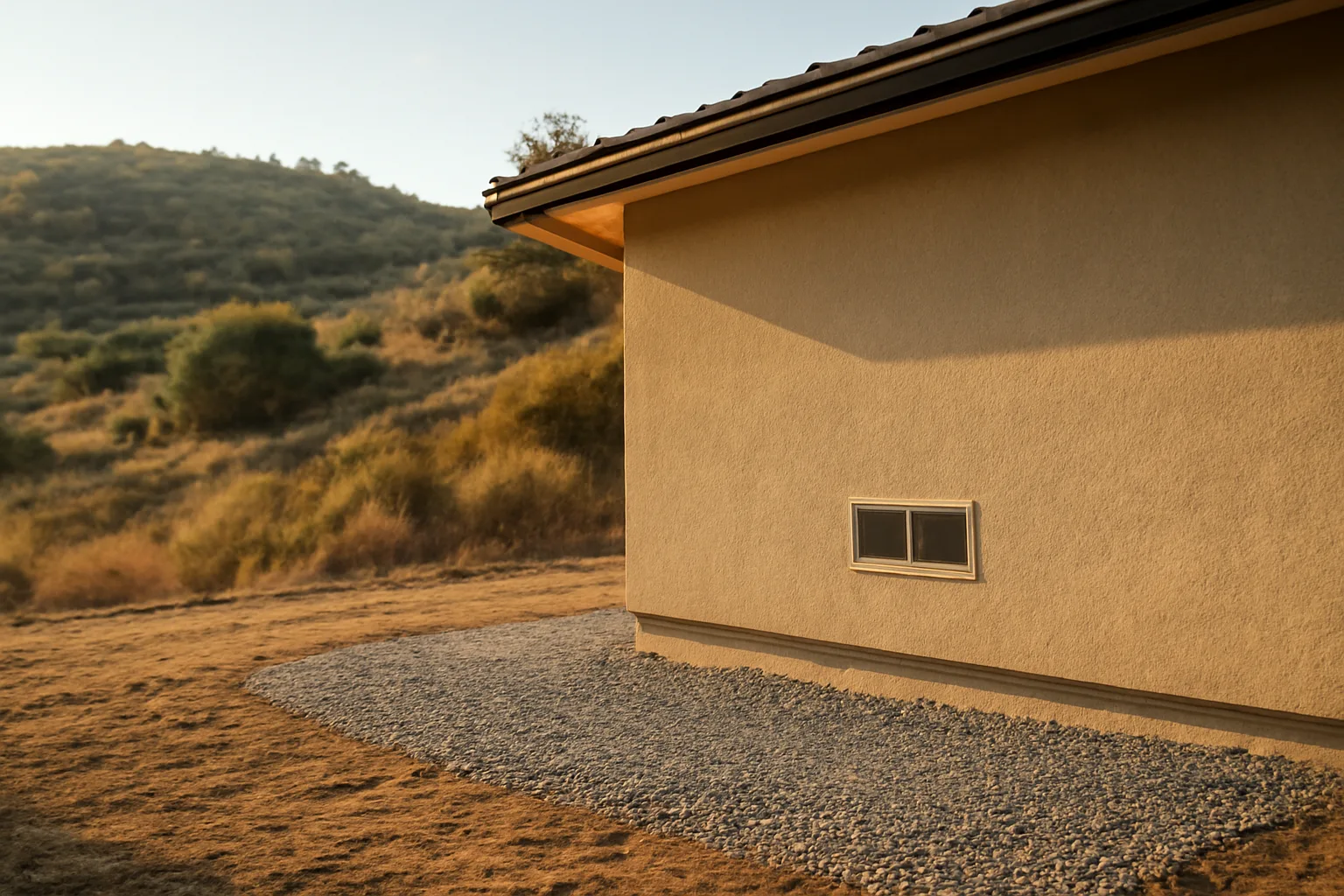
Ask This Old House has covered wildfire retrofits the way a good contractor thinks about it: work from the house outward, and fix the cheap stuff that causes the most damage first. That's the opposite of how most people react to a non-renewal letter. Panic makes people think about buying a $40,000 fire suppression sprinkler system when the actual problem is a $12 ember-catching gap under their deck. The research backs this up. The Insurance Institute for Business & Home Safety (IBHS) has run full-scale wildfire tests and found that homes ignite from embers landing on flammable material touching the house (mulch, dry leaves in gutters, wood fences attached to siding) far more often than from direct flame contact with a wall. CAL FIRE's own wildfire mitigation guidance leads with the same point: harden the home, then work outward through defensible space zones. So the mitigation hierarchy, in order of dollars-per-risk-reduction, looks like this: Class A roof and covered gutters, ember-resistant vents, the first 5 feet of noncombustible ground (Zone 0), then broader vegetation thinning further out. If you're starting from zero, don't start with the landscaping. Start with the vents and the gutters. That's the boring $200 fix that actually stops the house from catching. If you want the structural side of this covered in more depth, we've written about defensible space and specifically about fire safe landscaping right next to the house, which is where most of the ember-ignition risk concentrates.
When does the California defensible space law go into effect?
Right now, in every California county, defensible space out to 100 feet is already required by state law under Public Resources Code 4291, and has been for years for homes in State Responsibility Areas [1]. That part isn't new and isn't waiting on anything. What's newer, and what people usually mean when they ask this question, is the ember-resistant "Zone 0" rule, the 5-foot noncombustible zone immediately around structures. This came out of SB 63 (2023) and built on AB 3074 (2020), which added Government Code Section 51182 language directing the Board of Forestry to adopt regulations for a 0-to-5-foot ember-resistant zone around homes in the wildland-urban interface [2]. As of mid-2025, the Board of Forestry and Fire Protection had not yet finalized and adopted the enforceable Zone 0 regulation. CAL FIRE's public messaging has referenced a target of 2029 for statewide enforcement of Zone 0, giving homeowners lead time once the regulation is adopted and local jurisdictions implement it. That date has moved before and could move again, so treat it as a planning horizon, not a locked deadline. If you're waiting for the law to force your hand, you're leaving money on the table: insurers are already scoring homes on this exact 5-foot zone during inspections, law or no law.
What fire-safe home rules take effect in 2026?
| Adopted WUI code edition | ___________ | |
|---|---|---|
| Zone 0 (5 ft) requirement, enforced? | ___________ | |
| Local defensible space deadline | ___________ | |
| Vegetation clearance inspection frequency | ___________ | |
| Permit needed for vent/roof retrofit? | ___________ | Call your local fire marshal's office and ask them to fill in those five lines. It takes one phone call and it's the single most useful thing you can do this week. |
There isn't one single national "2026 wildfire code" that flips on for every homeowner. What's actually happening in 2026 is more piecemeal, and it varies by state and by fire district. In California, local jurisdictions are in various stages of adopting the 2022 California Fire Code and Wildland-Urban Interface (WUI) building standards under Chapter 7A of the California Building Code, which apply mainly to new construction and major remodels in WUI fire hazard severity zones, not existing homes wholesale [3]. Individual cities and counties set their own adoption and enforcement timelines, so a 2026 date in one county might be a 2027 or 2028 date twenty miles away. Colorado doesn't have a statewide WUI building code; wildfire mitigation rules there are set county by county and by local fire protection districts, several of which have added defensible space ordinances since the Marshall Fire in December 2021. Oregon's defensible space and home hardening standards under Senate Bill 762 (2021) direct the state forestry and fire marshal's offices to develop statewide wildfire risk maps and defensible space codes, with rollout phased over several years and repeatedly adjusted after public pushback on the risk map itself [4]. Arizona leaves most of this to local fire districts and the State Forestry Division's Firewise guidance rather than a single statewide code. Bottom line: check your own fire district before you assume a date. Use this as a guided fill-in: | Item | Your fire district's answer |
Why won't people follow the defensible space law in California?
CAL FIRE's own compliance data isn't flattering. Defensible space inspection programs across the state have repeatedly found noncompliance rates in the range of 30 to 50 percent depending on the county and year, even though PRC 4291 has been on the books in some form since 1965 [1]. So the honest answer is: a law existing and a law being followed are two different things, and this gap is one of the more studied problems in wildfire policy. A few real reasons keep showing up in CAL FIRE and academic surveys of homeowner behavior: Cost and labor. Clearing 100 feet of defensible space on a sloped, brush-covered lot can run into thousands of dollars for tree removal, chipping, and hauling, and it has to be redone every year as vegetation grows back. Renters and fixed-income homeowners often can't absorb that recurring cost. Perceived low personal risk. People who haven't been through a fire evacuation tend to underweight the odds it happens to them, a well-documented bias in wildfire risk perception research. "It hasn't happened here in my lifetime" is a common and understandable, if wrong, calculation. Aesthetic and privacy tradeoffs. Removing trees and shrubs next to a house changes how the property looks and feels, and some homeowners genuinely value the shade, screening, or landscaping they'd have to remove. Enforcement gaps. Not every county has enough inspectors to check every parcel every year, and penalties for noncompliance are often modest compared to the cost of doing the work. Some counties issue warnings before fines, and warnings without follow-up don't move behavior much. None of that changes what insurers now do with this information. Underwriters increasingly treat visible non-compliance (dead brush against the house, wood piles under decks, overhanging tree limbs on the roof) as a straightforward reason to decline renewal, law enforcement aside.
How to prevent wildfires from starting in the first place
Wildfire prevention splits into two categories: what causes ignition, and what you personally control. Roughly 85 to 89 percent of wildfires in the U.S. are caused by human activity rather than lightning, according to National Interagency Fire Center and U.S. Forest Service data cited by federal wildfire agencies [5]. That means most fires are preventable in a direct, mechanical sense: no spark, no fire. The specific human causes that show up again and again in agency reports: unattended or escaped debris burns, equipment and vehicle sparks (chains dragging, mower blades hitting rock, ATVs on dry grass), improperly extinguished campfires, downed power lines, and arson. Ready.gov's wildfire prevention guidance emphasizes checking local burn restrictions before any outdoor burning, keeping vehicles off dry grass (a hot catalytic converter can ignite vegetation in seconds), and never leaving a campfire unattended or not fully doused [6]. If you're asking "how to prevent forest fires" specifically (as opposed to fires starting at a structure), the answer is mostly about outdoor behavior during red flag warning days: no debris burning, no fireworks, no chainsaw or grinding work that throws sparks, no parking on dry grass, and campfires only in designated, cleared rings, fully out (cold to the touch) before you leave. Most state forestry agencies issue red flag or fire weather watch alerts through the National Weather Service, and checking that forecast before doing yard work with power tools is a genuinely underused five-minute habit.
How to prepare for a wildfire (or forest fire) as a homeowner
Preparing for a wildfire happens in three timeframes, and mixing them up is where people go wrong. There's what you do this year (structural hardening), what you do this season (defensible space maintenance), and what you do in the 72 hours before an evacuation order (go-bag, documents, final walkthrough). This year: Class A roof if you're due for replacement anyway, ember-resistant vents (1/8-inch or finer mesh, or listed ember-resistant vent products), enclosed eaves, and the 0-5 foot noncombustible zone around the foundation. This is the expensive, slow-moving work, and it's also the highest-leverage work per dollar spent, per IBHS's wildfire test data. This season: Clear roof and gutters of needles and leaves, move firewood stacks at least 30 feet from the house, mow dry grass within 100 feet down to 4 inches or less, and trim tree limbs so they don't overhang the roof or touch the chimney. CAL FIRE's defensible space guidance breaks this into Zone 1 (0-30 feet, lean and clean) and Zone 2 (30-100 feet, reduced fuel). The 72-hour window: Ready.gov recommends having a go-bag ready with medications, copies of insurance and identity documents, a battery radio, and a plan for pets, done well before a fire is nearby, because evacuation notices in fast-moving fires (like the 2018 Camp Fire, which moved roughly one football field per second at its peak per CAL FIRE's after-action reporting) can give residents minutes, not hours [7]. This is also the moment to have your documentation in order, because insurers ask for proof of pre-fire condition and completed mitigation work when they're deciding whether to renew, and post-fire when you're filing a claim. A dated photo log of your roof, vents, and cleared zones, plus receipts for any hardening work, is worth more than a verbal assurance to an adjuster. Our $99 Wildfire Insurance Survival Kit is built around exactly that: a structured way to document your home's condition and mitigation work before something happens, so you're not scrambling to remember what you did and when. We don't file claims or deal with your insurer on your behalf; you send your own documentation, we just help you build it in a format that holds up.
How to avoid forest fires when you're out in fire-prone areas
If "avoid" means staying out of harm's way rather than preventing ignition, the practical steps are different: know your evacuation routes before you need them, sign up for county emergency alerts (most California, Colorado, Oregon, and Arizona counties run free reverse-911 style alert systems), and keep a full tank of gas during red flag warning periods. If "avoid" means not causing one, it circles back to the same behavioral list: no burning on windy or dry days, no dragging chains or trailer safety chains on pavement near dry vegetation, no fireworks outside of legal, wet-season windows, no parking on dry grass. The U.S. Forest Service's Smokey Bear program, running continuously since 1944, exists specifically because human-caused ignition is the dominant, controllable share of wildfire starts. It's a genuinely effective long-running public health campaign, more than nostalgia.
Is Santa Barbara safe from fire?
No coastal California city is "safe" from wildfire in any absolute sense, and Santa Barbara specifically has a documented history that argues against complacency. The Thomas Fire (December 2017) burned into Santa Barbara and Ventura counties and was, at the time, the largest wildfire in modern California history by acreage; it was followed weeks later by the Montecito debris flow, which killed 23 people when burn-scarred hillsides failed during heavy rain [8]. The 2008 Tea Fire and 1990 Painted Cave Fire also burned into Santa Barbara's foothill neighborhoods. What makes Santa Barbara and similar foothill communities structurally higher-risk isn't bad luck, it's geography: dense chaparral fuel on steep terrain, Santa Ana/sundowner wind events that can push fire downslope at high speed, and a wildland-urban interface where expensive homes back directly onto undeveloped brush. CAL FIRE's Fire Hazard Severity Zone maps classify large sections of the Santa Barbara foothills as Very High severity zones, the state's top tier [9]. That classification is exactly why many Santa Barbara homeowners are getting non-renewal letters even after years without a fire touching their specific property: insurers price to the zone, more than your address's fire history.
How can we prevent forest fires at a community level
Individual mitigation matters, but fire doesn't respect property lines, so community-level prevention closes gaps that one homeowner can't close alone. Firewise USA, a National Fire Protection Association program, organizes neighborhoods to do coordinated fuel reduction, shared education, and joint defensible space work, and as of recent NFPA reporting there are over 1,900 recognized Firewise USA sites across the country . If your neighborhood isn't one, starting the conversation with neighbors is often more effective than any single homeowner's individual clearing work, because embers travel from the neighbor's untreated lot to yours regardless of what you did on your own five feet. Community-level prevention also includes the boring administrative stuff: supporting local fuel break maintenance funding, showing up to county hearings on WUI building code adoption, and pushing your HOA (if you have one) to stop banning gravel or hardscape in front yards, a genuinely common and counterproductive rule in fire-prone subdivisions that forces homeowners into flammable landscaping for aesthetic uniformity.
Frequently asked questions
When does the California defensible space law go into effect?
The 100-foot defensible space requirement under Public Resources Code 4291 is already in effect statewide in State Responsibility Areas. The newer Zone 0 (5-foot ember-resistant zone) rule from SB 63 hasn't been finalized by the Board of Forestry as of 2025; CAL FIRE has referenced a 2029 target for enforcement, but that date isn't locked in yet.
Why won't people follow the defensible space law in California?
Compliance surveys and CAL FIRE inspection data show 30-50% noncompliance in some counties, driven by clearing costs, low perceived personal risk, aesthetic tradeoffs, and inconsistent local enforcement. The law existing doesn't guarantee it's followed, and insurers now treat visible noncompliance as an independent reason to decline renewal.
How do I prevent wildfires from starting?
About 85-89% of U.S. wildfires are human-caused, per National Interagency Fire Center and U.S. Forest Service data. Prevention means no debris burning on windy/dry days, keeping vehicles off dry grass, fully extinguishing campfires, and checking local burn restrictions and red flag warnings before any outdoor spark-producing work.
How do I prepare for a wildfire if I live in a fire zone?
Work on three timelines: harden your home this year (roof, vents, 5-foot noncombustible zone), maintain defensible space every fire season (clear gutters, mow dry grass, move firewood), and keep a 72-hour go-bag with documents and medications ready, per Ready.gov guidance.
What's the difference between preventing forest fires and preparing for one?
Prevention stops ignition (safe burning practices, spark control, campfire safety). Preparation assumes a fire may happen nearby regardless and focuses on your home surviving it and your family evacuating safely. Both matter, but they're different projects with different timelines and different checklists.
What fire-safe home rules take effect in 2026?
There's no single national 2026 rule. California's Zone 0 regulation isn't finalized yet (2029 is the referenced target). WUI building code adoption (Chapter 7A) varies by California county. Colorado, Oregon, and Arizona set requirements at the county or fire-district level, so check your local fire marshal directly.
Is Santa Barbara safe from fire?
No. Santa Barbara has burned repeatedly, including the 2017 Thomas Fire and 2018 Montecito debris flow that followed it. CAL FIRE classifies large parts of the Santa Barbara foothills as Very High Fire Hazard Severity Zones, which is why insurers price the area high regardless of any single property's individual fire history.
How can we prevent forest fires as a neighborhood, more than individually?
Join or start a Firewise USA site (NFPA reports over 1,900 nationally) to coordinate fuel reduction across property lines, since embers don't respect boundaries. Support local fuel break funding, attend WUI code hearings, and push back on HOA rules that ban gravel or hardscape landscaping in fire-prone subdivisions.
What's the single most cost-effective wildfire mitigation step?
Ember-resistant vents and a cleared 5-foot zone around the foundation. IBHS wildfire testing found embers landing on debris touching the house cause more ignitions than direct flame contact, so cheap fixes here (mesh vents, gutter guards, clearing mulch) reduce risk more per dollar than large landscaping projects further out.
Do I need a permit to install ember-resistant vents or clear Zone 0?
It depends on your jurisdiction; some vent and roof work counts as a structural modification requiring a building permit, while brush clearing usually doesn't. Call your local building department and fire marshal's office directly, since this varies by fire district and there's no single statewide answer.
How often do I need to redo defensible space clearing?
At least once a year before fire season, more often in high-growth climates or after wet winters that produce heavy grass growth. CAL FIRE's Zone 1 (0-30 ft) and Zone 2 (30-100 ft) standards assume annual maintenance, not a one-time clearing.
Will completing wildfire mitigation get my insurance reinstated?
Maybe, but there's no guarantee, and mitigation work alone doesn't obligate an insurer to reinstate you. Documenting completed work (dated photos, contractor receipts, inspection reports) gives you something concrete to send your insurer or use with your state's FAIR Plan, but the decision is theirs, not something mitigation work forces.
Sources
- California Public Resources Code Section 4291: 100-foot defensible space clearance requirement around structures in State Responsibility Areas
- California Government Code Section 51182 (as amended by AB 3074, SB 63): Directs Board of Forestry to adopt ember-resistant zone (Zone 0) regulations for 0-5 feet around structures
- California Building Standards Commission, California Building Code Chapter 7A: Wildland-Urban Interface building standards apply to new construction and major remodels in fire hazard severity zones
- Oregon Senate Bill 762 (2021): Directs Oregon state forestry and fire marshal agencies to develop wildfire risk maps and defensible space codes
- USDA Forest Service, Smokey Bear campaign history: Smokey Bear wildfire prevention campaign has run since 1944 targeting human-caused ignition
- CAL FIRE, Camp Fire incident information: 2018 Camp Fire spread rate and after-action reporting on evacuation timing
- CAL FIRE, Thomas Fire incident archive: Thomas Fire size record and connection to subsequent Montecito debris flow deaths
- CAL FIRE, Fire Hazard Severity Zone Maps: Santa Barbara foothill areas classified as Very High Fire Hazard Severity Zones
- National Fire Protection Association, Firewise USA program: Over 1,900 recognized Firewise USA sites nationally coordinating neighborhood-level fuel reduction