Last updated 2026-07-25
TL;DR
California fire prevention centers on defensible space (100 feet around structures) and the new Zone 0 ember-resistant rule near homes, both enforced under Public Resources Code 4291. Zone 0 rulemaking, expected to require noncombustible material within 5 feet of structures, has been delayed past its original 2023 target; homeowners should track CAL FIRE's rulemaking page and start clearing now rather than wait.
When does the California defensible space law go into effect?
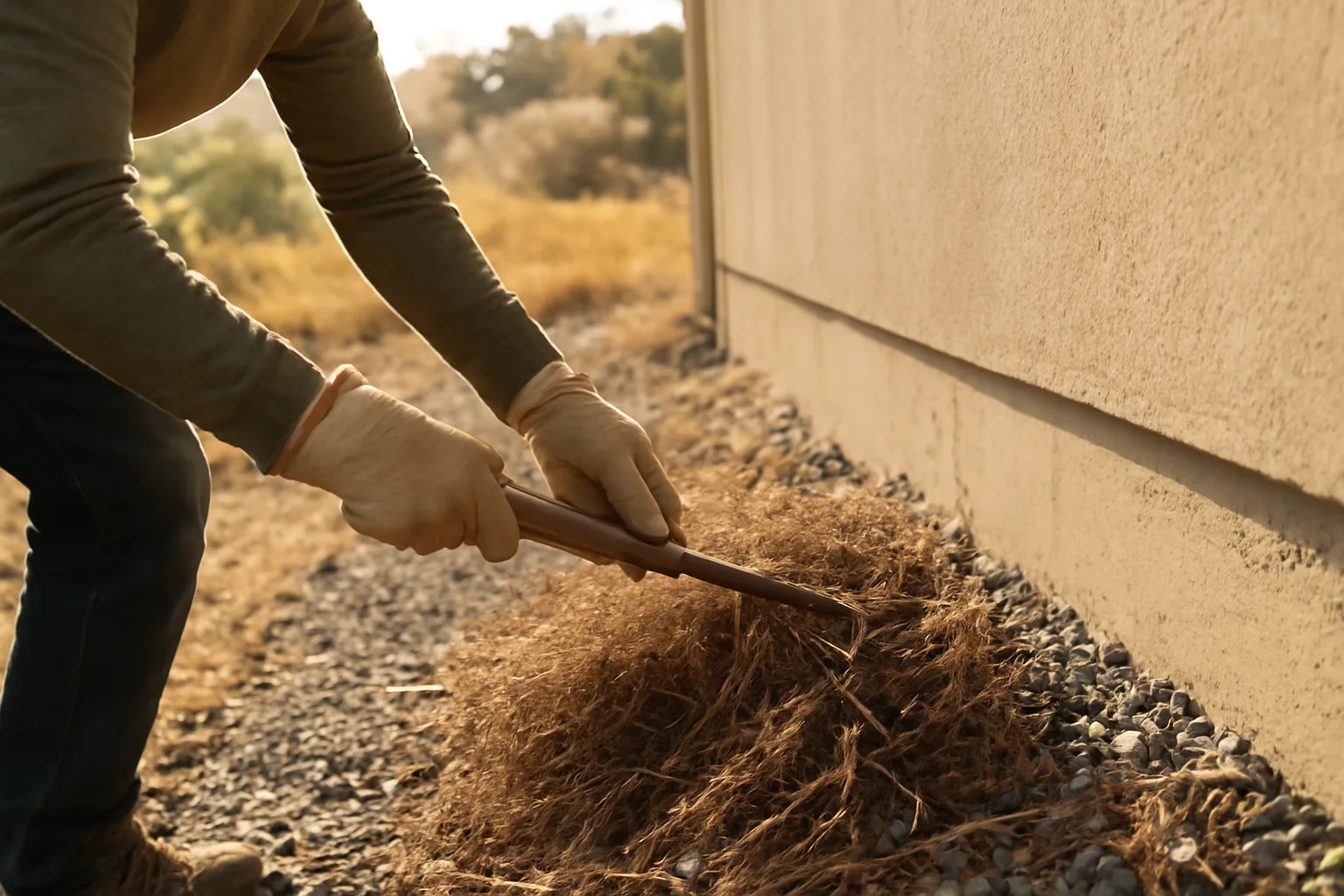
California's core defensible space law is not new. Public Resources Code section 4291 has required 100 feet of defensible space around habitable structures in State Responsibility Areas (and many Very High Fire Hazard Severity Zones in local jurisdictions) since amendments took effect in 2005, expanding the old 30-foot standard to 100 feet. If you own a home in a mapped fire hazard zone, this law almost certainly already applies to you, whether or not anyone has ever showed up to check. What's actually new, and still catching people off guard, is Zone 0. In 2020, the legislature passed AB 3074, which added a fifth defensible space zone: an ember-resistant zone within 5 feet of a structure where combustible materials (mulch, wood fencing attached to the house, stored firewood) would be restricted or banned [1]. AB 3074 directed the Board of Forestry and Fire Protection to develop these regulations, with an original statutory target date of January 1, 2023. That date came and went. As of this writing, the Board of Forestry has been working through formal rulemaking, including a Zone 0 regulation package that went out for public comment, but the regulation has not been finalized statewide [2]. CAL FIRE's own guidance describes Zone 0 as a recommended best practice you can adopt today, while the formal enforceable standard works through the regulatory process. Homeowners should check CAL FIRE's defensible space rulemaking updates directly rather than rely on a single hard date, because the effective date has already moved once and could shift again depending on public comment and board scheduling [2]. Bottom line: the 100-foot, four-zone defensible space law is in effect now and has been enforceable for two decades. Zone 0 is coming, is already good practice, and you should not wait for the regulation to be final before ripping out the mulch bed touching your siding.
What fire-safe home rules take effect in 2026?
There isn't one single 2026 law; there's a bundle of overlapping deadlines that homeowners in fire country are lumping together as 'the 2026 rules,' and it's worth separating them. First, Zone 0 enforcement. Even though the statutory target was 2023, real-world rollout for existing homes (as opposed to new construction) has slipped, and some industry and local agency guidance now points to phased applicability extending into 2026 and beyond for certain property types [2]. Because this is still moving through Board of Forestry rulemaking, the honest answer is: check your specific fire district's current requirement, because implementation timing is being phased differently for new construction versus retrofits of existing homes. Second, insurance-linked incentives. The California Department of Insurance's Safer from Wildfires regulation, effective since 2022, requires insurers to offer premium discounts or credits for documented mitigation work, including defensible space and home hardening steps that align with Zone 0 concepts. This isn't a building code deadline, but it's a real financial lever: insurers must recognize specific, listed mitigation actions when pricing or renewing policies. Third, local ordinances. Cities and counties inside Very High Fire Hazard Severity Zones can and do adopt stricter local defensible space and vegetation management ordinances on their own timelines, separate from state law. Your fire district's local rules may already mirror Zone 0 even if the statewide regulation isn't finalized. This is a genuine guided fill-in: check with [your local fire district / county fire marshal] for the exact ordinance number and effective date that applies to your parcel, because 'California law' and 'your city's law' are not always the same document.
Why won't people follow the defensible space law in California?
Compliance rates are not great, and it's not mainly about ignorance. CAL FIRE and county fire officials who do inspections consistently report that the biggest obstacles are cost, labor availability, and the sheer physical difficulty of clearing steep or brushy terrain, not lack of awareness [3]. A few recurring reasons show up across CAL FIRE public messaging and post-fire assessments. Cost is the obvious one: removing mature vegetation, regrading slopes, and hauling green waste can run into the thousands of dollars for a single property, and low-income and elderly homeowners in rural SRA parcels are disproportionately unable to absorb that. Labor is the second: many fire-prone counties have a shortage of tree services and vegetation contractors, so even homeowners who want to comply face month-long waits. There's also a documented gap between 'compliant on paper' and 'compliant in a way that would actually slow a fire.' CAL FIRE's own defensible space inspection data has shown that a meaningful share of properties inspected have some violation, most often related to vegetation clearance or roof/gutter debris, at the time of inspection [3]. Enforcement capacity is thin relative to the number of parcels in SRA, so many homeowners simply never get an inspection until after a neighbor's house burns and everyone starts calling contractors at once. Finally, there's a psychological piece that isn't unique to California: a defensible space isn't a one-time chore, it's a maintenance program. Chaparral regrows, pine needles refill gutters every fall, and a yard that passed inspection in April can fail in September. People treat it like a project with an end date instead of an ongoing responsibility, and that mismatch is a huge driver of noncompliance.
How to prevent wildfires (what actually reduces ignition risk)
Most wildfires in California are human-caused, and the practical prevention list is short and boring, which is exactly why people skip it. Power equipment, debris burning, vehicles, and unattended campfires are recurring ignition sources tracked by CAL FIRE, alongside lightning and powerline failures in high-wind events. At the individual level, prevention breaks into two buckets: not starting a fire, and not letting a fire that starts nearby reach your house. For the first bucket: don't mow dry grass on hot, windy afternoons (a mower blade hitting a rock is a real, documented ignition source); keep trailer chains from dragging on pavement; avoid outdoor debris burning during red flag warnings; and maintain vehicles and equipment so they don't throw sparks. CAL FIRE's 'Ready, Set, Go!' guidance and Smokey Bear/'Only You Can Prevent Wildfires' campaign materials both hammer these same basics because they account for a large share of preventable starts. For the second bucket, which matters more once a fire is already burning in your region: defensible space and home hardening. Embers, not the flame front, ignite most homes in wildfires. Research from the Insurance Institute for Business & Home Safety and CAL FIRE's own home hardening guidance both point to embers landing on vulnerable spots (open eaves, vents, wood decking, anything flammable within a few feet of the house) as the dominant home-loss mechanism, which is why Zone 0 focuses on that 5-foot ring rather than just the back 100 feet [1]. If you want a structured way to walk your own property zone by zone, our defensible space zones guide breaks down what belongs in each ring, and fire-safe landscaping choices near the house covers plant selection specifically for that ember-vulnerable zone.
How to prepare for a wildfire (before it starts)
Preparing for a wildfire has three tracks that should happen in parallel: property hardening, an evacuation plan, and documentation. Skipping the third one is the most common mistake people make, and it's the one that costs you the most after the fact. On property hardening, Ready.gov's wildfire preparedness guidance recommends creating and maintaining defensible space, using ember-resistant vents, clearing gutters and roof valleys of debris, and keeping a garden hose long enough to reach all sides of the house [4]. None of this is exotic; it's maintenance, done on a schedule, not a one-time purchase. On evacuation planning, know your zone. Many California counties now use zone-based evacuation systems (Genasys/Zonehaven-style mapping) tied to your address; know your zone number before you need it, not during a Ready-Set-Go alert. Keep a go-bag with medications, documents, and pet supplies staged somewhere you can grab it in five minutes, per Ready.gov's family evacuation guidance [4]. On documentation, this is the piece most homeowners underweight until they get a non-renewal letter or, worse, file a claim after a loss. Before fire season, walk your property and photograph or video every side of the house, the roof, vents, gutters, and your cleared zones, with a timestamp. Save receipts for defensible space and hardening work. This isn't about proving anything to an insurer in the moment; it's about having your own record if you ever need to show what mitigation work you'd done, for a non-renewal appeal, an inspection dispute, or simply your own future reference. We built a $99 one-time Wildfire Insurance Survival Kit specifically for this documentation step, because most people don't think about it until it's too late and they're trying to reconstruct six years of yard work from memory. To be clear: we don't negotiate with insurers, file claims on your behalf, or promise coverage outcomes. We help you build the record; you send it.
How to prevent forest fires and how to avoid forest fires
'Preventing forest fires' and 'preventing wildfires near your home' overlap but aren't identical questions, and the guidance splits a bit depending on whether the trip is a forested public land visit or work on your own property. For recreating in or near forested land: follow local fire restrictions exactly, which change by district and by season. Campfires only in established rings when permitted, fully drown and stir ashes until cold to the touch, never leave a fire unattended, and check current restriction status before you go, since a county can be under a burn ban while a neighboring one isn't. CAL FIRE and the US Forest Service both publish current fire restriction maps that change through the season. For your own forested or brush-covered property: the forest-fire-prevention question converges with defensible space. Thin dense vegetation, remove ladder fuels (the shrubs and low branches that let a ground fire climb into tree canopy), and keep a maintained buffer around any structure. CAL FIRE's defensible space zone guidance (Zone 1 within 30 feet, Zone 2 out to 100 feet) applies directly here, with specific spacing requirements between tree canopies and reduced fuel loads on the ground. One honest caveat: individual property-level prevention work matters, but it doesn't substitute for landscape-scale fuel management. California's wildfire problem is also a function of decades of fire suppression policy that let fuel loads build up across millions of acres, plus a warming, drying climate. Your defensible space work protects your house; it doesn't by itself prevent the fire from starting or spreading regionally. Both scales of work matter, and homeowners sometimes get frustrated when they've done everything right and a fire still threatens the area, which is a fair frustration but not evidence the work was pointless. It's the difference between a house surviving an ember storm and one that doesn't.
How can we prevent forest fires? (community and policy angle)
At a scale beyond one property, forest fire prevention in California runs through prescribed fire, fuel breaks, and utility infrastructure hardening, and homeowners have more influence over this than they think. Prescribed burning and mechanical fuel reduction on both public and private land reduce the dense understory fuel that lets fires spread fast and hot. CAL FIRE's Vegetation Management Program and the state's broader wildfire and forest resilience strategy fund exactly this kind of work, and it has bipartisan support because it's one of the few levers that demonstrably reduces fire severity at landscape scale [5]. On the utility side, powerline ignitions from utility equipment have caused some of the state's most destructive fires; utility undergrounding, vegetation clearance around lines, and public safety power shutoffs during extreme wind events are direct responses to that ignition source, run by utilities under CPUC oversight rather than by homeowners, but homeowners can push for and track this work in their area. At the neighborhood level, the single highest-leverage thing homeowners can do collectively is coordinate defensible space across property lines. A fire doesn't care about parcel boundaries; one uncleared lot next to three compliant ones can be the ignition bridge that takes out a whole street. Some Firewise USA communities organize shared chipper days, group vegetation removal contracts, and shared cost bids specifically to solve this coordination problem, since contractor pricing often drops when multiple neighbors book the same crew for the same week.
Is Santa Barbara safe from fire?
No place in California's wildland-urban interface is 'safe' from fire in an absolute sense, and Santa Barbara County has a documented history that argues against complacency. The Thomas Fire (2017) burned over 280,000 acres and was, at the time, the largest wildfire in modern California history, followed within weeks by the Montecito debris flow that killed 23 people, a disaster directly tied to the burned, denuded hillsides above town . The county has also seen the Jesusita Fire (2009) and Tea Fire (2008) burn into residential neighborhoods in the Santa Barbara foothills. Large parts of Santa Barbara's foothill neighborhoods, plus most of the unincorporated county in the Santa Ynez and Los Padres National Forest-adjacent areas, sit inside CAL FIRE's mapped Very High Fire Hazard Severity Zones, which triggers the same defensible space and disclosure requirements as any other VHFHSZ property in the state. If your address falls in one of these zones (check CAL FIRE's FHSZ viewer for your specific parcel), you're subject to PRC 4291 regardless of how the neighborhood 'feels.' What Santa Barbara does have going for it: active Firewise USA communities, a county fire department with a long institutional memory of these specific fires, and terrain that's well studied for fuel modeling. That's meaningfully different from a newer WUI development with no fire history and less community mitigation infrastructure. But 'better prepared than average' is not the same as 'safe,' and homeowners there should treat the Thomas Fire as the baseline case study for what a wind-driven fire in that terrain can do, not an anomaly.
How to prepare for forest fires as a homeowner near wildland
If your property borders forest or heavy wildland vegetation, the preparation checklist is the same core list as general wildfire prep, with a few additions specific to that terrain. First, extend your assessment past the standard 100 feet if your slope or fuel type calls for it. CAL FIRE's guidance already builds slope into the defensible space math because fire moves faster uphill, and a home below a steep, densely vegetated slope may need more clearance or additional mitigation than the flat-lot minimum. Second, coordinate with your specific fire district on local requirements, since forest-adjacent parcels often fall under overlapping jurisdiction (state SRA rules plus a local fire protection district plus, sometimes, National Forest boundary rules). This is a genuine guided fill-in: contact [your local fire district or county fire department] to confirm which specific vegetation management rules apply to your exact parcel, because forest-boundary properties are exactly where jurisdiction gets confusing. Third, plan your evacuation route assuming the primary road could be blocked. Forest-adjacent communities are disproportionately represented in California's list of communities with limited evacuation routes, a factor CAL FIRE and Cal OES have flagged in wildfire evacuation planning work after fires like the Camp Fire in Paradise exposed how a single-road bottleneck can turn deadly [4]. Know a second route, even if it's longer, and don't wait for a mandatory order if conditions are clearly deteriorating.
Frequently asked questions
When does the California defensible space law go into effect?
The 100-foot, four-zone defensible space requirement under Public Resources Code 4291 has been in effect since 2005. The newer Zone 0 (5-foot ember-resistant zone) rule was directed by AB 3074 with an original 2023 target, but formal statewide regulations are still in the Board of Forestry rulemaking process, so check CAL FIRE's current rulemaking status for your exact effective date.
Why won't people follow the defensible space law in California?
Cost, contractor availability, and steep or brushy terrain are the top barriers, according to CAL FIRE and county fire officials, not lack of awareness. Defensible space is also ongoing maintenance, not a one-time task, so properties that pass inspection in spring can fall out of compliance by fall as vegetation regrows and debris reaccumulates.
How do I prevent wildfires from starting on my property?
Avoid mowing dry grass in hot, windy conditions, don't drag trailer chains on pavement, skip outdoor debris burning during red flag warnings, and keep equipment maintained so it doesn't throw sparks. Most California wildfires are human-caused, and CAL FIRE tracks equipment use, vehicles, and unattended fires as the top preventable ignition sources.
How do I prepare for a wildfire if I live in a fire-prone area?
Build and maintain defensible space, harden vulnerable spots (vents, eaves, decking), know your evacuation zone before an alert, and keep a go-bag ready. Ready.gov also recommends documenting your property and mitigation work with photos and receipts before fire season, so you have your own record regardless of what happens later.
What fire-safe home rules take effect in 2026?
There's no single 2026 statute; it's a mix of phased Zone 0 rulemaking timelines, insurer mitigation-discount requirements under California's Safer from Wildfires regulation, and local fire district ordinances that vary by jurisdiction. Confirm your specific district's current requirement rather than assume one statewide 2026 deadline applies to your property.
Is Santa Barbara safe from fire?
No. Santa Barbara County has burned repeatedly, including the 2017 Thomas Fire (over 280,000 acres, the largest California wildfire at the time) followed by a deadly Montecito debris flow. Much of the foothill area sits in CAL FIRE's Very High Fire Hazard Severity Zone, meaning standard defensible space law applies there like anywhere else in the WUI.
How can we prevent forest fires at a community level?
Prescribed burning, mechanical fuel reduction, and utility infrastructure hardening (undergrounding lines, vegetation clearance near powerlines) reduce fire risk at landscape scale. Homeowners can also coordinate defensible space across property lines through Firewise USA groups, since one uncleared lot can undermine several compliant neighbors.
How do I prevent forest fires while camping or hiking?
Check current local fire restrictions before you go, since they change by county and season. Use only established fire rings when permitted, never leave a campfire unattended, and drown and stir ashes until they're cold to the touch, more than no longer smoking.
What is Zone 0 and why does it matter more than the 100-foot rule?
Zone 0 is the 5-foot ember-resistant zone directly around a structure, created by AB 3074. It matters because embers, not the main flame front, ignite most homes during wildfires, so removing combustible material immediately next to the house closes the most common ignition pathway.
Does defensible space actually reduce my home insurance risk?
California's Safer from Wildfires regulation requires insurers to factor in documented mitigation, including defensible space and home hardening, when pricing or renewing wildfire-zone policies. Documentation matters here: photos, dates, and receipts of completed work are what let you show what you've actually done.
How do I know if my property is in a Very High Fire Hazard Severity Zone?
CAL FIRE publishes Fire Hazard Severity Zone maps by county, viewable through their online FHSZ viewer tool. If your parcel falls in a Very High zone, PRC 4291's 100-foot defensible space requirement and related disclosure rules apply regardless of your city's general reputation for fire risk.
Who enforces the 100-foot defensible space law in California?
Enforcement runs through CAL FIRE in State Responsibility Areas and through local fire departments or fire protection districts in Local Responsibility Areas, depending on jurisdiction. Enforcement capacity varies widely, which is part of why compliance rates lag even though the requirement has existed since 2005.
Sources
- California Legislature, AB 3074 (2020): Creation of Zone 0 ember-resistant zone requirement and directive to Board of Forestry
- California Board of Forestry and Fire Protection, Zone 0 rulemaking materials: Zone 0 regulation status, delayed past original 2023 target, still in rulemaking
- CAL FIRE, wildfire prevention and Ready Set Go guidance: Human-caused ignition sources including equipment, vehicles, debris burning
- CAL FIRE, Vegetation Management Program: Prescribed burning and fuel reduction as landscape-scale prevention tools
- CAL FIRE, Thomas Fire incident information: Thomas Fire (2017) burned over 280,000 acres, largest California wildfire at the time