Last updated 2026-07-25
TL;DR
After the Eaton fire, Altadena rebuilds fall under California's Chapter 7A wildland-urban interface building code, which requires ignition-resistant materials, ember-resistant vents, and Zone 0 (0-5 ft) clearance under AB 3074 once CAL FIRE finalizes that regulation. A qualified builder should hand you inspection-ready documentation, more than a finished house.
What does a fire-resistant home builder in Altadena actually need to build to?
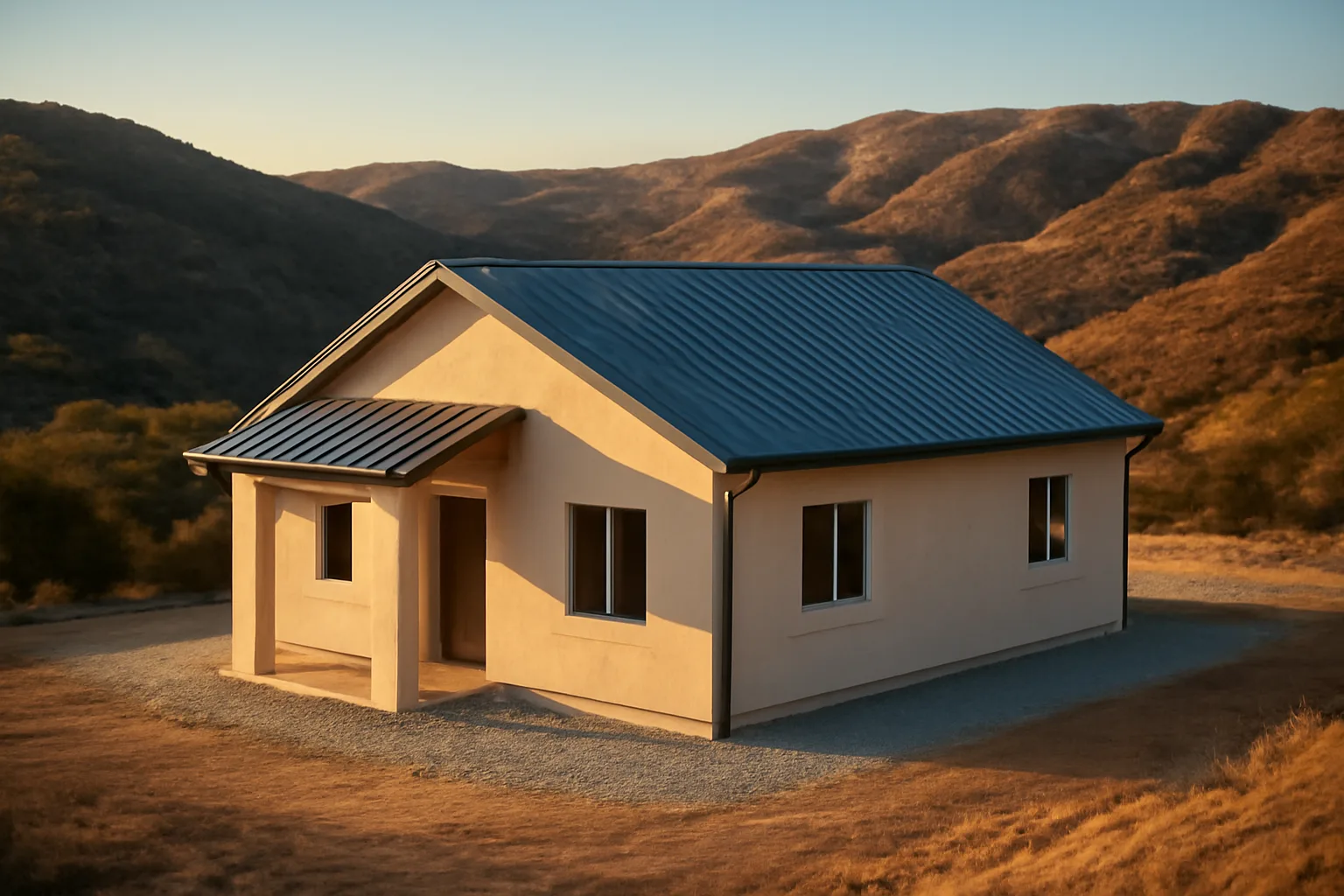
If your Altadena home is being rebuilt after the January 2025 Eaton fire, it almost certainly falls in a Very High Fire Hazard Severity Zone or a designated Wildland-Urban Interface (WUI) area. That triggers California's Chapter 7A of the California Building Code, the section that governs "materials and construction methods for exterior wildfire exposure" [1]. A builder who doesn't know this chapter cold shouldn't be anywhere near your rebuild. Chapter 7A covers roofing (Class A assemblies), siding (ignition-resistant materials or noncombustible), vents (ember- and flame-resistant, tested to ASTM E2886), windows (dual-pane, tempered outer pane), decking, and eave protection. It's not optional add-ons. If your parcel is in the mapped zone, it's code. Ask any prospective builder to show you their last three Chapter 7A permit sets in Los Angeles County. If they hesitate, that's your answer. Altadena's rebuild is happening under LA County's expedited rebuilding permit process, and the county has published specific guidance for fire-area rebuilds, but the underlying code requirements haven't changed just because the process is faster. For a plain-language walkthrough of what "fire-resistant" construction covers room by room, see fire-safe landscaping California next to house and defensible for the broader hardening picture.
When does the California defensible space law go into effect?
California's core defensible space law, Public Resources Code 4291, has been in effect for years and currently requires 100 feet of defensible space clearance around structures in State Responsibility Areas and some local jurisdictions, split into an ember-resistant zone near the structure and a reduced-fuel zone further out [2]. That part isn't new and isn't changing. What is new, and still pending, is Zone 0. Assembly Bill 3074, signed in 2020, directed CAL FIRE's State Board of Forestry and Fire Protection to develop regulations for an ember-resistant zone within 0 to 5 feet of structures, sometimes called "Zone 0." As of this writing, the Board of Forestry has been working through the rulemaking process, and the regulation has not yet taken final legal effect statewide; homeowners and builders should check the current status directly with CAL FIRE and the Board of Forestry rather than assume a specific date [3]. The honest answer here: the 100-foot defensible space requirement under PRC 4291 is already law and already enforced. The 0-5 foot Zone 0 requirement is written into statute (AB 3074) but its detailed regulatory standard is still moving through the state process. Don't let anyone tell you a hard national date for Zone 0 enforcement; verify with your local fire authority because implementation timing varies by jurisdiction.
What fire-safe rules for homes take effect in 2026?
This is genuinely murky right now. Anyone who gives you a confident single date for statewide Zone 0 enforcement in 2026 is guessing. The Board of Forestry and Fire Protection has been developing the Zone 0 regulation under AB 3074's directive, and prior legislative and agency timelines have referenced 2023 as an original target for proposed regulations, with actual adoption and enforcement dates slipping in the normal rulemaking process [3]. What you can act on now, regardless of the exact effective date: CAL FIRE's existing guidance already recommends treating the 0-5 foot zone around your home as ember-resistant, meaning no combustible mulch, no wood fencing attached directly to the house, no flammable plants touching the siding. Building to that standard now means you're not scrambling later. Your move: ask your local fire district (in Altadena's case, LA County Fire Department) whether they've adopted any interim Zone 0 guidance ahead of the state regulation. Mitigation rules vary by fire district, so confirm your specific jurisdiction's current requirement before you finalize landscaping or exterior material choices, rather than relying on a statewide number that may not be locked in yet.
Why won't people follow the defensible space law in California?
Cost, confusion, and inconsistent enforcement are the three real reasons, not laziness. Clearing 100 feet of vegetation on a hillside lot, removing overhanging branches, replacing wood fencing, and maintaining it year after year is genuine labor and genuine money, especially for homeowners on fixed incomes or absentee owners of rental properties. CAL FIRE's own compliance data has repeatedly shown that a meaningful share of inspected properties in State Responsibility Areas fail to fully meet PRC 4291 standards on first inspection, which is why the law includes a re-inspection and correction period rather than immediate citation [2]. Local fire agencies typically issue a warning first, then a notice to correct, before any fine or abatement action. There's also a documentation gap. A homeowner might genuinely believe they're compliant because they cleared brush five years ago, not realizing regrowth after a wet winter changed their fuel load entirely. Defensible space isn't a one-time project, it's ongoing maintenance, and that's the part most people underestimate. Finally, some homeowners simply don't know the rule applies to them, especially in areas that were reclassified into higher hazard zones after CAL FIRE updated its Fire Hazard Severity Zone maps. If your zone designation changed and you never got a notice, that's a real gap, not an excuse to ignore the law, but a reason to check your parcel's current zone status directly on CAL FIRE's maps [4].
How do I prepare for a wildfire if I live in Altadena or a similar WUI area?
Start with the structure, then the yard, then your documentation. Ready.gov's wildfire preparedness guidance recommends building an emergency kit, planning two evacuation routes, and signing up for local emergency alerts before fire season starts, not during an active warning. On the house itself: clear gutters and roof valleys of debris, install ember-resistant vents if you haven't already, and keep a garden hose long enough to reach your entire roofline. On the property: maintain the defensible space zones under PRC 4291, and if you have a wood deck or fence attached to the house, treat the first 5 feet of it as part of your ember-resistant zone. For your family: Ready.gov recommends an emergency supply kit with water for at least three days, a battery-powered radio, and copies of important documents stored somewhere you can grab fast. Add photos of your home's exterior, your defensible space work, and any fire-hardening upgrades, because insurers increasingly ask for this documentation before renewal decisions, more than after a loss. That documentation piece is where a lot of homeowners get caught flat. A $99 one-time Wildfire Insurance Survival Kit is built for exactly this: organizing your defensible space photos, hardening receipts, and inspection records into the format insurers and adjusters actually want to see. It doesn't file claims for you, that's not what it's for. It just makes sure your own paperwork is ready before you need it.
How can we prevent wildfires and forest fires from starting in the first place?
Most wildfires in California are human-caused, not lightning-caused. CAL FIRE and multiple federal sources consistently report that the large majority of wildfires nationally, and in California specifically, are started by human activity: unattended campfires, equipment sparks, downed power lines, arson, and vehicle-related ignitions [5]. At the individual level, prevention looks boring but works: never leave a campfire unattended and drown it completely before leaving, avoid mowing dry grass during peak heat hours (mower blades striking rocks are a real ignition source), keep vehicles off dry grass where hot exhaust systems can ignite it, and follow local burn permit rules exactly, including permit-required days versus red-flag warning days when all burning is banned. Utility equipment is a major driver of the largest, most destructive fires specifically. Multiple major California wildfires, including some of the state's most destructive, have been traced to utility infrastructure failures, which is part of why utilities now conduct Public Safety Power Shutoffs during extreme fire weather. At the community level, defensible space compliance itself is a prevention tool, more than a protection tool: a property with proper clearance is less likely to ignite from an ember cast a quarter mile away, which means it's less likely to become the next ignition point for a neighbor's home. See only you can prevent wildfires for more on individual-level prevention actions.
Is Santa Barbara safe from fire, and how does that compare to Altadena's risk?
No California community adjacent to wildland vegetation is "safe" from fire risk in an absolute sense, and Santa Barbara County has its own significant fire history, including the 2017 Thomas Fire and 2018 Montecito debris flow that followed it. CAL FIRE's Fire Hazard Severity Zone maps show large portions of Santa Barbara's foothill and canyon communities, including parts of Montecito and the Santa Ynez foothills, rated as Very High Fire Hazard Severity Zone, the same top-tier designation that covers much of Altadena [4]. The comparison that actually matters isn't "which city is safer," it's parcel-level: two homes a quarter mile apart can have completely different risk profiles based on slope, vegetation, prevailing wind exposure, and construction age. Check your specific parcel on CAL FIRE's Fire Hazard Severity Zone viewer rather than relying on your city's general reputation [4]. What both areas share: a WUI construction code requirement (Chapter 7A) for new construction and rebuilds in the mapped zones, and a defensible space requirement under PRC 4291 for existing structures. If you're comparing rebuild locations, ask any builder for their FHSZ-zone project history in that specific jurisdiction, more than general California wildfire experience.
What should I look for when hiring a fire-resistant home builder in Altadena specifically?
Look for three things: local Chapter 7A permit experience, documented material specs, and a defensible space plan that's coordinated with the structure, not an afterthought. A builder who treats landscaping as someone else's problem is setting you up for an insurance mismatch later, where your house meets code but your yard doesn't meet PRC 4291. Ask for their Class A roofing assembly spec sheet, their vent product's ASTM E2886 ember-resistance test documentation, and their siding material's flame-spread rating. These aren't nice-to-haves, Chapter 7A requires them, and a builder who can produce this paperwork instantly (not "I'll get back to you") has done this before in your exact jurisdiction. Also ask how they handle LA County's post-Eaton-fire rebuild permit process specifically, since expedited rebuild permitting has its own procedural quirks distinct from a standard new-build permit. A builder who's pulled multiple rebuild permits in Altadena or Pasadena since January 2025 will know the county's current review timelines and common resubmittal triggers. Finally, ask what they'll hand you at closeout. You want as-built material spec sheets, defensible space photos dated at completion, and copies of all Chapter 7A compliance documentation, because your insurer will likely ask for exactly this when you apply for coverage on the rebuilt structure. For more on structure-level hardening priorities, see house fire and fire at a house.
How does defensible space work interact with getting insurance back after a non-renewal?
Insurers reviewing a wildfire-zone property increasingly want to see specific, dated evidence of both structural hardening and maintained defensible space, more than a verbal assurance. California's FAIR Plan and admitted carriers writing in high-risk zones have leaned harder on wildfire risk scoring models (like those built on the Wildfire Prepared Home standards from the Insurance Institute for Business & Home Safety) as part of underwriting decisions. The practical version: photograph your defensible space zones (0-5 ft, 5-30 ft, 30-100 ft) at completion and again each spring, keep every contractor invoice for vegetation clearance and structural hardening, and keep your Chapter 7A material spec sheets from your builder in one file. This is the exact function the Wildfire Insurance Survival Kit is built for: a $99 one-time tool for organizing this documentation into a package that's actually usable when an insurer or adjuster asks for it. To be direct about what this isn't: we don't file claims on your behalf or promise any specific coverage outcome, discount, or reinstatement. You prepare and send your own documentation. What the kit does is make sure the documentation exists and is organized, which is the single biggest gap most homeowners have when a non-renewal notice arrives.
How do defensible space zone requirements break down under California law?
| Zone 0 (pending) | 0-5 ft | Ember-resistant, noncombustible materials near structure; regulation under AB 3074 still finalizing [3] | |
|---|---|---|---|
| Zone 1 | 0-30 ft | Remove dead vegetation, space plants, keep grass under 4 inches, no fuel ladder to canopy [2] | |
| Zone 2 | 30-100 ft | Reduced fuel volume, spaced vegetation, maintained fire breaks [2] | Public Resources Code 4291 states the requirement applies to a person who "owns, leases, controls, operates, or maintains" a building or structure in or adjoining a mountainous, forest-covered, brush-covered, or grass-covered area, and requires clearance "of not more than 100 feet from each side of the structure" [2]. Note the "not more than" language: the 100-foot figure is a maximum standard, and local jurisdictions or specific site conditions can require less if the parcel is smaller, but they can't legally demand you clear beyond your own property line onto a neighbor's land without agreement. |
California's defensible space law splits the 100-foot requirement (measured from the structure, within State Responsibility Areas and many Local Responsibility Areas) into two zones with different maintenance standards. Zone 1 runs from the structure to 30 feet out; Zone 2 runs from 30 to 100 feet, or to the property line, whichever is closer [2]. | Zone | Distance from structure | Core requirement |
Frequently asked questions
When does the California defensible space law go into effect?
The core 100-foot defensible space requirement under Public Resources Code 4291 is already in effect and has been enforced for years in State Responsibility Areas and many Local Responsibility Areas. The newer Zone 0 (0-5 foot ember-resistant zone) requirement under AB 3074 is written into law but the detailed CAL FIRE regulation implementing it is still finalizing; check current status with CAL FIRE directly.
Why won't people follow the defensible space law in California?
Mostly cost, confusion about which zone their parcel falls in, and the fact that defensible space needs ongoing maintenance, not a one-time clearing. Some homeowners also don't realize their zone status changed after CAL FIRE updated its Fire Hazard Severity Zone maps, so they think they're compliant when they're not.
How to prevent wildfires from starting near my home?
Never leave campfires unattended, avoid mowing dry grass in peak heat, keep vehicles off dry grass, follow local burn permit rules, and maintain your defensible space zones so embers landing on your property don't ignite fuel. Most wildfires are human-caused, so individual behavior matters more than most people assume.
How do I prepare for a wildfire if I live in a WUI zone like Altadena?
Build an emergency kit with three days of water and supplies, plan two evacuation routes, sign up for local emergency alerts, harden your home's vents and roofing, and maintain PRC 4291 defensible space clearance. Ready.gov recommends doing this before fire season starts, not during an active warning.
How can we prevent forest fires at the community level?
Enforce and comply with defensible space laws, support utility infrastructure hardening in high-risk corridors, follow local burn permits and red-flag warning bans strictly, and report unattended fires or downed power lines immediately. A single non-compliant property can become an ignition point that spreads to an entire block.
What fire-safe rules for homes take effect in 2026?
No confirmed statewide enforcement date exists yet for California's Zone 0 (0-5 foot ember-resistant zone) regulation under AB 3074; the Board of Forestry and Fire Protection has been finalizing this rule for years past its original target. Existing Chapter 7A construction code and PRC 4291 defensible space rules are already in effect regardless.
Is Santa Barbara safe from fire?
No California community near wildland vegetation is fully safe from fire risk. Large portions of Santa Barbara County, including foothill and canyon areas, are rated Very High Fire Hazard Severity Zone by CAL FIRE, comparable to much of Altadena. Check your specific parcel on CAL FIRE's FHSZ map rather than relying on city reputation.
What is Chapter 7A and why does it matter for Altadena rebuilds?
Chapter 7A is the section of the California Building Code covering materials and construction methods for wildfire exposure: Class A roofing, ignition-resistant siding, ember-resistant vents, and tempered dual-pane windows. It applies to new construction and rebuilds in Wildland-Urban Interface fire areas, which covers most of Altadena's fire-affected zones.
What should a fire-resistant home builder in Altadena provide at project completion?
As-built material spec sheets for roofing, siding, and vents, ASTM E2886 test documentation for ember-resistant vents, dated defensible space photos, and copies of all Chapter 7A compliance paperwork. This documentation is what insurers typically request when underwriting coverage on a newly rebuilt structure.
How does defensible space maintenance affect insurance renewal in California?
Insurers and the California FAIR Plan increasingly weigh wildfire risk scores that factor in defensible space compliance and structural hardening. Keeping dated photos and contractor invoices for both isn't a guarantee of coverage, but it's the documentation most commonly requested during underwriting review or after a non-renewal notice.
How to avoid forest fires when doing yard work or outdoor projects?
Avoid mowing or using metal tools on dry grass during afternoon heat, never use exposed flame equipment on red-flag warning days, keep a hose or extinguisher nearby during any spark-producing work, and clear debris from tool exhaust ports regularly. Most equipment-caused fires happen during routine yard maintenance, not dramatic events.
Does defensible space clearing require a permit in California?
Routine vegetation clearance for PRC 4291 compliance generally doesn't require a permit, but larger tree removal, grading, or work near protected habitat may need local permits depending on your jurisdiction. Check with your county fire department or planning department before major clearing projects, since rules vary by fire district.
Sources
- California Building Standards Commission, California Building Code Chapter 7A: Chapter 7A governs materials and construction methods for exterior wildfire exposure in WUI zones
- California Legislative Information, Public Resources Code Section 4291: 100-foot defensible space requirement, Zone 1/Zone 2 split, and clearance language for structures in SRA/LRA
- California State Board of Forestry and Fire Protection, Zone 0 rulemaking under AB 3074: Zone 0 ember-resistant zone regulation is in development under AB 3074 and not yet finalized statewide
- CAL FIRE, Fire Hazard Severity Zone Maps: Parcel-level Fire Hazard Severity Zone designations for Altadena, Santa Barbara, and other California areas
- CAL FIRE, Wildfire prevention and causes information: Majority of California wildfires are human-caused rather than naturally ignited