Last updated 2026-07-26
TL;DR
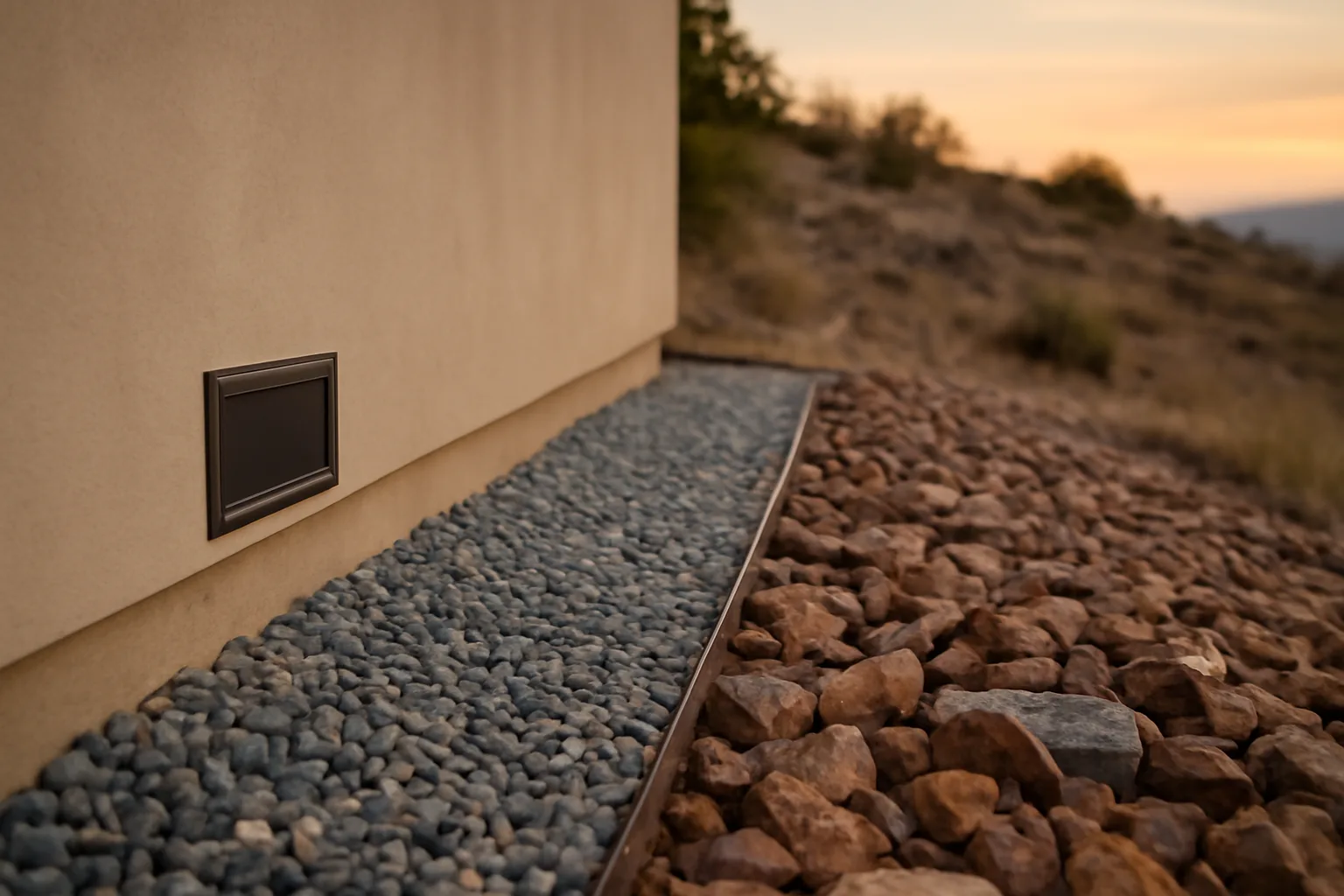
A fire resilient home combines noncombustible materials within 5 feet of the structure (Zone 0), ember-resistant vents, and cleared vegetation zones out to 100 feet. California's Zone 0 ember-resistant zone regulation is still in rulemaking as of 2026, but existing defensible space law (PRC 4291) is already enforced. No home is fireproof; the goal is surviving an ember storm without direct flame contact.
what does it mean for a home to be fire resilient?
A fire resilient home is one built and maintained to survive an ember storm and radiant heat without igniting, even if nobody is there to fight the fire when it arrives. It is not the same as fireproof. Nothing is fireproof. The goal is to remove the easy paths a fire uses to get inside: embers landing in gutters full of leaves, flames climbing through a wood fence into a wall, heat radiating off dry brush 3 feet from a window. CAL FIRE and most state fire agencies break this into two linked systems. One is defensible space, the cleared and modified vegetation around the structure. The other is home hardening, the physical building materials and details (roof, vents, siding, windows) that resist ignition. You need both. A perfectly cleared yard around a house with open eaves and a wood shake roof still burns. A hardened house surrounded by dry grass to the foundation still burns. The research backing this comes mostly from post-fire damage assessments. The Insurance Institute for Business & Home Safety (IBHS) and CAL FIRE have both documented that most homes lost in wildland-urban interface fires ignite from embers landing on or near the structure, not from a wall of flame rolling through. That's why the newest rules focus so heavily on the first 5 feet around the foundation, a zone where a single ember and a pile of mulch or dry leaves can start the fire that takes the house.
when does the california defensible space law go into effect?
California's core defensible space law, Public Resources Code 4291, has been in effect for years and is enforced today, not a future date. It requires 100 feet of defensible space (or to the property line, whichever is less) around structures in State Responsibility Areas and some designated local responsibility areas, split into two zones: 0-30 feet (lean, clean, and green) and 30-100 feet (reduced fuel) [1]. What's still pending is the newer Zone 0 rule, the ember-resistant zone within 5 feet of structures. The California Board of Forestry and Fire Protection has been working on this regulation since a 2020 law (AB 3074) directed it to define ember-resistant zone standards. As of early 2026, this regulation has gone through multiple draft revisions and public comment periods but had not been finalized into enforceable law for existing homes. Check the Board of Forestry's rulemaking page directly before you assume a specific date, because this has slipped multiple times already. Here's the honest state of play: PRC 4291's 100-foot defensible space requirement is law now and inspectors are citing homeowners for violations now. The Zone 0 ember-resistant zone rule (no combustible mulch, no wood fencing attached to the house, hardscape or noncombustible ground cover within 5 feet) is the anticipated next step, expected to eventually apply to homes in State Responsibility Areas and Very High Fire Hazard Severity Zones. Insurers, including the CA FAIR Plan and private carriers, are already asking about Zone 0 compliance on inspection forms even where it isn't yet mandatory by statute, because it correlates so strongly with survival outcomes.
what fire safe standards take effect in 2026?
Nothing sweeping and new snaps into force nationally on a single date in 2026; fire codes move district by district and state by state. The most relevant California-specific development to watch is the Zone 0 ember-resistant zone regulation discussed above, which the Board of Forestry has targeted for eventual adoption, with compliance timelines that have been proposed in the 1-3 year range after final adoption for existing homes (new construction in high hazard zones tends to face faster compliance windows). Separately, California's Chapter 7A building code (fire hazard severity zone construction standards, part of Title 24) already governs new construction and major remodels in Wildland-Urban Interface zones, requiring ignition-resistant materials for roofing, siding, vents, decking, and windows [2]. If you're building or substantially remodeling in a High or Very High Fire Hazard Severity Zone, Chapter 7A already applies to you, not a future rule. Because enforcement dates and specifics vary by county and fire district, don't rely on any single article, including this one, for your exact compliance deadline. Check your county's building department and your local CAL FIRE unit or fire protection district for the specific rule set and inspection schedule that applies to your parcel. Defensible space work planning breaks down the zone-by-zone requirements in more detail if you want the mechanics before you call anyone.
why won't people follow the defensible space law in california?
Cost, confusion about what actually counts, and the sheer physical labor involved are the three biggest reasons compliance lags, based on patterns fire agencies and researchers describe repeatedly. Clearing 100 feet of vegetation on a sloped, brush-covered lot isn't a weekend project. For older homeowners, people with mobility limitations, or absentee owners of rural parcels, it can mean hiring a contractor, and quotes for full defensible space clearing on larger or steep lots commonly run into the thousands of dollars. There's also a real information gap. Homeowners often don't know the difference between Zone 1 (0-30 feet, needs to be nearly bare of flammable material) and Zone 2 (30-100 feet, reduced and separated fuel, not bare dirt). Some over-clear and create erosion problems; others under-clear because they think a green lawn counts as defensible space (it can, if maintained, but an unmowed or drought-stressed lawn does not). Enforcement is also uneven. CAL FIRE and local fire departments in State Responsibility Areas are supposed to conduct defensible space inspections, and PRC 4291 gives them authority to issue notices of violation, but staffing limits mean not every property gets inspected every year. A CAL FIRE report on defensible space compliance surveys has repeatedly found compliance rates in the range of 60-70% on inspected parcels, meaning close to a third of inspected homes fail on first check. That gap is where insurers step in: many carriers and the FAIR Plan now require their own defensible space documentation before binding or renewing a policy, independent of whether CAL FIRE has inspected the property that year.
how to prevent wildfires from starting near your home
Most wildfires near homes start from human activity, not lightning. Ready.gov and the National Interagency Fire Center both point to equipment sparks, unattended debris burns, vehicle exhaust on dry grass, and improperly extinguished campfires as leading causes in populated areas. You control more of this than you might think. Don't mow dry grass with metal blades on hot, windy afternoons; a single spark from a blade hitting a rock has started fires. Keep debris burns fully permitted, small, and attended, and check your local burn ban status before lighting anything, since bans change with drought conditions week to week. Park vehicles and equipment with catalytic converters off dry grass; converters run at 1,000+ degrees Fahrenheit and are a documented ignition source. Maintain chainsaws, mowers, and grinders with spark arrestors where required by your fire district. On your own property, keep gutters and roof valleys free of dry leaves and needles, store firewood at least 30 feet from structures, and don't stack anything combustible against exterior walls or under decks. These small habits matter more than people expect, because ignition prevention and defensible space work together: even a hardened, well-cleared home is safer if the fire never gets a foothold in the first place.
how to prepare for a wildfire before it threatens your home
Preparation splits into three timeframes: what you do now regardless of fire season, what you do when a fire is burning in your region but not yet threatening you, and what you do in the final hours before evacuation. Ready.gov's wildfire preparedness guidance recommends building an emergency kit, planning two evacuation routes, and signing up for local emergency alerts well before fire season starts. Now (year-round): Complete your defensible space zones, harden vulnerable points (vents, eaves, under-deck areas), photograph your home and property for insurance documentation, and build a go-bag with medications, documents, and chargers. Register for your county's emergency alert system; most California counties use systems layered on top of the state's Cal OES alert infrastructure, and enrollment isn't automatic everywhere. Elevated risk (fire in your region): Move patio furniture and doormats inside, close all windows and doors but leave them unlocked for firefighter access, shut off gas at the meter if instructed, park your car facing out in the driveway with the keys in it, and move your go-bag to the car. Imminent threat: Leave when told to leave. Don't wait for a second warning. If you're documenting damage for insurance purposes after the fact, do it methodically: date-stamped photos of every room, receipts for major possessions, and your policy declarations page organized before you need them, not during a crisis. That kind of documentation is exactly the gap a $99 Wildfire Insurance Survival Kit is built to close: a structured way to have your home's fire mitigation records and property documentation ready before an adjuster or underwriter asks for them. We don't file claims or negotiate with insurers; the kit just helps you organize what you'll need to hand over yourself.
how to prevent forest fires and avoid forest fires on public land
Prevention on public land follows the same logic as around your home, just at scale: remove the human ignition sources and interrupt the paths flame takes to spread. The Smokey Bear campaign's core message, extinguish campfires completely (stir, drown, stir again until cold to the touch), remains the single most repeated piece of federal fire prevention guidance because unattended and improperly doused campfires are still a recurring cause of wildland fires [3]. On public and shared land specifically: follow posted fire restrictions and red flag warnings exactly, don't drive or park on dry vegetation, avoid fireworks entirely in wildland areas (illegal in most national forests year-round, more than during burn bans), and report unattended fires or suspicious smoke immediately rather than assuming someone else has called it in. Homeowners near wildland boundaries have an added responsibility: the vegetation management you do on your side of the property line affects fire behavior on the other side too. A well-maintained defensible space buffer doesn't just protect your house; it can slow fire spread toward neighboring wildland and give firefighters a place to make a stand. Fire safe landscaping choices matter here as much as clearing does, since the wrong plant choices right at the wildland edge can carry fire faster than bare dirt would.
how can we prevent forest fires as communities, more than individuals?
Individual defensible space work only goes so far if the house next door hasn't done any. Fire spreads structure to structure in dense WUI neighborhoods almost as often as it spreads through wildland vegetation, a pattern researchers at institutions studying the 2018 Camp Fire and 2021 Marshall Fire documented in post-fire assessments. This is why Firewise USA, the National Fire Protection Association's community program, organizes neighborhoods to do coordinated fuel reduction and hardening rather than relying on scattered individual effort [4]. Community-level prevention that actually moves the needle: shared chipper days to make debris removal cheaper and easier (a major reason people cite for not clearing brush is disposal cost and hassle), coordinated roadside and easement clearing so evacuation routes stay open, and community wildfire protection plans (CWPPs) that identify shared risk areas like unmaintained greenbelts or HOA-owned open space. If you live in an HOA or a rural fire district with shared responsibility areas, push for these at the community level rather than assuming your own compliance is enough. A neighborhood where 80% of homes are hardened and cleared still loses houses if the other 20% include ladder fuels that carry fire into the block. Defensible space clearing contract structures used in Washington State show one model for how states are trying to formalize shared vegetation management, which California communities are increasingly borrowing from.
is santa barbara safe from fire?
No community in California's foothill and chaparral zones, including Santa Barbara and the surrounding South Coast, is safe from fire in the sense of being exempt from risk. Santa Barbara County sits in one of the most fire-prone landscapes in the state: dense chaparral, steep terrain, and Sundowner wind events that can push fire downslope toward populated areas fast. The 2017 Thomas Fire, which at the time was the largest wildfire in modern California history by acreage, burned into Montecito and Santa Barbara's foothill communities, and the debris flow that followed in January 2018 killed 23 people, a stark reminder that wildfire risk and its aftermath (mudslides on burn scars) compound each other [5]. CAL FIRE's Fire Hazard Severity Zone maps classify large portions of the Santa Barbara foothills and adjacent unincorporated areas as High or Very High Fire Hazard Severity Zones, which is the state's own designation of elevated risk, not a marketing term . If you own property in these zones, Chapter 7A construction standards and PRC 4291 defensible space requirements already apply to you. The honest answer for any specific address is to check CAL FIRE's FHSZ viewer for that parcel directly, because risk varies block to block depending on slope, aspect, and vegetation type, even within the same city. Santa Barbara isn't uniquely dangerous compared to other Southern California foothill communities like Malibu or the San Bernardino Mountains foothills, but it isn't a fire-safe exception either.
what does home hardening actually cost and where should the money go first?
| Ember-resistant vents (1/8 inch mesh or listed ember-resistant vents) | Low ($20-$150/vent) | Embers entering attics/crawlspaces are a top cause of home ignition | |
|---|---|---|---|
| Zone 0 (5 ft): remove mulch, combustible plants, wood fencing at house | Low-moderate (mostly labor) | Direct flame contact zone; highest-leverage change per PRC 4291 successor rule | |
| Gutter guards / debris removal | Low | Prevents ember bed forming at roofline | |
| Class A roof covering | High (full replacement) | Only replace if roof already needs it; existing Class A roofs don't need upgrading | |
| Dual-pane or tempered exterior windows | Moderate-high | Reduces radiant heat breakage that lets embers inside | |
| Enclosed eaves | Moderate | Removes a common ember entry gap | If your budget is limited, do the vents and Zone 0 clearing first. They're the cheapest interventions with the highest documented correlation to survival in post-fire assessments, and they don't require touching your roof or siding at all. |
There's no single national number for full home hardening because it depends entirely on your existing construction, but the relative priorities are consistent across CAL FIRE, IBHS, and FEMA guidance. Vents and the 5-foot ember-resistant zone matter more per dollar spent than a full roof replacement, if your roof is already Class A rated. | Hardening Priority | Typical Relative Cost | Why It Matters First |
how do i document my fire mitigation work for my insurer?
Insurers and the CA FAIR Plan increasingly want proof, more than a claim that you cleared brush. Take dated photos of all four sides of your home showing the 5-foot, 30-foot, and 100-foot zones, keep contractor invoices for any clearing or hardening work, and save receipts for vent replacements, roof work, or fencing changes. Many carriers now use standardized wildfire mitigation forms (sometimes tied to the Wildfire Prepared Home certification through IBHS, or state-specific discount programs) that ask specific yes/no questions about vents, roofing class, and defensible space zones. Answer these accurately; overstating compliance can create problems if a claims adjuster inspects after a loss and finds discrepancies. We don't file claims, negotiate with insurers, or promise coverage, discounts, or reinstatement here; that's between you and your carrier, and if you're facing non-renewal you may want a licensed independent agent or, in disputed claims, a public adjuster. What we do provide is a structured way to organize the documentation you'll want ready before that conversation starts. If you've already gotten a non-renewal or inspection letter, read it line by line against your actual property conditions before you call anyone, because many letters cite specific deficiencies (vegetation distance, roof material, vent type) that you can address and re-photograph in a matter of days.
Frequently asked questions
When does the California defensible space law go into effect?
PRC 4291's 100-foot defensible space requirement is already in effect and enforced today. The newer Zone 0 ember-resistant zone rule (5 feet around structures) has been in Board of Forestry rulemaking since AB 3074 in 2020 and had not been finalized into enforceable law for existing homes as of early 2026. Check the Board of Forestry's rulemaking page for the current status.
Why won't people follow the defensible space law in California?
Cost of clearing (contractor quotes on brushy or sloped lots can run into the thousands), confusion about zone requirements, and physical labor limits are the main reasons. CAL FIRE compliance surveys have found roughly 60-70% compliance on inspected parcels, meaning a large share of homes fail their first inspection.
How do I prevent wildfires from starting on my own property?
Avoid mowing dry grass with metal blades on hot windy days, keep debris burns small and attended, park vehicles off dry grass (catalytic converters run over 1,000°F), clear gutters of dry leaves, and store firewood 30+ feet from structures. Most wildfires near homes start from human activity, not lightning.
How do I prepare for a wildfire if I live in a high-risk zone?
Build an emergency kit and two evacuation routes now, per Ready.gov guidance. When fire is active in your region, move furniture indoors, leave doors unlocked but closed, park facing out with keys in the car, and load your go-bag. Leave immediately when told to; don't wait for a second alert.
How can we prevent forest fires as a community rather than individually?
Coordinated fuel reduction (shared chipper days), cleared evacuation routes, and community wildfire protection plans matter because fire spreads structure to structure in dense neighborhoods. Firewise USA, run by the National Fire Protection Association, organizes neighborhoods to tackle this collectively instead of relying on scattered individual compliance.
What fire-safe standards take effect in 2026?
No single nationwide rule activates in 2026. California's Zone 0 ember-resistant zone regulation is the most-watched pending rule but wasn't finalized as of early 2026. Chapter 7A building standards for new construction and major remodels in Wildland-Urban Interface zones are already in effect, not new for 2026.
Is Santa Barbara safe from wildfire?
No. Santa Barbara County includes large areas CAL FIRE classifies as High or Very High Fire Hazard Severity Zones, with dense chaparral and Sundowner wind events that drove the 2017 Thomas Fire into Montecito, followed by a deadly debris flow in January 2018. Check CAL FIRE's FHSZ viewer for your specific parcel.
What is the difference between Zone 0, Zone 1, and Zone 2 defensible space?
Zone 0 (0-5 feet) is the ember-resistant zone: noncombustible surfaces, no mulch or wood fencing touching the house. Zone 1 (5-30 feet) requires lean, clean, and green low-fuel landscaping. Zone 2 (30-100 feet) allows more vegetation but requires reduced density and separation between plants and trees.
How much does home hardening for wildfire cost?
It varies widely by existing construction. Ember-resistant vents run roughly $20-$150 each, a major cost driver only if you need a full roof or window replacement, which can run into the tens of thousands. Prioritize vents and Zone 0 clearing first since they're the cheapest changes with the strongest survival correlation.
Does clearing defensible space guarantee my home won't burn?
No. Defensible space and home hardening significantly improve survival odds documented in post-fire assessments, but no combination of clearing and materials makes a home fireproof under extreme fire behavior, especially with high winds and long-range ember transport. Treat it as risk reduction, not a guarantee.
What should I do if I got a wildfire insurance non-renewal letter?
Read it for specific cited deficiencies (vegetation distance, roof class, vent type) and address what you can within days, since many are fixable quickly. Document everything with dated photos and receipts. We don't negotiate with insurers or promise reinstatement; consider a licensed independent agent for coverage questions.
How do I prevent forest fires when camping or on public land?
Fully extinguish campfires by stirring, drowning with water, and stirring again until cold to the touch, per longstanding Smokey Bear guidance. Follow posted fire restrictions, avoid fireworks entirely in wildland areas, don't park on dry grass, and report unattended fires immediately rather than assuming someone else called it in.
Sources
- California Public Resources Code Section 4291: 100 feet of defensible space required around structures in State Responsibility Areas, split into two zones
- California Building Standards Commission, Chapter 7A: Chapter 7A of Title 24 requires ignition-resistant materials for new construction in Wildland-Urban Interface fire hazard zones
- USDA Forest Service, Smokey Bear Campaign: Campfire extinguishing guidance (stir, drown, stir again) as core wildfire prevention message
- National Fire Protection Association, Firewise USA: Firewise USA organizes neighborhoods for coordinated fuel reduction and hardening
- CAL FIRE, Fire Hazard Severity Zone Viewer: State fire hazard severity zone classifications, including High and Very High zones in Santa Barbara County foothills