Last updated 2026-07-25
TL;DR
A fire safe home means noncombustible material in the first 5 feet around the structure (CAL FIRE's Zone 0), a Class A roof, ember-resistant vents, and cleared vegetation out to 100 feet where space allows. California's statewide Zone 0 ember-resistance regulation is still in rulemaking as of 2025 and is expected to take effect for many properties in 2026, though enforcement timing varies by jurisdiction.
What actually makes a home "fire safe"?
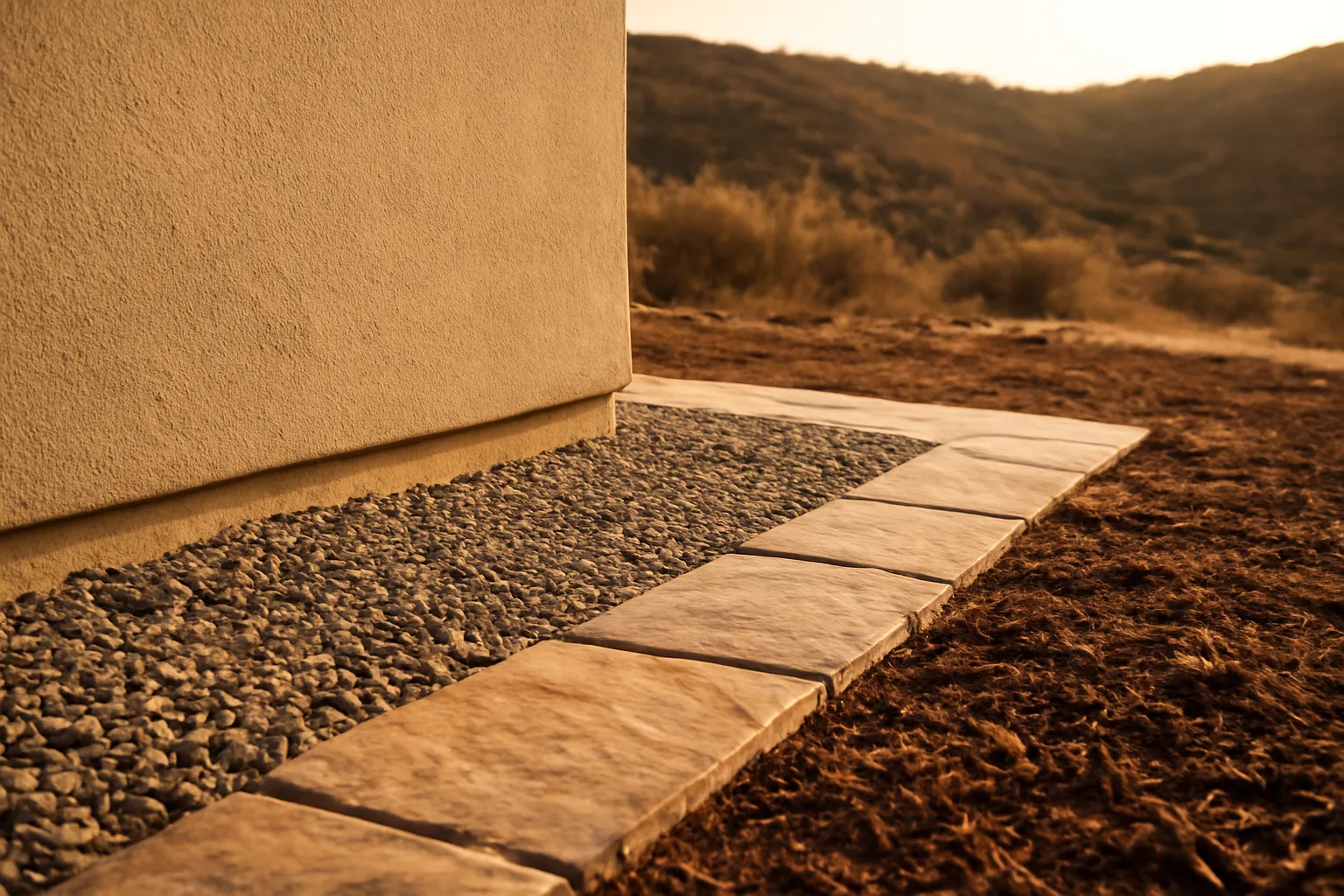
A fire safe home is one built and maintained so embers, more than flame fronts, can't find fuel close enough to ignite it. Most homes lost in wildfires don't burn because a wall of flame rolled through. They burn because wind-blown embers, sometimes traveling a mile or more ahead of the fire, land in a gutter full of dry leaves, a pile of mulch against the siding, or a wood fence that runs straight into the house. CAL FIRE calls this "home hardening" and pairs it with defensible space, the vegetation management around the structure. The practical checklist looks like this: a Class A fire-rated roof, ember-resistant vents (1/8 inch mesh or listed ember-resistant vents), enclosed eaves, dual-pane windows with at least one tempered pane, noncombustible siding or fire-resistant treatment, and gutters kept clear of debris. None of this is exotic. It's mostly what a competent roofer or contractor already knows how to install, just prioritized differently. The part people skip is the first 5 feet out from the foundation, what CAL FIRE now calls Zone 0. Rock, pavers, concrete, or bare mineral soil. No bark mulch, no wood fencing attached to the house, no shrubs touching siding. That 5-foot ring is where a surprising share of home ignitions start, because it's exactly where embers pile up against the structure. If you're building a target list, start with the roof and vents, then the 5-foot zone, then work outward. A fire safe landscaping plan for the zones beyond that matters, but it matters less than the first 5 feet.
When does the California defensible space law go into effect?
California's defensible space requirement (100 feet of vegetation management under Public Resources Code 4291) has been law since 1965 and was expanded substantially in 2005 to extend the requirement from 30 feet to 100 feet around structures in State Responsibility Areas and designated Wildland-Urban Interface areas [1]. That part isn't new and it isn't optional if your home sits in a state responsibility area or a local agency has adopted the same standard. What's newer, and what people mean when they ask about a "2026 law," is the Zone 0 ember-resistant zone regulation. Senate Bill 63 (2020) directed the Board of Forestry and Fire Protection to develop regulations for a 0-to-5-foot ember-resistant zone around structures in high and very high fire hazard severity zones [2]. The Board has been working through formal rulemaking, and as of late 2025 the regulation had not yet been finalized and adopted in final form, though draft language has circulated publicly and CAL FIRE has already published Zone 0 guidance homeowners can follow voluntarily [2]. The honest answer on timing: nobody outside the Board of Forestry can give you a locked date, because rulemaking timelines slip. Based on the SB 63 statutory framework and public Board of Forestry meeting materials, a 2026 effective date for new construction and remodels in high-severity zones is the commonly cited target, with existing homes potentially getting a longer compliance runway. Check the Board of Forestry's rulemaking page directly before you budget around a specific date, because this is exactly the kind of detail that shifts. Separately, note that PRC 4291's 100-foot rule already requires an annual inspection cadence in many SRA counties, and local fire districts can and do adopt stricter standards, so always confirm with your local fire district: [local fire district contact and current defensible space ordinance, fill in].
Why won't people follow the defensible space law in California?
The honest answer is cost, time, and a mix of denial and fatigue, not ignorance of the rule. CAL FIRE inspection data and various county studies have found compliance rates on initial defensible space inspections often sitting somewhere in the 40 to 70 percent range depending on the county and year, with many properties passing only after a re-inspection and correction notice, not on the first visit. A few real reasons people don't comply, none of them stupidity: Cost is the biggest one. Removing mature trees, regrading slopes, or replacing a wood fence with metal can run from a few hundred dollars for a small lot to five figures for a heavily wooded acre. Retirees and fixed-income homeowners in places like the Sierra foothills or parts of the Central Coast often can't front that cash even when they know the risk. Second, there's a real tension between defensible space and privacy or shade. People move to wooded lots specifically for the trees and the seclusion; being told to remove them feels like losing the reason they bought the property. Third, enforcement is inconsistent. Some counties send inspectors annually and follow up hard. Others are understaffed and inspections happen every few years if at all, so the perceived risk of a citation is low even though the fire risk is not. And fourth, plain procrastination and a belief that "it won't happen here," which is the same psychology behind flood insurance lapses and hurricane prep gaps nationwide. None of that changes the math on ignition risk. Homes with well-executed defensible space and hardening have measurably better survival odds in post-fire assessments, which is why insurers increasingly ask for photo documentation of exactly this work before they'll renew a policy.
How to prevent wildfires from starting in the first place
Most wildfires are human-caused, not lightning-caused. National Interagency Fire Center and USDA Forest Service data consistently show that roughly 85 to 90 percent of wildfires in the US are started by people, through debris burning, equipment sparks, unattended campfires, discarded cigarettes, and vehicle or power equipment malfunctions [3]. The prevention actions that actually move the needle are boring but real: never burn debris on windy or red-flag days, keep a shovel and water nearby for any outdoor burning, make sure trailer chains don't drag sparks on pavement, keep vehicles off dry grass (a hot catalytic converter can ignite dry grass in seconds), and maintain chainsaws and mowers so they're not throwing sparks into dry vegetation. Ready.gov's wildfire prevention guidance specifically calls out checking local burn permit and red flag warning status before any outdoor burning [4]. Power equipment is an underrated cause. Weed trimmers hitting rocks, mower blades striking metal, and even dragging tow chains have started fires that burned thousands of acres. If you're doing yard work during fire season, do it in the cooler, calmer morning hours, not mid-afternoon when winds pick up. On the individual level, this rolls up into the old Smokey Bear message, which is still accurate even if the slogan itself ("only you can prevent wildfires") is decades old: nearly all wildfire starts are preventable human actions, and most prevention is just situational awareness plus caution on high-wind days.
How to prepare for a wildfire (the homeowner checklist)
Preparing for a wildfire means having your evacuation plan, your documentation, and your home hardening done before a fire is anywhere near you, not during the two hours you have once an evacuation order hits. Ready.gov breaks wildfire prep into before, during, and after phases, and the "before" phase is where almost all of the value sits [4]. Before fire season, do these in order of urgency: 1. Sign up for your county's emergency alert system (more than relying on TV news). 2. Photograph and video every room of your home, closets and garage included, for insurance documentation. Do this even if nothing looks like it's changed since last year. 3. Complete home hardening basics: clear the Zone 0 ring, clean gutters, screen vents. 4. Pack a go-bag with medications, copies of ID and insurance documents, and a change of clothes, kept somewhere you can grab it in under five minutes. 5. Know two evacuation routes out of your neighborhood, not one, since fire can block roads. 6. Review your policy's coverage limits and additional living expense (ALE) provisions now, not after a non-renewal notice. During an active threat, follow evacuation orders immediately rather than waiting to "see how bad it gets." Fire behavior in wind-driven events like the ones that hit Paradise, CA in 2018 or Lahaina, HI in 2023 can outrun a car in open terrain within minutes. After a fire, if your home survived, document any smoke or ash damage before cleaning it up, since insurers often dispute smoke damage claims without photo evidence. This is the exact gap a documentation kit like a Wildfire Insurance Survival Kit is built to close: a standardized, dated photo and video record of your home's condition and hardening work, ready to hand your insurer or adjuster. To be clear, that's a documentation tool, not a claims service. It doesn't file a claim on your behalf, contact your insurer for you, or promise any discount or reinstatement. You prepare and send your own documentation.
How to prevent forest fires and avoid forest fires when you're outdoors
Preventing forest fires as a visitor or camper comes down to fire discipline: use established fire rings only, never leave a fire unattended even for a few minutes, and drown, stir, and feel campfires cold before walking away. The US Forest Service's own guidance states plainly that a campfire is not out until it's cold to the touch, because coals that look dead can reignite hours later in wind. Avoiding forest fires (in the sense of not being the cause) also means checking local fire restrictions before you go. National forests post current fire danger levels and burn bans, and these change week to week during dry season. A campfire that was fine in June can be banned by August in the same spot. A few specifics that matter more than people expect: park vehicles on gravel or pavement, not dry grass, since exhaust systems run hot enough to ignite grass on contact. Don't toss cigarettes from vehicles. If you're target shooting, know that steel-core or tracer ammunition and exploding targets have started real forest fires in dry conditions, which is why some agencies restrict them seasonally. For the "how can we prevent forest fires" question at a community level, the answer is less about individual vigilance and more about fuel management: prescribed burns, thinning overgrown forest stands, and defensible space requirements around communities in the wildland-urban interface. The US Forest Service and CAL FIRE both run prescribed fire programs specifically because decades of total fire suppression left western forests with unnaturally dense fuel loads, which is part of why fires now burn hotter and faster than historical baselines.
What fire safety rules for homes take effect in 2026?
The most significant 2026-adjacent rule change is California's Zone 0 ember-resistant zone regulation under SB 63, which the Board of Forestry and Fire Protection has been developing through formal rulemaking and which CAL FIRE has previewed in public guidance even before final adoption [2]. The regulation would require the 0-to-5-foot zone around structures in high and very high fire hazard severity zones to be free of combustible material, meaning no bark mulch, no wood fencing attached to the house, and no vegetation touching the structure. Based on the statutory timeline in SB 63 and Board of Forestry public rulemaking documents, new construction and major remodels in the highest-risk zones are the most likely first group required to comply, with existing single-family homes potentially phased in later. This is genuinely unsettled as of this writing, so don't treat any specific date as locked. Check the Board of Forestry's current rulemaking status directly, and confirm with your county or fire district whether a local ordinance is already ahead of the state timeline: [insert local fire district Zone 0 enforcement status and date]. Outside California, other western states are moving in similar directions but on different tracks. Colorado's state legislature has funded wildfire mitigation grant programs and some counties have adopted their own defensible space ordinances, but Colorado does not currently have a single statewide mandatory defensible space statute comparable to California's PRC 4291. Oregon passed SB 762 in 2021, which directed the creation of a statewide wildfire risk map and defensible space code framework, though implementation and map finalization have gone through multiple revisions after public pushback over risk classifications. Arizona's wildfire rules are largely handled at the county and fire district level rather than a single statewide defensible space law. If you're outside California, the honest move is to check your specific state's rules rather than assume California's framework applies.
Is Santa Barbara safe from fire?
No part of Santa Barbara County sits outside wildfire risk, and large sections of the city and surrounding foothill communities are mapped by CAL FIRE as Very High Fire Hazard Severity Zone. The Thomas Fire in December 2017 burned into Montecito and Santa Barbara's foothill neighborhoods and, combined with the debris flow that followed in January 2018, was one of the deadliest wildfire-adjacent disasters in recent California history, killing 23 people in the Montecito debris flow alone according to Santa Barbara County's own after-action reporting [5]. The city's flatter coastal core near downtown and the waterfront carries meaningfully lower direct wildfire exposure than the foothill and canyon neighborhoods (Montecito, Mission Canyon, the Riviera, San Roque foothills) because those areas back directly into chaparral-covered slopes with steep terrain and limited road access, a combination CAL FIRE's hazard mapping consistently flags as high risk . If you're evaluating a specific Santa Barbara address, the only reliable answer comes from CAL FIRE's Fire Hazard Severity Zone viewer for the specific parcel, not a general reputation for the city. Insurers underwriting in this area increasingly pull that same zone data, which is a big part of why homeowners in Montecito and the foothill neighborhoods have seen non-renewal notices even when their specific home has good hardening and clearance.
How does home hardening differ from defensible space, and do I need both?
| Zone 0 | 0-5 ft | Noncombustible material, no vegetation touching structure | |
|---|---|---|---|
| Zone 1 | 5-30 ft | Lean, clean, and green; spaced plants, no ladder fuels | |
| Zone 2 | 30-100 ft | Reduced fuel load, mowed grass, spaced trees | |
| Structure | N/A | Class A roof, ember-resistant vents, dual-pane windows | If you're triaging a limited budget, hardening usually wins over landscaping dollar for dollar, because a single vent replacement or gutter guard installation closes an ignition path that acres of cleared brush can't fully compensate for. For a deeper breakdown of defensible space zone requirements specifically, that's worth reading before you hire a contractor. |
Yes, you need both, because they solve different failure points. Home hardening is about the structure itself: the roof, vents, siding, windows, and the materials in the first 5 feet. Defensible space is about the vegetation and fuel load in the 5-to-100-foot zones around the structure. A perfectly hardened home surrounded by unmanaged brush can still lose to radiant heat and prolonged flame contact. A perfectly cleared lot with an old wood shake roof and open eave vents can still ignite from a single ember shower. CAL FIRE structures its guidance around three zones: Zone 0 (0-5 feet, ember-resistant), Zone 1 (5-30 feet, lean and clean, well-spaced plants), and Zone 2 (30-100 feet, reduced fuel and managed spacing). Insurers reviewing wildfire risk on a property increasingly ask for evidence across all three zones, more than one. | Zone | Distance from structure | Primary requirement |
What does this cost, and who actually does the work?
Costs vary enormously by property size, slope, and how overgrown the lot already is, but rough ranges from CAL FIRE-adjacent contractor guidance and county wildfire mitigation grant program budgets put small-lot Zone 0 conversion (removing mulch, adding gravel or pavers) at roughly $500 to $3,000, vent retrofits at $50 to $200 per vent, and full defensible space clearing on a wooded acre-plus lot anywhere from $2,000 to $15,000 or more depending on tree removal needs. Some counties and utility companies run cost-share or grant programs for defensible space work, particularly for lower-income and senior homeowners; check with your county fire safe council or local fire district, since availability and amounts vary a lot: [insert local grant/cost-share program name and link]. For the actual labor, licensed tree services and landscaping contractors handle vegetation clearing, roofers and general contractors handle hardening retrofits, and some counties maintain a vetted contractor list through their Fire Safe Council. Always confirm any contractor is licensed and, where required, bonded, especially for roof and vent work where a bad installation can create new ignition paths rather than closing them. After the work is done, the single most valuable thing you can do is document it: dated photos of the cleared Zone 0 ring, the new vents, the roof material, kept somewhere you (and your insurer, if asked) can access after a fire, more than before one.
What should I do first if I got a non-renewal or inspection letter?
Read the letter closely for a specific reason code or inspection deficiency, because insurers and FAIR Plans increasingly cite specific defensible space or hardening gaps rather than a blanket "wildfire risk" denial. If the letter names specific corrections (vegetation clearance, roof condition, vent screening), address exactly those items first, since that's what a re-inspection or new underwriter will check. Second, get your documentation in order before you do anything else. Photograph the current state of your property, then photograph again after each correction, dated and organized by zone. Insurers reviewing an appeal or a new application respond better to a clear before-and-after record than a verbal assurance that "we cleared the brush." Third, understand what you're allowed to do and what you're not. You (or a licensed public adjuster you hire separately) can appeal a non-renewal, request a re-inspection, or shop new coverage including your state FAIR Plan. A documentation service, including ours, does not contact your insurer for you, file claims on your behalf, or promise any specific coverage outcome, discount, or reinstatement. What it can do is give you a clean, organized, dated set of photos and records to send yourself. That distinction matters, because a lot of homeowners in this exact situation get pitched services that overpromise on the insurance side. If you want a structured way to build that documentation without guessing what to photograph or how to organize it, that's exactly what the $99 Wildfire Insurance Survival Kit is built around. It's a one-time tool, not a subscription, and not a claims or negotiation service.
Frequently asked questions
When does the California defensible space law go into effect?
The core 100-foot defensible space requirement under Public Resources Code 4291 has been law since 1965 and was expanded to 100 feet in 2005. The newer Zone 0 ember-resistant zone rule under SB 63 was still in Board of Forestry rulemaking as of late 2025, with a 2026 effective date commonly discussed for high-severity zones, though this isn't finalized. Check your local fire district for current enforcement.
Why won't people follow the defensible space law in California?
Mostly cost and inconsistent enforcement, not ignorance. Removing mature trees or replacing fencing can run into five figures on wooded lots, some counties inspect only every few years, and homeowners often value the shade and privacy the vegetation provides. Compliance rates on first inspections often run well below 100 percent across California counties.
How to prevent wildfires from starting?
Avoid outdoor burning on windy or red-flag days, keep vehicles off dry grass, maintain equipment like mowers and chainsaws so they don't throw sparks, and never leave a campfire unattended. Roughly 85-90% of US wildfires are human-caused according to federal wildfire agency data, so situational caution prevents most starts.
How to prepare for a wildfire as a homeowner?
Sign up for local emergency alerts, photograph your home's interior and exterior for insurance documentation, complete home hardening basics like Zone 0 clearance and vent screening, pack a go-bag with medications and ID copies, and know two evacuation routes out of your neighborhood before fire season starts, not during an active threat.
How to prevent forest fires while camping or hiking?
Use only established fire rings, never leave a fire unattended, and drown, stir, and feel campfires cold before leaving, since coals that look out can reignite. Check current fire restrictions before your trip, park on gravel or pavement rather than dry grass, and never discard cigarettes from vehicles.
How can we prevent forest fires at a community level?
Community-level prevention relies on fuel management: prescribed burns, forest thinning, and defensible space requirements in wildland-urban interface zones. Decades of total fire suppression left many western forests with unnaturally dense fuel loads, which agencies like CAL FIRE and the US Forest Service are now addressing through active prescribed fire programs.
What fire safety rules for homes take effect in 2026?
California's Zone 0 ember-resistant zone regulation under SB 63 is the main one under active rulemaking, expected to require noncombustible material in the 0-5 foot zone around structures in high and very high fire hazard zones. The exact effective date isn't finalized as of this writing; confirm with the Board of Forestry and your local fire district.
Is Santa Barbara safe from fire?
No, large parts of Santa Barbara County, especially foothill neighborhoods like Montecito and Mission Canyon, are mapped as Very High Fire Hazard Severity Zone by CAL FIRE. The 2017 Thomas Fire and 2018 Montecito debris flow killed 23 people. Flatter coastal areas carry lower direct wildfire exposure, but no part of the county is risk-free.
What is Zone 0 and why does it matter more than other clearance zones?
Zone 0 is the 0-5 foot ring immediately around a structure, and CAL FIRE guidance calls for noncombustible material there instead of mulch or plants touching the house. It matters most because wind-blown embers, not direct flame contact, cause most home ignitions, and this zone is where embers pile up against the structure.
What's the difference between home hardening and defensible space?
Home hardening covers the structure itself (roof, vents, siding, windows, and Zone 0 materials), while defensible space covers vegetation management from 5 to 100 feet out. You need both; a hardened home with unmanaged brush nearby, or a cleared lot with a flammable roof, both remain vulnerable to ignition.
How much does defensible space and home hardening cost?
Rough ranges: Zone 0 conversion on a small lot runs $500-$3,000, vent retrofits cost $50-$200 each, and full defensible space clearing on a wooded acre-plus lot can run $2,000-$15,000 or more. Some counties offer grant or cost-share programs for lower-income and senior homeowners; check your local fire safe council.
What should I do if my home insurance sent a non-renewal or inspection letter?
Read it for the specific deficiency cited, address exactly those items (vegetation, roof, vents), and document your property with dated before-and-after photos organized by clearance zone. You can appeal or shop new coverage yourself; a documentation tool doesn't contact insurers or promise reinstatement on your behalf.
Do other states besides California have defensible space laws?
Not identical statewide mandates. Colorado funds mitigation grants but lacks one statewide statute like California's PRC 4291. Oregon's SB 762 (2021) created a statewide risk mapping and defensible space code framework still being implemented. Arizona handles wildfire rules mostly at the county and fire district level.
Sources
- California Public Resources Code Section 4291: 100-foot defensible space requirement around structures in State Responsibility Areas
- California Senate Bill 63 (2020), Board of Forestry and Fire Protection rulemaking: Statutory basis for the Zone 0 ember-resistant zone regulation directed to the Board of Forestry and Fire Protection
- National Interagency Fire Center, Wildland Fire statistics: Majority of US wildfires are human-caused
- Santa Barbara County, Montecito Debris Flow after-action information: The January 2018 Montecito debris flow following the Thomas Fire killed 23 people
- CAL FIRE, Fire Hazard Severity Zone Viewer: Fire Hazard Severity Zone mapping designates areas like Santa Barbara County foothill neighborhoods as Very High risk