Last updated 2026-07-25
TL;DR
A fireplace check for wildfire risk means inspecting your spark arrestor mesh, chimney cap clearance, ember-resistant vents, and the 5-foot noncombustible zone around the flue exit. Insurers and CAL FIRE defensible space inspectors treat chimneys as a top ember-entry point. Most fixes cost $50 to $400 and take a weekend.
what does a fireplace check actually look at
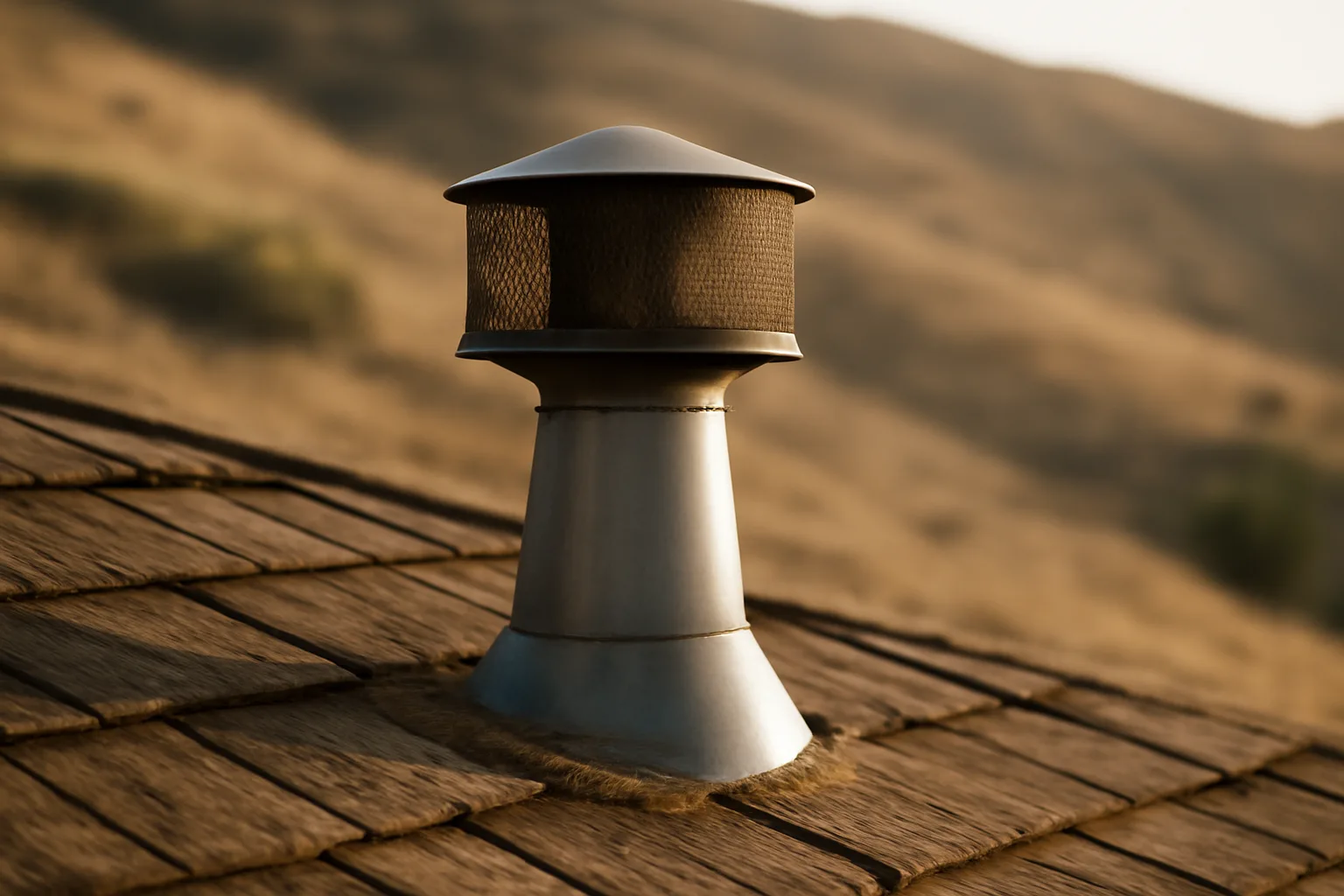
A fireplace check for wildfire risk is not the same as a chimney sweep visit for creosote buildup. It's an ember-intrusion inspection. Inspectors and insurance adjusters look at the spark arrestor screen on top of the chimney, the mesh size (should be 3/8 inch to 1/2 inch, per most local fire codes and CAL FIRE guidance on ember-resistant vents), whether the cap is rusted through or missing, and whether embers could get past the damper into the house through gaps around an old flue. They also check the ground and roof zone around the chimney. CAL FIRE's defensible space standard requires the area within 5 feet of the home, called Zone 0, to be nearly free of combustible material, and that includes anything stacked near an exterior fireplace or wood stove flue exit, more than brush against siding. A chimney with a rotted spark arrestor sitting 4 feet from a dry wood pile is exactly the kind of thing that fails an inspection and gets flagged in an insurer's underwriting photo. If you have an outdoor fireplace, fire pit, or wood-burning insert, the check extends there too. Insurers increasingly photograph these features during renewal inspections because they're both an ignition source during use and an ember catcher during a wildfire when unused.
why do insurers care about my fireplace during a wildfire risk review
Embers, not direct flame contact, cause most home ignitions in wildfires. A rusted-out spark arrestor or a chimney cap that's fallen off gives embers a direct path into your attic or living space, even if the fire itself never reaches your property line. Insurance underwriters use aerial and street-level imagery plus in-person inspections to score defensible space and hardening. A chimney is an easy visual flag: it's on the roofline, easy to photograph from a drone, and either has a cap or doesn't. If your policy is up for non-renewal review, expect the fireplace and chimney to show up as a line item, right alongside roof material and vent screening. This matters more in the states doing aggressive non-renewal review right now. California's FAIR Plan enrollment has grown sharply as standard insurers pull back in high-risk zip codes, and the state has pushed insurers toward using wildfire mitigation credit programs (the Safer from Wildfires framework) that explicitly reward documented hardening steps, including ember-resistant vents and enclosed eaves, the same category most spark arrestor and vent fixes fall into [1].
what does the california defensible space law require, and when does it take effect
California's core defensible space law (Public Resources Code 4291) has been in effect for years and currently requires 100 feet of defensible space clearance around structures in State Responsibility Areas and some Local Responsibility Areas, split into an ember-resistant Zone 0 (0-5 feet) and vegetation management Zones 1 and 2 out to 100 feet [2]. The part people are actually asking about is the Zone 0 ember-resistant zone regulation. CAL FIRE and the Board of Forestry have been developing formal Zone 0 regulations under SB 63 (2023) and earlier direction from AB 3074 (2020), which authorized ember-resistant zone rules within 5 feet of structures. As of early 2026, the Board of Forestry's Zone 0 regulations are in a rulemaking and phase-in process; check CAL FIRE's defensible space page directly for the current adoption and enforcement timeline before assuming a hard statewide date, because it has shifted more than once during rulemaking. Separately, California's wildfire-related building code updates (Chapter 7A of the California Building Code, covering ignition-resistant construction including vents, eaves, and in some readings chimney spark arrestor requirements) apply to new construction and some remodels in Wildland-Urban Interface Fire Areas, not as a retrofit mandate on existing homes statewide. If someone tells you 2026 is a hard cutoff for retrofitting every existing home, that's not quite accurate; the mandatory retrofit question is still working through rulemaking as of this writing. Check with your local fire district's building department for what actually applies to your parcel.
why won't people follow the defensible space law in california
Cost, confusion about what's actually required, and inconsistent local enforcement are the three real reasons, not laziness. A full 100-foot defensible space clearance on a sloped, wooded lot can run into thousands of dollars in tree trimming, brush removal, and hauling, and CAL FIRE inspections have historically found non-compliance rates in the range of 30 to 45 percent depending on the county and year, based on annual CAL FIRE defensible space inspection reports for State Responsibility Areas [2]. A lot of homeowners also genuinely don't know which zone rules apply to their address, because SRA, LRA, and Very High Fire Hazard Severity Zone designations overlap in confusing ways, and enforcement has historically been complaint-driven or tied to point-in-time inspections rather than continuous monitoring. Some homeowners also worry that removing trees near a home hurts property value or violates HOA rules, which creates a real conflict CAL FIRE literature doesn't fully resolve for them. The honest fix isn't a bigger fine. It's clearer, parcel-specific guidance (which is what a lot of county fire departments are now trying to provide through defensible space assessment programs) and, frankly, cost assistance, which several California grant programs have started offering through CAL FIRE's fire prevention grants to local agencies.
what fire-safe home rules take effect in 2026
There's no single nationwide fireplace or defensible space rule flipping on in 2026. What's actually happening is a patchwork of state-level rulemaking reaching final stages around that timeframe. California's Zone 0 ember-resistant zone regulation, discussed above, is the biggest one to watch, since the Board of Forestry has targeted a phase-in for Very High Fire Hazard Severity Zones. Oregon has its own defensible space and home hardening code framework tied to Senate Bill 762 (2021), with a statewide wildfire risk map and defensible space standards developed by the Oregon Department of Forestry, which has gone through its own delays and revisions after public pushback on the risk map itself. Colorado doesn't have a statewide mandatory defensible space law like California's; wildfire mitigation requirements there are set at the county and fire district level, so a 'fire-safe home' checklist in Boulder County looks different from one in El Paso County. Arizona similarly leaves most defensible space and fire code requirements to local jurisdictions and the Arizona Department of Forestry and Fire Management's community wildfire protection guidance rather than one state law. Bottom line: if you're trying to time a 2026 deadline, check your specific state fire marshal's office and county fire district page, because '2026 fire-safe home rules' as a single national mandate does not exist. Guided fill-in: [Check your local fire district's current defensible space and vent/chimney requirements here], because inspection frequency, mesh size requirements, and enforcement deadlines vary by district even within the same state.
how do I check my fireplace and chimney for wildfire risk myself
Get on the roof (or use binoculars from the ground if you're not comfortable up there) and look at the spark arrestor cap. It should have intact metal mesh with openings no larger than 1/2 inch across, no rust holes, and it should sit securely over the flue opening, not hanging loose or tilted. Check the 5-foot zone around the chimney's exterior base and the roof zone around where the flue penetrates the roofline. Clear pine needles, leaf litter, and any stored wood within that radius. If you have a woodpile near an exterior chimney or fireplace structure, move it at least 30 feet away and off the ground, per CAL FIRE's Zone 0 and general defensible space guidance on keeping combustibles away from structures. Inside, check that your fireplace damper closes fully and that there are no visible gaps or daylight around the flue liner where it meets the ceiling or attic space; those gaps let embers and smoke bypass the intended path. If you smell smoke in rooms other than where the fireplace is, that's a sign of a leak worth having a certified chimney sweep (look for Chimney Safety Institute of America certification) inspect properly, since this crosses from wildfire-hardening into general fire safety. While you're up there, this is also the moment to check attic and foundation vents for the same ember-resistant mesh standard, since a fireplace check and a vent check use the same tools and the same afternoon. For a broader walkthrough of hardening priorities beyond the chimney, see fire safe landscaping california next to house.
how to prevent wildfires from starting near my home
Most wildfires near homes start from human sources, not lightning: unattended campfires, equipment sparks, downed power lines, and yes, outdoor fireplaces or fire pits used during red flag warning days. The single highest-leverage thing a homeowner can do is simply not burn anything outdoors, including yard debris, during declared red flag warning or high wind advisory periods, which your local fire district or National Weather Service office issues. Keep any outdoor wood-burning feature (chimney, fire pit, wood stove flue) at least 10 feet from combustible structures and vegetation when in use, and always have a hose or extinguisher within reach. Never leave any outdoor flame unattended, even for a few minutes; that's genuinely how a large share of escaped-fire incidents start, per Ready.gov's wildfire preparedness guidance [3]. Beyond your own property, the defensible space work discussed throughout this piece (100-foot vegetation clearance, ember-resistant Zone 0, spark arrestors) is what actually slows fire spread once it's already burning nearby, since you can't fully prevent every ignition source in a wildland-urban interface community.
how to prepare for a wildfire (and a wildfire evacuation)
Preparing for a wildfire has two tracks that run in parallel: hardening the structure, and getting your household ready to leave fast. On the structure side, that's everything covered above (spark arrestors, Zone 0 clearance, ember-resistant vents) plus an ember-resistant roof and enclosed eaves if your budget allows it over time. On the household side, Ready.gov recommends building a go-bag with at least a 3-day supply of food, water, medications, and copies of critical documents, and having a family communication and evacuation plan established before fire season, not during an active evacuation order [3]. CAL FIRE's 'Ready, Set, Go!' program uses the same three-stage framework: Ready means your home and family are prepared year-round, Set means you're packed and monitoring conditions as a fire approaches, and Go means you leave immediately when told to, without waiting to see how bad it gets. Documentation matters more than people expect here, especially if you're already facing an insurance non-renewal letter. Photograph your hardening work (the new spark arrestor, the cleared Zone 0, trimmed vegetation) before fire season starts, because that documentation is what you'll want on hand if you ever need to show an insurer or adjuster what mitigation steps you completed. This is exactly the kind of organized folder the $99 Wildfire Insurance Survival Kit is built around: a structured way to compile your own hardening photos, receipts, and property details into one file you control, without hiring anyone to file claims or negotiate coverage on your behalf. You send your own documentation; the kit just keeps it organized and insurer-ready. Start at /survival-kit-builder.
how to prevent forest fires and avoid forest fires when you're outdoors
Forest fire prevention for individuals mostly comes down to fire discipline: fully extinguish campfires by drowning, stirring, and feeling for heat, never leave a fire unattended, and check local fire restrictions before any outdoor burning, since many forest districts ban campfires entirely during peak season. The U.S. Forest Service and Smokey Bear program (managed jointly with the Ad Council and the National Association of State Foresters) have promoted this exact 'drown, stir, feel' method for decades because unattended and improperly extinguished campfires remain one of the most common human-caused ignition sources [4]. Avoid parking vehicles on dry grass (catalytic converters can ignite vegetation), don't use fireworks or exploding targets in wildland areas, and be careful with chainsaws, mowers, and grinding equipment during dry, windy conditions, since metal-on-rock or metal-on-metal sparks from equipment cause a meaningful share of wildland ignitions too. If you see an unattended fire or a fire starting, call 911 immediately rather than trying to handle it yourself unless it's small and you have proper tools; seconds matter more than most people expect in dry, windy conditions.
is santa barbara safe from fire risk right now
No coastal California community, including Santa Barbara, is 'safe' from fire risk in the sense of being exempt, and large parts of Santa Barbara County sit in CAL FIRE-designated Very High Fire Hazard Severity Zones, particularly in the foothill and wildland-urban interface neighborhoods like Montecito, San Roque, and the Riviera area [5]. The 2017 Thomas Fire and the debris flow that followed in Montecito in January 2018 (which killed 23 people, per Santa Barbara County's own after-action reporting) is the clearest evidence that this region carries serious wildfire and post-fire flood risk, not a low one . That said, 'safe' is relative and depends heavily on which specific parcel you're asking about. Flatter, more urbanized parts of the city closer to the ocean carry meaningfully lower wildfire hazard than foothill-adjacent properties. If you're evaluating a specific Santa Barbara address, check CAL FIRE's Fire Hazard Severity Zone viewer directly rather than relying on the city's general reputation, because the zone can change block to block [5].
how can we prevent forest fires at the community level
Individual defensible space work only goes so far if your neighbors haven't done theirs, since fire spreads structure to structure once it's established in a neighborhood, a dynamic researchers call the wildland-urban interface conflagration problem. Community-level prevention works best through Firewise USA, a National Fire Protection Association program that helps neighborhoods coordinate shared defensible space standards, joint chipper days, and community risk assessments, currently covering thousands of recognized communities across fire-prone states . Local Community Wildfire Protection Plans (CWPPs), developed jointly by fire districts, state forestry agencies, and residents under federal Healthy Forests Restoration Act guidance, are the formal planning tool that identifies high-risk areas and prioritizes fuel reduction projects at a landscape scale, more than parcel by parcel. If your community doesn't have one, contacting your county fire department or state forestry office to ask is a reasonable first step. For an individual homeowner, the most useful community-level action is simply making sure your own hardening work isn't the weak link: a neighborhood where nine of ten homes did chimney and vent hardening but one didn't can still lose the whole block, because that one house becomes the ember source for everyone downwind. See defensible for a broader look at how defensible space zones work property to property.
fireplace and chimney wildfire check: quick reference table
| Item | What to check | Typical fix cost | |
|---|---|---|---|
| Spark arrestor mesh | 1/2 inch or smaller openings, no rust holes | $50-$150 (replacement cap) | |
| Chimney cap fit | Secure, not loose or tilted | $75-$250 installed | |
| 5-foot Zone 0 around flue base | Clear of needles, leaves, stored wood | Free (your labor) to $200 (hauling) | |
| Woodpile distance | 30+ feet from any structure, off ground | Free (relocate) | |
| Attic/foundation vents | 1/8 inch ember-resistant mesh | $30-$100 per vent | |
| Damper seal | Closes fully, no attic gap around flue | $0-$300 (sweep inspection + repair) | This table reflects general CAL FIRE defensible space and ember-resistant vent guidance; your specific fire district may set stricter mesh sizes or distances, so confirm with your local building or fire department before assuming these numbers apply exactly to your address. |
Frequently asked questions
When does the California defensible space law go into effect?
California's core defensible space law (Public Resources Code 4291) has been in effect for years, requiring 100 feet of clearance in State Responsibility Areas. The newer Zone 0 ember-resistant zone regulation (5 feet from structures) is still in rulemaking as of early 2026; check CAL FIRE's defensible space page for the current phase-in date for your zone.
Why won't people follow the defensible space law in California?
Mainly cost, confusion over which zone rules apply to their parcel, and inconsistent enforcement. CAL FIRE's own annual inspection data has historically shown non-compliance rates around 30-45 percent in some counties, driven more by unclear guidance and expense than by disregard for fire safety.
How do I prevent wildfires from starting on my own property?
Don't burn debris or use outdoor fireplaces during red flag warnings, keep any flame source 10+ feet from combustibles, never leave fire unattended, and maintain defensible space zones. Most wildfires near homes are human-caused, so fire discipline around equipment, campfires, and outdoor burning matters as much as landscaping.
How do I prepare for a wildfire if I get an evacuation warning?
Follow the Ready, Set, Go framework from CAL FIRE: keep your home hardened and a go-bag packed year-round (Ready), monitor conditions and load your vehicle when a fire is nearby (Set), and leave immediately when ordered, without waiting (Go). Ready.gov recommends at least 3 days of supplies in your go-bag.
How can we prevent forest fires as a community, more than individually?
Join or start a Firewise USA site through the National Fire Protection Association, which coordinates shared defensible space standards and chipper days across a neighborhood. Community Wildfire Protection Plans, developed with local fire districts and state forestry agencies, also prioritize fuel reduction at a landscape scale beyond single properties.
What fire-safe home rules take effect in 2026?
There's no single 2026 national deadline. California's Zone 0 ember-resistant zone rule is in late-stage rulemaking, Oregon's SB 762 defensible space standards are being phased in through the Department of Forestry, and Colorado/Arizona leave requirements to county and local fire districts. Check your specific state fire marshal's site.
Is Santa Barbara safe from fire risk?
No. Large parts of Santa Barbara County, including foothill neighborhoods like Montecito, sit in CAL FIRE's Very High Fire Hazard Severity Zones. The 2017 Thomas Fire and the January 2018 Montecito debris flow, which killed 23 people, show this region carries real wildfire and post-fire flood risk, not a low one.
What size mesh should a spark arrestor have?
Most fire codes and CAL FIRE ember-resistant guidance call for openings between 3/8 inch and 1/2 inch, small enough to stop embers but large enough to avoid excessive creosote buildup. Confirm the exact requirement with your local fire district, since some jurisdictions specify tighter mesh.
How close can a woodpile be to my house in a wildfire zone?
CAL FIRE's defensible space guidance recommends keeping firewood and other combustible storage at least 30 feet from any structure and off the ground, well outside the 5-foot Zone 0 and ideally outside Zone 1 as well. Local fire districts sometimes require even greater distances.
Does a fireplace check affect my homeowners insurance renewal?
It can. Insurers increasingly use aerial and street-level imagery to assess wildfire hardening, and a rusted or missing spark arrestor, or debris near a chimney base, is an easy visual flag during underwriting review. Documented fixes may help support a mitigation credit request, though final coverage decisions rest with the insurer.
What's the difference between defensible space and home hardening?
Defensible space is vegetation and fuel management around your home, out to 100 feet in California's SRA zones. Home hardening is physical construction upgrades, like ember-resistant vents, enclosed eaves, and spark arrestors, that stop embers from entering the structure itself. Both matter; neither replaces the other.
How to prevent forest fires when using equipment outdoors?
Avoid mowing or using chainsaws and grinders during hot, dry, windy conditions, since metal sparks can ignite dry vegetation. Don't drive or park on dry grass, as catalytic converters can reach ignition temperatures. Follow local fire district burn restrictions, which often tighten during red flag warning periods.
Who do I call to check my chimney for wildfire safety, more than creosote?
A certified chimney sweep (look for Chimney Safety Institute of America certification) can check both creosote buildup and structural issues like damper seals and flue gaps. For the wildfire-specific spark arrestor and clearance check, your local fire department or a defensible space inspector can confirm compliance with district-specific rules.
Sources
- California Department of Insurance, Safer from Wildfires regulation: Insurers must offer mitigation discounts/credit for documented wildfire hardening steps
- California Public Resources Code Section 4291: 100-foot defensible space clearance requirement around structures in SRA/LRA zones
- USDA Forest Service / Smokey Bear, Campfire Safety: Drown, stir, feel method for extinguishing campfires and human-caused ignition prevention
- Santa Barbara County, Thomas Fire and Montecito Debris Flow after-action information: The January 2018 Montecito debris flow following the Thomas Fire killed 23 people
- National Fire Protection Association, Firewise USA: Firewise USA coordinates community-level wildfire risk reduction across recognized neighborhoods