Last updated 2026-07-25
TL;DR
LA-area wildfire control relies on defensible space (100 feet under California PRC 4291), home hardening against embers, and evacuation planning. A new statewide Zone 0 rule requiring ember-resistant space within 5 feet of homes is expected to take effect in 2026 for parcels under an acre in high fire hazard zones, though CAL FIRE has delayed final rulemaking before.
What actually causes most LA-area home losses in wildfires?
Embers, not walls of flame, destroy most homes in Southern California wildfires. Firebrands can travel over a mile ahead of a fire front, landing on roofs, in gutters, on wood decks, or in mulch beds pressed against siding. The Insurance Institute for Business & Home Safety has documented this pattern repeatedly after major fires, and CAL FIRE's own guidance leads with the same point: home ignition is driven by embers landing on vulnerable material near or on the structure, not by direct flame contact in most cases. That's why "LA fires control" isn't really about stopping a fire in the hills. It's about making sure that when embers rain down on a neighborhood (and in a wind-driven event like the January 2025 Palisades and Eaton fires, they will), your specific house doesn't have an easy path to ignite. The Eaton and Palisades fires together destroyed more than 16,000 structures and killed at least 29 people, according to CAL FIRE incident data, making it one of the most destructive urban-wildfire events in state history. The practical takeaway: vent screens, roof material, deck construction, and the five feet of ground right next to your foundation matter more than most people assume. A well-built, well-cleared home can survive in a neighborhood where most houses burn. That's not a guess, it's the pattern researchers keep finding in post-fire damage assessments.
When does the California defensible space law go into effect?
| Zone 0 (ember-resistant zone) | 0-5 feet | Non-combustible or ember-resistant materials; no mulch, no combustible plants against the house (pending final regulation) | |
|---|---|---|---|
| Zone 1 | 5-30 feet | Lean, clean, and green; widely spaced plants, no ladder fuels | |
| Zone 2 | 30-100 feet | Reduced fuel volume, spaced vegetation, maintained vegetation height | For a full breakdown of what belongs in each ring, see defensible space zones and, for planting specifics near the house, fire safe landscaping California next to house. |
California's core defensible space law, Public Resources Code 4291, has been in effect since it was last substantially amended in 2020, when the state expanded the requirement from 30 feet to 100 feet around structures in State Responsibility Areas and designated Very High Fire Hazard Severity Zones [1]. There's no future "go-live" date for the 100-foot rule itself; it's already the law and has been enforced by CAL FIRE and local fire agencies for years. What's coming later is a new, more specific rule for the zone closest to the house. In 2020, the legislature also directed CAL FIRE to develop regulations for a distinct "Zone 0" (the first 5 feet around a structure) requiring ember-resistant, mostly non-combustible material [2]. That rulemaking has taken years longer than originally planned, and CAL FIRE has pushed the effective date back more than once. The two zones work together, and both are already required in most fire-prone jurisdictions: | Zone | Distance from structure | Core rule |
What fire-safe home rules take effect in 2026?
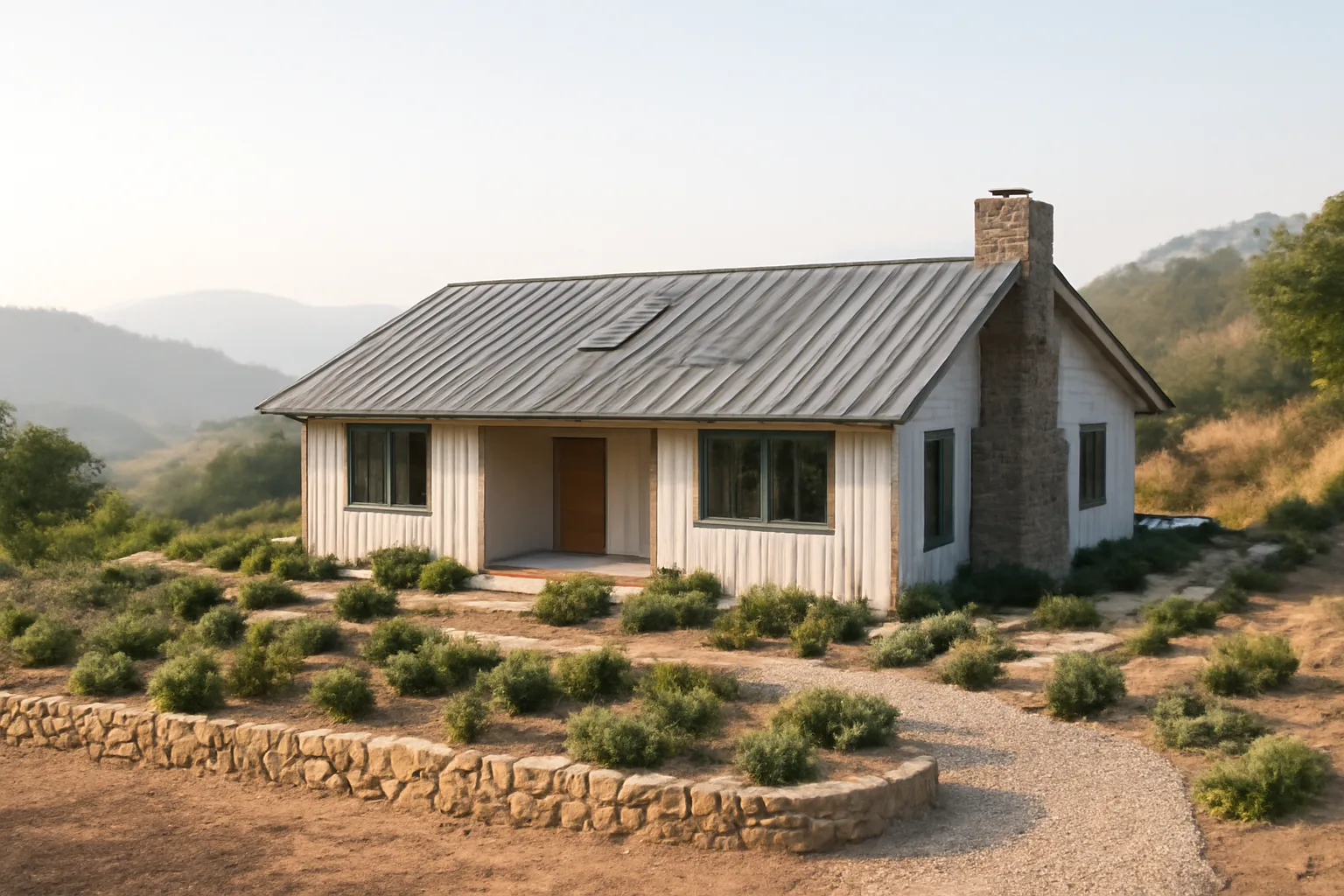
The headline 2026 rule to watch is Zone 0. CAL FIRE has been developing regulations under Government Code 51182 and PRC 4291 that would require homeowners in Very High Fire Hazard Severity Zones to keep the 5 feet immediately surrounding their home clear of combustible mulch, stored firewood, dry vegetation, and other ignitable material, replacing it with gravel, pavers, bare soil, or well-irrigated low-growing plants [2]. CAL FIRE's Board of Forestry has moved the target date multiple times. As of the most recent public rulemaking timeline, the regulation is expected to apply first to newer or larger parcels and phase toward broader applicability, with enforcement mechanisms tied to local building and fire codes rather than a single statewide inspection sweep [2]. Because this has already slipped past earlier projected dates (it was originally discussed for 2023, then 2025), homeowners should treat any specific 2026 date as directional, not guaranteed, and check CAL FIRE's official Board of Forestry and Fire Protection rulemaking page for the current status before assuming a hard deadline [2]. Separately, some cities and counties in the LA basin have moved faster than the state, adopting their own five-foot ember zone ordinances or stricter roof and vent standards ahead of the statewide rule. Because mitigation requirements vary by fire district, check with your local fire department or building department for the exact ordinance language, current deadline, and whether your parcel size or zoning triggers different requirements. [Guided fill-in: contact ______ Fire Department / Fire Protection District for your jurisdiction's current Zone 0 timeline.]
Why won't people follow the defensible space law in California?
Cost, confusion, and inconsistent enforcement are the three real reasons, and none of them are irrational on their face. Clearing 100 feet of vegetation on a hillside lot, especially one with mature oaks, mixed brush, and steep grade, can run from a few hundred dollars for a flat quarter-acre to several thousand dollars for a heavily overgrown, steep, multi-acre parcel, depending on vegetation density and whether you hire a crew or do it yourself. Homeowners on fixed incomes, particularly older residents, often defer the work because they genuinely can't afford it in a given year. Confusion is the second driver. Many homeowners don't know which zone rules apply to their specific parcel, whether they're in a State Responsibility Area or a Local Responsibility Area, or whether a Very High Fire Hazard Severity Zone map even includes their address. CAL FIRE maintains fire hazard severity zone maps precisely because this gets contested, and maps have been updated substantially in recent years, catching some homeowners by surprise [3]. Third, enforcement has historically been uneven. Inspections happen on a rotating basis in many counties, not every year for every parcel, and penalties for non-compliance (misdemeanor citations under PRC 4291, historically modest fines) haven't been a strong enough deterrent compared to the cost of doing the work. Insurers, not fire departments, have become the more effective enforcement mechanism in the last few years: a defensible space violation noted in an inspection can now trigger a non-renewal notice faster than it triggers a fine. That shift is arguably why more people are complying now than five years ago, not because the law changed, but because the consequence changed. See house fire for how a single ignition event plays out when defensible space is missing.
How do you prepare for a wildfire before it starts?
Preparation splits into three buckets: the house itself, the space around it, and your family's evacuation plan, and all three need attention months before fire season, not during a red flag warning. For the house: clear roof and gutters of pine needles and leaves, install 1/8-inch metal mesh screens over all vents (embers exploit unscreened attic and foundation vents constantly), and replace or repair any wood shake roofing, which Ready.gov and CAL FIRE both flag as one of the highest-risk materials in wildfire-prone areas. For the yard: maintain the 100-foot defensible space zones described above, remove dead vegetation annually (not once and done), and keep firewood stacks at least 30 feet from the structure. For the family: Ready.gov recommends every household build an emergency supply kit with at least a three-day supply of water (one gallon per person per day) and non-perishable food, plus a family communication plan and two evacuation routes in case one is blocked. Know your zone's evacuation warning system (many LA-area counties now use Genasys or similar zone-based alert tools) and practice the drive out, more than the route on a map, because wildfire evacuations often happen at night, in smoke, with traffic. Documentation matters just as much as physical prep. Before a fire, walk your property and photograph or video every room, your roof, your defensible space clearing, and your major possessions. This is the single most useful thing you can do for your own recovery, and it costs nothing but an afternoon.
How can homeowners prevent wildfires from starting in the first place?
Most wildfires near homes in California aren't started by lightning, they're started by people, equipment, or infrastructure. CAL FIRE and the National Interagency Fire Center have both noted that the large majority of wildfires nationally are human-caused, whether from unattended campfires, vehicle exhaust or dragging chains sparking on dry grass, power equipment used on hot dry days, or electrical infrastructure failures [4]. The practical prevention list for homeowners is short and unglamorous: don't mow dry grass with metal blades during red flag warning days, don't park hot vehicles on dry grass, maintain any generators or equipment so they don't spark, and report downed power lines immediately rather than assuming someone else already has. If you have a wood-burning fire pit or use fireworks (illegal in unincorporated fire hazard areas in most of California during peak season), that's a direct, controllable risk. At a neighborhood level, prevention also means supporting or at least not blocking utility vegetation management and power line hardening projects near your property, even when the tree trimming looks aggressive. Southern California Edison and PG&E have both faced billions of dollars in wildfire liability tied to equipment failures, and utility-caused ignitions remain one of the most litigated and best-documented causes of catastrophic California wildfires in the last decade.
How do you prevent forest fires and avoid forest fires more broadly?
"Preventing forest fires" and "protecting your home from wildfire" are related but not identical goals, and it's worth separating them. Forest and wildland fire prevention at the landscape level is mostly about fuel management: prescribed burns, mechanical thinning, and fuel breaks maintained by agencies like the U.S. Forest Service and CAL FIRE, plus basic personal responsibility around campfires and equipment use in wildland areas [4]. The Smokey Bear program (managed jointly by the USDA Forest Service, the National Association of State Foresters, and the Ad Council since 1944) built its entire message around the fact that individual human behavior is the largest controllable variable in fire starts: fully extinguish campfires by dousing, stirring, and feeling for heat, never leave a fire unattended, and check local fire restrictions before any outdoor burning. For a homeowner, the honest answer to "how do I avoid forest fires" is that you mostly can't control whether one starts miles away in the hills. What you control is whether your own activities add another ignition source, and whether your home is ready to survive if a wildland fire reaches your neighborhood. Those are two different jobs, and both matter.
Is Santa Barbara safe from fire?
No coastal or foothill community in Santa Barbara County is fire-safe in an absolute sense, and large parts of the county carry a Very High Fire Hazard Severity Zone designation from CAL FIRE, particularly in the foothill and canyon communities like Montecito, Mission Canyon, and the areas above the 101 corridor [3]. Santa Barbara County has a long, documented history of destructive fires, including the 2017 Thomas Fire (at the time the largest wildfire in modern California history) and the debris flow that followed in January 2018, which killed 23 people in Montecito, a disaster directly linked to the burned, denuded hillsides above town [5]. That said, "safe" isn't a fixed status, it's a moving target based on preparation. Homes in Santa Barbara with proper defensible space, ember-resistant construction, and hardened roofs and vents have measurably better survival odds than unprepared neighbors on the same street, a pattern documented after nearly every major Southern California fire event by IBHS and CAL FIRE post-fire assessments. If you own property in the Santa Barbara foothills, check your parcel against the current CAL FIRE Fire Hazard Severity Zone viewer, because zone designations have been updated in recent years and some parcels previously rated moderate are now rated high or very high [3].
What should you do if you got a wildfire insurance non-renewal letter?
First, read the letter carefully for the stated reason. California insurers are required to give at least 75 days' notice before non-renewing a residential policy in most cases, and the notice must state the reason for non-renewal under California Insurance Code requirements enforced by the California Department of Insurance . If the reason cites defensible space or brush clearance, that's specific and actionable: get the required clearing done, get it documented, and consider a defensible space inspection from your local fire department to get an official record. Second, understand your options. The California FAIR Plan exists as an insurer of last resort for property owners who can't get standard coverage due to wildfire risk, though it typically offers more limited coverage at higher cost than a standard admitted carrier policy, and the California Department of Insurance has pushed FAIR Plan reforms in recent years as the number of policyholders forced onto it has grown sharply . Third, document everything before you need it, not after. Photograph your defensible space clearing, your roof, your vents, and every room in your house. This is where a lot of homeowners lose ground during a claim dispute: they can describe what they had, but they can't prove it. A $99 Wildfire Insurance Survival Kit gives you a structured way to organize that documentation (room-by-room photos, defensible space records, receipts for hardening work) before a fire or a non-renewal notice forces the issue. To be clear: we don't negotiate with insurers, file claims on your behalf, or promise coverage, discounts, or reinstatement. You prepare and send your own documentation; we just help you organize it so it's ready.
What does defensible space actually require, zone by zone?
Under PRC 4291, defensible space in California State Responsibility Areas and Very High Fire Hazard Severity Zones extends 100 feet from the structure (or to the property line, whichever is closer), split into two zones with different rules [1]. Zone 1 (0 to 30 feet): remove all dead plants, grass, and weeds; keep tree branches at least 10 feet from other trees and from your chimney; remove branches that hang over your roof; keep grass mowed to a maximum height (commonly 4 inches, though local ordinances vary). Zone 2 (30 to 100 feet): cut annual grass down to a maximum height (commonly 4 inches); create horizontal and vertical spacing between shrubs and trees based on slope; remove fallen leaves, needles, and small branches regularly, though a light layer of duff is generally allowed. Zone 0, the pending 5-foot ember-resistant zone discussed above, will sit inside Zone 1 once finalized, and will likely require homeowners to swap bark mulch, wood fencing attached to the house, and combustible plants immediately against the foundation for gravel, concrete, pavers, or well-irrigated succulents [2]. For plant-by-plant guidance on what's appropriate at each distance, see fire safe landscaping California next to house, and for a broader look at how other states structure similar clearing work, see wildfire defensible space clearing contracts, Washington State DNR.
What does home hardening add beyond defensible space?
Defensible space controls fuel around the house. Home hardening controls what happens when an ember reaches the house anyway, and both are necessary; neither alone is enough. CAL FIRE's home hardening guidance focuses on a short list of high-value fixes: Class A fire-rated roofing, 1/8-inch metal mesh ember-resistant vents, dual-pane tempered glass windows, non-combustible siding materials, and enclosed eaves that don't trap rising embers. Decks deserve special attention. A wood deck attached to the house is effectively a fuel ladder aimed straight at your siding and windows, and IBHS research after major California fires consistently found deck ignition as a common path to full structure loss. Swapping to non-combustible decking material, or at minimum keeping the area under and around the deck completely clear of stored items and vegetation, closes one of the more common failure points. A rough ranking of hardening priorities by cost-effectiveness: vent screens and gutter guards are cheap (often under a few hundred dollars) and high-impact; roof replacement is expensive (often tens of thousands of dollars) but the single highest-impact fix if your roof material is currently wood shake or another combustible type; window and siding upgrades sit in between, worth doing during any planned renovation but rarely worth a standalone project purely for fire risk unless your current materials are clearly combustible.
What should be in a wildfire go-bag and family evacuation plan?
Ready.gov's baseline recommendation is a kit that covers each household member for at least three days: one gallon of water per person per day, non-perishable food, a battery or hand-crank radio, flashlights, a first aid kit, medications, copies of important documents, and a phone charger with a backup battery. For wildfire specifically, add N95 masks for smoke, a change of clothes made of natural fibers (synthetic fabrics can melt), and a paper map with your evacuation route marked, since cell networks and GPS can fail during a major incident. Build a family communication plan that assumes you won't all be home when an evacuation order comes: agree on an out-of-area contact person, a meeting point, and how you'll reach pets if someone's away. Practice loading the car with your go-bag and pets at least once a year, because the actual evacuation, at night, in smoke, with neighbors also on the road, is nothing like the drive on a clear afternoon. For a broader sense of how quickly a home fire situation can escalate once it starts, see fire at a house, and for the mindset shift that turns prevention from a slogan into daily habits, see only you can prevent wildfires.
Frequently asked questions
When does the California defensible space law go into effect?
The core 100-foot defensible space requirement under Public Resources Code 4291 has been in effect since its 2020 amendment; there's no future start date for that part. The pending Zone 0 (5-foot ember-resistant zone) regulation is expected to take effect around 2026 for many parcels, but CAL FIRE has delayed this rule before, so check the Board of Forestry's current rulemaking status for your area.
Why won't some Californians follow the defensible space law?
Cost of clearing overgrown or steep lots, confusion over which fire hazard zone and jurisdiction applies to their parcel, and historically inconsistent enforcement are the main reasons. Insurance non-renewals tied to inspection failures have become a stronger compliance driver in recent years than the misdemeanor citations under PRC 4291 ever were.
How do you prevent wildfires from starting near your home?
Avoid mowing dry grass with metal blades on hot windy days, don't park or idle vehicles on dry vegetation, keep equipment and generators well maintained, extinguish campfires completely, and report downed power lines immediately. Most wildfires are human-caused, so eliminating avoidable ignition sources on your own property matters more than most people assume.
How should you prepare for a wildfire before fire season starts?
Clear your 100 feet of defensible space, screen all vents with 1/8-inch metal mesh, clean gutters and roofs of debris, build a Ready.gov-style emergency kit with three days of water and food per person, and practice your evacuation route with your family, more than plan it on paper.
What's the difference between preventing wildfires and preventing forest fires?
They overlap but aren't identical. Wildfire prevention near your home focuses on your own ignition sources and property hardening. Forest fire prevention at a landscape scale involves agency-level fuel management like prescribed burns and thinning, plus basic outdoor safety habits like fully extinguishing campfires and following local burn restrictions.
What fire-safe home rules take effect in 2026 in California?
CAL FIRE's Zone 0 regulation, requiring ember-resistant, largely non-combustible material within 5 feet of homes in high fire hazard zones, is currently targeted for phased effect around 2026, though this date has slipped before. Check CAL FIRE's Board of Forestry and Fire Protection page for the current confirmed timeline before assuming it's final.
Is Santa Barbara safe from wildfire?
No community in Santa Barbara County is fully fire-safe; large parts, especially the foothill and canyon neighborhoods, carry Very High Fire Hazard Severity Zone designations from CAL FIRE. The 2017 Thomas Fire and the deadly 2018 Montecito debris flow show the real risk. Home hardening and defensible space measurably improve survival odds within that risk.
How can homeowners prevent forest fires in wildland areas they visit?
Fully extinguish campfires by dousing and stirring until cold to the touch, never leave a fire unattended even briefly, check and follow local fire restrictions before any outdoor burning, and avoid parking or driving on dry grass. The Smokey Bear program, run by the USDA Forest Service since 1944, was built around exactly these behaviors.
What's the fastest, cheapest home-hardening fix against embers?
Installing 1/8-inch metal mesh over all vents and clearing gutters of pine needles and leaves are the cheapest, highest-impact fixes, often costing a few hundred dollars total. Roof replacement is far more expensive but matters most if your current roof is wood shake or another combustible material.
Does defensible space guarantee my house won't burn?
No. Defensible space and home hardening significantly improve survival odds in post-fire damage studies, but nothing guarantees a structure survives a wind-driven wildfire like the 2025 Palisades or Eaton fires. It shifts the odds meaningfully in your favor; it doesn't eliminate the risk.
What should I do if my insurer sends a wildfire non-renewal notice?
Read the stated reason carefully, address any defensible space or hardening deficiency it names, and document your property (photos of clearing, roof, vents, room contents) before you need it for a claim or an appeal. California requires most insurers to give at least 75 days' notice and state a reason for non-renewal.
What is the California FAIR Plan and when do I need it?
The California FAIR Plan is the state's insurer of last resort for property owners who can't get standard wildfire coverage. It generally costs more and covers less than an admitted carrier policy, so it's a fallback option after non-renewal, not a first choice, and reforms to expand its coverage have been ongoing at the Department of Insurance.
Sources
- California Legislative Information, Public Resources Code Section 4291: State law requires 100 feet of defensible space around structures in State Responsibility Areas and Very High Fire Hazard Severity Zones, split into two zones.
- CAL FIRE, Board of Forestry and Fire Protection, Zone 0 Ember-Resistant Zone Rulemaking: CAL FIRE is developing a Zone 0 regulation requiring ember-resistant material within 5 feet of structures, with an implementation timeline that has been delayed multiple times.
- CAL FIRE, Fire Hazard Severity Zone Maps: CAL FIRE maintains and periodically updates Fire Hazard Severity Zone maps that determine which properties fall under Very High Fire Hazard Severity Zone rules.
- National Interagency Fire Center, Statistics: The large majority of wildfires in the United States are human-caused rather than started by lightning.
- California Department of Insurance, Residential Property Insurance Non-Renewal Notice Requirements: California insurers must generally provide at least 75 days' notice and state a reason before non-renewing a residential policy.