Last updated 2026-07-25
TL;DR
"Level 1 fire" usually refers to a low-to-moderate fire danger rating or an initial defensible-space inspection finding, not an active emergency. It means a fire district or CAL FIRE has flagged your property for basic Zone 0/Zone 1 clearance work. Fix the items, photograph everything, and keep records; insurers increasingly ask for this proof before renewing coverage.
what does "level 1 fire" actually mean
The phrase gets used in a few different ways, and that's part of why it's confusing. There's no single national "Level 1 fire" category that applies everywhere. Most homeowners run into it in one of three contexts. First, the National Fire Danger Rating System and local fire weather scales use tiered levels (often labeled low, moderate, high, very high, extreme, sometimes numbered 1 through 5) to describe current fire risk based on weather, fuel moisture, and drought conditions. A "level 1" day in that system usually means low fire danger, the calmest end of the scale. Second, some fire districts and insurance inspection programs use tiered defensible-space violation levels, where a "Level 1" finding means basic, fixable issues (dead vegetation near the house, debris in gutters, wood piles too close to the structure) rather than an imminent, severe hazard. That's the version most people reading this are actually dealing with: a letter or inspection tag calling out Zone 0 and Zone 1 problems around the home. Third, insurers sometimes use their own internal risk tiers (not official government levels) to decide who gets non-renewed, who gets a surcharge, and who stays covered. If your letter references a fire district's defensible-space code rather than a state-wide numbered scale, treat this article as a guide to that code process, and always confirm the specific tier definitions with [your local fire district, name, phone, and permit portal link] since language varies by jurisdiction. CAL FIRE describes defensible space as "the buffer you create between a building on your property and the grass, trees, shrubs, or any wildland area that surrounds it," and that buffer is broken into zones, not "levels," in California's statewide framework. If your notice mixes zone language (Zone 0, Zone 1, Zone 2) with "Level 1," it's likely a local district's own severity ranking layered on top of the state zone system.
when does the california defensible space law go into effect
California's Zone 0 ember-resistant zone requirement, the 0-to-5-foot area immediately around a home, was created by Assembly Bill 3074 (2020) but has not yet taken legal effect as an enforceable statewide mandate. CAL FIRE and the Board of Forestry have been developing the implementing regulations for several years, with adoption repeatedly delayed [1]. As of the most recent public guidance, the Board of Forestry and Fire Protection was still working through the formal rulemaking process for Zone 0, and no statewide enforcement date had been finalized [1]. Homeowners should check the Board of Forestry and Fire Protection's regulation status page directly, because this date has moved before and will likely be announced with a phased compliance window once finalized. The broader defensible space law, Public Resources Code 4291, has been in effect for years. It already requires 100 feet of defensible space (or to the property line) around structures in State Responsibility Areas and some Local Responsibility Areas, split into two zones: 0-30 feet (lean, clean, and green) and 30-100 feet (reduced fuel) [2]. That part isn't new and isn't waiting on rulemaking. Zone 0 is the new, stricter layer on top of it. So if someone asks "what fire safe rules for homes take effect in 2026," the honest answer is: nobody outside CAL FIRE and the Board of Forestry knows the exact enforcement date yet, because it keeps slipping. Some industry and insurance discussions have referenced a 2026 compliance target for Zone 0 in high-risk areas, but that has not been confirmed as final by the Board of Forestry as of this writing [1]. Don't wait for the deadline to do the work; insurers are already asking about ember-resistant zones now, deadline or not.
why won't people follow the defensible space law in california
Cost, confusion, and enforcement gaps are the three real reasons, and they compound each other. Cost is the biggest one. Removing mature trees, replacing wood mulch with gravel, and re-siding vent openings can run from a few hundred dollars in DIY labor to $10,000 or more for a full property retrofit, and there's no statewide subsidy that covers most of that for typical homeowners. Some counties and utilities offer limited chipper programs or rebates, but coverage is patchy and applicants should check [their county's specific defensible space assistance program] for what's actually available locally. Confusion is real too. Zone 0, Zone 1, and Zone 2 requirements differ by whether the parcel sits in a State Responsibility Area, a Very High Fire Hazard Severity Zone within a city, or neither, and the rules genuinely differ for rural acreage versus close-set housing developments. A homeowner in a dense suburban tract and one on a rural five-acre lot get different instructions, and the state's own materials sometimes read as written for the second group when most non-renewal letters are landing on the first. Enforcement is inconsistent. PRC 4291 gives local fire officials authority to inspect and require compliance, and non-compliance can carry fines, but actual inspection frequency and follow-through vary a lot by county and fire district. CAL FIRE data on defensible space inspections shows compliance rates improving over time but still leaving a meaningful share of properties non-compliant on first inspection. Where enforcement is rare, procrastination wins, until the insurer non-renewal letter or the neighbor's house fire changes the calculus fast.
how to prepare for a wildfire
Preparing for a wildfire has two tracks that run at the same time: hardening the property, and getting your household and paperwork ready to evacuate on short notice. Skipping either one leaves a gap. On the property side, work outward from the house. Start with Zone 0 (0-5 feet): clear anything combustible touching the structure, including mulch, planters, doormats, and firewood stacks. Move to Zone 1 (5-30 feet): remove dead vegetation, space out shrubs, keep grass mowed under 4 inches, and prune tree limbs up 6 feet from the ground and away from the roofline. Then Zone 2 (30-100 feet): thin trees so canopies don't touch, reduce ladder fuels, and keep the area mowed and maintained [2]. Check gutters for debris, screen vents with 1/8-inch metal mesh, and replace anything you can with ember-resistant materials at your own pace; you can compare zone-by-zone landscaping choices in fire safe landscaping California next to house. On the household side, Ready.gov recommends building a go-bag with medications, copies of insurance documents, chargers, and cash, and knowing two ways out of your neighborhood before you need them. Sign up for local emergency alerts, know your community's evacuation zone designation, and decide now where you'd go and what you'd bring in the first five minutes. Document the property before fire season starts, not after a loss. Photos and video of every room, exterior siding, roof, deck, and the defensible-space work you've completed give you a record insurers and adjusters will ask for anyway. A structured version of this, built specifically for wildfire claims and non-renewal appeals, is what the $99 one-time Wildfire Insurance Survival Kit walks you through: a documentation checklist and templates, not a claims service. We don't negotiate with insurers or file claims for you; you prepare and send your own file.
how to prevent wildfires (and how to prevent forest fires)
Prevention splits into ignition prevention and spread prevention, and homeowners have real control over both, even though weather and drought aren't in anyone's hands. On ignition: the U.S. Forest Service and CAL FIRE both note that the overwhelming majority of wildfires are human-caused, through unattended campfires, equipment sparks, downed power lines, fireworks, and vehicles parked on dry grass [3]. That means the single highest-leverage prevention action for most people is boring: fully extinguish campfires (drown, stir, drown again), don't park or idle vehicles on dry grass, avoid outdoor equipment use (mowers, grinders, chainsaws) during red flag warnings, and maintain vehicles and machinery that could throw sparks. On spread: defensible space around structures doesn't stop a wildfire from starting, but it dramatically changes whether a home survives once fire arrives. CAL FIRE's research and post-fire assessments have repeatedly found that homes with adequate defensible space and ember-resistant construction survive wildfires at much higher rates than homes without it. This is really the same question as "how to prevent forest fires" or "how to avoid forest fires" at the community level: reducing continuous fuel across a landscape (through prescribed burns, fuel breaks, and resident-level defensible space) is what actually slows fire spread, since no amount of individual caution stops a lightning strike or an arsonist. Report smoke or unattended fire immediately by calling 911; don't assume someone else already has. And if you're in a fire-prone community, ask your local fire district about Firewise USA participation or community chipper days, since collective fuel reduction on neighboring parcels matters as much as your own yard.
how to prepare for forest fires as a community, more than a household
Individual defensible space only works as well as the property next door lets it. Embers can travel over a mile ahead of a fire front, so one neglected lot in an otherwise well-prepared neighborhood can still be the ignition point that takes down a block. That's why CAL FIRE and many fire districts push neighborhood-level coordination: shared chipper days, joint vegetation management on shared fence lines and easements, and community Firewise USA recognition programs that formalize a neighborhood's collective mitigation work. If your HOA or neighborhood hasn't looked at this, it's worth raising, especially since some insurers are starting to ask about community-level mitigation status, more than individual property work, when underwriting policies in high-risk zones. At the household level, coordinate with immediate neighbors on shared risks: overhanging trees that cross property lines, shared fences (a wood fence touching your house is functionally an ignition wick), and shared driveways or access roads that need to stay clear for fire apparatus. None of this requires a grant or a government program; it requires a conversation and, often, a shared chainsaw rental. If you're new to a wildfire-prone area, or you're rebuilding after loss, read up on how ignition actually happens at the structure level; the difference between a house fire that starts inside the home and fire at a house that arrives from outside changes what mitigation actually helps.
is santa barbara safe from fire
No coastal California community, including Santa Barbara, is "safe" from wildfire in any absolute sense, and the region's own fire history makes that clear. Santa Barbara County has been directly hit by major wildfires including the 1990 Painted Cave Fire, the 2008 Tea Fire, and the 2017 Thomas Fire, which at the time was the largest wildfire in modern California history by acreage before being surpassed by later fires [4]. Much of the city and surrounding foothill communities sit within or adjacent to a CAL FIRE-designated Very High Fire Hazard Severity Zone, which means the state's own hazard mapping treats parts of Santa Barbara as high-risk for wildfire exposure, not low-risk [5]. You can check your specific address against CAL FIRE's Fire Hazard Severity Zone viewer rather than relying on general reputation; a property a few blocks from the foothills can sit in a very different hazard zone than one closer to the water. That history is exactly why insurance non-renewals have hit Santa Barbara-area homeowners hard in recent years, alongside similar coastal-adjacent, foothill-adjacent communities across the state. "Safe from fire" isn't really the right question for anyone living near wildland-urban interface terrain; "how exposed is this specific parcel, and what has been done to reduce that exposure" is the one insurers and fire officials actually answer with data.
what fire safe rules for homes take effect in 2026
The honest answer, as of this writing, is that no statewide California "2026 fire-safe home" mandate has been formally finalized and published by the Board of Forestry and Fire Protection, though the Zone 0 ember-resistant zone rule (from AB 3074) has been in active rulemaking with industry discussion pointing toward a 2026 or later compliance horizon for at least some property types [1]. What is confirmed and already law: PRC 4291's 100-foot defensible space requirement, the two-zone (0-30 ft, 30-100 ft) structure, and local fire agencies' authority to inspect and enforce it [2]. What is not yet finalized: the specific Zone 0 (0-5 ft) ember-resistant materials list, the exact compliance date, and whether existing homes get a grace period or retrofit assistance. Readers should treat any specific "2026 deadline" claim they see online, including ones repeated confidently in real estate listings or contractor sales pitches, with real skepticism until it's confirmed on the Board of Forestry and Fire Protection's own regulation page or a CAL FIRE bulletin. This is a case where being early on the easy stuff (clearing Zone 1 and 2, screening vents, clearing gutters) costs you nothing and helps your insurance file regardless of what the final Zone 0 date turns out to be. If your specific fire district has already adopted local ember-resistant zone requirements ahead of the state rule, note that here: [local fire district Zone 0 adoption status, if applicable].
what a level 1 defensible space violation letter usually asks for
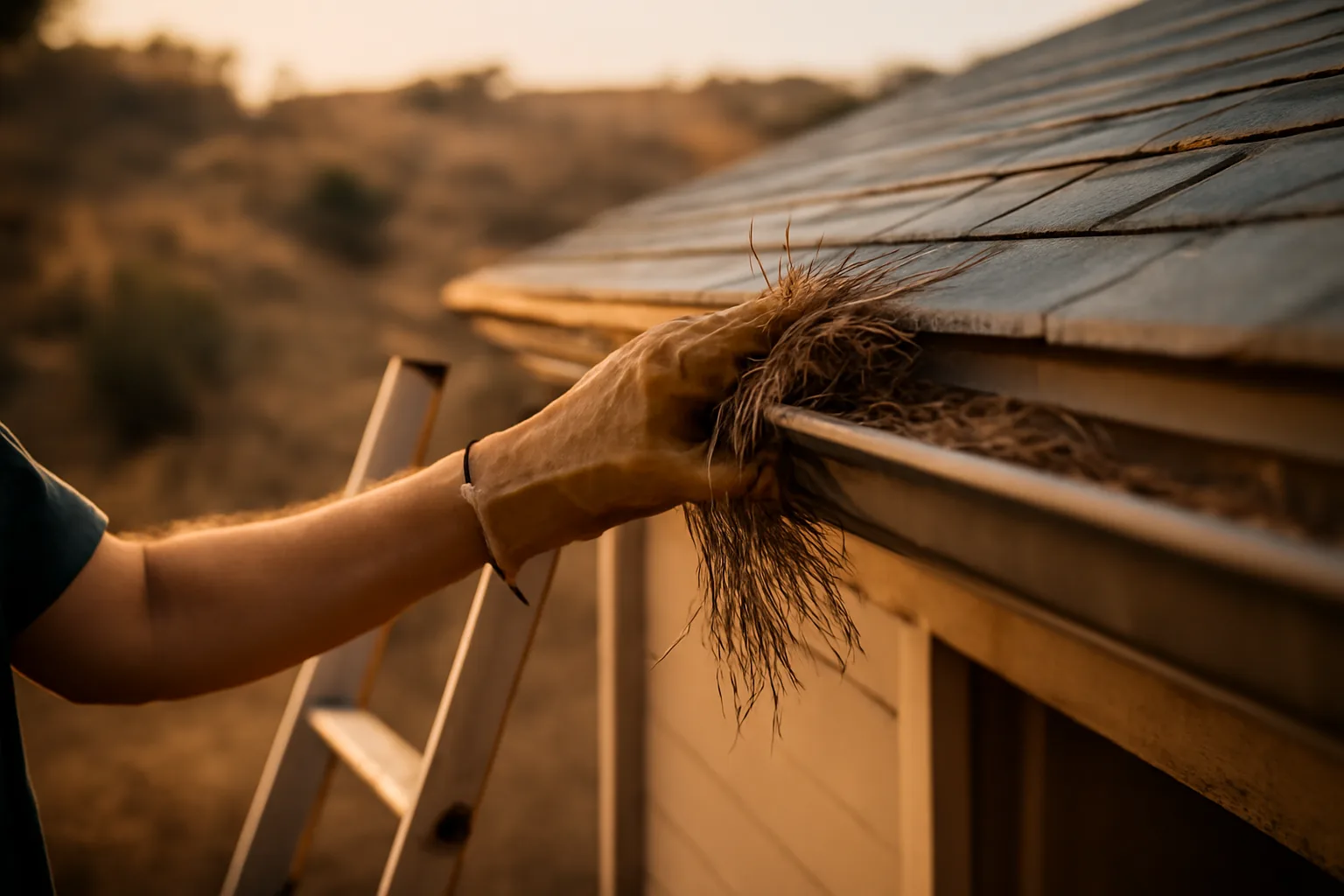
If your "Level 1" notice came from a local fire district inspection rather than a statewide fire-danger scale, it's almost always flagging low-cost, fast-fix items rather than structural problems. Typical Level 1 items include: dead or dry vegetation within 5 to 30 feet of the structure, firewood or lumber stacked against the house or under a deck, leaves and needles in gutters or on the roof, overgrown grass, and low tree limbs that create a ladder from ground fuels to the canopy [2]. Most districts give a defined correction window, often 30 to 60 days, though [check your specific fire district's compliance timeline] since this varies. Fixing Level 1 items is usually a weekend-to-single-day job for most properties: mow, clear, prune, sweep the roof and gutters, move the woodpile 30 feet from the house, and photograph the finished work. Here's the part that actually matters for insurance: keep dated, timestamped photos of the before-and-after state, keep any receipts for tree removal or hauling, and keep a copy of the correction notice and your compliance confirmation from the fire district. That paper trail is exactly what an insurer wants to see when you're contesting a non-renewal or applying for reinstatement after mitigation. It's also exactly the kind of file that gets lost in a phone's camera roll if you don't organize it as you go, which is the whole reason a structured Wildfire Insurance Survival Kit documentation approach exists: a one-time $99 template to keep the proof organized, not a service that talks to your insurer for you.
Frequently asked questions
When does the California defensible space law go into effect?
Public Resources Code 4291's 100-foot defensible space requirement is already in effect. The newer Zone 0 (0-5 feet) ember-resistant zone rule from AB 3074 is still in rulemaking at the Board of Forestry and Fire Protection, with no finalized statewide enforcement date confirmed as of this writing. Check the Board's regulation status page for updates.
Why won't people follow the defensible space law in California?
Cost, confusion over which zone rules apply to their parcel, and inconsistent local enforcement are the three main reasons. Retrofit work can run into the thousands of dollars with little statewide subsidy, and inspection frequency varies a lot by county, so many properties go uninspected for years until an insurer or a nearby fire forces the issue.
How do I prevent wildfires from starting on or near my property?
Fully extinguish campfires by drowning and stirring them, avoid parking or idling vehicles on dry grass, skip mowing or grinding during red flag warnings, and keep equipment maintained to avoid sparks. Most wildfires are human-caused, so eliminating these everyday ignition sources is the highest-leverage prevention step available to individuals.
How do I prepare for a wildfire if I live in a fire-prone area?
Build defensible space in zones (0-5, 5-30, 30-100 feet), harden vents and roof edges, and keep gutters clear. Separately, build a go-bag with medications, cash, and insurance documents, know two evacuation routes, and sign up for local emergency alerts, per Ready.gov's wildfire preparedness guidance.
How can we prevent forest fires at the community level?
Community-level prevention combines fuel reduction (prescribed burns, fuel breaks, coordinated vegetation clearing across neighboring parcels) with ignition prevention (campfire rules, equipment restrictions during red flag conditions). No single homeowner's yard work stops a wildfire; embers can travel over a mile ahead of a fire front, so neighborhood coordination matters as much as individual defensible space.
Is Santa Barbara safe from fire?
No. Santa Barbara County has a documented history of major wildfires, including the 1990 Painted Cave Fire and the 2017 Thomas Fire, and parts of the city sit in CAL FIRE-designated Very High Fire Hazard Severity Zones. Check your specific address on CAL FIRE's hazard zone viewer rather than assuming coastal proximity means safety.
What fire-safe rules for homes take effect in 2026?
No statewide 2026 mandate is confirmed as finalized. California's Zone 0 ember-resistant zone rule has been discussed with a possible 2026-or-later compliance horizon, but the Board of Forestry and Fire Protection had not published a final enforcement date as of this writing. Confirm directly with the Board before relying on any specific 2026 date.
What does a 'Level 1' fire danger rating actually mean?
In fire weather rating systems, Level 1 typically indicates low fire danger, the calmest end of a scale that also includes moderate, high, very high, and extreme categories based on weather, fuel moisture, and drought conditions. It's not a description of an active fire's size or severity.
What's the difference between Zone 0, Zone 1, and Zone 2 defensible space?
Zone 0 (0-5 feet from the structure) requires an ember-resistant area with no combustible mulch or debris. Zone 1 (5-30 feet) requires lean, clean, and green landscaping with dead vegetation removed. Zone 2 (30-100 feet) requires reduced fuel load, thinned tree canopies, and mowed grass, per CAL FIRE's defensible space guidance.
How much does it cost to bring a property into defensible space compliance?
Costs vary widely by lot size and existing vegetation, from a few hundred dollars in DIY labor for basic clearing to $10,000 or more for tree removal, gravel replacement, and vent retrofits on larger or heavily wooded lots. Some counties offer limited chipper programs or rebates; check your county's specific assistance program for local options.
What happens if I ignore a defensible space violation notice?
Local fire agencies have enforcement authority under Public Resources Code 4291 and can issue fines or require corrective action within a set timeline, often 30 to 60 days depending on the district. Beyond legal risk, unaddressed defensible space issues are increasingly cited by insurers as grounds for non-renewal.
Does clearing defensible space guarantee my insurance will be renewed?
No. Defensible space work improves your risk profile and gives you documentation to present, but insurers weigh regional wildfire risk models, claims history, and their own reinsurance costs alongside your property's condition. Completing the work and documenting it is preparation, not a guarantee of renewal or reinstatement.
How do I document defensible space work for my insurance company?
Take dated, timestamped photos and video before and after the work, keep receipts for tree removal, hauling, or contractor labor, and keep copies of any fire district inspection or compliance notices. Organize these into one file you can send to your insurer; you send the documentation yourself, since no service can promise coverage outcomes on your behalf.
Sources
- California Board of Forestry and Fire Protection, Zone 0 rulemaking status: Zone 0 ember-resistant zone regulation status and lack of a finalized enforcement date
- California Public Resources Code Section 4291: 100-foot defensible space requirement and two-zone (0-30 ft, 30-100 ft) structure
- USDA Forest Service, wildfire prevention and human-caused fire statistics: most wildfires are human-caused through campfires, equipment, and other ignition sources
- National Interagency Fire Center / CAL FIRE incident archive, Thomas Fire (2017): Thomas Fire size and historical significance in Santa Barbara County
- CAL FIRE, Fire Hazard Severity Zone Viewer: Very High Fire Hazard Severity Zone designations covering parts of Santa Barbara County