Last updated 2026-07-23
TL;DR
Wildfire protection means three layers: defensible space clearing around your home, hardened building materials (especially roofs, vents, and the first 5 feet), and a documented evacuation plan. California's new ember-resistant zone rule targets 2026 for phase-in. No home is fully fireproof, but the data shows hardening and clearance dramatically cut structure loss rates.
What does wildfire protection actually mean for a homeowner?
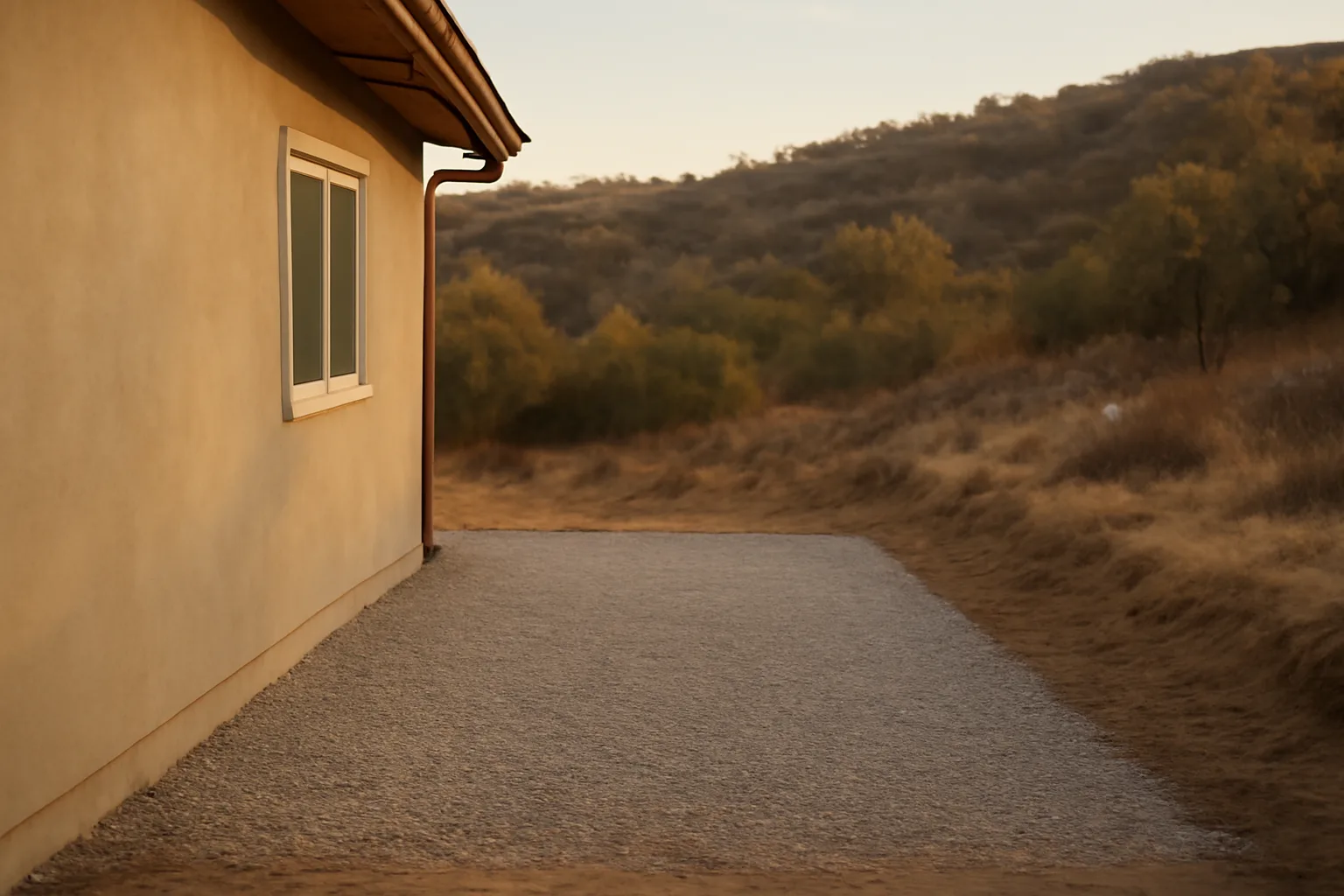
Wildfire protection isn't one thing. It's a stack of three separate jobs, and most homeowners only do one of them. Job one is defensible space: cutting back vegetation and fuel in rings around your house so a ground fire has less to burn as it approaches. CAL FIRE defines this in zones, typically 0-5 feet (the ember-resistant zone), 5-30 feet (lean, clean, and green), and 30-100 feet (reduced fuel). Job two is home hardening: the physical materials on your house. Roof type, vent screens, siding, deck boards, window glazing. This matters more than most people think. A 2020 analysis from the Insurance Institute for Business & Home Safety (IBHS) found that embers, not direct flame contact, cause the majority of home ignitions in wildfires. Job three is planning: knowing your evacuation route, having documentation of your property's condition, and having a go-bag ready. Ready.gov calls this having a "family emergency communication plan" and a go-kit, and recommends practicing it before you need it. Miss any one of the three and the other two lose a lot of their value. A hardened roof next to a woodpile still burns. A cleared yard around a house with open soffit vents still lets embers in. Protection is the combination, not any single fix.
When does the California defensible space law go into effect?
California's core defensible space law (Public Resources Code 4291) has been in effect for years and requires 100 feet of defensible space clearance around structures in State Responsibility Areas, or to the property line if it's closer [1]. That part isn't new. What's newer, and what people mean when they ask about 2026, is the "ember-resistant zone" (Zone 0) rule. This is the 0-to-5-foot zone immediately touching the house, and it's meant to keep flammable material away from the structure itself, since embers landing right against siding or under a deck are a huge cause of home loss. CAL FIRE and the Board of Forestry have been developing Zone 0 regulations for several years under SB 63 (2021) and related legislation, with the regulatory language going through the state rulemaking process. As of this writing, the Board of Forestry and Fire Protection has been working on finalizing Zone 0 standards, and the target for statewide enforcement has been pushed multiple times; check fire.ca.gov directly for the current adopted effective date before you assume a specific year applies to your property. The honest answer: don't wait for the regulation to be finalized to start clearing your first 5 feet. Whatever the enforcement date ends up being, insurers are already asking about it in inspection letters, and doing it now costs you nothing but time. Fire safe landscaping next to your house is a good next read if you're planning that zone.
What fire-safe home rules take effect in 2026?
This is the question with the least settled answer, because it depends heavily on which state and which local fire district you're in. Here's what's actually confirmed versus still in progress. In California, the Zone 0 ember-resistant zone standard is the big one people are watching for 2026, but the exact statewide enforcement date has moved before and should be verified directly with CAL FIRE's Wildfire Preparedness pages rather than assumed. Oregon's wildfire risk map and defensible space requirements (under SB 762, 2021) have had a rocky rollout, with the original statewide risk map withdrawn in 2022 after public pushback and reissued later with revisions; homeowners in Oregon should check with the Oregon Department of Forestry for the current status of their county's requirements. Colorado doesn't have one statewide defensible space mandate the way California does; wildfire mitigation rules are mostly set at the county and fire-district level, so a homeowner in Boulder County faces different requirements than one in El Paso County. Check with your local fire authority. Arizona similarly leaves most defensible space rules to counties and fire districts, though the Arizona Department of Forestry and Fire Management publishes statewide guidance homeowners can use as a baseline. [Fill in: confirm your specific fire district's 2026 rule status before treating any date as final. Rules vary by jurisdiction and this article cannot substitute for checking your local fire marshal's current bulletin.]
Why won't people follow the defensible space law in California?
This isn't really about people being careless. Compliance research and CAL FIRE's own inspection data point to a handful of concrete reasons. Cost is the biggest one. Clearing 100 feet of defensible space on a sloped, brush-covered lot can run into thousands of dollars if you hire a crew, and many rural and older homeowners are on fixed incomes. A 2020 study on wildfire mitigation adoption found that cost and physical capacity (older or disabled homeowners who can't do the labor themselves) were consistently cited as top barriers. Second, people misjudge their own risk. Someone who's lived in the same canyon for 30 years without a major fire nearby develops a kind of normalcy bias; they've seen fire season come and go and start treating the rules as bureaucratic overreach rather than as protection. Third, some homeowners genuinely don't understand what's required. The zones, the specific plant spacing, the "lean, clean, and green" language, none of it is intuitive if you've never read a CAL FIRE defensible space guide. Local inspection letters can be terse and confusing. Fourth, there's a values conflict: mature trees and dense landscaping is exactly what many people bought their property for. Being told to remove decades-old vegetation close to the house feels like a real loss, more than a chore. CAL FIRE inspectors report compliance rates well under 100% in many high-hazard zones, and enforcement has historically been inconsistent, more a warning-letter system than a fined-and-fixed system in most counties. That's part of why insurers have started doing their own inspections instead of relying on local code enforcement.
How to prevent wildfires from starting near your home
Roughly 85% of wildfires in the U.S. are human-caused, according to the National Interagency Fire Center's long-running statistics, cited by the U.S. Forest Service and Ready.gov. That means most wildfire prevention isn't about the forest, it's about human behavior around ignition sources. The practical list: don't do outdoor debris burning on red flag warning days (check your county's daily fire weather status), keep vehicles off dry grass (catalytic converters and exhaust systems run hot enough to ignite dry vegetation), make sure trailer chains aren't dragging on pavement, extinguish campfires completely with water until they're cool to the touch, and don't use fireworks in wildland-adjacent areas even where legal. On your own property, the ignition risks are usually mundane: a lawnmower hitting a rock in dry grass, an angle grinder throwing sparks near brush, a cigarette tossed from a car window onto a shoulder full of cured grass. None of these feel dramatic until they are. If you have equipment with spark potential (chainsaws, mowers, grinders), CAL FIRE recommends doing that work in early morning when humidity is higher and wind is lower, and keeping a shovel and water source within reach.
How to prevent forest fires and avoid forest fires as an individual
"Prevent forest fires" and "prevent wildfires" get used almost interchangeably, but forest fire prevention usually points people toward recreational behavior: camping, hiking, off-roading, hunting. Smokey Bear's messaging ("Only you can prevent wildfires," run by the USDA Forest Service since 1944) still holds up as a rough behavior checklist: fully drown and stir campfires, never leave a fire unattended, check local fire restrictions before any outdoor burning, and don't park hot vehicles on dry vegetation. Read more at only you can prevent wildfires. Beyond individual behavior, "avoiding" forest fires as a homeowner near wildland is really about reducing what a fire can do once it starts, since you generally can't control ignition sources on public land near your property. That's back to defensible space and hardening, covered above. One underused tool: many counties post real-time fire restriction levels (Stage 1, Stage 2, closures) on their fire department or forest service websites. Checking that before any outdoor burning, welding, or even mowing on a red flag day is a five-minute habit that actually moves the needle on ignition risk in your area.
How to prepare for a wildfire before it happens
Preparation splits into documentation, physical readiness, and an evacuation plan. Do all three before fire season, not during a red flag warning. Documentation: photograph or video your home's exterior, roof, vents, deck, and the full perimeter of your defensible space zones. Do this every season. If you're facing an insurance non-renewal or inspection, this record is what you'll want to send along with your own compliance photos; you're not filing a claim with this, you're building a paper trail that shows the condition of your property over time. This is also the gap the DefensibleHome $99 Wildfire Insurance Survival Kit is built to close: a structured way to document your defensible space zones and hardening work so you have something concrete to hand an inspector or underwriter, not a claims filing or coverage guarantee. Physical readiness: know where your gas shutoff is, keep a garden hose long enough to reach your whole roofline, clear gutters of debris (dry leaves and pine needles in a gutter are one of the more common ember-catch points), and store any propane tanks at least 30 feet from structures per most fire district guidance. Evacuation plan: Ready.gov recommends identifying two ways out of your neighborhood in case one route is blocked, a family meeting point outside the immediate area, and a go-bag with medications, documents, and pet supplies packed before fire season starts, not during an evacuation order. Sign up for your county's emergency alert system (most California counties use systems tied to Cal OES or local sheriff's offices) so you get evacuation warnings on your phone, more than from watching the news.
How to prepare for forest fires when you live near wildland
If your property backs onto national forest, state forest, or BLM land, preparation has an extra layer: you're dealing with fuel you don't control and can't legally clear yourself. First, find out who manages the adjacent land (Forest Service, BLM, state forestry department, or a private timber company) and whether they have a fuel reduction or prescribed burn schedule. Some agencies will do defensible space coordination with adjacent landowners; ask. Second, your own defensible space zones become even more important, since you can't extend clearance onto land you don't own. CAL FIRE's 100-foot standard is measured from your structure, and if your property line is closer than 100 feet to the structure, the requirement stops at the property line, but that also means your effective buffer is smaller than someone with a bigger lot [1]. Third, consider that forest-adjacent properties often see fire behavior differently than suburban wildland-urban interface homes: more crown fire potential, higher ember loads, longer exposure windows during an active fire. Talk to your local fire district about whether your specific location has been assessed for this.
Is Santa Barbara safe from fire?
No location in California's wildland-urban interface is "safe" from fire risk in an absolute sense, and Santa Barbara County has a documented history that makes this concrete, not theoretical. The Thomas Fire (December 2017) burned over 281,000 acres across Ventura and Santa Barbara counties and was, at the time, the largest wildfire in modern California history. The Jesusita Fire (2009) burned in the Santa Barbara foothills and destroyed dozens of homes. The Tea Fire (2008) did the same. Montecito, just south of Santa Barbara, also suffered a catastrophic debris flow in January 2018 tied directly to the burn scar left by the Thomas Fire, which killed 23 people, a reminder that wildfire risk doesn't end when the fire is out. What makes Santa Barbara specific: steep coastal foothills, dense chaparral fuel, and Sundowner winds (a local downslope wind pattern that can push fire rapidly toward the coast, sometimes overnight and with little warning). These conditions are why Santa Barbara County has some of the more active defensible space enforcement and community wildfire protection planning in the state. If you own property in the Santa Barbara foothills, Montecito, or similar terrain, treat defensible space and home hardening as non-optional, not because a specific fire is coming this year, but because the terrain and wind pattern make ignition-to-structure-loss timelines shorter than in flatter areas.
How can we prevent forest fires as a community, more than individually?
Individual prevention only goes so far in a wildland-urban interface neighborhood, since one neglected property can put a whole street at risk regardless of what your own home looks like. Community-level tools that actually work: Firewise USA, a National Fire Protection Association program, helps neighborhoods organize collective defensible space work, mutual chipper days, and shared risk assessments; there are Firewise-recognized communities across California, Colorado, Oregon, and Arizona. Community Wildfire Protection Plans (CWPPs), often developed at the county level with input from CAL FIRE or state forestry agencies, identify high-risk zones and prioritize fuel reduction funding. HOAs and neighborhood associations can also push compliance harder than individual county inspectors do, since a neighbor's overgrown lot affects everyone's insurance risk, more than their own. On the funding side, some counties and utility companies (in California, some investor-owned utilities run wildfire mitigation grant programs) offer cost-share money for defensible space clearing, chipping services, or home hardening retrofits. It's worth calling your county fire department or utility provider directly to ask what's currently funded, since these programs change year to year and aren't always advertised well.
How does home hardening fit into overall wildfire protection?
Defensible space slows a fire down. Home hardening determines whether your house survives contact with embers and heat once the fire is close. The priority order, based on IBHS ember research and CAL FIRE's Wildfire Prepared Home standard, roughly goes: roof material and roof-to-wall junctions first (roofs are the single largest ember-catch surface), then vents (ember-resistant 1/8-inch mesh screens on attic and foundation vents), then decks and the area under them, then siding and window glazing, then gutters kept clear of debris. CAL FIRE's Wildfire Prepared Home program certifies homes that meet specific hardening standards, and insurers increasingly reference this kind of documentation when deciding on renewals, though certification itself doesn't guarantee coverage or a discount; check with your specific insurer. For a full house-fire risk comparison across material choices, see house fire risk factors and general home fire risk. For a broader look at how defensible space zones interact with hardening, see defensible space overview.
What should go in your wildfire documentation for insurers?
If you got a non-renewal letter or an inspection notice, the fastest thing you can do that actually helps is build a clean, dated record of your property's condition. That means: wide shots of all four sides of the house, close-ups of vents and roof edges, photos of your 5-foot, 30-foot, and 100-foot zones (or whatever your local fire district's zone distances are), a list of any hardening work done with dates and receipts, and copies of any inspection or compliance letters from your local fire department. This isn't a claims filing and it isn't a negotiation with your insurer; you're not disputing coverage or promising an outcome. You're just putting together the same kind of record a fire marshal or underwriter would want to see, in a format you control, so if an inspector shows up or your policy comes up for renewal, you have something ready rather than scrambling. [Fill in: check your specific insurer's inspection checklist format, since some carriers use their own photo/document templates.] The $99 DefensibleHome Wildfire Insurance Survival Kit is built around exactly this gap: a structured template for documenting your zones, your hardening work, and your compliance history, so you're not starting from a blank page when a letter arrives. It's a documentation tool, not a claims or coverage service; you still handle any filing or negotiation with your insurer yourself. Start at /survival-kit-builder.
Frequently asked questions
When does the California defensible space law go into effect?
The base 100-foot defensible space requirement under Public Resources Code 4291 is already in effect. The newer Zone 0 (0-5 foot ember-resistant zone) rule has been in development for several years under SB 63, with the statewide enforcement date shifting during rulemaking. Check fire.ca.gov directly for the current adopted date rather than assuming a fixed year.
Why won't people follow the defensible space law in California?
Cost, physical capacity, and confusion about the rules are the top cited barriers in wildfire mitigation adoption research. Clearing dense brush on sloped land can cost thousands, older or disabled homeowners struggle with the labor, and many people underestimate their own fire risk after years without a nearby fire.
How do I prevent wildfires around my property?
Avoid outdoor burning on red flag warning days, keep vehicles and equipment off dry grass, fully extinguish campfires with water, clear gutters of dry debris, and do spark-risk yard work (mowing, grinding) in early morning when humidity is higher. About 85% of U.S. wildfires are human-caused, per National Interagency Fire Center data.
How should I prepare for a wildfire this season?
Photograph your home's exterior and defensible space zones, know your gas shutoff location, keep a hose that reaches your full roofline, pack a go-bag with medications and documents, identify two evacuation routes, and sign up for your county's emergency alert system before fire season starts.
How can we prevent forest fires as individuals?
Fully drown and stir out campfires, never leave fire unattended, check local fire restriction levels before any outdoor burning, keep exhaust systems and trailer chains off dry vegetation, and don't use fireworks near wildland. The USDA Forest Service's long-running Smokey Bear campaign covers most of this ground.
What is the difference between preventing wildfires and preparing for them?
Prevention targets ignition sources, mostly human behavior like campfires, equipment sparks, and debris burning. Preparation assumes a fire will happen nearby regardless and focuses on defensible space, home hardening, documentation, and an evacuation plan so your home and family have the best odds when it does.
What fire-safe home rules take effect in 2026?
California's Zone 0 ember-resistant zone standard is the rule most people associate with 2026, but the exact statewide enforcement date has shifted during the regulatory process. Oregon, Colorado, and Arizona largely set requirements at the county or fire-district level rather than one statewide date. Confirm with your local fire marshal.
Is Santa Barbara safe from fire?
No, Santa Barbara County has a documented wildfire history including the 2017 Thomas Fire (281,000+ acres) and the 2018 Montecito debris flow that killed 23 people. Steep foothill terrain, dense chaparral, and Sundowner winds make parts of the county higher risk, not lower, compared to flatter California regions.
What are the defensible space zones around a house?
CAL FIRE generally defines three zones: 0-5 feet (ember-resistant zone, keep this area nearly free of combustibles), 5-30 feet (lean, clean, and green, reduced and spaced vegetation), and 30-100 feet (reduced fuel, thinned trees and brush). Exact requirements can vary by local fire district.
Does defensible space actually reduce home loss in a wildfire?
Research from IBHS and CAL FIRE points to ember intrusion, not direct flame contact, as the leading cause of home ignition in wildfires. Clearing the zones near a house and hardening vents, roofs, and decks directly targets that ember pathway, which is why both are treated as primary defenses rather than optional extras.
Can I get insurance discounts for defensible space or home hardening?
Some insurers offer discounts or renewal consideration for documented mitigation work, but this varies by carrier and isn't guaranteed. Programs like CAL FIRE's Wildfire Prepared Home can support your case, but you'll need to check directly with your specific insurer about their criteria and whether any discount applies.
What should I include in wildfire documentation if I got a non-renewal letter?
Dated photos of all sides of your home, close-ups of vents and roofline, photos of each defensible space zone, receipts or records for any hardening work, and copies of fire department inspection letters. This builds your own record; it doesn't replace filing anything with your insurer or negotiating on your behalf.
Who enforces defensible space rules in California?
Local fire departments and CAL FIRE conduct defensible space inspections in State Responsibility Areas, typically through warning letters and follow-up checks rather than automatic fines. Enforcement consistency varies significantly by county, which is part of why insurers have started running their own separate inspections.
Sources
- California Public Resources Code Section 4291: 100-foot defensible space clearance requirement in State Responsibility Areas
- CAL FIRE: Fire Hazard Severity Zone maps determine where defensible space and home hardening requirements apply.
- National Fire Protection Association (NFPA): NFPA outlines specific home hardening measures such as ember-resistant vents and fire-resistant roofing to protect homes from wildfire.
- CAL FIRE Ready for Wildfire Program: Defensible space zones (Zone 0, Zone 1, Zone 2) are defined with specific clearance distances for homeowners to reduce wildfire risk.
- County of Santa Barbara: Santa Barbara County provides local wildfire risk information and fire safety resources relevant to residents' wildfire preparedness.
- USDA Forest Service: The U.S. Forest Service manages community wildfire risk reduction programs and forest fire prevention initiatives.